
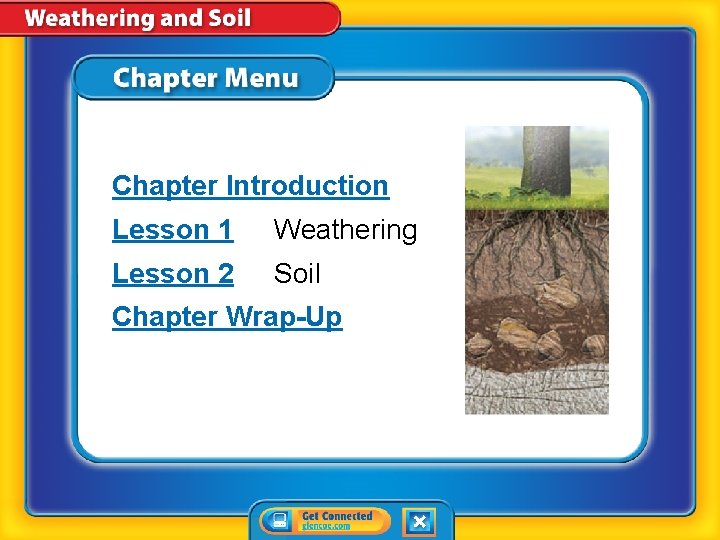
Chapter Introduction Lesson 1 Weathering Lesson 2 Soil
- Slides: 45
Chapter Introduction Lesson 1 Weathering Lesson 2 Soil Chapter Wrap-Up
Soil • How is soil created? • What are soil horizons? • Which soil properties can be observed and measured? • How are soils and soil conditions related to life?
Soil • soil • climate • organic matter • topography • pore • biota • decomposition • horizon • parent material
What is soil? • Soil is a mixture of weathered rock, decayed organic matter, mineral fragments, water, and air. • Organic matter is the remains of something that was once alive. • Decomposition is the process of changing once-living material into darkcolored organic matter.
What is soil? (cont. ) Soil contains gases that fill the soil pores– the small holes and spaces in soil. pore from Greek poros, means “passage, way”
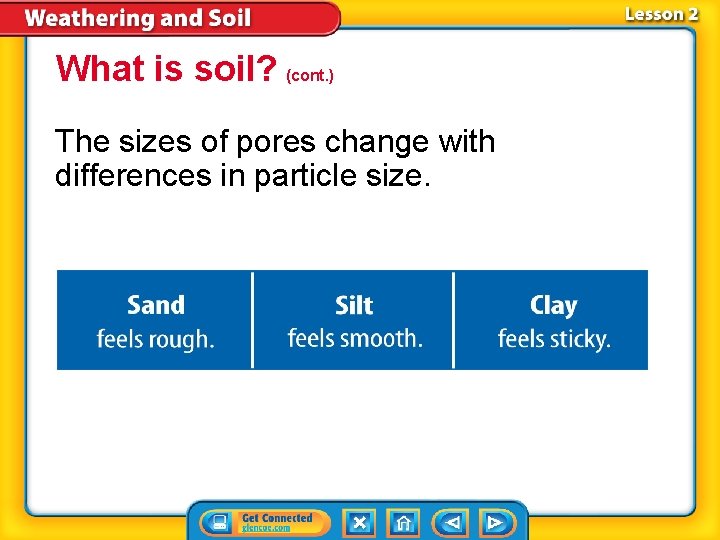
What is soil? (cont. ) The sizes of pores change with differences in particle size.
Formation of Soil • Inorganic matter in soil is formed by the mechanical and chemical weathering of rocks into fragments. • The term inorganic describes materials that have never been alive.
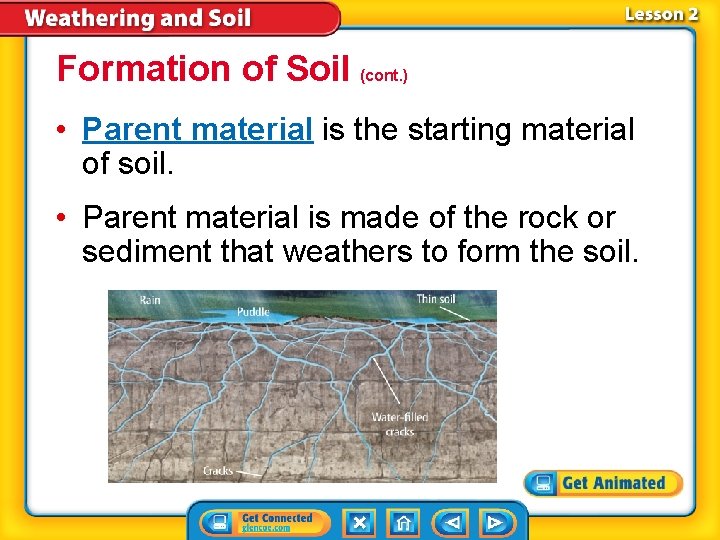
Formation of Soil (cont. ) • Parent material is the starting material of soil. • Parent material is made of the rock or sediment that weathers to form the soil.
Formation of Soil (cont. ) What is the role of parent material in creating soil?
Formation of Soil (cont. ) • The average weather of an area is its climate. • If the parent material is in a warm, wet climate, soil formation can be rapid. • Topography is the shape and steepness of the landscape.
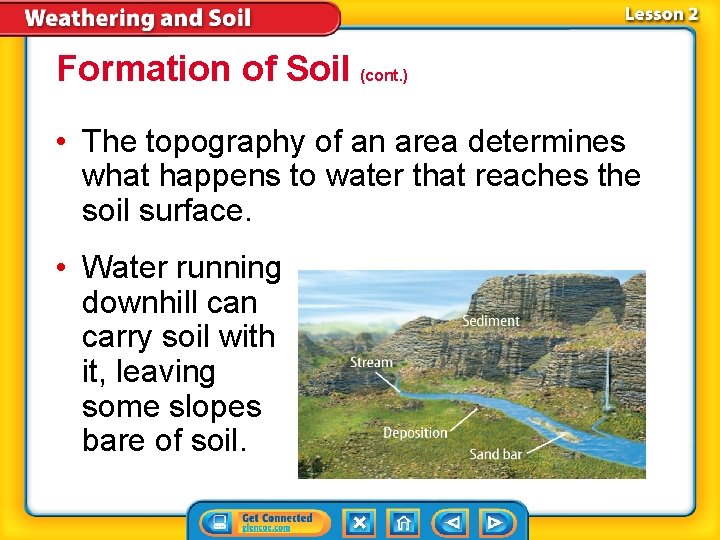
Formation of Soil (cont. ) • The topography of an area determines what happens to water that reaches the soil surface. • Water running downhill can carry soil with it, leaving some slopes bare of soil.
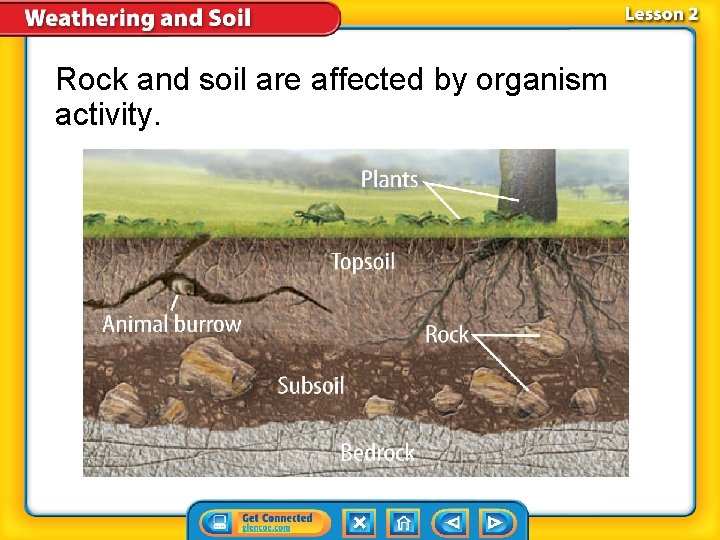
Formation of Soil (cont. ) • Biota is all of the organisms that live in a region. • Biota in the soil help speed up the process of soil formation in various ways. • Organisms can be involved in decomposition of organic matter or form passages in soil for water to move through.
Rock and soil are affected by organism activity.
Formation of Soil (cont. ) How does biota aid in soil formation?
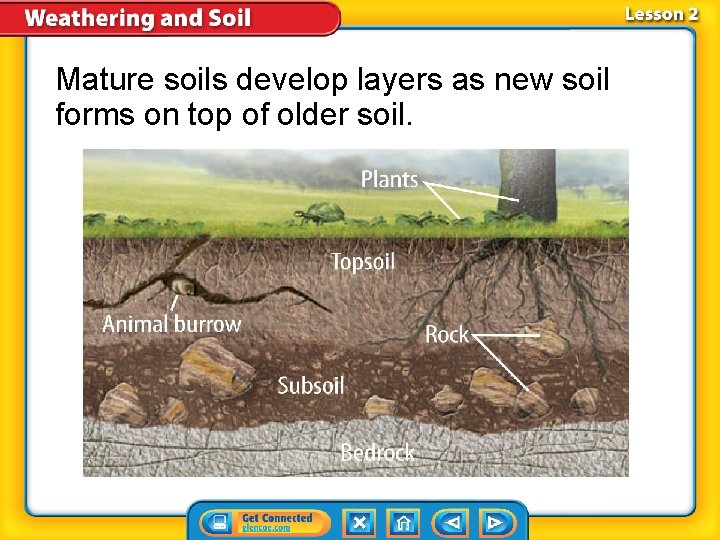
Mature soils develop layers as new soil forms on top of older soil.
Horizons • As time passes, weathering is constantly acting on rock and sediment, making soil formation a constant, but slow, process. • Horizons are layers of soil formed from the movement of the products of weathering.
Horizons (cont. ) horizon from Latin horizontem, means “bounding circle”
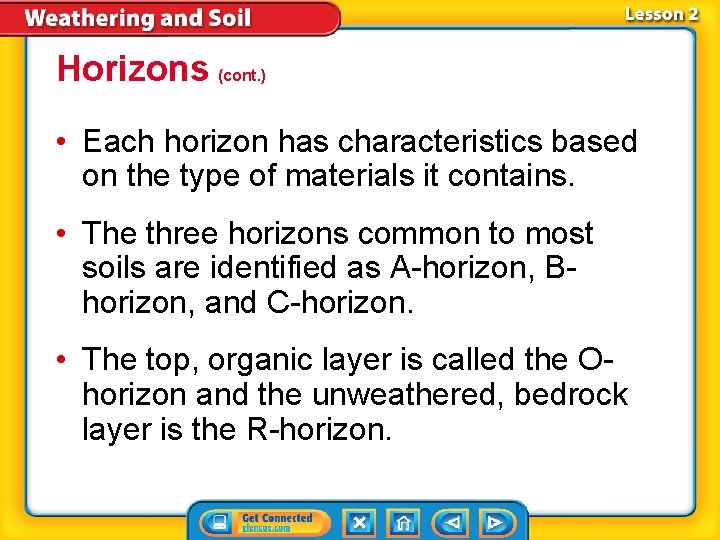
Horizons (cont. ) • Each horizon has characteristics based on the type of materials it contains. • The three horizons common to most soils are identified as A-horizon, Bhorizon, and C-horizon. • The top, organic layer is called the Ohorizon and the unweathered, bedrock layer is the R-horizon.
Horizons (cont. ) What are soil horizons?
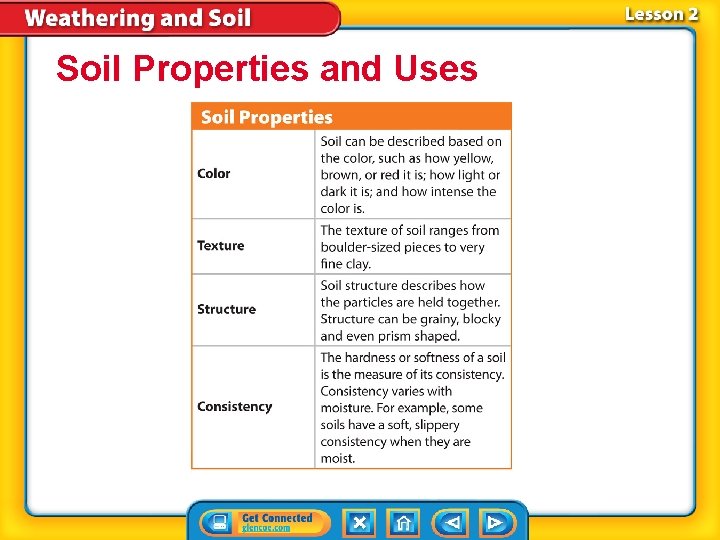
Soil Properties and Uses
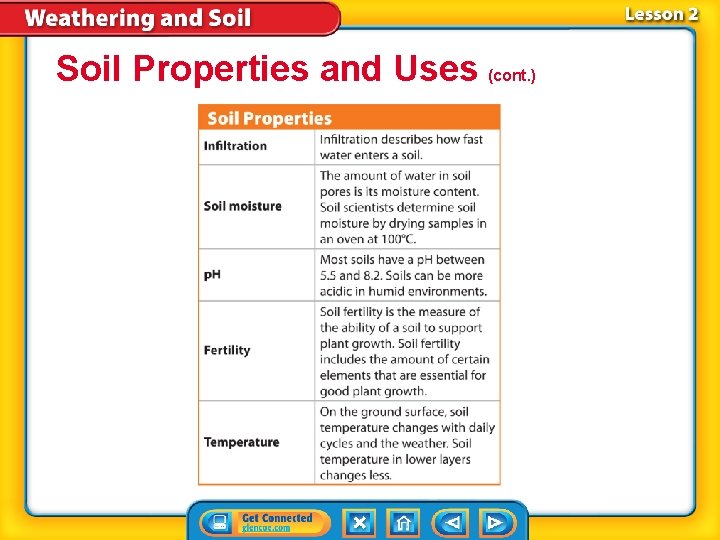
Soil Properties and Uses (cont. )
Soil Properties and Uses (cont. ) • Some properties of soil can be determined just by observation. • The amount of sand, silt, and clay in a soil can be estimated by feeling the soil. • Many soil properties can be measured more accurately in a laboratory.
Soil Properties and Uses (cont. ) Laboratory measurements can determine exactly what is in each sample of soil. List soil properties that can be observed and measured.
Soil Properties and Uses (cont. ) Plant growers can observe how well plants grow in the soil to get information about soil nutrients. How is soil related to life?
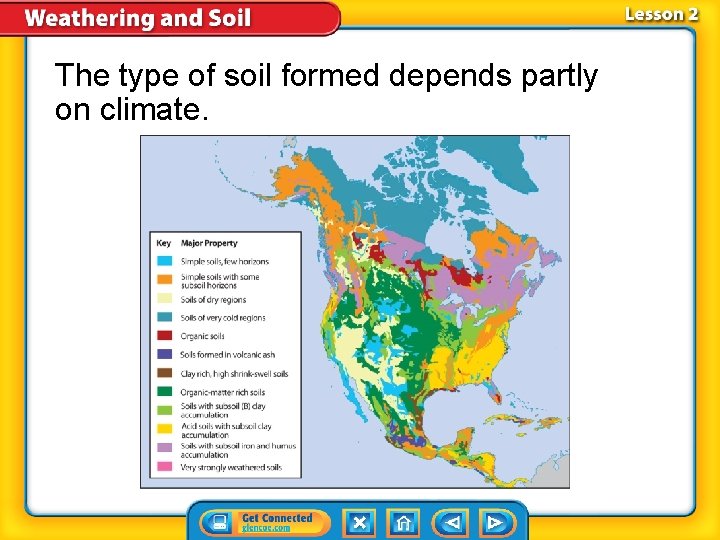
The type of soil formed depends partly on climate.
Soil Properties and Uses (cont. ) Are soils the same everywhere?
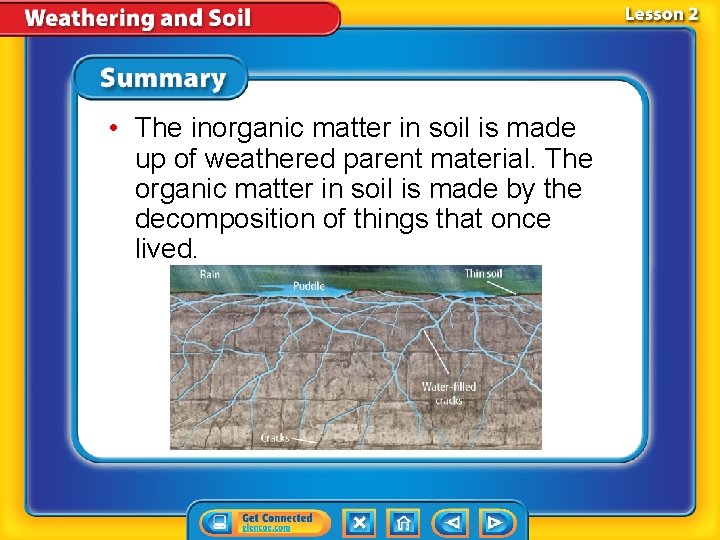
• The inorganic matter in soil is made up of weathered parent material. The organic matter in soil is made by the decomposition of things that once lived.
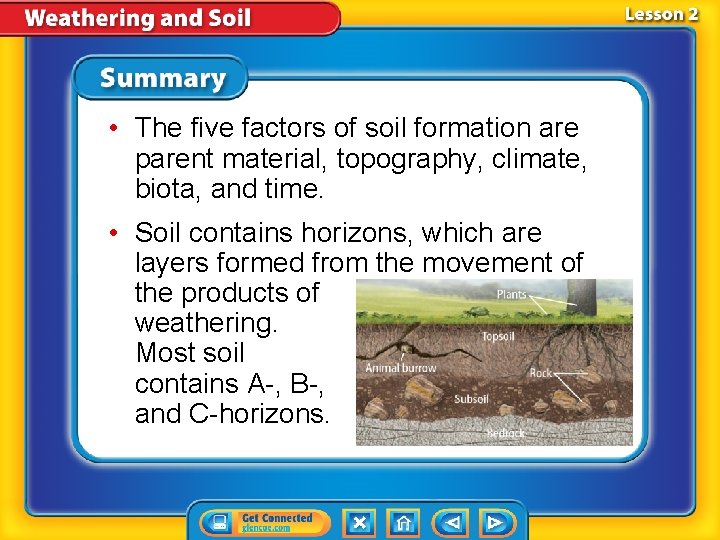
• The five factors of soil formation are parent material, topography, climate, biota, and time. • Soil contains horizons, which are layers formed from the movement of the products of weathering. Most soil contains A-, B-, and C-horizons.
Which term refers to the process of changing once-living material into dark-colored organic matter? A. biota B. topography C. decomposition D. mechanical weathering
Which of these refers to the starting material of soil? A. parent material B. bed rock C. biota D. horizons
Which of these is the top, organic layer of soil? A. A-horizon B. B-horizon C. C-horizon D. O-horizon
Do you agree or disagree? 4. Air and water are present in soil. 5. Soil that is 1, 000 years old is a young soil. 6. Soil is the same in all locations.
Key Concept Summary Interactive Concept Map Chapter Review Standardized Test Practice
Physical and chemical weathering are destructive forces that break down rocks, which begins the formation of soil.
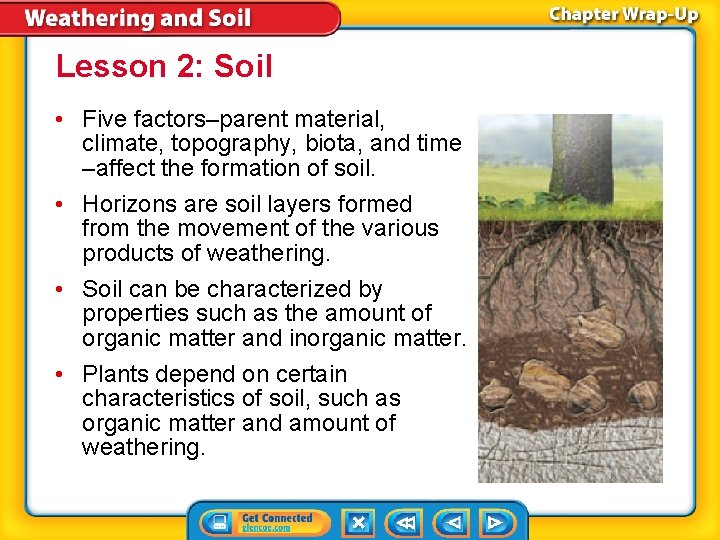
Lesson 2: Soil • Five factors–parent material, climate, topography, biota, and time –affect the formation of soil. • Horizons are soil layers formed from the movement of the various products of weathering. • Soil can be characterized by properties such as the amount of organic matter and inorganic matter. • Plants depend on certain characteristics of soil, such as organic matter and amount of weathering.
Which term refers to what happens when physical processes naturally break rocks into smaller pieces? A. chemical weathering B. mechanical weathering C. oxidation D. ice wedging
What is the product of oxidation? A. oxygen B. an oxide C. acid D. iron
Where does chemical weathering occur fastest? A. cool, dry places B. places with a lot of temperature changes C. warm, wet places D. none of these
Which term refers to the shape and steepness of a landscape? A. biota B. pores C. horizons D. topography
Which of these refers to all of the organisms that live in a region? A. organic matter B. soil C. biota D. horizons
Which term refers to changes in the materials that are part of a rock into new materials? A. mechanical weathering B. abrasion C. chemical weathering D. ice wedging
Which of these can cause mechanical weathering? A. ice wedging B. abrasion C. plants D. all of the above
Which of these occurs fastest in locations that have a lot of temperature changes? A. mechanical weathering B. oxidation C. chemical weathering D. none of these
Which term refers to the small holes and spaces in soil? A. biota B. pores C. horizons D. silt
Why will weathering occur more quickly to a rock that has been broken into several pieces? A. The surface area of the broken pieces is larger. B. The surface area of the broken pieces is smaller. C. The total weight of the rock decreases when it is broken. D. The total weight of the rock increases when it is broken.