
Chapter Introduction Lesson 1 Cells and Life Lesson

- Slides: 79
Chapter Introduction Lesson 1 Cells and Life Lesson 2 Lesson 3 The Cell Moving Cellular Material Lesson 4 Cells and Energy Chapter Wrap-Up
How do the structures and processes of a cell enable it to survive?
Cells and Life • How did scientists’ understanding of cells develop? • What basic substances make up a cell?
Cells and Life • cell theory • lipid • macromolecule • carbohydrate • nucleic acid • protein
Understanding Cells • English scientist Robert Hooke first identified cells over 300 years ago while looking at cork under a microscope he built. • After Hooke’s discovery, other scientists began to use better microscopes to identify different structures in the cells of plants and animals.
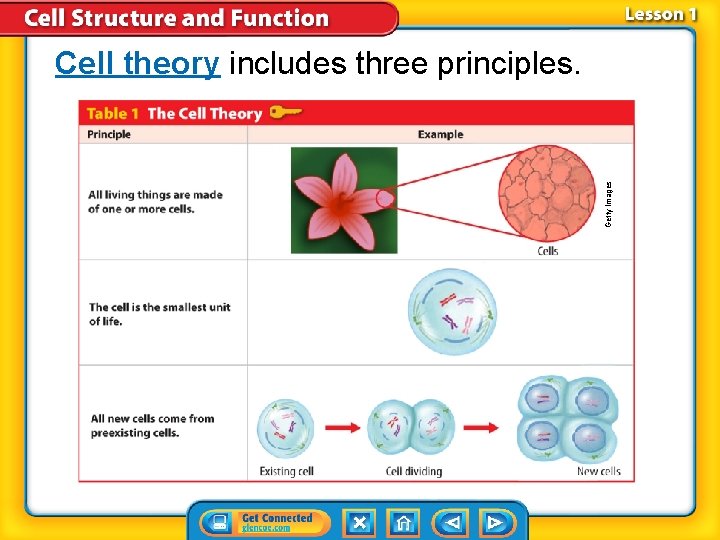
Getty Images Cell theory includes three principles.
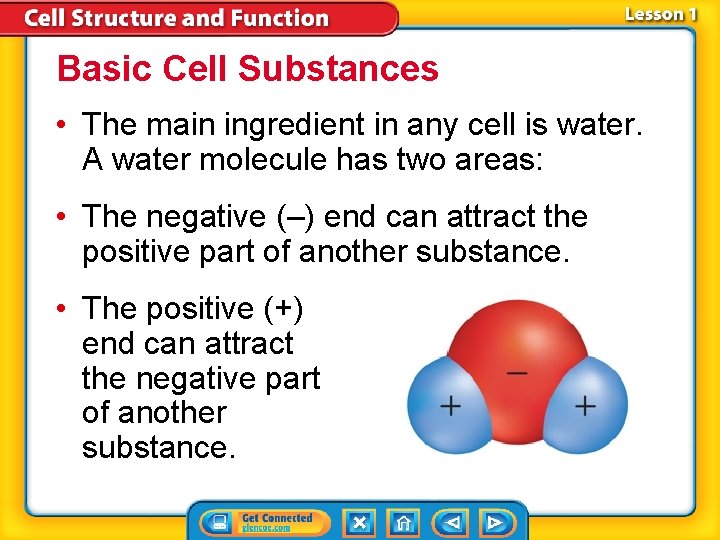
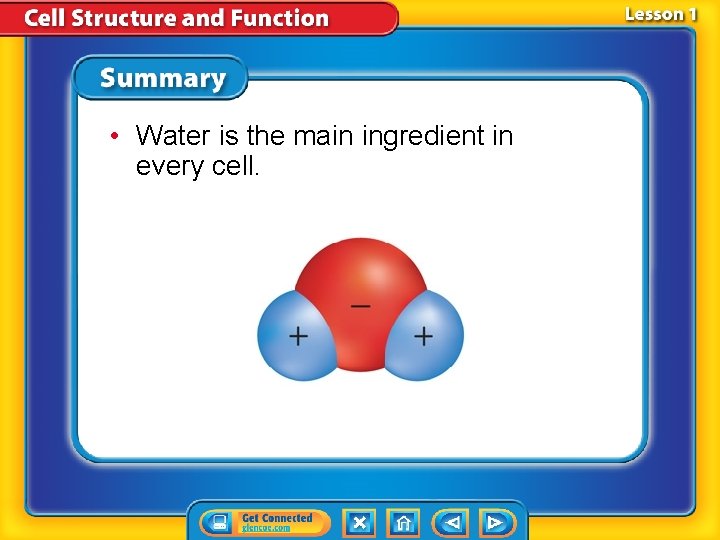
Basic Cell Substances • The main ingredient in any cell is water. A water molecule has two areas: • The negative (–) end can attract the positive part of another substance. • The positive (+) end can attract the negative part of another substance.
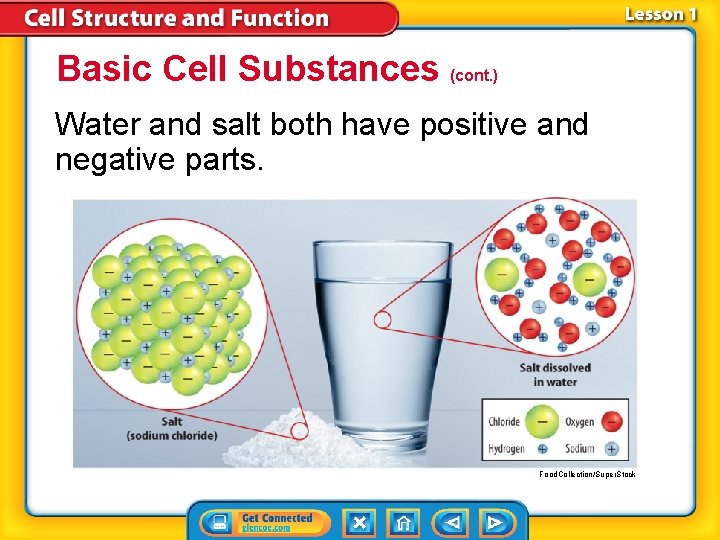
Basic Cell Substances (cont. ) Water and salt both have positive and negative parts. Food. Collection/Super. Stock
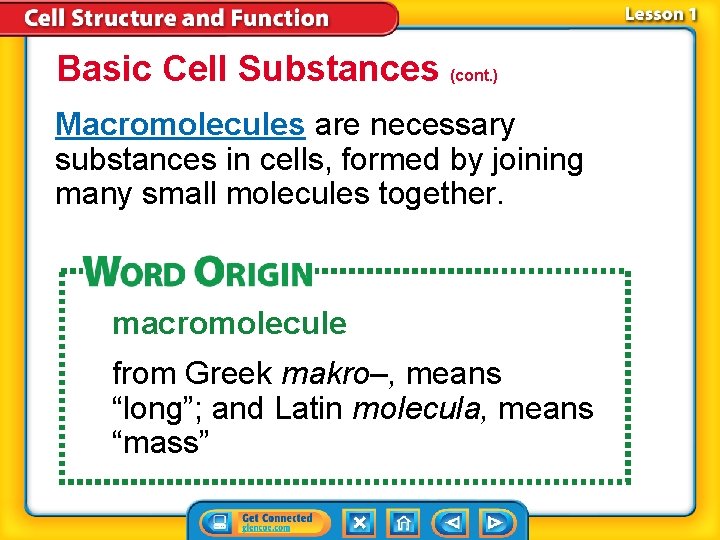
Basic Cell Substances (cont. ) Macromolecules are necessary substances in cells, formed by joining many small molecules together. macromolecule from Greek makro–, means “long”; and Latin molecula, means “mass”
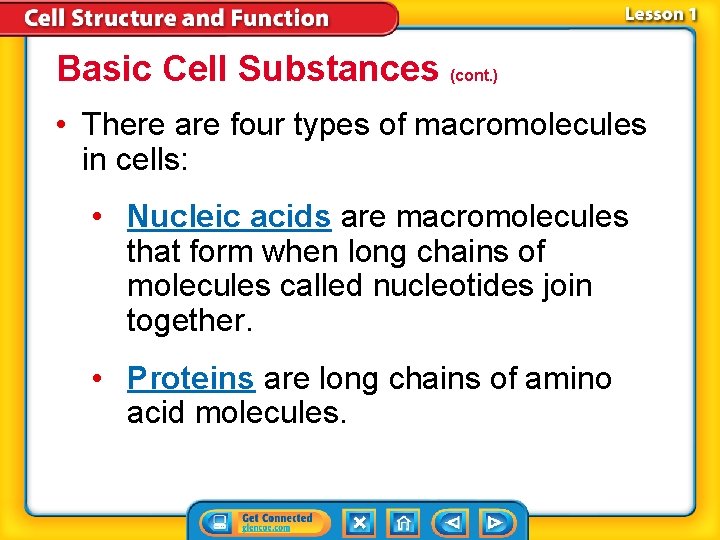
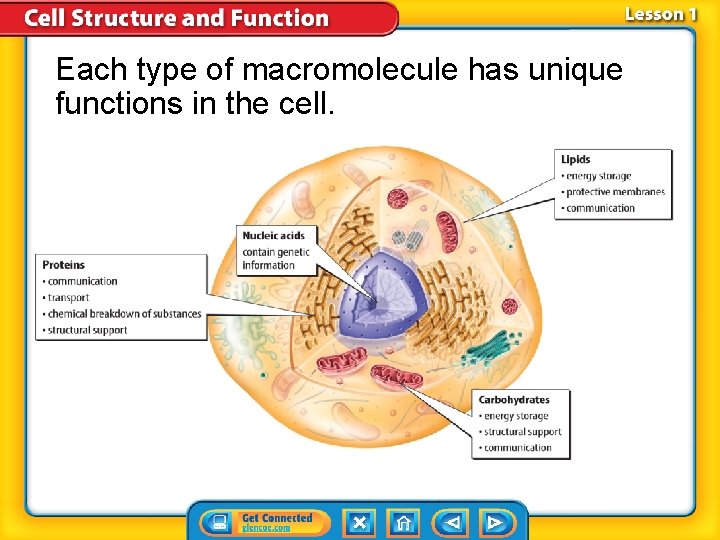
Basic Cell Substances (cont. ) • There are four types of macromolecules in cells: • Nucleic acids are macromolecules that form when long chains of molecules called nucleotides join together. • Proteins are long chains of amino acid molecules.
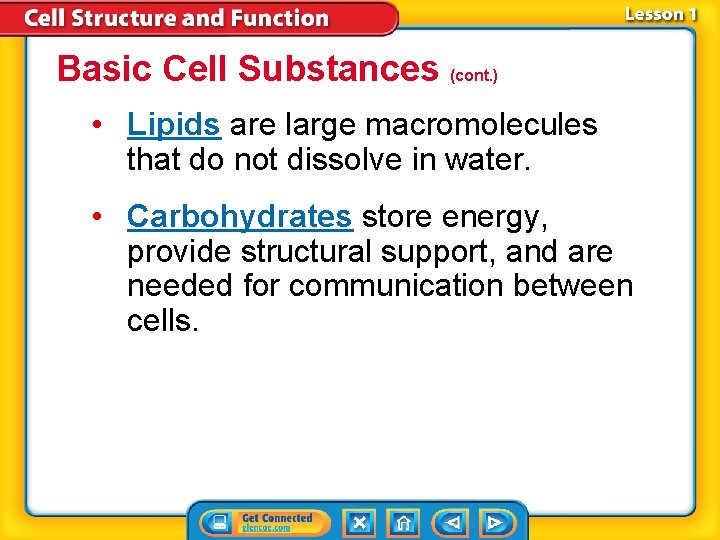
Basic Cell Substances (cont. ) • Lipids are large macromolecules that do not dissolve in water. • Carbohydrates store energy, provide structural support, and are needed for communication between cells.
Each type of macromolecule has unique functions in the cell.
Basic Cell Substances (cont. ) What basic substances make up a cell?
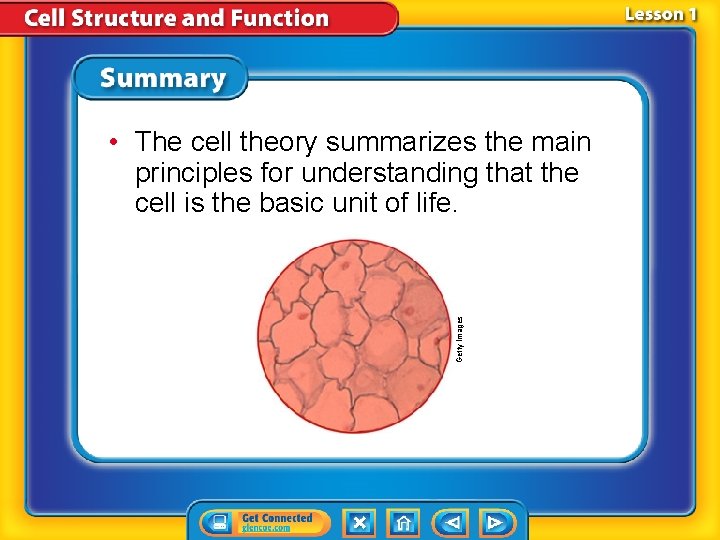
Getty Images • The cell theory summarizes the main principles for understanding that the cell is the basic unit of life.
• Water is the main ingredient in every cell.
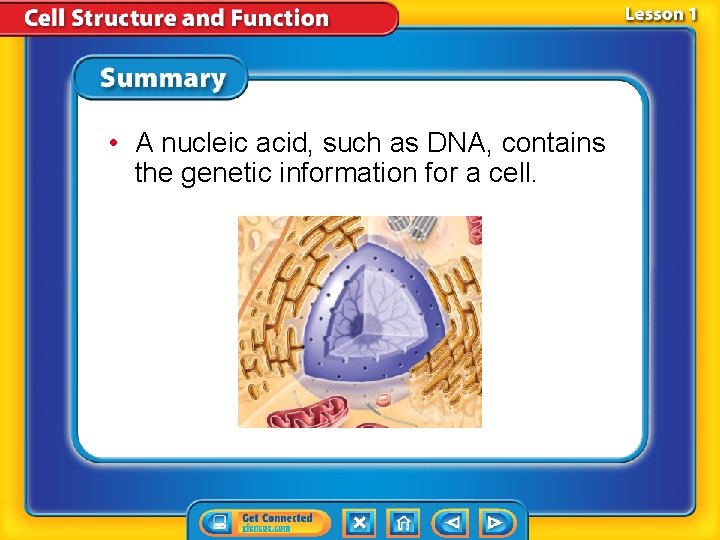
• A nucleic acid, such as DNA, contains the genetic information for a cell.
The Cell • cell membrane • organelle • cell wall • nucleus • cytoplasm • chloroplast • cytoskeleton
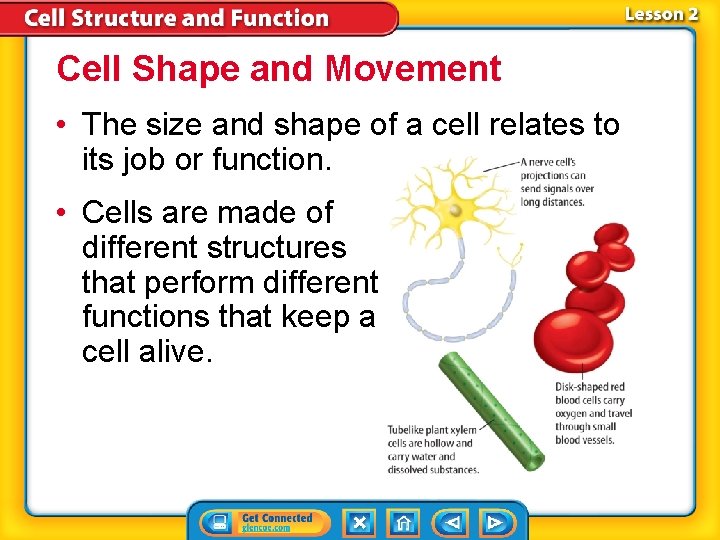
Cell Shape and Movement • The size and shape of a cell relates to its job or function. • Cells are made of different structures that perform different functions that keep a cell alive.
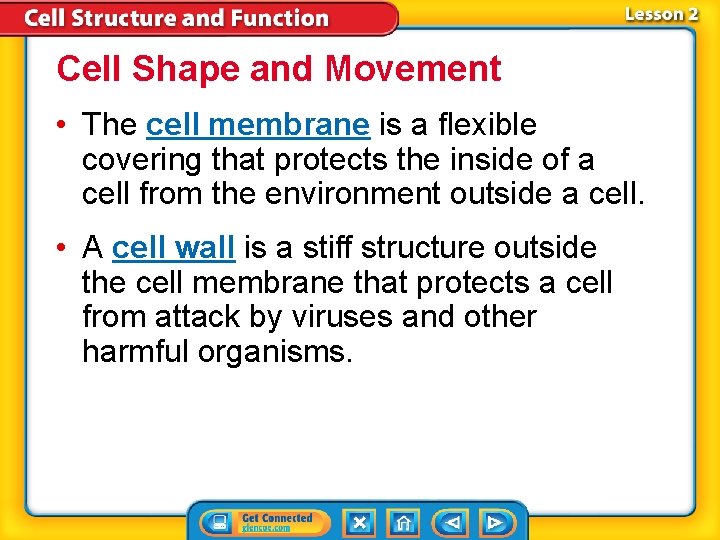
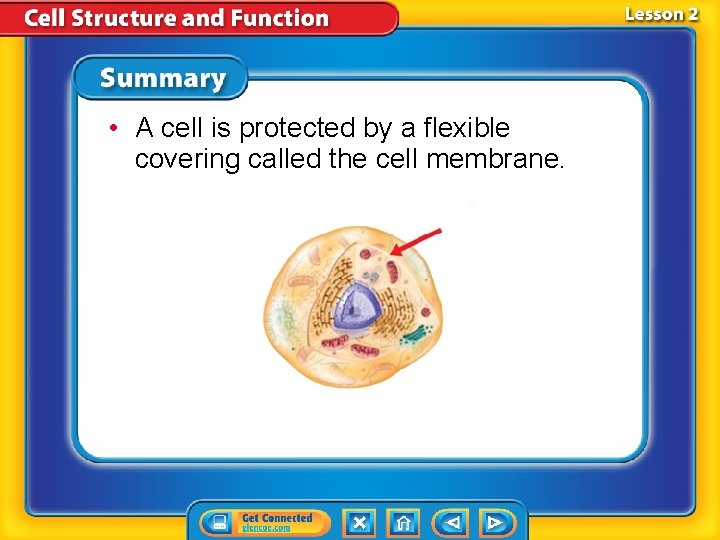
Cell Shape and Movement • The cell membrane is a flexible covering that protects the inside of a cell from the environment outside a cell. • A cell wall is a stiff structure outside the cell membrane that protects a cell from attack by viruses and other harmful organisms.
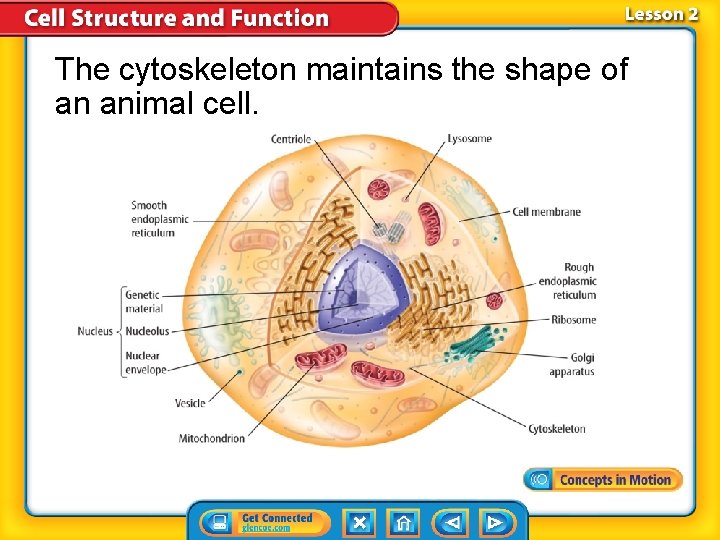
The cytoskeleton maintains the shape of an animal cell.
Cell Shape and Movement (cont. ) • Cell appendages, like flagella and cilia, are often used for movement. • The cytoskeleton is a network of threadlike proteins that are joined together.
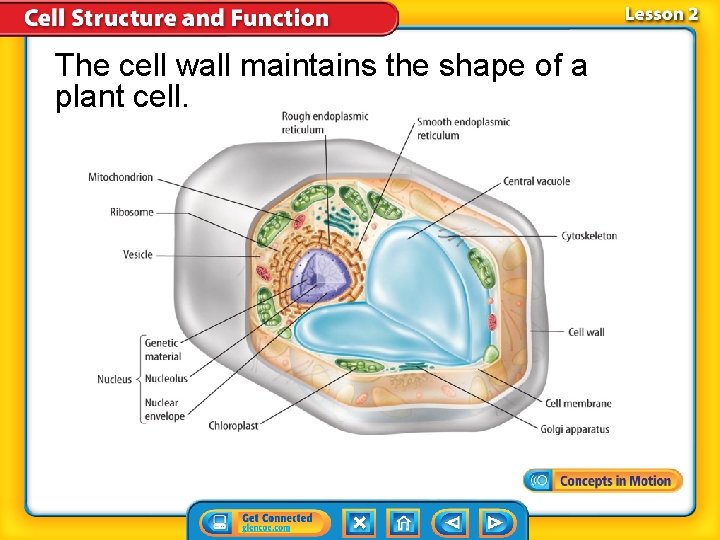
The cell wall maintains the shape of a plant cell.
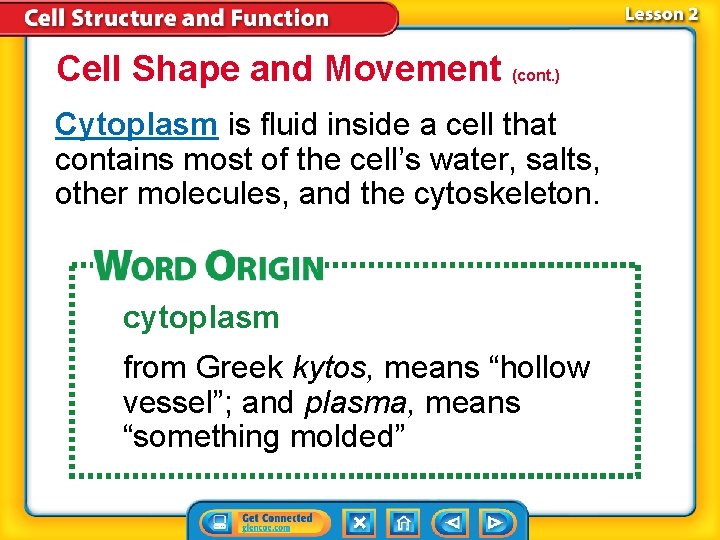
Cell Shape and Movement (cont. ) Cytoplasm is fluid inside a cell that contains most of the cell’s water, salts, other molecules, and the cytoskeleton. cytoplasm from Greek kytos, means “hollow vessel”; and plasma, means “something molded”
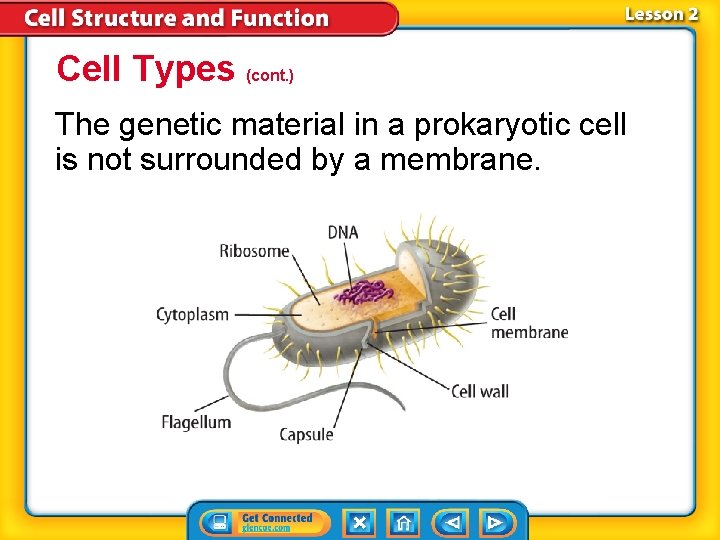
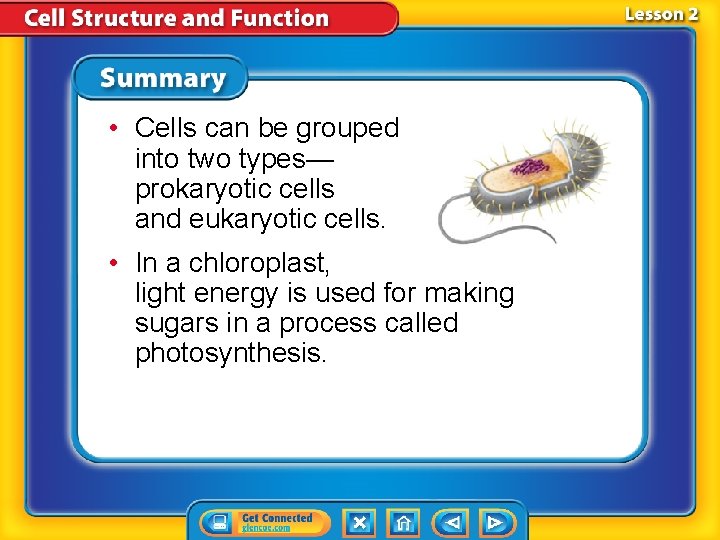
Cell Types • With more advanced microscopes, scientists discovered that all cells can be grouped into two types: • prokaryotic cells • eukaryotic cells • Most prokaryotic cells are unicellular organisms called prokaryotes.
Cell Types (cont. ) The genetic material in a prokaryotic cell is not surrounded by a membrane.
Cell Types (cont. ) • Plants, animals, fungi, and protists are all made of eukaryotic cells and are called eukaryotes. • In eukaryotic cells, the genetic material is surrounded by a membrane.
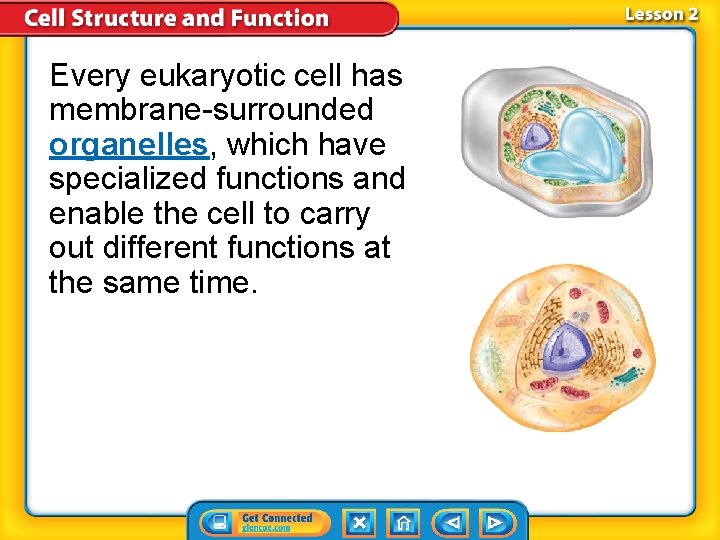
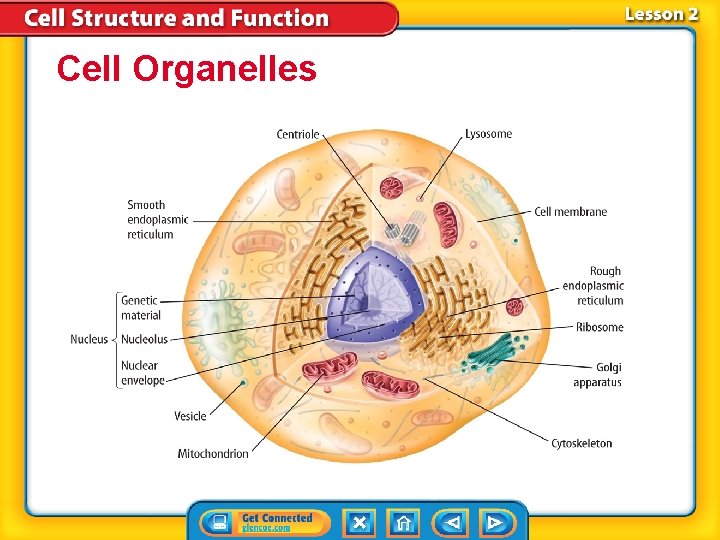
Every eukaryotic cell has membrane-surrounded organelles, which have specialized functions and enable the cell to carry out different functions at the same time.
Cell Types (cont. ) How are prokaryotic cells and eukaryotic cells similar, and how are they different?
Nucleus • Organelles enable cells to carry out different functions at the same time. • The nucleus is the part of a eukaryotic cell that directs cell activities and contains genetic information stored in DNA.
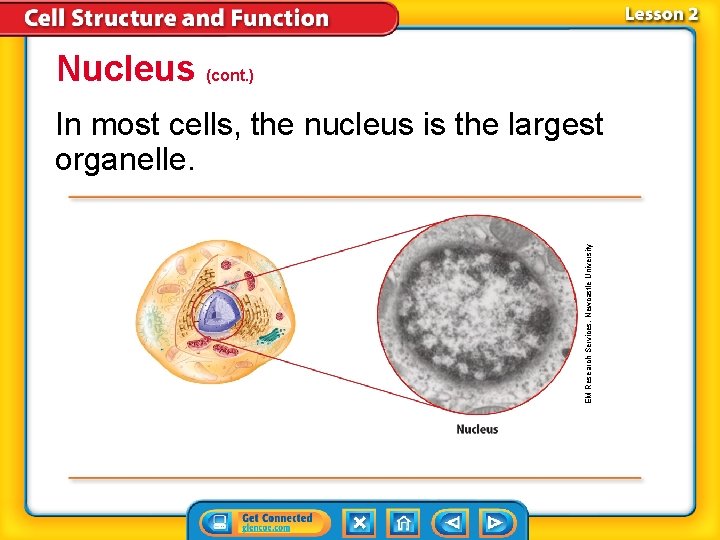
Nucleus (cont. ) EM Research Services, Newcastle University In most cells, the nucleus is the largest organelle.
Nucleus (cont. ) • DNA in the nucleus is organized into structures called chromosomes. • The nucleolus is also contained in the nucleus and makes ribosomes, organelles involved in the production of proteins. • The nuclear envelope is a porous, twomembrane structure that surrounds the nucleus.
Nucleus (cont. ) envelope Science Use an outer covering Common Use a flat paper container for a letter
Manufacturing Molecules • Ribosomes are in a cell’s cytoplasm and make proteins. • Ribosomes can be attached to a weblike organelle called the endoplasmic reticulum, or ER. • ER with ribosomes on its surface is called rough ER and is the site of protein production.
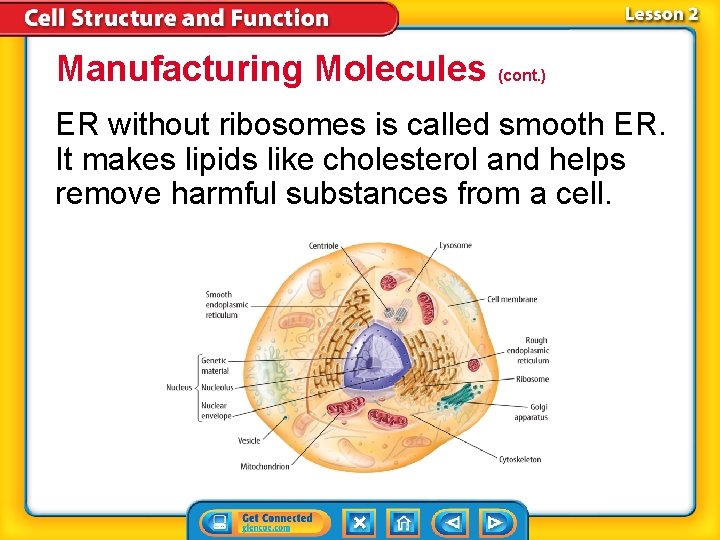
Manufacturing Molecules (cont. ) ER without ribosomes is called smooth ER. It makes lipids like cholesterol and helps remove harmful substances from a cell.
Processing Energy • Most eukaryotic cells contain mitochondria, where energy-releasing reactions occur. • Chloroplasts are membrane-bound organelles that use light energy and make food—a sugar called glucose— from water and carbon dioxide through the process of photosynthesis.
Processing, Storing, and Transporting Molecules • The Golgi apparatus prepares proteins for their specific functions and packages the proteins into vesicles. • Vesicles are organelles that transport substances from one area of a cell to another area of a cell. • Vacuoles—organelles found in some cells—store food, water, and waste material.
Cell Organelles
Cell Organelles (cont. ) What is the function of the Golgi apparatus?
• A cell is protected by a flexible covering called the cell membrane.
• Cells can be grouped into two types— prokaryotic cells and eukaryotic cells. • In a chloroplast, light energy is used for making sugars in a process called photosynthesis.
Moving Cellular Material • How do materials enter and leave cells? • How does cell size affect the transport of materials?
Moving Cellular Material • passive transport • active transport • diffusion • endocytosis • osmosis • exocytosis • facilitated diffusion
Passive Transport • Passive transport is the movement of substances through a cell membrane without using the cell’s energy. • Small molecules, such as oxygen and carbon dioxide, pass through membranes via passive transport. • Passive transport depends on the amount of substance on each side of a membrane.
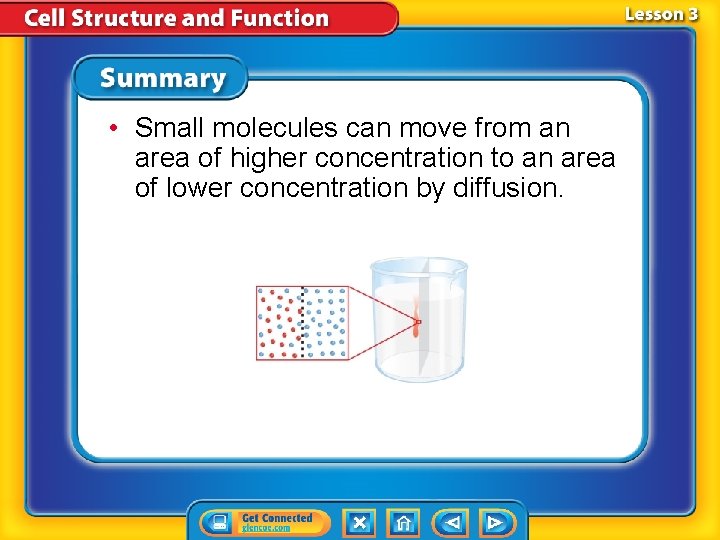
Diffusion is the movement of substances from an area of higher concentration to an area of lower concentration. diffusion from Latin diffusionem, means “scatter, pour out”
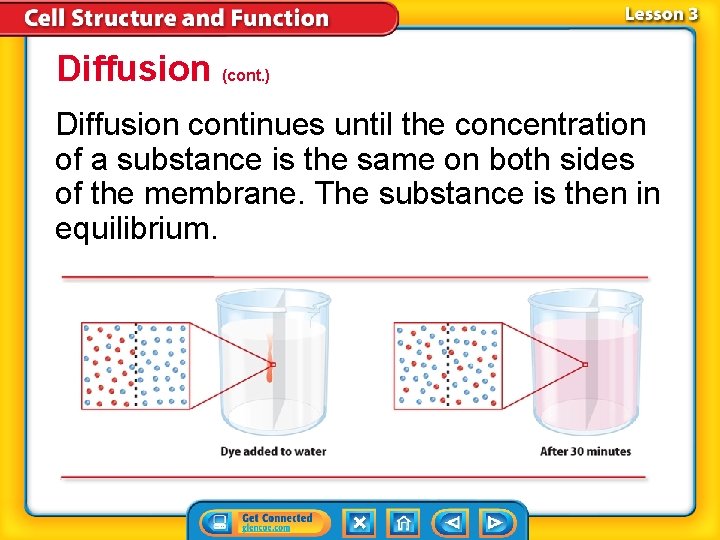
Diffusion (cont. ) Diffusion continues until the concentration of a substance is the same on both sides of the membrane. The substance is then in equilibrium.
Osmosis—The Diffusion of Water • Osmosis is the diffusion of water molecules only through a membrane. • Semipermeable cell membranes allow water to pass through them until equilibrium occurs.
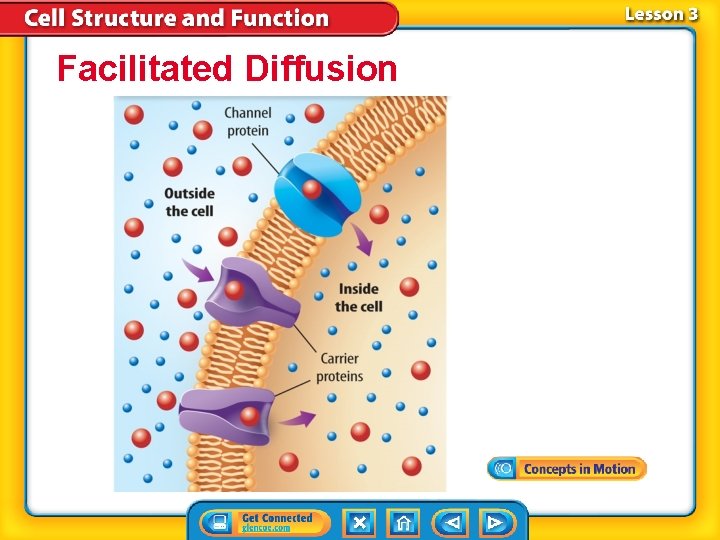
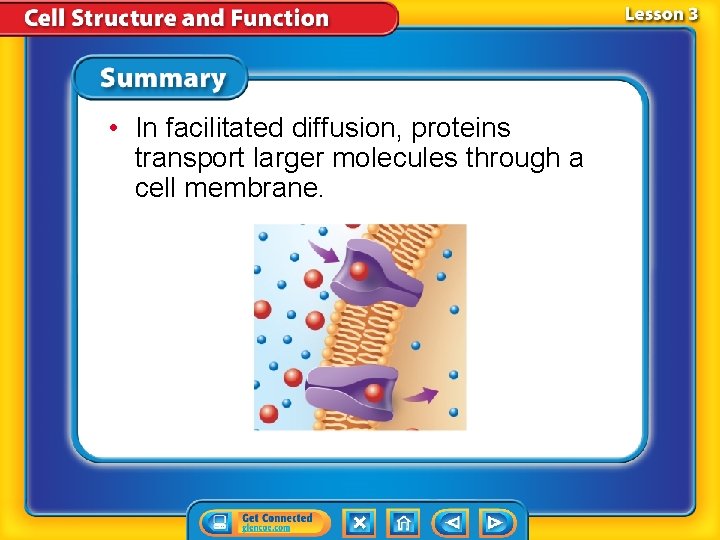
Facilitated Diffusion • Facilitated diffusion occurs when molecules pass through a cell membrane using special proteins called transport proteins. • Carrier proteins are transport proteins that carry large molecules through the cell membrane. • Channel proteins are transport proteins that form pores through the cell membrane.
Facilitated Diffusion
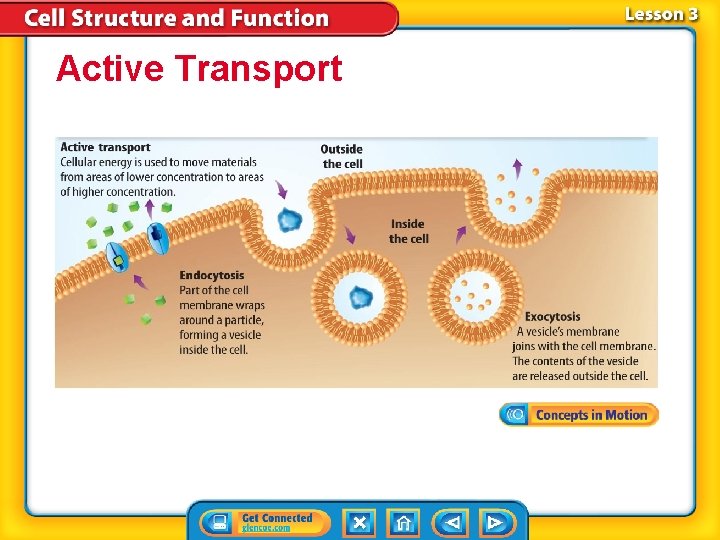
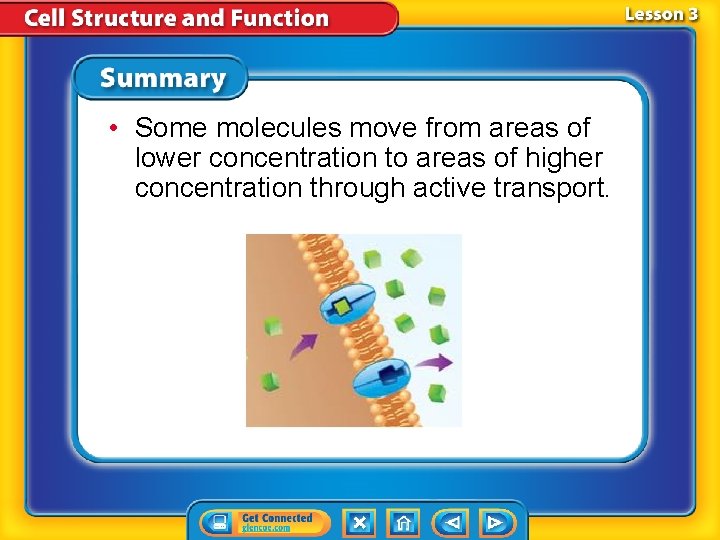
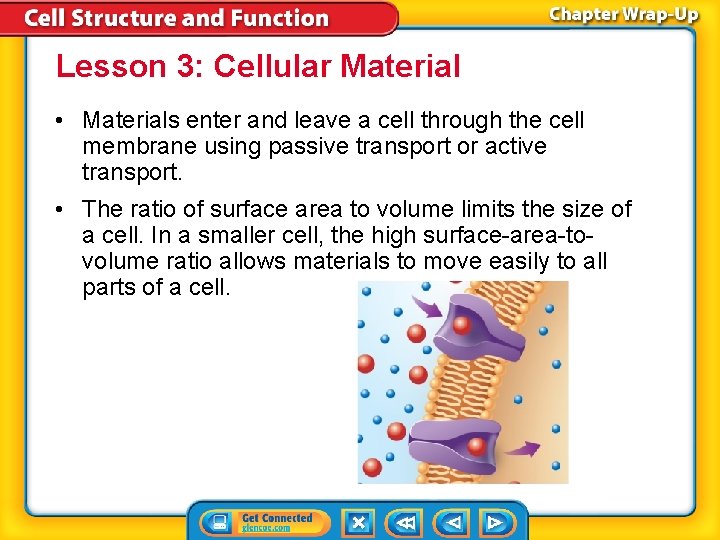
Active Transport • Active transport is the movement of substances through a cell membrane only by using the cell’s energy. • Substances moving by active transport can move from areas of lower concentration to areas of higher concentration. • Cells can take in needed nutrients from the environment through carrier proteins by using active transport.
Active Transport (cont. ) • Endocytosis is the process during which a cell takes in a substance by surrounding it with a cell membrane. • Exocytosis is the process during which a cell’s vesicles release their contents outside the cell.
Active Transport
Active Transport (cont. ) How do materials enter and leave cells?
Cell Size and Transport • The area of the cell membrane must be large compared to its volume so that substances can move into and out of the cell. • The area of the cell membrane is the cell’s surface area. • The volume is the amount of space inside the cell.
Cell Size and Transport (cont. ) How does cell size affect the transport of materials?
• Small molecules can move from an area of higher concentration to an area of lower concentration by diffusion.
• In facilitated diffusion, proteins transport larger molecules through a cell membrane.
• Some molecules move from areas of lower concentration to areas of higher concentration through active transport.
Cells and Energy • How does a cell obtain energy? • How do some cells make food molecules?
Cells and Energy • cellular respiration • glycolysis • fermentation • photosynthesis
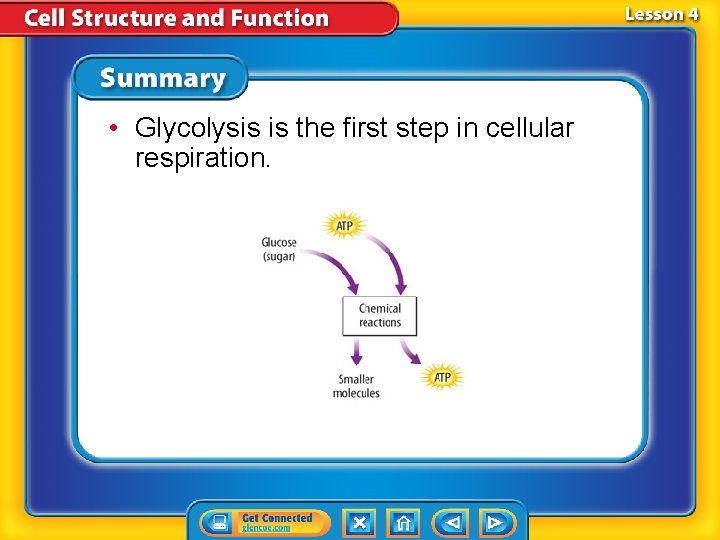
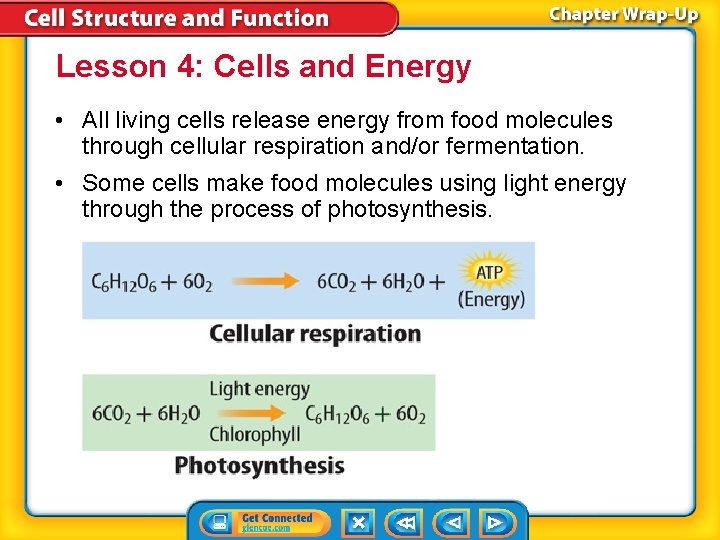
Cellular Respiration • Cellular respiration is a series of chemical reactions that convert the energy in food molecules into a usable form of energy called ATP. • Glycolysis, the first step in cellular respiration, is a process by which glucose is broken down into smaller molecules. It occurs in the cytoplasm.
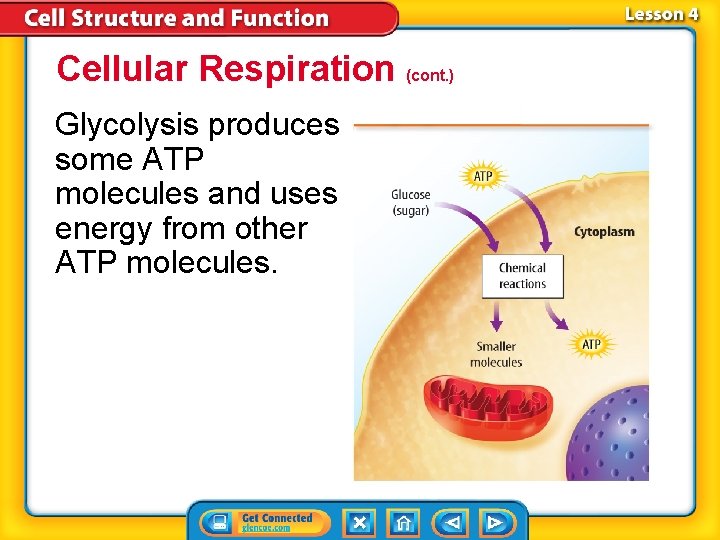
Cellular Respiration (cont. ) Glycolysis produces some ATP molecules and uses energy from other ATP molecules.
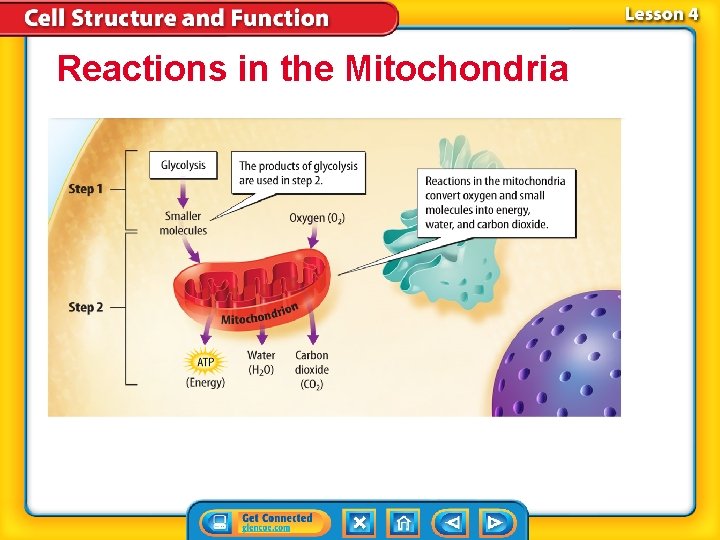
Cellular Respiration (cont. ) • The second step of cellular respiration requires oxygen and occurs in the mitochondria of eukaryotic cells. • The smaller molecules made from glucose during glycolysis are broken down. • Large amounts of ATP—usable energy —are produced. Cells use ATP to power all cellular processes.
Reactions in the Mitochondria
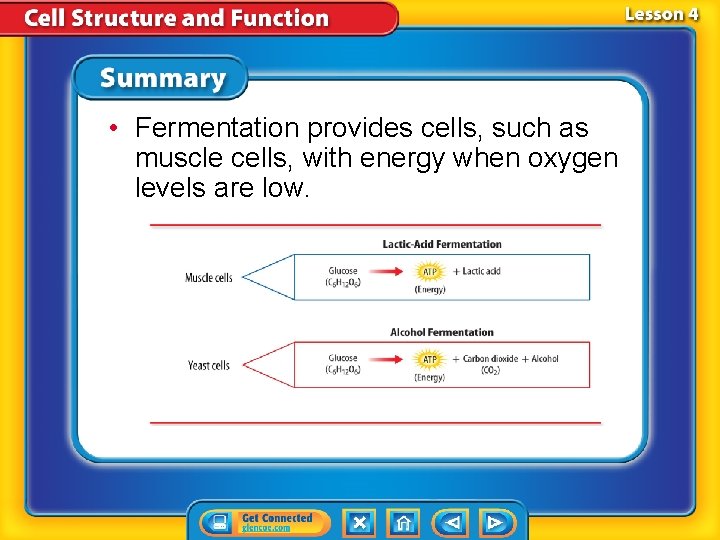
Fermentation • Fermentation is a reaction that eukaryotic and prokaryotic cells use to obtain energy from food when oxygen levels are low. • Fermentation occurs in a cell’s cytoplasm, not in mitochondria.
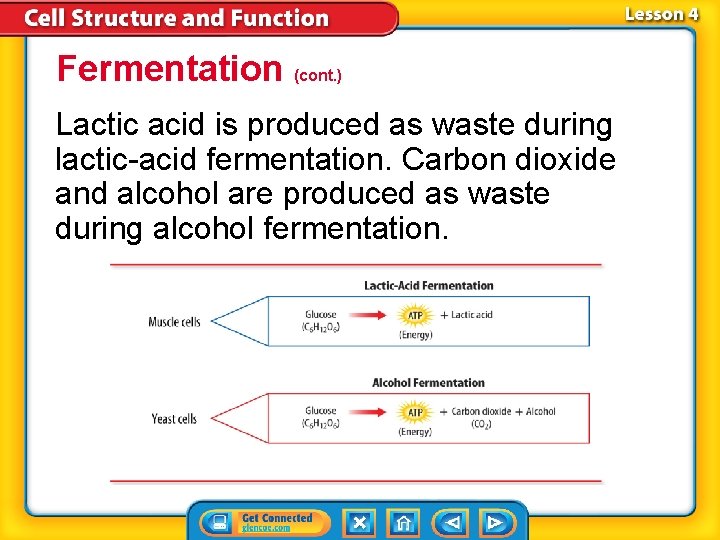
Fermentation (cont. ) Lactic acid is produced as waste during lactic-acid fermentation. Carbon dioxide and alcohol are produced as waste during alcohol fermentation.
Fermentation (cont. ) How does a cell obtain energy?
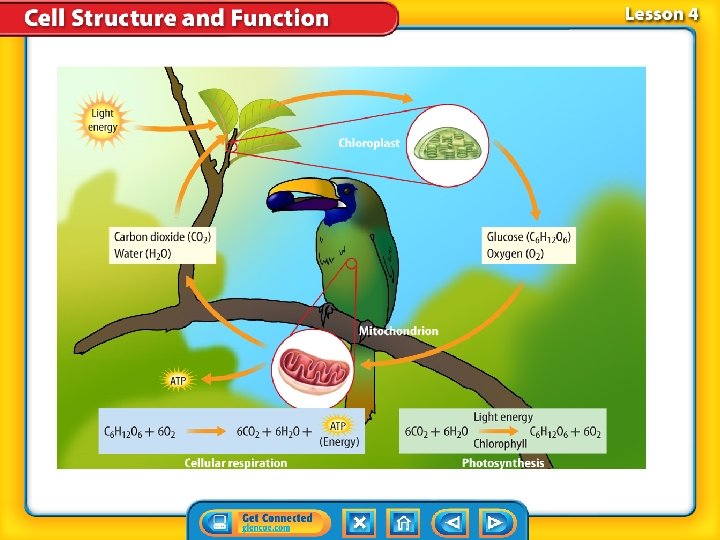
Photosynthesis is a series of chemical reactions that convert light energy, water, and CO 2 into the food-energy molecule glucose and give off oxygen. photosynthesis from Greek photo, means “light”; and synthesis, means “composition”
Photosynthesis (cont. ) • The chemical reactions of photosynthesis are powered by light energy. • In the chloroplasts of plants, pigments such as chlorophyll absorb light energy • Chlorophyll absorbs all colors except green light, which is reflected as the green color in leaves.
Photosynthesis (cont. ) How do some cells make food molecules?
Photosynthesis (cont. ) • When an organism eats plant material it takes in food energy from the plant’s glucose. • An organism’s cells use the oxygen released during photosynthesis and convert the food energy into usable energy through cellular respiration.
• Glycolysis is the first step in cellular respiration.
• Fermentation provides cells, such as muscle cells, with energy when oxygen levels are low.
• Light energy powers the chemical reactions of photosynthesis.
A cell is made up of various structures that are essential for growth, reproduction, and homeostasis. They provide support and movement, process energy, and transport materials.
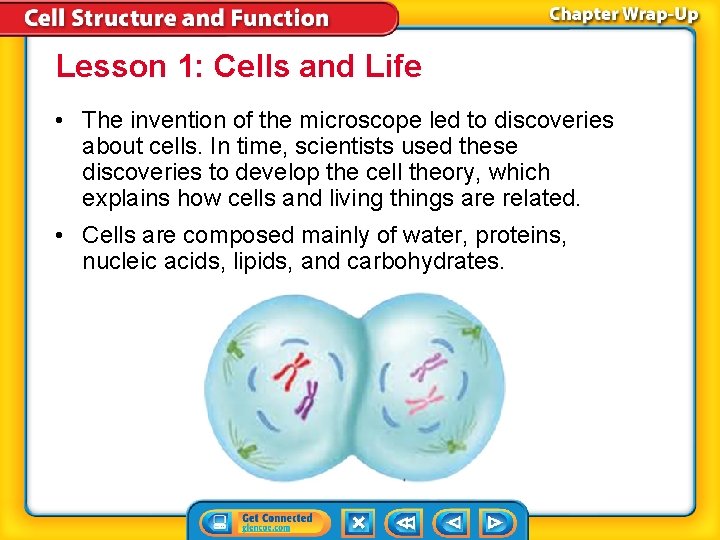
Lesson 1: Cells and Life • The invention of the microscope led to discoveries about cells. In time, scientists used these discoveries to develop the cell theory, which explains how cells and living things are related. • Cells are composed mainly of water, proteins, nucleic acids, lipids, and carbohydrates.
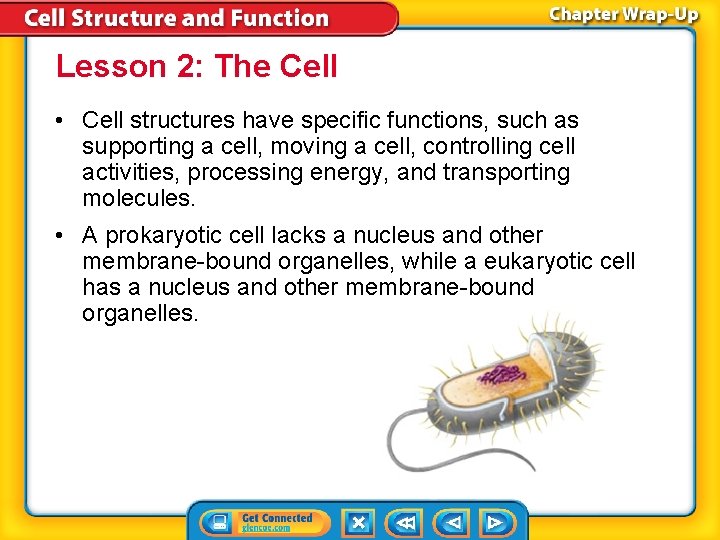
Lesson 2: The Cell • Cell structures have specific functions, such as supporting a cell, moving a cell, controlling cell activities, processing energy, and transporting molecules. • A prokaryotic cell lacks a nucleus and other membrane-bound organelles, while a eukaryotic cell has a nucleus and other membrane-bound organelles.
Lesson 3: Cellular Material • Materials enter and leave a cell through the cell membrane using passive transport or active transport. • The ratio of surface area to volume limits the size of a cell. In a smaller cell, the high surface-area-tovolume ratio allows materials to move easily to all parts of a cell.
Lesson 4: Cells and Energy • All living cells release energy from food molecules through cellular respiration and/or fermentation. • Some cells make food molecules using light energy through the process of photosynthesis.