
Chapter II Arabization History Part 3 Modern history
Chapter II: Arabization History (Part 3: Modern history of Arabization)
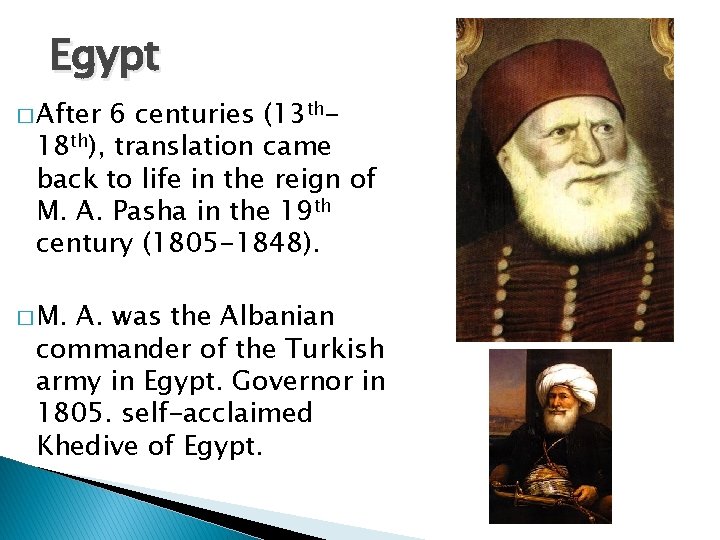
Egypt � After 6 centuries (13 th 18 th), translation came back to life in the reign of M. A. Pasha in the 19 th century (1805 -1848). � M. A. was the Albanian commander of the Turkish army in Egypt. Governor in 1805. self-acclaimed Khedive of Egypt.

Had great ambitions to make his country and his army strong and developed. Planned well for this. Revived interest in Arabic, declared it the official language of Egypt. Launched a campaign of Arabization. Started by medical sciences.

� Established the Medical School at Abu Zaabal. � The first to start Arabizing and translating in Egypt were Dr. Clot, the French Chair of Abu Zaabal School, and Dr. Perron, another teacher in the same school. Both wrote medical and science books themselves and translated them accurately. � Egyptian Dr. Clot translators were appointed to keep company with those foreign teachers and report on the translations these teachers undertook. � These translations were revised by specialists from Al-Azhar university such as: ﺭﻓﺎﻋﺔ ﺍﻟﻄﻬﻄﺎﻭﻱ � Both translators and revisers used to meet an discuss translations.

� 120 students were sent to France to study modern sciences and arts. � Came back and embarked on translation projects. � Translated books in different fields. � Arabized some specialized dictionaries. ﺇﺑﺮﺍﻫﻴﻢ ﺍﻟﻨﺒﺮﺍﻭﻱ �. . ، ﺇﺑﺮﺍﻫﻴﻢ ﺍﻟﻨﺒﺮﺍﻭﻱ ، ﻣﺤﻤﺪ ﻋﺒﺪ ﺍﻟﻔﺘﺎﺡ ، ﻋﻠﻲ ﻫﻴﺒﺔ � A group of Syrian translators contributed to the Arabization movement in Egypt. �. . . ، ﻳﻮﺳﻒ ﻓﺮﻋﻮﻥ ، ﺟﻮﺭﺝ ﻓﻴﺪﺍﻝ ، ﻳﻮﺣﻨﺎ ﻋﻨﺤﻮﺭﻱ ، ﺃﻨﻄﻮﺍﻥ ﺯﺧﻮﺭ � Translation movement in Egypt, which lasted for 70 years, came to an end with the death of M. A. Pasha.
� Inventory: 66 books on military sciences, 76 on medical sciences, and 59 on other sciences, including dictionaries. � Tens of thousands of terms were Arabized. � Husni Sabh’s assessment of these efforts: � 1. they were pioneers � 2. applied the modern standards of translating medical terms � 3. revived Arabic medical terms when appropriate. � 4. worked hard to create new terms � 5. as a last resort they used borrowing.

Syria � Arabization started there in 1919 with the establishment of the Arabic Medical School. � In 1919 also, the Arabic Institute of Medicine declared that one of their main aims was to Arabize and author books in various fields of knowledge. � Syria ﻣﺮﺷﺪ ﺧﺎﻃﺮ was occupied by the French in 1920, yet they still taught medicine in Arabic. � In 1946, they gained independence, and since then, the Institute, later called Language Academy ﺣﺴﻨﻲ ﺳﺒﺦ undertook the task of Arabizing sciences. � Translators were members of the medical terminology committee in the Institute: �. . . ، ﺣﺴﻨﻲ ﺳﺒﺢ ، ﻣﺮﺷﺪ ﺧﺎﻃﺮ � Completed a number of dictionaries.
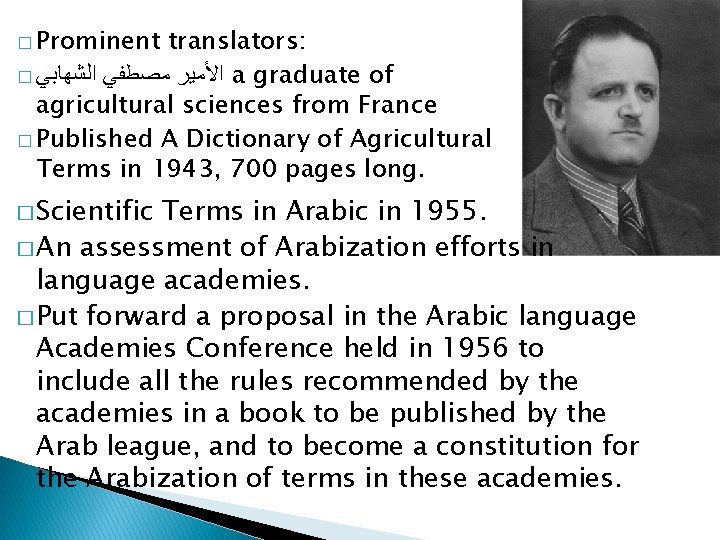
� Prominent translators: � ﺍﻷﻤﻴﺮ ﻣﺼﻄﻔﻲ ﺍﻟﺸﻬﺎﺑﻲ a graduate of agricultural sciences from France � Published A Dictionary of Agricultural Terms in 1943, 700 pages long. � Scientific Terms in Arabic in 1955. � An assessment of Arabization efforts in language academies. � Put forward a proposal in the Arabic language Academies Conference held in 1956 to include all the rules recommended by the academies in a book to be published by the Arab league, and to become a constitution for the Arabization of terms in these academies.
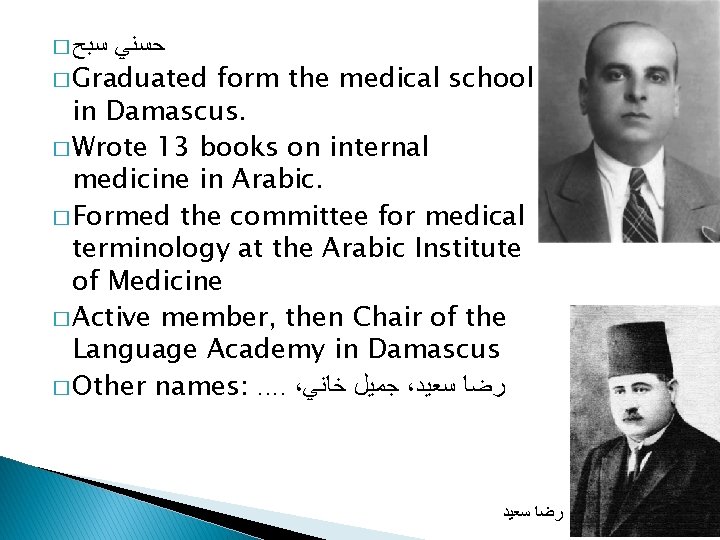
� ﺳﺒﺢ ﺣﺴﻨﻲ � Graduated form the medical school in Damascus. � Wrote 13 books on internal medicine in Arabic. � Formed the committee for medical terminology at the Arabic Institute of Medicine � Active member, then Chair of the Language Academy in Damascus � Other names: . . ، ﺟﻤﻴﻞ ﺧﺎﻧﻲ ، ﺭﺿﺎ ﺳﻌﻴﺪ


Lebanon � Arabization started in Lebanon as early as 1773 when the National School and the Maronite School opened and sciences were taught in Arabic. � Then 2 scientific societies were founded to promote the use of Arabic in sciences and literature. � Important figures who contributed in these societies: ﻳﻮﺳﻒ ﺍﻷﺴﻴﺮ ، ﺑﻄﺮﺱ ﺍﻟﺒﺴﺘﺎﻧﻲ ، ﻧﺎﺻﻴﻒ ﺍﻟﻴﺎﺯﺟﻲ � In 1866 a college was established by American preachers, followed by other similar schools. Arabic was used as the medium of instruction even in medical departments until 1883. ﻧﺎﺻﻴﻒ ﺍﻟﻴﺎﺯﺟﻲ
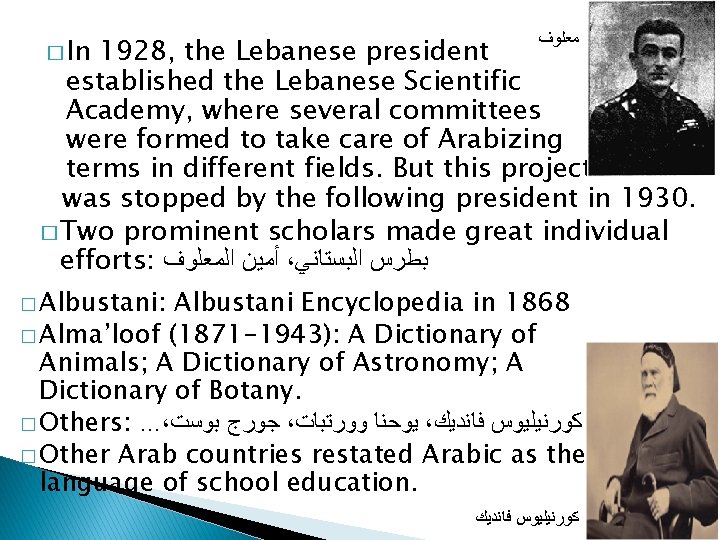
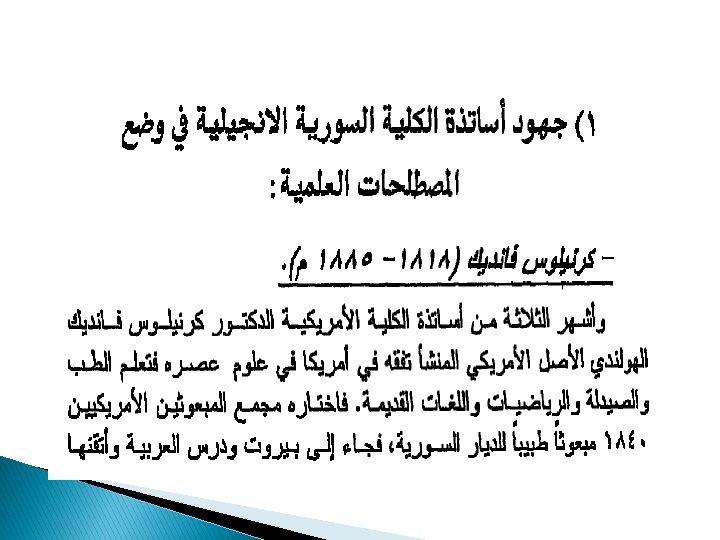
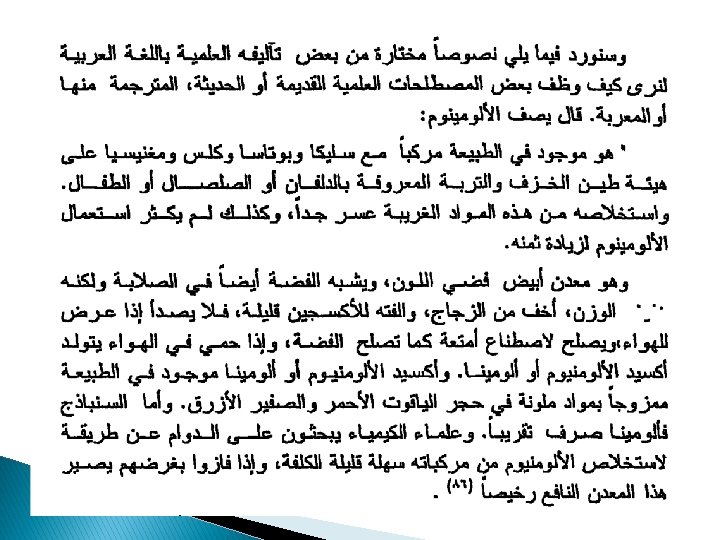
� In ﻣﻌﻠﻮﻑ 1928, the Lebanese president established the Lebanese Scientific Academy, where several committees were formed to take care of Arabizing terms in different fields. But this project was stopped by the following president in 1930. � Two prominent scholars made great individual efforts: ﺃﻤﻴﻦ ﺍﻟﻤﻌﻠﻮﻑ ، ﺑﻄﺮﺱ ﺍﻟﺒﺴﺘﺎﻧﻲ � Albustani: Albustani Encyclopedia in 1868 � Alma’loof (1871 -1943): A Dictionary of Animals; A Dictionary of Astronomy; A Dictionary of Botany. � Others: . . . ، ﺟﻮﺭﺝ ﺑﻮﺳﺖ ، ﻳﻮﺣﻨﺎ ﻭﻭﺭﺗﺒﺎﺕ ، ﻛﻮﺭﻧﻴﻠﻴﻮﺱ ﻓﺎﻧﺪﻳﻚ � Other Arab countries restated Arabic as the language of school education. ﻛﻮﺭﻧﻴﻠﻴﻮﺱ ﻓﺎﻧﺪﻳﻚ
Current situation of Arabization � Language Academies? Check websites. � Arab Organization for Translation (1999). Have translated 283 books so far. � Kalima (2007). Have translated around 900 books (100 yearly). � King Abdullah International Award for Translation

Summary and important lessons � Importance of political decision and decision makers. � Effect of political situation on translation activities � importance of institutional work � Importance of translator’s skills � Importance of translation in starting a civilization � Importance of translation in enriching languages.
- Slides: 19