
CHAPTER FOURTEEN Consumers and the Diffusion of Innovations

- Slides: 34
CHAPTER FOURTEEN Consumers and the Diffusion of Innovations
Learning Objectives 1. To Understand the Twofold Process of the Spread and Acceptance of Innovative Products and Services Within a Social System. 2. To Understand How Innovative Products and Services Spread (or Fail to Spread) Within a Social System. 3. To Understand How Individual Consumers Decide Whether or Not to Try and Adopt a Particularly Innovative Product or Service. 4. To Understand the Personal Characteristics of Innovators. Copyright 2010 Pearson Education, Inc. Publishing as Prentice Hall Chapter Fourteen Slide 2
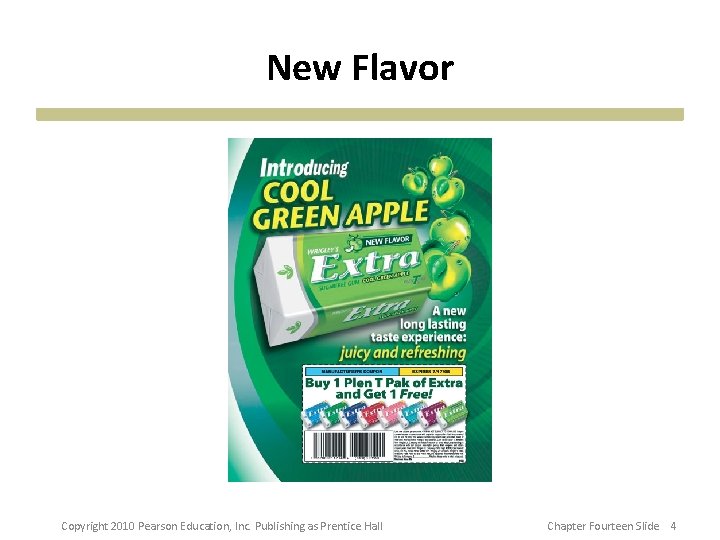
What Is Shown or Stated in This Ad That Is Designed to Attract Consumers to This New Product? Copyright 2010 Pearson Education, Inc. Publishing as Prentice Hall Chapter Fourteen Slide 3
New Flavor Copyright 2010 Pearson Education, Inc. Publishing as Prentice Hall Chapter Fourteen Slide 4
Diffusions of Innovation • How are new products and services accepted? Copyright 2010 Pearson Education, Inc. Publishing as Prentice Hall Chapter Fourteen Slide 5
Diffusion Process The process by which the acceptance of an innovation is spread by communication to members of a social system over a period of time. Copyright 2010 Pearson Education, Inc. Publishing as Prentice Hall Chapter Fourteen Slide 6
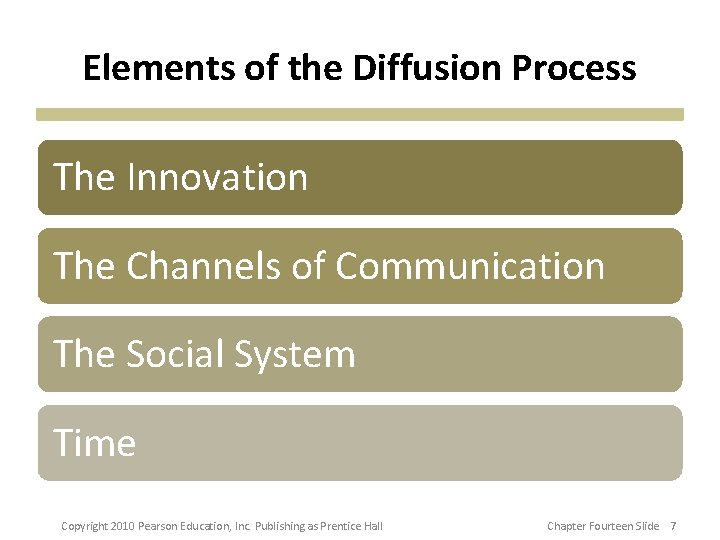
Elements of the Diffusion Process The Innovation The Channels of Communication The Social System Time Copyright 2010 Pearson Education, Inc. Publishing as Prentice Hall Chapter Fourteen Slide 7
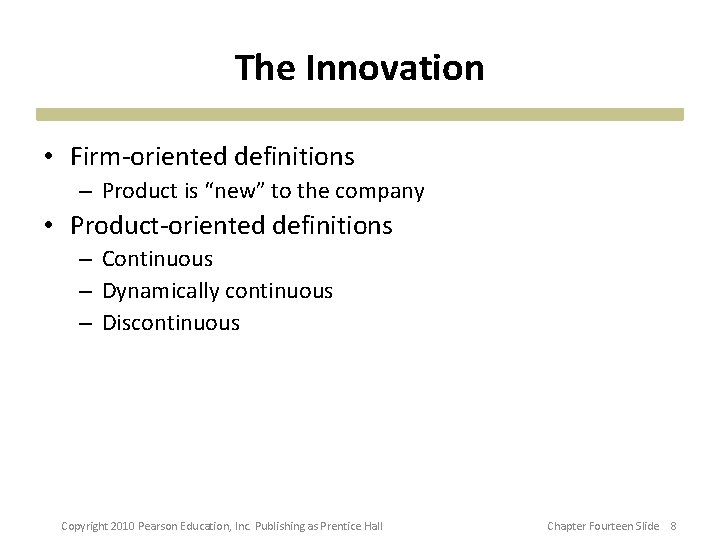
The Innovation • Firm-oriented definitions – Product is “new” to the company • Product-oriented definitions – Continuous – Dynamically continuous – Discontinuous Copyright 2010 Pearson Education, Inc. Publishing as Prentice Hall Chapter Fourteen Slide 8
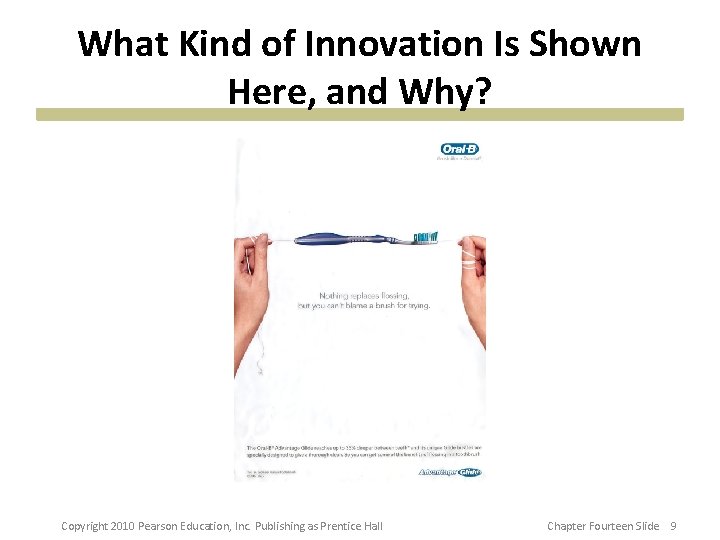
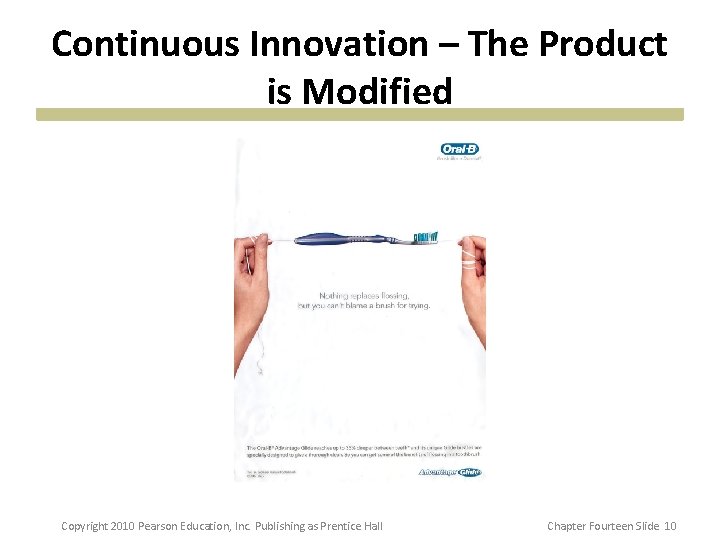
What Kind of Innovation Is Shown Here, and Why? Copyright 2010 Pearson Education, Inc. Publishing as Prentice Hall Chapter Fourteen Slide 9
Continuous Innovation – The Product is Modified Copyright 2010 Pearson Education, Inc. Publishing as Prentice Hall Chapter Fourteen Slide 10
The Innovation • Market-oriented definitions – Based on consumer exposure • Consumer-oriented definitions – Consumer judges it as “new” Copyright 2010 Pearson Education, Inc. Publishing as Prentice Hall Chapter Fourteen Slide 11
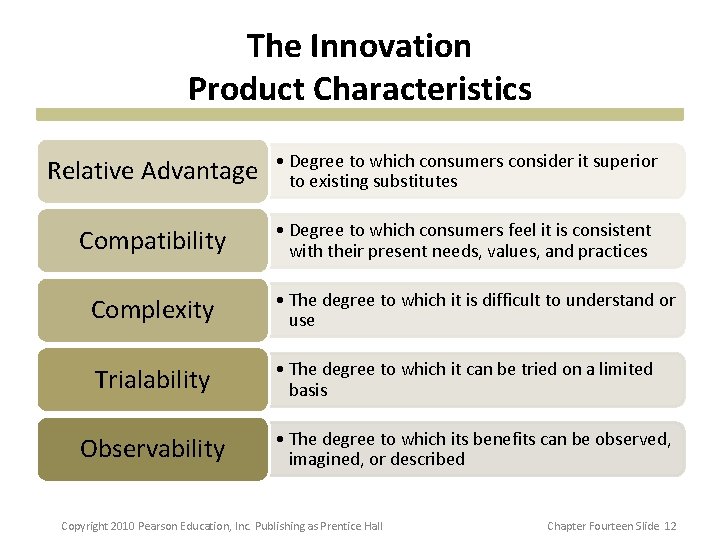
The Innovation Product Characteristics Relative Advantage • Degree to which consumers consider it superior to existing substitutes Compatibility • Degree to which consumers feel it is consistent with their present needs, values, and practices Complexity • The degree to which it is difficult to understand or use Trialability • The degree to which it can be tried on a limited basis Observability • The degree to which its benefits can be observed, imagined, or described Copyright 2010 Pearson Education, Inc. Publishing as Prentice Hall Chapter Fourteen Slide 12
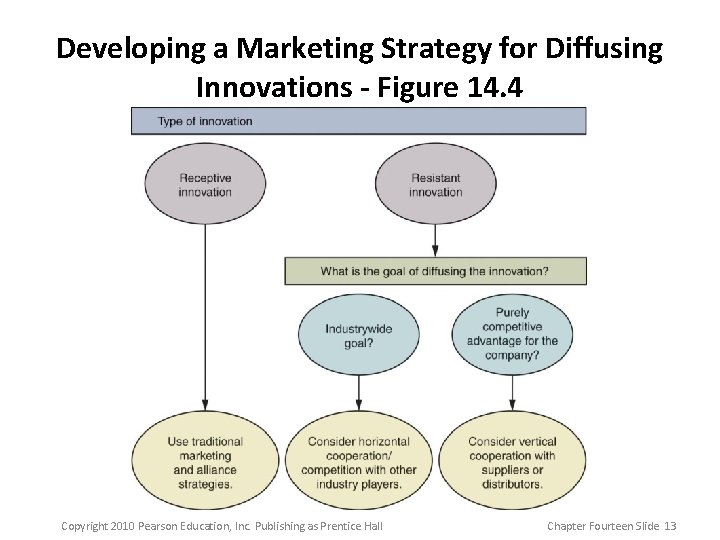
Developing a Marketing Strategy for Diffusing Innovations - Figure 14. 4 Copyright 2010 Pearson Education, Inc. Publishing as Prentice Hall Chapter Fourteen Slide 13
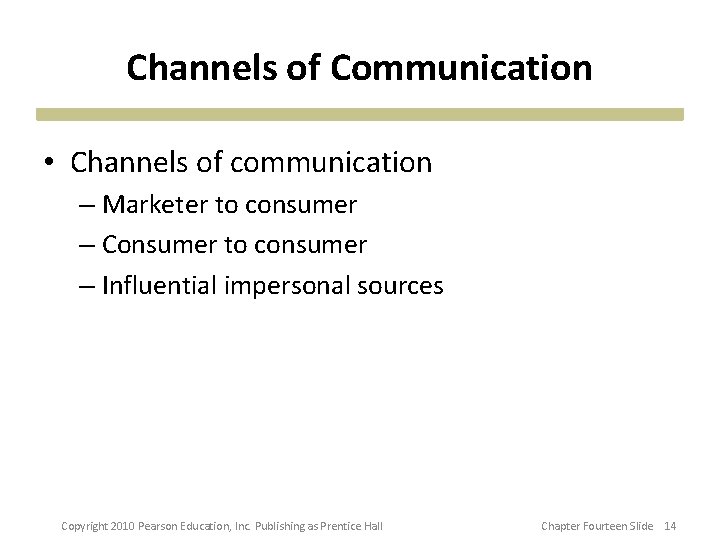
Channels of Communication • Channels of communication – Marketer to consumer – Consumer to consumer – Influential impersonal sources Copyright 2010 Pearson Education, Inc. Publishing as Prentice Hall Chapter Fourteen Slide 14
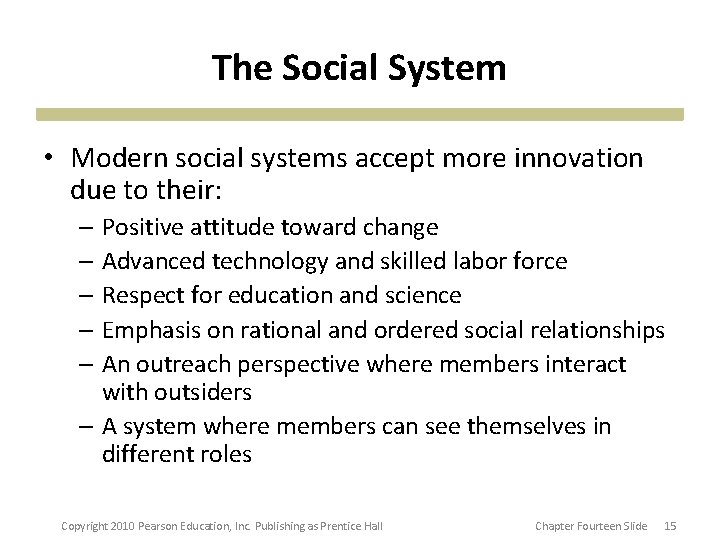
The Social System • Modern social systems accept more innovation due to their: – Positive attitude toward change – Advanced technology and skilled labor force – Respect for education and science – Emphasis on rational and ordered social relationships – An outreach perspective where members interact with outsiders – A system where members can see themselves in different roles Copyright 2010 Pearson Education, Inc. Publishing as Prentice Hall Chapter Fourteen Slide 15
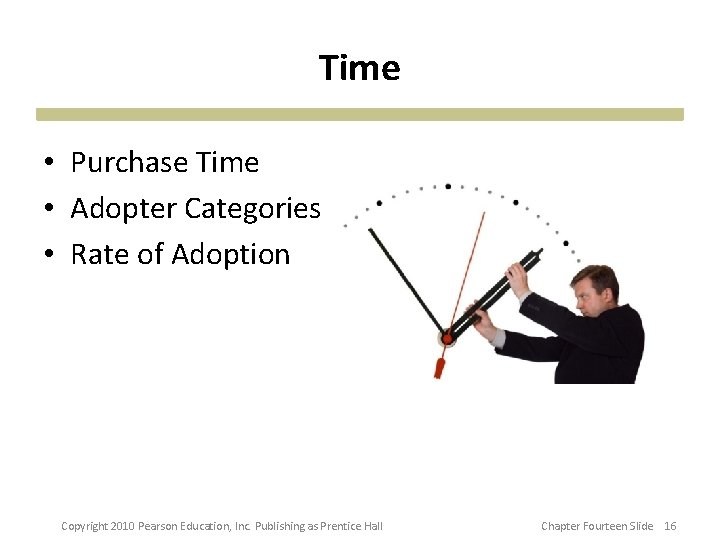
Time • Purchase Time • Adopter Categories • Rate of Adoption Copyright 2010 Pearson Education, Inc. Publishing as Prentice Hall Chapter Fourteen Slide 16
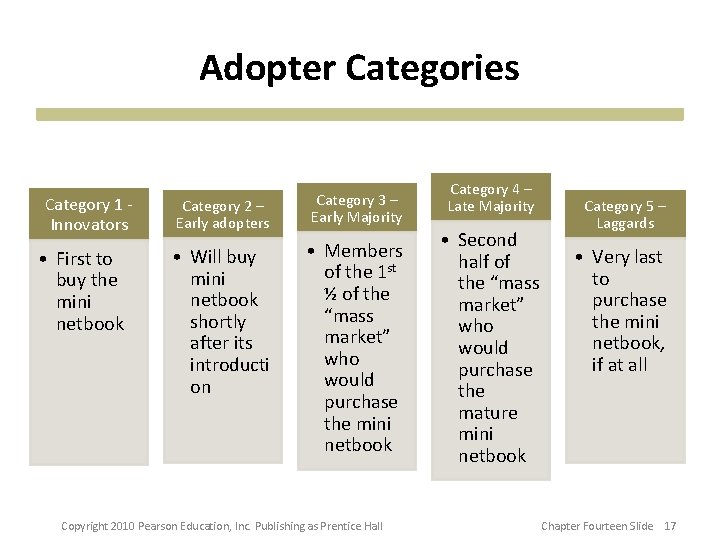
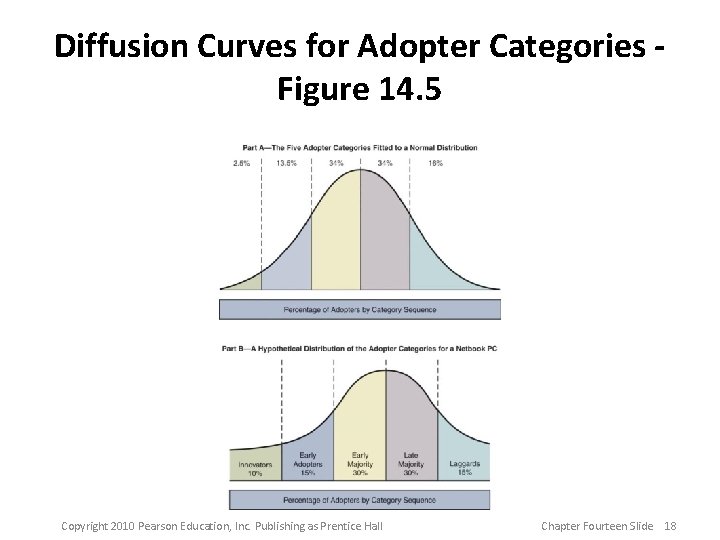
Adopter Categories Category 1 Innovators • First to buy the mini netbook Category 2 – Early adopters Category 3 – Early Majority • Will buy mini netbook shortly after its introducti on • Members of the 1 st ½ of the “mass market” who would purchase the mini netbook Copyright 2010 Pearson Education, Inc. Publishing as Prentice Hall Category 4 – Late Majority • Second half of the “mass market” who would purchase the mature mini netbook Category 5 – Laggards • Very last to purchase the mini netbook, if at all Chapter Fourteen Slide 17
Diffusion Curves for Adopter Categories Figure 14. 5 Copyright 2010 Pearson Education, Inc. Publishing as Prentice Hall Chapter Fourteen Slide 18
Discussion Question • Which adopter category are you? • Does it differ with different product categories? • How about your parents, what category are they? • Is age a factor in innovation behavior? Copyright 2010 Pearson Education, Inc. Publishing as Prentice Hall Chapter Fourteen Slide 19
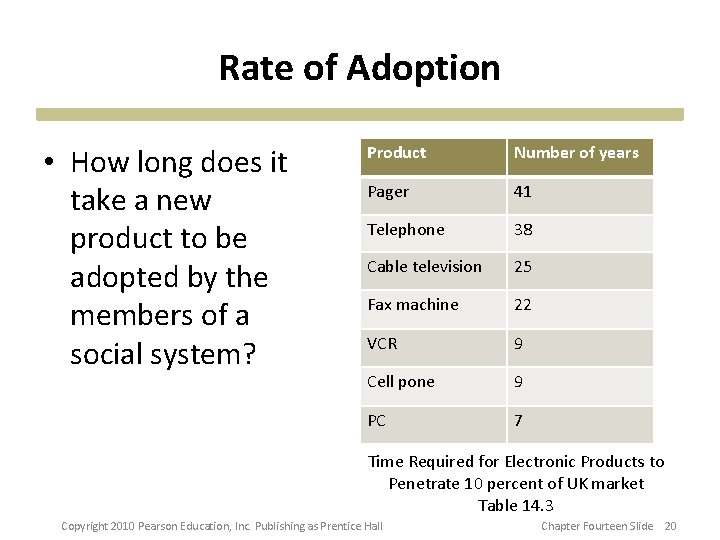
Rate of Adoption • How long does it take a new product to be adopted by the members of a social system? Product Number of years Pager 41 Telephone 38 Cable television 25 Fax machine 22 VCR 9 Cell pone 9 PC 7 Time Required for Electronic Products to Penetrate 10 percent of UK market Table 14. 3 Copyright 2010 Pearson Education, Inc. Publishing as Prentice Hall Chapter Fourteen Slide 20
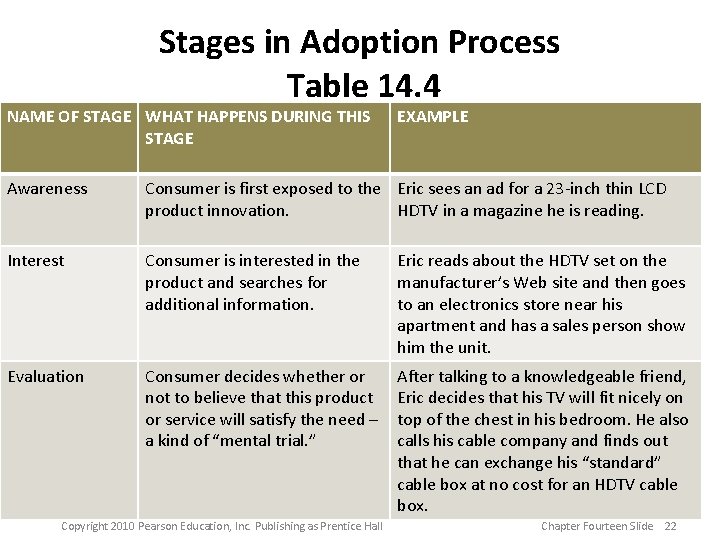
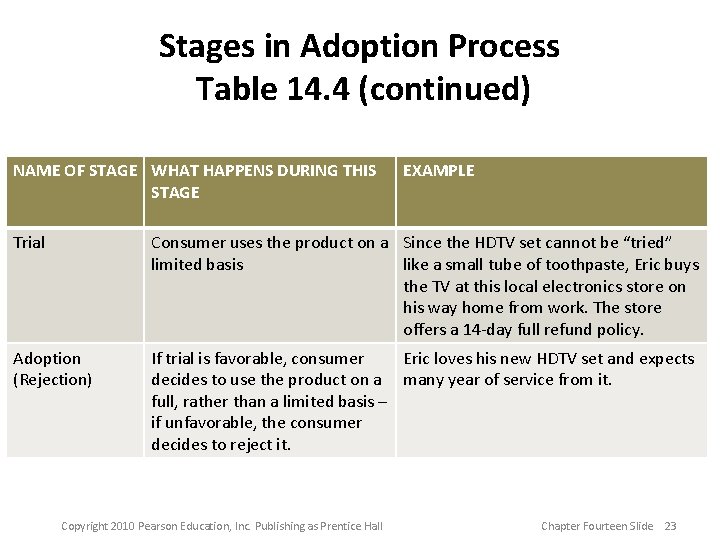
Adoption Process The stages through which an individual consumer passes in arriving at a decision to try (or not to try), to continue using (or discontinue using) a new product. Copyright 2010 Pearson Education, Inc. Publishing as Prentice Hall Chapter Fourteen Slide 21
Stages in Adoption Process Table 14. 4 NAME OF STAGE WHAT HAPPENS DURING THIS STAGE EXAMPLE Awareness Consumer is first exposed to the Eric sees an ad for a 23 -inch thin LCD product innovation. HDTV in a magazine he is reading. Interest Consumer is interested in the product and searches for additional information. Eric reads about the HDTV set on the manufacturer’s Web site and then goes to an electronics store near his apartment and has a sales person show him the unit. Evaluation Consumer decides whether or not to believe that this product or service will satisfy the need – a kind of “mental trial. ” After talking to a knowledgeable friend, Eric decides that his TV will fit nicely on top of the chest in his bedroom. He also calls his cable company and finds out that he can exchange his “standard” cable box at no cost for an HDTV cable box. Copyright 2010 Pearson Education, Inc. Publishing as Prentice Hall Chapter Fourteen Slide 22
Stages in Adoption Process Table 14. 4 (continued) NAME OF STAGE WHAT HAPPENS DURING THIS STAGE EXAMPLE Trial Consumer uses the product on a Since the HDTV set cannot be “tried” limited basis like a small tube of toothpaste, Eric buys the TV at this local electronics store on his way home from work. The store offers a 14 -day full refund policy. Adoption (Rejection) If trial is favorable, consumer Eric loves his new HDTV set and expects decides to use the product on a many year of service from it. full, rather than a limited basis – if unfavorable, the consumer decides to reject it. Copyright 2010 Pearson Education, Inc. Publishing as Prentice Hall Chapter Fourteen Slide 23
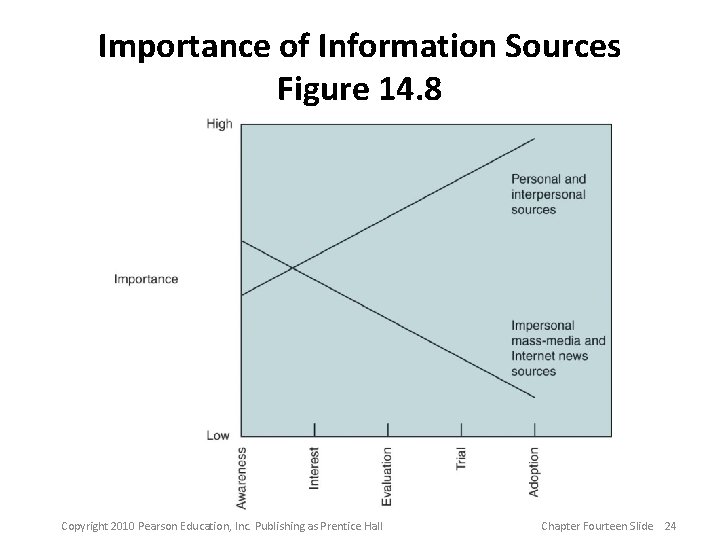
Importance of Information Sources Figure 14. 8 Copyright 2010 Pearson Education, Inc. Publishing as Prentice Hall Chapter Fourteen Slide 24
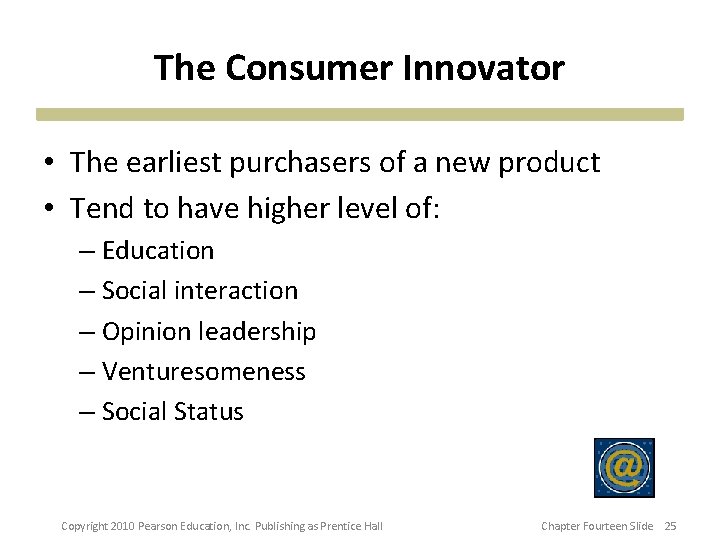
The Consumer Innovator • The earliest purchasers of a new product • Tend to have higher level of: – Education – Social interaction – Opinion leadership – Venturesomeness – Social Status Copyright 2010 Pearson Education, Inc. Publishing as Prentice Hall Chapter Fourteen Slide 25
Discussion Questions • Who do you know, personally, that you would consider an innovator? • What is it about that person that makes them an innovator? What personality traits might they have which prompt their status? Copyright 2010 Pearson Education, Inc. Publishing as Prentice Hall Chapter Fourteen Slide 26
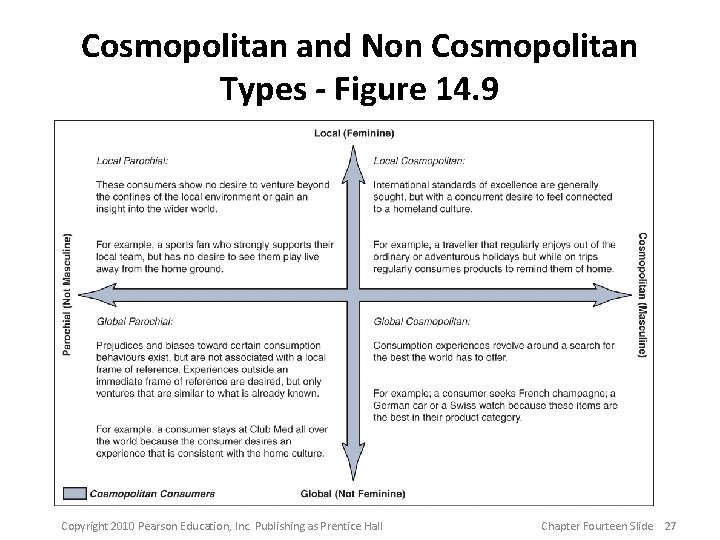
Cosmopolitan and Non Cosmopolitan Types - Figure 14. 9 Copyright 2010 Pearson Education, Inc. Publishing as Prentice Hall Chapter Fourteen Slide 27
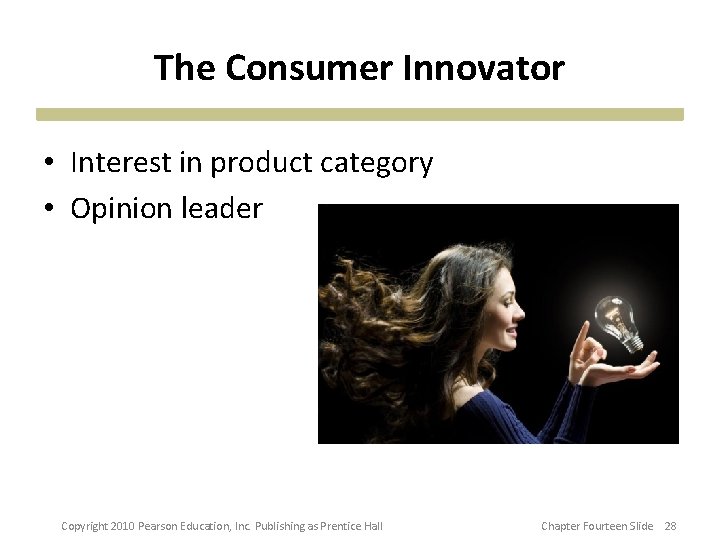
The Consumer Innovator • Interest in product category • Opinion leader Copyright 2010 Pearson Education, Inc. Publishing as Prentice Hall Chapter Fourteen Slide 28
Discussion Questions • Who are the most influential opinion leaders for college-aged people? • Why are they influential? Copyright 2010 Pearson Education, Inc. Publishing as Prentice Hall Chapter Fourteen Slide 29
The Consumer Innovator • Personality traits – Perceived risk and venturesomeness – Purchase and consumption characteristics – Media habits Copyright 2010 Pearson Education, Inc. Publishing as Prentice Hall Chapter Fourteen Slide 30
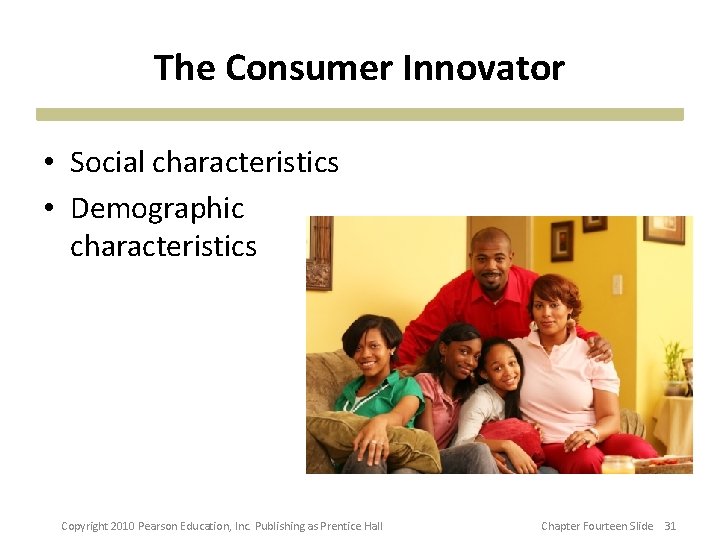
The Consumer Innovator • Social characteristics • Demographic characteristics Copyright 2010 Pearson Education, Inc. Publishing as Prentice Hall Chapter Fourteen Slide 31
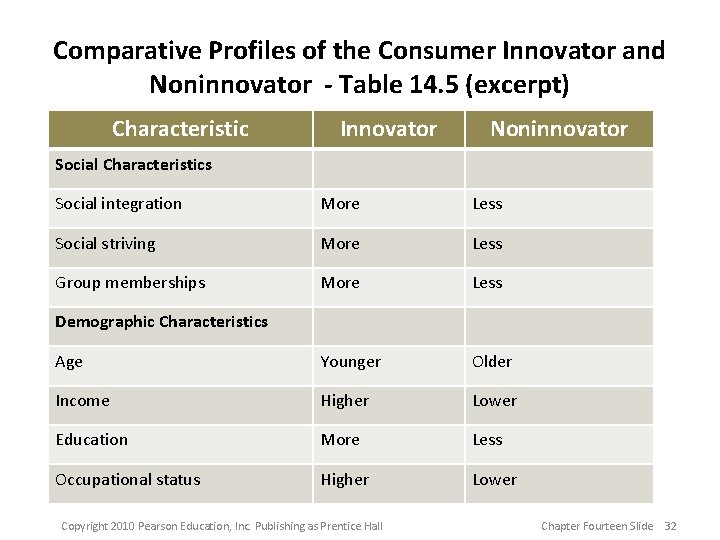
Comparative Profiles of the Consumer Innovator and Noninnovator - Table 14. 5 (excerpt) Characteristic Innovator Noninnovator Social Characteristics Social integration More Less Social striving More Less Group memberships More Less Age Younger Older Income Higher Lower Education More Less Occupational status Higher Lower Demographic Characteristics Copyright 2010 Pearson Education, Inc. Publishing as Prentice Hall Chapter Fourteen Slide 32
Are There Generalized Consumer Innovators? • Domain-specific vs. global innovativeness • Technology and innovators Copyright 2010 Pearson Education, Inc. Publishing as Prentice Hall Chapter Fourteen Slide 33
All rights reserved. No part of this publication may be reproduced, stored in a retrieval system, or transmitted, in any form or by any means, electronic, mechanical, photocopying, recording, or otherwise, without the prior written permission of the publisher. Printed in the United States of America. Copyright © 2010 Pearson Education, Inc. Publishing as Prentice Hall Copyright 2010 Pearson Education, Inc. Publishing as Prentice Hall Chapter Fourteen Slide 34