
CHAPTER FOUR PRESENTATION OF FINDINGS 4 1 Introduction
- Slides: 14
CHAPTER FOUR PRESENTATION OF FINDINGS 4. 1 Introduction � This chapter presents the findings of the study which endeavoured to evaluate the education system in Kasempa ward. The objectives were; � to investigate the quality of education system within Kasempa ward. � To assess the accessibility and cost of education in Kasempa ward. � To investigate the SNDP key performance indicators in schools. � To explore the effectiveness of the available record management systems in the sampled schools.
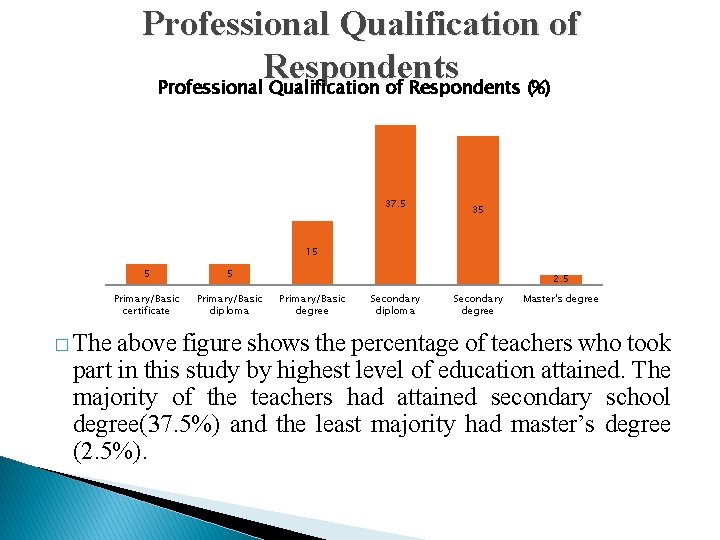
Professional Qualification of Respondents (%) 37. 5 35 15 � The 5 5 Primary/Basic certificate Primary/Basic diploma 2. 5 Primary/Basic degree Secondary diploma Secondary degree Master's degree above figure shows the percentage of teachers who took part in this study by highest level of education attained. The majority of the teachers had attained secondary school degree(37. 5%) and the least majority had master’s degree (2. 5%).
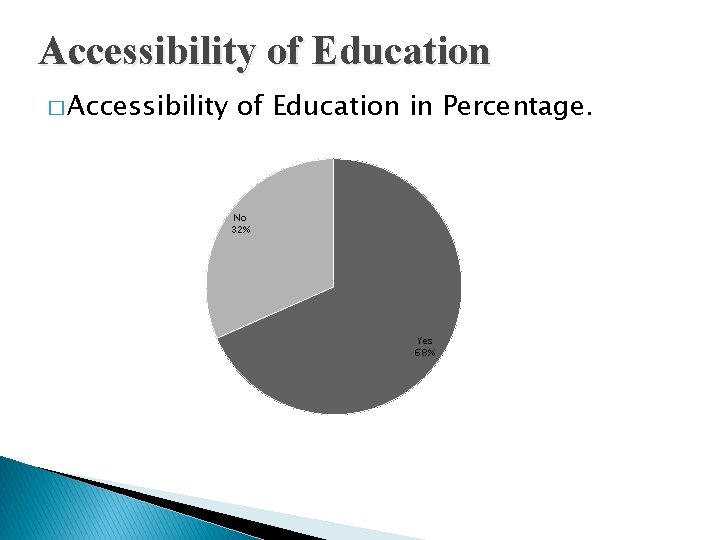
Accessibility of Education � Accessibility of Education in Percentage. No 32% Yes 68%
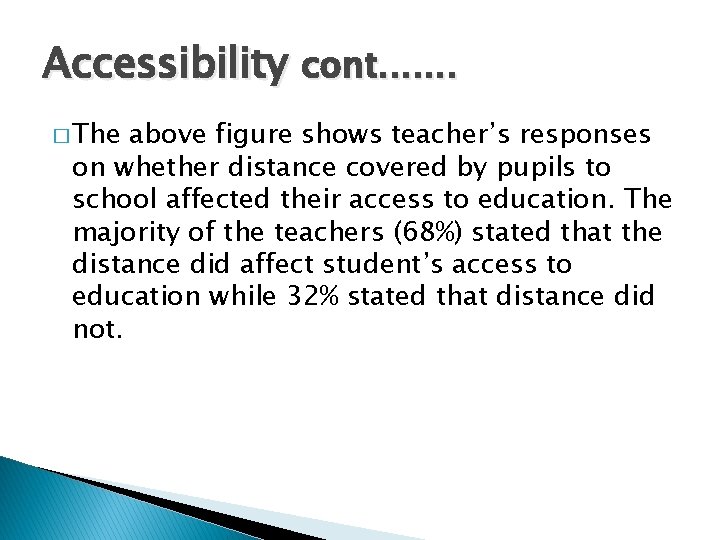
Accessibility cont. . . . � The above figure shows teacher’s responses on whether distance covered by pupils to school affected their access to education. The majority of the teachers (68%) stated that the distance did affect student’s access to education while 32% stated that distance did not.
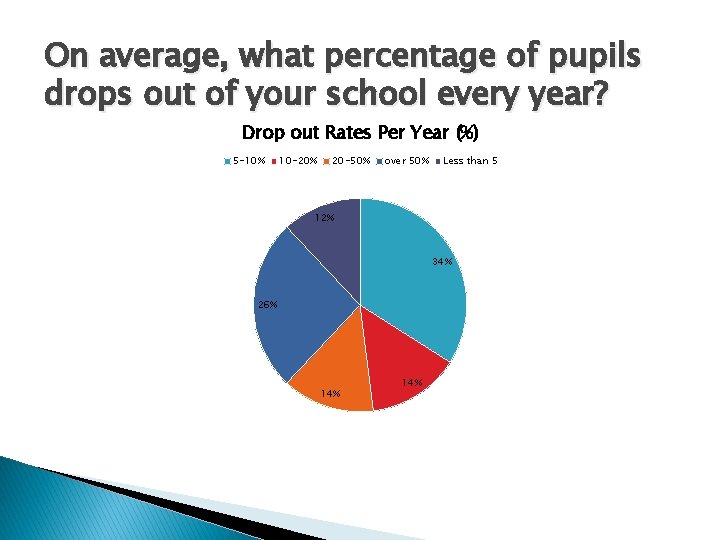
On average, what percentage of pupils drops out of your school every year? Drop out Rates Per Year (%) 5 -10% 10 -20% 20 -50% over 50% Less than 5 12% 34% 26% 14%
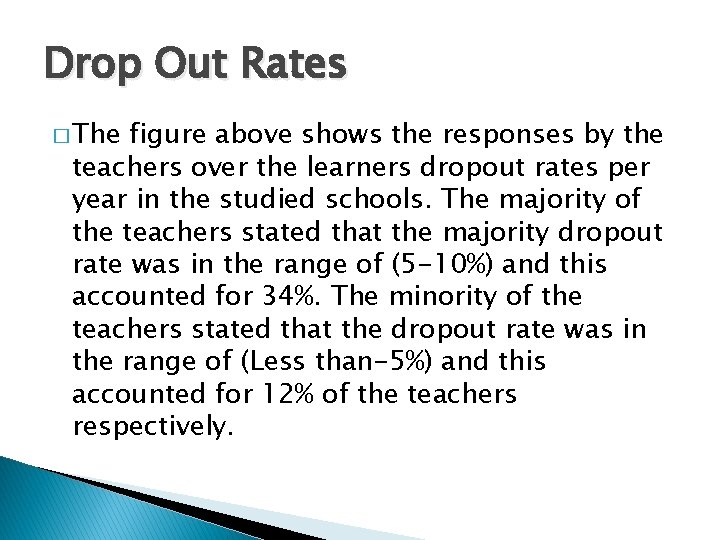
Drop Out Rates � The figure above shows the responses by the teachers over the learners dropout rates per year in the studied schools. The majority of the teachers stated that the majority dropout rate was in the range of (5 -10%) and this accounted for 34%. The minority of the teachers stated that the dropout rate was in the range of (Less than-5%) and this accounted for 12% of the teachers respectively.
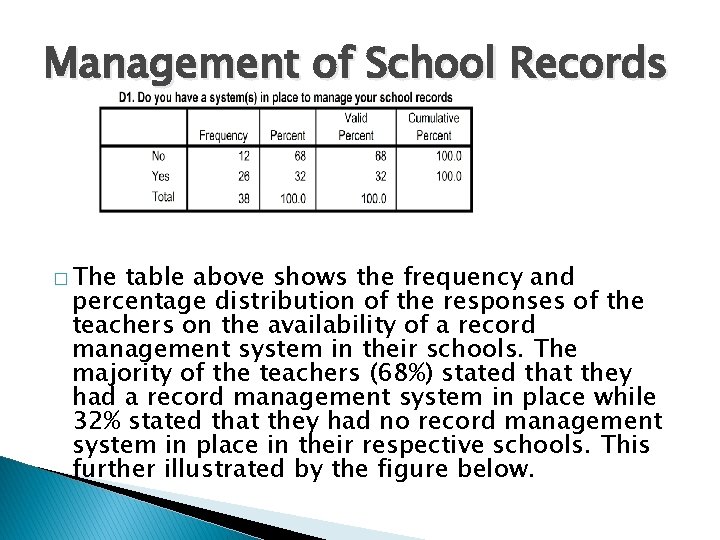
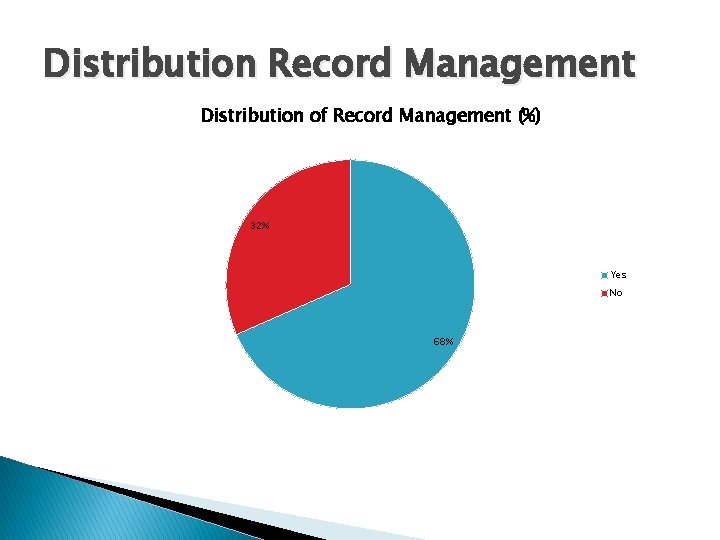
Management of School Records � The table above shows the frequency and percentage distribution of the responses of the teachers on the availability of a record management system in their schools. The majority of the teachers (68%) stated that they had a record management system in place while 32% stated that they had no record management system in place in their respective schools. This further illustrated by the figure below.
Distribution Record Management Distribution of Record Management (%) 32% Yes No 68%
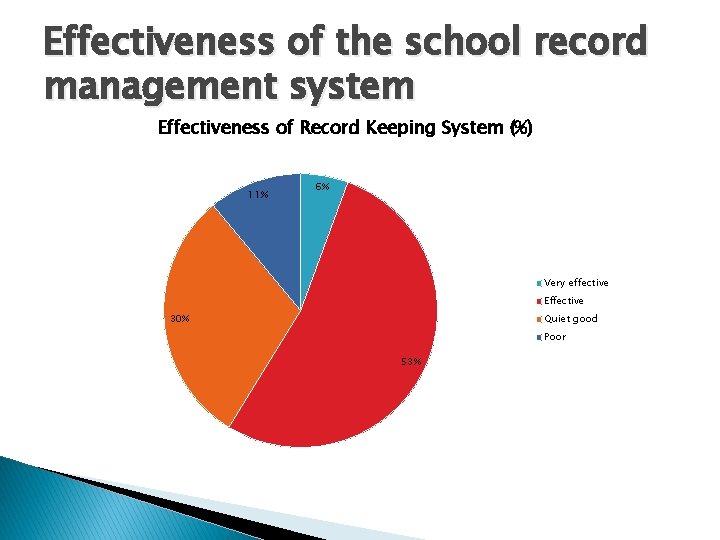
Effectiveness of the school record management system Effectiveness of Record Keeping System (%) 11% 6% Very effective Effective 30% Quiet good Poor 53%
Cont. . . . � The above figure shows the response of the teachers on the effectiveness of the record management system in their schools. The majority of the teachers stated that the record management system in place in their schools was poor, quite good, effective and very effective representing 11%, 30% , 53 and 6% of the teachers respectively. The majority of the teachers stated that the record management system in their schools was effective and accounted for 53% of the teachers responses.
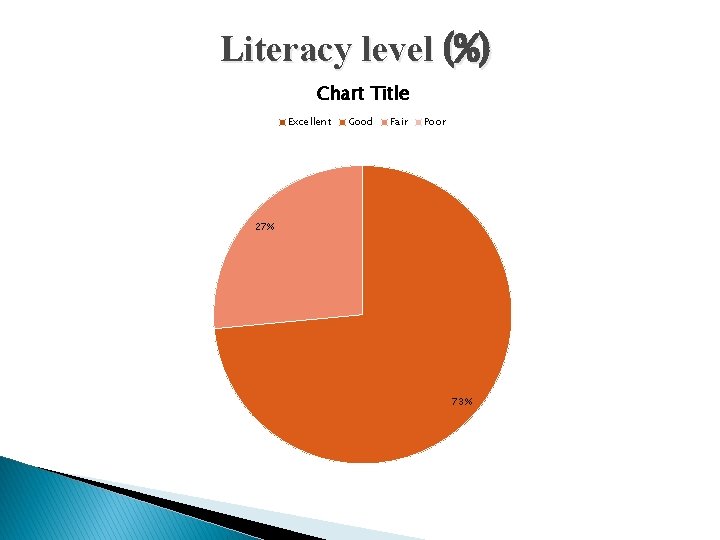
Literacy level (%) Chart Title Excellent Good Fair Poor 27% 73%
Literacy cont. . . . � The above figure shows the teacher’s rate of grading of students level of literacy in the sampled schools. Out of the 40 teachers who took part in this study, 25 amounting to 73% stated that the literacy levels were good, 9 amounting 27% stated that it was fair and none stated it was poor or excellent.
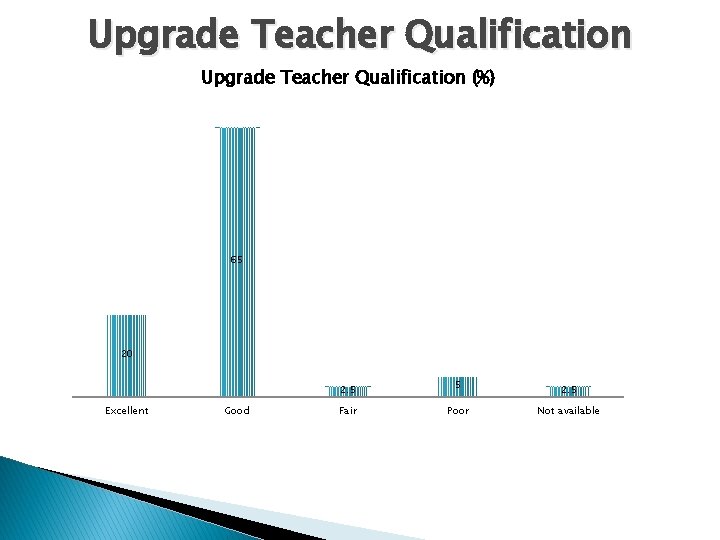
Upgrade Teacher Qualification (%) 65 20 Excellent Good 2. 5 5 2. 5 Fair Poor Not available
Upgrade Teacher Qualification cont. . � The figure above shows the percentage rate at which teachers are upgrading their qualifications in order to improve their skills and knowledge. Out of the 40 teachers who took part in this study, 2 were not sure of the rate at which teachers were upgrading their qualifications. Of the 38 who were sure, 20% said it was excellent, 65% said it was good, 2. 5% said it was fair and 5% said it was poor.