
CHAPTER FOUR MARKET SEGMENTATION TARGETING AND POSITIONING Market

- Slides: 20
CHAPTER FOUR MARKET SEGMENTATION, TARGETING, AND POSITIONING
Market Original Meaning- a physical place where buyers and sellers gathered to exchange goods and services. v Economists- all buyers and sellers who transact for a good or service. v Marketer-set of all actual and potential buyers of a product. v
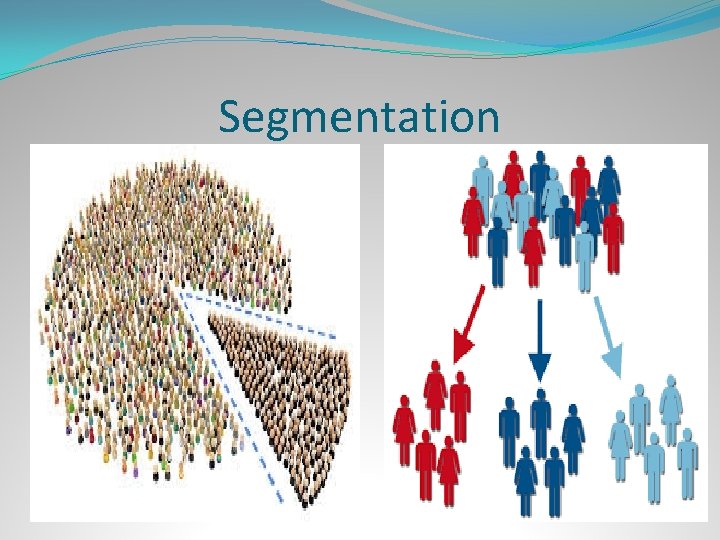
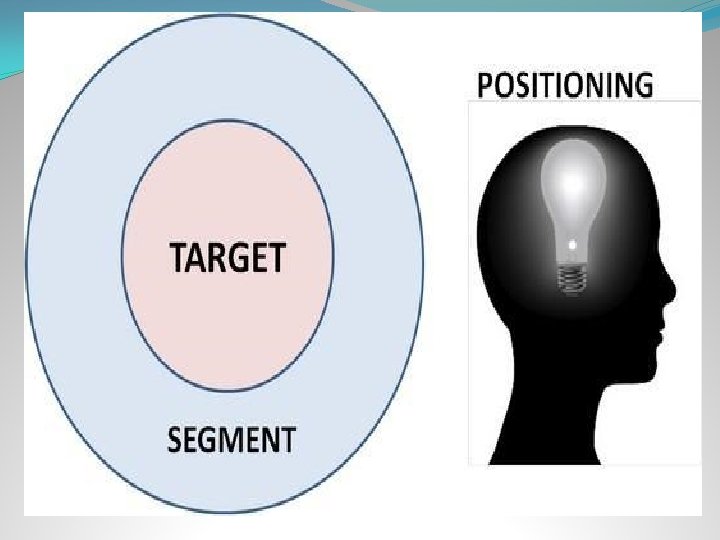
Market Segments and Market Segmentation n n Market segment: a group of customers who share a similar set of wants. Market segmentation: the act of dividing a market into distinct groups of customers who might require separate products and/or marketing mixes.
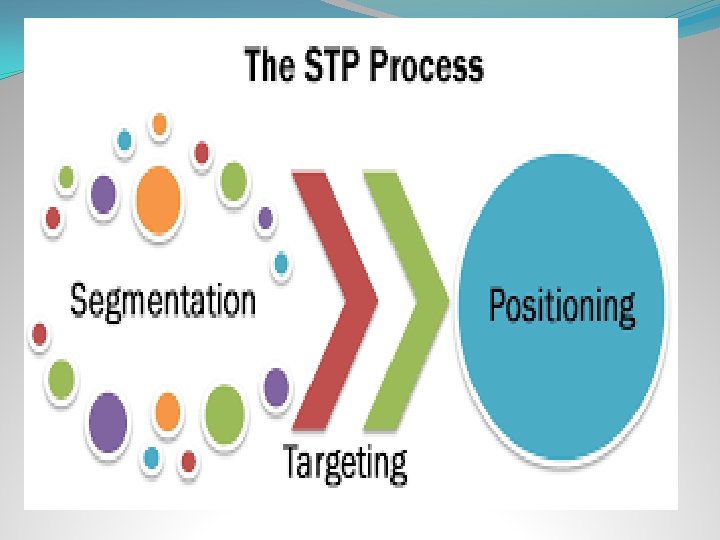
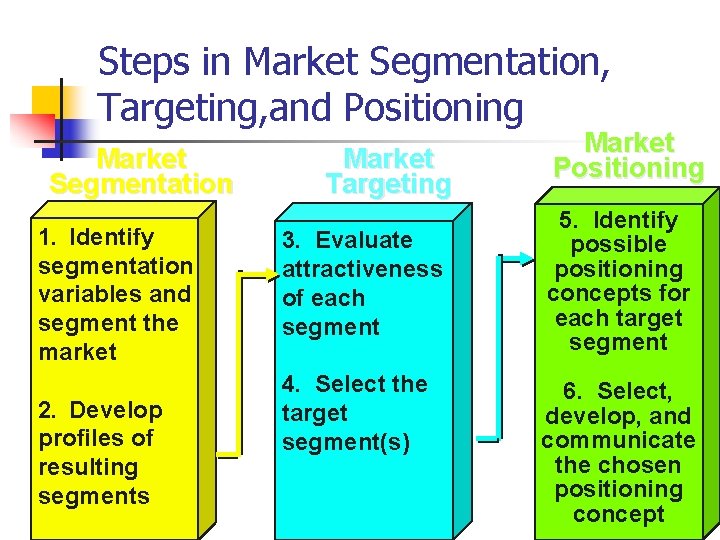
Steps in Market Segmentation, Targeting, and Positioning Market Segmentation 1. Identify segmentation variables and segment the market 2. Develop profiles of resulting segments Market Targeting 3. Evaluate attractiveness of each segment 4. Select the target segment(s) Market Positioning 5. Identify possible positioning concepts for each target segment 6. Select, develop, and communicate the chosen positioning concept
Segmentation
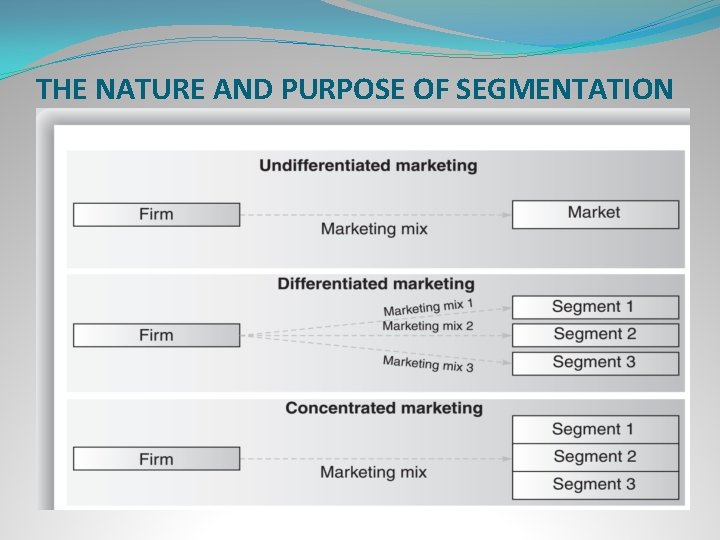
THE NATURE AND PURPOSE OF SEGMENTATION
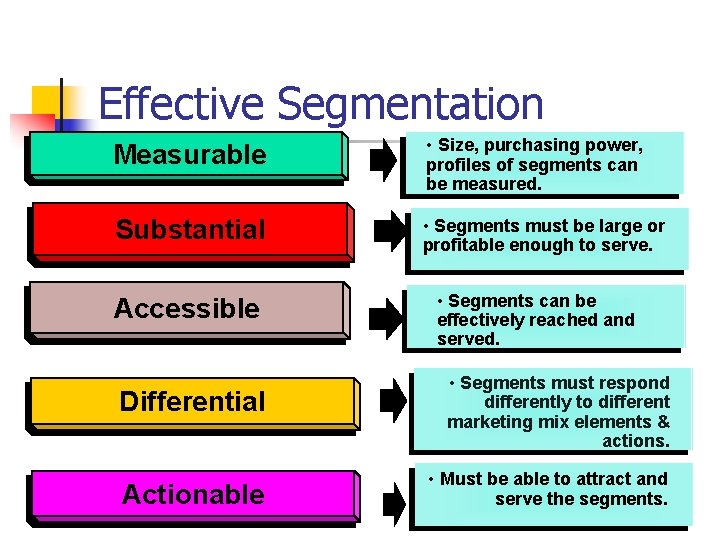
Effective Segmentation Measurable • Size, purchasing power, profiles of segments can be measured. Substantial • Segments must be large or profitable enough to serve. Accessible Differential Actionable • Segments can be effectively reached and served. • Segments must respond differently to different marketing mix elements & actions. • Must be able to attract and serve the segments.
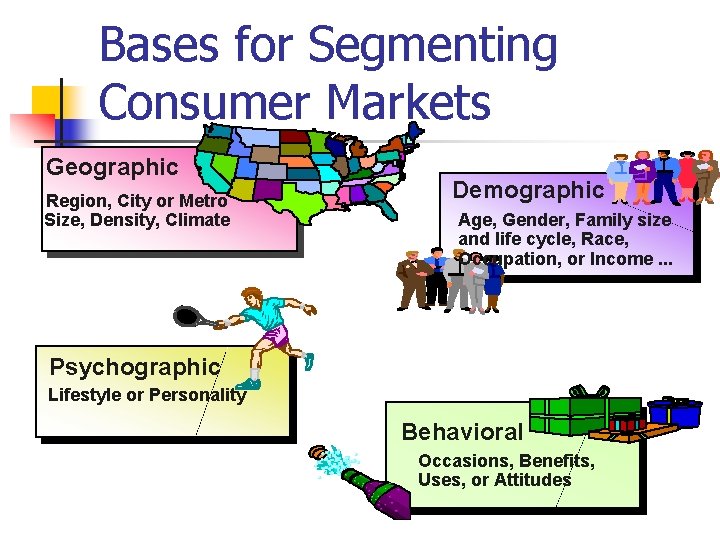
Bases for Segmenting Consumer Markets Geographic Region, City or Metro Size, Density, Climate Demographic Age, Gender, Family size and life cycle, Race, Occupation, or Income. . . Psychographic Lifestyle or Personality Behavioral Occasions, Benefits, Uses, or Attitudes
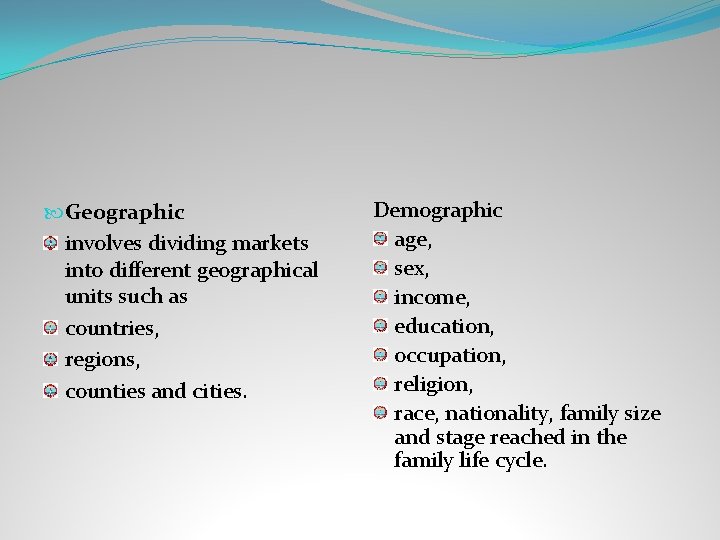
Geographic involves dividing markets into different geographical units such as countries, regions, counties and cities. Demographic age, sex, income, education, occupation, religion, race, nationality, family size and stage reached in the family life cycle.
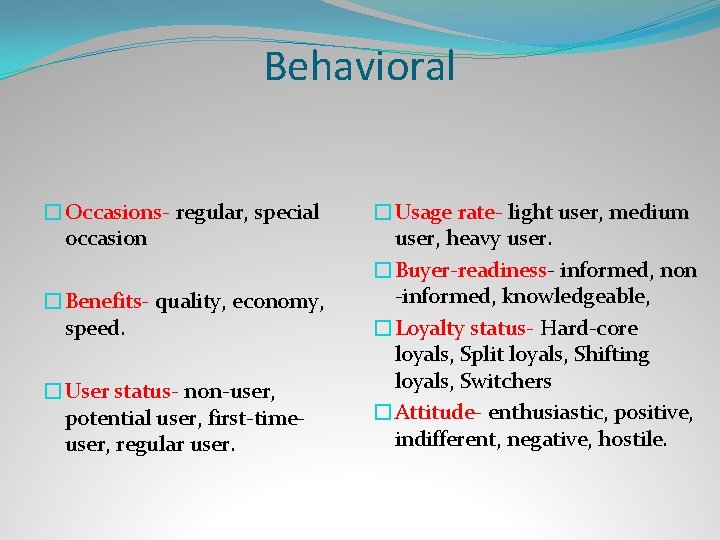
Behavioral �Occasions- regular, special occasion �Benefits- quality, economy, speed. �User status- non-user, potential user, first-timeuser, regular user. �Usage rate- light user, medium user, heavy user. �Buyer-readiness- informed, non -informed, knowledgeable, �Loyalty status- Hard-core loyals, Split loyals, Shifting loyals, Switchers �Attitude- enthusiastic, positive, indifferent, negative, hostile.
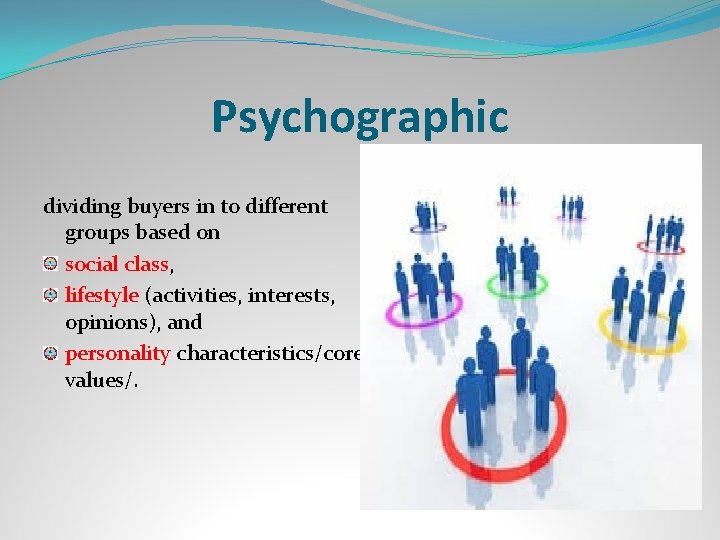
Psychographic dividing buyers in to different groups based on social class, lifestyle (activities, interests, opinions), and personality characteristics/core values/.
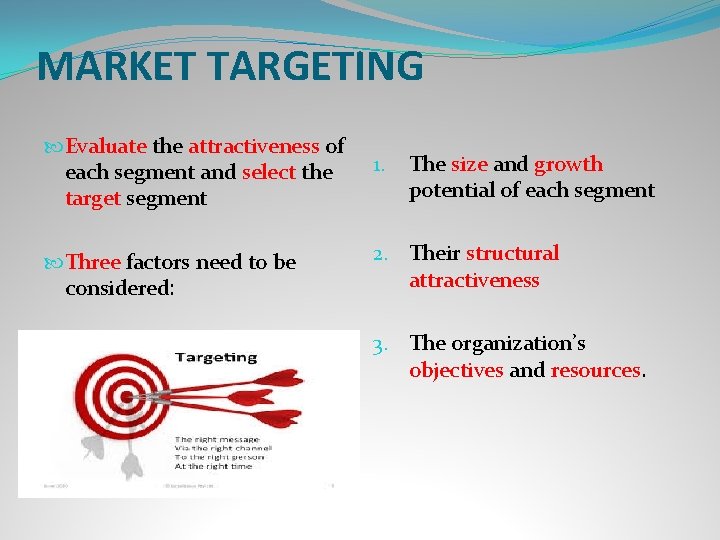
MARKET TARGETING Evaluate the attractiveness of each segment and select the target segment 1. Three factors need to be considered: 2. Their structural attractiveness The size and growth potential of each segment 3. The organization’s objectives and resources.
POSITIONING: THE BATTLE FOR THE MIND Positioning is therefore the process of designing an image and value so that customers within the target segment understand what the company or brand stands for in relation to its competitors. positioning has direct and immediate implications for the whole of the marketing mix.
USP ( Unique Selling Proposition) It means the one aspect of your product that makes you different from all other products. USP can be something real, which one product has over all others, such as the strong taste of Minto mints. Steps in positioning Identifying the organization or brand’s possible competitive advantages Deciding on those that are to be emphasized Implementing the positioning concept.
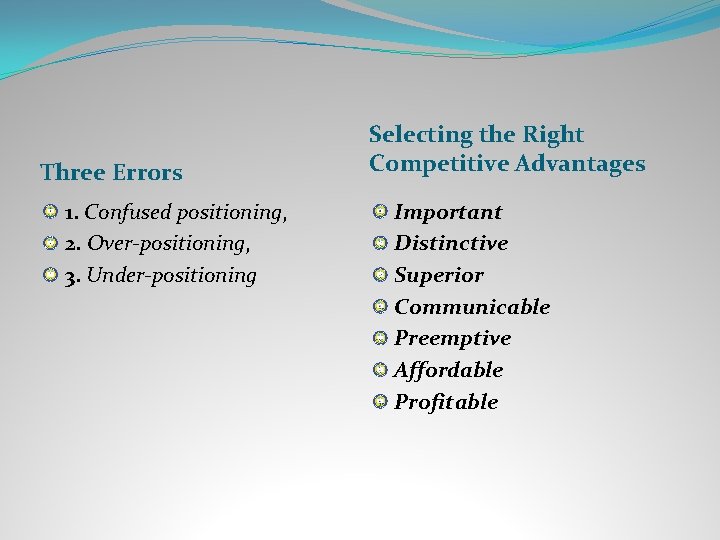
Three Errors 1. Confused positioning, 2. Over-positioning, 3. Under-positioning Selecting the Right Competitive Advantages Important Distinctive Superior Communicable Preemptive Affordable Profitable
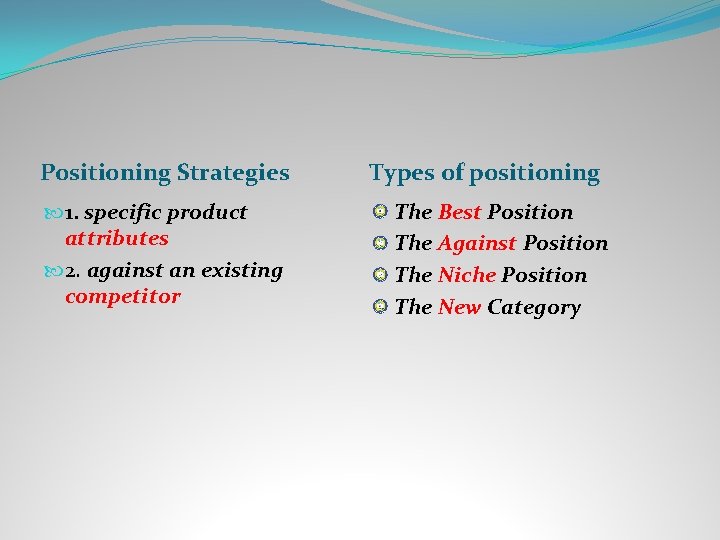
Positioning Strategies 1. specific product attributes 2. against an existing competitor Types of positioning The Best Position The Against Position The Niche Position The New Category
Any Question?
Thank You Very Much n For your cooperation n. Your patience n. Your stamina