
Chapter Four CONSCIOUSNESS AND ITS VARIATIONS Introduction Consciousness

- Slides: 40
Chapter Four CONSCIOUSNESS AND ITS VARIATIONS
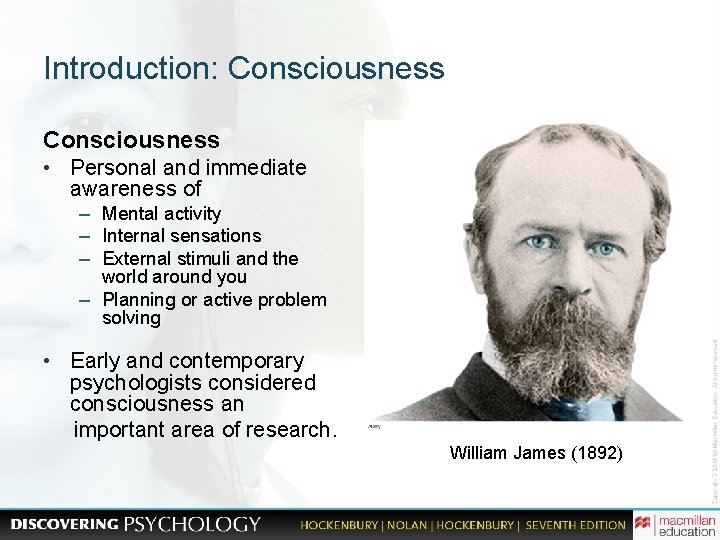
Introduction: Consciousness • Personal and immediate awareness of – Mental activity – Internal sensations – External stimuli and the world around you – Planning or active problem solving • Early and contemporary psychologists considered consciousness an important area of research. William James (1892)
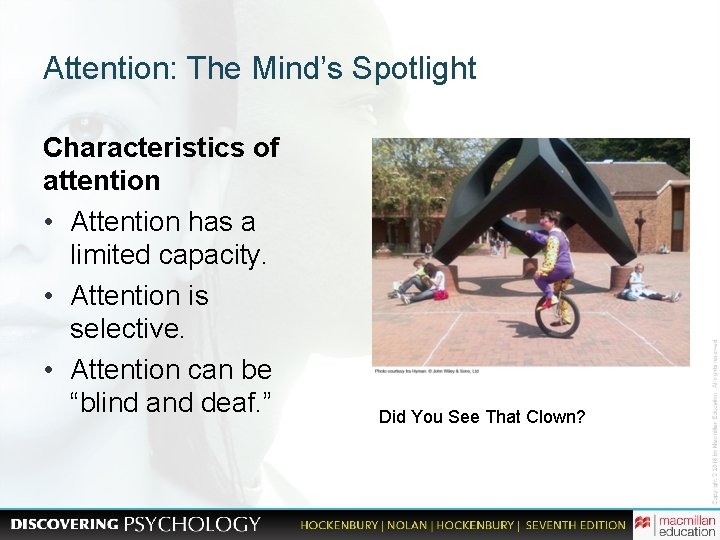
Attention: The Mind’s Spotlight Characteristics of attention • Attention has a limited capacity. • Attention is selective. • Attention can be “blind and deaf. ” Did You See That Clown?
The Perils of Multitasking • Multitasking – Refers to doing two or more things at once – Involves the division of attention • Cell phone risks – Driving was more impaired when drivers were talking on a cell phone than when the same drivers were legally drunk. – Using a headset or Bluetooth device while driving does not improve safety.
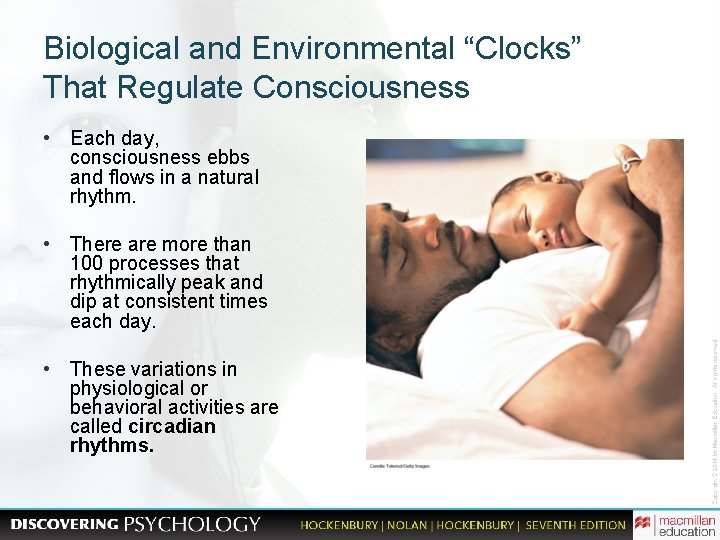
Biological and Environmental “Clocks” That Regulate Consciousness • Each day, consciousness ebbs and flows in a natural rhythm. • There are more than 100 processes that rhythmically peak and dip at consistent times each day. • These variations in physiological or behavioral activities are called circadian rhythms.
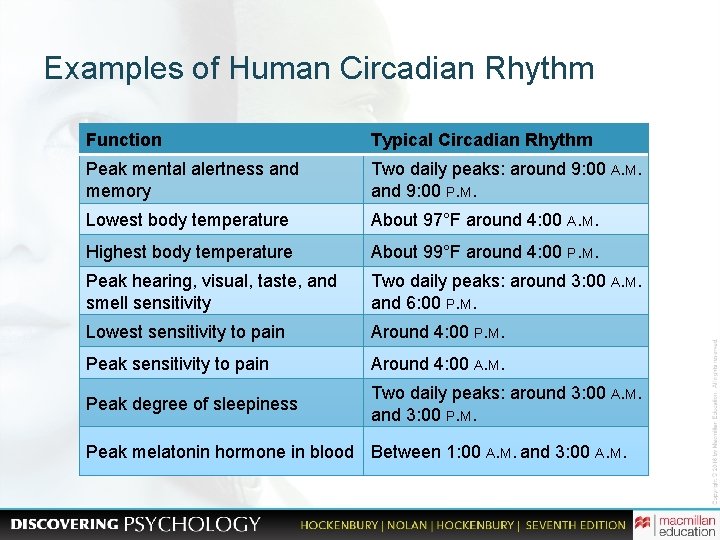
Examples of Human Circadian Rhythm Function Typical Circadian Rhythm Peak mental alertness and memory Two daily peaks: around 9: 00 A. M. and 9: 00 P. M. Lowest body temperature About 97°F around 4: 00 A. M. Highest body temperature About 99°F around 4: 00 P. M. Peak hearing, visual, taste, and smell sensitivity Two daily peaks: around 3: 00 A. M. and 6: 00 P. M. Lowest sensitivity to pain Around 4: 00 P. M. Peak sensitivity to pain Around 4: 00 A. M. Peak degree of sleepiness Two daily peaks: around 3: 00 A. M. and 3: 00 P. M. Peak melatonin hormone in blood Between 1: 00 A. M. and 3: 00 A. M.
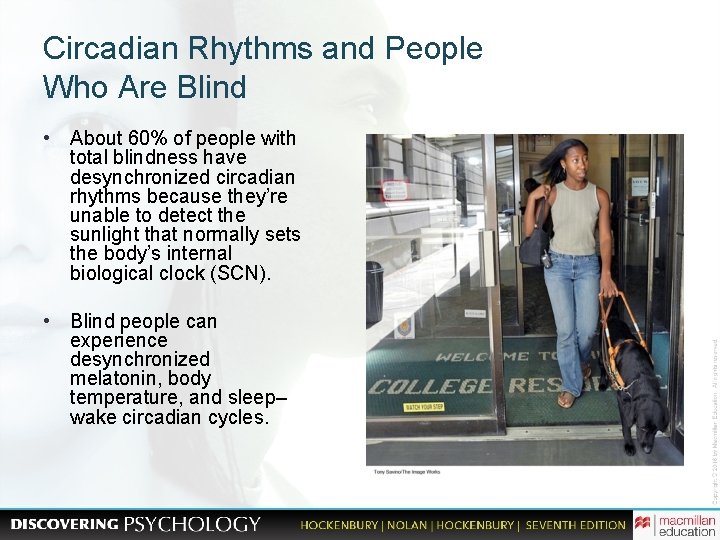
Circadian Rhythms and People Who Are Blind • Blind people can experience desynchronized melatonin, body temperature, and sleep– wake circadian cycles. Kieran Doherty/Reuters/Corbis • About 60% of people with total blindness have desynchronized circadian rhythms because they’re unable to detect the sunlight that normally sets the body’s internal biological clock (SCN).
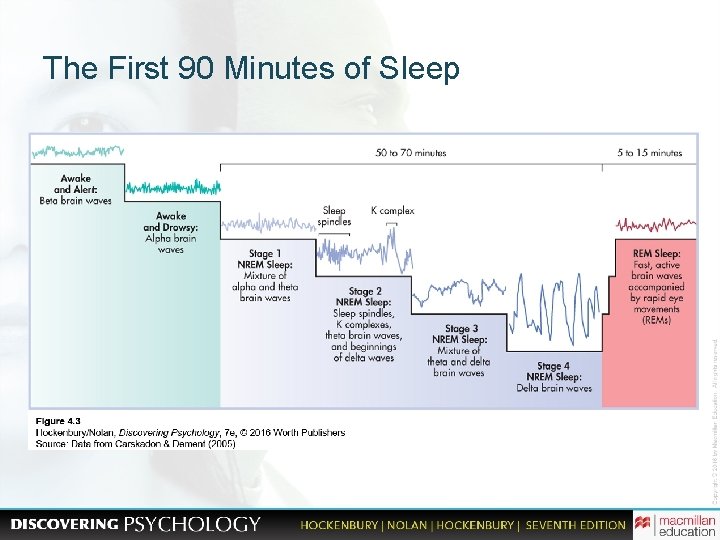
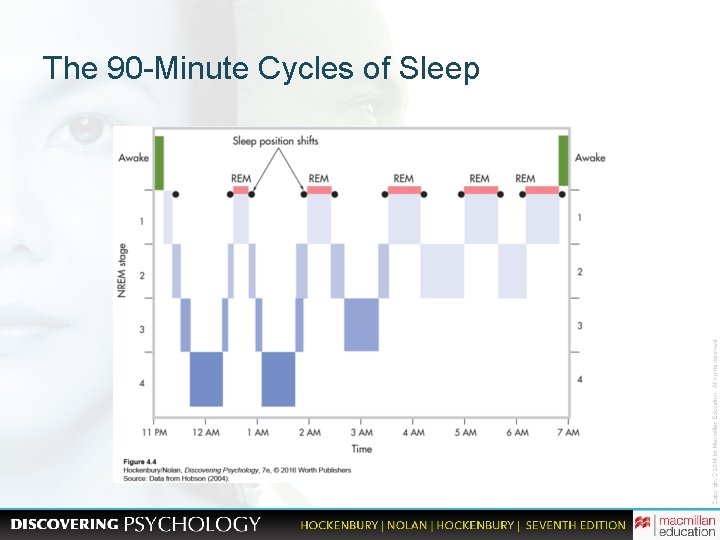
The Dawn of Modern Sleep Research • Modern sleep research began with the invention of electroencephalography and the discovery that sleep is marked by distinct physiological processes and stages. • EEG (electroencephalogram): graphic record of brain activity produced by an electroencephalograph • Brain remains active during sleep • Pattern of activity differs from waking state—some areas active, others not Two basic types of sleep REM (rapid eye movement)— associated with dreaming NREM (non- rapid eye movement, or quiet, sleep)— divided into four stages
The First 90 Minutes of Sleep
The 90 -Minute Cycles of Sleep
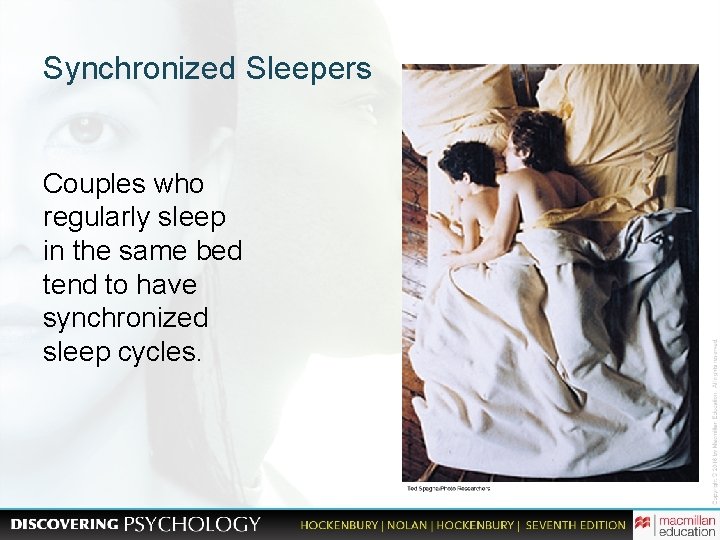
Synchronized Sleepers Couples who regularly sleep in the same bed tend to have synchronized sleep cycles.
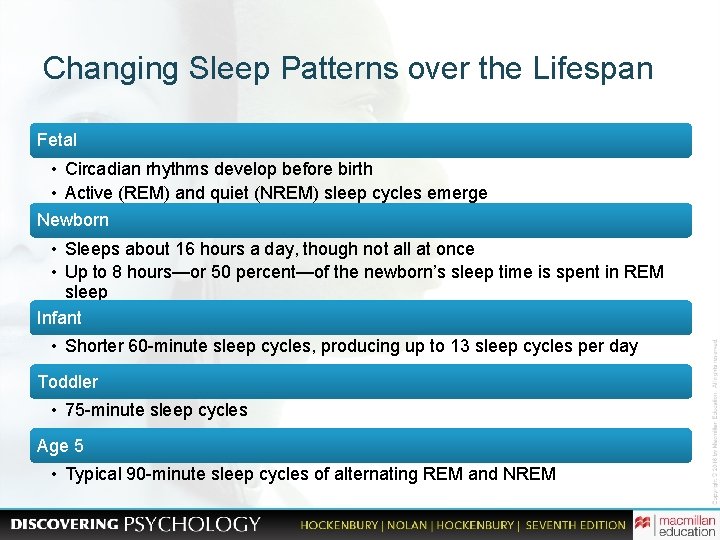
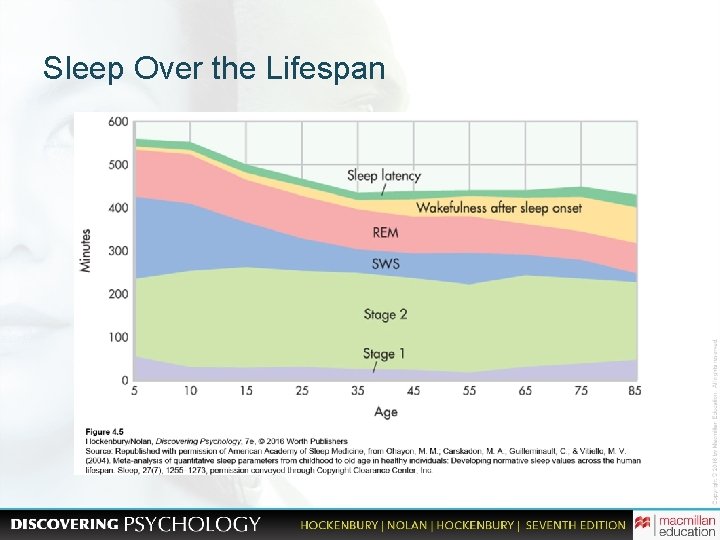
Changing Sleep Patterns over the Lifespan Fetal • Circadian rhythms develop before birth • Active (REM) and quiet (NREM) sleep cycles emerge Newborn • Sleeps about 16 hours a day, though not all at once • Up to 8 hours—or 50 percent—of the newborn’s sleep time is spent in REM sleep Infant • Shorter 60 -minute sleep cycles, producing up to 13 sleep cycles per day Toddler • 75 -minute sleep cycles Age 5 • Typical 90 -minute sleep cycles of alternating REM and NREM
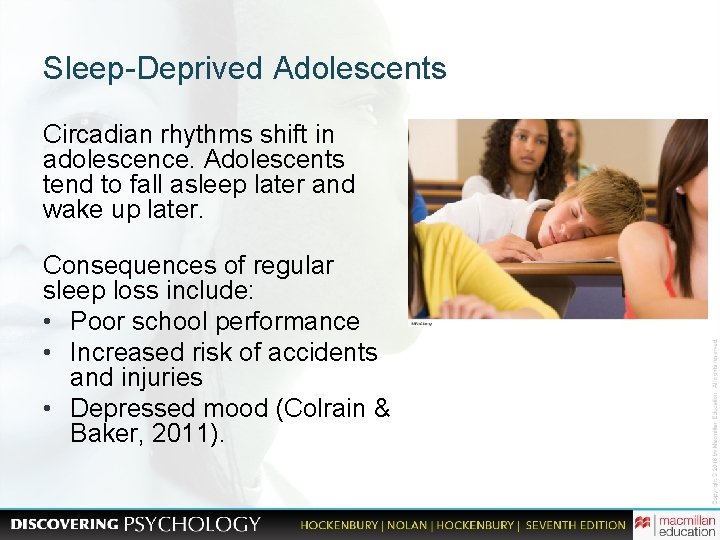
Sleep-Deprived Adolescents Circadian rhythms shift in adolescence. Adolescents tend to fall asleep later and wake up later. Consequences of regular sleep loss include: • Poor school performance • Increased risk of accidents and injuries • Depressed mood (Colrain & Baker, 2011).
Sleep Over the Lifespan
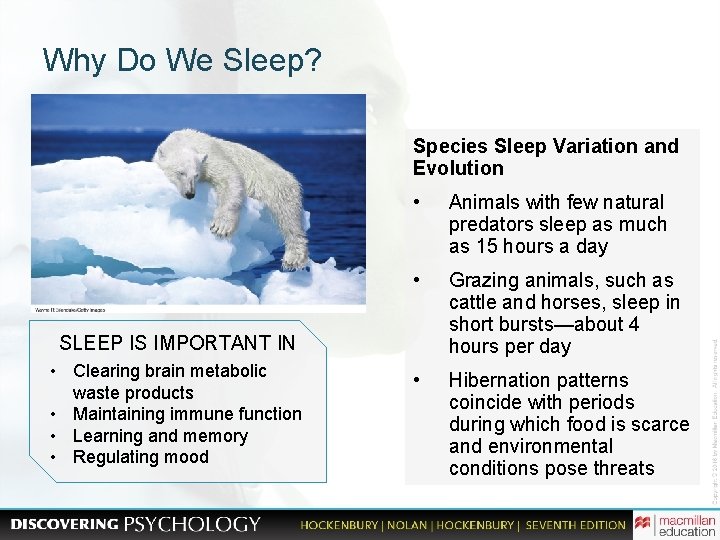
Why Do We Sleep? Species Sleep Variation and Evolution • Animals with few natural predators sleep as much as 15 hours a day • Grazing animals, such as cattle and horses, sleep in short bursts—about 4 hours per day • Hibernation patterns coincide with periods during which food is scarce and environmental conditions pose threats SLEEP IS IMPORTANT IN • Clearing brain metabolic waste products • Maintaining immune function • Learning and memory • Regulating mood
Dreams • Dream – An unfolding sequence of perceptions, thoughts, and emotions that is experienced as a series of actual events during sleep • Sleep thinking (sleep mentation) • • • Occurs during NREM slow-wave sleep Vague, bland, thought-like ruminations about real-life events
Dream Themes and Imagery • Common dream themes – – Themes involve everyday things Themes are seldom about sex or sexual behaviors Negative feelings occur more often than positive ones Women dream about men and women in equal proportion and are more likely to report emotions in their dreams – Men dream about other men and more likely have dreams about physical aggression – Apprehension or fear are frequently reported dream emotions for both sexes
Nightmares • Vivid and frightening or unpleasant anxiety dreams during REM sleep – Most common during middle and late childhood (ages 5 to 10) – Experienced by 10% of adults on weekly basis – More frequently reported by women than men – Associated with daytime stress, anxiety, and emotional difficulties – Differ from night terrors (sleep terrors)
The Significance of Dreams Freud: Dreams as Fulfilled Wishes • Dreams function as psychological “safety valve” for the release of unconscious and unacceptable urges. • Frustrated sexual and aggressive wishes are expressed symbolically in dreams. – Manifest content – Latent content • Notion that dream images contain symbolic messages has been challenged by contemporary neuroscience studies of the dreaming brain.
Sleep Disorders • 7 out of 10 people experience regular sleep disruptions. • Disruptions become sleep disorder. – Consistent occurrence of abnormal sleep patterns – Feelings of subjective distress – Interfere with daytime functioning • Categories of sleep disorders – Dyssomnias – Parasomnias
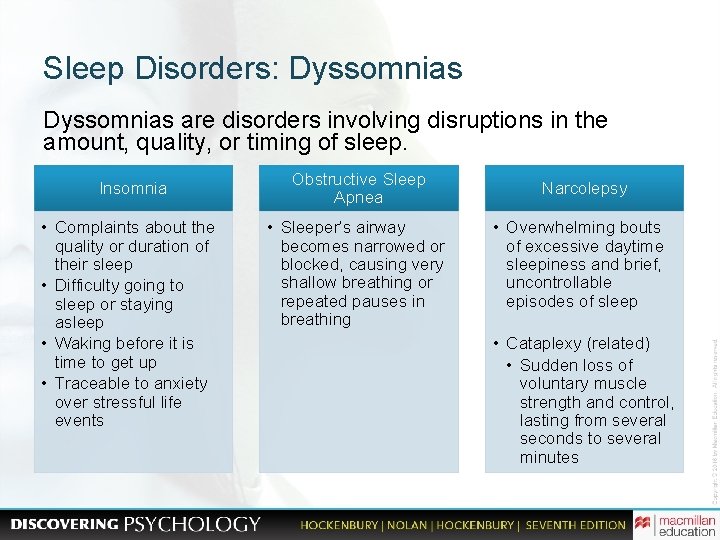
Sleep Disorders: Dyssomnias are disorders involving disruptions in the amount, quality, or timing of sleep. Insomnia • Complaints about the quality or duration of their sleep • Difficulty going to sleep or staying asleep • Waking before it is time to get up • Traceable to anxiety over stressful life events Obstructive Sleep Apnea • Sleeper’s airway becomes narrowed or blocked, causing very shallow breathing or repeated pauses in breathing Narcolepsy • Overwhelming bouts of excessive daytime sleepiness and brief, uncontrollable episodes of sleep • Cataplexy (related) • Sudden loss of voluntary muscle strength and control, lasting from several seconds to several minutes
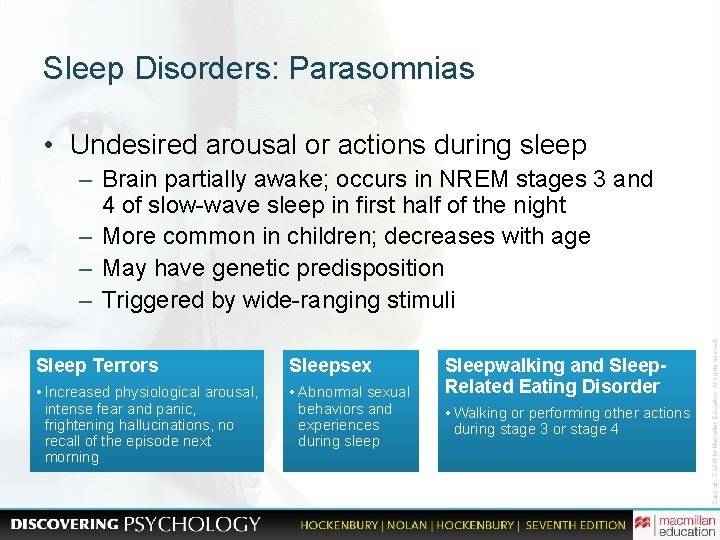
Sleep Disorders: Parasomnias • Undesired arousal or actions during sleep – Brain partially awake; occurs in NREM stages 3 and 4 of slow-wave sleep in first half of the night – More common in children; decreases with age – May have genetic predisposition – Triggered by wide-ranging stimuli Sleep Terrors Sleepsex • Increased physiological arousal, intense fear and panic, frightening hallucinations, no recall of the episode next morning • Abnormal sexual behaviors and experiences during sleep Sleepwalking and Sleep. Related Eating Disorder • Walking or performing other actions during stage 3 or stage 4
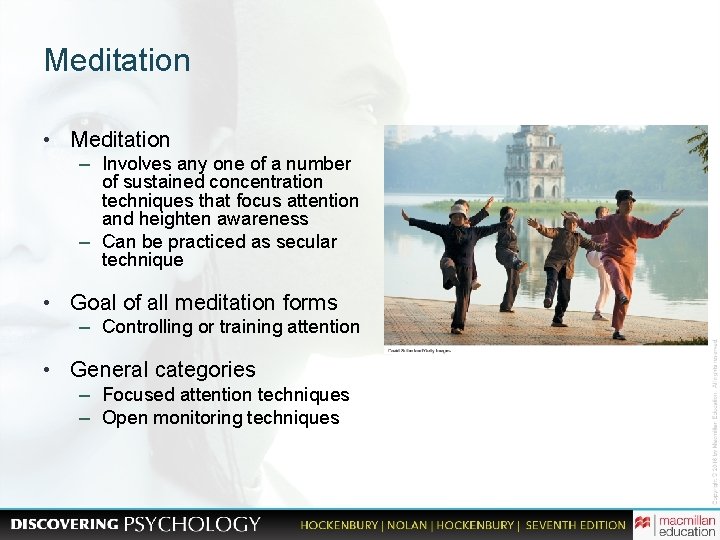
Meditation • Meditation – Involves any one of a number of sustained concentration techniques that focus attention and heighten awareness – Can be practiced as secular technique • Goal of all meditation forms – Controlling or training attention • General categories – Focused attention techniques – Open monitoring techniques
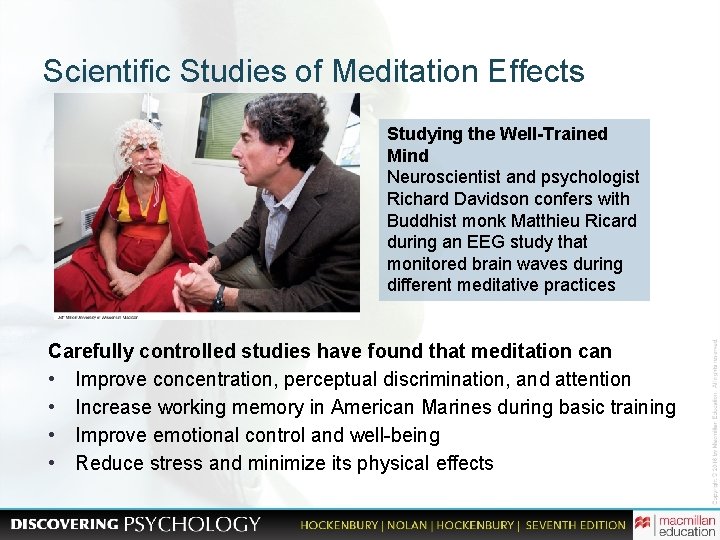
Scientific Studies of Meditation Effects Studying the Well-Trained Mind Neuroscientist and psychologist Richard Davidson confers with Buddhist monk Matthieu Ricard during an EEG study that monitored brain waves during different meditative practices Carefully controlled studies have found that meditation can • Improve concentration, perceptual discrimination, and attention • Increase working memory in American Marines during basic training • Improve emotional control and well-being • Reduce stress and minimize its physical effects
Psychoactive Drugs • Psychoactive drugs are chemical substances that can alter arousal, mood, thinking, sensation, and perception. • Broad categories of psychoactive drugs: 1. Depressants: Drugs that depress, or inhibit, brain activity 2. Opiates: Drugs that are chemically similar to morphine and that relieve pain and produce euphoria 3. Stimulants: Drugs that stimulate, or excite, brain activity 4. Psychedelics: Drugs that distort sensory perceptions
Problems with Misuse • Addiction – Condition in which a person feels psychologically and physically compelled to take a specific drug • Common effects of addictive drugs – – – Development of drug tolerance Withdrawal symptoms Drug rebound effect Substance abuse Change in reward circuitry
The Depressants • Depressants – – Depress or inhibit central nervous system activity. Produce drowsiness, sedation, or sleep Relieve anxiety and lower inhibitions Produce addictive effects (increased sedative effects when combined) • Kinds – – Alcohol Barbiturates Inhalants Tranquilizers
Alcohol and Inhalants Alcohol Inhalants • Produces a mild euphoria, talkativeness, and feelings of good humor and friendliness • Lessens inhibitions by depressing brain centers responsible for judgment and self-control • Rebound hyperexcitability in the brain caused by withdrawal • 17 million Americans are either dependent upon alcohol or have serious alcohol problems • Are chemical substances inhaled to produce an alteration in consciousness • Paint solvents, spray paint, gasoline, and aerosol sprays • Act as central nervous system depressants • Dangers • Suffocation • Toxic to the liver and other organs • Chronic abuse leads to neurological and brain damage
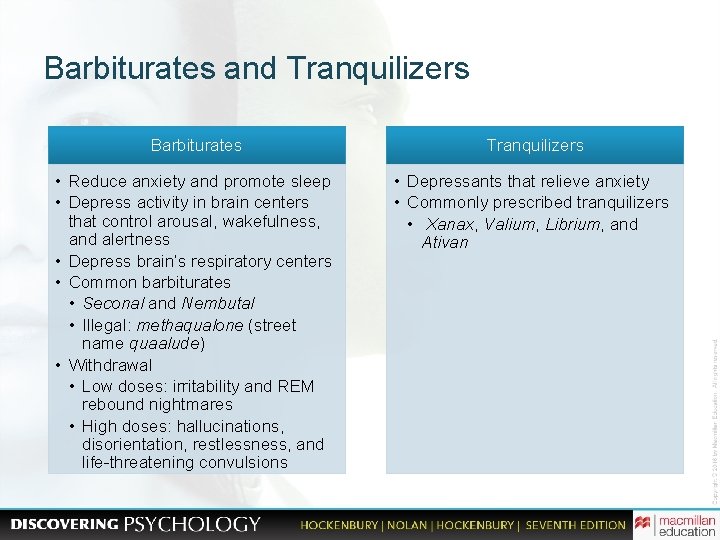
Barbiturates and Tranquilizers Barbiturates Tranquilizers • Reduce anxiety and promote sleep • Depress activity in brain centers that control arousal, wakefulness, and alertness • Depress brain’s respiratory centers • Common barbiturates • Seconal and Nembutal • Illegal: methaqualone (street name quaalude) • Withdrawal • Low doses: irritability and REM rebound nightmares • High doses: hallucinations, disorientation, restlessness, and life-threatening convulsions • Depressants that relieve anxiety • Commonly prescribed tranquilizers • Xanax, Valium, Librium, and Ativan
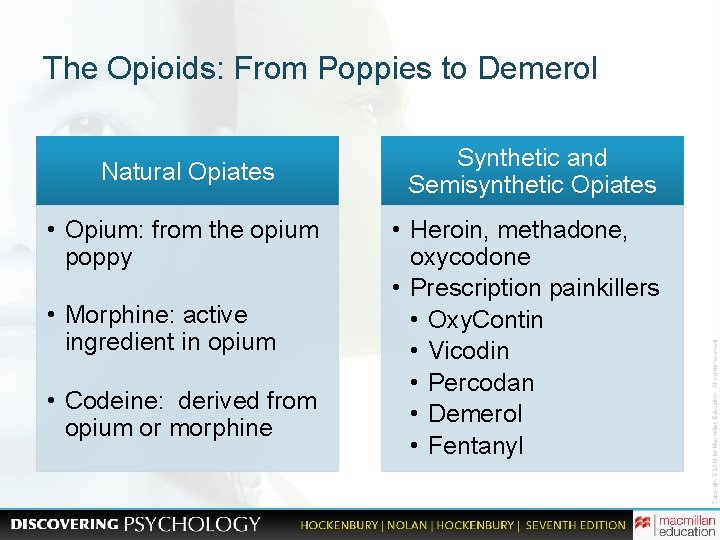
The Opioids: From Poppies to Demerol Natural Opiates • Opium: from the opium poppy • Morphine: active ingredient in opium • Codeine: derived from opium or morphine Synthetic and Semisynthetic Opiates • Heroin, methadone, oxycodone • Prescription painkillers • Oxy. Contin • Vicodin • Percodan • Demerol • Fentanyl
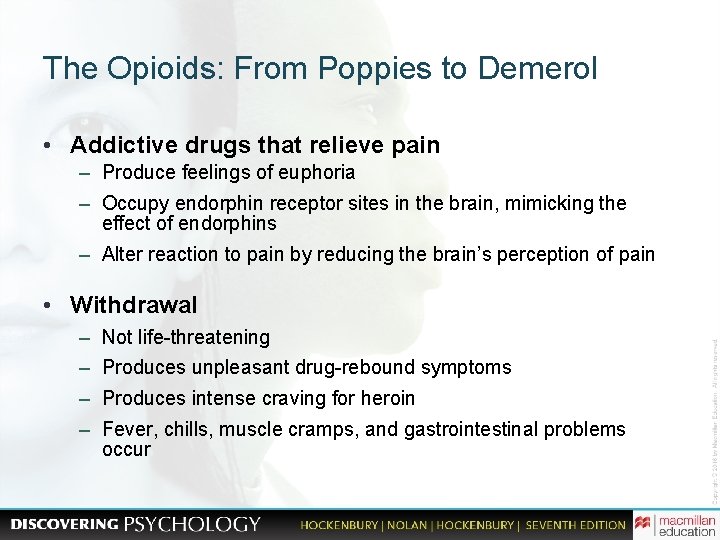
The Opioids: From Poppies to Demerol • Addictive drugs that relieve pain – Produce feelings of euphoria – Occupy endorphin receptor sites in the brain, mimicking the effect of endorphins – Alter reaction to pain by reducing the brain’s perception of pain • Withdrawal – Not life-threatening – Produces unpleasant drug-rebound symptoms – Produces intense craving for heroin – Fever, chills, muscle cramps, and gastrointestinal problems occur
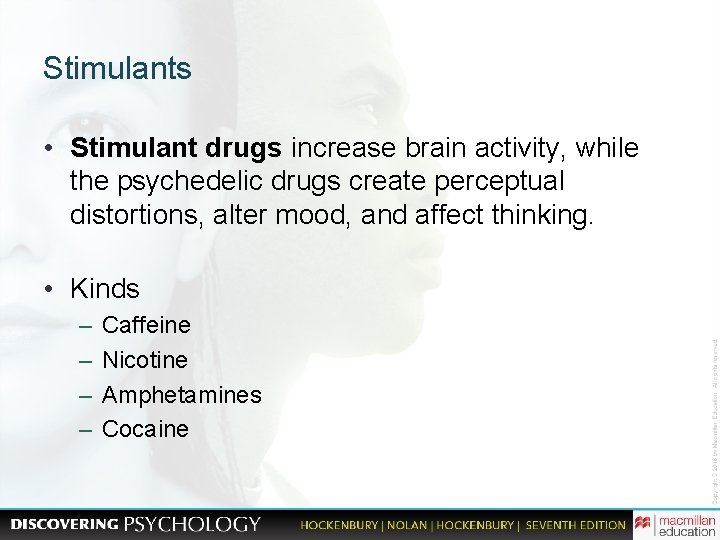
Stimulants • Stimulant drugs increase brain activity, while the psychedelic drugs create perceptual distortions, alter mood, and affect thinking. • Kinds – – Caffeine Nicotine Amphetamines Cocaine
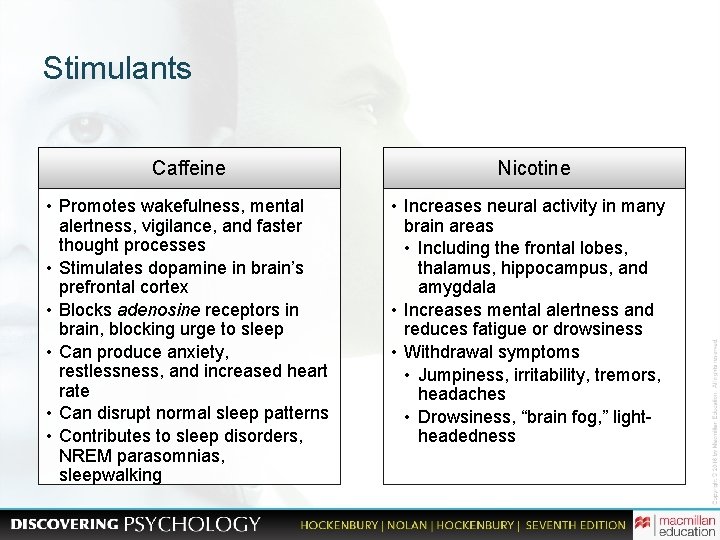
Stimulants Caffeine • Promotes wakefulness, mental alertness, vigilance, and faster thought processes • Stimulates dopamine in brain’s prefrontal cortex • Blocks adenosine receptors in brain, blocking urge to sleep • Can produce anxiety, restlessness, and increased heart rate • Can disrupt normal sleep patterns • Contributes to sleep disorders, NREM parasomnias, sleepwalking Nicotine • Increases neural activity in many brain areas • Including the frontal lobes, thalamus, hippocampus, and amygdala • Increases mental alertness and reduces fatigue or drowsiness • Withdrawal symptoms • Jumpiness, irritability, tremors, headaches • Drowsiness, “brain fog, ” lightheadedness
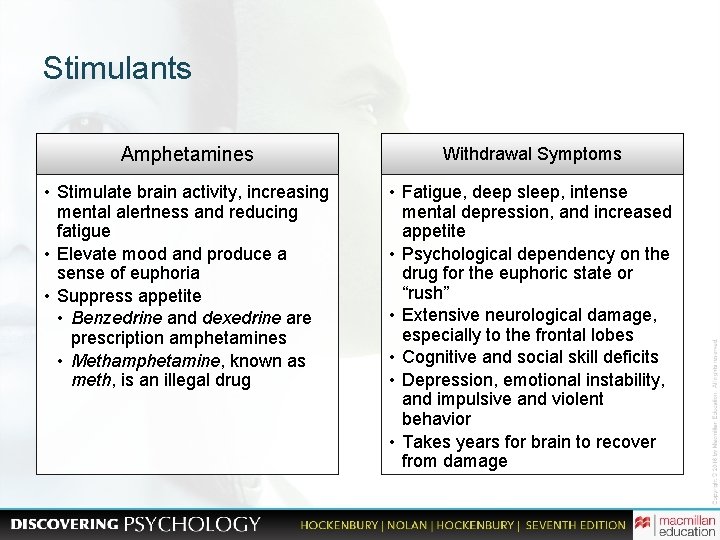
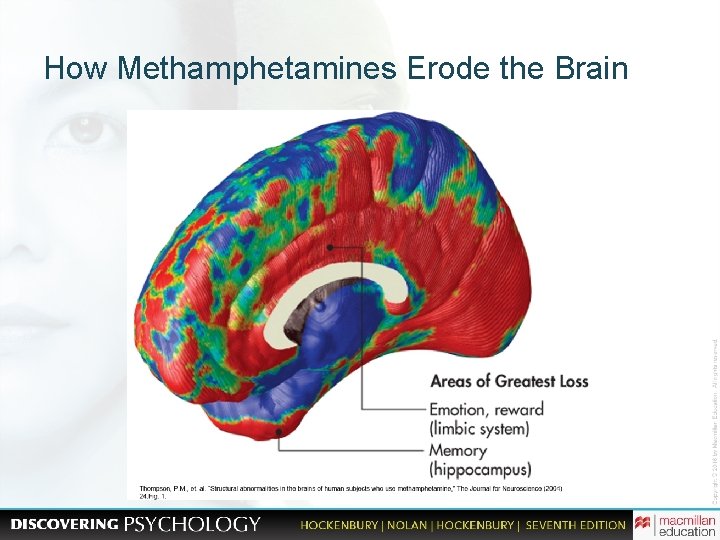
Stimulants Amphetamines Withdrawal Symptoms • Stimulate brain activity, increasing mental alertness and reducing fatigue • Elevate mood and produce a sense of euphoria • Suppress appetite • Benzedrine and dexedrine are prescription amphetamines • Methamphetamine, known as meth, is an illegal drug • Fatigue, deep sleep, intense mental depression, and increased appetite • Psychological dependency on the drug for the euphoric state or “rush” • Extensive neurological damage, especially to the frontal lobes • Cognitive and social skill deficits • Depression, emotional instability, and impulsive and violent behavior • Takes years for brain to recover from damage
How Methamphetamines Erode the Brain
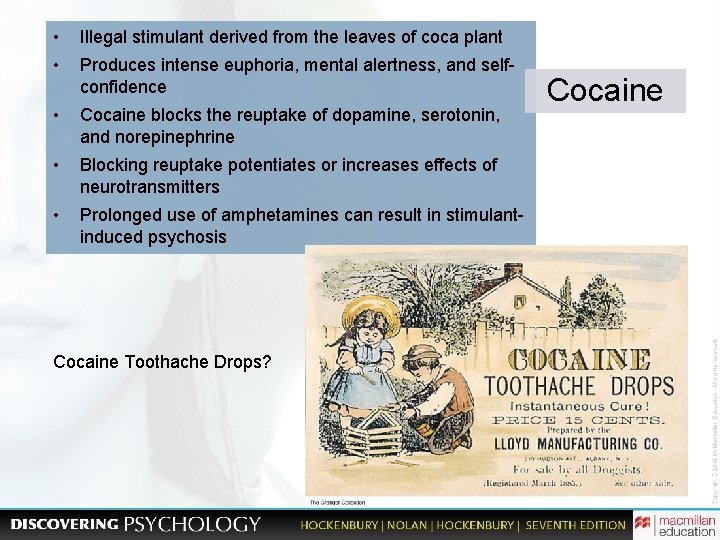
• Illegal stimulant derived from the leaves of coca plant • Produces intense euphoria, mental alertness, and selfconfidence • Cocaine blocks the reuptake of dopamine, serotonin, and norepinephrine • Blocking reuptake potentiates or increases effects of neurotransmitters • Prolonged use of amphetamines can result in stimulantinduced psychosis Cocaine Toothache Drops? Cocaine
Psychedelic Drugs • Mescaline: Psychedelic drug derived from the peyote cactus • Psilocybin: Psychedelic drug sometimes referred to as “magic mushrooms” or “shrooms” • LSD: Synthetic psychedelic drug – Mimics serotonin in the brain – Stimulates serotonin receptor sites in the somatosensory cortex • Adverse reactions to LSD – Flashbacks (recurrences of the drug’s effects) – Depression – Long-term psychological instability – Prolonged psychotic reactions
Psychedelic Drugs • Marijuana – Active ingredient THC, tetrahydrocannabinol – Lumping marijuana with the highly psychedelic drugs mescaline and LSD is misleading – At high doses, it produce sensory distortions; can interfere with muscle coordination, perception, and driving ability • Neural action – Discovery of naturally occurring brain chemical, called anandamide, that is structurally similar to THC – Anandamide involved in regulating transmission of pain signals and may reduce painful sensations – Similar to THC – Brain sites have receptors that respond to both
Rave Culture • All-night dance parties, called raves, originated in Great Britain and quickly spread to other European countries and to the United States. • Rave culture helped popularize the use of ecstasy, a synthetic drug.
Implementing Stimulus Control Theory to Overcome Insomnia • Four strategies to consistently get a good night’s sleep. 1. Monitor stimulant intake. 2. Establish a quiet bedtime routine. 3. Create the conditions for restful sleep. 4. Establish a consistent sleep–wake schedule.