
Chapter Four Asexual reproduction 1 2 3 Fungi

- Slides: 26
Chapter Four
Asexual reproduction § 1. 2. 3. § § § Fungi can reproduce asexually by one of the following: Sporulation followed by germination Budding Fragmentation of hyphae Sporulation vary greatly in colour , size & shape and are important for classification Conidiophores formed at the tip of hyphae Most common type of asexual spore, shows variation in form , colour , size , number of cells and arrangement. Dr. Nahlaa Khalifa 2
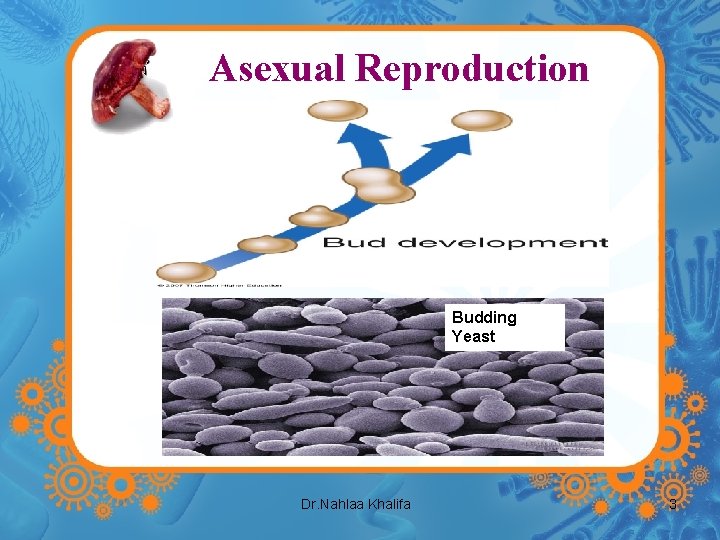
Asexual Reproduction Budding Yeast Dr. Nahlaa Khalifa 3
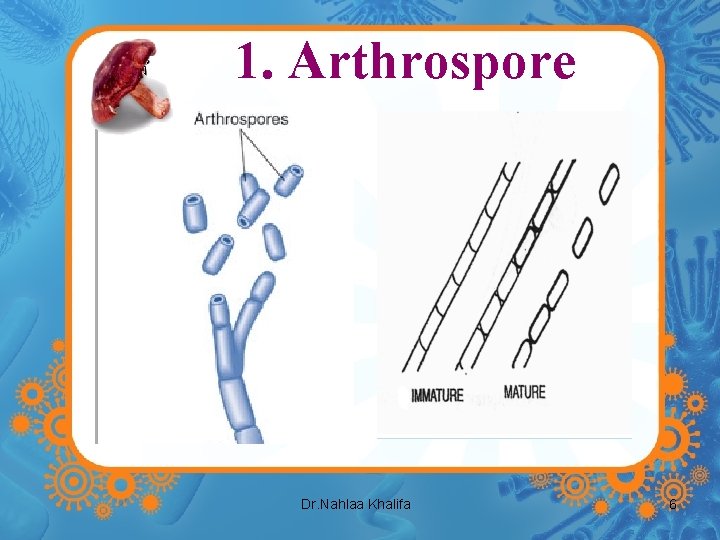
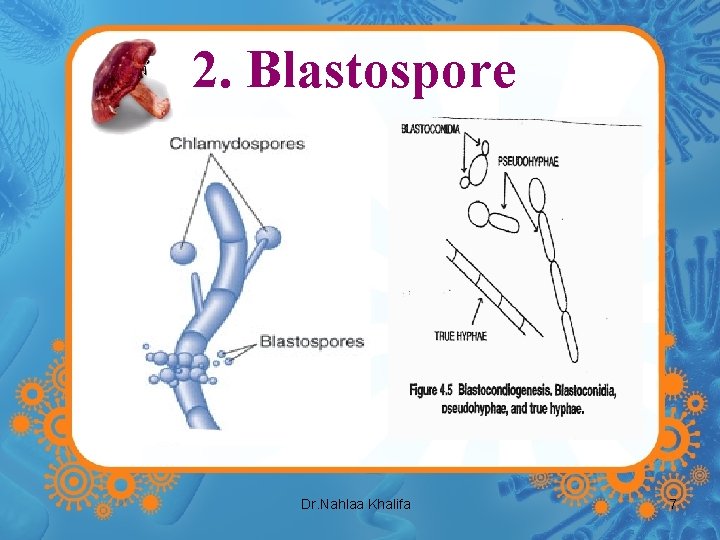
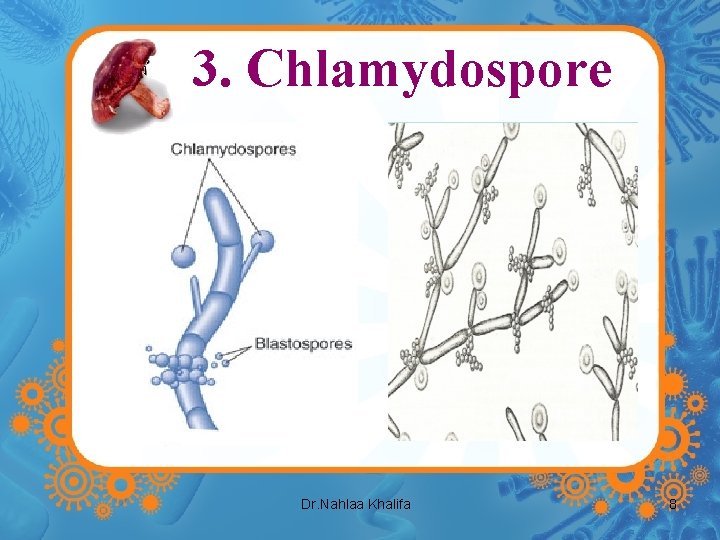
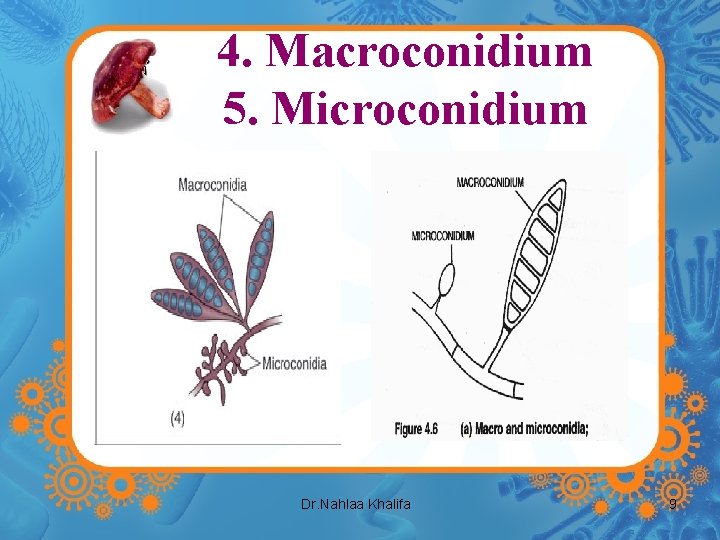
A sexual spores (Condia) 1. 2. 3. 4. 5. 6. 7. 8. Arthrospore Blastospore Chlamydospore Macroconidium Microconidium Sporangiospore Porospores Phialospores Dr. Nahlaa Khalifa 4
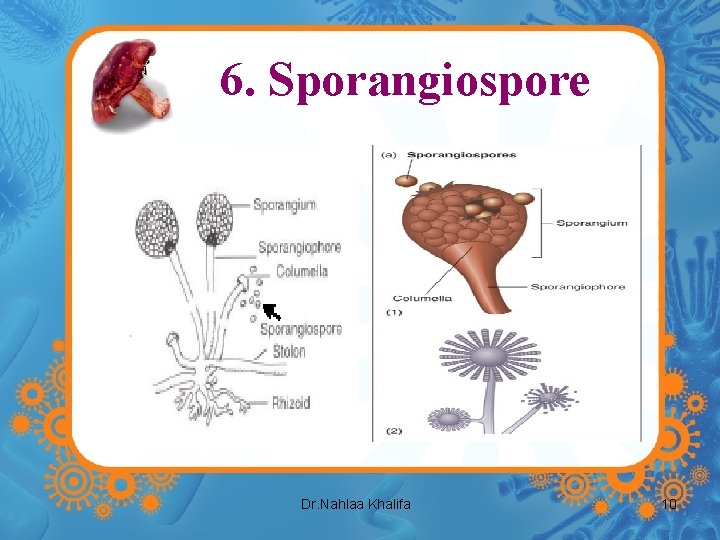
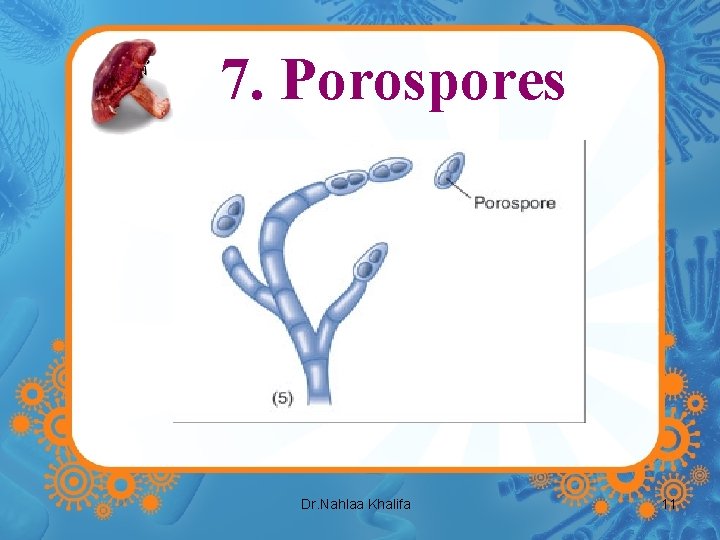
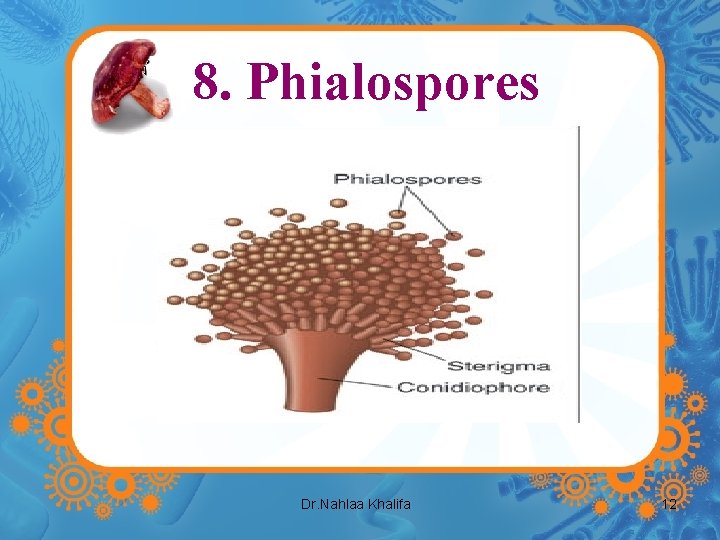
Spore types and representative genera § § § Arthrospores – Coccidiodes Chlamydospores/blastospores – Candida albicans Micro/microconidia – Microsporum, Fusarium Sporangiospores – Absidia, Mucor Porospores - Alternaria Phialospores – Aspergillus, Penicillium Dr. Nahlaa Khalifa 5
1. Arthrospore Dr. Nahlaa Khalifa 6
2. Blastospore Dr. Nahlaa Khalifa 7
3. Chlamydospore Dr. Nahlaa Khalifa 8
4. Macroconidium 5. Microconidium Dr. Nahlaa Khalifa 9
6. Sporangiospore Dr. Nahlaa Khalifa 10
7. Porospores Dr. Nahlaa Khalifa 11
8. Phialospores Dr. Nahlaa Khalifa 12
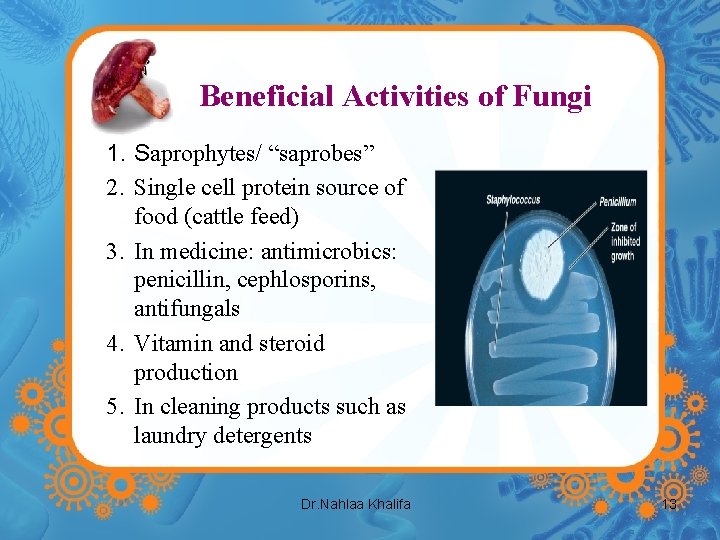
Beneficial Activities of Fungi 1. Saprophytes/ “saprobes” 2. Single cell protein source of food (cattle feed) 3. In medicine: antimicrobics: penicillin, cephlosporins, antifungals 4. Vitamin and steroid production 5. In cleaning products such as laundry detergents Dr. Nahlaa Khalifa 13
Beneficial Activities of Fungi 6. They can be applied to farmers’ fields to eliminate pests, and they’re often used to clean up oil spills 7. Balanced parasitism § Fungi are responsible for breaking down dead organic matter which allows nutrients to be cycled through the ecosystem. § Fungi play an essential role in both the Nitrogen and Carbon cycle by breaking down dead organic material. Dr. Nahlaa Khalifa 14
Beneficial Activities of Fungi • Food – Mushrooms – Used in producing cheese, blue cheeses s and bread Dr. Nahlaa Khalifa 15
Harmful Aspects of Fungi 1. Food spoilage, plant disease/sick buildings 2. Human diseases (Mycoses): Of the 200, 000 species; 300 cause wide spectrum of human diseases including the following infections: § Superficial § Cutaneous § Subcutaneous § Opportunistic § Systemic Dr. Nahlaa Khalifa 16
Harmful Aspects of Fungi 3. Allergies: • hypersensitivity reactions to inhaled spores, conidia or hyphal fragment mushroom poisoning (mycetismus): • ingestion of poisonous fleshy field fungi 4. Mycotoxicosis: • result of eating moldy food or grains in which the • Fungus has produced toxic metabolites (e. g. aflatoxin) Dr. Nahlaa Khalifa 17
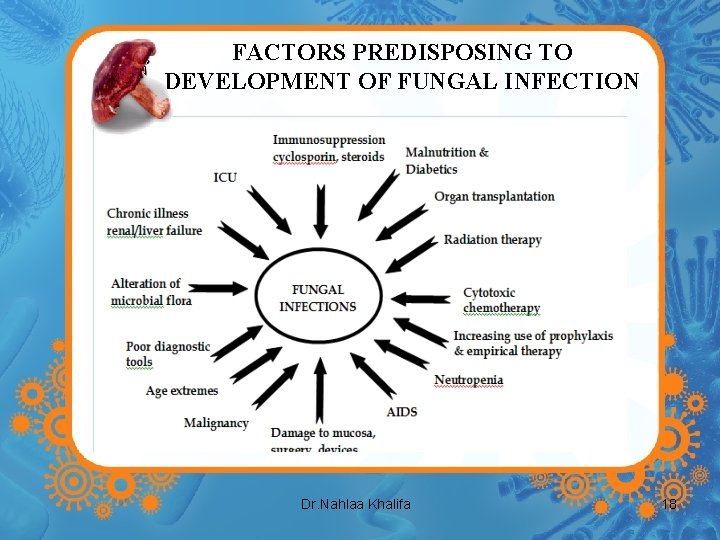
FACTORS PREDISPOSING TO DEVELOPMENT OF FUNGAL INFECTION Dr. Nahlaa Khalifa 18
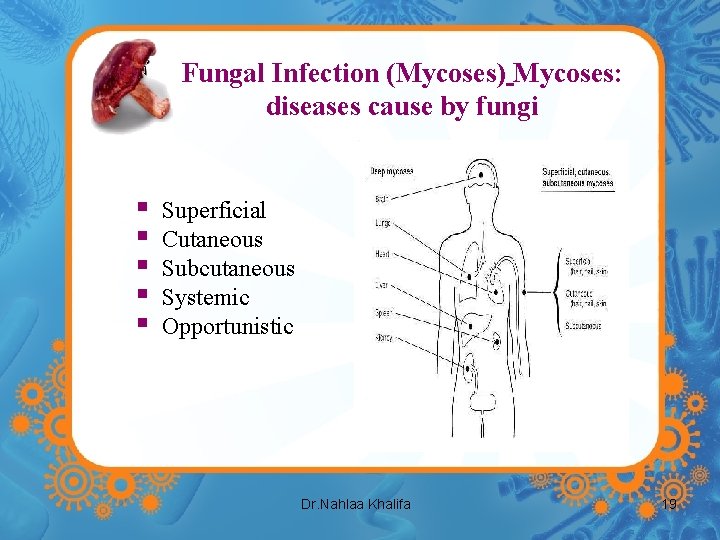
Fungal Infection (Mycoses) Mycoses: diseases cause by fungi § § § Superficial Cutaneous Subcutaneous Systemic Opportunistic Dr. Nahlaa Khalifa 19
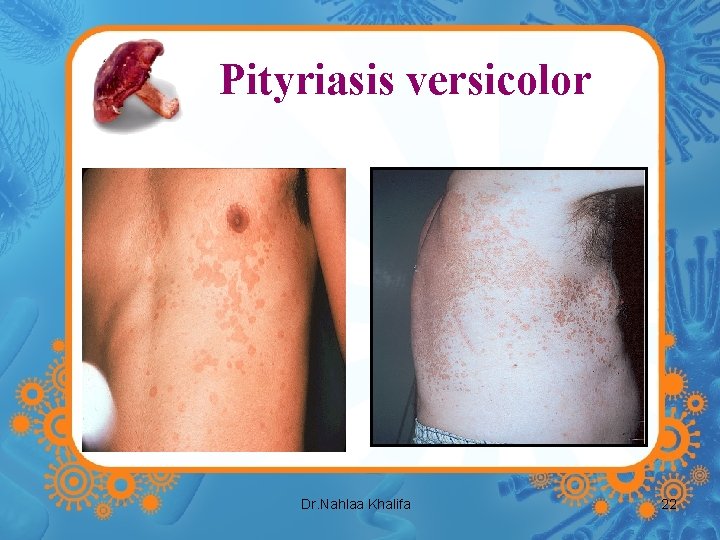
SUPERFICIAL MYCOSES § § Pityriasis versicolor Tinea nigra Black piedra White piedra Dr. Nahlaa Khalifa 20
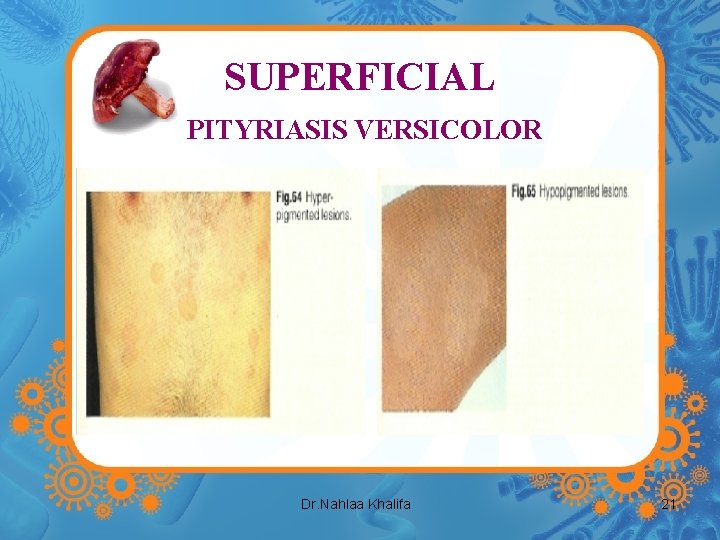
SUPERFICIAL PITYRIASIS VERSICOLOR Dr. Nahlaa Khalifa 21
Pityriasis versicolor Dr. Nahlaa Khalifa 22
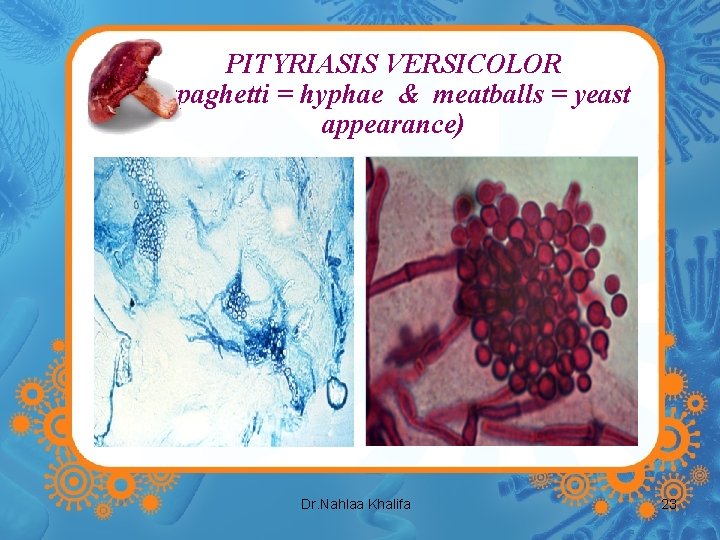
PITYRIASIS VERSICOLOR (spaghetti = hyphae & meatballs = yeast appearance) Dr. Nahlaa Khalifa 23
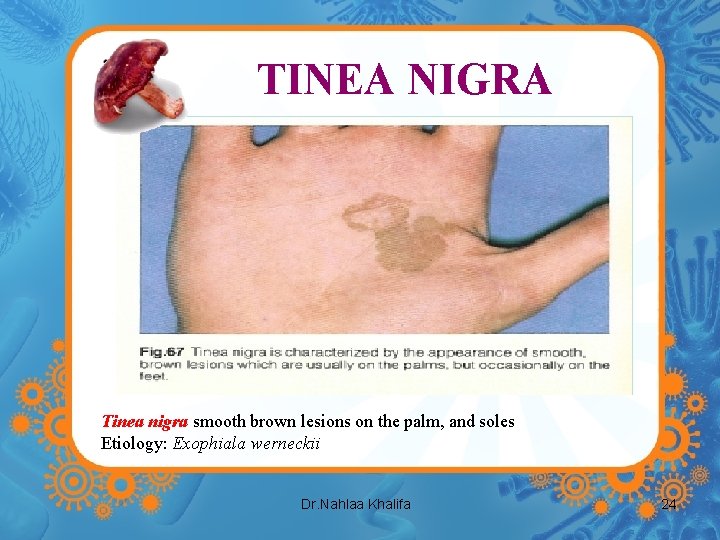
TINEA NIGRA Tinea nigra smooth brown lesions on the palm, and soles Etiology: Exophiala werneckii Dr. Nahlaa Khalifa 24
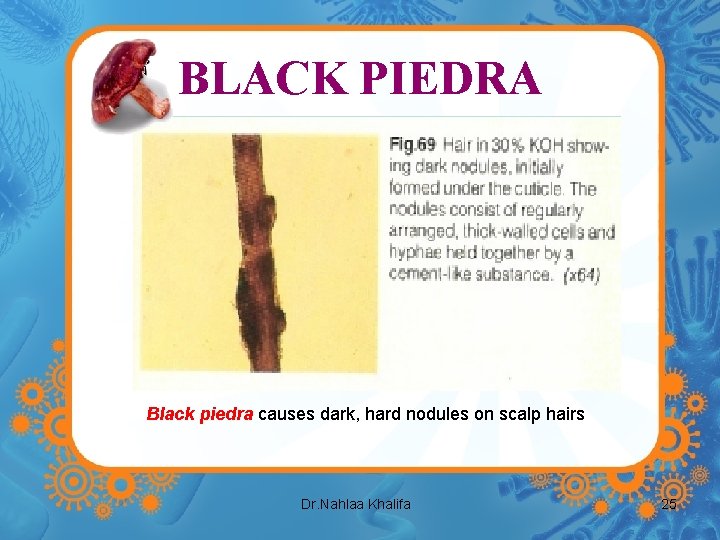
BLACK PIEDRA Black piedra causes dark, hard nodules on scalp hairs Dr. Nahlaa Khalifa 25
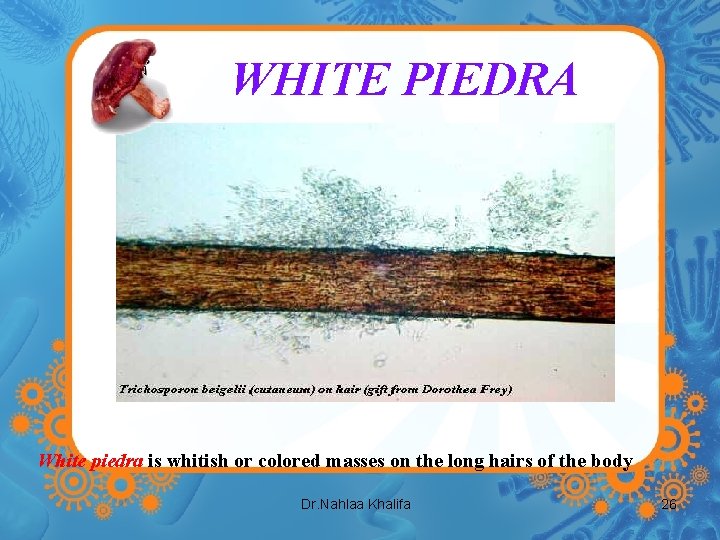
WHITE PIEDRA White piedra is whitish or colored masses on the long hairs of the body Dr. Nahlaa Khalifa 26