
Chapter Five Nonverbal Messages This multimedia product and
Chapter Five: Nonverbal Messages This multimedia product and its contents are protected under copyright law. The following are prohibited by law: - any public performance or display, including transmission of any image over a network; - preparation of any derivative work, including the extraction, in whole or in part, of any images; - any rental, lease, or lending of the program. Copyright © 2014, 2011, 2008 Pearson Education, Inc. All rights reserved.
Chapter Five Goals l l l Explain the principles that identify the ways in which nonverbal communication functions Use appropriate and effective types of nonverbal communication Use appropriate nonverbal communication based on gender and culture Copyright © 2014, 2011, 2008 Pearson Education, Inc. All rights reserved.
Which of the following statements do you think are true? l l l Nonverbal communication conveys more meaning than verbal communication Liars avoid eye contact Studying nonverbal communication will enable you to detect lying Unlike verbal communication, nonverbal communication is universal throughout the world When verbal and nonverbal messages contradict each other, it’s wise to believe the nonverbal Copyright © 2014, 2011, 2008 Pearson Education, Inc. All rights reserved.
Principles of Nonverbal Communication l l l Interacts with verbal messages Helps manage impressions Helps form relationships Structures conversation Influences and deceives Expresses emotions Copyright © 2014, 2011, 2008 Pearson Education, Inc. All rights reserved.
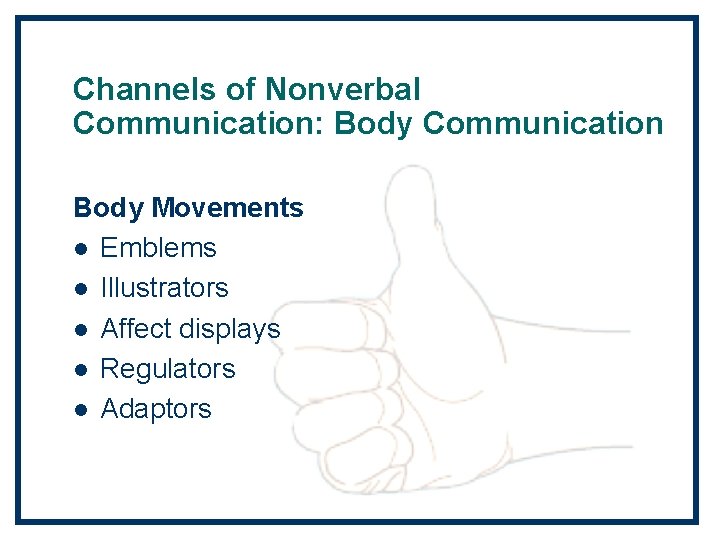
Channels of Nonverbal Communication: Body Communication Body Movements l Emblems l Illustrators l Affect displays l Regulators l Adaptors Copyright © 2014, 2011, 2008 Pearson Education, Inc. All rights reserved.
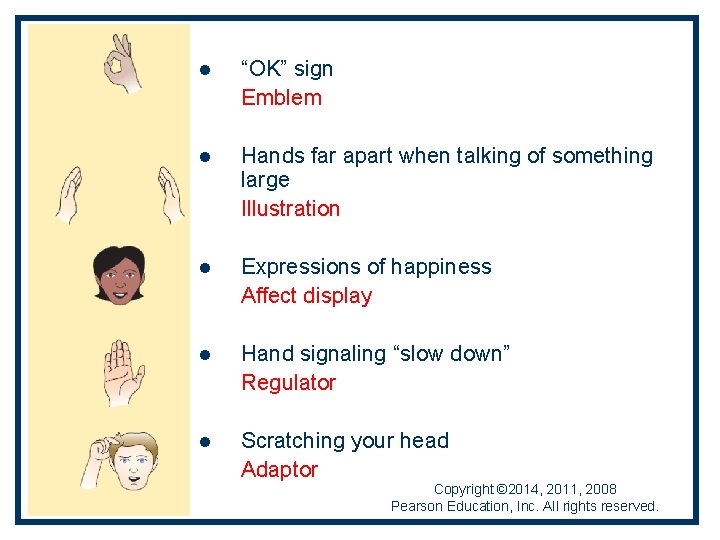
l “OK” sign Emblem l Hands far apart when talking of something large Illustration l Expressions of happiness Affect display l Hand signaling “slow down” Regulator l Scratching your head Adaptor Copyright © 2014, 2011, 2008 Pearson Education, Inc. All rights reserved.
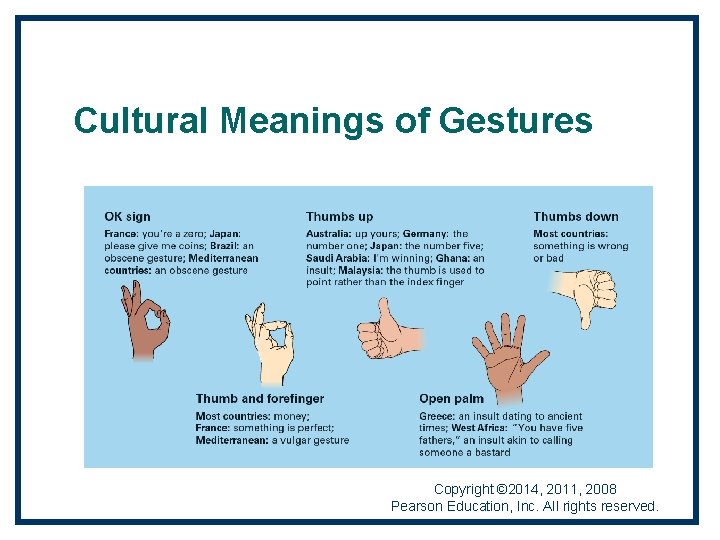
Cultural Meanings of Gestures Copyright © 2014, 2011, 2008 Pearson Education, Inc. All rights reserved.
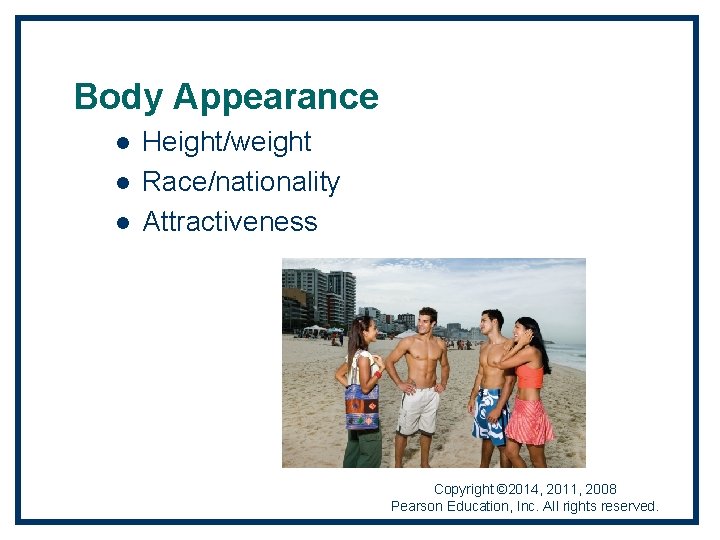
Body Appearance l l l Height/weight Race/nationality Attractiveness Copyright © 2014, 2011, 2008 Pearson Education, Inc. All rights reserved.
Facial Communication l l Happiness Surprise Fear Anger l l Sadness Disgust Contempt Interest Copyright © 2014, 2011, 2008 Pearson Education, Inc. All rights reserved.
Facial Management l Techniques that allow you to express feelings while achieving desired effects: – – – Intensifying Deintensifying Neutralizing Masking Simulating Copyright © 2014, 2011, 2008 Pearson Education, Inc. All rights reserved.
Facial Feedback Hypothesis l l l Facial expressions influence levels of physiological arousal. Research indicates it is more likely to increase feelings of sadness Will not replace an emotion Copyright © 2014, 2011, 2008 Pearson Education, Inc. All rights reserved.
Eye Communication l l Duration of eye contact Eye avoidance Civil inattention Eye messages vary with both gender and culture Copyright © 2014, 2011, 2008 Pearson Education, Inc. All rights reserved.
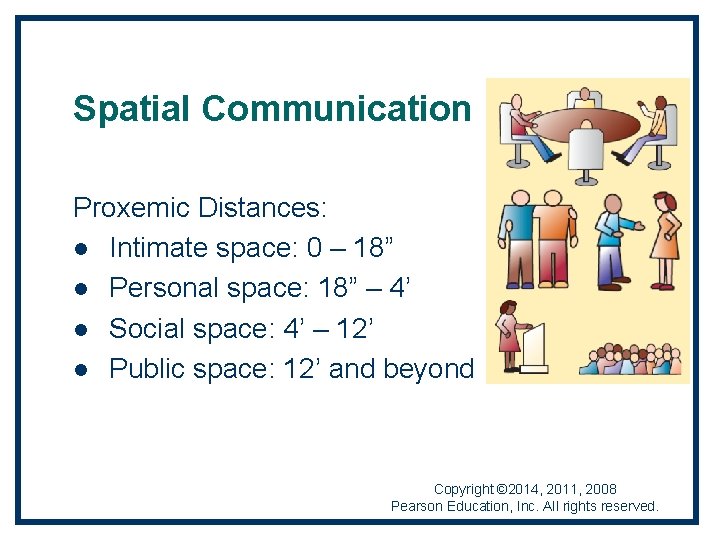
Spatial Communication Proxemic Distances: l Intimate space: 0 – 18” l Personal space: 18” – 4’ l Social space: 4’ – 12’ l Public space: 12’ and beyond Copyright © 2014, 2011, 2008 Pearson Education, Inc. All rights reserved.
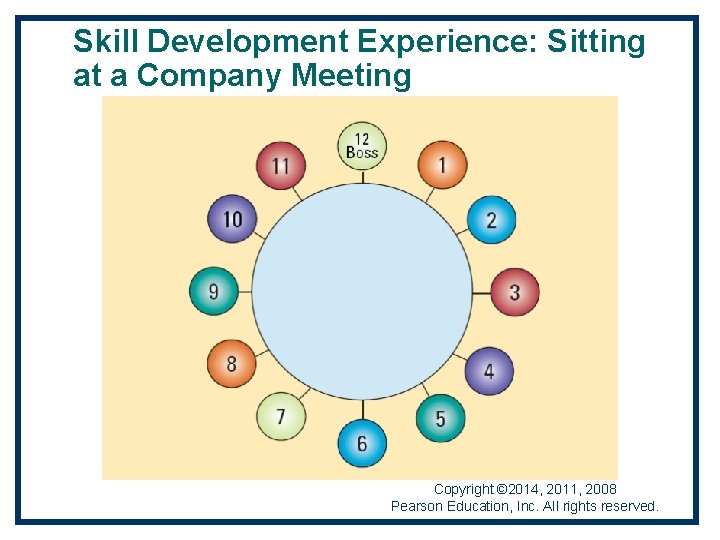
Skill Development Experience: Sitting at a Company Meeting Copyright © 2014, 2011, 2008 Pearson Education, Inc. All rights reserved.
Territoriality “Possessiveness of primary, secondary, or public space” l Central markers: Reserves a space l Boundary markers: Sets space between your space and others’ l Earmarkers: Identifies one’s possessions Copyright © 2014, 2011, 2008 Pearson Education, Inc. All rights reserved.
Artifactual Communication “Communicating through objects and arrangements” l Color l Clothing and body adornment l Space decoration l Smell communication Copyright © 2014, 2011, 2008 Pearson Education, Inc. All rights reserved.
Touch Communication Meanings of Touch l Positive emotions l Playfulness l Control l Ritual l Task-related Copyright © 2014, 2011, 2008 Pearson Education, Inc. All rights reserved.
Touch Avoidance l People avoid touch for a number of reasons: – – – l Communication apprehension Age Gender Many factors enter into a person’s willingness to touch and be touched by others Copyright © 2014, 2011, 2008 Pearson Education, Inc. All rights reserved.
Paralanguage l l Rate, volume, pitch, and rhythm of speaking Vocal dimensions of speech Judgments about people Judgments about communication effectiveness Copyright © 2014, 2011, 2008 Pearson Education, Inc. All rights reserved.
Functions of Silence l l l Time to think, prepare Signal importance of a message Used as a weapon Behavior/response to personal anxiety Communicate emotional responses Nothing to say Copyright © 2014, 2011, 2008 Pearson Education, Inc. All rights reserved.
Time Communication l l Time orientation Monochronic time orientation Polychronic time orientation Social clock Copyright © 2014, 2011, 2008 Pearson Education, Inc. All rights reserved.
Culture, Gender, and Nonverbal Communication l l l Gestures Facial expression and eye movements Colors Touch Paralanguage and silence Time Copyright © 2014, 2011, 2008 Pearson Education, Inc. All rights reserved.
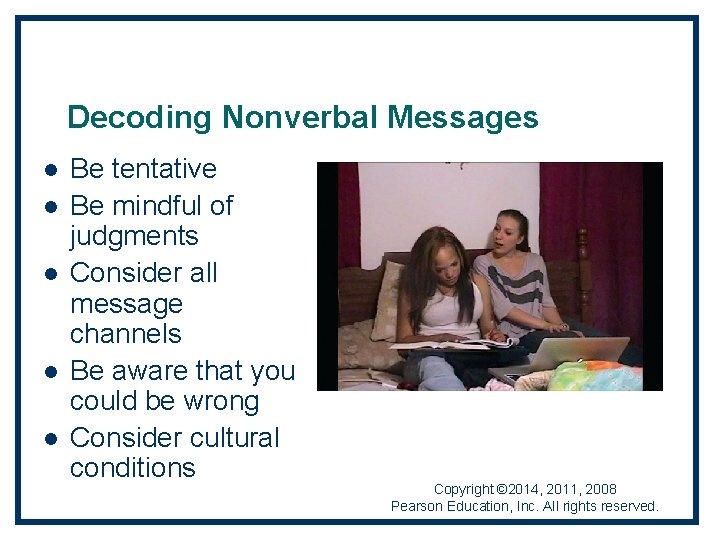
Decoding Nonverbal Messages l l l Be tentative Be mindful of judgments Consider all message channels Be aware that you could be wrong Consider cultural conditions Copyright © 2014, 2011, 2008 Pearson Education, Inc. All rights reserved.
Encoding Nonverbal Messages l l Keep verbal and nonverbal messages consistent Monitor your own nonverbal messages Avoid extremes and monotony Consider the situation Copyright © 2014, 2011, 2008 Pearson Education, Inc. All rights reserved.
End Show Copyright © 2014, 2011, 2008 Pearson Education, Inc. All rights reserved.
- Slides: 25