
CHAPTER FIVE INFRASTRUCTURES SUSTAINABLE TECHNOLOGIES The Mc GrawHill
CHAPTER FIVE INFRASTRUCTURES SUSTAINABLE TECHNOLOGIES ©The Mc. Graw-Hill Companies, All Rights Reserved
SECTION 5. 1 MIS Infrastructures ©The Mc. Graw-Hill Companies, All Rights Reserved

3 THE BUSINESS BENEFITS OF A SOLID MIS INFRASTRUCTURE § MIS infrastructure – Includes the plans for how a firm will build, deploy, use, and share its data, processes, and MIS assets • • • Hardware Software Network Client Server
4 THE BUSINESS BENEFITS OF A SOLID MIS INFRASTRUCTURE § Supporting operations • Information MIS infrastructure § Supporting change • Agile MIS Infrastructure § Supporting the environment • Sustainable MIS infrastructure

5 SUPPORTING OPERATIONS: INFORMATION MIS INFRASTRUCTURE § Backup and recovery plan § Disaster recovery plan § Business continuity plan
6 Backup and Recovery Plan § Backup – An exact copy of a system’s information § Recovery – The ability to get a system up and running in the event of a system crash or failure • Fault tolerance • Failover • Failback
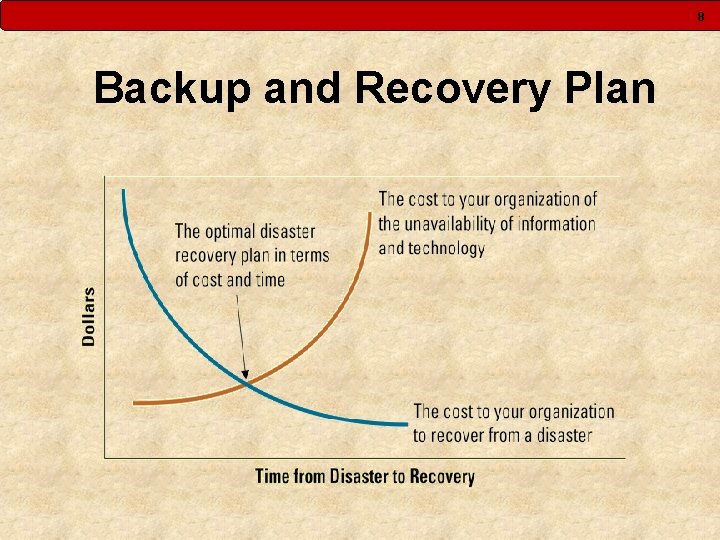
7 Backup and Recovery Plan § Disaster recovery plan - A detailed process for recovering information or an IT system in the event of a catastrophic disaster such as a fire or flood § Disaster recovery cost curve - Charts (1) the cost to the organization of the unavailability of information and technology and (2) the cost to the organization of recovering from a disaster over time
8 Backup and Recovery Plan
9 Backup and Recovery Plan § Hot site - A separate and fully equipped facility where the company can move immediately after a disaster and resume business § Cold site - A separate facility that does not have any computer equipment, but is a place where employees can move after a disaster § Warm site – A separate facility with computer equipment that requires installation and configuration
10 SUPPORTING CHANGE: AGILE MIS INFRASTRUCTURE § Characteristics of an agile MIS infrastructure • • Accessibility Availability Maintainability Portability Reliability Scalability Usability
11 Accessibility § Accessibility - Refers to the varying levels that define what a user can access, view, or perform when operating a system § Web accessibility – Allows people with disabilities to use the Web § Administrator access – Unrestricted access to the entire system
12 Availability § Availability – Time frames when the system is operational § Unavailable – Time frames when a system is not operating and cannot be used § High availability – System is continuously operational at all times
13 Maintainability § Maintainability – How quickly a system can transform to support environmental changes § Organizations must watch today’s business, as well as tomorrow’s, when designing and building systems § Systems must be flexible enough to meet all types of business changes
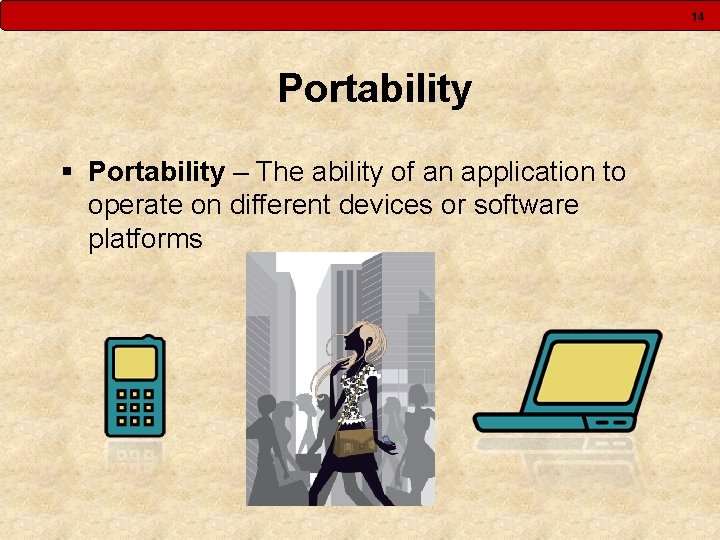
14 Portability § Portability – The ability of an application to operate on different devices or software platforms
15 Reliability § Reliability - Ensures a system is functioning correctly and providing accurate information § Reliability is another term for accuracy when discussing the correctness of systems within the context of efficiency IT metrics § Vulnerability – a system weakness that can be exploited by a threat
16 Scalability § Scalability - How well a system can scale up, or adapt to the increased demands of growth § Performance - Measures how quickly a system performs a process or transaction § Capacity planning - Determines future environmental infrastructure requirements to ensure high-quality system performance
17 Usability § Usability – The degree to which a system is easy to learn and efficient and satisfying to use § Serviceability – How quickly a third -party can change a system to ensure it meets user needs and the terms of any contracts, including agreed levels of reliability, maintainability, or availability
SECTION 5. 2 Building Sustainable MIS Infrastructures ©The Mc. Graw-Hill Companies, All Rights Reserved
19 MIS AND THE ENVIRONMENT § Moore’s Law - Refers to the computer chip performance per dollar doubles every 18 months § Sustainable, or “green, ” MIS Describes the production, management, use, and disposal of technology in a way that minimizes damage to the environment § Corporate social responsibility Companies’ acknowledged responsibility to society
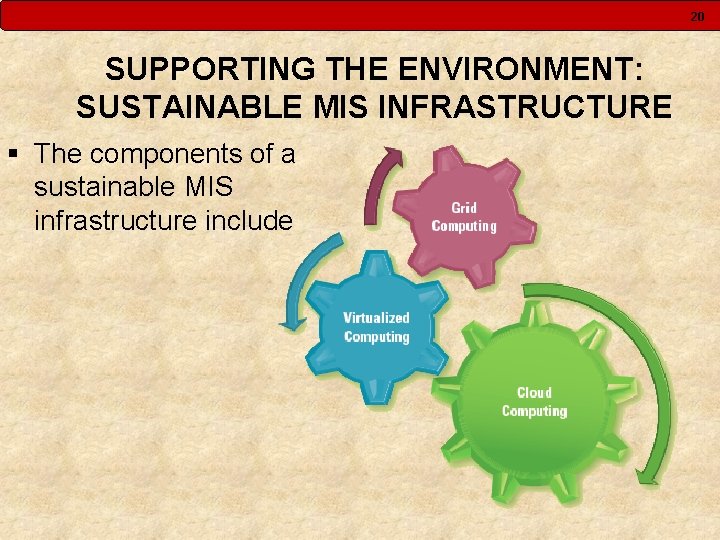
20 SUPPORTING THE ENVIRONMENT: SUSTAINABLE MIS INFRASTRUCTURE § The components of a sustainable MIS infrastructure include
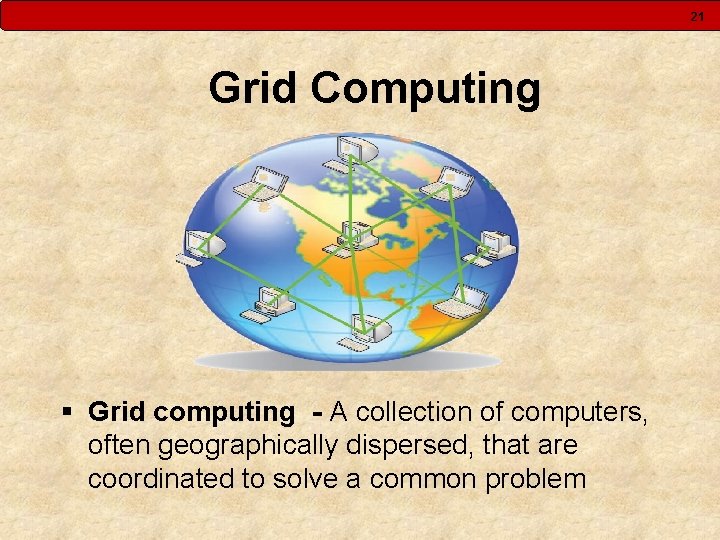
21 Grid Computing § Grid computing - A collection of computers, often geographically dispersed, that are coordinated to solve a common problem
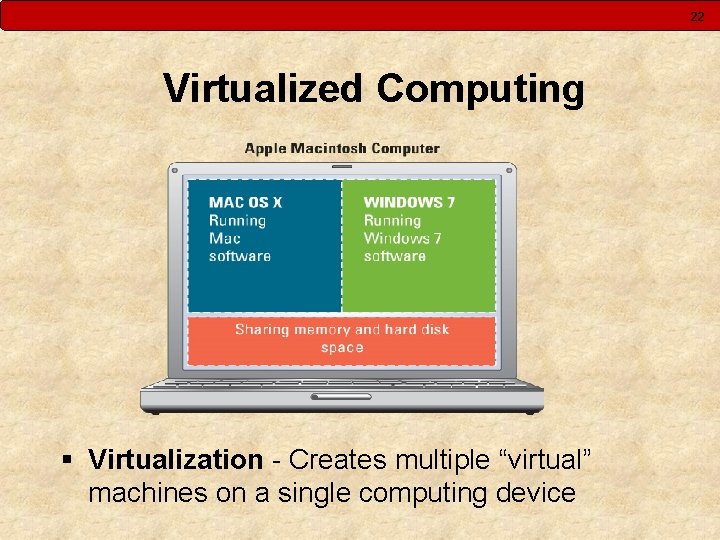
22 Virtualized Computing § Virtualization - Creates multiple “virtual” machines on a single computing device
23 Virtualized Computing § Data center – A facility used to house management information systems and associated components, such as telecommunications and storage systems § Sustainable data centers • Reduces carbon emissions • Reduces required floor Space • Chooses Geographic location
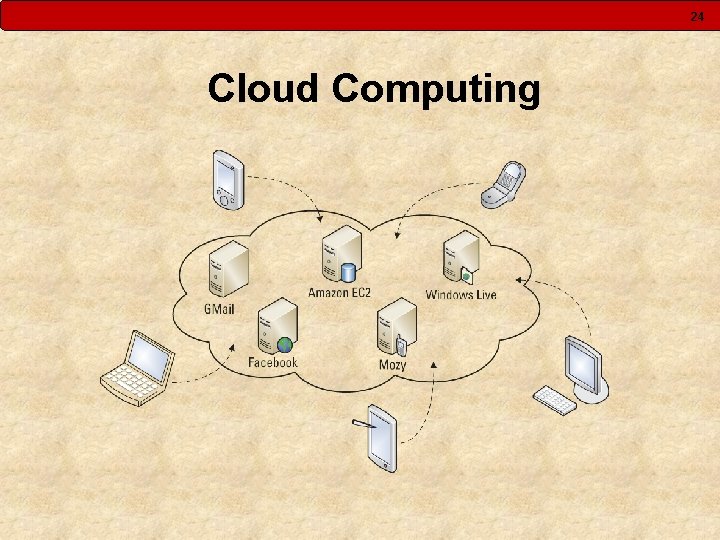
24 Cloud Computing
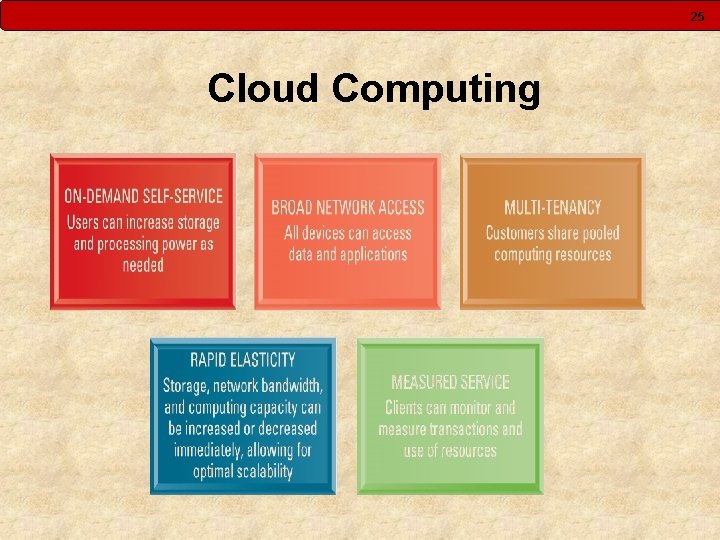
25 Cloud Computing
- Slides: 25