
Chapter Five Cell Structure and Function 5 1



- Slides: 19
Chapter Five: Cell Structure and Function • 5. 1 What are Cells? • 5. 2 Cells: A Look Inside
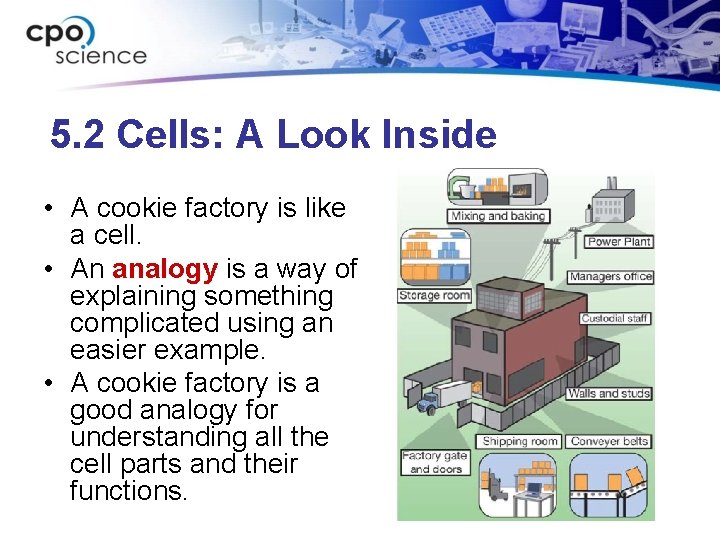
5. 2 Cells: A Look Inside • A cookie factory is like a cell. • An analogy is a way of explaining something complicated using an easier example. • A cookie factory is a good analogy for understanding all the cell parts and their functions.
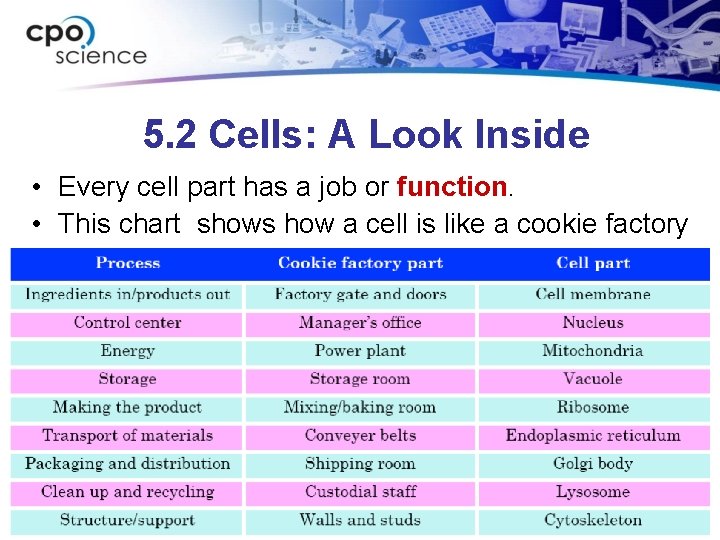
5. 2 Cells: A Look Inside • Every cell part has a job or function. • This chart shows how a cell is like a cookie factory
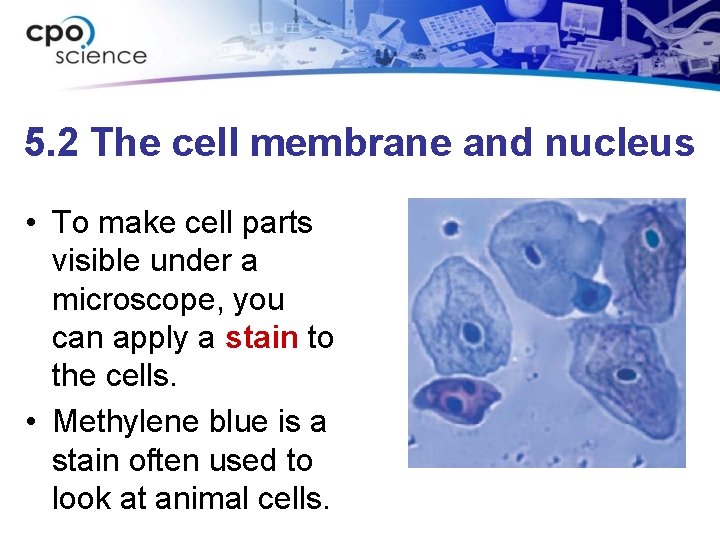
5. 2 The cell membrane and nucleus • To make cell parts visible under a microscope, you can apply a stain to the cells. • Methylene blue is a stain often used to look at animal cells.
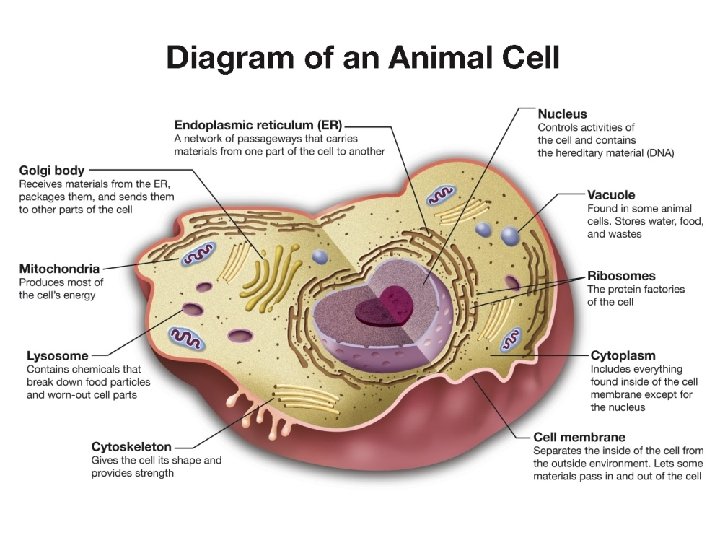
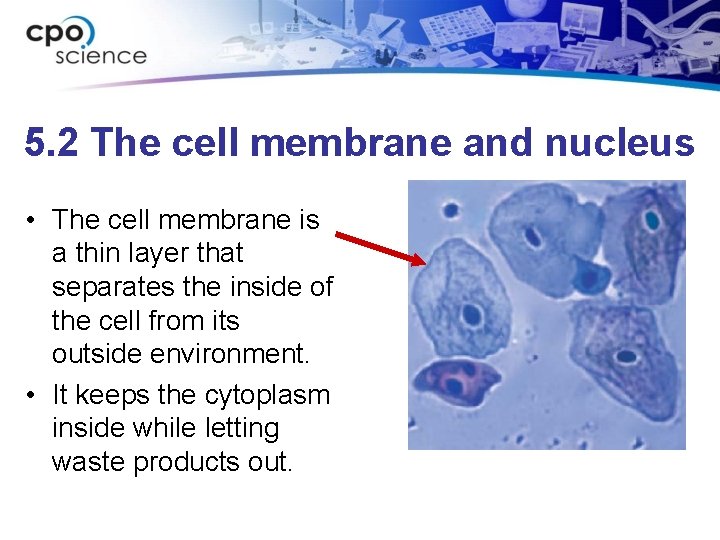
5. 2 The cell membrane and nucleus • The cell membrane is a thin layer that separates the inside of the cell from its outside environment. • It keeps the cytoplasm inside while letting waste products out.
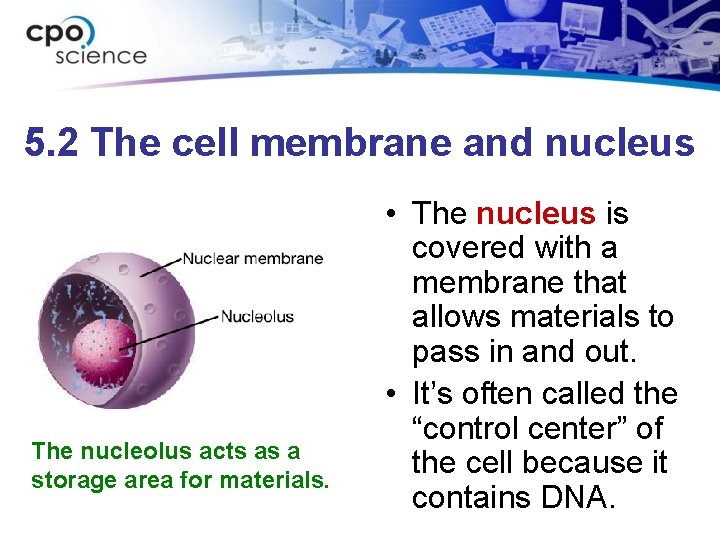
5. 2 The cell membrane and nucleus The nucleolus acts as a storage area for materials. • The nucleus is covered with a membrane that allows materials to pass in and out. • It’s often called the “control center” of the cell because it contains DNA.
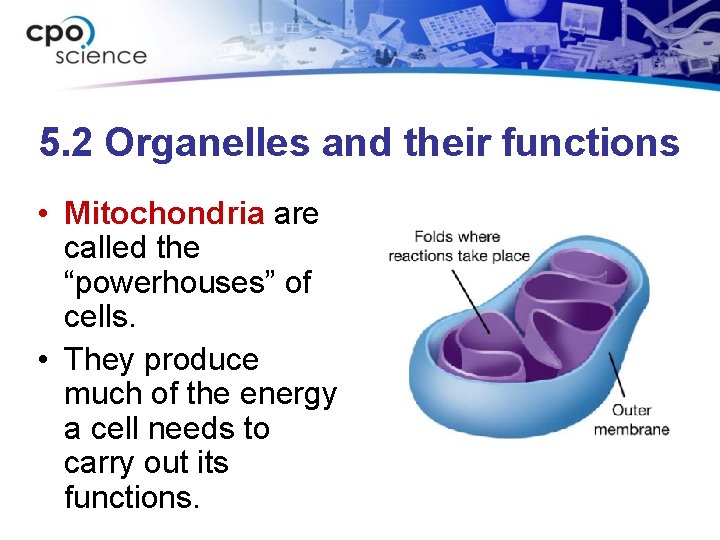
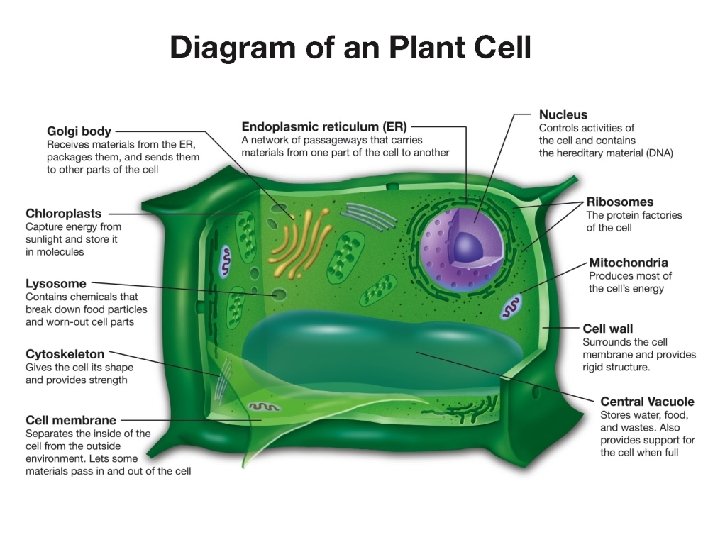
5. 2 Organelles and their functions • Mitochondria are called the “powerhouses” of cells. • They produce much of the energy a cell needs to carry out its functions.
5. 2 Organelles and their functions • A vacuole is the storage area of the cell. • Vacuoles store water, food, and waste.
5. 2 Organelles and their functions • The endoplasmic reticulum (ER) is a series of tunnels throughout the cytoplasm. • They transport proteins from one part of the cell to another.
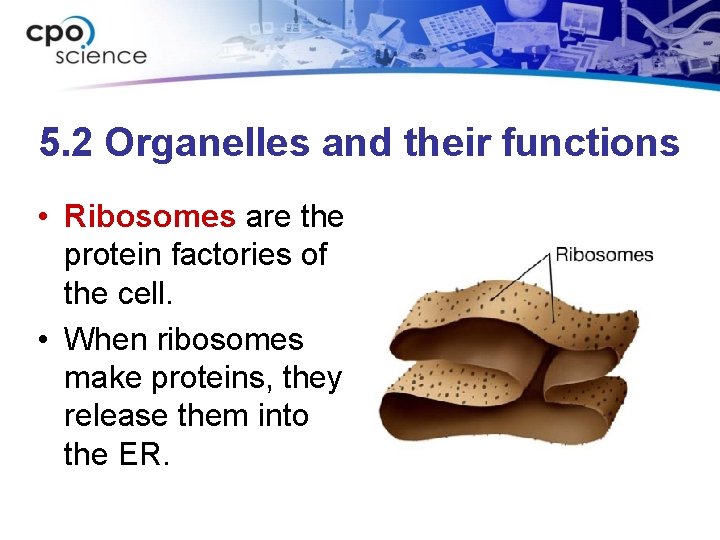
5. 2 Organelles and their functions • Ribosomes are the protein factories of the cell. • When ribosomes make proteins, they release them into the ER.
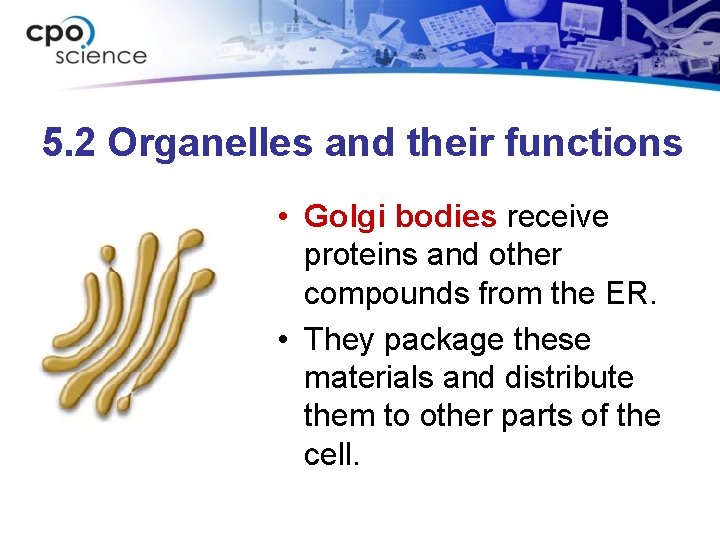
5. 2 Organelles and their functions • Golgi bodies receive proteins and other compounds from the ER. • They package these materials and distribute them to other parts of the cell.
5. 2 Organelles and their functions • Lysosomes contain enzymes that can break things down. • Lysosomes pick up bacteria, food, and old organelles and break them into small pieces that can be reused.
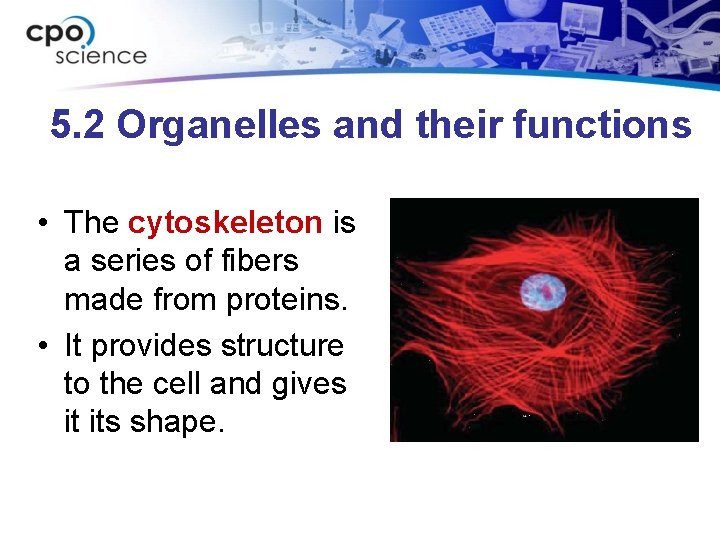
5. 2 Organelles and their functions • The cytoskeleton is a series of fibers made from proteins. • It provides structure to the cell and gives it its shape.
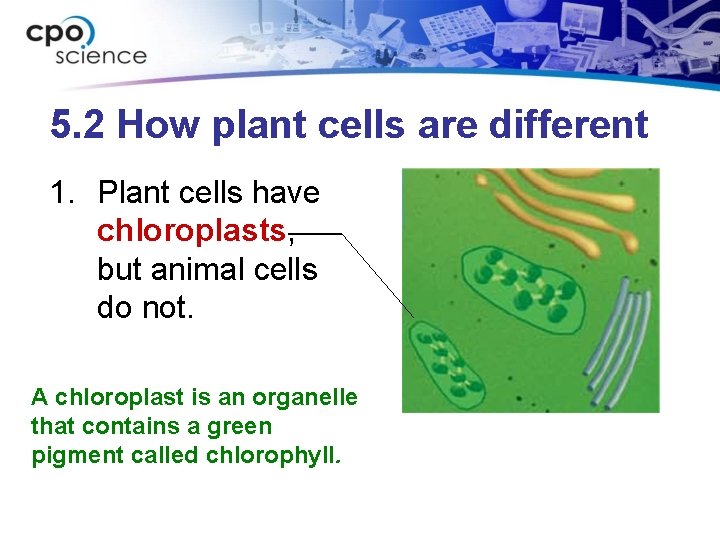
5. 2 How plant cells are different 1. Plant cells have chloroplasts, but animal cells do not. A chloroplast is an organelle that contains a green pigment called chlorophyll.
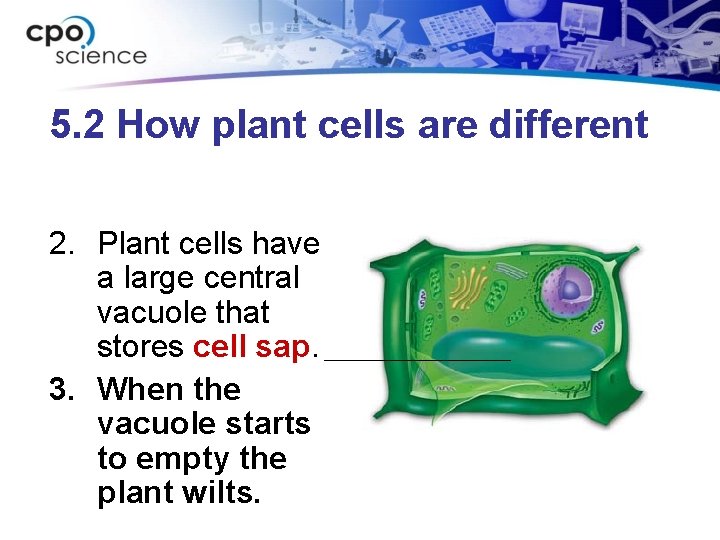
5. 2 How plant cells are different 2. Plant cells have a large central vacuole that stores cell sap. 3. When the vacuole starts to empty the plant wilts.
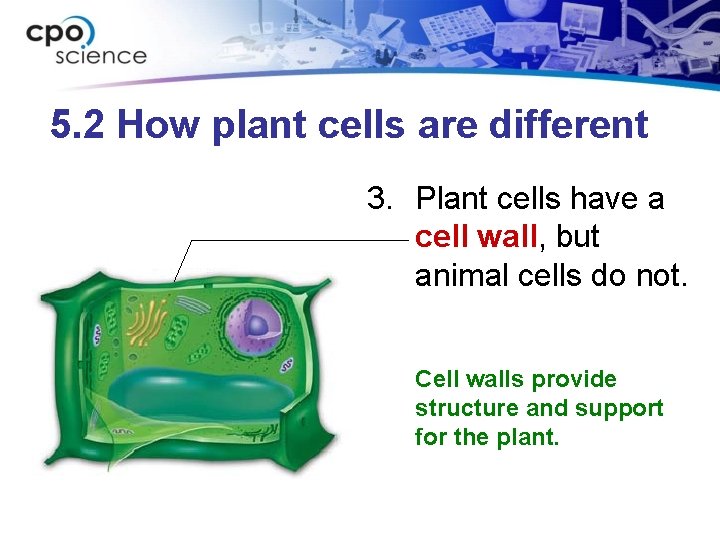
5. 2 How plant cells are different 3. Plant cells have a cell wall, but animal cells do not. Cell walls provide structure and support for the plant.
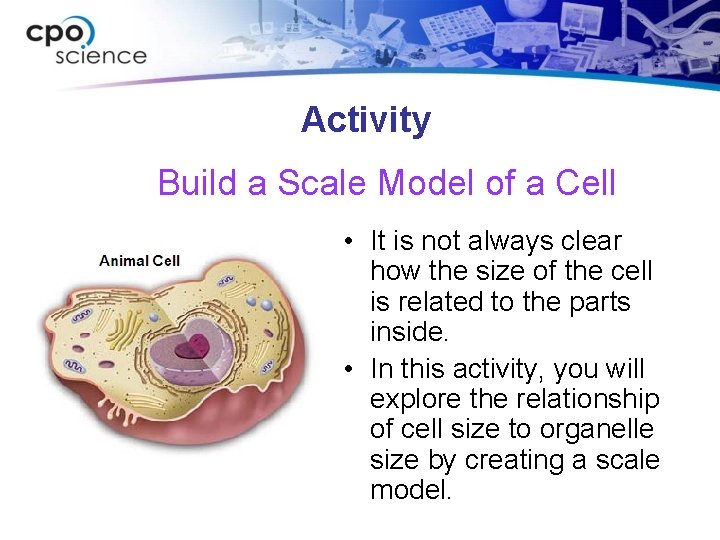
Activity Build a Scale Model of a Cell • It is not always clear how the size of the cell is related to the parts inside. • In this activity, you will explore the relationship of cell size to organelle size by creating a scale model.