
chapter Endocrine 3 Responses to Resistance Exercise Endocrine

- Slides: 58
chapter Endocrine 3 Responses to Resistance Exercise Endocrine Responses to Resistance Exercise William J. Kraemer, Ph. D, CSCS, FACSM, FISSN, FNSCA Jakob L. Vingren, Ph. D, CSCS Barry A. Spiering, Ph. D, CSCS
Chapter Objectives • Understand basic concepts of endocrinology. • Explain the physiological roles of anabolic hormones. • Describe hormonal responses to resistance exercise. • Develop training programs that demonstrate an understanding of human endocrine responses.
Key Point • It has been theorized that the endocrine system can be manipulated naturally with resistance training to enhance the development of various target tissues, thereby improving performance.
Section Outline • Synthesis, Storage, and Secretion of Hormones
Key Term • hormones: Chemical messengers that are synthesized, stored, and released into the blood by endocrine glands and certain other cells.
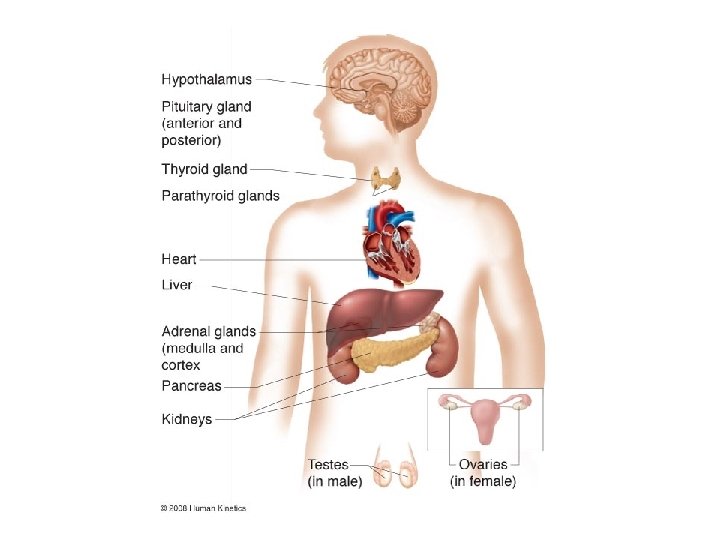
Glands of the Body • Figure 3. 1 (next slide) – The principal endocrine glands of the body along with other glands that secrete hormones
Figure 3. 1
Section Outline • Muscle as the Target for Hormone Interactions
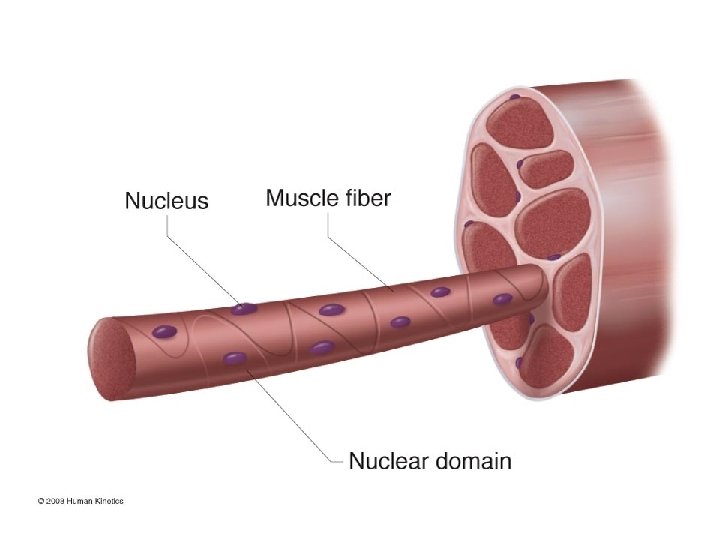
Muscle Cell • Figure 3. 2 (next slide) – The muscle cell is a multinucleated cell in which each nucleus controls a region of the muscle protein (called a nuclear domain).
Figure 3. 2
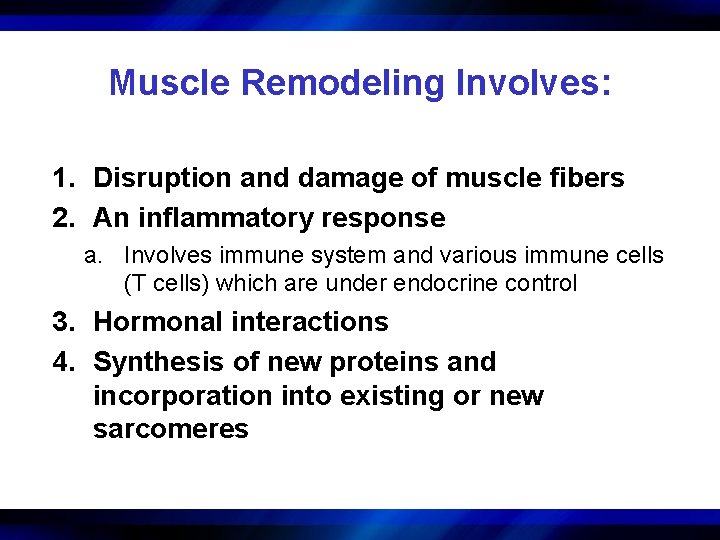
Muscle Remodeling Involves: 1. Disruption and damage of muscle fibers 2. An inflammatory response a. Involves immune system and various immune cells (T cells) which are under endocrine control 3. Hormonal interactions 4. Synthesis of new proteins and incorporation into existing or new sarcomeres
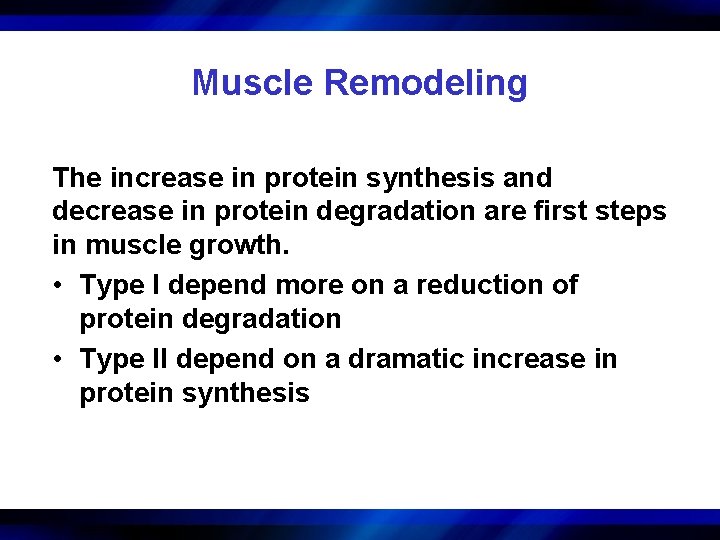
Muscle Remodeling The increase in protein synthesis and decrease in protein degradation are first steps in muscle growth. • Type I depend more on a reduction of protein degradation • Type II depend on a dramatic increase in protein synthesis
Muscle Remodeling Hormones are involved with protein synthesis and degradation mechanisms. • Anabolic hormones – promote tissue building – insulin, insulin-like growth factors, testosterone, growth hormone • Catabolic hormones – degrade cell proteins and support glucose synthesis – cortisol, progesterone
Section Outline • Steroid Hormones Versus Polypeptide Hormones – Steroid Hormone Interactions – Polypeptide Hormone Interactions
Steroid Hormones Versus Polypeptide Hormones • There are two main categories of hormones: – Steroid – Polypeptide (or simply peptide)
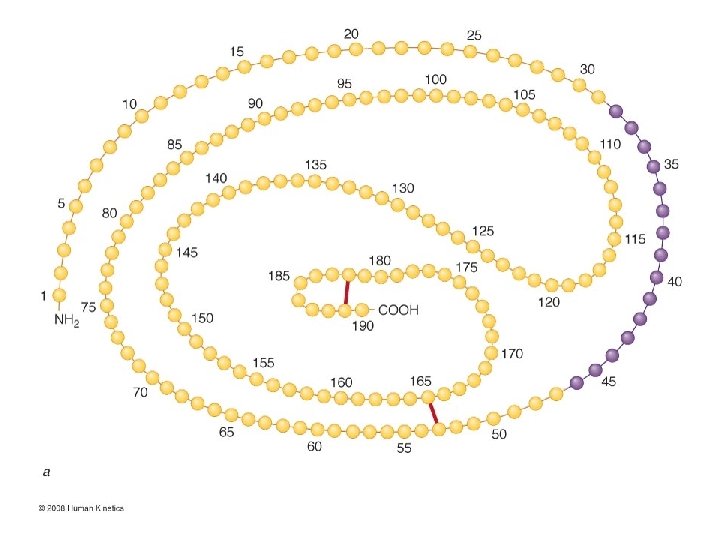
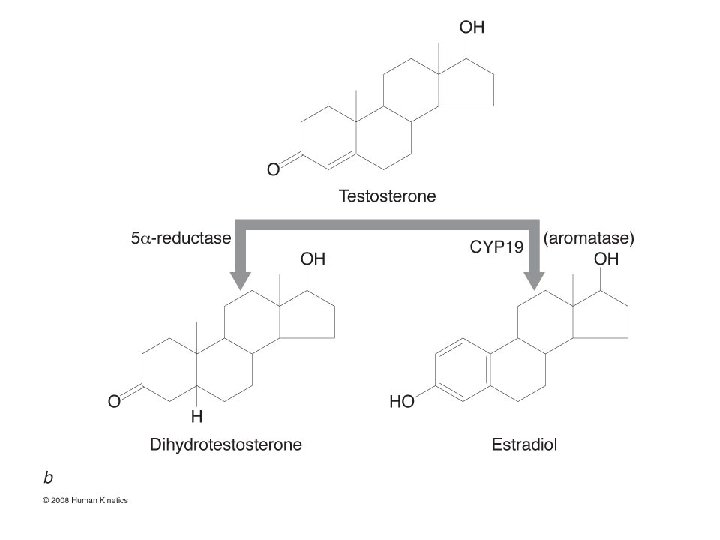
Hormone Structure • Figure 3. 5 (next two slides) – Structure of • (a) a polypeptide hormone (growth hormone, 22 k. Da) • (b) a steroid hormone (testosterone)
Figure 3. 5 a
Figure 3. 5 b
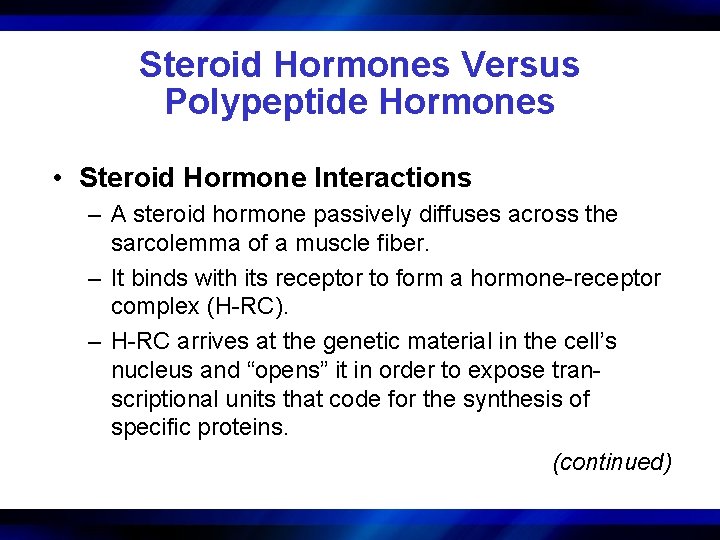
Steroid Hormones Versus Polypeptide Hormones • Steroid Hormone Interactions – A steroid hormone passively diffuses across the sarcolemma of a muscle fiber. – It binds with its receptor to form a hormone-receptor complex (H-RC). – H-RC arrives at the genetic material in the cell’s nucleus and “opens” it in order to expose transcriptional units that code for the synthesis of specific proteins. (continued)
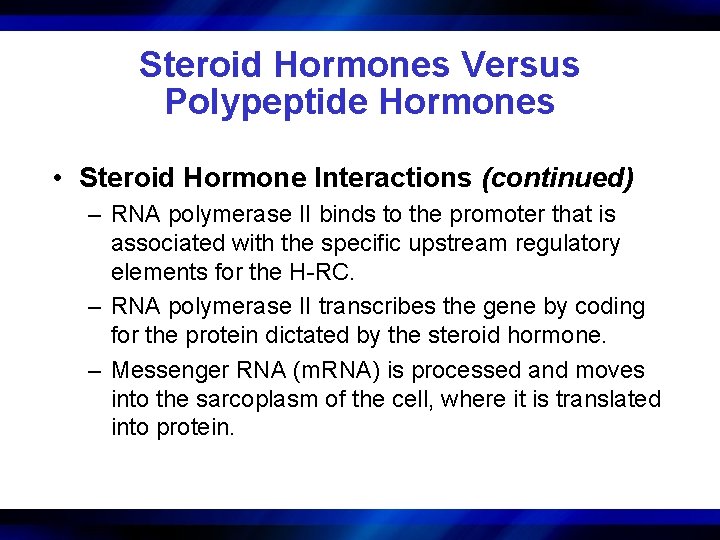
Steroid Hormones Versus Polypeptide Hormones • Steroid Hormone Interactions (continued) – RNA polymerase II binds to the promoter that is associated with the specific upstream regulatory elements for the H-RC. – RNA polymerase II transcribes the gene by coding for the protein dictated by the steroid hormone. – Messenger RNA (m. RNA) is processed and moves into the sarcoplasm of the cell, where it is translated into protein.
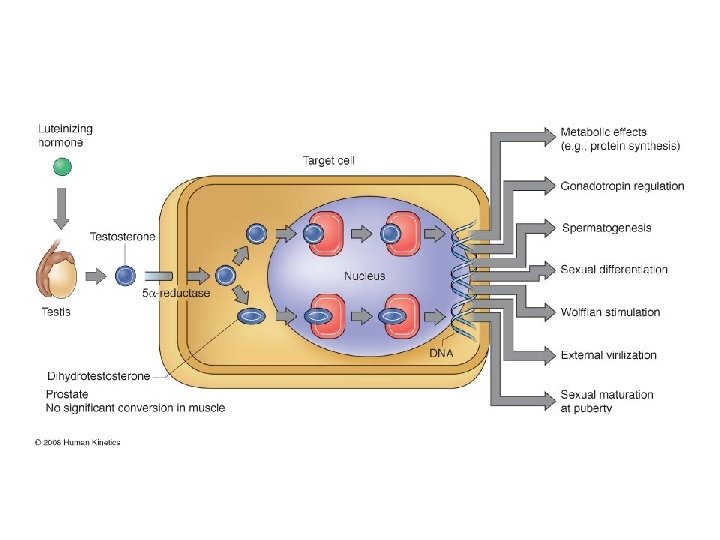
Steroid Migration • Figure 3. 6 (next slide) – The slide shows typical steroid migration into a target cell by either testosterone in skeletal muscle or dihydrotestosterone in sex-linked tissues. – Only one hormone pathway (testosterone or dihydrotestosterone) is targeted for one cell, but the two are shown together in this diagram.
Figure 3. 6
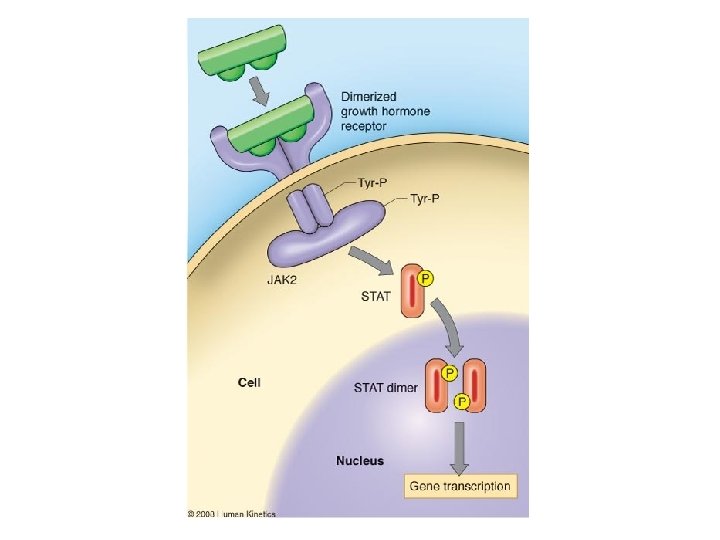
Steroid Hormones Versus Polypeptide Hormones • Polypeptide Hormone Interactions – Cyclic adenosine monophosphate-dependent (cyclic AMP-dependent) signaling pathway – Cytokine-activated JAK/STAT signaling pathway – Prototypical growth factor, mitogen-activated signaling pathway
Polypeptide Hormone Interaction • Figure 3. 7 (next slide) – The slide shows typical polypeptide hormone (growth hormone in this example) interaction with a receptor via the cytokine-activated JAK/STAT signaling pathway. – Although the hormone binds to an external receptor, a secondary messenger (STAT) is activated that can enter the cell nucleus. – Tyr-P = tyrosinase related protein
Figure 3. 7
Section Outline • Heavy Resistance Exercise and Hormonal Increases
Key Point • The specific force produced in activated fibers stimulates receptor and membrane sensitivities to anabolic factors, including hormones, which lead to muscle growth and strength changes.
Section Outline • Mechanisms of Hormonal Interactions
Mechanisms of Hormonal Interactions • Interactions with receptors are greater when – exercise acutely increases the blood concentrations of hormones. • Receptors are less sensitive when – the physiological function to be affected is already close to a genetic maximum, – resting hormone levels are chronically elevated due to disease or exogenous drug use, and – mistakes are made in exercise prescriptions.
Heavy Resistance Exercise and Hormonal Increases • Hormones are secreted during and after the resistance exercise – Due to physiological stress of the exercise • When forces are produced it requires the activation of high-threshold motor unites - Not typically stimulated by other types of exercise • Stress produces alterations in sarcolemma’s ability to import nutrients and in the sensitivity and # of hormone receptors
Heavy Resistance Exercise and Hormonal Increases The extent of hormonal interactions in the growth of muscle fibers is dictated by loads and exercise angles used in training program • If use same exercise only specific set of muscle fibers will grow • Some fibers may be close to genetic ceilings for size • Volume of work, rest periods, and type of protocol are vital to hormonal changes
Key Point • Hormone responses are tightly linked to the characteristics of the resistance exercise protocol.
Section Outline • Primary Anabolic Hormones – Testosterone • Free Testosterone and Sex Hormone–Binding Globulin • Testosterone Responses in Women • Training Adaptations of Testosterone – Growth Hormone • • Efficacy of Pharmacological Growth Hormone Responses to Stress Growth Hormone Responses in Women Training Adaptations of Growth Hormone (continued)
Section Outline (continued) • Primary Anabolic Hormones – Insulin-Like Growth Factors • Exercise Responses of Insulin-Like Growth Factors • Training Adaptations of Insulin-Like Growth Factors
Primary Anabolic Hormones • There are three primary hormones involved in muscle tissue growth and remodeling: – Testosterone – Growth hormone (GH) – Insulin-like growth factors (IGFs)
Primary Anabolic Hormones • Testosterone – The primary androgen hormone that interacts with skeletal muscle tissue – Indirect effects on muscle tissue: • GH responses that lead to protein synthesis • Interact with receptors on neurons which can increase the amounts of neurotransmitters and influence protein changes - Direct effects on muscle tissue: • Gets into cell and binds to nuclear androgen receptor which binds to DNA and causes in increase in DNA transcription – thus protein synthesis – Diurnal variations • Men: Exercise later in the day is more effective for increasing overall testosterone concentrations over an entire day. • Women: There are lower concentrations and little variation during the day.
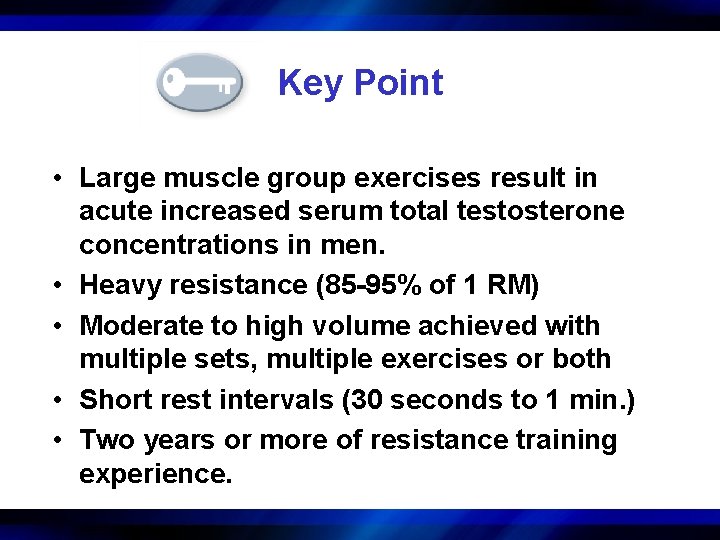
Key Point • Large muscle group exercises result in acute increased serum total testosterone concentrations in men. • Heavy resistance (85 -95% of 1 RM) • Moderate to high volume achieved with multiple sets, multiple exercises or both • Short rest intervals (30 seconds to 1 min. ) • Two years or more of resistance training experience.
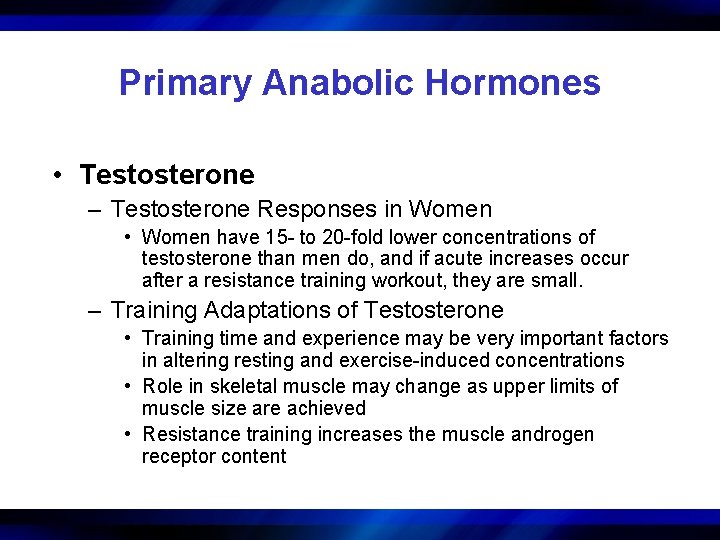
Primary Anabolic Hormones • Testosterone – Testosterone Responses in Women • Women have 15 - to 20 -fold lower concentrations of testosterone than men do, and if acute increases occur after a resistance training workout, they are small. – Training Adaptations of Testosterone • Training time and experience may be very important factors in altering resting and exercise-induced concentrations • Role in skeletal muscle may change as upper limits of muscle size are achieved • Resistance training increases the muscle androgen receptor content
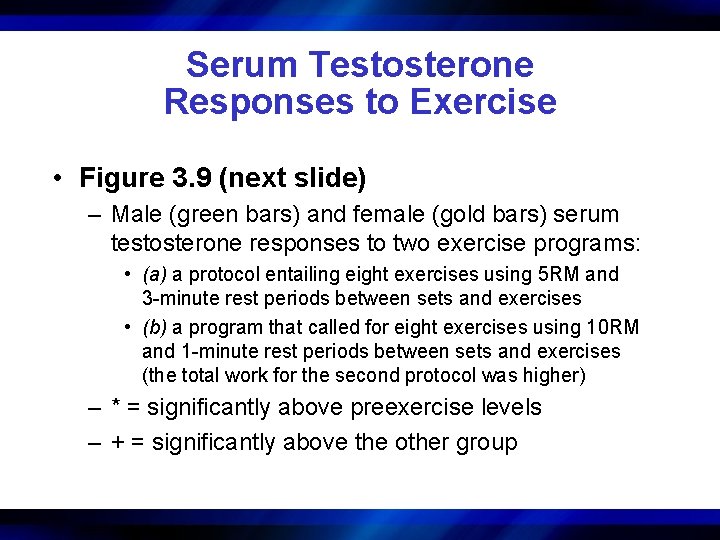
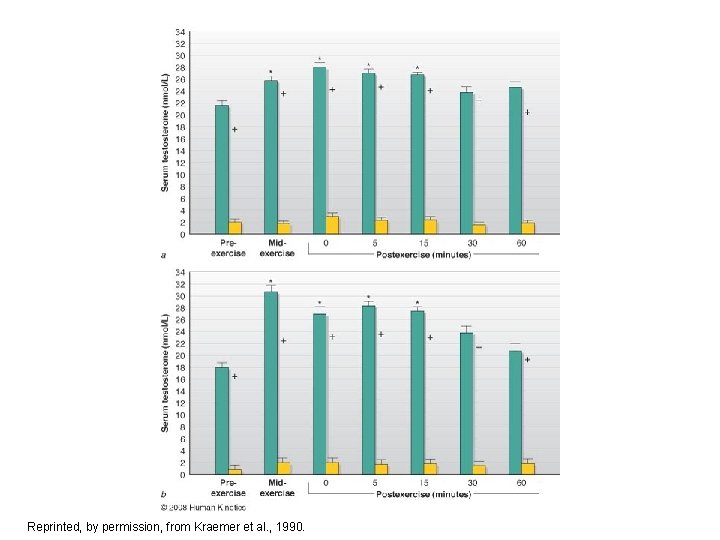
Serum Testosterone Responses to Exercise • Figure 3. 9 (next slide) – Male (green bars) and female (gold bars) serum testosterone responses to two exercise programs: • (a) a protocol entailing eight exercises using 5 RM and 3 -minute rest periods between sets and exercises • (b) a program that called for eight exercises using 10 RM and 1 -minute rest periods between sets and exercises (the total work for the second protocol was higher) – * = significantly above preexercise levels – + = significantly above the other group
Figure 3. 9 Reprinted, by permission, from Kraemer et al. , 1990.
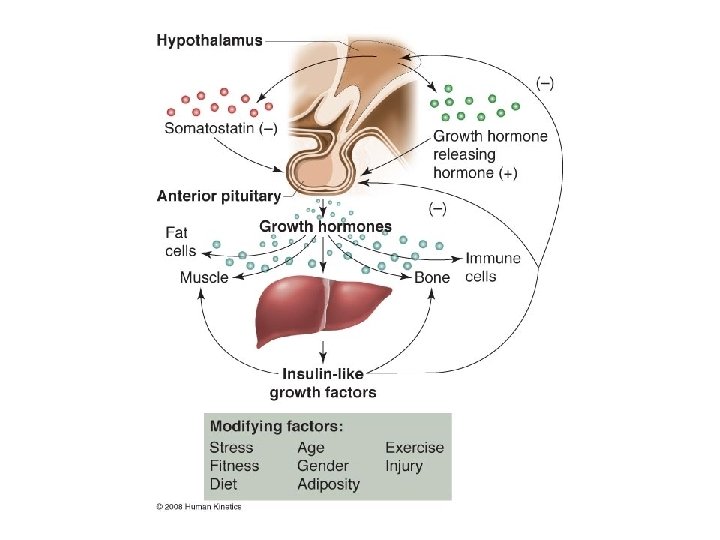
Primary Anabolic Hormones • Growth Hormone – Secreted by the pituitary gland – Interacts directly with target tissues, which include bone, immune cells, skeletal muscle, fat cells, and liver tissue – Regulated by neuroendocrine feedback mechanisms and mediated by secondary hormones – GH release patterns altered by age, gender, sleep, nutrition, alcohol consumption, and exercise
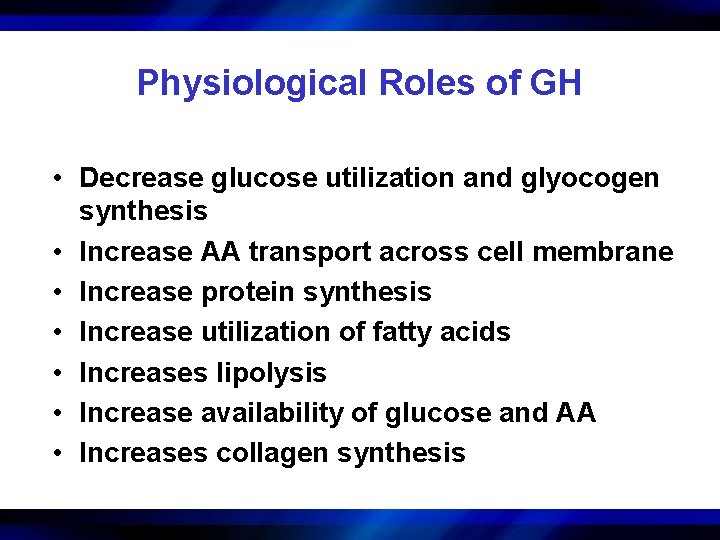
Physiological Roles of GH • Decrease glucose utilization and glyocogen synthesis • Increase AA transport across cell membrane • Increase protein synthesis • Increase utilization of fatty acids • Increases lipolysis • Increase availability of glucose and AA • Increases collagen synthesis
Growth Hormone Cybernetics and Interactions • Figure 3. 10 (next slide) – Diagram of growth hormone cybernetics and interactions
Figure 3. 10
Primary Anabolic Hormones • Growth Hormone – Growth Hormone Responses to Stress • GH responds to exercise stressors, including resistance exercise. – Significant stimulus is hydrogen ion and lactate • GH response depends on load, rest, and volume of exercise. – Most significant increases with 1 -minute rest with 10 RM vs. 5 RM
Primary Anabolic Hormones • Growth Hormone – Growth Hormone Responses in Women • GH concentrations and responses to exercise vary with menstrual phase. • Women have higher blood levels of GH than do men.
Key Point • Growth hormone is important for the normal development of a child and appears to play a vital role in adapting to the stress of resistance training. However, GH injections result in a wide variety of secondary effects not related to changes in muscle size or strength and can, in fact, result in hypertrophy with less force production than occurs with exercise-induced hypertrophy.
Primary Anabolic Hormones • Insulin-Like Growth Factors – Exercise Responses of Insulin-Like Growth Factors • Insulin-like growth factor I (IGF-I) is most studied because of its role in protein anabolism. • Exercise results in acute increases in blood levels of IGF-I.
Primary Anabolic Hormones • Insulin-Like Growth Factors – Training Adaptations of Insulin-Like Growth Factors • Changes in IGF-I appear to be based on the starting concentrations before training. – If basal concentrations are low, IGF-I increases. – If basal concentrations are high, there is no change or it decreases.
Section Outline • The Adrenal Hormones – Cortisol • Role of Cortisol • Resistance Exercise Responses of Cortisol – Catecholamines • Role of Catecholamines • Training Adaptations of Catecholamines
The Adrenal Hormones • Cortisol – Role of Cortisol • Catabolic effects – Converts amino acids to carbohydrates, increases the level of enzymes that break down proteins, and inhibits protein synthesis – Resistance Exercise Responses of Cortisol • Cortisol increases with resistance exercise. • Training may reduce the negative effects of this increase. • Vast differences are observed in the physiological role of cortisol in acute versus chronic responses.
Key Point • Resistance exercise protocols that use high volume, large muscle groups, and short rest periods result in increased serum cortisol values. Though chronic high levels of cortisol may have adverse catabolic effects, acute increases may contribute to the remodeling of muscle tissue.
The Adrenal Hormones • Catecholamines – Role of Catecholamines • Increase force production via central mechanisms and increased metabolic enzyme activity • Increase muscle contraction rate • Increase blood pressure • Increase energy availability • Increase blood flow • Augment secretion rates of other hormones, such as testosterone – Training Adaptations of Catecholamines
Key Point • Training protocols must be varied to allow the adrenal gland to engage in recovery processes and to prevent the secondary responses of cortisol, which can have negative effects on the immune system and protein structures.
How Can Athletes Manipulate the Endocrine System? General Concepts • The more muscle fibers recruited for an exercise, the greater the extent of potential remodeling process in the whole muscle • Only muscle fibers recruited for an exercise are subject to adaptation, including hormonal adaptations to stress
How Can Athletes Manipulate the Endocrine System? To Increase Testosterone Concentrations • Large muscle group exercises (e. g. , deadlift, power cleans, squats) • Heavy resistance (85% to 95% of 1 RM) • Moderate to high volume of exercise, achieved with multiple sets or multiple exercises • Short rest intervals (30 – 60 seconds)
How Can Athletes Manipulate the Endocrine System? To Increase Growth Hormone Levels • Use workouts with higher lactate concentrations and associated acid-base disruptions; – High intensity (10 RM or heavy resistance) with 3 sets of each exercise (high total work) and short (1 minute) rest periods • Supplement diet with carbohydrate and protein before and after workouts
How Can Athletes Manipulate the Endocrine System? To Optimize Responses of Adrenal Hormones • Use high volume, large muscle groups, and short rest periods, but vary the protocol and the rest period length and volume to allow the adrenal gland to engage in recovery processes (secreting less cortisol) and to prevent chronic catabolic responses to cortisol. This way the stress of the exercise will not result in overuse or overtraining.