
Chapter Eleven Plants Lesson 11 1 Plant Adaptations




- Slides: 18
Chapter Eleven: Plants Lesson 11. 1 Plant Adaptations Lesson 11. 2 Plant Responses
Investigation 11. 1 Plant Adaptations • How are a plant’s structures specially suited to their functions?
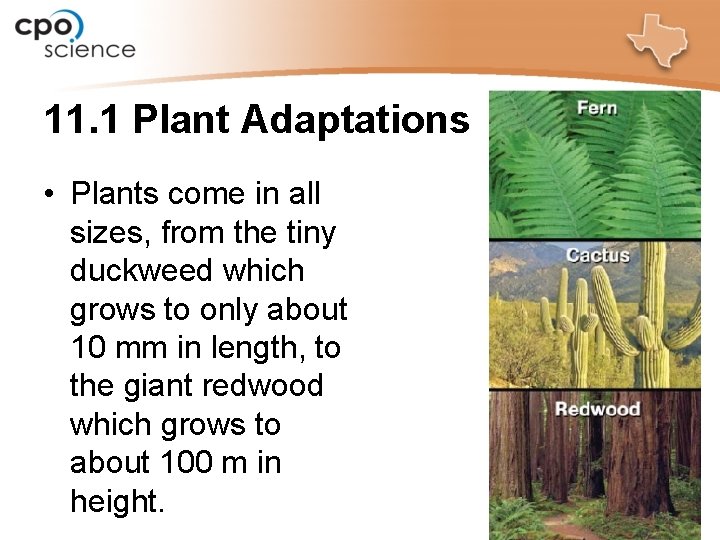
11. 1 Plant Adaptations • Plants come in all sizes, from the tiny duckweed which grows to only about 10 mm in length, to the giant redwood which grows to about 100 m in height.
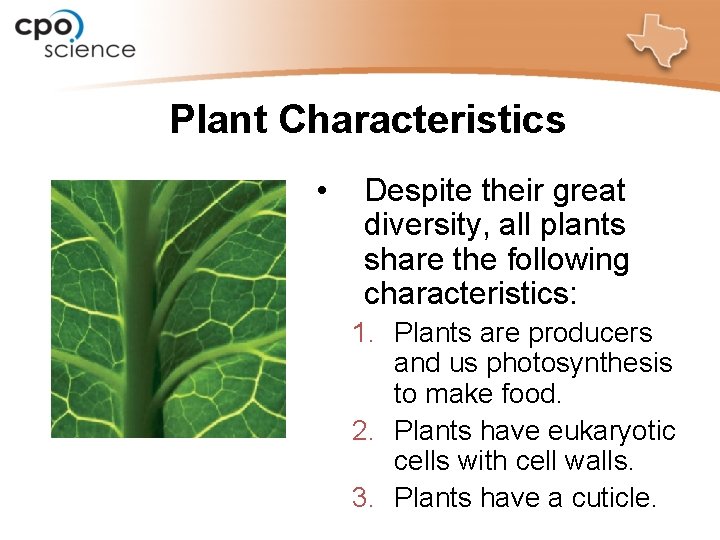
Plant Characteristics • Despite their great diversity, all plants share the following characteristics: 1. Plants are producers and us photosynthesis to make food. 2. Plants have eukaryotic cells with cell walls. 3. Plants have a cuticle.
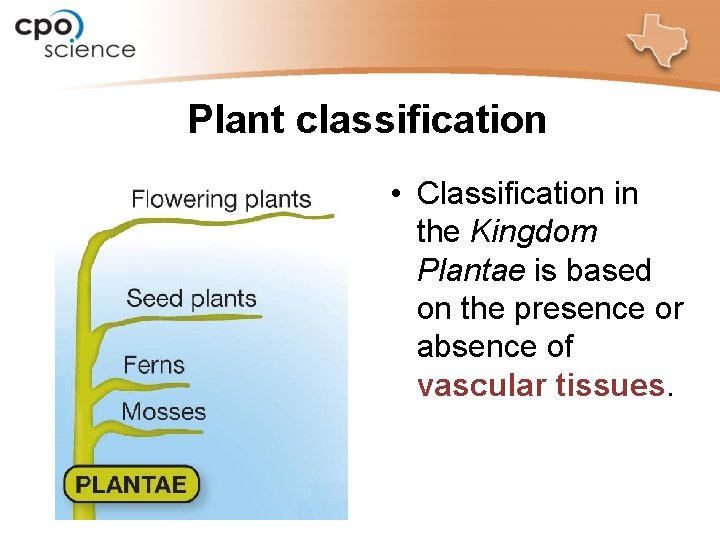
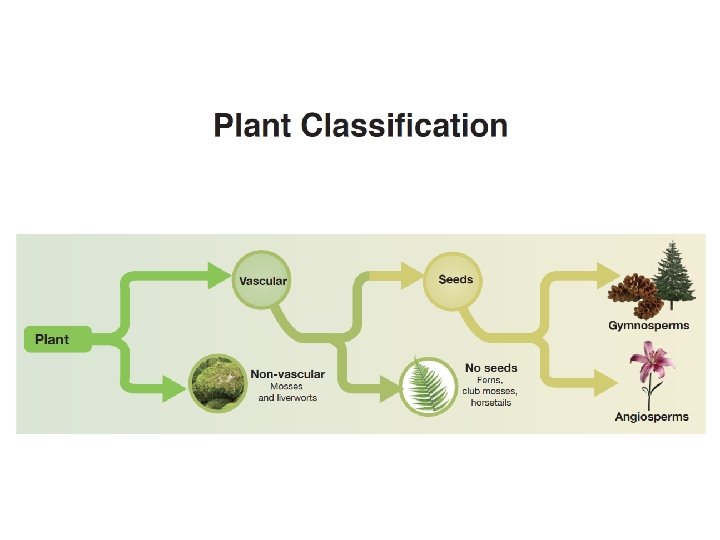
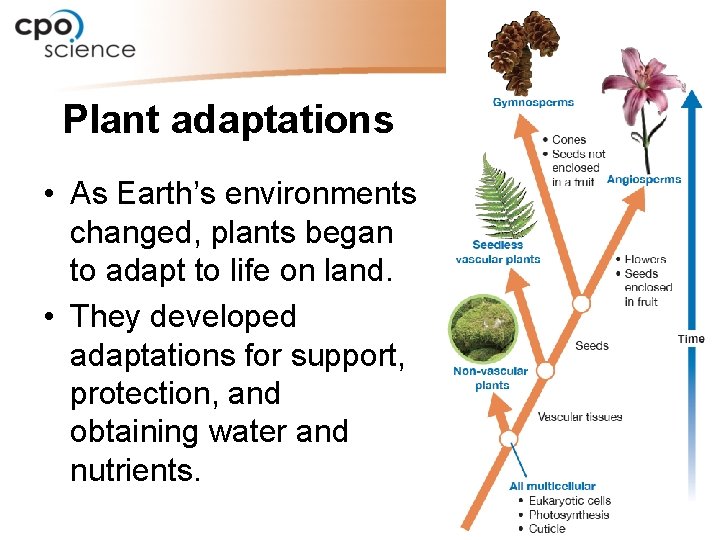
Plant classification • Classification in the Kingdom Plantae is based on the presence or absence of vascular tissues.
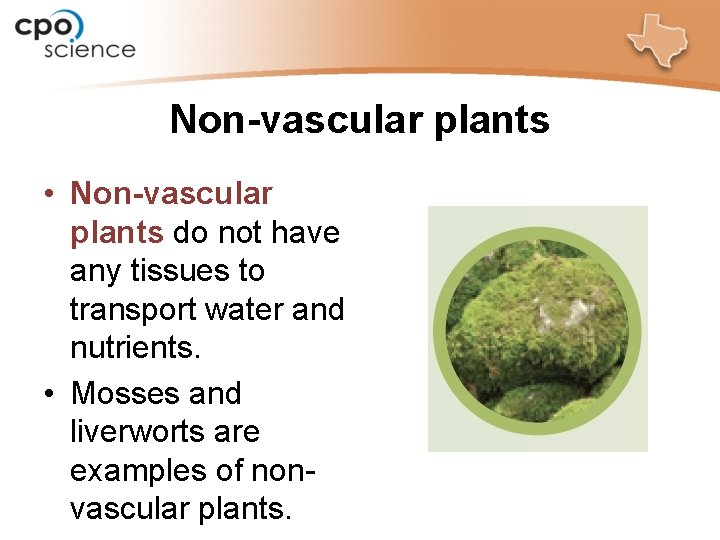
Non-vascular plants • Non-vascular plants do not have any tissues to transport water and nutrients. • Mosses and liverworts are examples of nonvascular plants.
Plant Classification • Vascular plants are divided into two groups—those that produce seeds and those that do not. • Plants that produce seeds are divided into gymnosperms and angiosperms. • Examples of plants that have no seeds are ferns, mosses and horsetails.
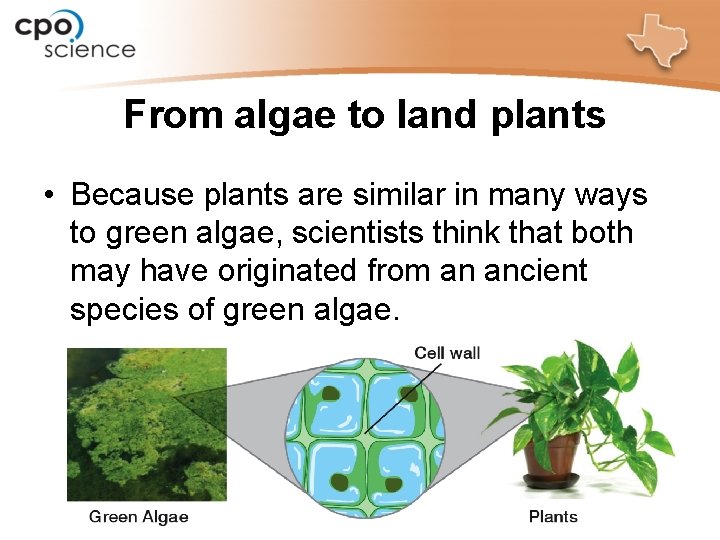
From algae to land plants • Because plants are similar in many ways to green algae, scientists think that both may have originated from an ancient species of green algae.
A history of plants • The first ancestors of plants show up in the fossil record during the late Ordovician Period—about 450 million years ago. • Plants started out living in water, an ideal environment that supported cells and transported nutrients. • As Earth’s environments changed, plants had to adapt to life on land.
Plant adaptations • As Earth’s environments changed, plants began to adapt to life on land. • They developed adaptations for support, protection, and obtaining water and nutrients.
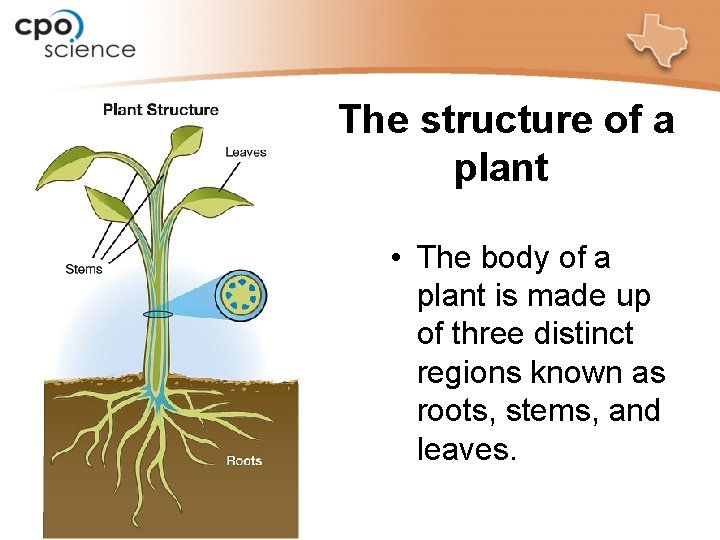
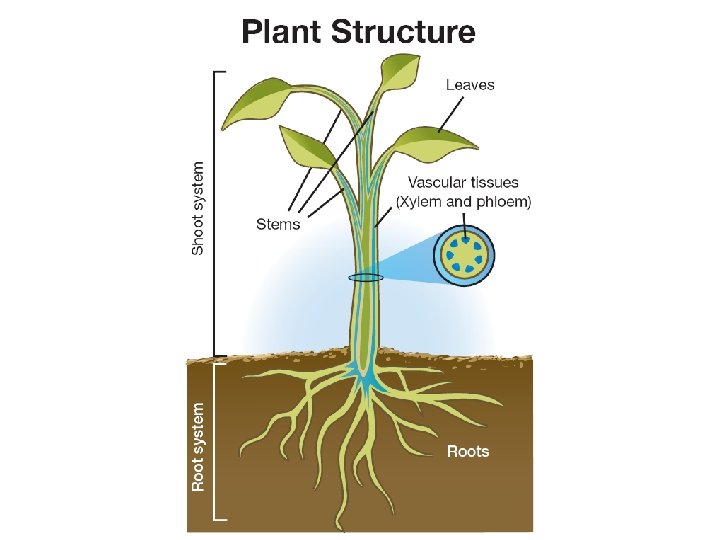
The structure of a plant • The body of a plant is made up of three distinct regions known as roots, stems, and leaves.
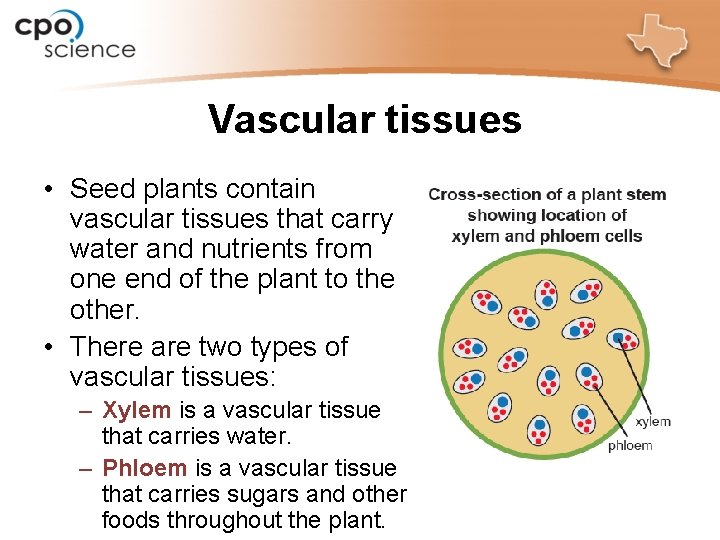
Vascular tissues • Seed plants contain vascular tissues that carry water and nutrients from one end of the plant to the other. • There are two types of vascular tissues: – Xylem is a vascular tissue that carries water. – Phloem is a vascular tissue that carries sugars and other foods throughout the plant.
Adaptations of cells • Because dead xylem cells have rigid cell walls, they help provide structural support for plants. • Like xylem cells, phloem cells act like tubes and have holes between them, but they work as living cells.
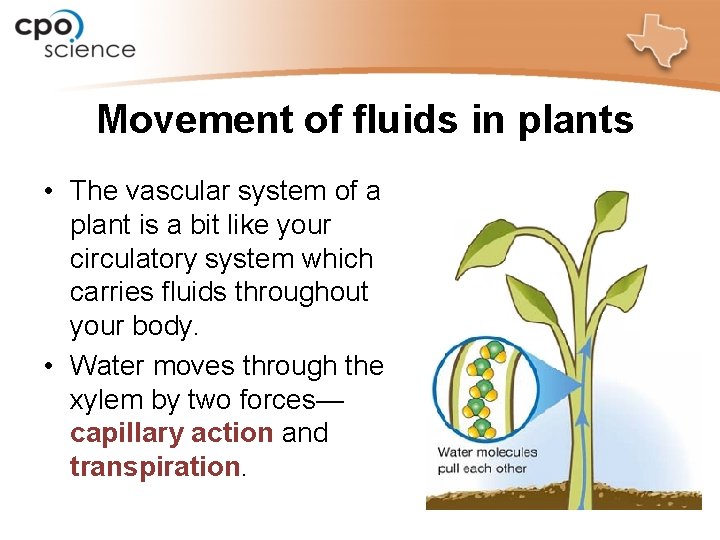
Movement of fluids in plants • The vascular system of a plant is a bit like your circulatory system which carries fluids throughout your body. • Water moves through the xylem by two forces— capillary action and transpiration.
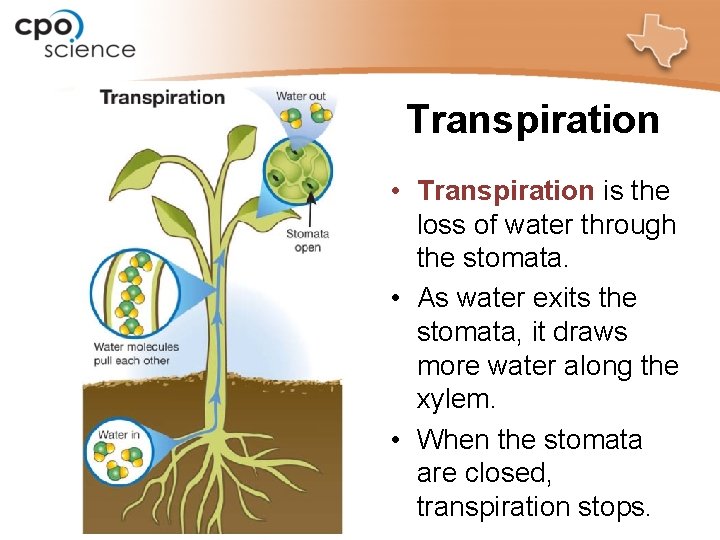
Transpiration • Transpiration is the loss of water through the stomata. • As water exits the stomata, it draws more water along the xylem. • When the stomata are closed, transpiration stops.