
Chapter Eleven CONGRESS Copyright 2014 Cengage Learning The
- Slides: 31
Chapter Eleven CONGRESS Copyright © 2014 Cengage Learning
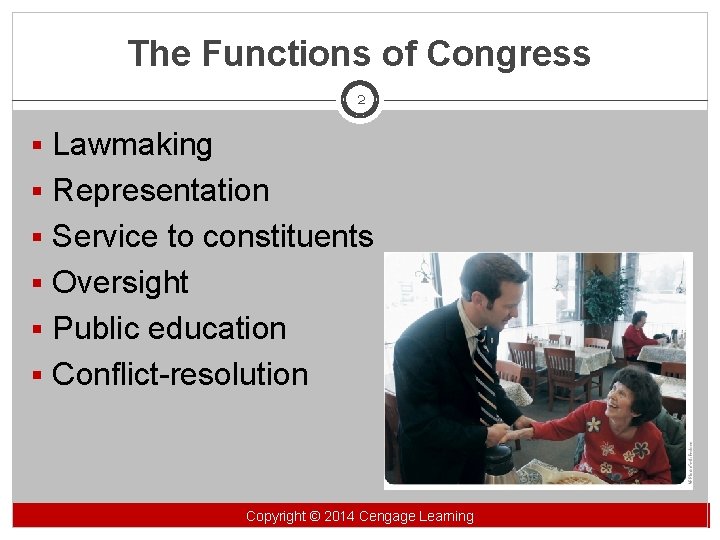
The Functions of Congress 2 § Lawmaking § Representation § Service to constituents § Oversight § Public education § Conflict-resolution Copyright©© 2014 Cengage Learning Copyright Learning
The Functions of Congress 3 § Representation function: § § Often at variance with lawmaking function Trustee view of representation- Reps should act as trustees of the broad interests of society even if it means voting against their constituents sometimes. Instructed-delegate view of representation- agent of the constituents and votes according to their views regardless of their own personal beliefs. Politico style (combination) Copyright©© 2014 Cengage Learning Copyright Learning
The Functions of Congress 4 § Service to constituents: § § Casework and “hillstyle”- personal work for constituents by Congress Ombudsperson role- a person who hears and investigates complaints by private individuals against public officials or agencies. § Oversight function: When Congress follows up on a law it has enacted to ensure it is being enforced and administered in the way Congress intended. § Committee hearings and investigations § Budgeting § Nomination review § Special commissions Copyright©© 2014 Cengage Learning Copyright Learning
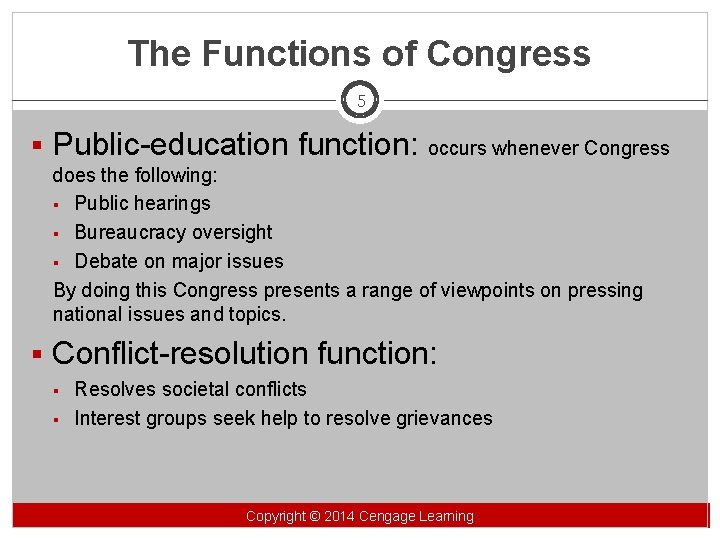
The Functions of Congress 5 § Public-education function: occurs whenever Congress does the following: § Public hearings § Bureaucracy oversight § Debate on major issues By doing this Congress presents a range of viewpoints on pressing national issues and topics. § Conflict-resolution function: § § Resolves societal conflicts Interest groups seek help to resolve grievances Copyright©© 2014 Cengage Learning Copyright Learning
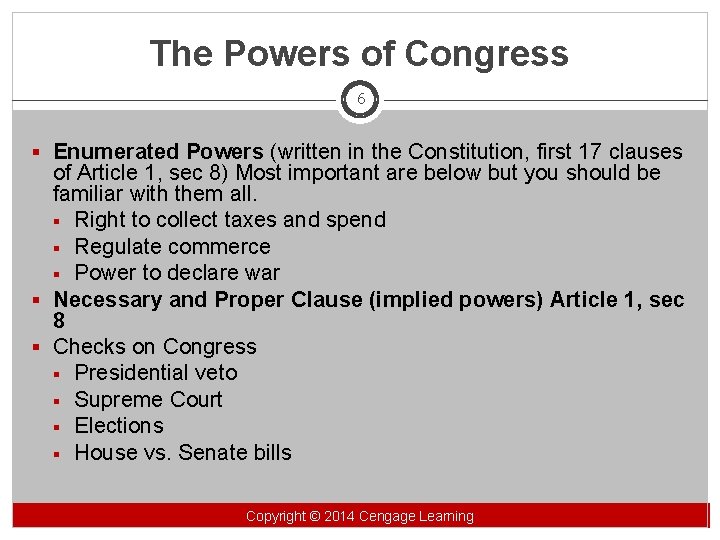
The Powers of Congress 6 § Enumerated Powers (written in the Constitution, first 17 clauses of Article 1, sec 8) Most important are below but you should be familiar with them all. § Right to collect taxes and spend § Regulate commerce § Power to declare war § Necessary and Proper Clause (implied powers) Article 1, sec 8 § Checks on Congress § Presidential veto § Supreme Court § Elections § House vs. Senate bills Copyright©© 2014 Cengage Learning Copyright Learning
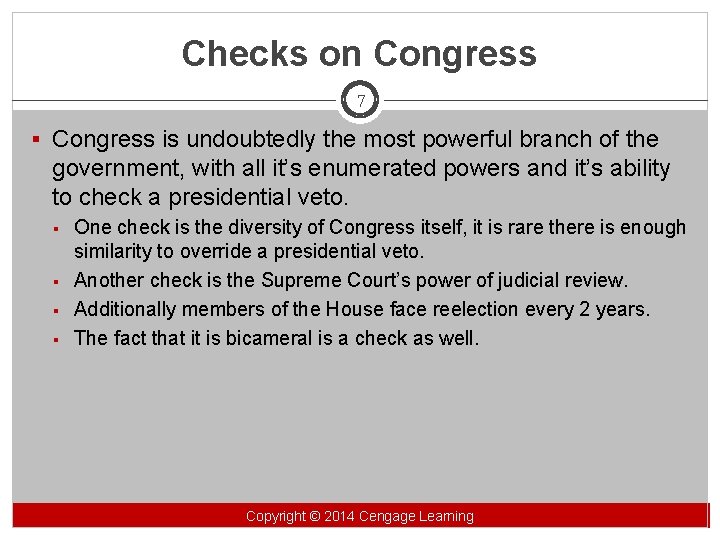
Checks on Congress 7 § Congress is undoubtedly the most powerful branch of the government, with all it’s enumerated powers and it’s ability to check a presidential veto. § § One check is the diversity of Congress itself, it is rare there is enough similarity to override a presidential veto. Another check is the Supreme Court’s power of judicial review. Additionally members of the House face reelection every 2 years. The fact that it is bicameral is a check as well. Copyright©© 2014 Cengage Learning Copyright Learning
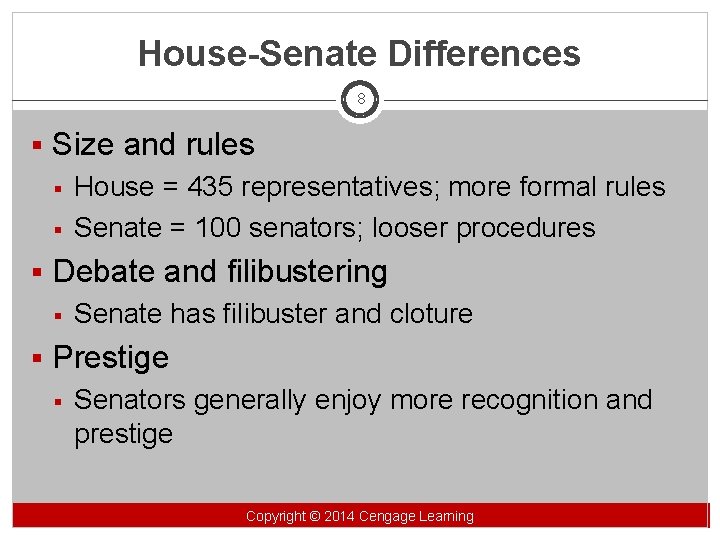
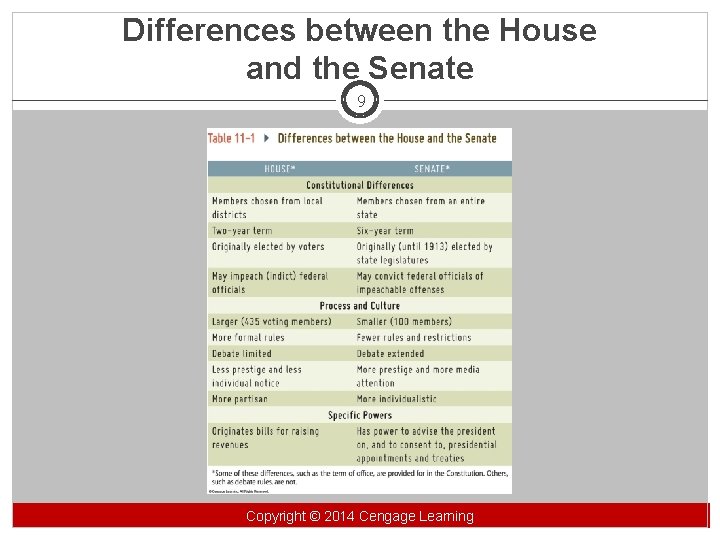
House-Senate Differences 8 § Size and rules § House = 435 representatives; more formal rules § Senate = 100 senators; looser procedures § Debate and filibustering § Senate has filibuster and cloture § Prestige § Senators generally enjoy more recognition and prestige Copyright©© 2014 Cengage Learning Copyright Learning
Differences between the House and the Senate 9 Copyright©© 2014 Cengage Learning Copyright Learning
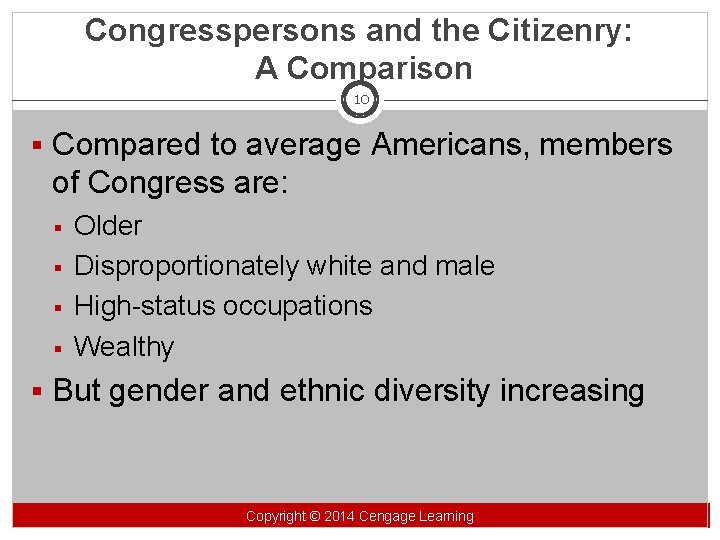
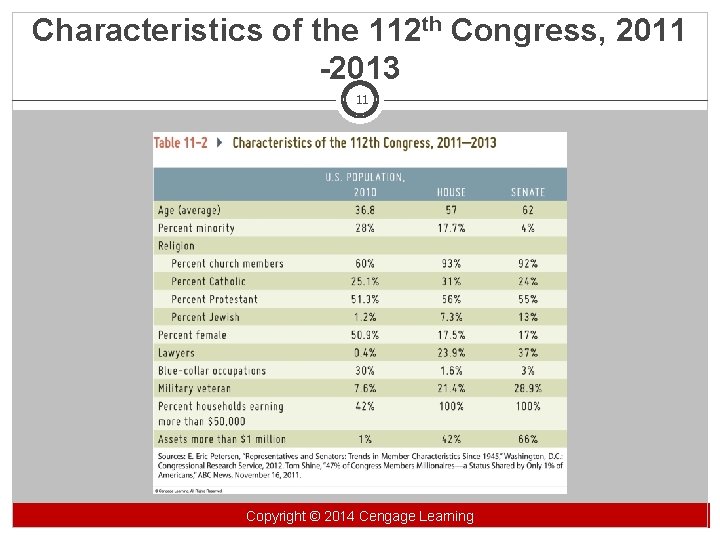
Congresspersons and the Citizenry: A Comparison 10 § Compared to average Americans, members of Congress are: § § Older Disproportionately white and male High-status occupations Wealthy § But gender and ethnic diversity increasing Copyright©© 2014 Cengage Learning Copyright Learning
Characteristics of the 112 th Congress, 2011 -2013 11 Copyright©© 2014 Cengage Learning Copyright Learning
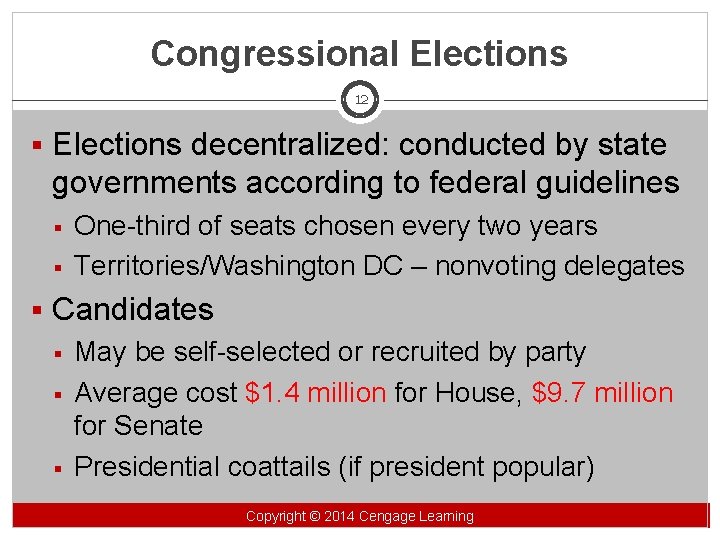
Congressional Elections 12 § Elections decentralized: conducted by state governments according to federal guidelines § § One-third of seats chosen every two years Territories/Washington DC – nonvoting delegates § Candidates § May be self-selected or recruited by party § Average cost $1. 4 million for House, $9. 7 million for Senate § Presidential coattails (if president popular) Copyright©© 2014 Cengage Learning Copyright Learning
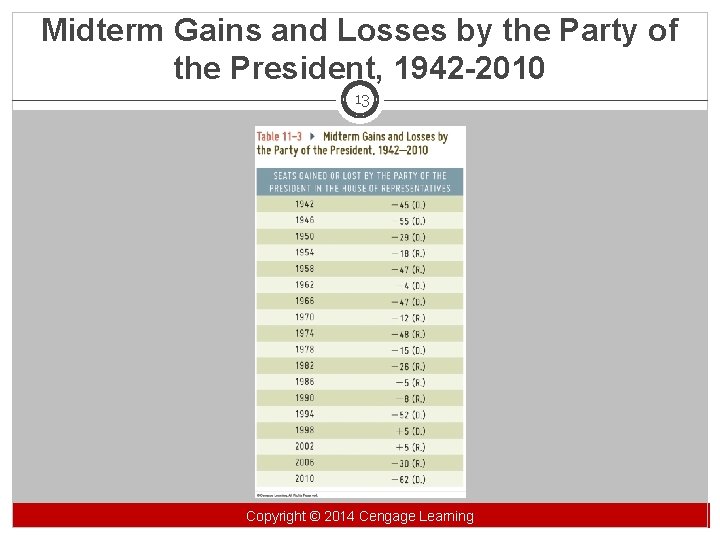
Midterm Gains and Losses by the Party of the President, 1942 -2010 13 Copyright©© 2014 Cengage Learning Copyright Learning
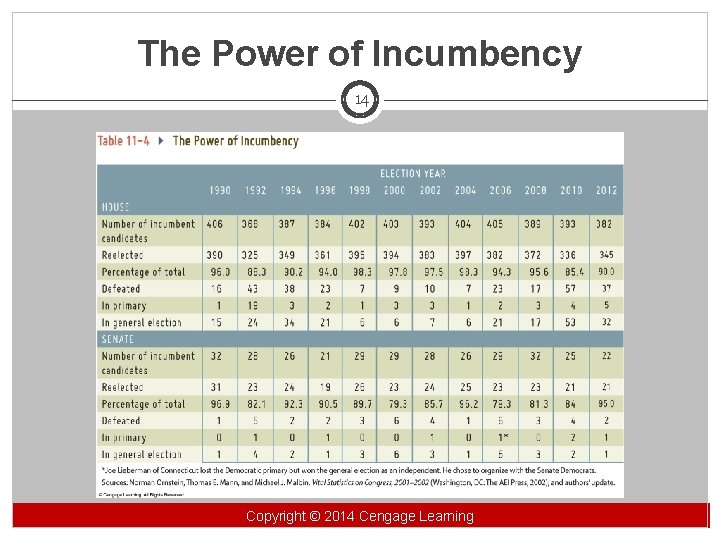
The Power of Incumbency 14 Copyright©© 2014 Cengage Learning Copyright Learning
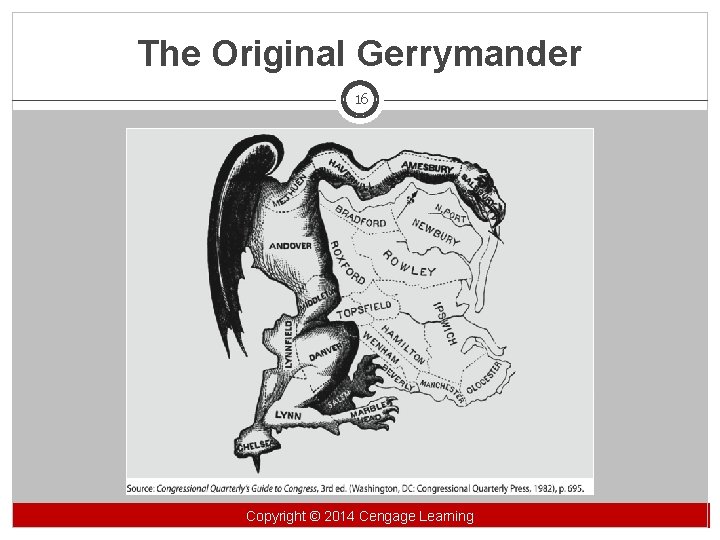
Congressional Apportionment 15 § Reapportionment : allocation of seats in the House to each state after each census § Redistricting: redrawing of boundaries of districts within each state § Gerrymandering Copyright©© 2014 Cengage Learning Copyright Learning
The Original Gerrymander 16 Copyright©© 2014 Cengage Learning Copyright Learning
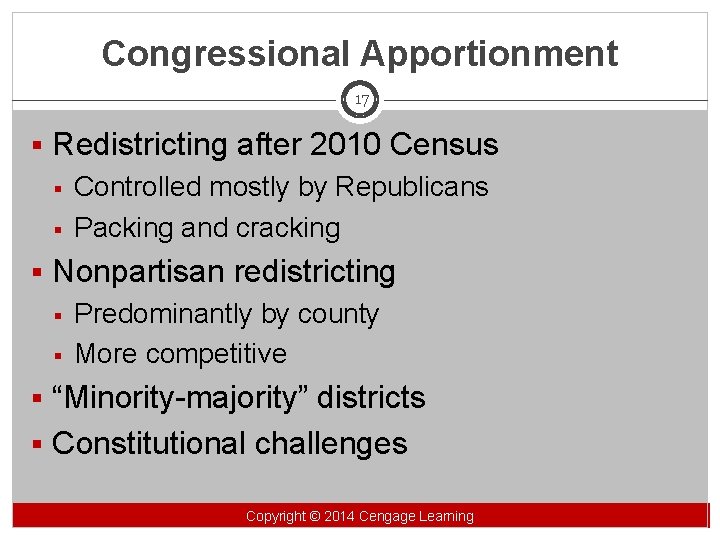
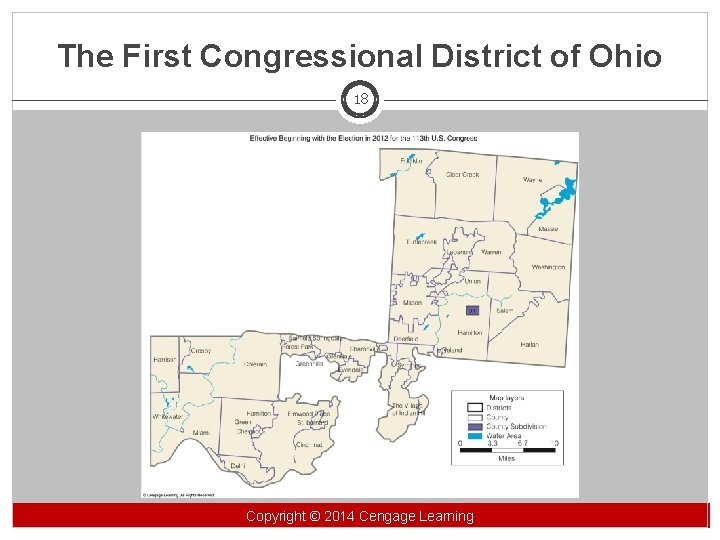
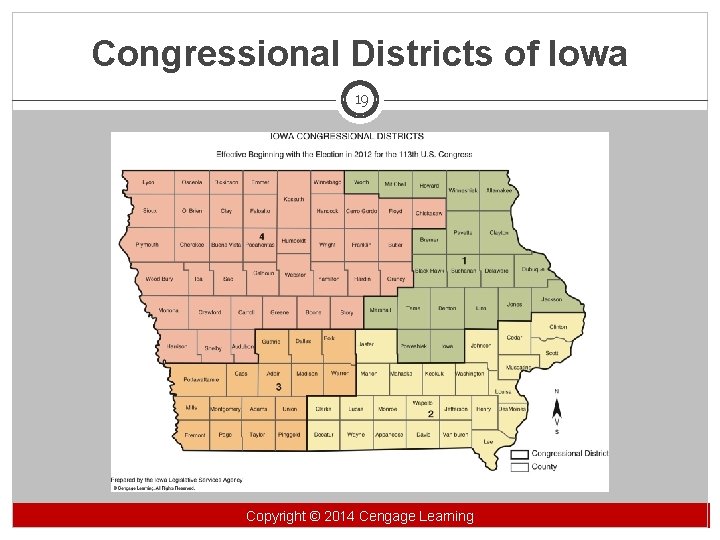
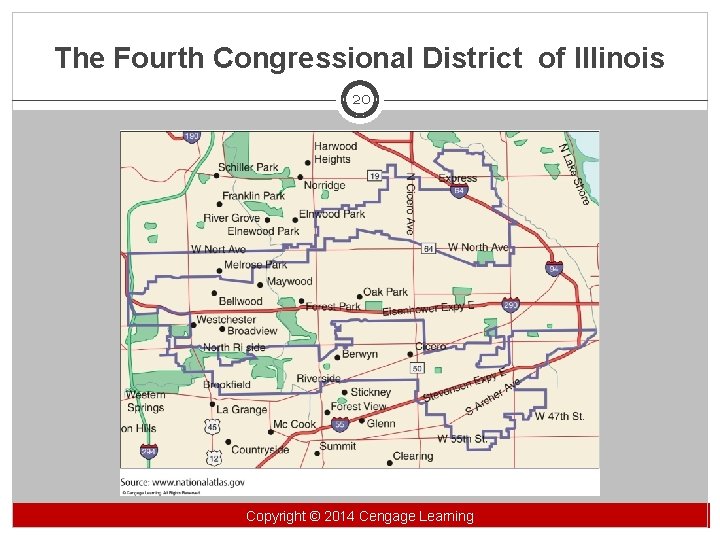
Congressional Apportionment 17 § Redistricting after 2010 Census § Controlled mostly by Republicans § Packing and cracking § Nonpartisan redistricting § Predominantly by county § More competitive § “Minority-majority” districts § Constitutional challenges Copyright©© 2014 Cengage Learning Copyright Learning
The First Congressional District of Ohio 18 Copyright©© 2014 Cengage Learning Copyright Learning
Congressional Districts of Iowa 19 Copyright©© 2014 Cengage Learning Copyright Learning
The Fourth Congressional District of Illinois 20 Copyright©© 2014 Cengage Learning Copyright Learning
Perks and Privileges 21 § Permanent professional staffs § Privileges and immunities § Caucuses: another source of support § Party caucuses most important § Other examples: § § § Democratic Study Group Rust Belt Caucus Congressional Women’s Caucus Copyright©© 2014 Cengage Learning Copyright Learning
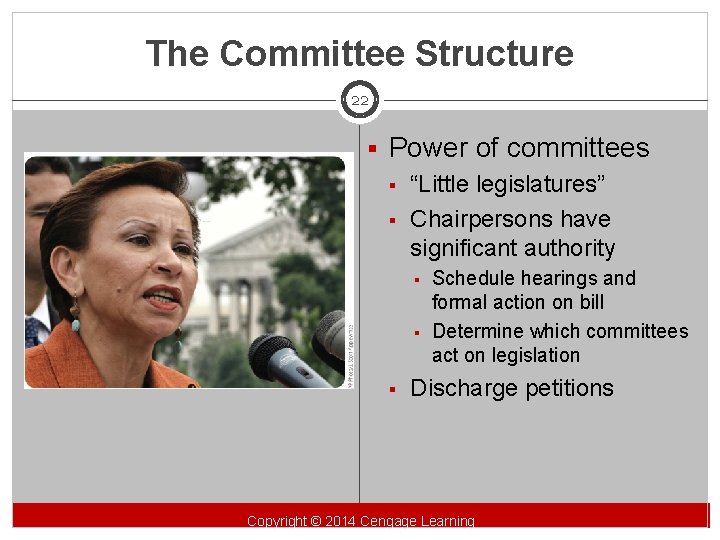
The Committee Structure 22 § Power of committees § “Little legislatures” § Chairpersons have significant authority § § § Schedule hearings and formal action on bill Determine which committees act on legislation Discharge petitions Copyright©© 2014 Cengage Learning Copyright Learning
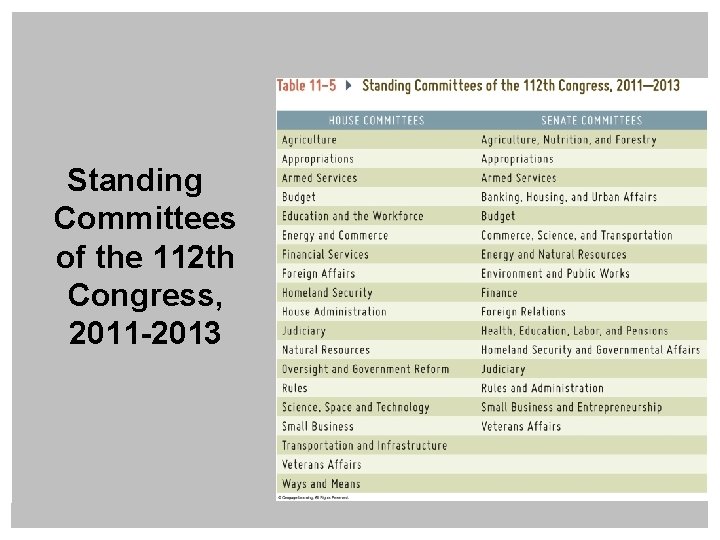
The Committee Structure 23 § Types of committees § Standing Committees § Select Committees § Joint Committees § Conference Committees § House Rules Committee § Selection of committee members § Appointed § Seniority system (informal process) Copyright©© 2014 Cengage Learning Copyright Learning
Standing Committees of the 112 th Congress, 2011 -2013 Copyright © 2014 Cengage Learning
The Formal Leadership 25 House Leadership Senate Leadership § The Speaker § Vice President § Majority Leader § President pro tempore § Minority Leader § Majority Leader § Whips § Minority Leader § Whips Copyright©© 2014 Cengage Learning Copyright Learning
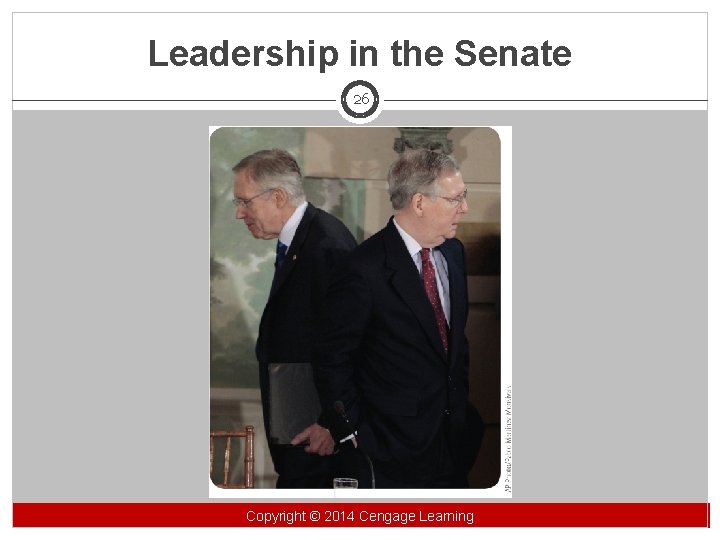
Leadership in the Senate 26 Copyright©© 2014 Cengage Learning Copyright Learning
How Members of Congress Decide 27 § Party membership is major determinant of how members vote, but not the only factor § Conservative coalition § “Crossing over” § Logrolling, earmarks, and “pork” Copyright©© 2014 Cengage Learning Copyright Learning
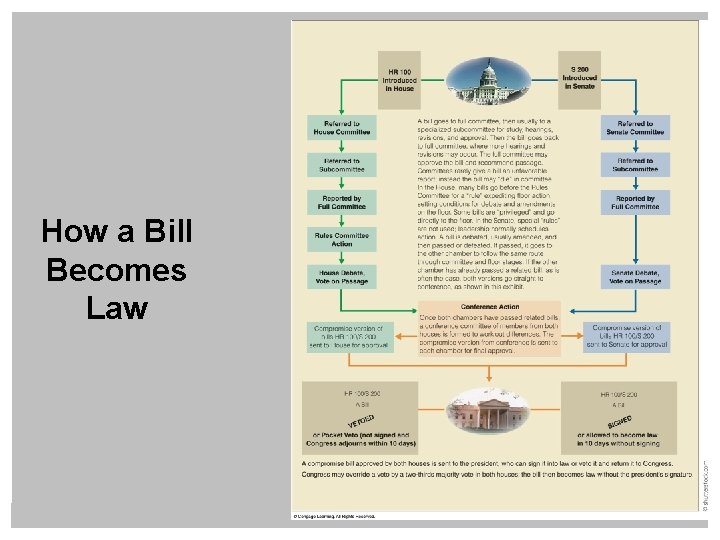
How Members of Congress Decide 28 § How a bill becomes law § Must pass through both houses of Congress § “Money bills” must start in the House § Similar steps in both chambers § § Study, discussion, hearings, markup Scheduling and debate Conference committees Joint resolutions Copyright©© 2014 Cengage Learning Copyright Learning
How a Bill Becomes Law Copyright © 2014 Cengage Learning
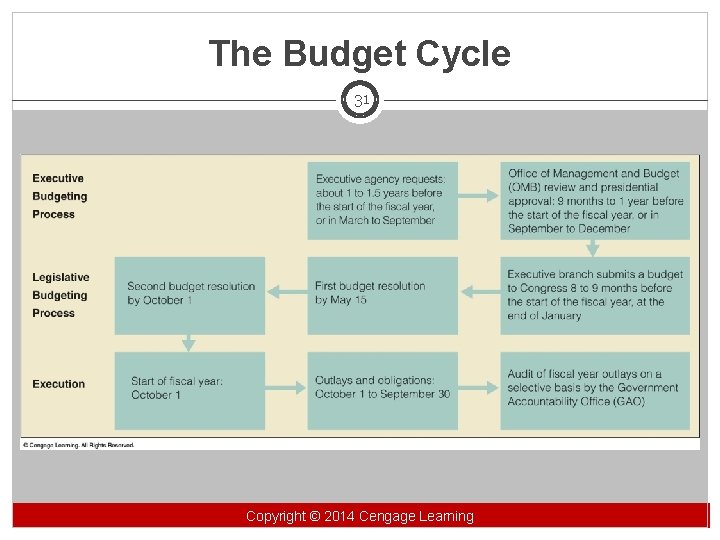
How Much Will the Government Spend? 30 § Preparing the budget § Fiscal year cycle (October 1– September 30) § Office of Management and Budget § Congress faces the budget § Authorization § Appropriation § Budget resolutions Copyright©© 2014 Cengage Learning Copyright Learning
The Budget Cycle 31 Copyright©© 2014 Cengage Learning Copyright Learning