
Chapter Eight Organizing a Customer Driven Business Management
Chapter Eight Organizing a Customer. Driven Business

Management Pyramid CEO, Top Comptroller, Vice Pres. Sales Mgrs Plant Mgrs. Mid-Level Front Line/Supervisory Supervisors Foremen
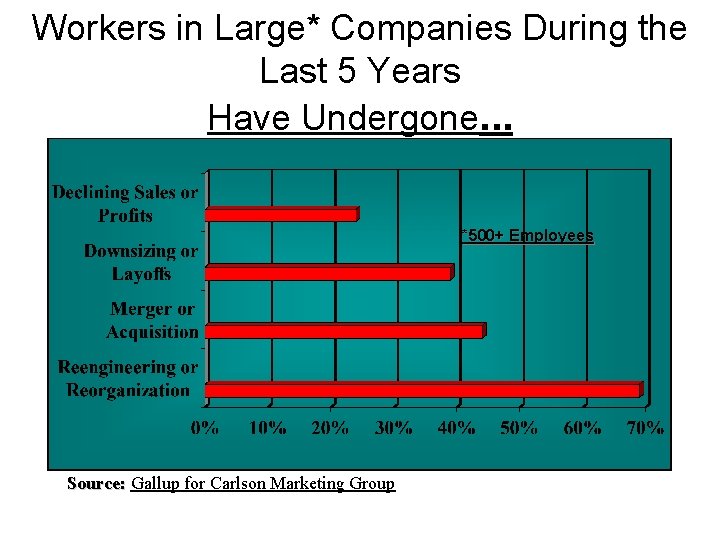
Workers in Large* Companies During the Last 5 Years Have Undergone. . . *500+ Employees Source: Gallup for Carlson Marketing Group
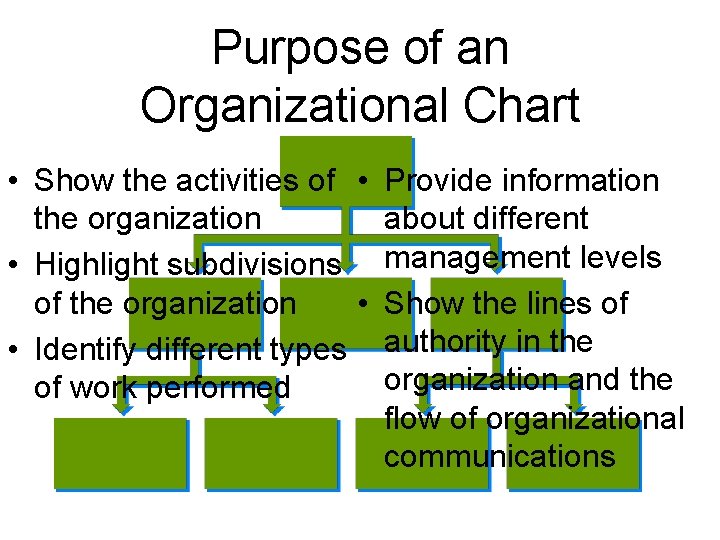
Purpose of an Organizational Chart • Show the activities of • Provide information the organization about different • Highlight subdivisions management levels of the organization • Show the lines of • Identify different types authority in the organization and the of work performed flow of organizational communications
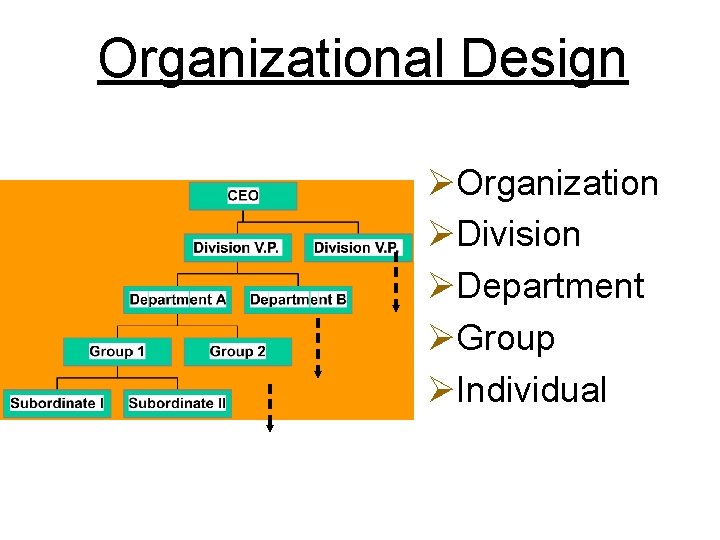
Organizational Design ØOrganization ØDivision ØDepartment ØGroup ØIndividual
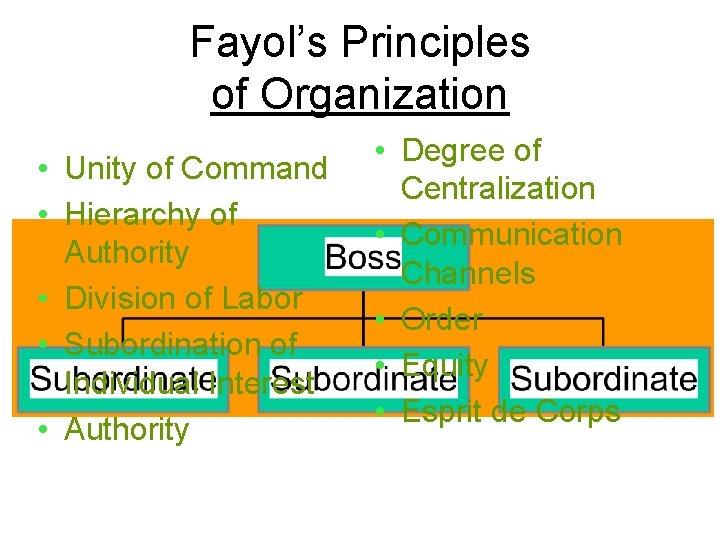
Fayol’s Principles of Organization • Unity of Command • Hierarchy of Authority • Division of Labor • Subordination of Individual Interest • Authority • Degree of Centralization • Communication Channels • Order • Equity • Esprit de Corps
Weber’s Organizational Principles • • Job Descriptions Written Rules Procedures, Regulations, Policies Staffing/Promotions based on Qualifications
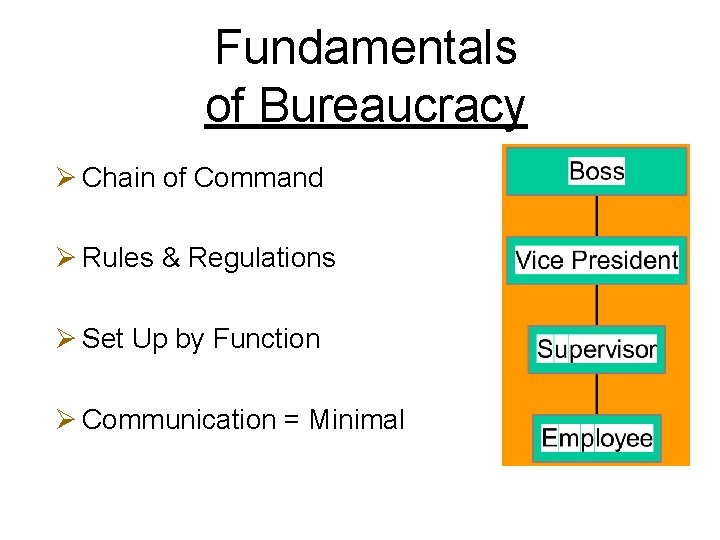
Fundamentals of Bureaucracy Ø Chain of Command Ø Rules & Regulations Ø Set Up by Function Ø Communication = Minimal
Organizational Structures Tall Organizations - Many Layers of Mgmt. - Cost of Mgmt. =High Flat Organizations - Current Trend - Creation of Teams
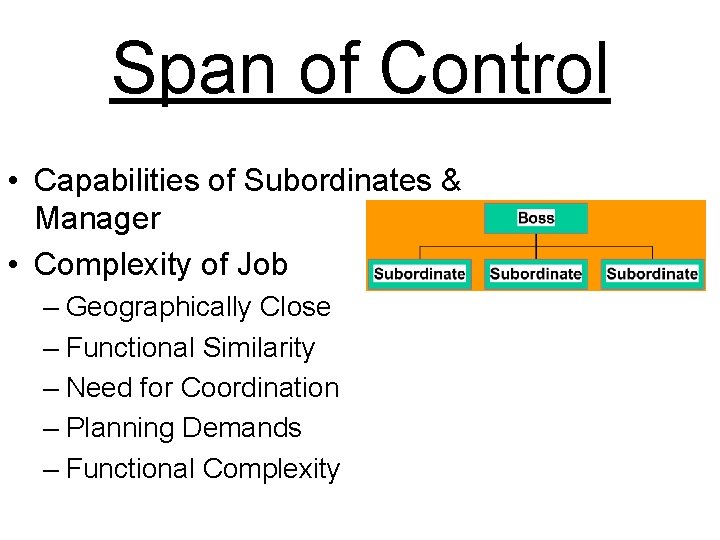
Span of Control • Capabilities of Subordinates & Manager • Complexity of Job – Geographically Close – Functional Similarity – Need for Coordination – Planning Demands – Functional Complexity
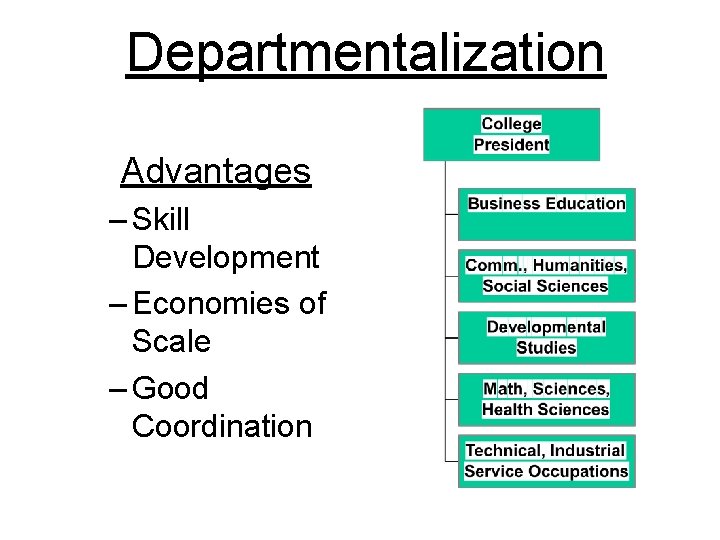
Departmentalization Advantages – Skill Development – Economies of Scale – Good Coordination
Departmentalization Disadvantages – Lack of Communication – Employees Identify with Department – Slow Response to External Demands – Narrow Specialists
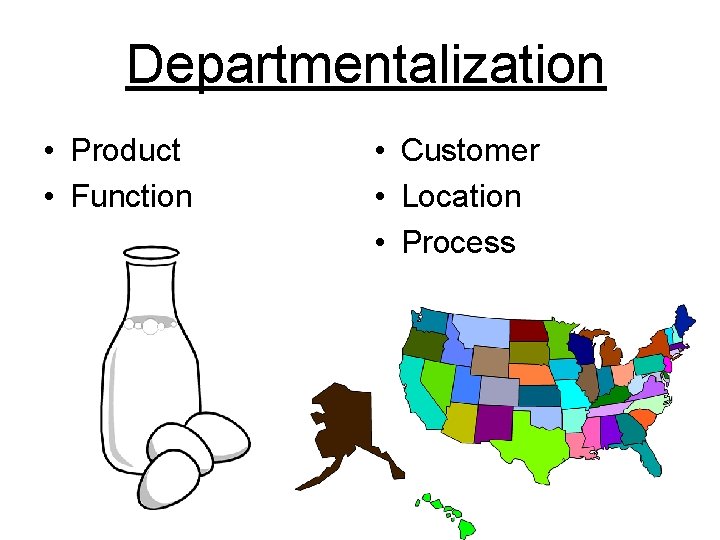
Departmentalization • Product • Function • Customer • Location • Process
Centralization (No Delegation) Advantages – Increased Uniformity – Less Duplication – Maximum Control Disadvantages – Lots of Policies & Procedures – Many Layers/Slower
Decentralization (Delegate Authority) Advantages – Informed Decisions – Worker Responsibility – Few Layers/Faster Disadvantages – Loss of Control – Possible Duplication
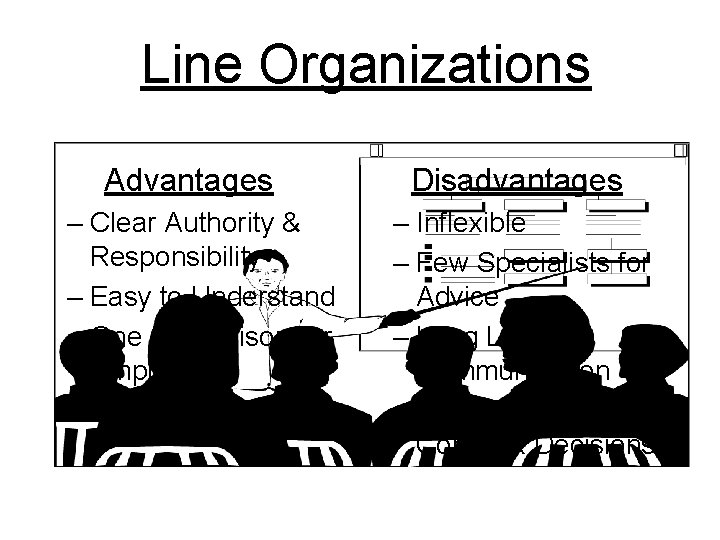
Line Organizations Advantages – Clear Authority & Responsibility – Easy to Understand – One Supervisor per Employee Disadvantages – Inflexible – Few Specialists for Advice – Long Line of Communication – Difficult to Handle Complex Decisions
Layers of Authority • Top Managers- Decision Makers • Middle Managers. Developed Rules & Procedures • Workers and Supervisors
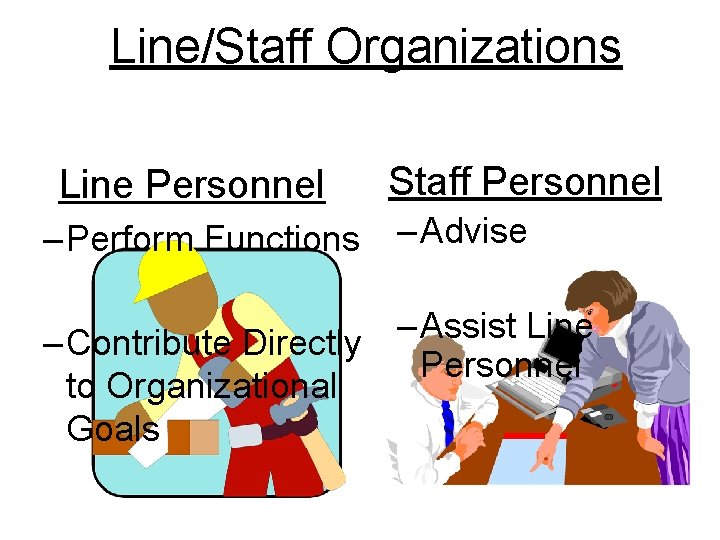
Line/Staff Organizations Line Personnel – Perform Functions Staff Personnel – Advise – Assist Line – Contribute Directly Personnel to Organizational Goals
Matrix Organizations Advantages – Flexibility – Cooperation & Teamwork – Creativity – More Efficient Use of Resources Disadvantages – Costly/Complex – Confusion in Loyalty – Requires Good Interpersonal Skills & Cooperation – Not Permanent
Tips for Team Leaders • Don’t be afraid to admit • • ignorance Know when to intervene Learn to truly share power Worry about what you take on, not what you give up Get used to learning on the job
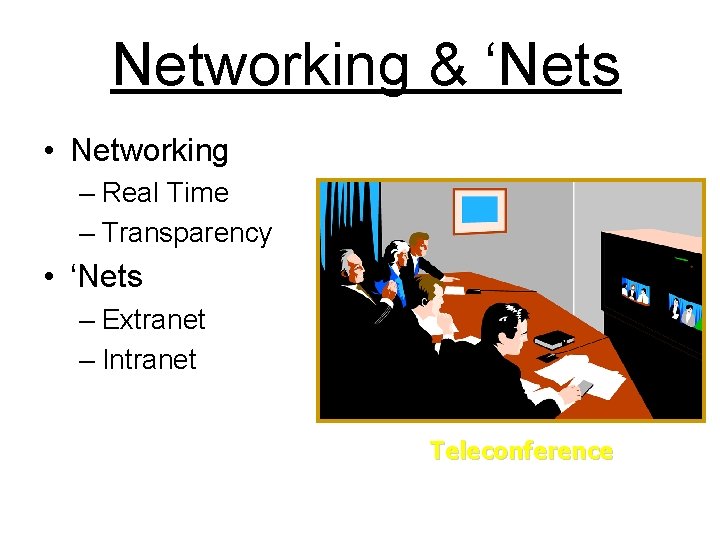
Networking & ‘Nets • Networking – Real Time – Transparency • ‘Nets – Extranet – Intranet Teleconference
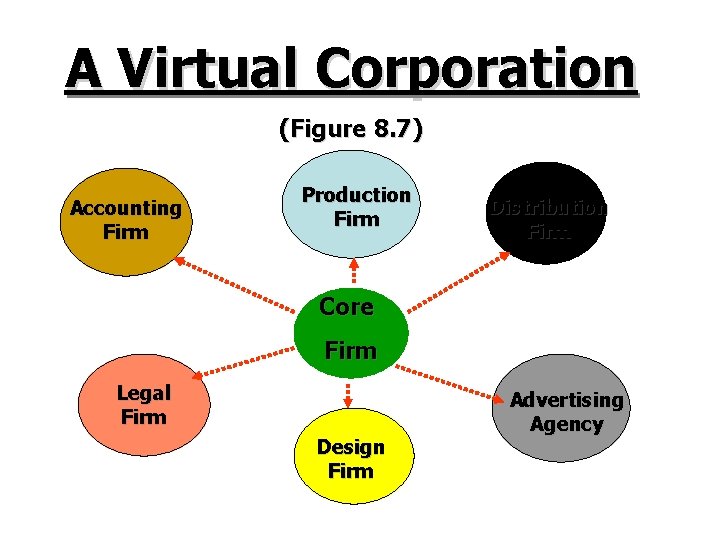
A Virtual Corporation (Figure 8. 7) Accounting Firm Production Firm Distribution Firm Core Firm Legal Firm Design Firm Advertising Agency
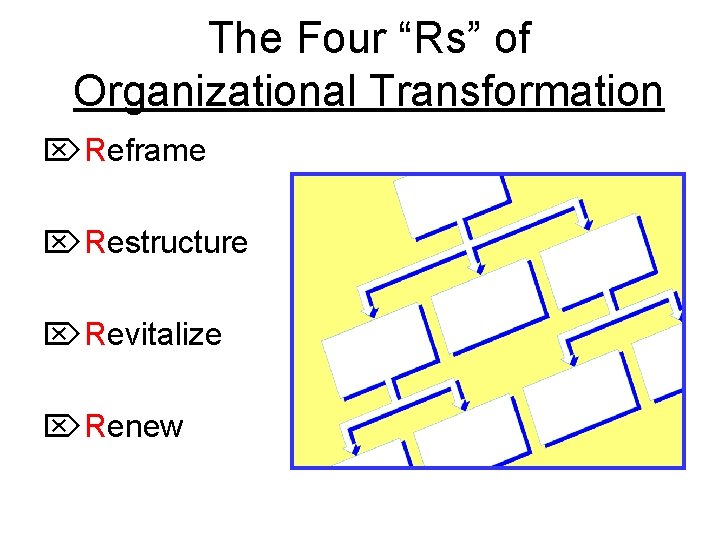
The Four “Rs” of Organizational Transformation ÖReframe ÖRestructure ÖRevitalize ÖRenew
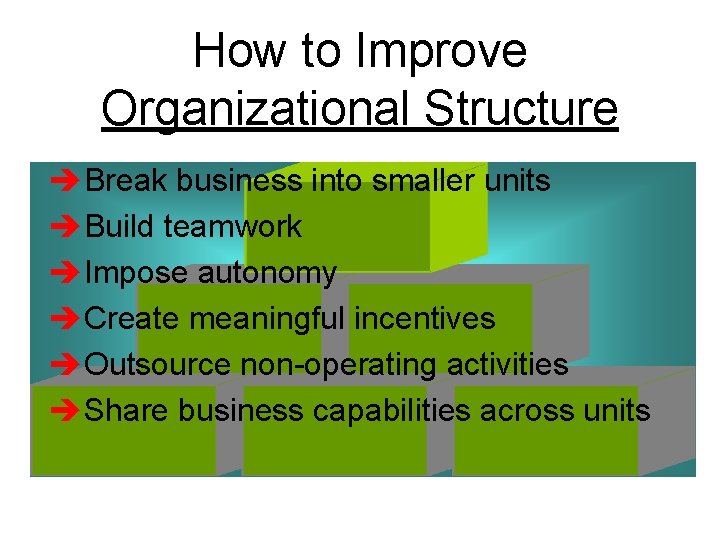
How to Improve Organizational Structure èBreak business into smaller units èBuild teamwork èImpose autonomy èCreate meaningful incentives èOutsource non-operating activities èShare business capabilities across units
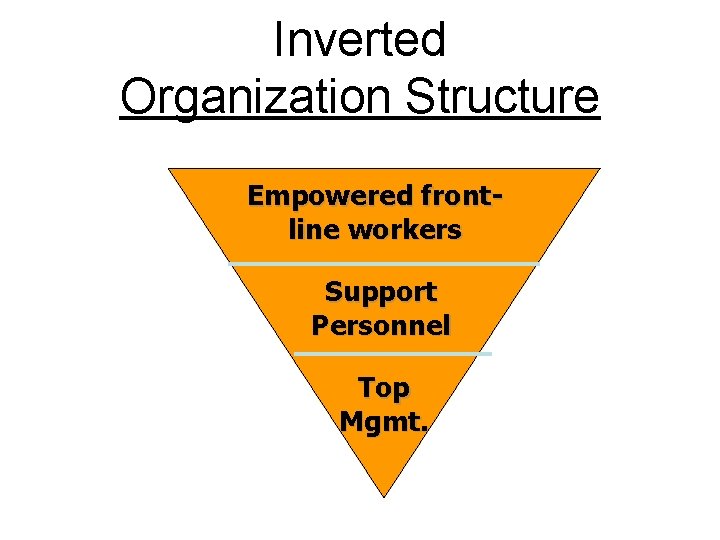
Inverted Organization Structure Empowered frontline workers Support Personnel Top Mgmt.
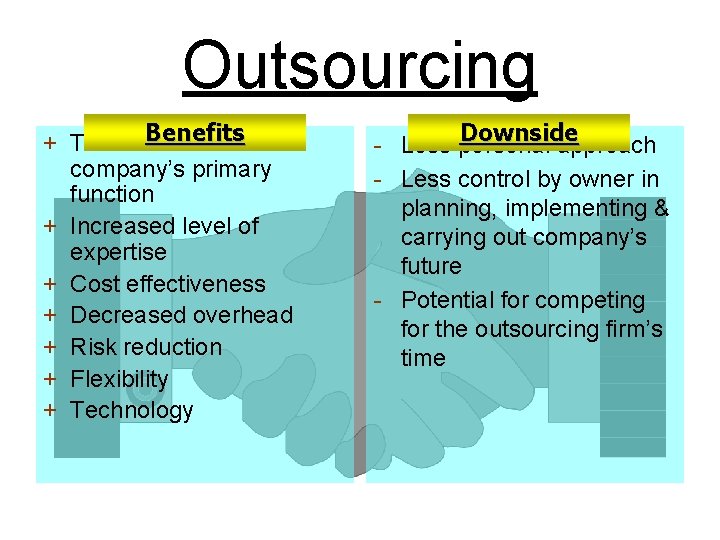
Outsourcing + Time to. Benefits focus on company’s primary function + Increased level of expertise + Cost effectiveness + Decreased overhead + Risk reduction + Flexibility + Technology Downside - Less personal approach - Less control by owner in planning, implementing & carrying out company’s future - Potential for competing for the outsourcing firm’s time
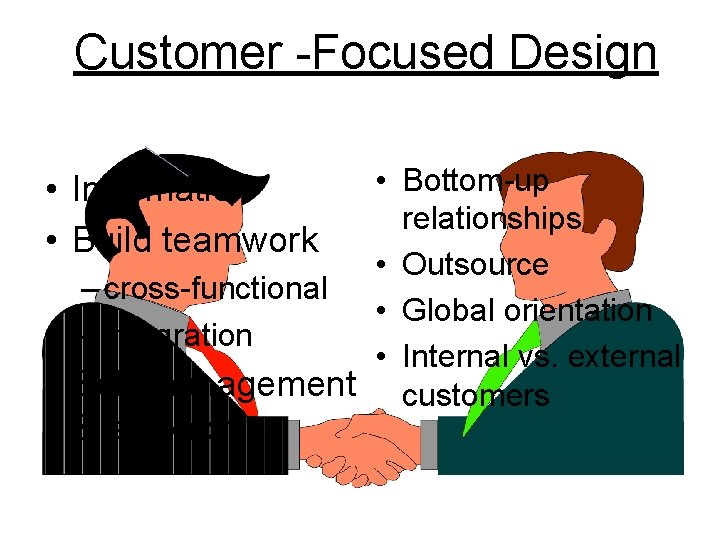
Customer -Focused Design • Bottom-up relationships • Outsource – cross-functional • Global orientation – integration • Internal vs. external • Self-management customers • Information • Build teamwork & autonomy
Examples of Informal Group Norms ¬Do your job but don’t produce more than the rest of the group. ¬Don’t tell off-color jokes or use profane language among group members. ¬Listen to the boss and use his/her expertise but don’t trust him/her. ¬Everyone is to be clean/organized at the workstation.
Examples of Informal Group Norms(cont’d) ¬Never side with managers in a dispute involving group members. ¬Respect/help your fellow group members on the job. ¬Criticize the organization only among group members- never among strangers. ¬Drinking is done off-the-job. Never at work!
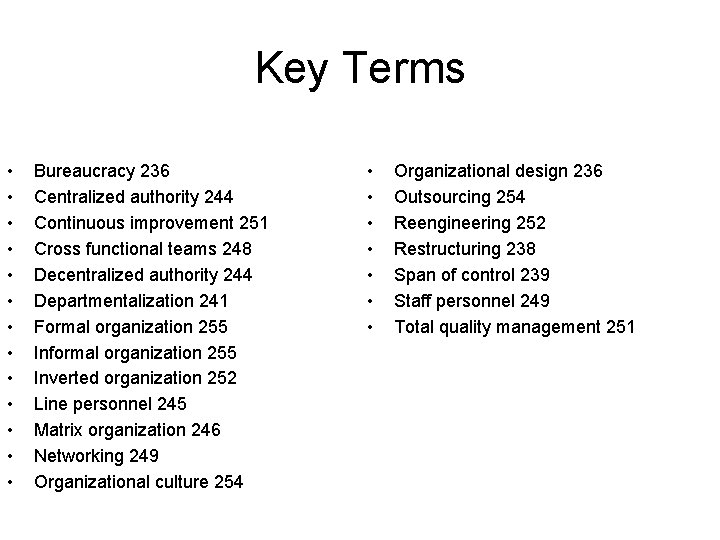
Key Terms • • • • Bureaucracy 236 Centralized authority 244 Continuous improvement 251 Cross functional teams 248 Decentralized authority 244 Departmentalization 241 Formal organization 255 Informal organization 255 Inverted organization 252 Line personnel 245 Matrix organization 246 Networking 249 Organizational culture 254 • • Organizational design 236 Outsourcing 254 Reengineering 252 Restructuring 238 Span of control 239 Staff personnel 249 Total quality management 251
- Slides: 30