
CHAPTER Ecosystems and Biomes the BIG idea Matter
CHAPTER Ecosystems and Biomes the BIG idea Matter and energy together support life within an environment. 1. 1 Ecosystems support life. 1. 2 Matter cycles through ecosystems. 1. 3 Energy flows through ecosystems. 1. 4 Biomes contain many ecosystems. CHAPTER OUTLINE NEW CHAPTER
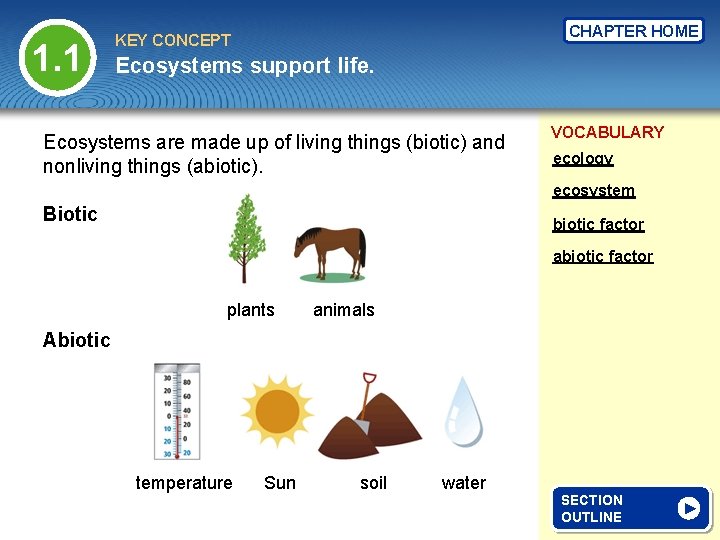
1. 1 CHAPTER HOME KEY CONCEPT Ecosystems support life. Ecosystems are made up of living things (biotic) and nonliving things (abiotic). VOCABULARY ecology ecosystem Biotic biotic factor abiotic factor plants animals Abiotic temperature Sun soil water SECTION OUTLINE
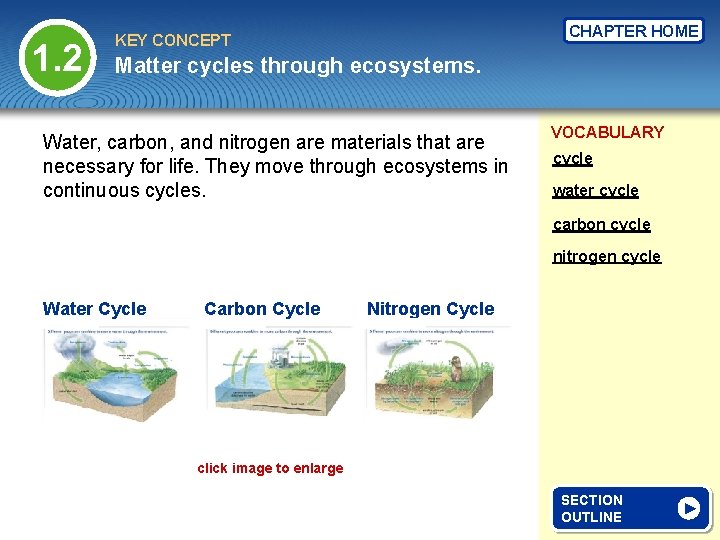
1. 2 CHAPTER HOME KEY CONCEPT Matter cycles through ecosystems. Water, carbon, and nitrogen are materials that are necessary for life. They move through ecosystems in continuous cycles. VOCABULARY cycle water cycle carbon cycle nitrogen cycle Water Cycle Carbon Cycle Nitrogen Cycle click image to enlarge SECTION OUTLINE
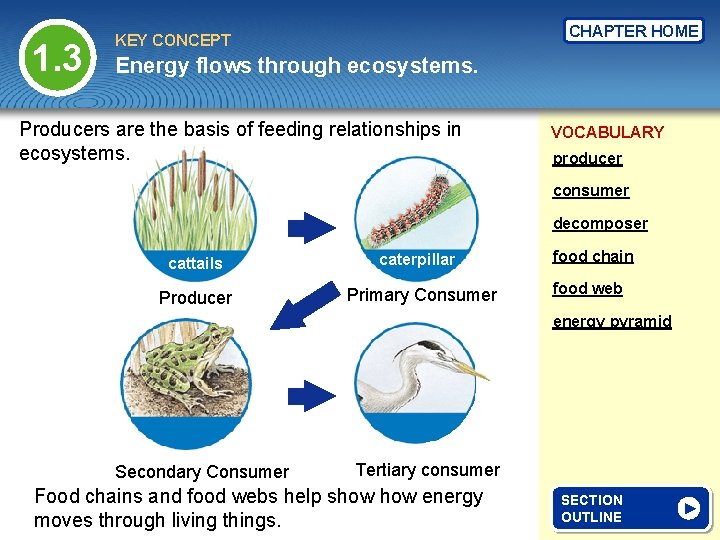
1. 3 CHAPTER HOME KEY CONCEPT Energy flows through ecosystems. Producers are the basis of feeding relationships in ecosystems. VOCABULARY producer consumer decomposer cattails caterpillar Producer Primary Consumer food chain food web energy pyramid frog heron Secondary Consumer Tertiary consumer Food chains and food webs help show energy moves through living things. SECTION OUTLINE
1. 4 KEY CONCEPT CHAPTER HOME Biomes contain many ecosystems. Ecosystems of land biomes • are affected by climate • are affected by conditions of the soil • are characterized by types of plants VOCABULARY biome coniferous deciduous estuary Land Biomes click image to enlarge SECTION OUTLINE
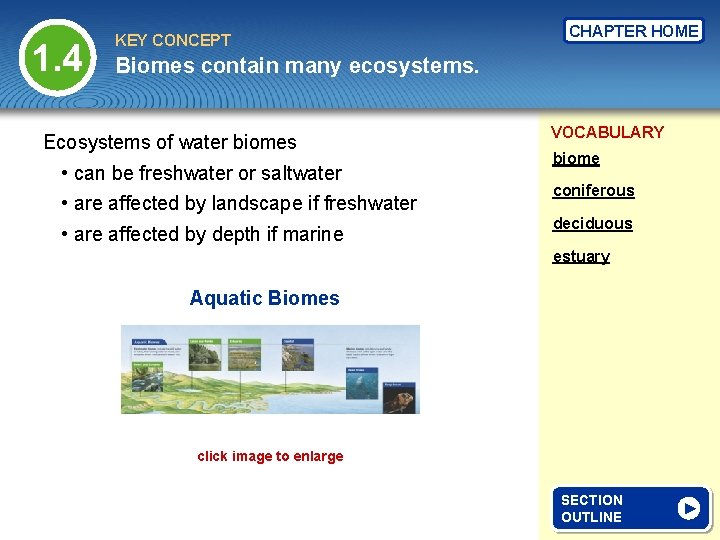
1. 4 KEY CONCEPT CHAPTER HOME Biomes contain many ecosystems. Ecosystems of water biomes • can be freshwater or saltwater • are affected by landscape if freshwater • are affected by depth if marine VOCABULARY biome coniferous deciduous estuary Aquatic Biomes click image to enlarge SECTION OUTLINE
1. 1 KEY CONCEPT CHAPTER HOME Ecosystems support life. I. Ecosystems support life. A. Living things depend on the environment. VOCABULARY ecology ecosystem B. Biotic factors interact with an ecosystem. biotic factor C. Many abiotic factors affect ecosystems. abiotic factor 1. Temperature 2. Light 3. Soil 4. Water KEY CONCEPT SUMMARY
1. 2 KEY CONCEPT CHAPTER HOME Matter cycles through ecosystems. II. Matter cycles through ecosystems. A. All ecosystems need certain materials. B. Water cycles through ecosystems. C. Carbon cycles through ecosystems. VOCABULARY cycle water cycle carbon cycle nitrogen cycle D. Nitrogen cycles through ecosystems. KEY CONCEPT SUMMARY
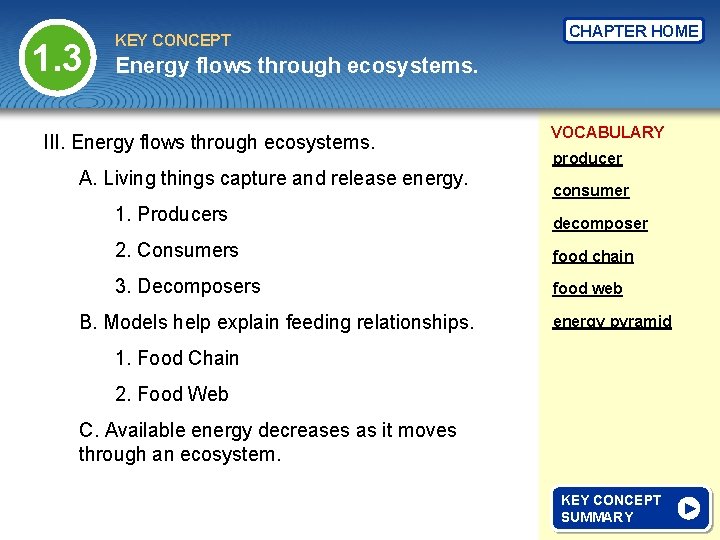
1. 3 KEY CONCEPT CHAPTER HOME Energy flows through ecosystems. III. Energy flows through ecosystems. A. Living things capture and release energy. VOCABULARY producer consumer 1. Producers decomposer 2. Consumers food chain 3. Decomposers food web B. Models help explain feeding relationships. energy pyramid 1. Food Chain 2. Food Web C. Available energy decreases as it moves through an ecosystem. KEY CONCEPT SUMMARY
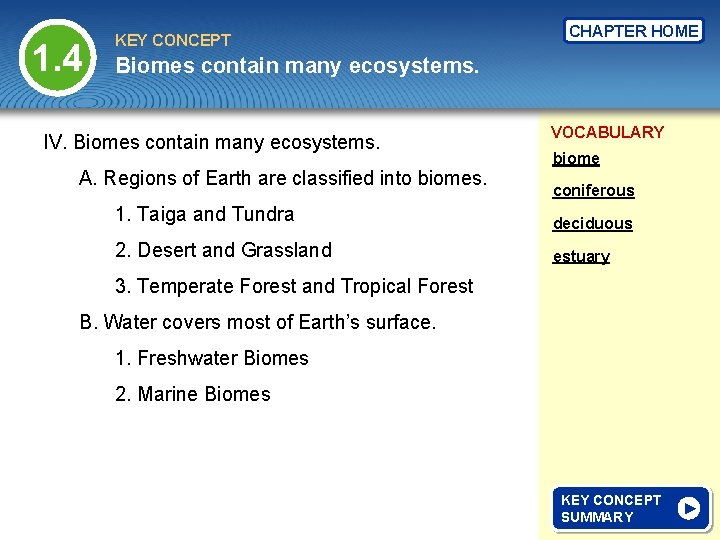
1. 4 KEY CONCEPT CHAPTER HOME Biomes contain many ecosystems. IV. Biomes contain many ecosystems. A. Regions of Earth are classified into biomes. VOCABULARY biome coniferous 1. Taiga and Tundra deciduous 2. Desert and Grassland estuary 3. Temperate Forest and Tropical Forest B. Water covers most of Earth’s surface. 1. Freshwater Biomes 2. Marine Biomes KEY CONCEPT SUMMARY
- Slides: 10