
Chapter 9 Water Quality Learning Objectives By the
Chapter 9 Water Quality
Learning Objectives By the end of this chapter the reader will be able to: • Describe sources of potable water • Define what is meant by the hydrological cycle • List hazardous substances that may be found in drinking water • Describe how water is made safe for human consumption • Discuss hazards to the aquatic environment (oceans, lakes, rivers) associated with environmental pollution
Water Facts • A human can live up to a month without food but can survive for about a week without water. • Average requirement for human consumption of water per day is approximately 2. 5 liters (about 2 ½ quarts). • About two-thirds of the human body is made up of water.
Water Use in the U. S. • Average person uses about 100 gallons (about 400 liters) of water per day. • Average residence uses over 100, 000 gallons (about 400, 000 liters) during a typical year. • Most of this household water (50%-70%) is used for outdoor purposes such as watering lawns and washing cars.
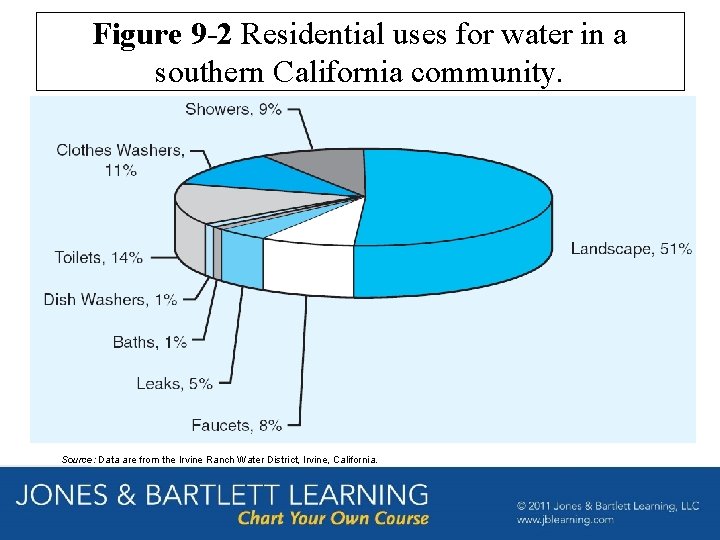
Figure 9 -2 Residential uses for water in a southern California community. Source: Data are from the Irvine Ranch Water District, Irvine, California.
Source Water • “untreated water (i. e. , raw water) used to produce drinking water. ”
Finished Water • “the water (e. g. , drinking water) delivered to the distribution system after treatment, if any. ”
Surface Water • “all water on the surface (e. g. , lakes, rivers, reservoirs, ponds, and oceans) as distinguished from subsurface or ground water. ”
Figure 9 -4 Examples of surface waters. Source: Author.
Groundwater • “water that is contained in the interconnected pores in an aquifer. ”
Groundwater Under the Direct Influence of Surface Water • “any water beneath the surface of the ground with substantial occurrence of insects or other macroorganisms, algae, or large-diameter pathogens (e. g. , Giardia intestinalis or Cryptosporidium), or substantial and relatively rapid shifts in water characteristics (e. g. , turbidity, temperature, conductivity, or PH) that closely correlate with climatologic or surface water conditions. ”
Aquifer • “A layer or section of earth or rock that contains freshwater, known as groundwater (any water that is stored naturally underground or that flows through rock or soil, supplying springs and wells). ”
Freshwater Lakes • “Most freshwater lakes are located at high altitudes, with nearly 50% of the world's lakes in Canada alone. ” • “Many lakes, especially those in arid regions, become salty through evaporation, which concentrates the inflowing salts. ” Examples of major salt lakes are the Caspian Sea, Dead Sea, and Great Salt Lake.
Glaciers and Icecaps • “Glaciers and icecaps cover about 10% of the world's landmass. ” • “These are concentrated in Greenland Antarctica and contain ~70% of the world's freshwater. ”
Hydrological (Water) Cycle • “The natural cycle by which water evaporates from oceans and other water bodies, accumulates as water vapor in clouds, and returns to oceans and other water bodies as precipitation. ”
![Nonrenewable Water • “Water in aquifers and other natural reservoirs that. . . [is]](http://slidetodoc.com/presentation_image_h2/69cc9e0de1e07b1d7290bd92533a7131/image-17.jpg "Nonrenewable Water • “Water in aquifers and other natural reservoirs that. . . [is]")
Nonrenewable Water • “Water in aquifers and other natural reservoirs that. . . [is] not recharged by the hydrological cycle or. . . [is] recharged so slowly that significant withdrawal for human use causes depletion. Fossil aquifers are in this category. ”
Renewable Water • “Freshwater that is continuously replenished by the hydrological cycle for withdrawal within reasonable time limits, such as water in rivers, lakes, or reservoirs that fill from precipitation or from runoff. ”
Reservoirs • “Artificial lakes, produced by constructing physical barriers across flowing rivers, which allow the water to pool and be used for various purposes. The volume of water stored in reservoirs worldwide is estimated at 4, 286 km 3…. ”
Runoff • “Water originating as precipitation on land that then runs off the land into rivers, streams, and lakes, eventually reaching the oceans, inland seas, or aquifers, unless it evaporates first. ”
Water Withdrawal • “Removal of freshwater for human use from any natural source or reservoir, such as a lake, river, or aquifer. If not consumed, the water may return to the environment and can be used again. ”
Water Scarcity • “. . . a country faces water scarcity when its annual supply of renewable freshwater is less than 1, 000 cubic meters person. ” • “Such countries can expect to experience chronic and widespread shortages of water that hinder their development. ”
Water Stress • “A country faces water stress when its annual supply of renewable freshwater is between 1, 000 and 1, 700 cubic meters person. ” • “Such countries can expect to experience temporary or limited water shortages. ”
Wetlands • “Wetlands include swamps, bogs, marshes, mires, lagoons and floodplains. ”
The Earth’s 10 Largest Wetlands • • • West Siberian Lowlands Amazon River Hudson Bay Lowlands (in Canada) Pantanal (in mid-South America) Upper Nile River, Chari-Logone River (in Africa) Hudson Bay Lowlands in the South Pacific Congo River Upper Mackenzie River (in northwestern Canada) North America prairie potholes (wetlands made up of shallow depressions in the northern Great Plains)
Water Availability Facts • Although the earth’s surface (about 70%) is covered largely by water, most of this water is unusable ocean water. • Approximately 3% of all water is freshwater, of which the majority is unavailable for human use (e. g. , frozen in icecaps and glaciers). • Remaining 1% of readily accessible water comes from surface freshwater; sources include lakes, rivers, and shallow underground aquifers.
Regions That Are Facing Water Scarcity and Water Stress • Two sections of the world that currently have severe water shortages also are experiencing some of the highest population growth rates in the world. – Africa (sub-Saharan and North) – Near East
Treatment of Water for Residential Consumption • Water supplied to the public in the U. S. undergoes treatment in order to meet quality standards set by the EPA for safe levels of chemical contaminants and waterborne microorganisms.
Fluoridation of Water • Some communities in the United States add fluoride to public drinking water in order to prevent tooth decay. • Field trials conducted in the 1940 s demonstrated a 50%-70% reduction in the prevalence of dental caries.
The Four Stages of Water Treatment in Most Plants 1. Coagulation–removes suspended material 2. Sedimentation–causes heavy particles to settle to bottom of tanks for collection 3. Filtration–removes smaller particles 4. Disinfection–kills bacteria or microorganisms
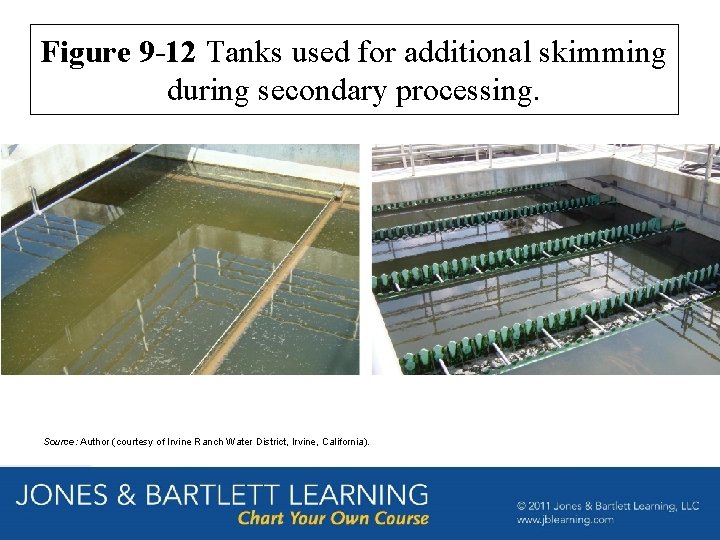
Figure 9 -12 Tanks used for additional skimming during secondary processing. Source: Author (courtesy of Irvine Ranch Water District, Irvine, California).
Treatment of Water from Aquifers • For high-quality water from aquifers, minimal aeration, filtration, and disinfection are necessary. • In some cases, water drawn from aquifers is free from microorganisms but undesirable for human consumption because of impurities and coloration that impair the esthetic qualities of this essential liquid.
Water That Flows across the Ground • Potential contaminants include: – Chemicals and nutrients (e. g. , fertilizers and nitrates from agricultural lands) – Rubber, heavy metals, sodium (from roads) – Petroleum byproducts and organic chemicals (from dry cleaners, service stations, and leaking underground storage tanks)
More Potential Contaminants • Chemicals used in the home (solvents, paints, used motor oil, lead, and copper) • Heavy metals and toxic chemicals (from factories) • Microbial pathogens (from human and animal wastes)
Waterborne Diseases • Conditions that are “transmitted through the ingestion of contaminated water and water acts as the passive carrier of the infectious agent. ” • Examples are: – Cryptosporidiosis – Cholera – Certain viruses
Examples of Waterborne Pathogens • • Enteric protozoal parasites Bacterial enteropathogens Viral pathogens Other agents
Chemicals in the Water Supply • Some chemicals that have been reported to cause adverse health effects: – Aluminum – Arsenic – Disinfection by-products – Fluoride – Lead – Pesticides – Radon
Health Effects of Chemicals in the Water Supply • Reported health effects have included: – Various cancers – Adverse reproductive outcomes – Cardiovascular disease – Neurological disease
Another Source of Water Contamination • Pharmaceutical and personal care products (PPCPs) represent another source of water contamination. • They are washed off or excreted from the body. • Examples include: analgesics, oral contraceptive agents, drugs for lowering cholesterol, and anticonvulsants.
Water Disinfection Byproducts (DBPs) • Chemicals used to disinfect water include chlorine, chloramines, chlorine dioxide, and ozone. • These chemicals are associated with byproducts of chlorination called DBPs. • Chlorine is associated with trihalomethanes (THMs), which are among the most common and widely measured DBPs.
Chlorination of Water and Risk of Birth Defects • Associated with frequency of late adverse pregnancy outcomes – Congenital anomalies – Other birth defects – Stillbirths – Neonatal deaths
Beach and Coastal Pollution • The approximately 1 billion people who live near coastal areas cause great stress on coastal ecosystems. • Coastal areas are threatened by over-development, poor planning, and economic expansion. • World’s coastal regions are the recipients of billions of gallons of treated and untreated wastewater.
Effects of Beach and Coastal Pollution • Excessive amounts of nutrients that enter the oceans may cause harmful blooms of algae, resulting in reduced levels of oxygen in the water (anoxic conditions). • An anoxic ocean environment can bring about fish kills and damage other forms of ocean life. • Urban runoff and sewage contamination of the ocean expose swimmers to waterborne diseases.
Petroleum Spills • Oil spills from tankers and off-shore drilling platforms can have a devastating impact on the shoreline, aquatic life, mammals, and birds. – On March 24, 1989, the tanker Exxon Valdez ran aground in Alaska and caused the largest oil spill in U. S. waters as of that time. – On April 20, 2010, the Deepwater Horizon oil platform exploded, causing history’s largest accidental marine oil spill as of mid-2010.
- Slides: 44