
Chapter 9 The Immune System and Mechanisms of
- Slides: 34
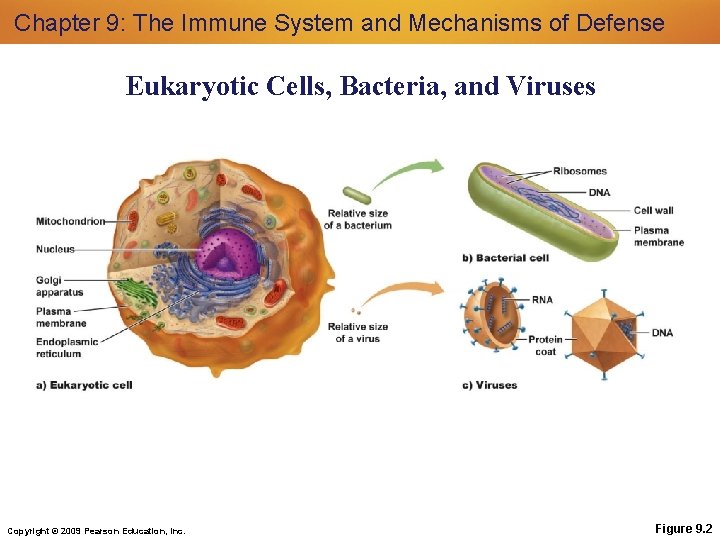
Chapter 9: The Immune System and Mechanisms of Defense Eukaryotic Cells, Bacteria, and Viruses Copyright © 2009 Pearson Education, Inc. Figure 9. 2
Section 9. 1 Pathogens Disease-causing agents Living organisms Bacteria Fungi Parasites Non-living Viruses Prions Copyright © 2009 Pearson Education, Inc.
Determination of Health Risk Transmissibility How easily it is passed from person to person Mode of transmission Respiratory, fecal–oral, body fluids Virulence How easy it is to set up infection How much damage is caused by the infection Copyright © 2009 Pearson Education, Inc.
Lymphatic System—Functions Maintenance of blood volume in cardiovascular system Transports excess fluid from the capillaries back to the cardiovascular system Transport of fats and fat-soluble material from digestive system Filtration of foreign material to defend against infection Copyright © 2009 Pearson Education, Inc.
Lymphatic System—Components Lymph: protein-containing fluid, transported by lymphatic vessels Lymph nodes: cleanse lymph by filtering out material Spleen: cleanses blood, removes dying red blood cells, helps fight infection Thymus: secretes thymosin and thymopoietin to cause T lymphocytes to mature Tonsils: protect throat Copyright © 2009 Pearson Education, Inc.
First Line of Defense: Keep Pathogens Out Physical and chemical barriers Skin Structure: dead layer, inhospitable to microorganisms Constant replacement: many adhering microorganisms removed p. H = 5– 6: too acidic for many microorganisms Others: tears, saliva, earwax, digestive and vaginal acids, mucus, vomiting, urination, defecation, resident bacteria (normal flora) Copyright © 2009 Pearson Education, Inc.
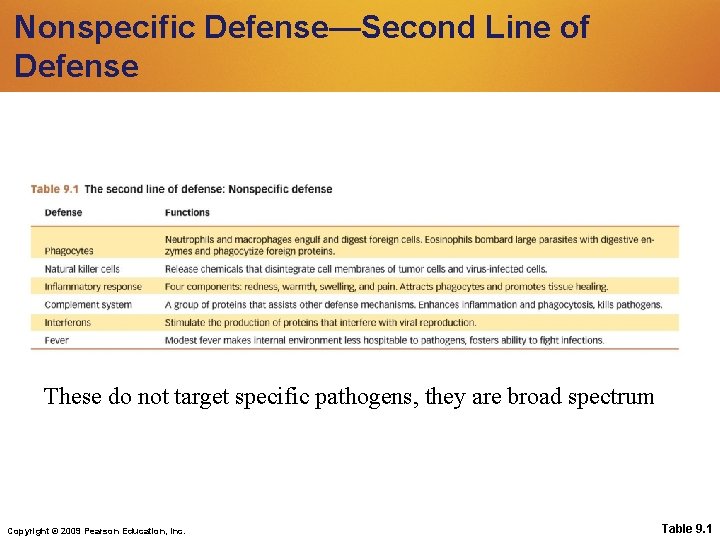
Nonspecific Defense—Second Line of Defense These do not target specific pathogens, they are broad spectrum Copyright © 2009 Pearson Education, Inc. Table 9. 1
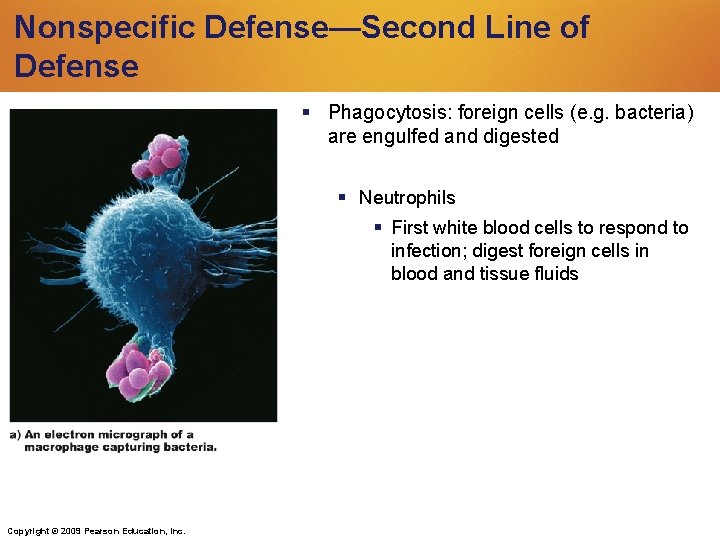
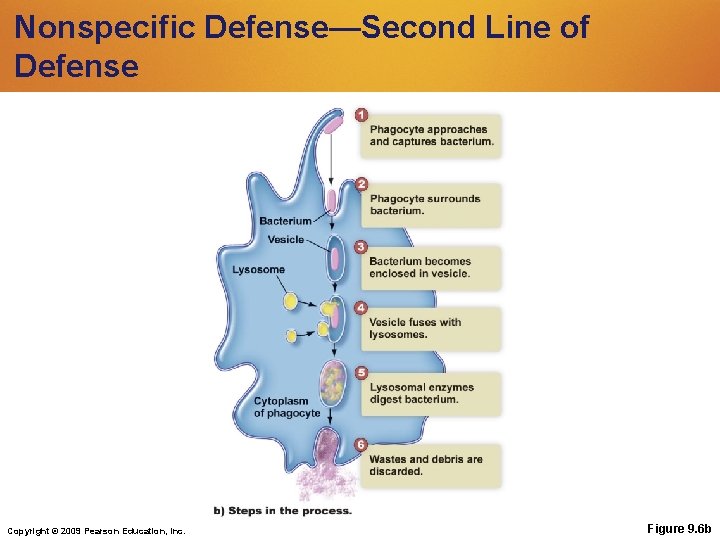
Nonspecific Defense—Second Line of Defense Phagocytosis: foreign cells (e. g. bacteria) are engulfed and digested Neutrophils First white blood cells to respond to infection; digest foreign cells in blood and tissue fluids Copyright © 2009 Pearson Education, Inc.
Nonspecific Defense—Second Line of Defense Macrophages (a. k. a monocytes) • Digest large numbers of foreign cells as well as function in clean up • Stimulate the production of more WBC Eosinophils • Surround large parasites and bombard them with digestive enzymes Copyright © 2009 Pearson Education, Inc. Figure 9. 6 a
Nonspecific Defense—Second Line of Defense Copyright © 2009 Pearson Education, Inc. Figure 9. 6 b
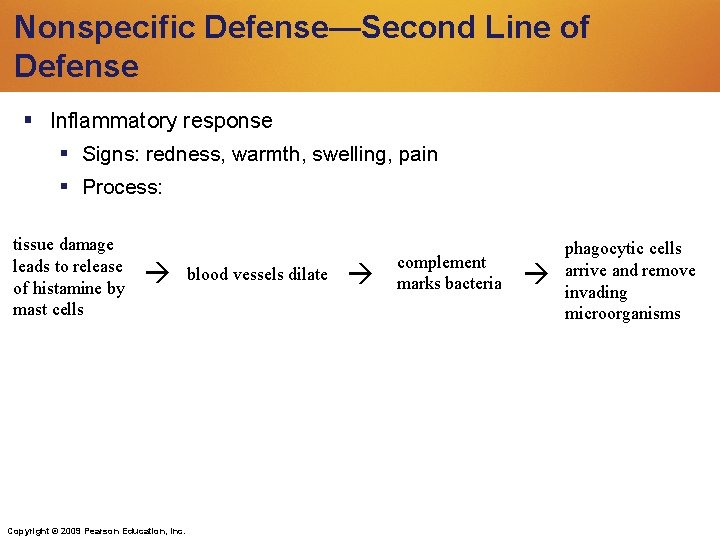
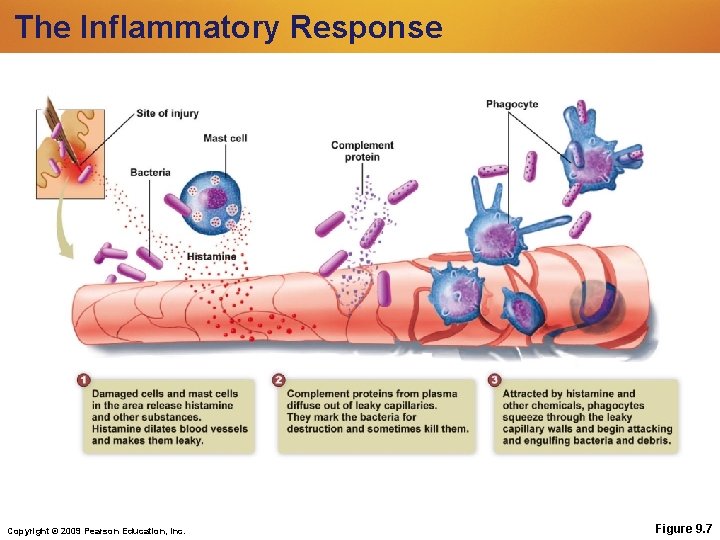
Nonspecific Defense—Second Line of Defense Inflammatory response Signs: redness, warmth, swelling, pain Process: tissue damage leads to release of histamine by mast cells Copyright © 2009 Pearson Education, Inc. blood vessels dilate complement marks bacteria phagocytic cells arrive and remove invading microorganisms
The Inflammatory Response Copyright © 2009 Pearson Education, Inc. Figure 9. 7
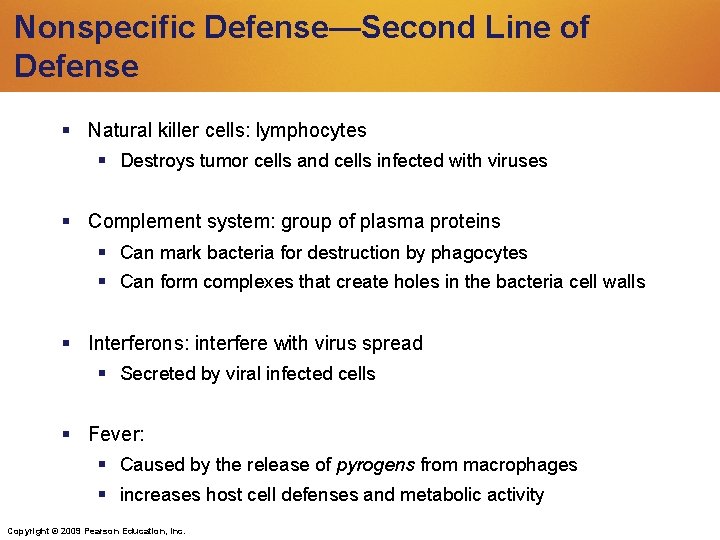
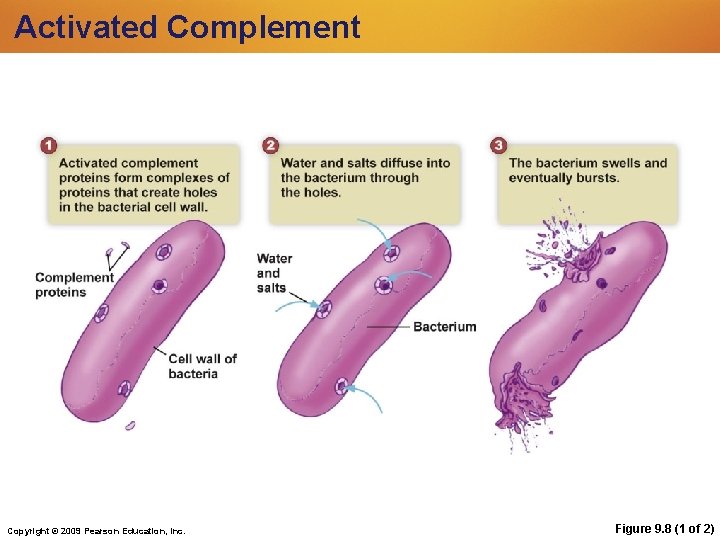
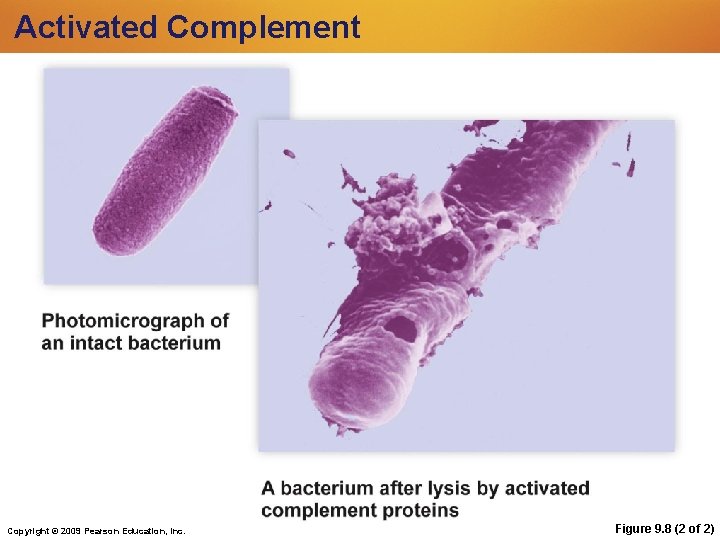
Nonspecific Defense—Second Line of Defense Natural killer cells: lymphocytes Destroys tumor cells and cells infected with viruses Complement system: group of plasma proteins Can mark bacteria for destruction by phagocytes Can form complexes that create holes in the bacteria cell walls Interferons: interfere with virus spread Secreted by viral infected cells Fever: Caused by the release of pyrogens from macrophages increases host cell defenses and metabolic activity Copyright © 2009 Pearson Education, Inc.
Activated Complement Copyright © 2009 Pearson Education, Inc. Figure 9. 8 (1 of 2)
Activated Complement Copyright © 2009 Pearson Education, Inc. Figure 9. 8 (2 of 2)
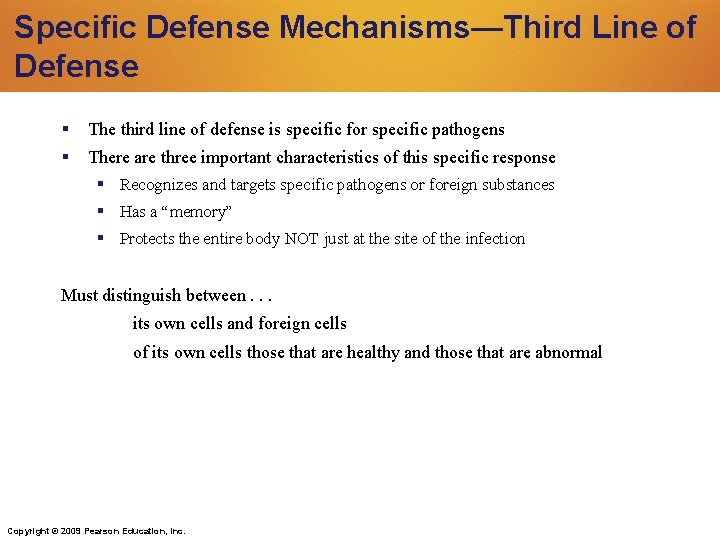
Specific Defense Mechanisms—Third Line of Defense The third line of defense is specific for specific pathogens There are three important characteristics of this specific response Recognizes and targets specific pathogens or foreign substances Has a “memory” Protects the entire body NOT just at the site of the infection Must distinguish between. . . its own cells and foreign cells of its own cells those that are healthy and those that are abnormal Copyright © 2009 Pearson Education, Inc.
Specific Defense Mechanisms—Third Line of Defense Immune response targets antigens Antigens: major histocompatibility complex (MHC) proteins Self- antigens B cells: antibody-mediated immunity, action by antibodies Classes of antibodies: Ig. G activates complement system and neutralizes many toxins, can pass the placenta Ig. M activate complement system and cause foreign cells to agglutinate, ABO antibodies belong to this type Ig. A enter areas covered by mucus membranes, neutralize infectious pathogens, pass to infants during breastfeeding Ig. D found in B cells, function not clear Ig. E found in B cells, mast cells, and basophils, trigger inflammatory response by causing release of histamine, allergic responses Copyright © 2009 Pearson Education, Inc.
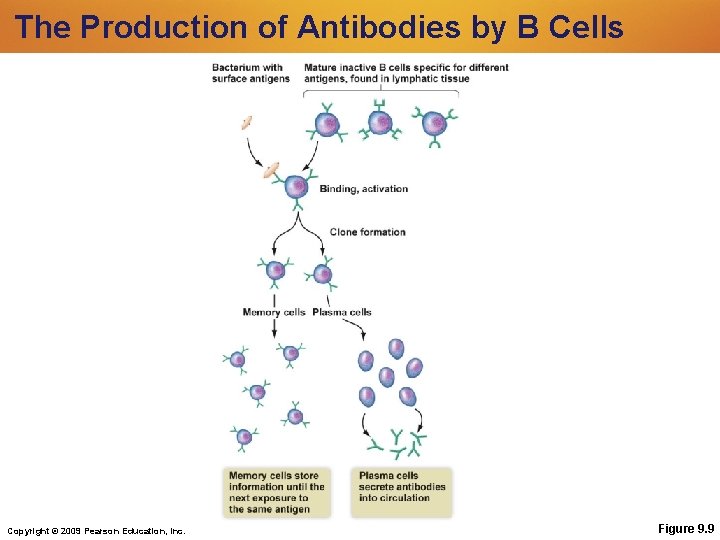
The Production of Antibodies by B Cells Copyright © 2009 Pearson Education, Inc. Figure 9. 9
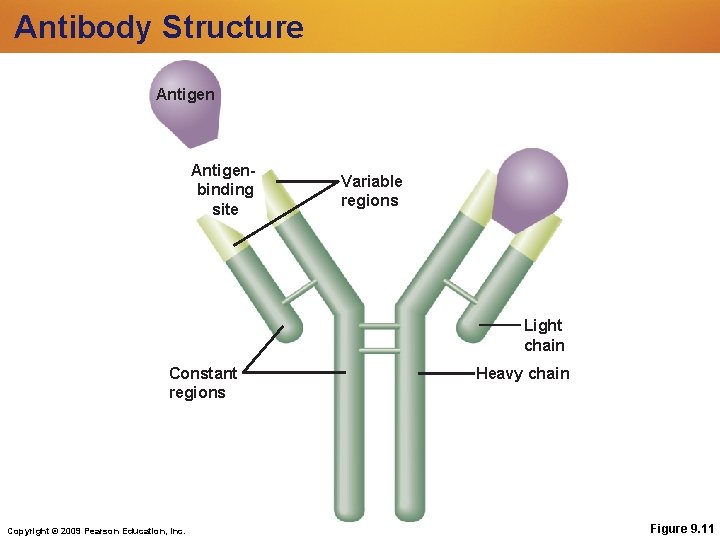
Antibody Structure Antigenbinding site Variable regions Light chain Constant regions Copyright © 2009 Pearson Education, Inc. Heavy chain Figure 9. 11
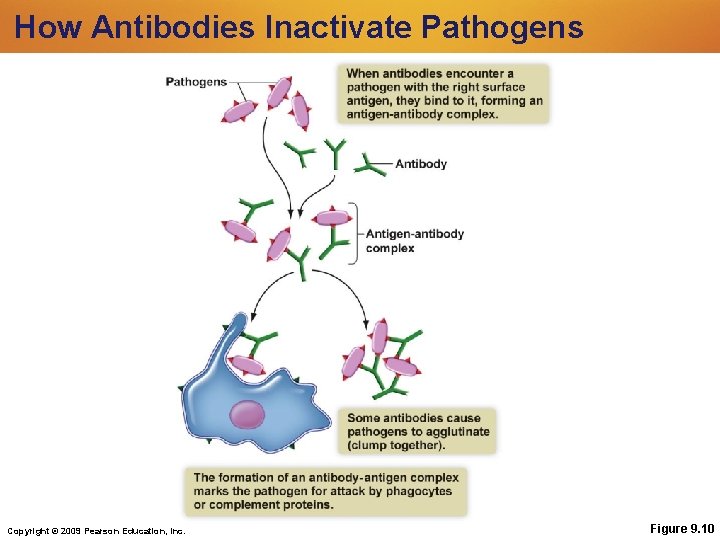
How Antibodies Inactivate Pathogens Copyright © 2009 Pearson Education, Inc. Figure 9. 10
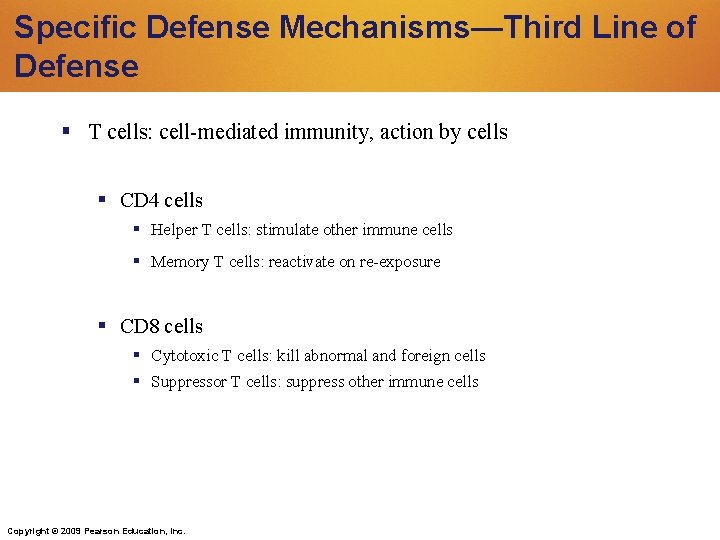
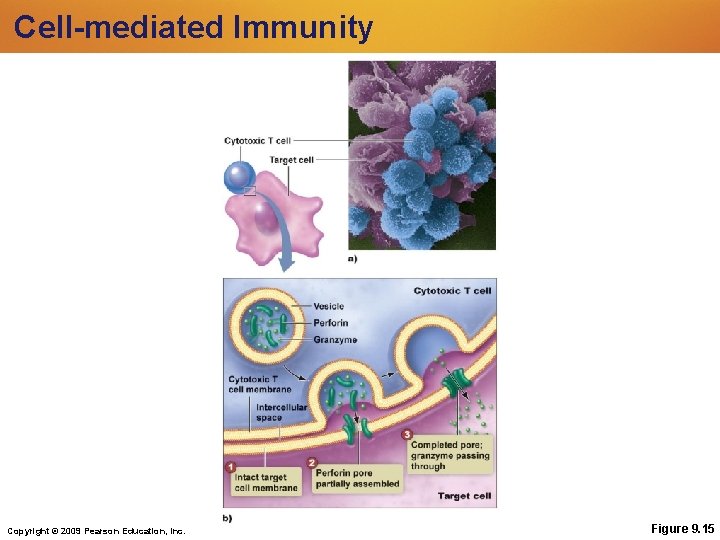
Specific Defense Mechanisms—Third Line of Defense T cells: cell-mediated immunity, action by cells CD 4 cells Helper T cells: stimulate other immune cells Memory T cells: reactivate on re-exposure CD 8 cells Cytotoxic T cells: kill abnormal and foreign cells Suppressor T cells: suppress other immune cells Copyright © 2009 Pearson Education, Inc.
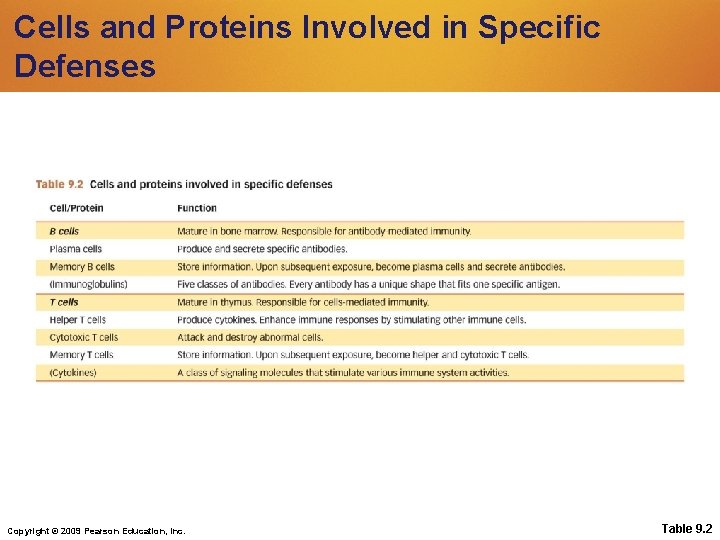
Cells and Proteins Involved in Specific Defenses Copyright © 2009 Pearson Education, Inc. Table 9. 2
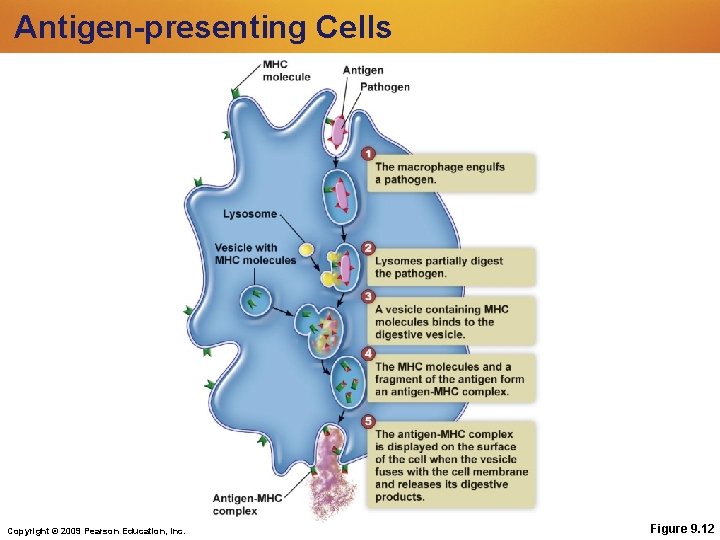
Antigen-presenting Cells Copyright © 2009 Pearson Education, Inc. Figure 9. 12
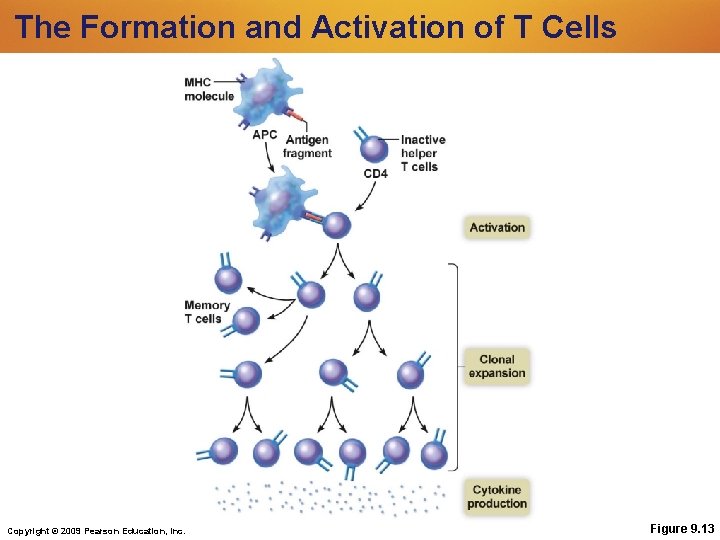
The Formation and Activation of T Cells Copyright © 2009 Pearson Education, Inc. Figure 9. 13
Cell-mediated Immunity Copyright © 2009 Pearson Education, Inc. Figure 9. 15
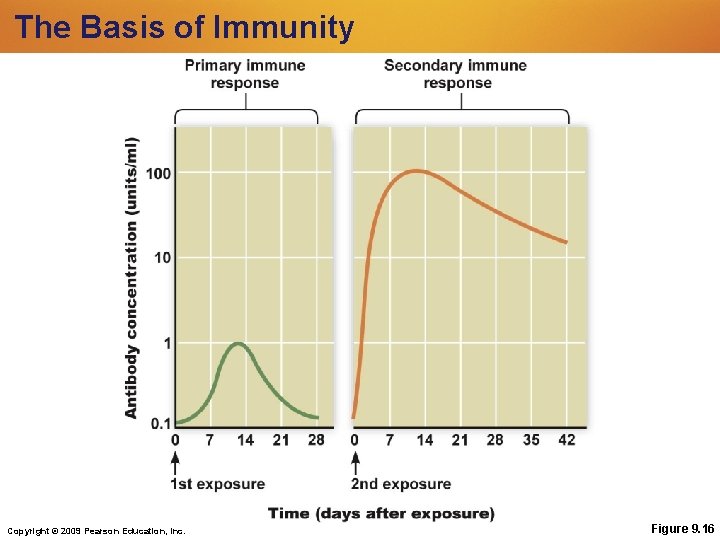
The Basis of Immunity Copyright © 2009 Pearson Education, Inc. Figure 9. 16
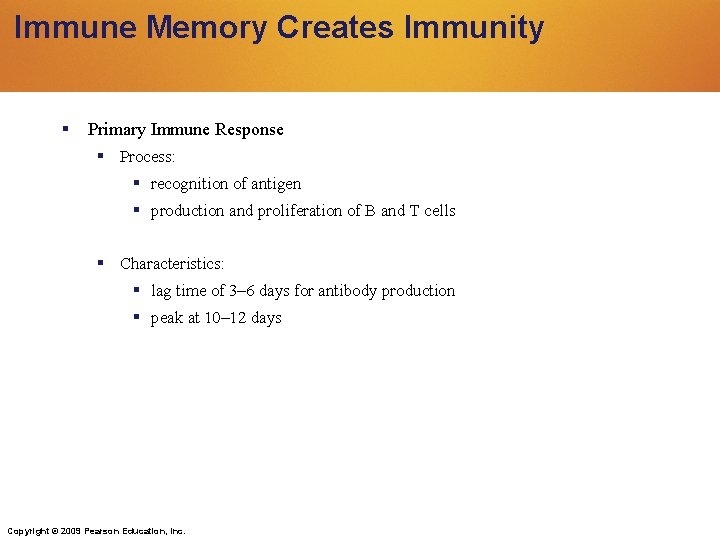
Immune Memory Creates Immunity Primary Immune Response Process: recognition of antigen production and proliferation of B and T cells Characteristics: lag time of 3– 6 days for antibody production peak at 10– 12 days Copyright © 2009 Pearson Education, Inc.
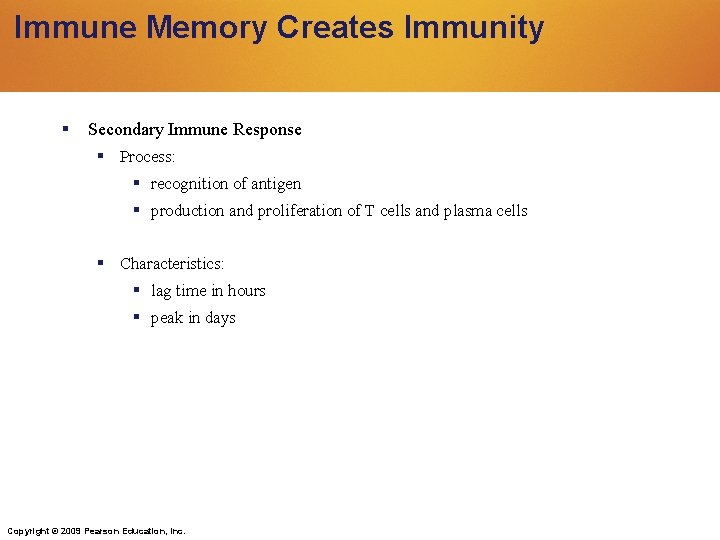
Immune Memory Creates Immunity Secondary Immune Response Process: recognition of antigen production and proliferation of T cells and plasma cells Characteristics: lag time in hours peak in days Copyright © 2009 Pearson Education, Inc.
Medical Assistance in the War Against Pathogens Active immunization: effective against viruses Passive immunization: effective against existing or anticipated infections Monoclonal antibodies: clones of hybrid cells Antibiotics: effective only against bacteria, resistance is a problem Copyright © 2009 Pearson Education, Inc.
Tissue Rejection Transplants: 75% match essential What do we mean by match? Recent advances: Improvements in immunosuppressive drugs Better techniques for tissue typing National organ bank systems Immunosuppressive drugs: prevent patient’s immune system from attacking transplanted tissue Copyright © 2009 Pearson Education, Inc.
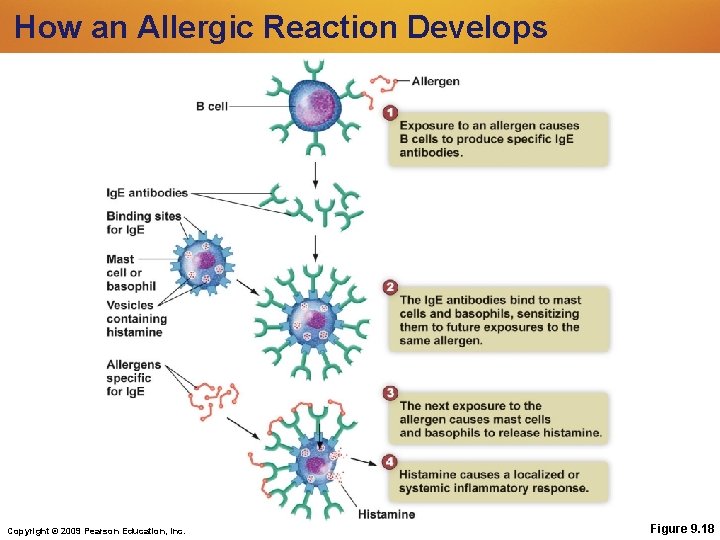
Inappropriate Immune Responses Allergies Hypersensitivity reaction, excessive inflammatory response mediated by Ig. E Localized: affect only the area exposed Systemic: affect several organ systems Copyright © 2009 Pearson Education, Inc.
How an Allergic Reaction Develops Copyright © 2009 Pearson Education, Inc. Figure 9. 18
Inappropriate Immune Responses Anaphylactic shock Severe systemic allergic reaction Symptoms: difficulty breathing severe stomach cramps swelling throughout the body circulatory collapse fall in blood pressure Copyright © 2009 Pearson Education, Inc.
Inappropriate Immune Responses Autoimmune Disorders Defective recognition of “self” Lupus erythymatosis (LE or lupus) Inflamed connective tissue Rheumatoid arthritis Inflamed synovial membrane Copyright © 2009 Pearson Education, Inc.