
Chapter 9 The Cell Cycle What you must


- Slides: 36
Chapter 9: The Cell Cycle
What you must know: The structure of the replicated chromosome. The events that occur in interphase of the cell cycle (G 1, S, G 2). The role of cyclins and cyclin-dependent kinases in the regulation of the cell cycle. Ways in which the normal cell cycle is disrupted to cause cancer or halted in certain specialized cells. The features of mitosis that result in the production of genetically identical daughter cells including replication, alignment of chromosomes (metaphase), and separation of chromosomes (anaphase).
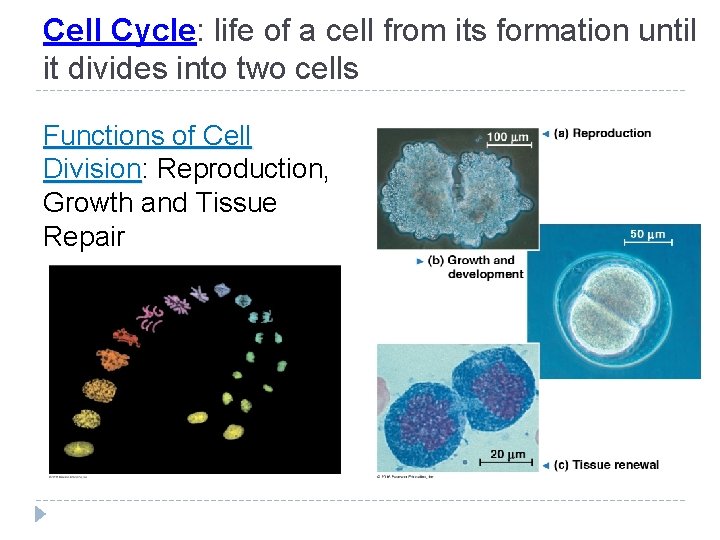
Cell Cycle: life of a cell from its formation until it divides into two cells Functions of Cell Division: Division Reproduction, Growth and Tissue Repair
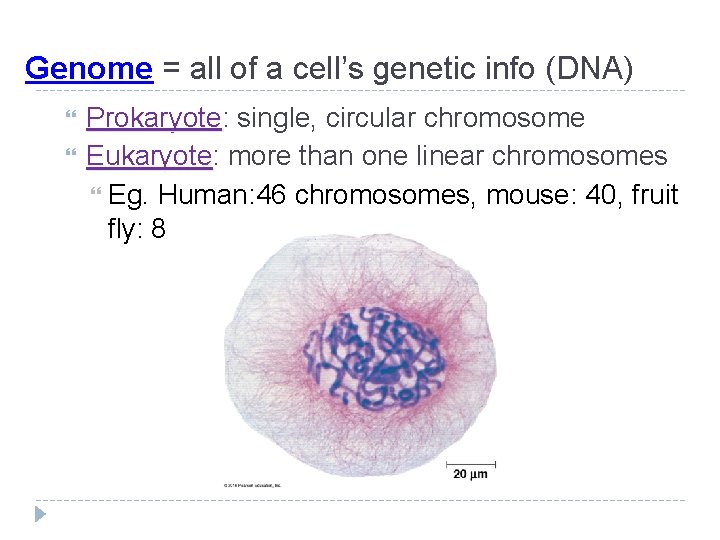
Genome = all of a cell’s genetic info (DNA) Prokaryote: Prokaryote single, circular chromosome Eukaryote: Eukaryote more than one linear chromosomes Eg. Human: 46 chromosomes, mouse: 40, fruit fly: 8
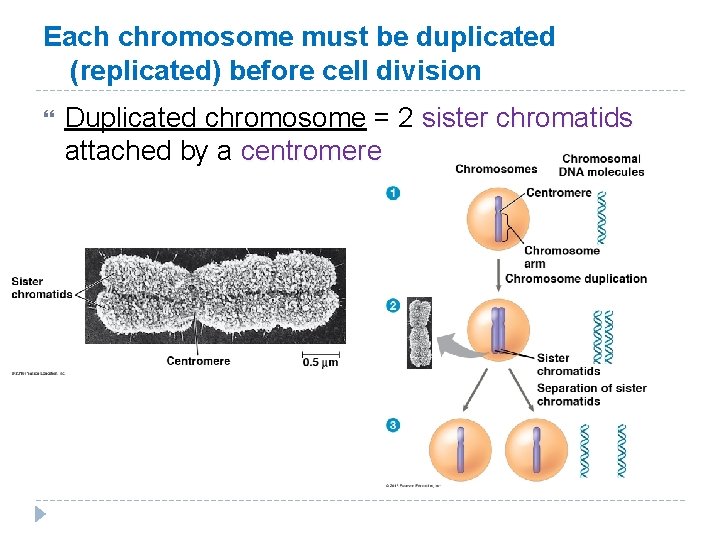
Each chromosome must be duplicated (replicated) before cell division Duplicated chromosome = 2 sister chromatids attached by a centromere
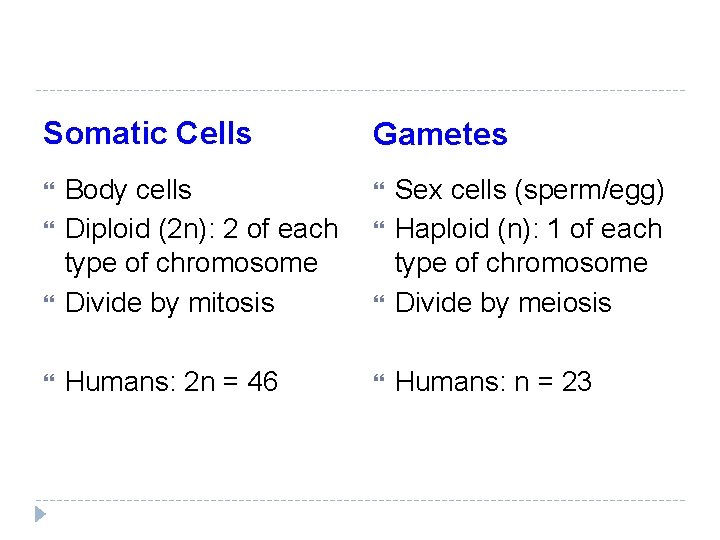
Somatic Cells Gametes Body cells Diploid (2 n): 2 of each type of chromosome Divide by mitosis Sex cells (sperm/egg) Haploid (n): 1 of each type of chromosome Divide by meiosis Humans: 2 n = 46 Humans: n = 23
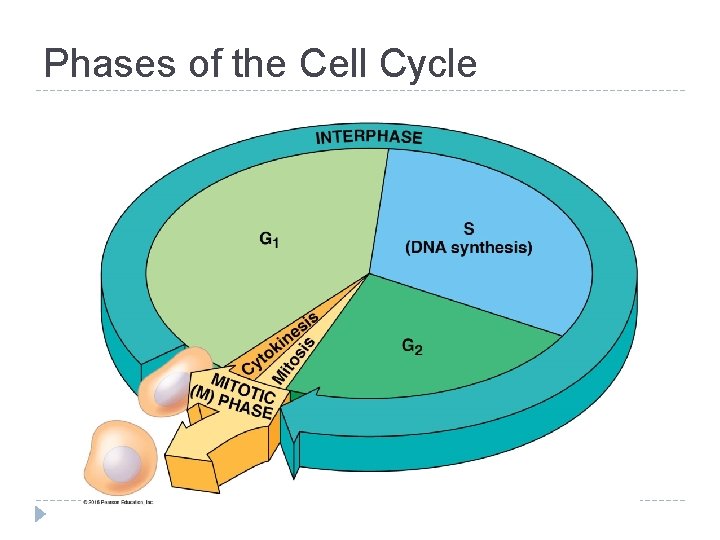
Phases of the Cell Cycle
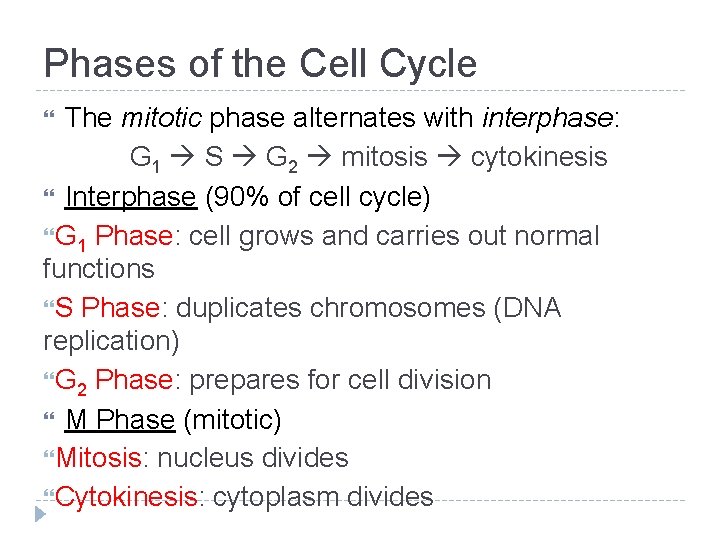
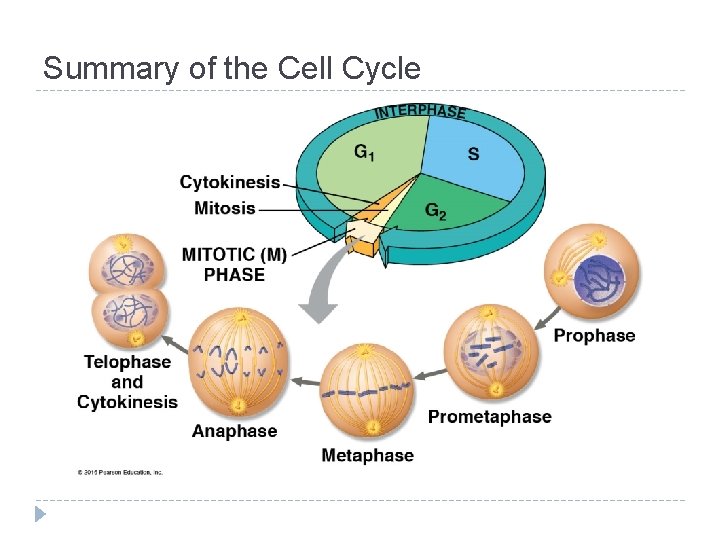
Phases of the Cell Cycle The mitotic phase alternates with interphase: G 1 S G 2 mitosis cytokinesis Interphase (90% of cell cycle) G 1 Phase: cell grows and carries out normal functions S Phase: duplicates chromosomes (DNA replication) G 2 Phase: prepares for cell division M Phase (mitotic) Mitosis: nucleus divides Cytokinesis: cytoplasm divides
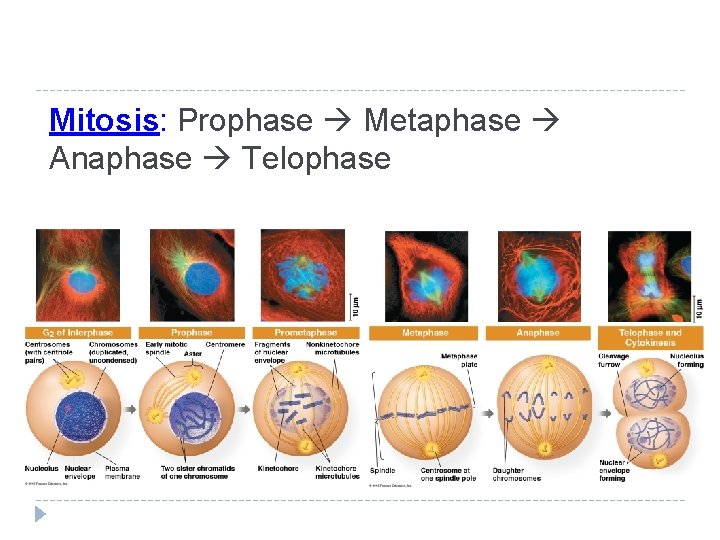
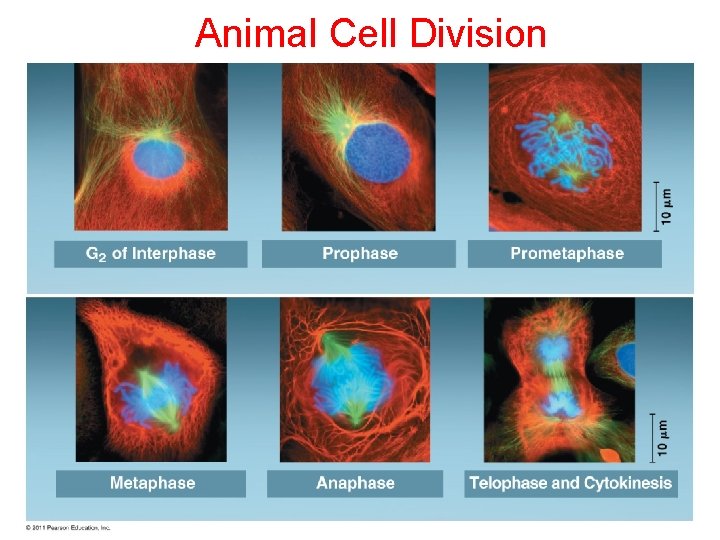
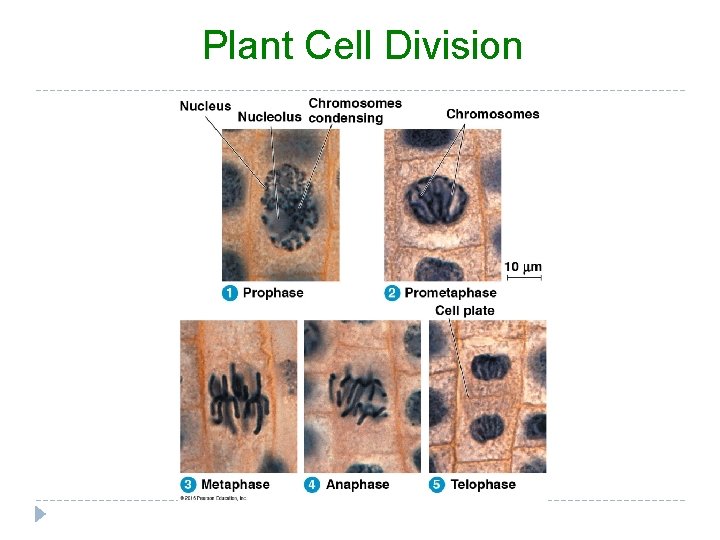
Mitosis: Prophase Metaphase Anaphase Telophase
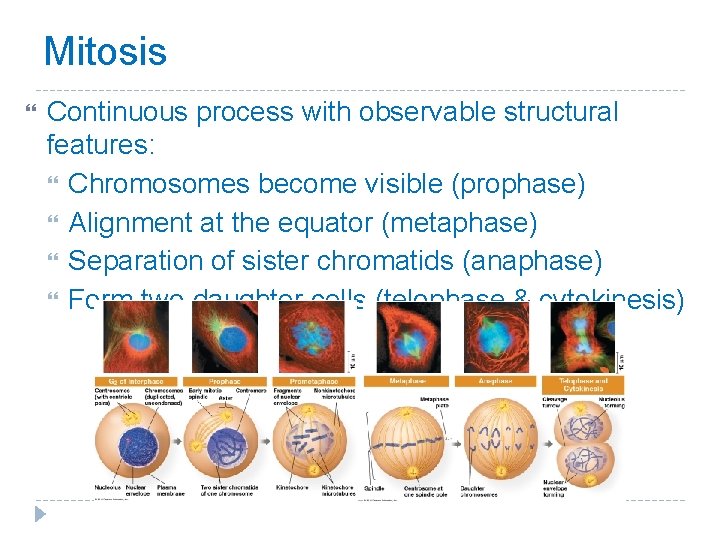
Mitosis Continuous process with observable structural features: Chromosomes become visible (prophase) Alignment at the equator (metaphase) Separation of sister chromatids (anaphase) Form two daughter cells (telophase & cytokinesis)
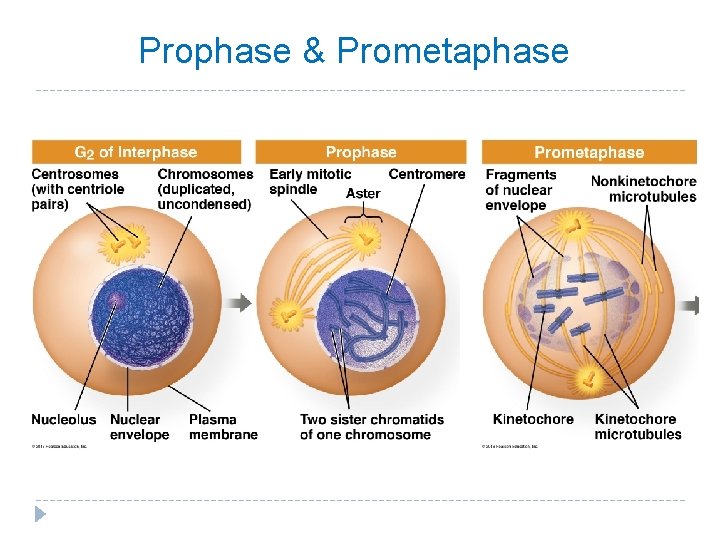
Prophase & Prometaphase
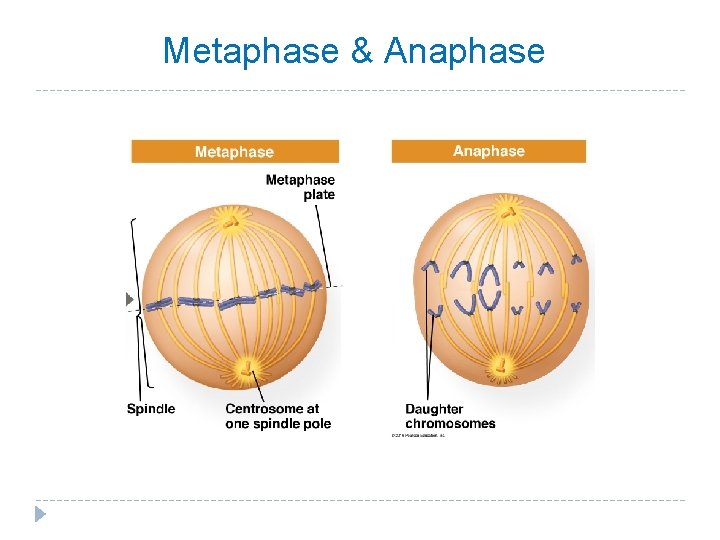
Metaphase & Anaphase
Telophase & Cytokinesis Cytoplasm of cell divided Animal Cells: cleavage furrow Plant Cells: cell plate forms
Cytokinesis in Animal vs. Plant Cells
Animal Cell Division
Plant Cell Division
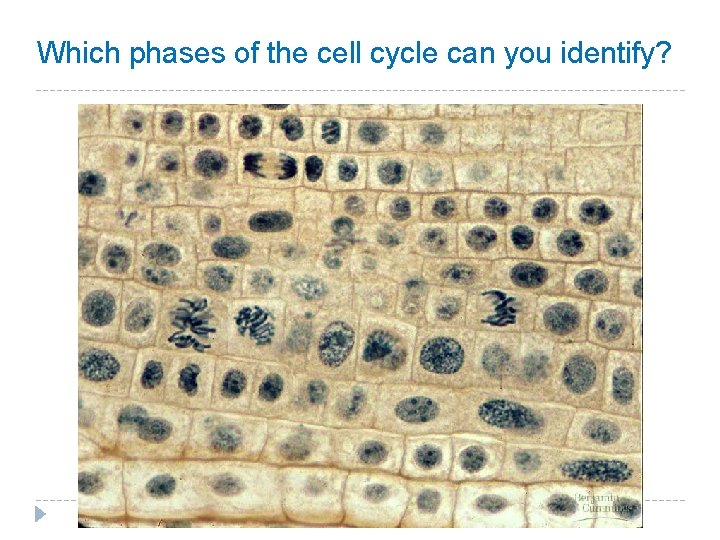
Which phases of the cell cycle can you identify?
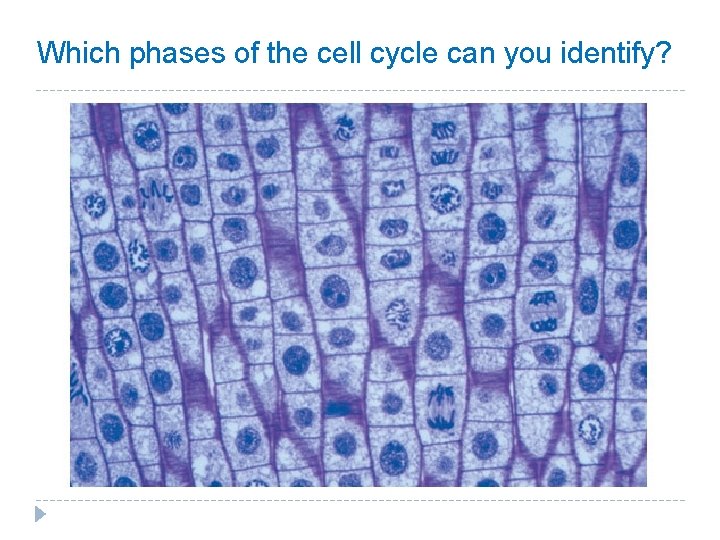
Which phases of the cell cycle can you identify?
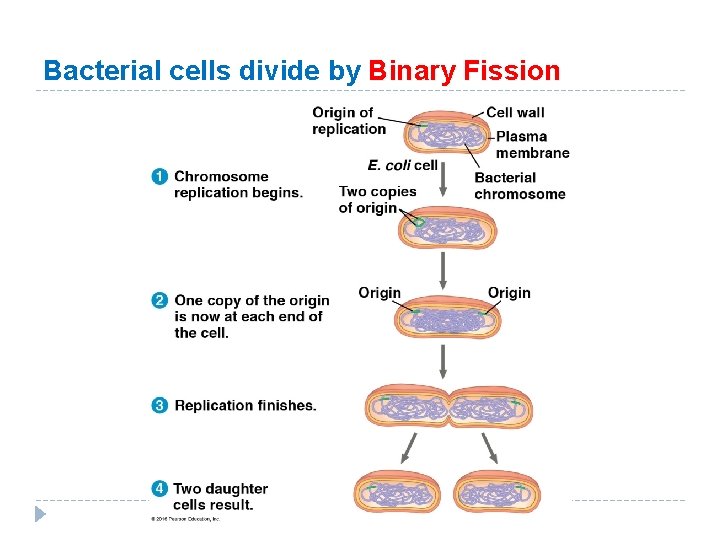
Bacterial cells divide by Binary Fission
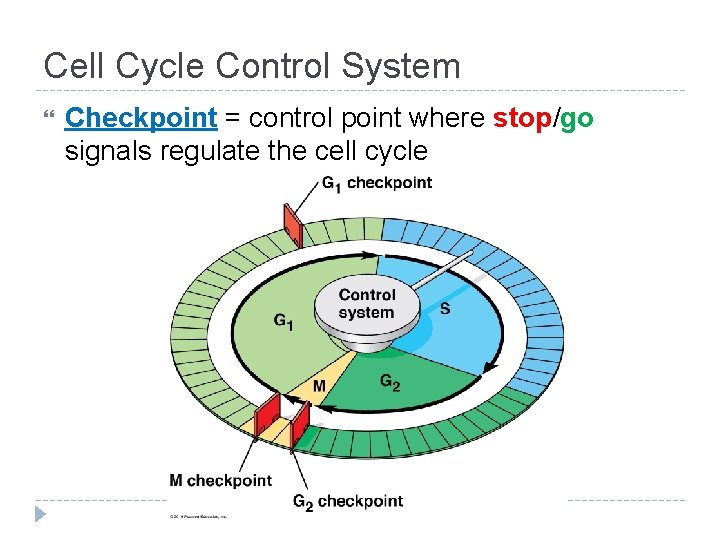
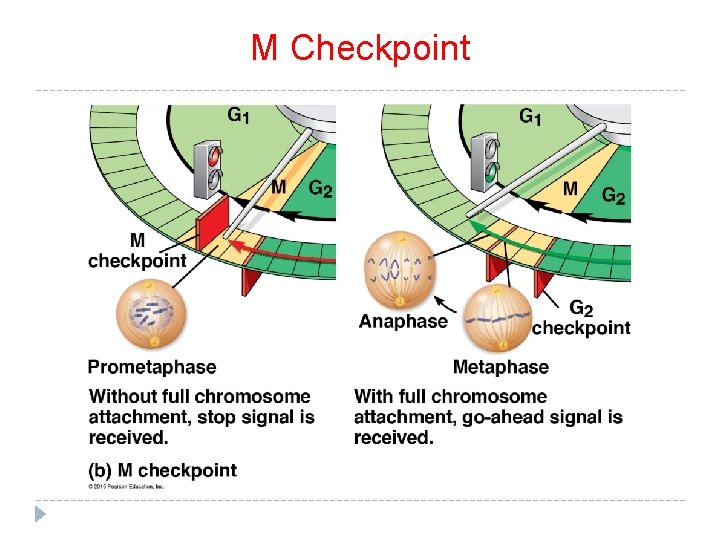
Cell Cycle Control System Checkpoint = control point where stop/go signals regulate the cell cycle
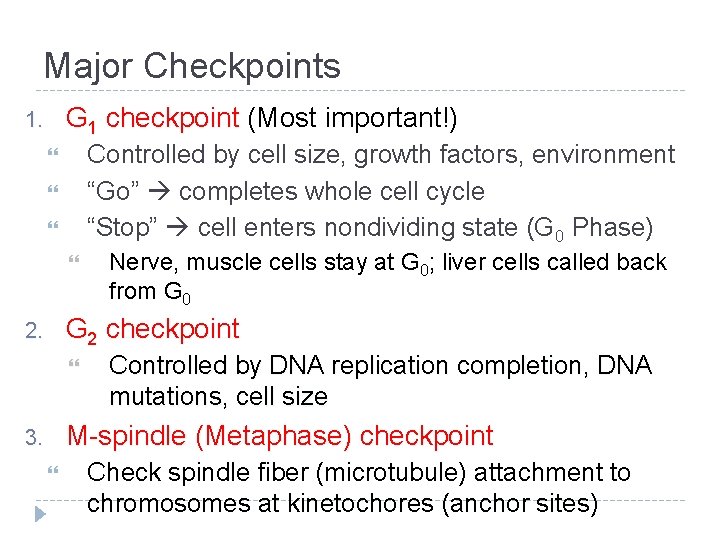
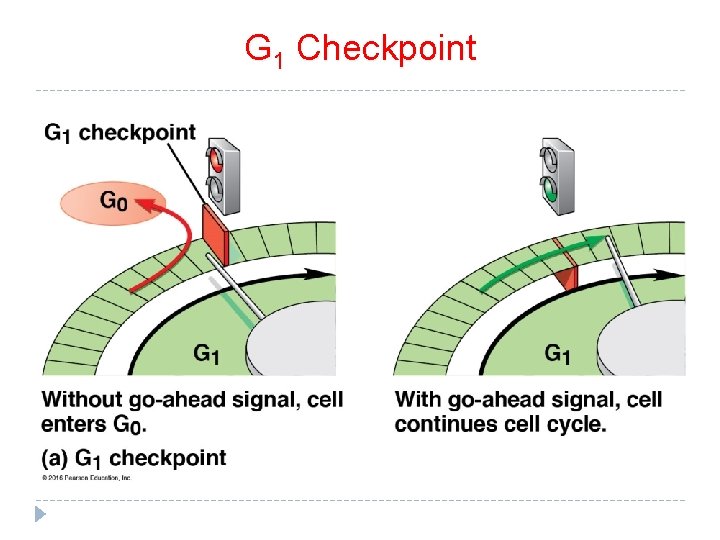
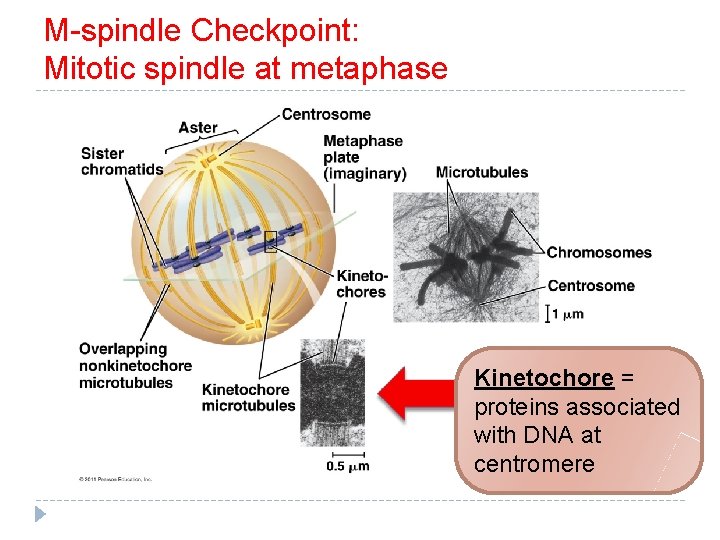
Major Checkpoints G 1 checkpoint (Most important!) 1. Controlled by cell size, growth factors, environment “Go” completes whole cell cycle “Stop” cell enters nondividing state (G 0 Phase) Nerve, muscle cells stay at G 0; liver cells called back from G 0 G 2 checkpoint 2. Controlled by DNA replication completion, DNA mutations, cell size M-spindle (Metaphase) checkpoint 3. Check spindle fiber (microtubule) attachment to chromosomes at kinetochores (anchor sites)
G 1 Checkpoint
M Checkpoint
M-spindle Checkpoint: Mitotic spindle at metaphase Kinetochore = proteins associated with DNA at centromere
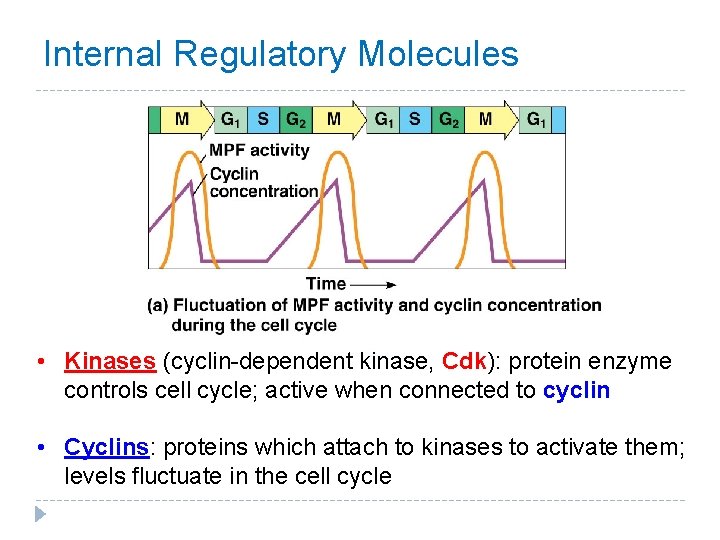
Internal Regulatory Molecules • Kinases (cyclin-dependent kinase, Cdk): protein enzyme controls cell cycle; active when connected to cyclin • Cyclins: proteins which attach to kinases to activate them; levels fluctuate in the cell cycle
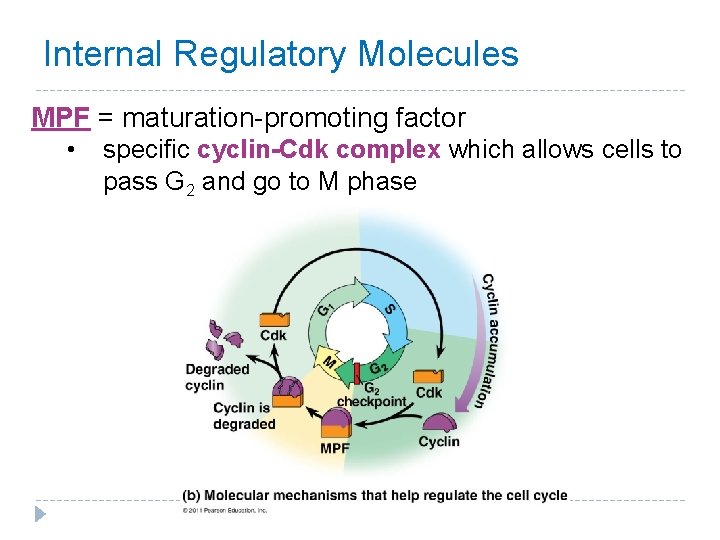
Internal Regulatory Molecules MPF = maturation-promoting factor • specific cyclin-Cdk complex which allows cells to pass G 2 and go to M phase
External Regulatory Factors
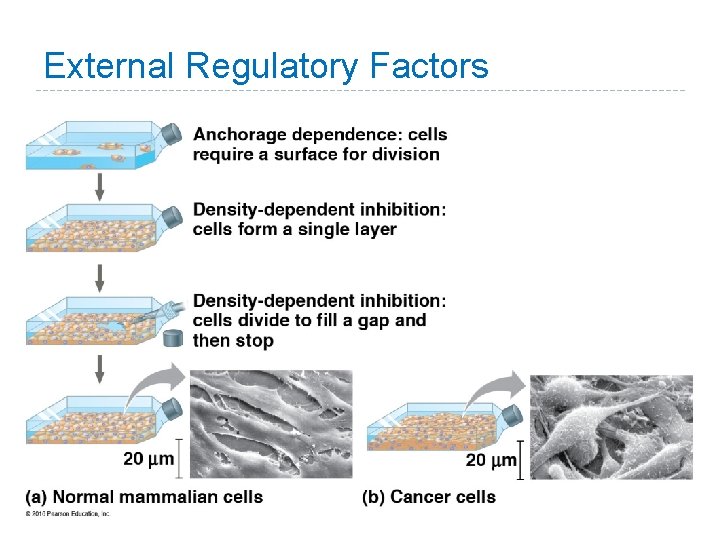
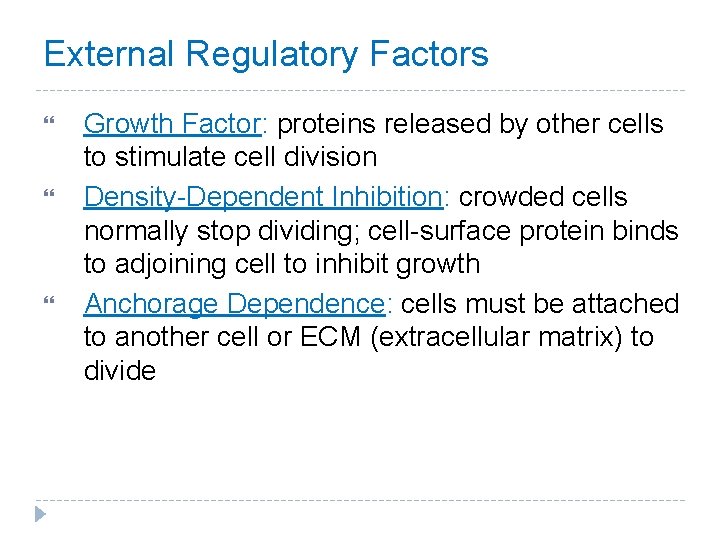
External Regulatory Factors Growth Factor: proteins released by other cells to stimulate cell division Density-Dependent Inhibition: crowded cells normally stop dividing; cell-surface protein binds to adjoining cell to inhibit growth Anchorage Dependence: cells must be attached to another cell or ECM (extracellular matrix) to divide
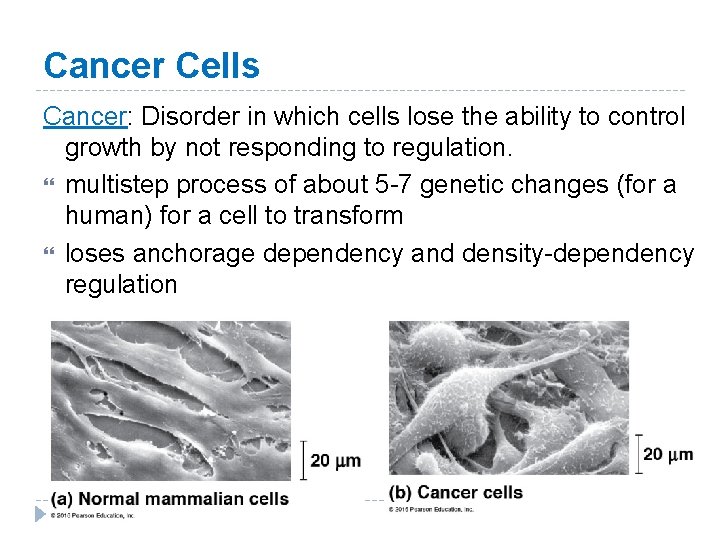
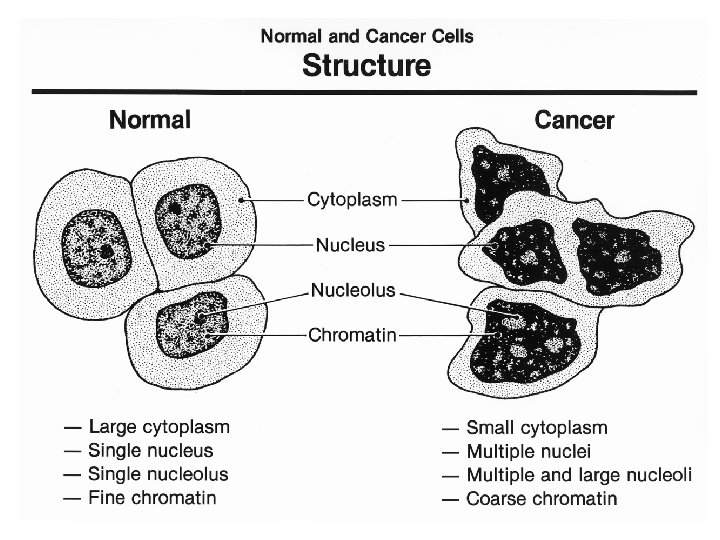
Cancer Cells Cancer: Disorder in which cells lose the ability to control growth by not responding to regulation. multistep process of about 5 -7 genetic changes (for a human) for a cell to transform loses anchorage dependency and density-dependency regulation
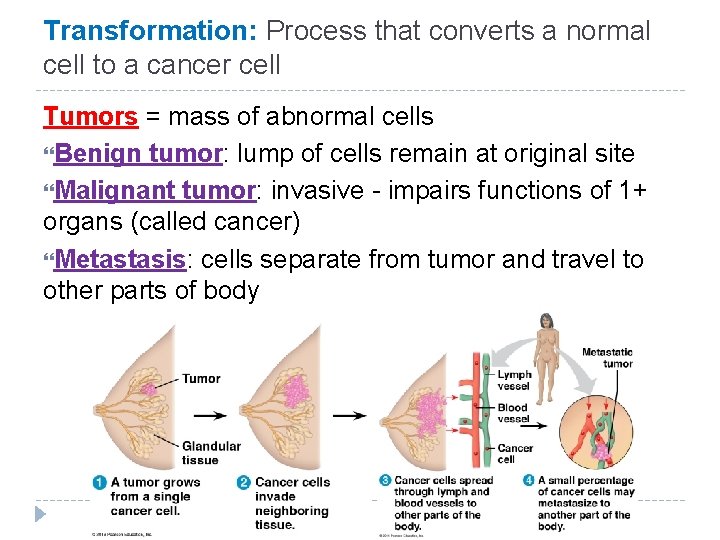
Transformation: Process that converts a normal cell to a cancer cell Tumors = mass of abnormal cells Benign tumor: lump of cells remain at original site Malignant tumor: invasive - impairs functions of 1+ organs (called cancer) Metastasis: cells separate from tumor and travel to other parts of body
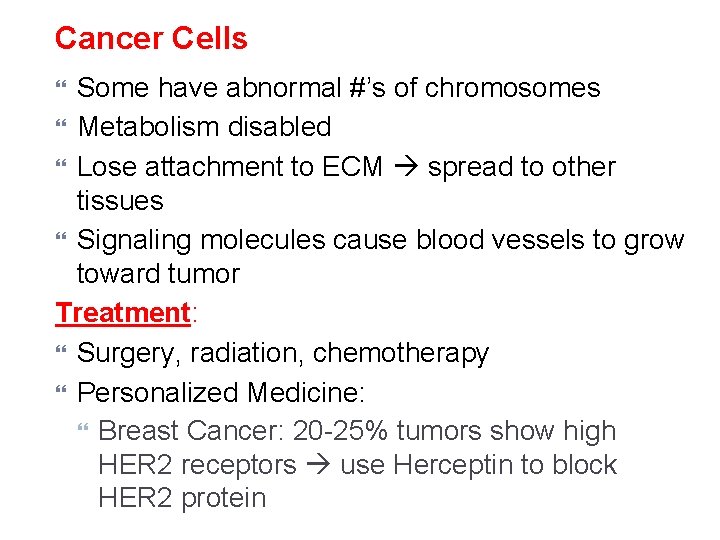
Cancer Cells Some have abnormal #’s of chromosomes Metabolism disabled Lose attachment to ECM spread to other tissues Signaling molecules cause blood vessels to grow toward tumor Treatment: Surgery, radiation, chemotherapy Personalized Medicine: Breast Cancer: 20 -25% tumors show high HER 2 receptors use Herceptin to block HER 2 protein
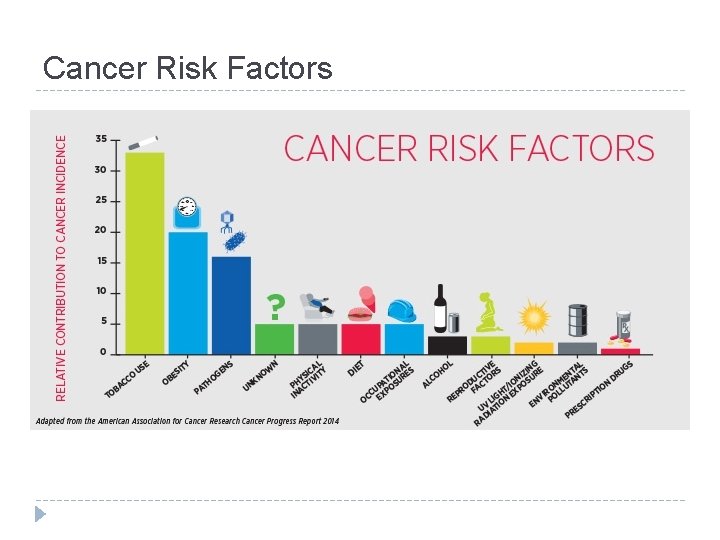
Cancer Risk Factors
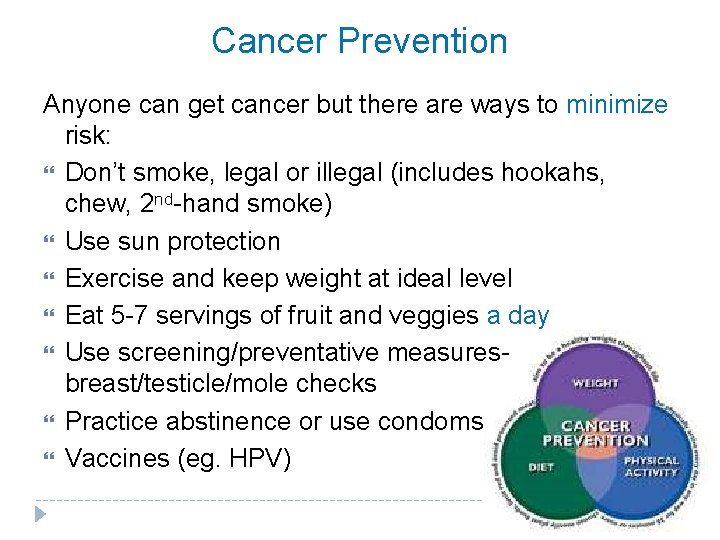
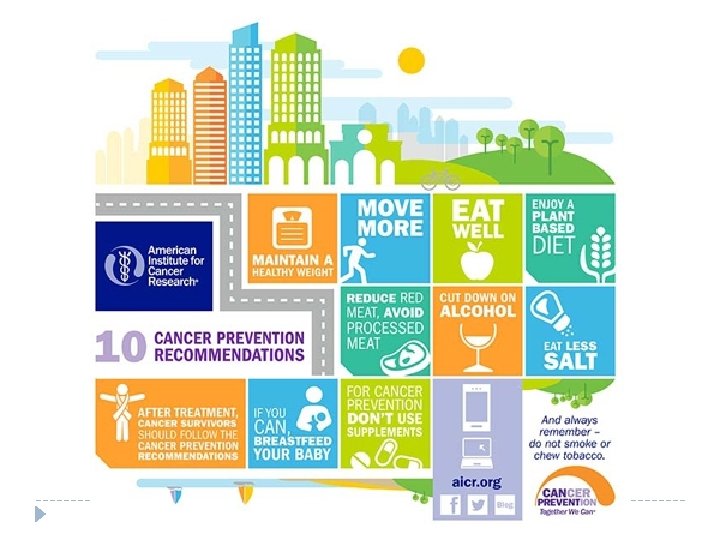
Cancer Prevention Anyone can get cancer but there are ways to minimize risk: Don’t smoke, legal or illegal (includes hookahs, chew, 2 nd-hand smoke) Use sun protection Exercise and keep weight at ideal level Eat 5 -7 servings of fruit and veggies a day Use screening/preventative measuresbreast/testicle/mole checks Practice abstinence or use condoms Vaccines (eg. HPV)
Summary of the Cell Cycle