
Chapter 9 Subnetting IP Networks Introduction to Networks
Chapter 9: Subnetting IP Networks Introduction to Networks Presentation_ID © 2008 Cisco Systems, Inc. All rights reserved. Cisco Confidential 1
Chapter 9 9. 0 Introduction 9. 1 Subnetting an IPv 4 Network 9. 2 Addressing Schemes 9. 3 Design Considerations for IPv 6 9. 4 Summary Presentation_ID © 2008 Cisco Systems, Inc. All rights reserved. Cisco Confidential 2
Chapter 9: Objectives Upon completion of this chapter, you will be able to: § Explain why routing is necessary for hosts on different networks to communicate. § Describe IP as a communication protocol used to identify a single device on a network. § Given a network and a subnet mask, calculate the number of host addresses available. § Calculate the necessary subnet mask in order to accommodate the requirements of a network. § Describe the benefits of variable length subnet masking (VLSM). § Explain how IPv 6 address assignments are implemented in a business network. Presentation_ID © 2008 Cisco Systems, Inc. All rights reserved. Cisco Confidential 3
9. 1 Subnetting an IPv 4 Network Presentation_ID © 2008 Cisco Systems, Inc. All rights reserved. Cisco Confidential 4
Network Segmentation Reasons for Subnetting is the process of segmenting a network into multiple smaller network spaces called subnetworks or subnets. § Large networks must be segmented into smaller subnetworks, creating smaller groups of devices and services to: • Control traffic by containing broadcast traffic within each subnetwork. • Reduce overall network traffic and improve network performance. Communication Between Subnets § A router is necessary for devices on different networks and subnets to communicate. § Each router interface must have an IPv 4 host address that belongs to the network or subnet that the router interface is connected. § Devices on a network and subnet use the router interface attached to their LAN as their default gateway. Presentation_ID © 2008 Cisco Systems, Inc. All rights reserved. Cisco Confidential 5
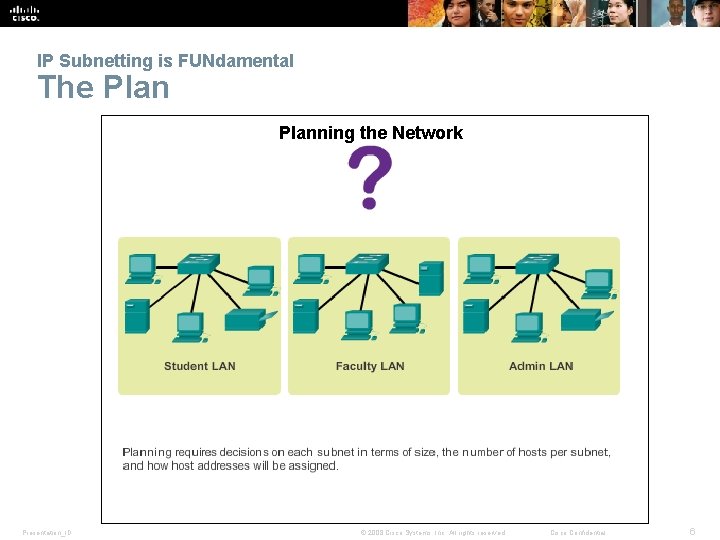
IP Subnetting is FUNdamental The Planning the Network Presentation_ID © 2008 Cisco Systems, Inc. All rights reserved. Cisco Confidential 6
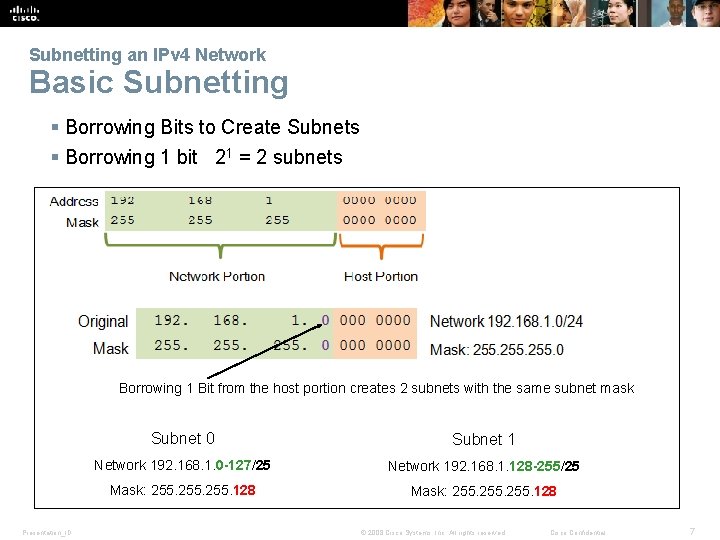
Subnetting an IPv 4 Network Basic Subnetting § Borrowing Bits to Create Subnets § Borrowing 1 bit 21 = 2 subnets Borrowing 1 Bit from the host portion creates 2 subnets with the same subnet mask Presentation_ID Subnet 0 Subnet 1 Network 192. 168. 1. 0 -127/25 Network 192. 168. 1. 128 -255/25 Mask: 255. 128 © 2008 Cisco Systems, Inc. All rights reserved. Cisco Confidential 7
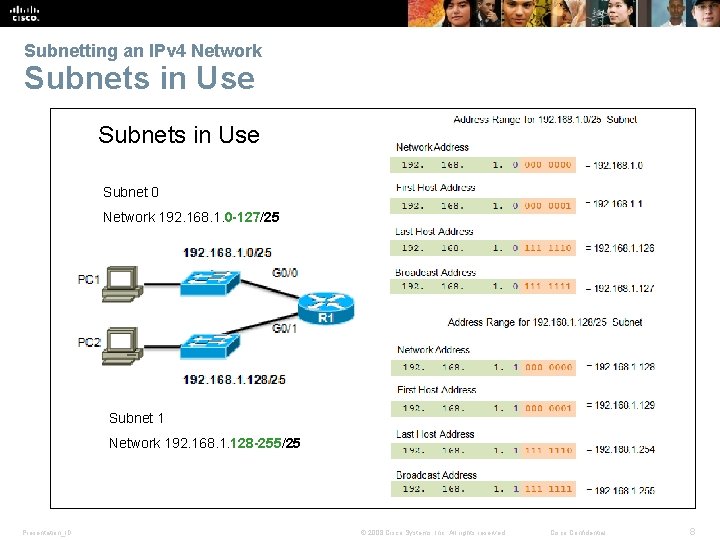
Subnetting an IPv 4 Network Subnets in Use Subnet 0 Network 192. 168. 1. 0 -127/25 Subnet 1 Network 192. 168. 1. 128 -255/25 Presentation_ID © 2008 Cisco Systems, Inc. All rights reserved. Cisco Confidential 8

Subnetting an IPv 4 Network Subnetting Formulas Calculate number of subnets Calculate number of hosts Presentation_ID © 2008 Cisco Systems, Inc. All rights reserved. Cisco Confidential 9
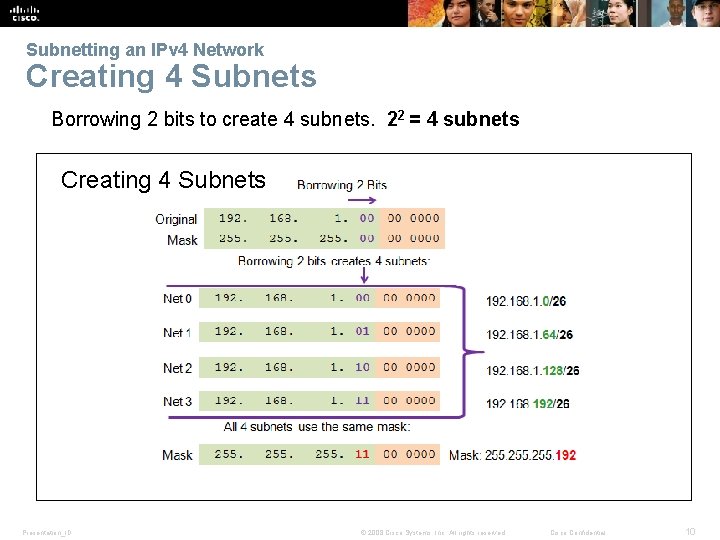
Subnetting an IPv 4 Network Creating 4 Subnets Borrowing 2 bits to create 4 subnets. 22 = 4 subnets Creating 4 Subnets Presentation_ID © 2008 Cisco Systems, Inc. All rights reserved. Cisco Confidential 10
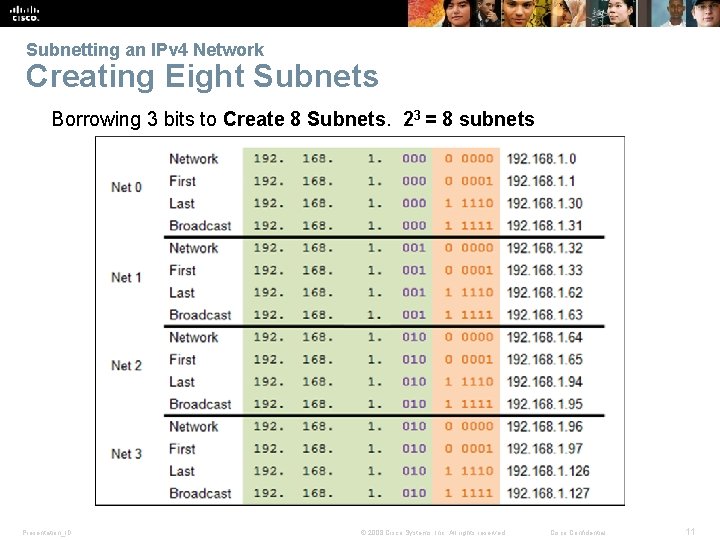
Subnetting an IPv 4 Network Creating Eight Subnets Borrowing 3 bits to Create 8 Subnets. 23 = 8 subnets Presentation_ID © 2008 Cisco Systems, Inc. All rights reserved. Cisco Confidential 11

Subnetting an IPv 4 Network Creating Eight Subnets (Cont. ) Presentation_ID © 2008 Cisco Systems, Inc. All rights reserved. Cisco Confidential 12
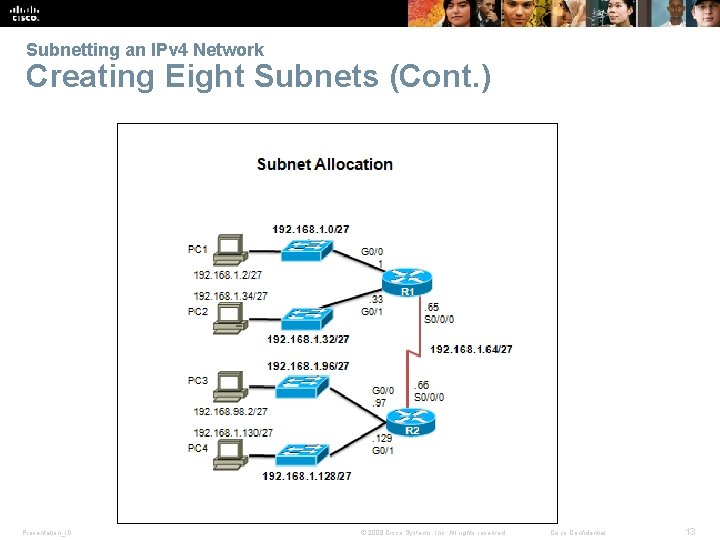
Subnetting an IPv 4 Network Creating Eight Subnets (Cont. ) Presentation_ID © 2008 Cisco Systems, Inc. All rights reserved. Cisco Confidential 13

Determining the Subnet Mask Subnetting Based on Host Requirements Two considerations when planning subnets: § Number of subnets required § Number of host addresses required Formula to determine number of usable hosts: 2^n-2 § 2^n (where n is the number of remaining host bits) is used to calculate the number of hosts. § -2 (The subnetwork ID and broadcast address cannot be used on each subnet. ) Presentation_ID © 2008 Cisco Systems, Inc. All rights reserved. Cisco Confidential 14
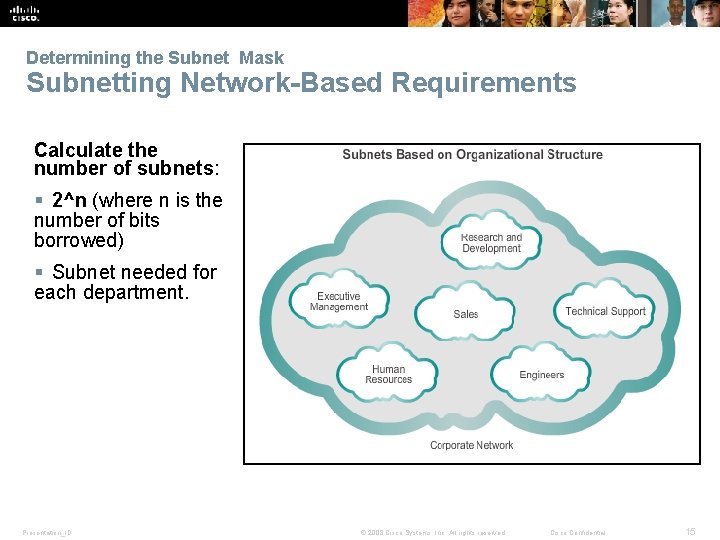
Determining the Subnet Mask Subnetting Network-Based Requirements Calculate the number of subnets: § 2^n (where n is the number of bits borrowed) § Subnet needed for each department. Presentation_ID © 2008 Cisco Systems, Inc. All rights reserved. Cisco Confidential 15
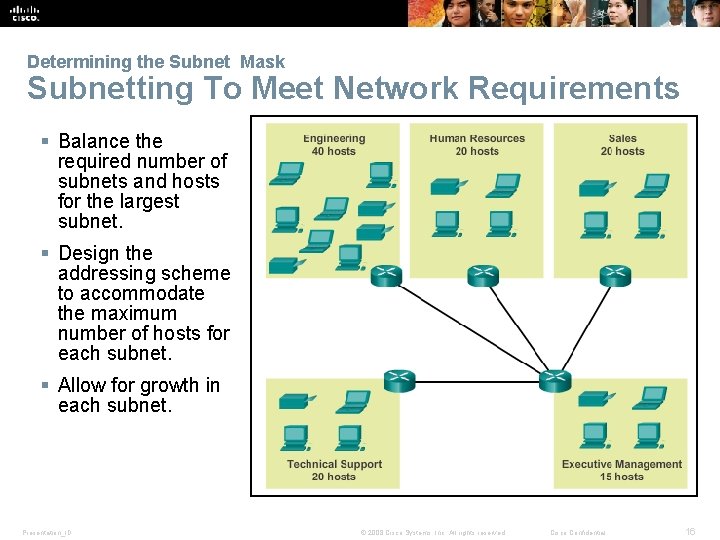
Determining the Subnet Mask Subnetting To Meet Network Requirements § Balance the required number of subnets and hosts for the largest subnet. § Design the addressing scheme to accommodate the maximum number of hosts for each subnet. § Allow for growth in each subnet. Presentation_ID © 2008 Cisco Systems, Inc. All rights reserved. Cisco Confidential 16
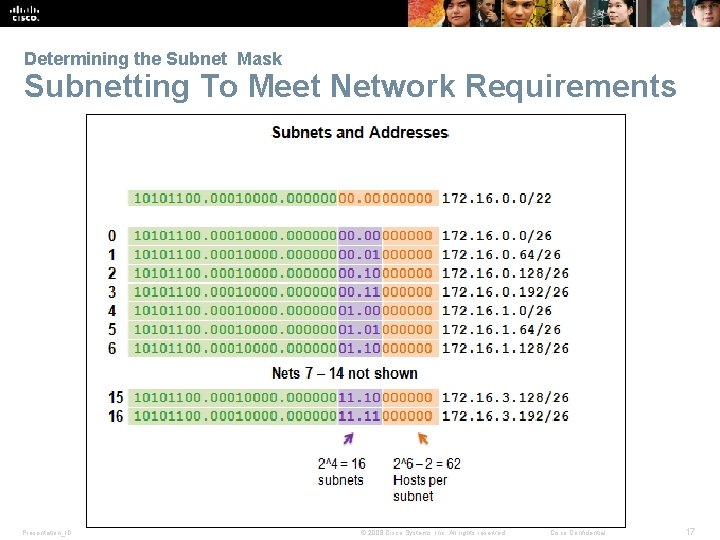
Determining the Subnet Mask Subnetting To Meet Network Requirements Presentation_ID © 2008 Cisco Systems, Inc. All rights reserved. Cisco Confidential 17
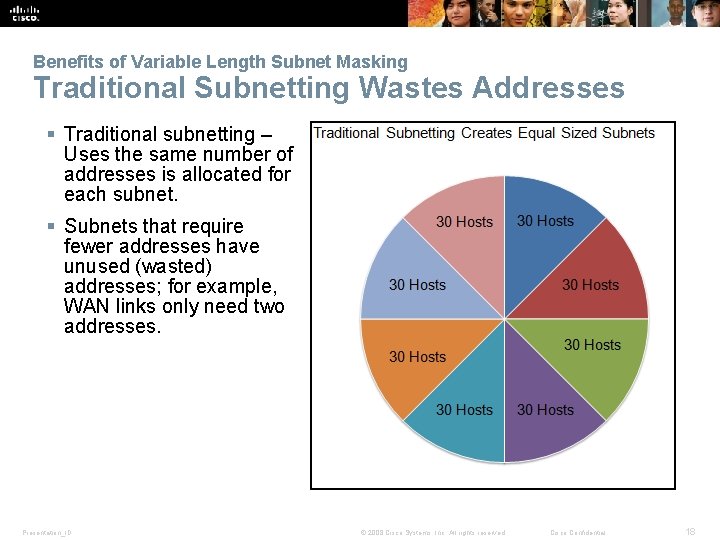
Benefits of Variable Length Subnet Masking Traditional Subnetting Wastes Addresses § Traditional subnetting – Uses the same number of addresses is allocated for each subnet. § Subnets that require fewer addresses have unused (wasted) addresses; for example, WAN links only need two addresses. Presentation_ID © 2008 Cisco Systems, Inc. All rights reserved. Cisco Confidential 18
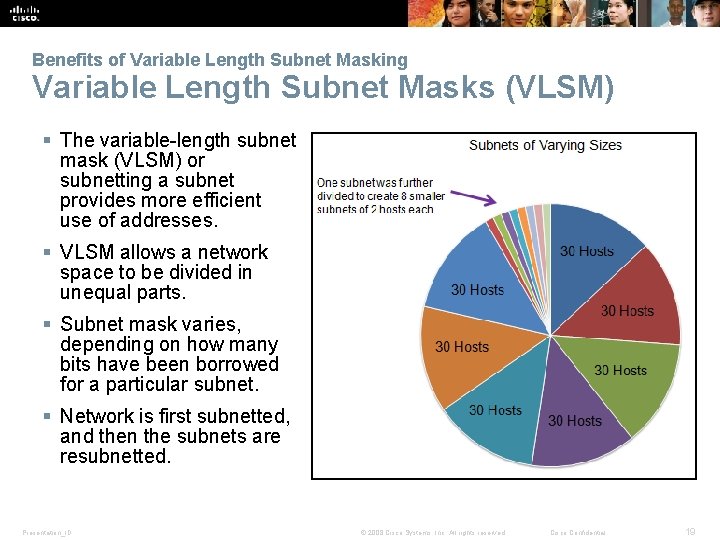
Benefits of Variable Length Subnet Masking Variable Length Subnet Masks (VLSM) § The variable-length subnet mask (VLSM) or subnetting a subnet provides more efficient use of addresses. § VLSM allows a network space to be divided in unequal parts. § Subnet mask varies, depending on how many bits have been borrowed for a particular subnet. § Network is first subnetted, and then the subnets are resubnetted. Presentation_ID © 2008 Cisco Systems, Inc. All rights reserved. Cisco Confidential 19
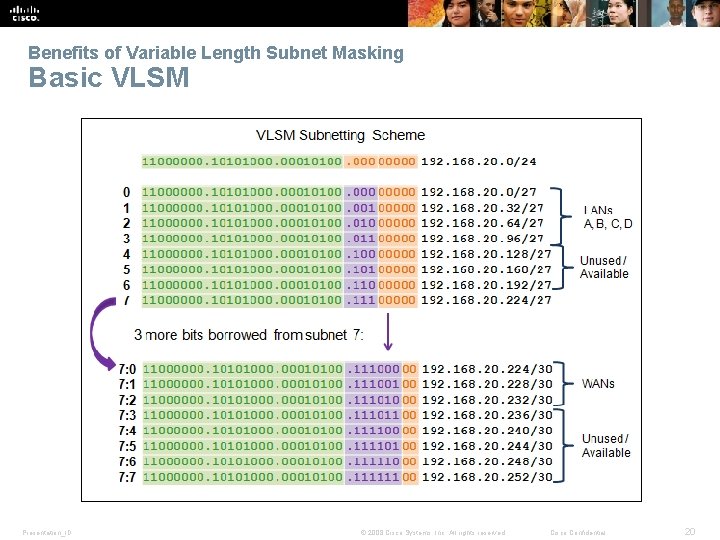
Benefits of Variable Length Subnet Masking Basic VLSM Presentation_ID © 2008 Cisco Systems, Inc. All rights reserved. Cisco Confidential 20
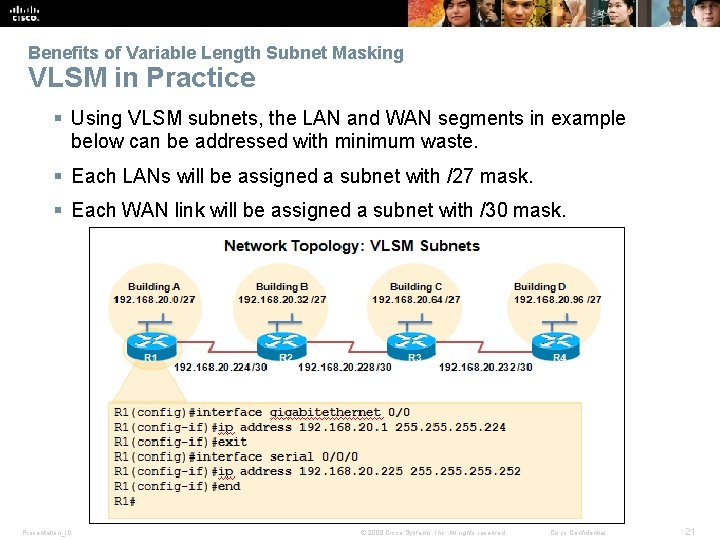
Benefits of Variable Length Subnet Masking VLSM in Practice § Using VLSM subnets, the LAN and WAN segments in example below can be addressed with minimum waste. § Each LANs will be assigned a subnet with /27 mask. § Each WAN link will be assigned a subnet with /30 mask. Presentation_ID © 2008 Cisco Systems, Inc. All rights reserved. Cisco Confidential 21
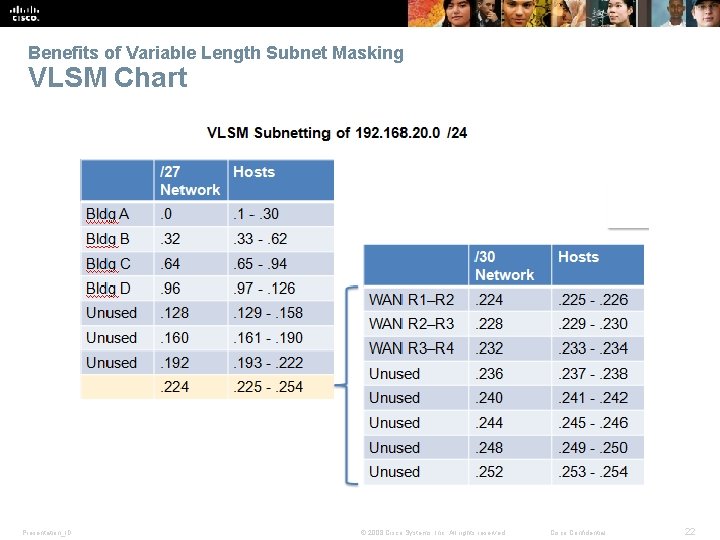
Benefits of Variable Length Subnet Masking VLSM Chart Presentation_ID © 2008 Cisco Systems, Inc. All rights reserved. Cisco Confidential 22
9. 2 Addressing Schemes Presentation_ID © 2008 Cisco Systems, Inc. All rights reserved. Cisco Confidential 23
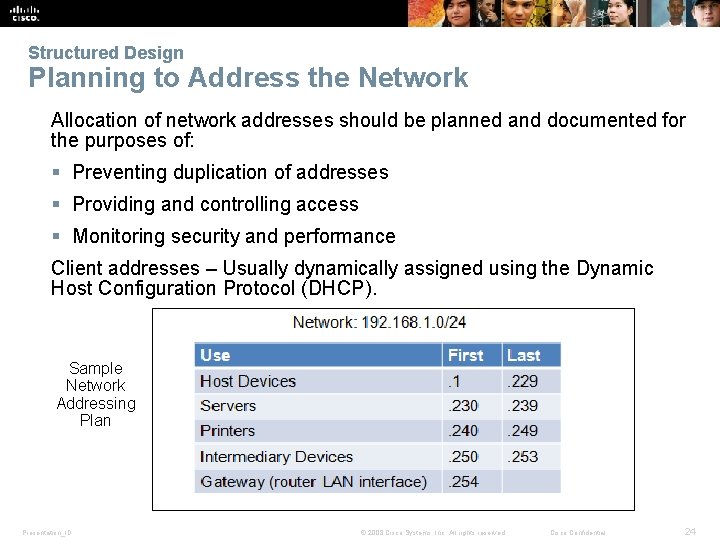
Structured Design Planning to Address the Network Allocation of network addresses should be planned and documented for the purposes of: § Preventing duplication of addresses § Providing and controlling access § Monitoring security and performance Client addresses – Usually dynamically assigned using the Dynamic Host Configuration Protocol (DHCP). Sample Network Addressing Plan Presentation_ID © 2008 Cisco Systems, Inc. All rights reserved. Cisco Confidential 24
9. 3 Design Considerations for IPv 6 Presentation_ID © 2008 Cisco Systems, Inc. All rights reserved. Cisco Confidential 25
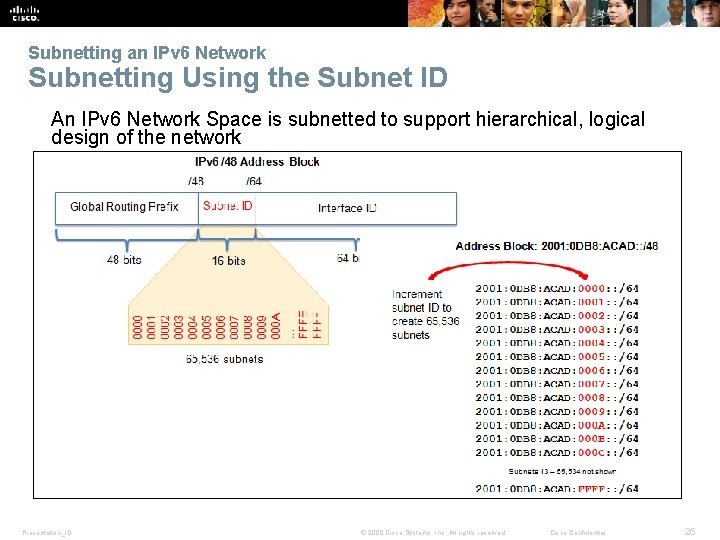
Subnetting an IPv 6 Network Subnetting Using the Subnet ID An IPv 6 Network Space is subnetted to support hierarchical, logical design of the network Presentation_ID © 2008 Cisco Systems, Inc. All rights reserved. Cisco Confidential 26
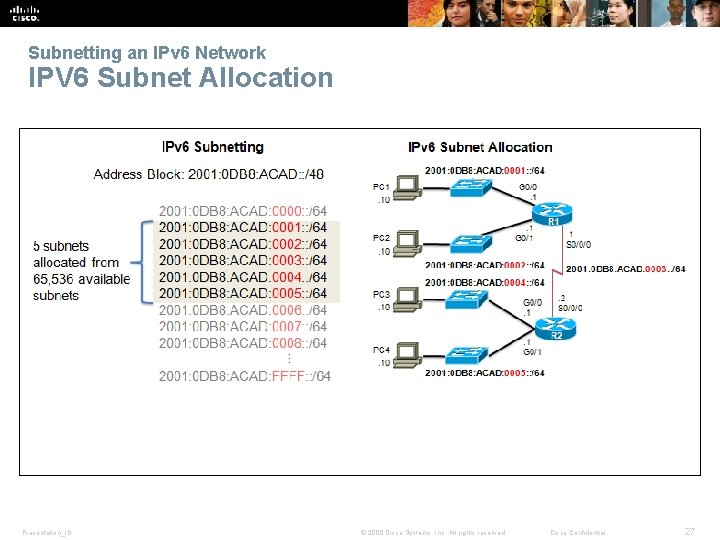
Subnetting an IPv 6 Network IPV 6 Subnet Allocation Presentation_ID © 2008 Cisco Systems, Inc. All rights reserved. Cisco Confidential 27
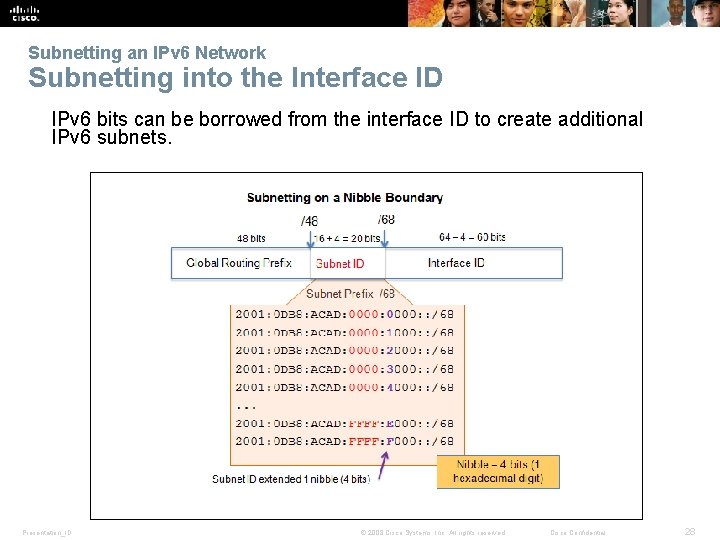
Subnetting an IPv 6 Network Subnetting into the Interface ID IPv 6 bits can be borrowed from the interface ID to create additional IPv 6 subnets. Presentation_ID © 2008 Cisco Systems, Inc. All rights reserved. Cisco Confidential 28
9. 3 Summary Presentation_ID © 2008 Cisco Systems, Inc. All rights reserved. Cisco Confidential 29
Chapter 9: Summary In this chapter, you learned that: § Subnetting is the process of segmenting a network, by dividing it into multiple smaller network spaces. § Subnetting a subnet, or using VLSM, was designed to avoid wasting addresses. § IPv 6 address space is subnetted to support the hierarchical, logical design of the network. § Size, location, use, and access requirements are all considerations in the address planning process. § IP networks must be tested to verify connectivity and operational performance. Presentation_ID © 2008 Cisco Systems, Inc. All rights reserved. Cisco Confidential 30
Presentation_ID © 2008 Cisco Systems, Inc. All rights reserved. Cisco Confidential 31
- Slides: 31