
Chapter 9 South and Central Asia and International



- Slides: 29
Chapter 9 South and Central Asia and International Studies Environment and Population
Introduction: Why Study South and Central Asia? • Long history – Harrapan civilization occupied the Indus valley, considered one of the beginnings of civilization • Major geographic scale – Region accounts for 25% of world’s population – By 2050 India will surpass China as world’s most populous country • Cultural complexity – Hinduism and Buddhism originated in South Asia and Islam made its way there by the Middle Ages • Growing economic power – India is a rising economic star and South Asia provides many of the world’s goods and services • Political significance – India has the world’s largest democracy – India and Pakistan have nuclear weapons
How Is South Asia Connected to the West? • Relations between the West and India date back to Alexander the Great around 326 BCE • Many English words and phrases that are of Indian origin • We can analyze this connection between South Asia and the West by looking at the influence of the following: – Geography – History – Culture – Economics – Politics
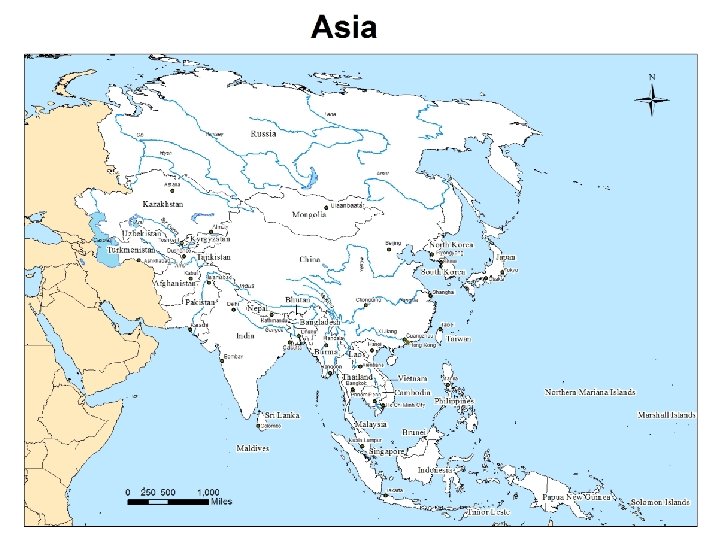
Geography • Regions in South and Central Asia sometimes overlap – Afghanistan and Pakistan areas of ambiguity • Most of the time the regions are divided as follows: – South Asia: India, Pakistan, Bangladesh, Nepal, and Sri Lanka – Central Asia: Uzbekistan, Turkmenistan, Kazakhstan, Kyrgyzstan, Tajikistan, and Mongolia
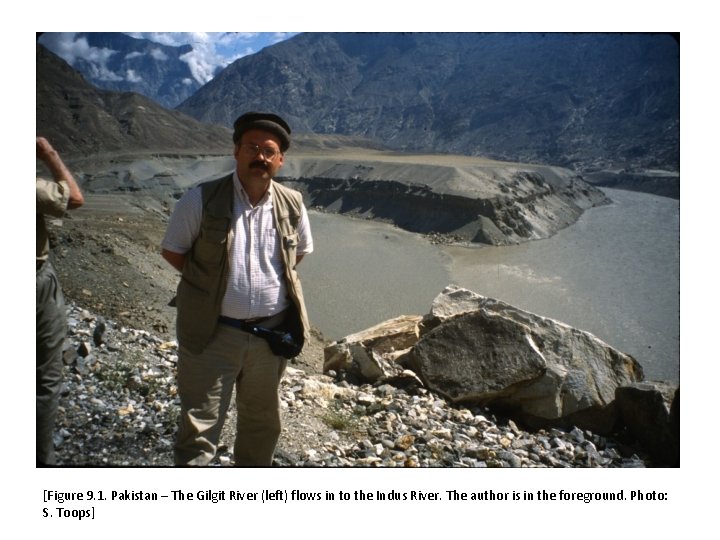
[Figure 9. 1. Pakistan – The Gilgit River (left) flows in to the Indus River. The author is in the foreground. Photo: S. Toops]
Geography – South Asia • Both Pakistan and Bangladesh were once part of the Indian empire • Dominant religions are broken up as such: – Hinduism: India and Nepal – Islam: Pakistan and Bangladesh – Buddhism: Sri Lanka • India and Pakistan are strong political powers due to their nuclear capabilities • Historical center of the region: Indus River • Modern center of the region: Ganges River
Geography – Central Asia • Landlocked region • Most countries in this region were former Soviet Republics • All countries in this region are Muslim, except Mongolia which is mostly Buddhist • Economic development in Central Asia has struggled due to the difficult transition from Soviet-style command economies to a more market-oriented system • Many of the current governments are authoritarian
History • The Indus Valley civilization goes back to 3000 BCE • Early civilizations developed by being able to produce food surpluses • Around the 1500 s Dutch, French, British, and Russian colonialists began to conquer the area – British dominated India – Russians dominated Central Asia • By 1949 India was free from colonial rule, forming two new states: India and Pakistan – Pakistan later divided into Bangladesh in 1971
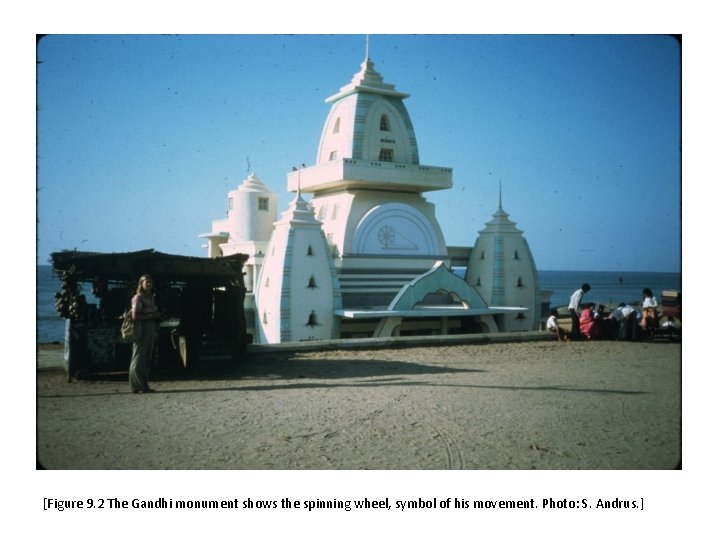
[Figure 9. 2 The Gandhi monument shows the spinning wheel, symbol of his movement. Photo: S. Andrus. ]
Culture • Religious diversity in South and Central Asia is very high – Influences include Buddhism, Islam, and Christianity in Central Asia – South Asia has Hinduism, Islam, Christianity, Buddhism, Sikhism, Jainism, and Zoroastrianism • Language diversity is also very high – Central Asian languages: various Turkic languages ( Uzbek, Kazakh), Mongol and Russian – South Asian languages: Indo-European languages (Hindi, Urdu, Bengali, Sinhalese) as well as Dravidian languages such as Tamil, Telugu. English is a second language for many.
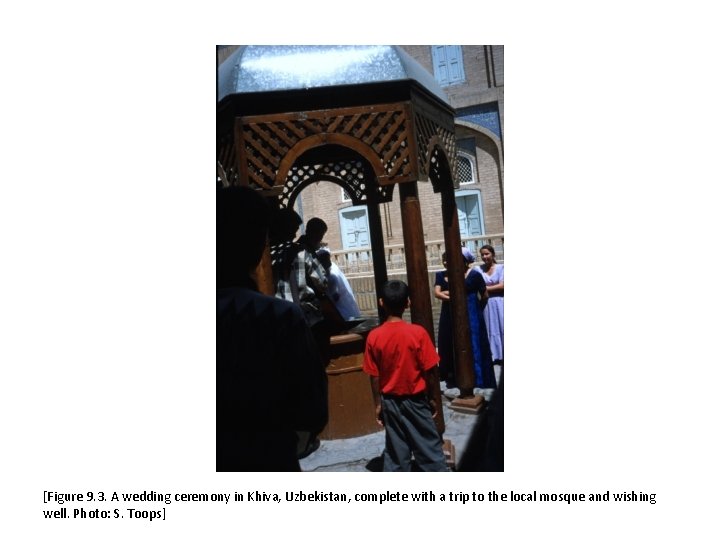
[Figure 9. 3. A wedding ceremony in Khiva, Uzbekistan, complete with a trip to the local mosque and wishing well. Photo: S. Toops]
Religious Innovation in South/Central Asia • The oldest beliefs originated in the Indus River Valley, which was mainly Hinduism • By 500 BCE, Buddhism was introduced to the region by Buddha himself • By 1000 BCE, Islam made its way into the region by way of the Turkic peoples • Christianity had been in the region since almost the beginning but didn’t really make an impact until Russian colonialism in the 1800 s • The last wave of religion was in 1930 as Marxist atheism made its way into the Central Asia
Economics • The impacts of South and Central Asian economies are felt worldwide • Oil is a strong export good in Kazakhstan, one of the few countries in Central Asia with a good per capita GDP • Poverty is a much larger issue in South and Central Asia than in East Asia • India is a part of the BRIC (Brazil, Russia, India, and China), a group of the fastest growing economies • India as seen great economic success due to its educational system and increased communication technologies
Politics • The political systems at work in South and Central Asia are closely related to its historical, geographic, cultural and economic issues • Historically Asian government has seen itself responsible to the people • In India’s case, how does such a large country intend to govern over a billion people?
Politics – South Asia • Partition of Pakistan and India has caused political tension in the area – Tensions have caused ever changing relationships with China, the US, and Russia – Pakistan has for the most part allied with the US against terrorist groups of the region • Even with the partition, democratic rule has dominated the region • India is the world’s largest democracy – Also the strongest militarily and politically • Complex politics: Killing of bin Laden by US forces in 2011 in Pakistan
Politics – Central Asia • Diverse political issues after the political domination of the Soviet Union • Civil wars have persisted in Tajikistan and Afghanistan • Afghanistan found itself at the mercy of the United States after the Sept. 11 th, 2001 attacks – US invaded to take care of the Taliban terrorist group that controlled the region • Uzbekistan, Turkmenistan, and Kazakhstan have authoritarian regimes • Mongolia has a democratic system
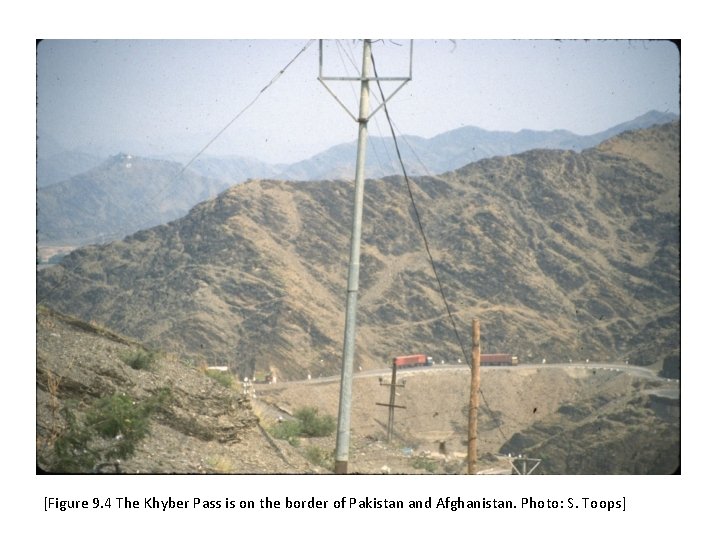
[Figure 9. 4 The Khyber Pass is on the border of Pakistan and Afghanistan. Photo: S. Toops]
The Silk Road • Historic trade artery • A few major events allowed for the reopening of the Silk Road: – Fall of communism in the Soviet Union in 1991 – China’s opening to the West in the 1980 s • Rich mix of cultural tradition with several groups of people living on the Silk Road – – – – Afghanis Turks Uyghurs Chinese Kyrgyz Uzbeks Russians
The Silk Road • The Silk Road was a crossroads nexus of religious, cultural, and economic communication between the East and West • The Silk Road was an important route of cultural transmission and political change – Japan and China: Buddhism – Russia and Britain: The Great Game • Metaphor for globalization and trade linkages in contemporary Central and South Asia • US involvement in Afghanistan
[Figure 9. 5. Samarkand. The Registan complex of Samarkand, Uzbekistan, was the center of the Timurid Empire. Photo S. Toops]
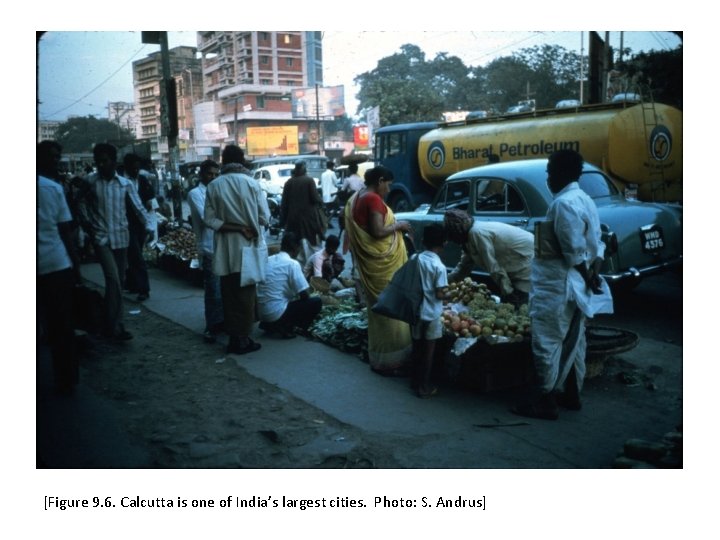
Demographic Issues • Two issues facing South and Central Asia: – Population growth • Like China, countries like India have sought to control the population, but haven’t made radical attempts like China and have been mildly successful – Urbanization • Overall urbanization is lower in South Asia than East Asia, but like East Asia there are many large cities as people move from the countryside to the cities • Urban planning will become a major concern
[Figure 9. 6. Calcutta is one of India’s largest cities. Photo: S. Andrus]
Environmental Diversity and Challenges in India • India is divided into three environments: – Rice-producing central and southern uplands • Fertile soils and water support high population densities – Alluvial lowland of the fertile Ganges and Brahmaputra valleys • River systems and fertile soil supply the people with crops that include wheat and rice – Himalayan mountains of the North • Too rugged for much settlement with many earthquakes • Home to India’s Adivasi, indigenous peoples
The Monsoon in India • The monsoon dominates climate patterns in India • Monsoon comes from the Arabic word meaning “season” • The monsoon brings moisture from the Bay of Bengal and the Indian Ocean • The pattern of the monsoon is not regular and sometimes results in crop failure
Environmental Issues in India • India has many environmental issues: – Flooding in the Ganges river valley – Deforestation in the Western and Eastern Ghats – Water and air pollution by the large cities…a result of urbanization – Global climate change could have strong affects on India • For example, many people living in the low lying areas near the Bay of Bengal could be displaced due to rising sea levels
Political Ecology in South and Central Asia • Central Asia experiences great conflict over water issues – The region has an arid environment – The Aral Sea is shrinking at an alarming rate as the water of rivers entering the sea were diverted to irrigation • Human activity is a major cause of these environmental issues as well • Flooding in Bangladesh is a problem exacerbated by the deforestation of the Ganges headwaters.
The Future of India • The economic rise of India is a result of placing a strong value on education • India’s bright future rests on its huge democracy and its economic prospects – Democracy helps link the cultural diversity – Growing economy gives it a greater say in world issues • Future challenges of India include: – Environmental issues – Regional economic inequalities – Social issues such as inequality between men and women
Asia Matters: Global Connections • Elements of South Asian culture are known and recognized worldwide – Indian yoga and Indian restaurants – Bollywood (“Slumdog Millionaire” 2008) – Global transnational corporations • Central Asia connected in a different way – History – Contemporary geographies – Connections through Russia to Europe – Connections through Islam and Turkey to the Middle East