
Chapter 9 Solids and Fluids 1 Introduction 2
- Slides: 34
Chapter 9 Solids and Fluids 1. Introduction 2. Fluids at Rest 3. Fluid Motion
States of Matter n n Solid Liquid Gas Plasma
Density and Specific Gravity n n What is Density? How do I calculate it? What are its SI units? What is Specific Gravity?
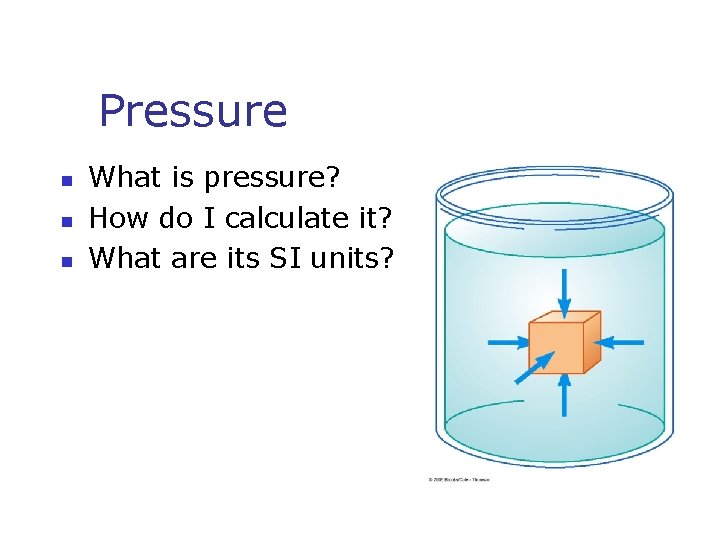
Pressure n n n What is pressure? How do I calculate it? What are its SI units?
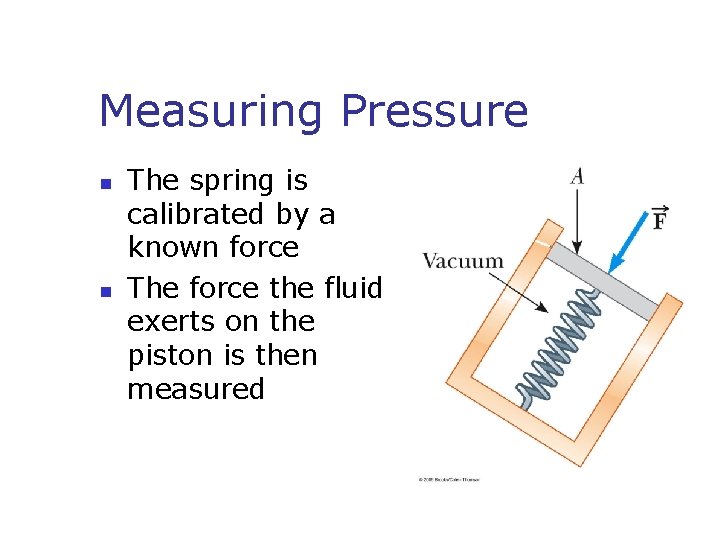
Measuring Pressure n n The spring is calibrated by a known force The force the fluid exerts on the piston is then measured
Density - Example 1. A water bed is 2. 0 m wide and 30. 0 cm deep. Find its weight and the pressure that the bed exerts on the floor.
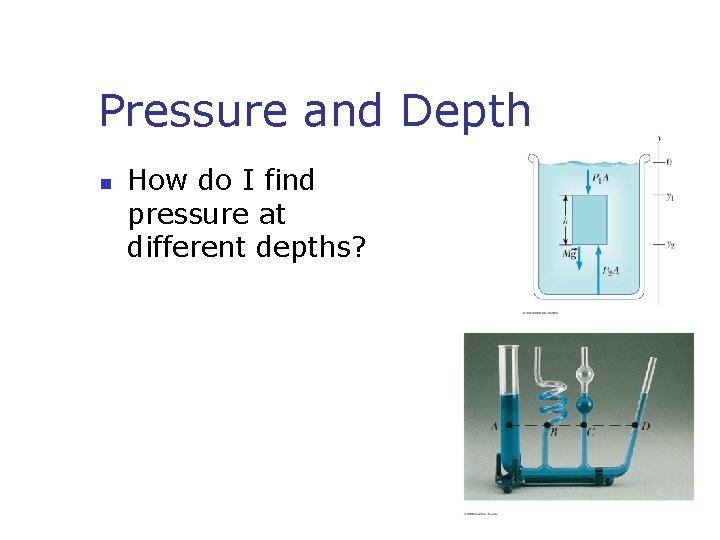
Pressure and Depth n How do I find pressure at different depths?
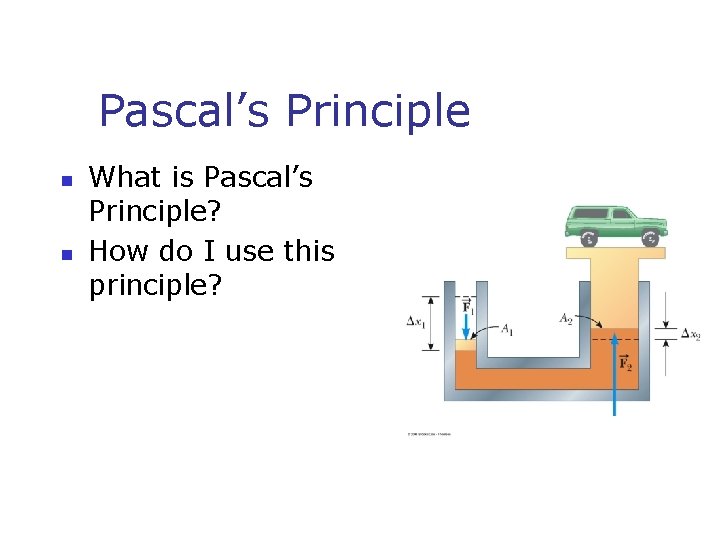
Pascal’s Principle n n What is Pascal’s Principle? How do I use this principle?
Absolute vs. Gauge Pressure n What’s the difference?
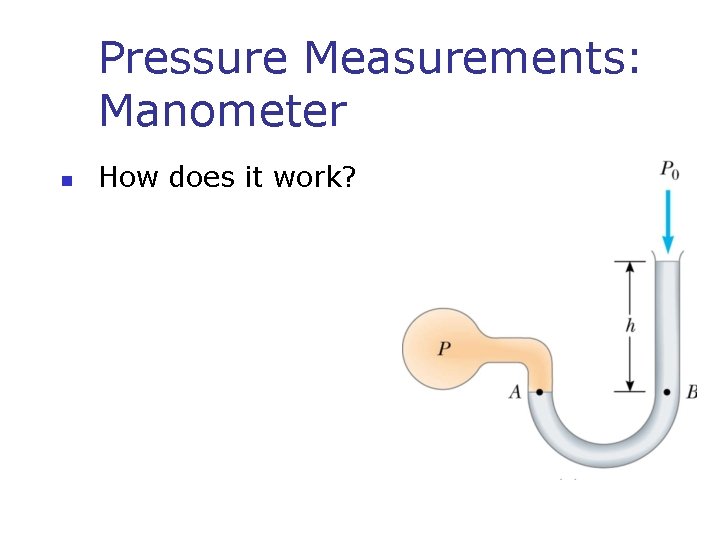
Pressure Measurements: Manometer n How does it work?
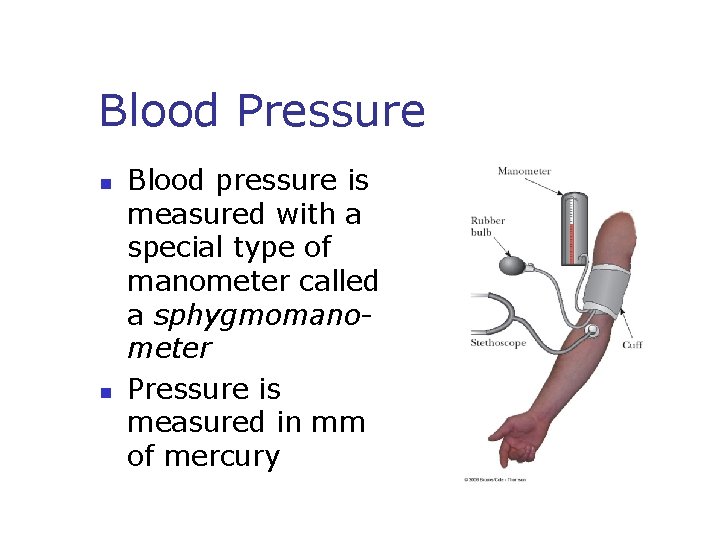
Blood Pressure n n Blood pressure is measured with a special type of manometer called a sphygmomanometer Pressure is measured in mm of mercury
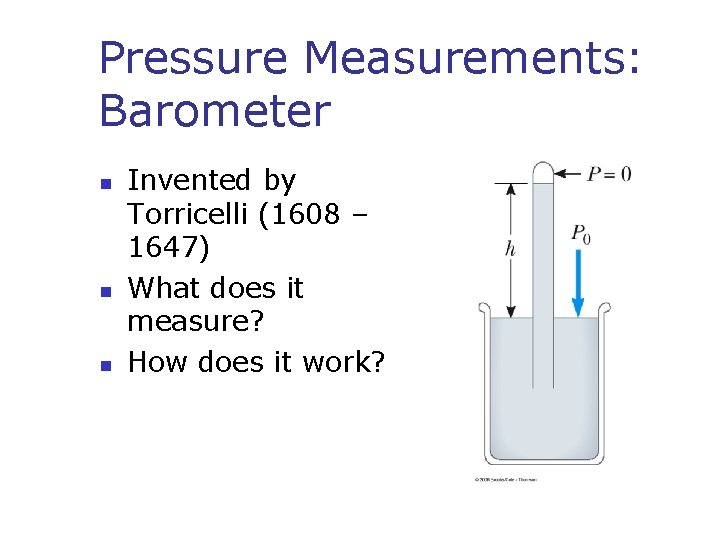
Pressure Measurements: Barometer n n n Invented by Torricelli (1608 – 1647) What does it measure? How does it work?
Pressure Values in Various Units n n One atmosphere of pressure is defined as the pressure equivalent to a column of mercury exactly 0. 76 m tall at 0 o C where g = 9. 806 65 m/s 2 One atmosphere (1 atm) = n n n 76. 0 cm of mercury 1. 013 x 105 Pa 14. 7 lb/in 2
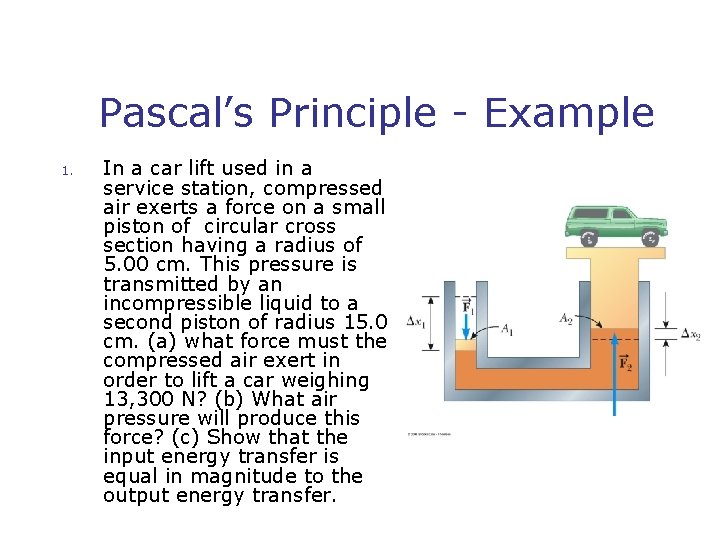
Pascal’s Principle - Example 1. In a car lift used in a service station, compressed air exerts a force on a small piston of circular cross section having a radius of 5. 00 cm. This pressure is transmitted by an incompressible liquid to a second piston of radius 15. 0 cm. (a) what force must the compressed air exert in order to lift a car weighing 13, 300 N? (b) What air pressure will produce this force? (c) Show that the input energy transfer is equal in magnitude to the output energy transfer.
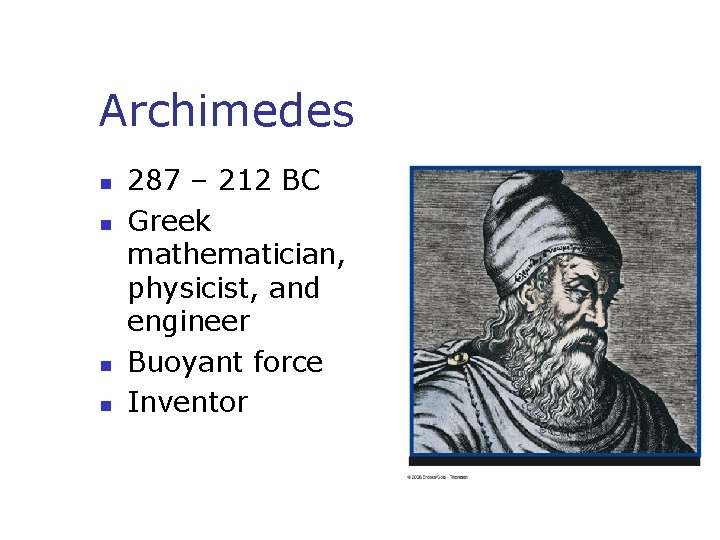
Archimedes n n 287 – 212 BC Greek mathematician, physicist, and engineer Buoyant force Inventor
Archimedes' Principle n Any object completely or partially submerged in a fluid is buoyed up by a force whose magnitude is equal to the weight of the fluid displaced by the object.
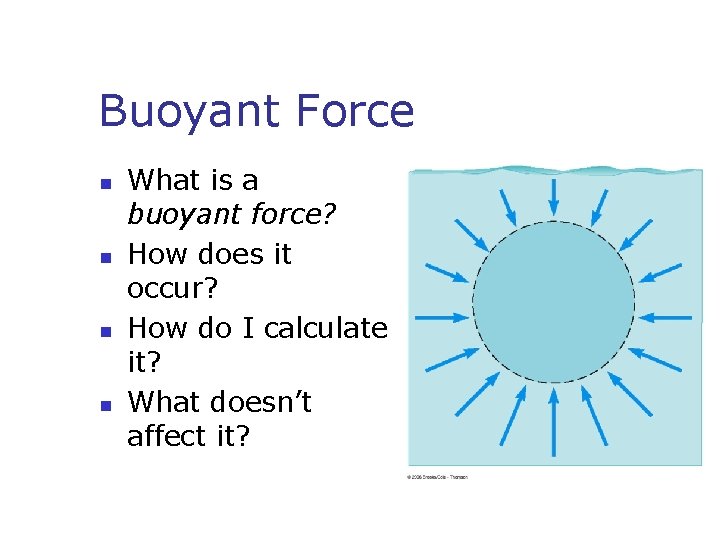
Buoyant Force n n What is a buoyant force? How does it occur? How do I calculate it? What doesn’t affect it?
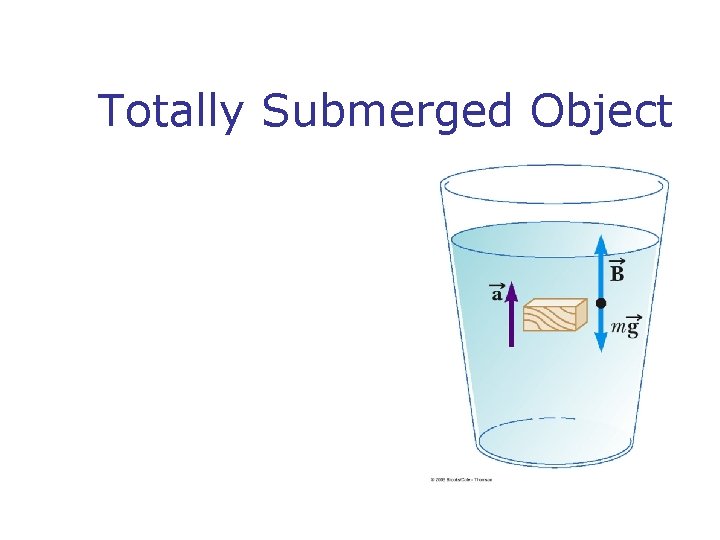
Totally Submerged Object
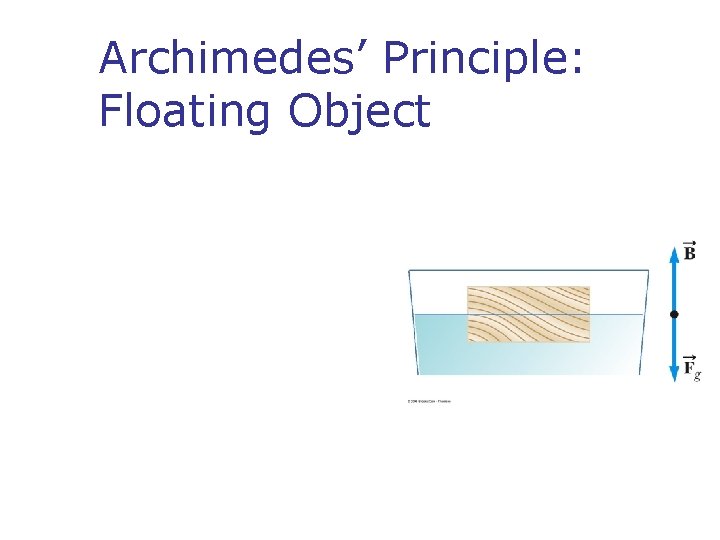
Archimedes’ Principle: Floating Object
Archimedes’ Principle Example 1. A bargain hunter purchases a “gold” crown at a flea market. After she gets home, she hangs it from a scale and finds its weight to be 7. 84 N. She then weighs the crown while it is immersed in water of density 1, 000 kg/m 3, and now the scale reads 6. 86 N. Is the crown made of pure gold?
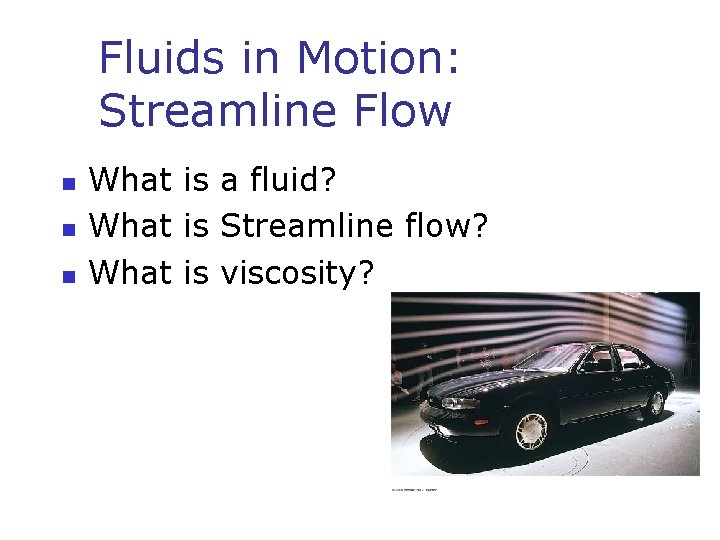
Fluids in Motion: Streamline Flow n n n What is a fluid? What is Streamline flow? What is viscosity?
Characteristics of an Ideal Fluid n The fluid is nonviscous n n The fluid is incompressible n n Its density is constant The fluid motion is steady n n There is no internal friction between adjacent layers Its velocity, density, and pressure do not change in time The fluid moves without turbulence n n No eddy currents are present The elements have zero angular velocity about its center
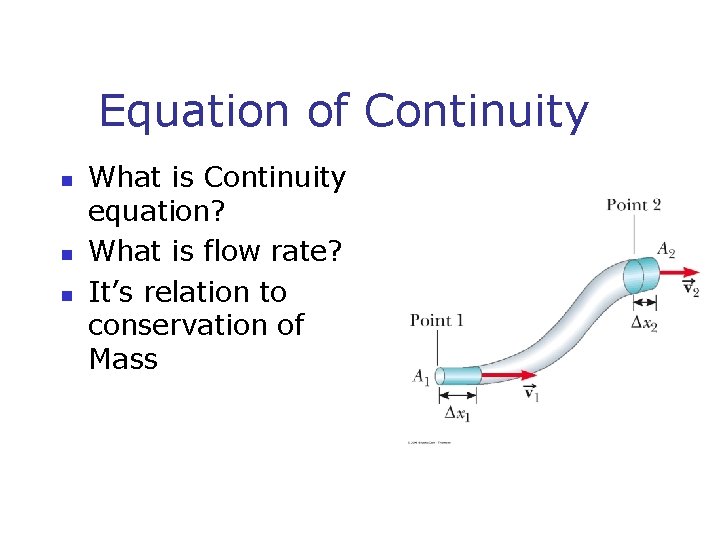
Equation of Continuity n n n What is Continuity equation? What is flow rate? It’s relation to conservation of Mass
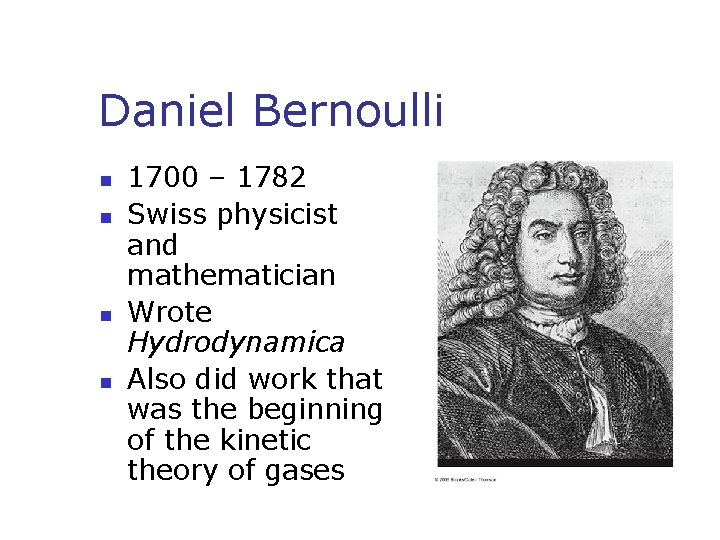
Daniel Bernoulli n n 1700 – 1782 Swiss physicist and mathematician Wrote Hydrodynamica Also did work that was the beginning of the kinetic theory of gases
Bernoulli’s Equation n Relates pressure to fluid speed and elevation Bernoulli’s equation is a consequence of Conservation of Energy applied to an ideal fluid Assumes the fluid is incompressible and nonviscous, and flows in a nonturbulent, steady-state manner
Bernoulli’s Equation n What is it? Conservation of Energy When can it be used?
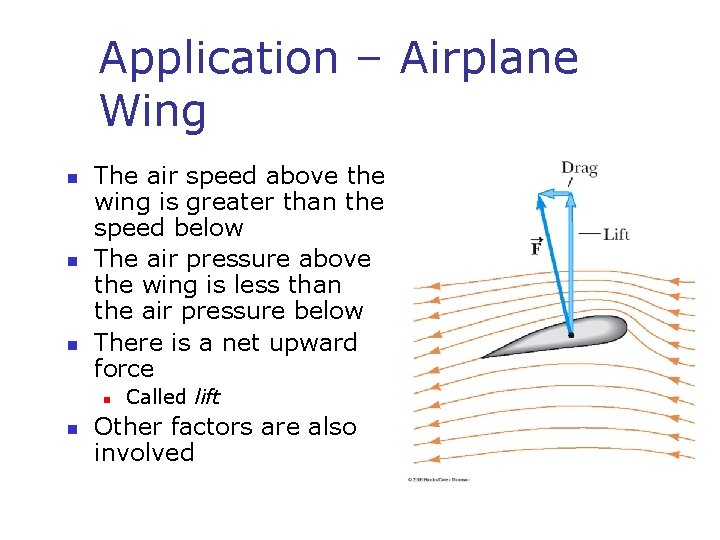
Application – Airplane Wing n n n The air speed above the wing is greater than the speed below The air pressure above the wing is less than the air pressure below There is a net upward force n n Called lift Other factors are also involved
Application – Airplane Wing 1. When a person inhales, air moves down the bronchus (windpipe) at 15 cm/s. The average flow speed of the air doubles through a constriction in the bronchus. Assuming incompressible flow, determine the pressure drop in the constriction.
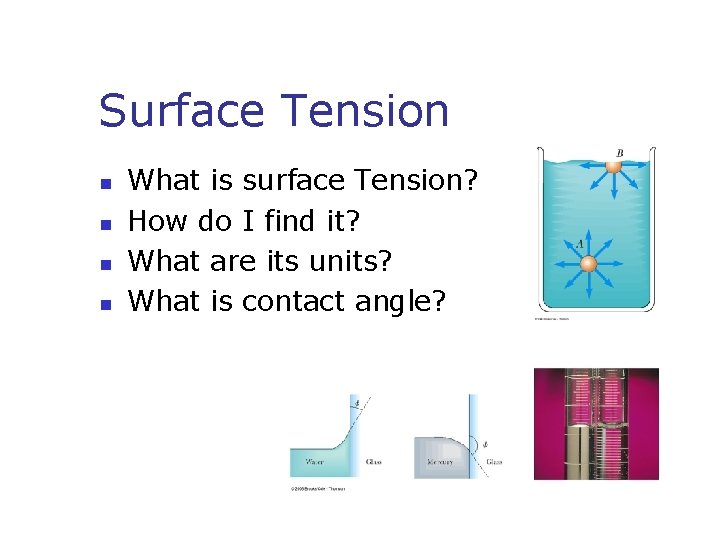
Surface Tension n n What is surface Tension? How do I find it? What are its units? What is contact angle?
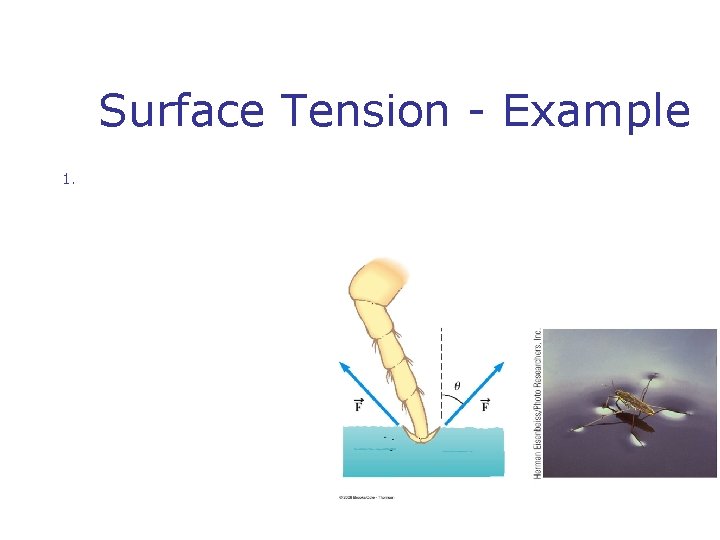
Surface Tension - Example 1.
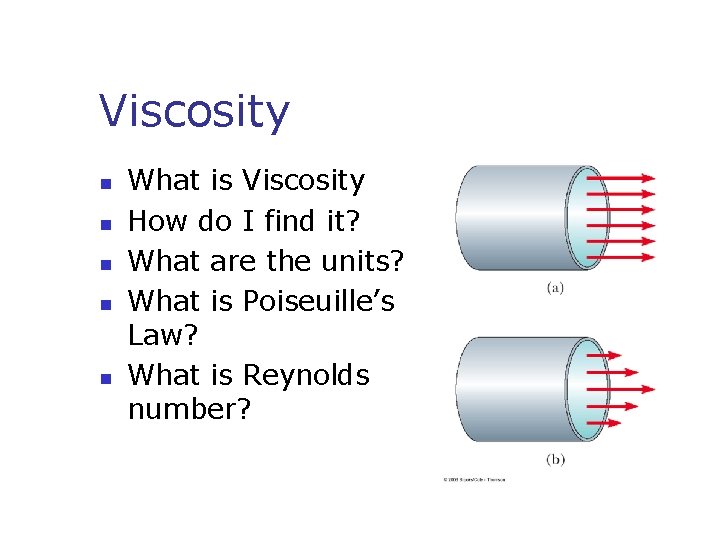
Viscosity n n n What is Viscosity How do I find it? What are the units? What is Poiseuille’s Law? What is Reynolds number?
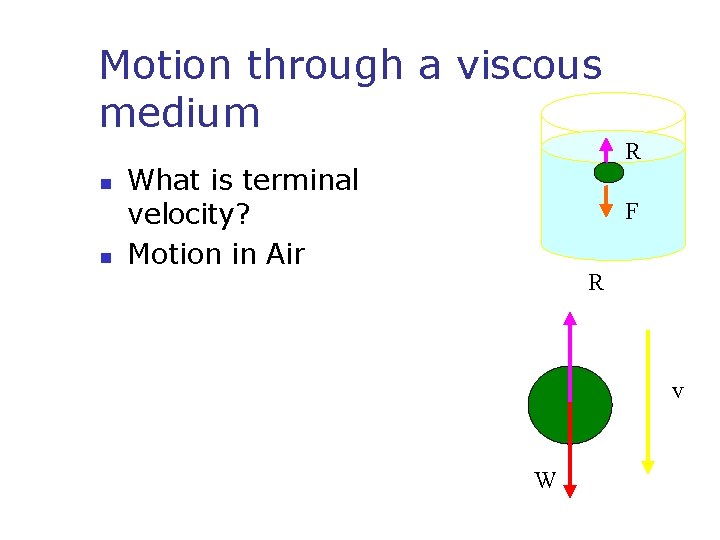
Motion through a viscous medium n n R What is terminal velocity? Motion in Air F R v W
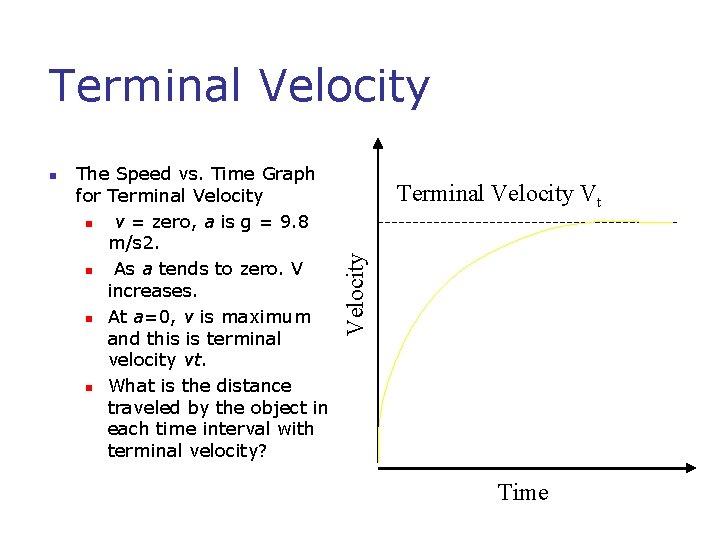
Terminal Velocity The Speed vs. Time Graph for Terminal Velocity n v = zero, a is g = 9. 8 m/s 2. n As a tends to zero. V increases. n At a=0, v is maximum and this is terminal velocity vt. n What is the distance traveled by the object in each time interval with terminal velocity? Terminal Velocity Vt Velocity n Time
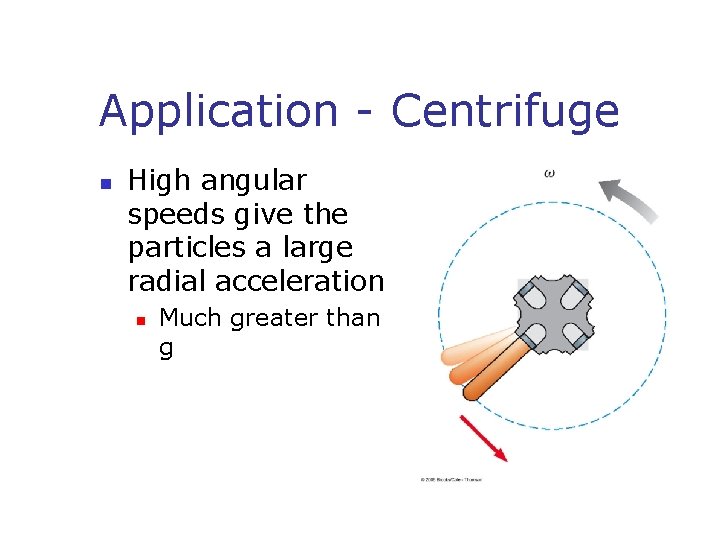
Application - Centrifuge n High angular speeds give the particles a large radial acceleration n Much greater than g