
CHAPTER 9 SLOPE PROCESSES LANDSLIDES AND SUBSIDENCE La
CHAPTER 9 SLOPE PROCESSES, LANDSLIDES, AND SUBSIDENCE
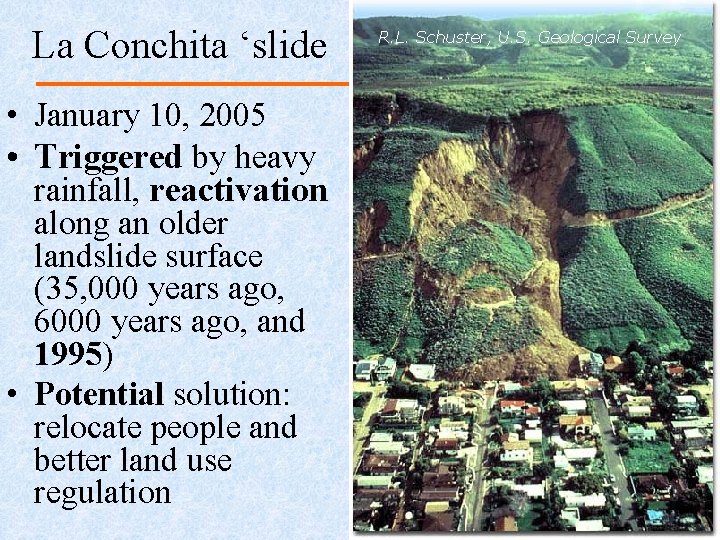
La Conchita ‘slide • January 10, 2005 • Triggered by heavy rainfall, reactivation along an older landslide surface (35, 000 years ago, 6000 years ago, and 1995) • Potential solution: relocate people and better land use regulation R. L. Schuster, U. S. Geological Survey
Introduction • Landslide and other ground failures cause substantial damage and loss of life • In U. S. , average 25– 50 deaths; damage more than $3. 5 billion annually • For convenience, definition of landslide includes all forms of mass-wasting movements • Landslide and subsidence: naturally occurred and affected by human activities
Slope Processes • Slopes: The most common landforms • Consists of cliff face (“free face”) and talus slope or upper convex slope, a straight slope, and a lower concave slope • Dynamic evolving feature, depending upon topography, rock types, climate, vegetation, water, and time • Materials constantly moving down the slope at varied rates
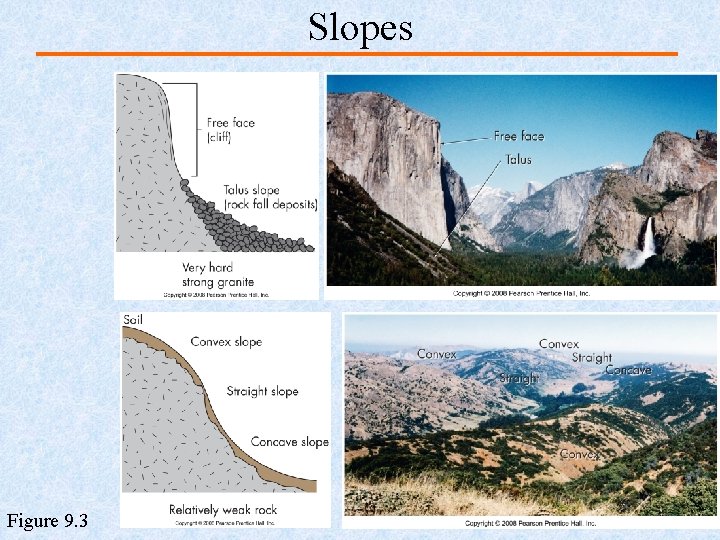
Slopes Figure 9. 3
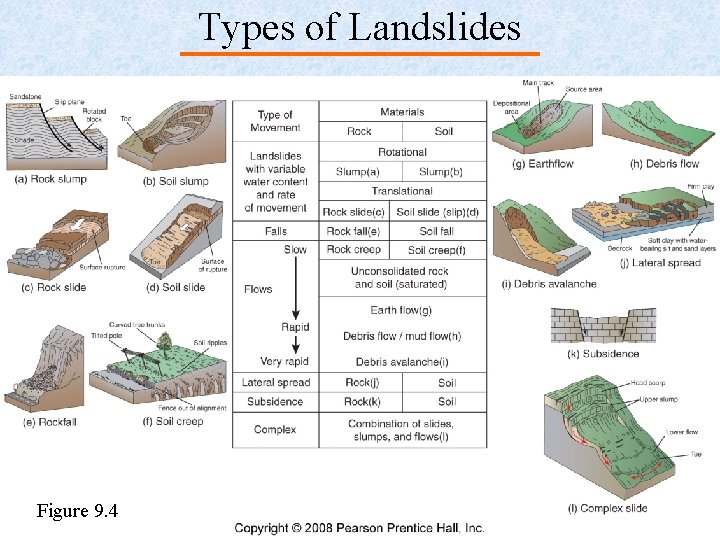
Types of Landslides Figure 9. 4
Slope Stability • Safety Factor: = Resisting/Driving Forces If SF >1, then safe or stable slope If SF <1, then unsafe or unstable slope • Driving and resisting force variables: – Slip surface – “plane of weakness” – Type of Earth materials – Slope angle and topography – Climate, vegetation, and water – Shaking • Causes vs. triggers
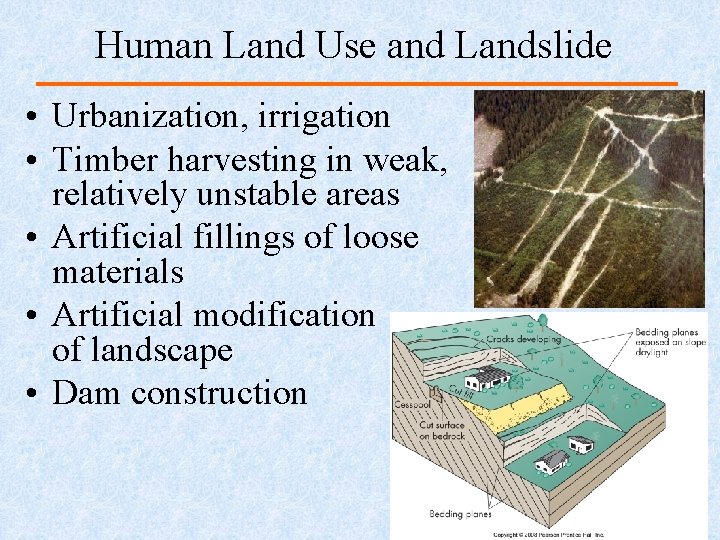
Human Land Use and Landslide • Urbanization, irrigation • Timber harvesting in weak, relatively unstable areas • Artificial fillings of loose materials • Artificial modification of landscape • Dam construction
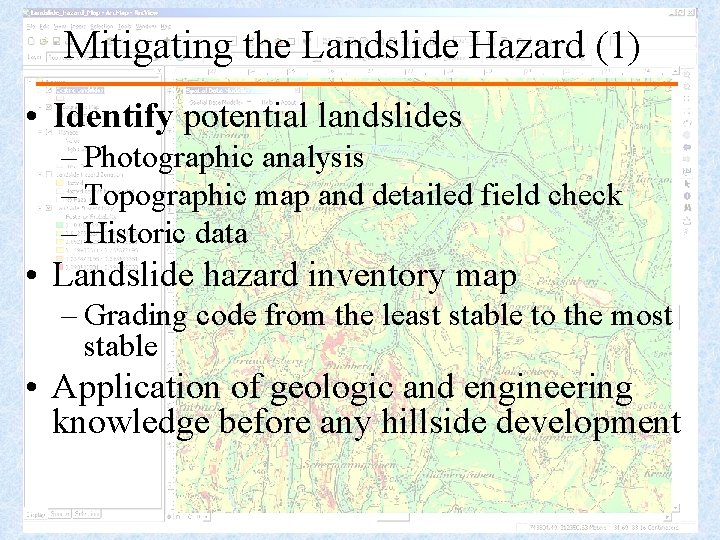
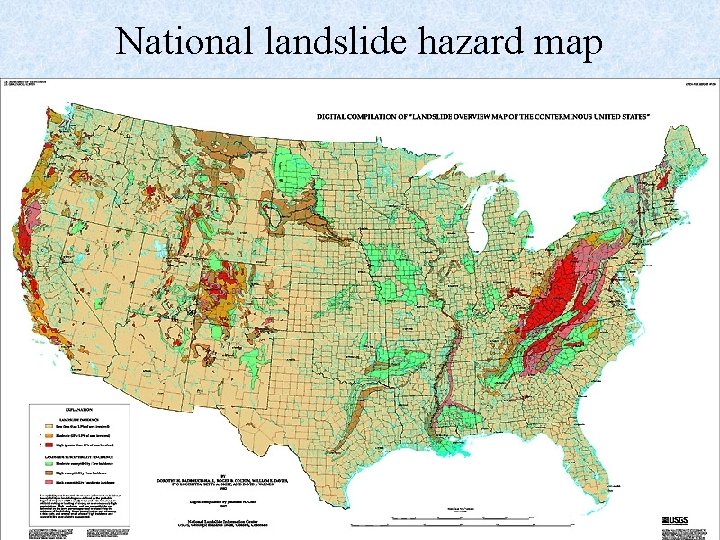
Mitigating the Landslide Hazard (1) • Identify potential landslides – Photographic analysis – Topographic map and detailed field check – Historic data • Landslide hazard inventory map – Grading code from the least stable to the most stable • Application of geologic and engineering knowledge before any hillside development
Mitigating the Landslide Hazard (2) • Preventing landslides – Drainage control: Reducing infiltration and surface runoff – Slope grading: Reducing the overall slope – Slope supports: Retaining walls or deep supporting piles • Avoid landslide hazards – Landslide warning for critical evacuations – Correcting landslides
Warning of Impending Landslides • Monitoring changes – Human surveillance – Instrumental survey: Tilt meter and geophones • Landslide warning system – Info for public awareness and education – Enough time for public evacuation – Stop or reroute traffic flow – Emergency services
![Snow Avalanche [GNFAv. Ctr] • Mountainous regions – Rapid downslope movement of snow and](http://slidetodoc.com/presentation_image_h/f543bb2ffdb0d95eda02f4c5d1c2ca8b/image-12.jpg "Snow Avalanche [GNFAv. Ctr] • Mountainous regions – Rapid downslope movement of snow and")
Snow Avalanche [GNFAv. Ctr] • Mountainous regions – Rapid downslope movement of snow and ice – Location, location… • Preventive measures: – Well-designed explosives – Engineering structures to retain, divert, or retard avalanches
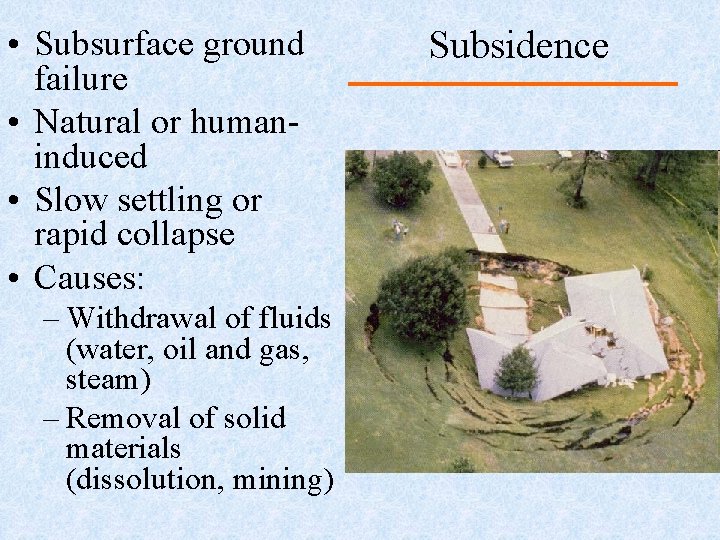
• Subsurface ground failure • Natural or humaninduced • Slow settling or rapid collapse • Causes: – Withdrawal of fluids (water, oil and gas, steam) – Removal of solid materials (dissolution, mining) Subsidence
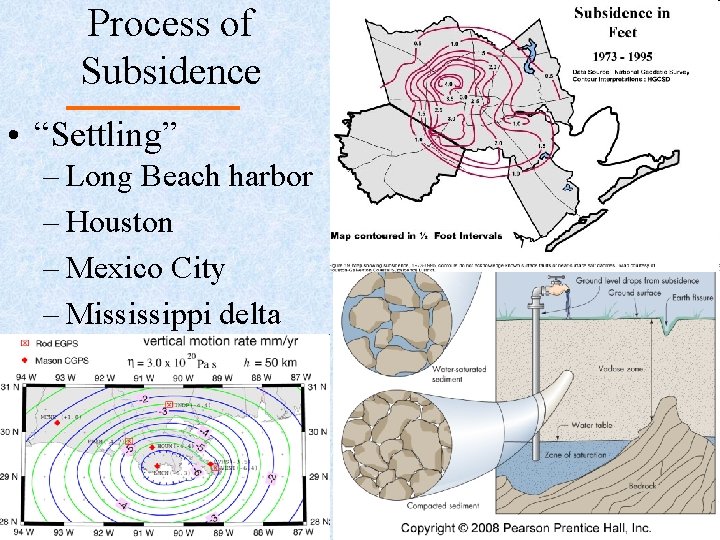
Process of Subsidence • “Settling” – Long Beach harbor – Houston – Mexico City – Mississippi delta Figure 9. 25
Removal of Solid Materials (1) • Sinkholes Ø Dissolution of carbonate rocks, limestone, and dolomite Ø Affecting most of the conterminous states Ø Natural or artificial fluctuations in water table increasing the problem Ø Triggering other problems: Sinkholes as waste dumping sites
Removal of Solid Materials (2) • Salt and coal mining Ø Salt dissolution and pumping Ø Active coal mines and abandoned coal mines Ø Ground failure due to depleted subsurface pressure Ø More than 8000 km 2 of land subsidence due to underground coal mining
Perception of the Landslide Hazard • Landslide hazard maps not preventing development • Common perception: “It could happen on other hillsides, but never on this one. ” • Infrequency and unpredictability of large slides reducing awareness of the hazards • Often people taking chances and unknown risks
National landslide hazard map
What Can You Do? (1) • Professional geologic evaluation for a property on a slope • Avoid building at the mouth of a canyon, regardless of its size • Consult local agencies for historical records • Watch signs of little slides—often precursor for larger ones
What Can You Do? (2) • Look for signs of structure cracks or damage prior to purchase • Be wary of pool leaking, tilt of trees and utility poles • Look for linear cracks, subsurface water movement • Put observations into perspective, one aspect may not tell the whole story
Applied and Critical Thinking Topics • Discuss the reasons why our society could not prevent slope development. • Assume you have been hired by a community to make the citizens more aware of the landslide hazard in a very steep topographic area. Outline a plan of action and defend it. • Compare and contrast landslide hazards and impact risks in the east coast vs. west coast, and tropical vs. polar regions.
- Slides: 21