
Chapter 9 Shock Chapter 9 Shock Objectives List
Chapter 9 Shock
Chapter 9: Shock Objectives • List signs and symptoms of shock. • State the steps in the emergency medical care of a patient with signs and symptoms of shock. • Explain the sense of urgency to transport patients who are bleeding and show signs of shock. • Demonstrate the care of the patient exhibiting signs and symptoms of shock. 2
Chapter 9: Shock • State of collapse and failure of the cardiovascular system • Leads to inadequate circulation • Without adequate blood flow, cells cannot get rid of metabolic wastes. 3
Chapter 9: Shock Capillary Sphincters • Regulate the blood flow through the capillary beds. • Sphincters are under the control of the automatic nervous system. • Regulation of blood flow is determined by cellular need. 4
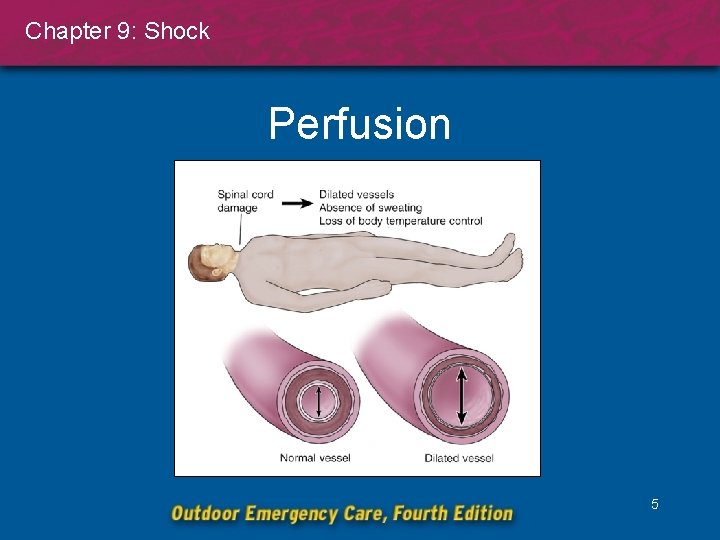
Chapter 9: Shock Perfusion 5
Chapter 9: Shock Cardiovascular Causes of Shock (1 of 4) • Pump failure (cardiogenic shock): – Inadequate function of the heart – Causes a backup of blood into the lungs – Results in pulmonary edema – Pulmonary edema leads to impaired ventilation 6
Chapter 9: Shock Cardiovascular Causes of Shock (2 of 4) • Poor vessel function: – Damage to the cervical spine may affect control of the size and muscular tone of blood vessels. – The vascular system increases. § Blood in the body cannot fill the enlarged system. § Neurogenic shock occurs. 7
Chapter 9: Shock Cardiovascular Causes of Shock (3 of 4) • Content failure (hypovolemic shock): – Results from fluid or blood loss – Blood is lost through external and internal bleeding. – Severe thermal burns cause plasma loss. – Dehydration aggravates shock. 8
Chapter 9: Shock Cardiovascular Causes of Shock (4 of 4) • Combined vessel and content failure: – Some patients with severe bacterial infections, toxins, or infected tissues contract septic shock. – Toxins damage vessel walls, causing leakage and impairing ability to contract. – Leads to dilation of vessels and loss of plasma, causing shock. 9
Chapter 9: Shock Noncardiovascular Causes of Shock (1 of 3) • Respiratory insufficiency: – Patient with a severe chest injury or airway obstruction may be unable to breathe adequate amounts of oxygen. – Insufficient oxygen in the blood will produce shock. 10
Chapter 9: Shock Noncardiovascular Causes of Shock (2 of 3) • Anaphylactic shock: – Occurs when a person reacts violently to a substance. – Four categories of common causes: § Injections § Stings § Ingestion § Inhalation 11
Chapter 9: Shock Noncardiovascular Causes of Shock (3 of 3) • Psychogenic shock: – Caused by sudden reaction of the nervous system that produces a temporary, generalized vascular dilation – Commonly referred to as fainting or syncope – Can be brought on by causes ranging from fear or bad news to unpleasant sights 12
Chapter 9: Shock Progression of Shock • Compensated shock • Decompensated shock • Irreversible shock 13
Chapter 9: Shock Signs and Symptoms of Compensated Shock • • Agitation Anxiety Restlessness Feeling of impending doom • Altered mental status • Weak pulse • Clammy skin • Pallor • Shallow, rapid breathing • Shortness of breath • Nausea or vomiting • Delayed capillary refill • Marked thirst 14
Chapter 9: Shock Signs and Symptoms of Decompensated Shock • • • Falling blood pressure Labored, irregular breathing Ashen, mottled, cyanotic skin Thready or absent pulse Dull eyes, dilated pupils Poor urinary output 15
Chapter 9: Shock Irreversible Shock • This is the terminal stage of shock. • A transfusion of any type will not be enough to save a patient’s life. 16
Chapter 9: Shock When to Expect Shock • • • Multiple severe fractures Abdominal or chest injuries Spinal injuries Severe infection Major heart attack Anaphylaxis 17
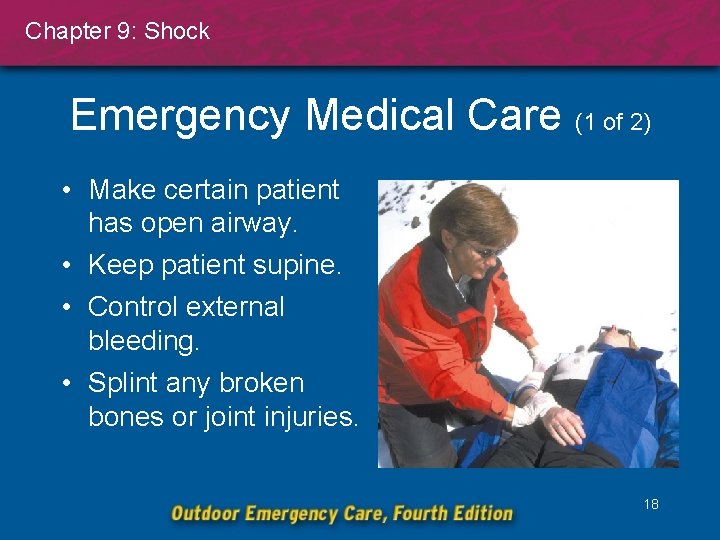
Chapter 9: Shock Emergency Medical Care (1 of 2) • Make certain patient has open airway. • Keep patient supine. • Control external bleeding. • Splint any broken bones or joint injuries. 18
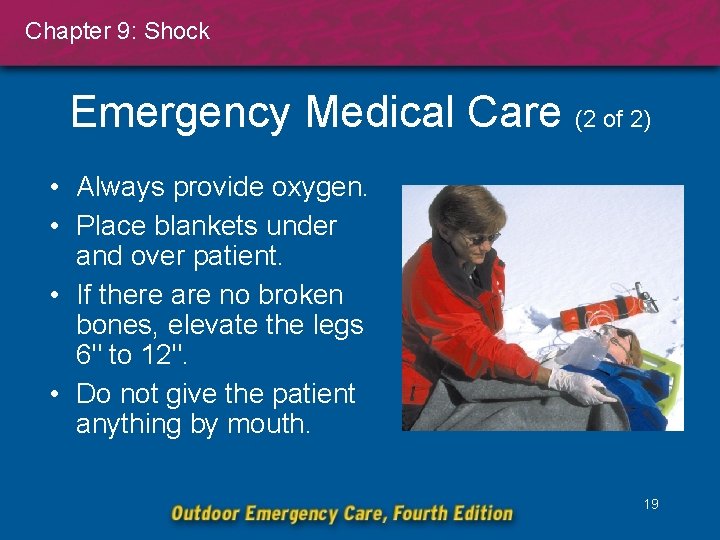
Chapter 9: Shock Emergency Medical Care (2 of 2) • Always provide oxygen. • Place blankets under and over patient. • If there are no broken bones, elevate the legs 6" to 12". • Do not give the patient anything by mouth. 19
Chapter 9: Shock Treating Cardiogenic Shock • Patient may breathe better in a sitting or semi-sitting position. • Administer high-flow oxygen. • Assist ventilations as necessary. • Have suction nearby in case the patient vomits. • Transport promptly. 20
Chapter 9: Shock Treating Neurogenic Shock • Maintain airway and assist breathing as needed. • Keep patient warm. • Transport promptly. 21
Chapter 9: Shock Treating Hypovolemic Shock • • • Control obvious bleeding. Splint any bone or joint injuries. If no fractures, raise legs 6" to 12". Secure and maintain airway. Give oxygen as soon as you suspect shock. • Transport rapidly. 22
Chapter 9: Shock Treating Septic Shock • Transport as promptly as possible while giving all general support available. • Give high-flow oxygen during transport. • Use blankets to conserve body heat. 23
Chapter 9: Shock Treating Respiratory Insufficiency • Secure and support the airway. • Clear airway of any obstructions. • Ventilate if needed with a BVM device. • Administer oxygen. • Transport promptly. 24
Chapter 9: Shock Treating Anaphylactic Shock • Arrange for epinephrine administration or assist with prescribed autoinjector. • Provide prompt transport. • Provide all possible support. – Oxygen – Ventilatory assistance 25
Chapter 9: Shock Treating Psychogenic Shock • It is usually self-resolving. • Assess patient for injuries from fall. • If patient has difficulties after regaining consciousness, suspect another problem. 26
- Slides: 26