
Chapter 9 Section 3 Part I Weapons of
- Slides: 16
Chapter 9 Section 3 Part I
Weapons of WWI • WWI saw many new weapons used on the battlefield, both sides begin to develop new technology to break though enemy lines.
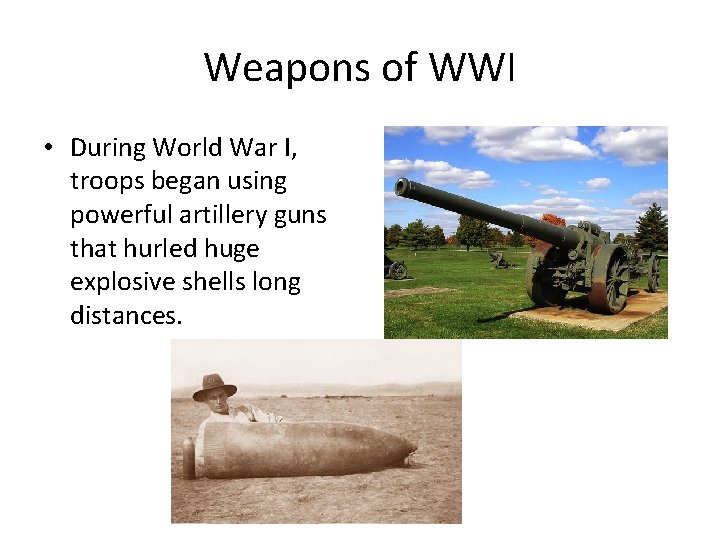
Weapons of WWI • During World War I, troops began using powerful artillery guns that hurled huge explosive shells long distances.
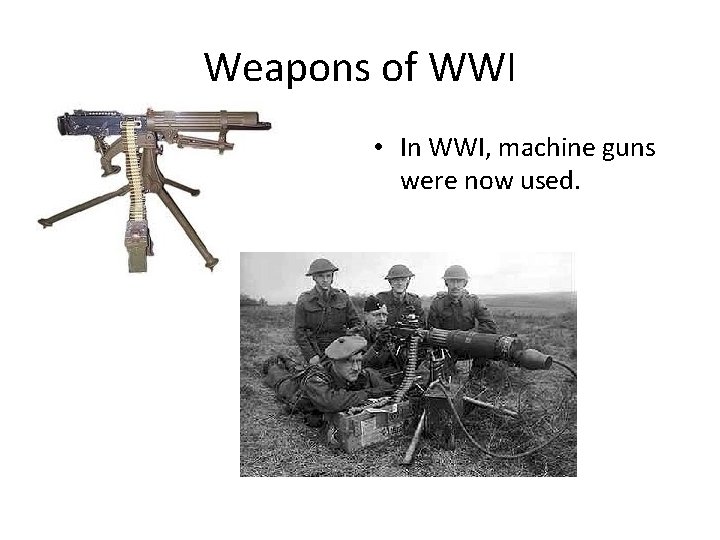
Weapons of WWI • In WWI, machine guns were now used.
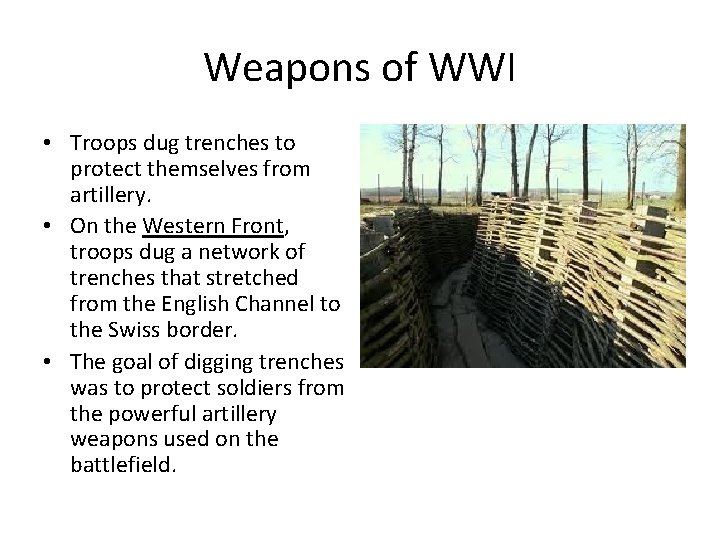
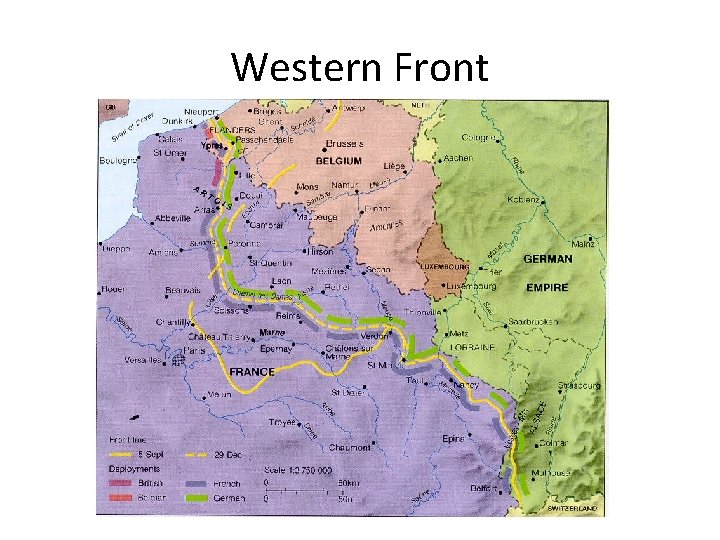
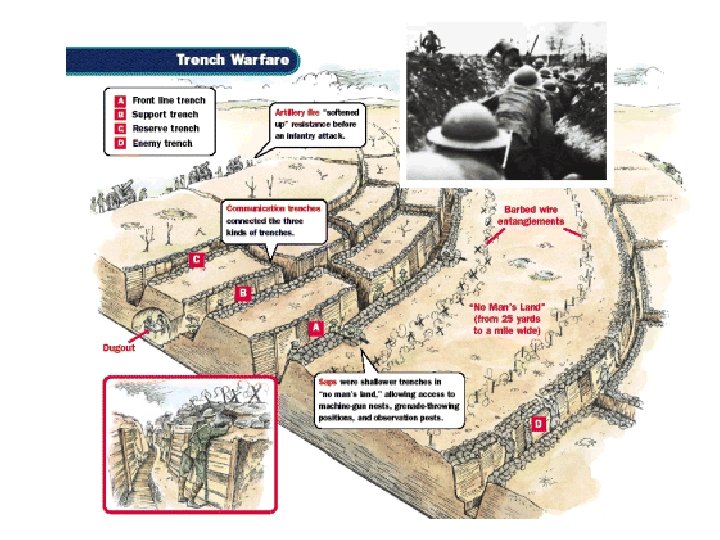
Weapons of WWI • Troops dug trenches to protect themselves from artillery. • On the Western Front, troops dug a network of trenches that stretched from the English Channel to the Swiss border. • The goal of digging trenches was to protect soldiers from the powerful artillery weapons used on the battlefield.
Western Front
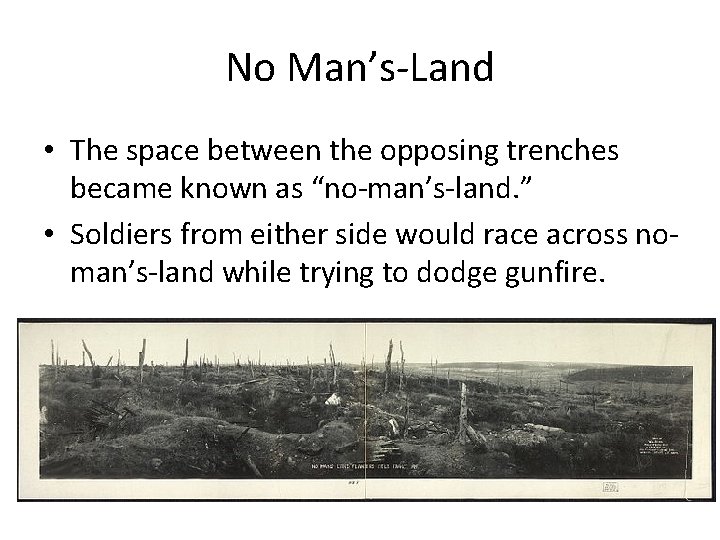
No Man’s-Land • The space between the opposing trenches became known as “no-man’s-land. ” • Soldiers from either side would race across noman’s-land while trying to dodge gunfire.
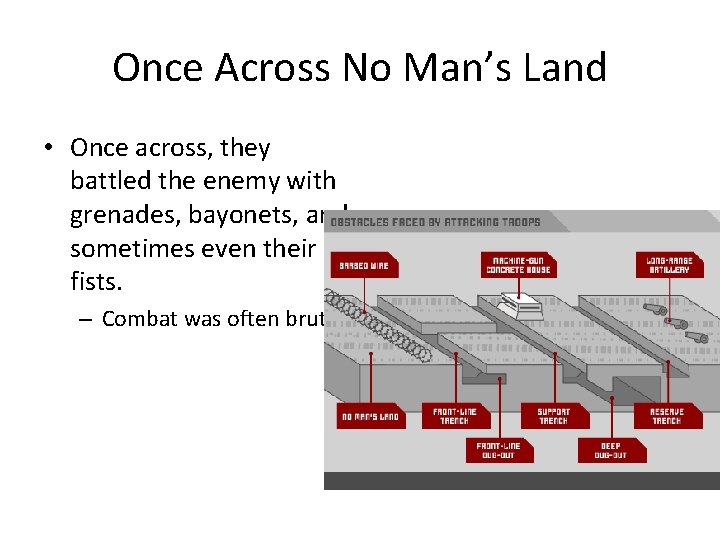
Once Across No Man’s Land • Once across, they battled the enemy with grenades, bayonets, and sometimes even their fists. – Combat was often brutal.
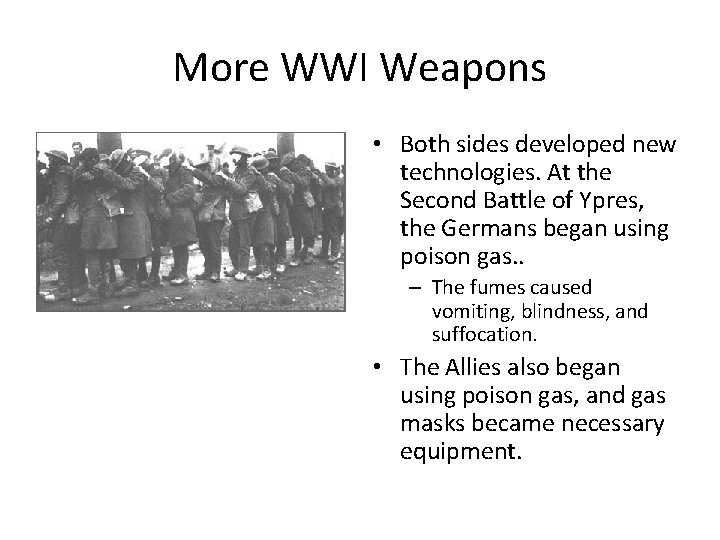
More WWI Weapons • Both sides developed new technologies. At the Second Battle of Ypres, the Germans began using poison gas. . – The fumes caused vomiting, blindness, and suffocation. • The Allies also began using poison gas, and gas masks became necessary equipment.
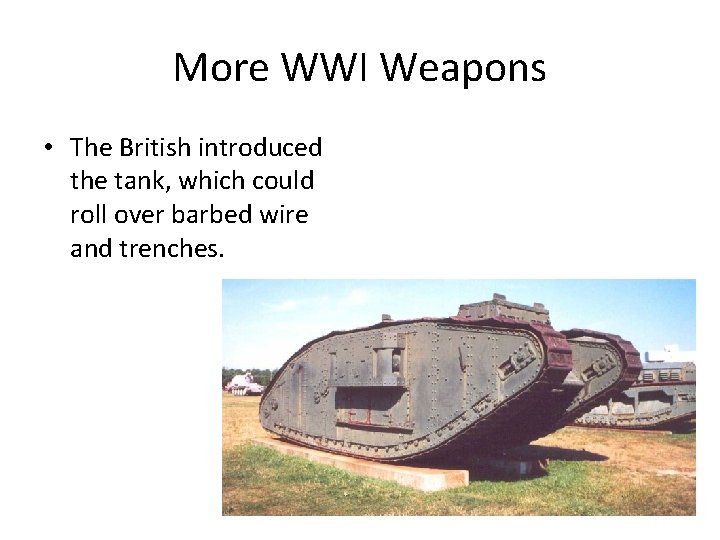
More WWI Weapons • The British introduced the tank, which could roll over barbed wire and trenches.
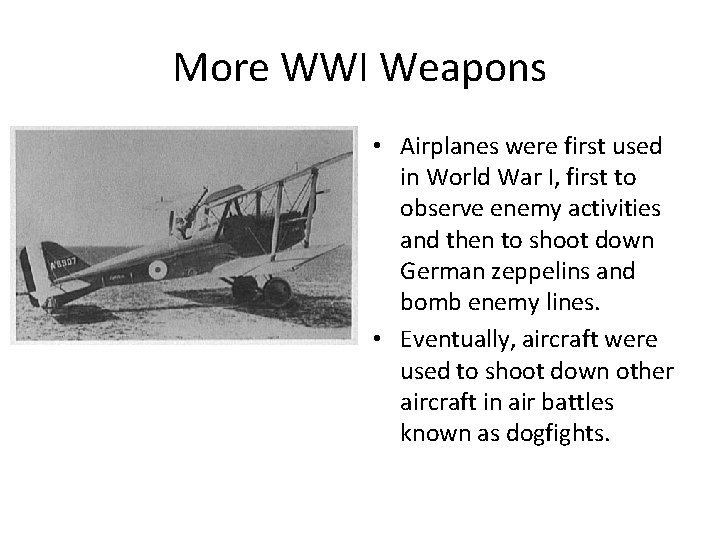
More WWI Weapons • Airplanes were first used in World War I, first to observe enemy activities and then to shoot down German zeppelins and bomb enemy lines. • Eventually, aircraft were used to shoot down other aircraft in air battles known as dogfights.
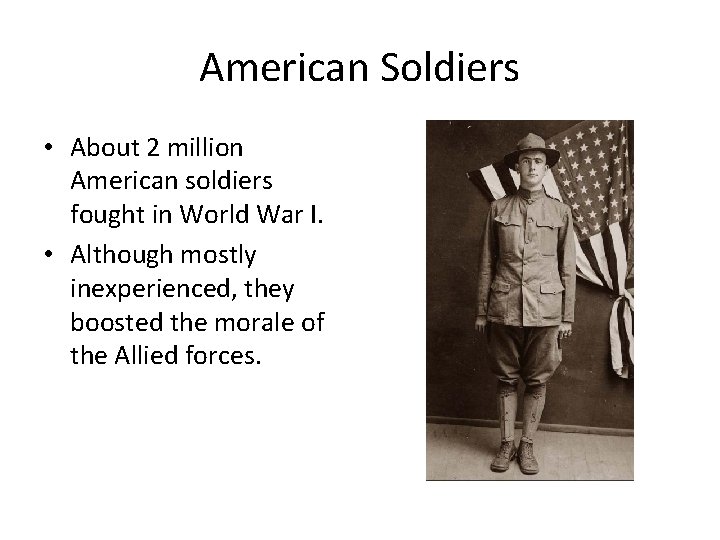
American Soldiers • About 2 million American soldiers fought in World War I. • Although mostly inexperienced, they boosted the morale of the Allied forces.
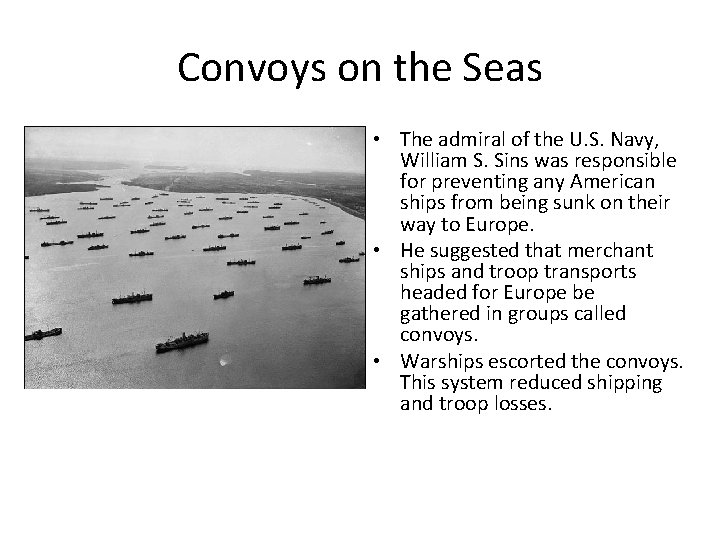
Convoys on the Seas • The admiral of the U. S. Navy, William S. Sins was responsible for preventing any American ships from being sunk on their way to Europe. • He suggested that merchant ships and troop transports headed for Europe be gathered in groups called convoys. • Warships escorted the convoys. This system reduced shipping and troop losses.
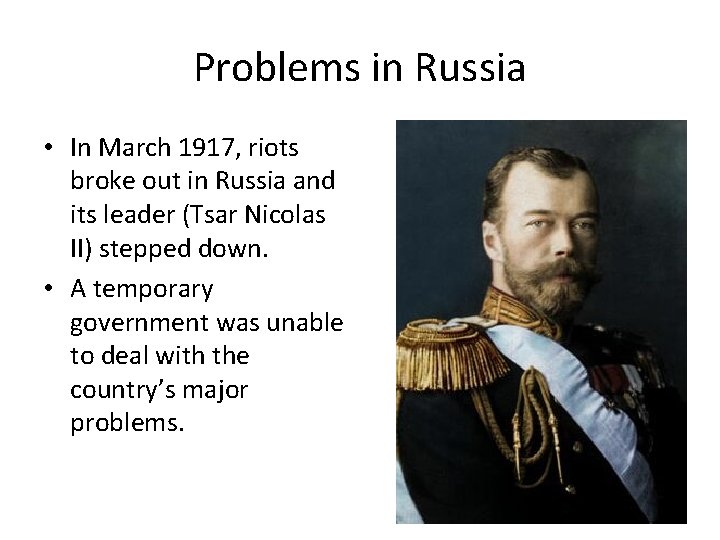
Problems in Russia • In March 1917, riots broke out in Russia and its leader (Tsar Nicolas II) stepped down. • A temporary government was unable to deal with the country’s major problems.
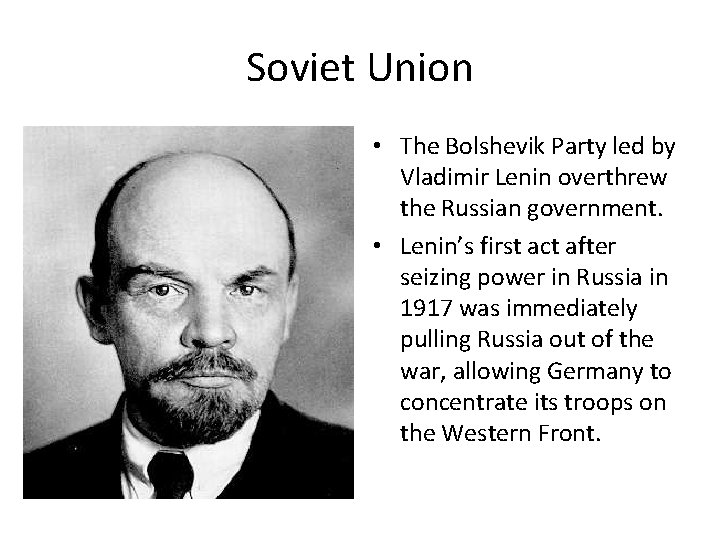
Soviet Union • The Bolshevik Party led by Vladimir Lenin overthrew the Russian government. • Lenin’s first act after seizing power in Russia in 1917 was immediately pulling Russia out of the war, allowing Germany to concentrate its troops on the Western Front.