
Chapter 9 Section 1 Alliances In the late

- Slides: 22
Chapter 9 Section 1
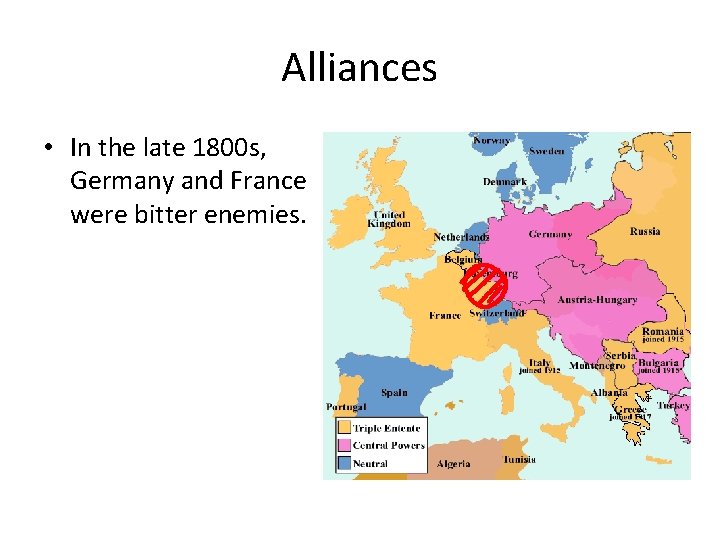
Alliances • In the late 1800 s, Germany and France were bitter enemies.
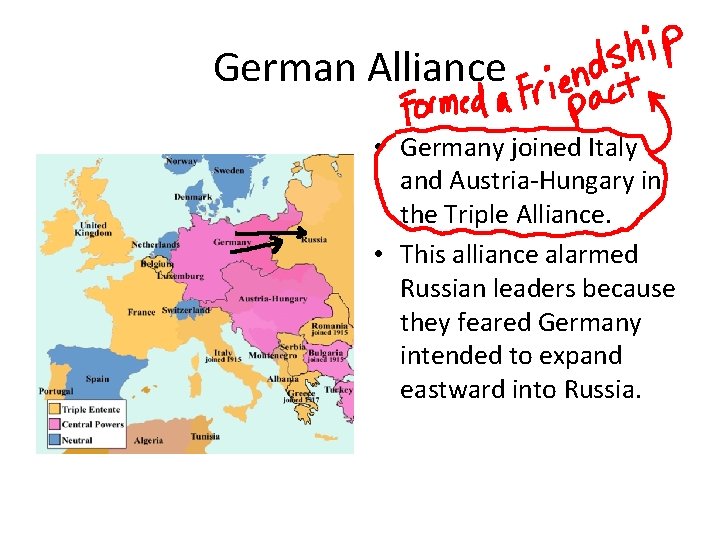
German Alliance • Germany joined Italy and Austria-Hungary in the Triple Alliance. • This alliance alarmed Russian leaders because they feared Germany intended to expand eastward into Russia.
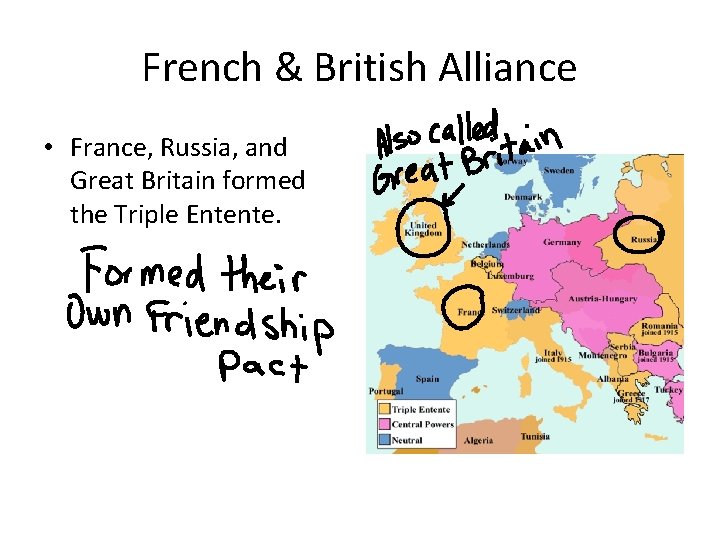
French & British Alliance • France, Russia, and Great Britain formed the Triple Entente.
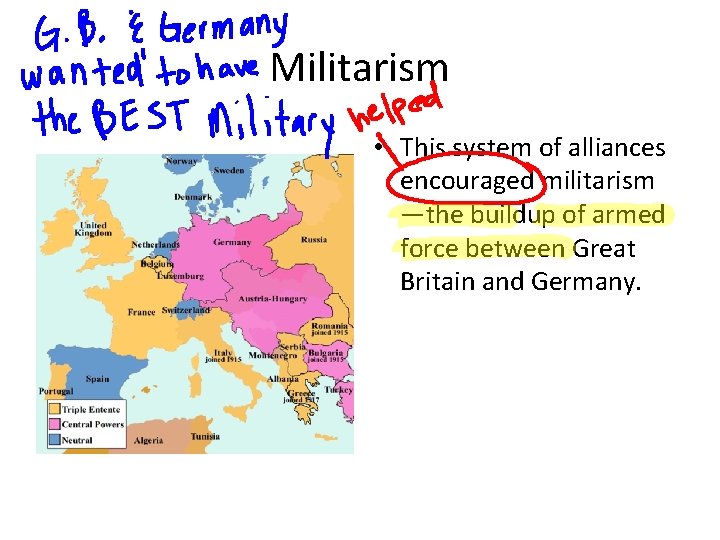
Militarism • This system of alliances encouraged militarism —the buildup of armed force between Great Britain and Germany.
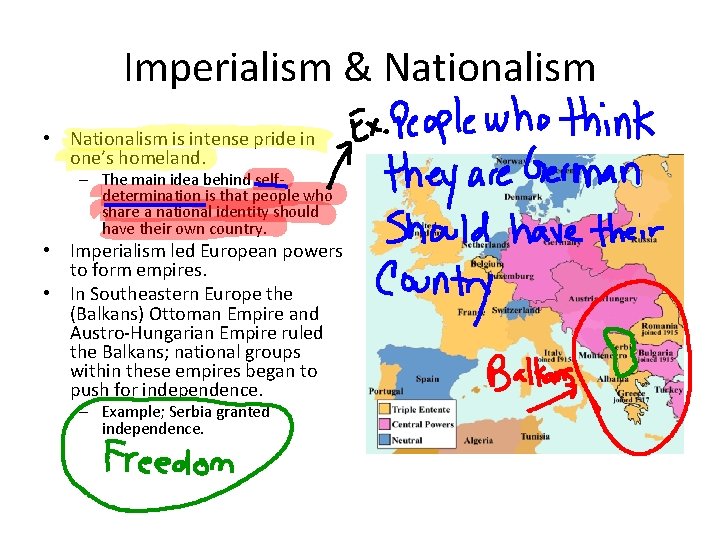
Imperialism & Nationalism • Nationalism is intense pride in one’s homeland. – The main idea behind selfdetermination is that people who share a national identity should have their own country. • Imperialism led European powers to form empires. • In Southeastern Europe the (Balkans) Ottoman Empire and Austro-Hungarian Empire ruled the Balkans; national groups within these empires began to push for independence. – Example; Serbia granted independence.
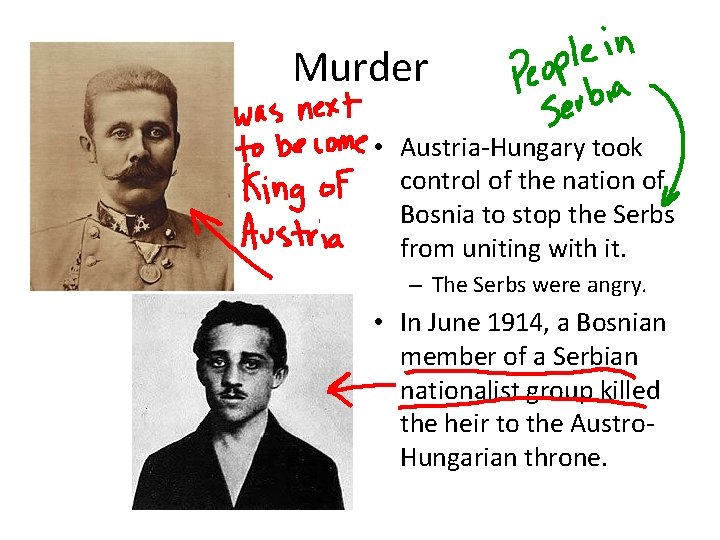
Murder • Austria-Hungary took control of the nation of Bosnia to stop the Serbs from uniting with it. – The Serbs were angry. • In June 1914, a Bosnian member of a Serbian nationalist group killed the heir to the Austro. Hungarian throne.
Russian Support • Russia support the Serbian nationalist group that assassinated Archduke Franz Ferdinand because the Russians belonged to a similar ethnic group called the Slavs and supported their independence from the Austria. Hungarian Empire.
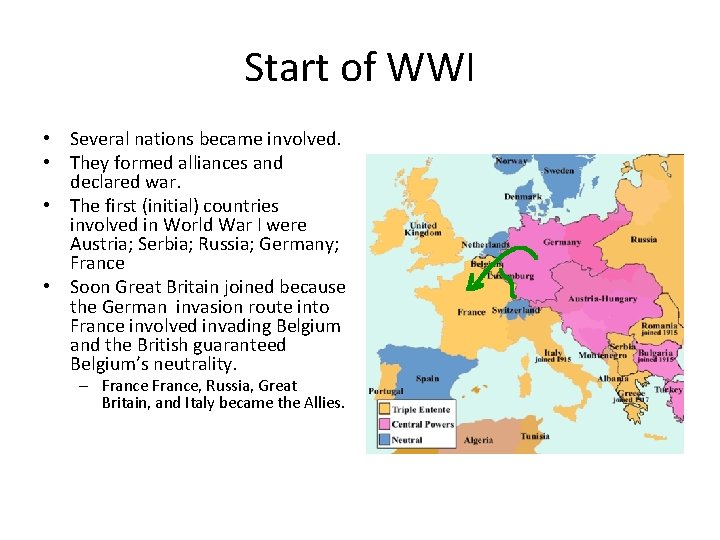
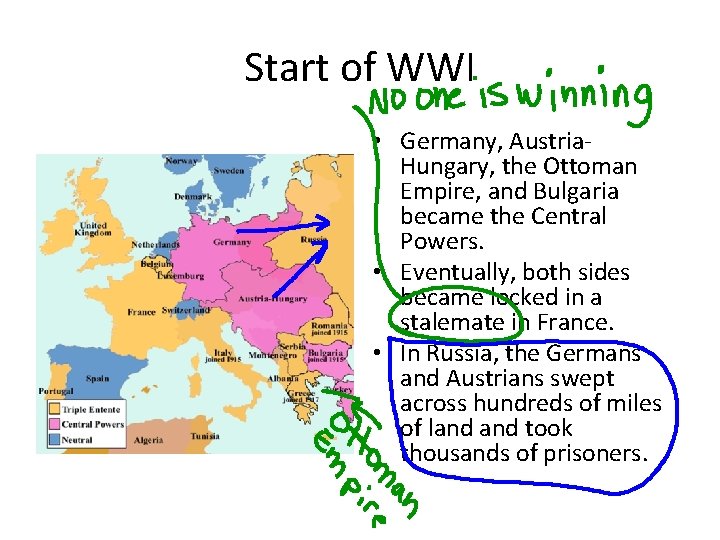
Start of WWI • Several nations became involved. • They formed alliances and declared war. • The first (initial) countries involved in World War I were Austria; Serbia; Russia; Germany; France • Soon Great Britain joined because the German invasion route into France involved invading Belgium and the British guaranteed Belgium’s neutrality. – France, Russia, Great Britain, and Italy became the Allies.
Start of WWI • Germany, Austria. Hungary, the Ottoman Empire, and Bulgaria became the Central Powers. • Eventually, both sides became locked in a stalemate in France. • In Russia, the Germans and Austrians swept across hundreds of miles of land took thousands of prisoners.
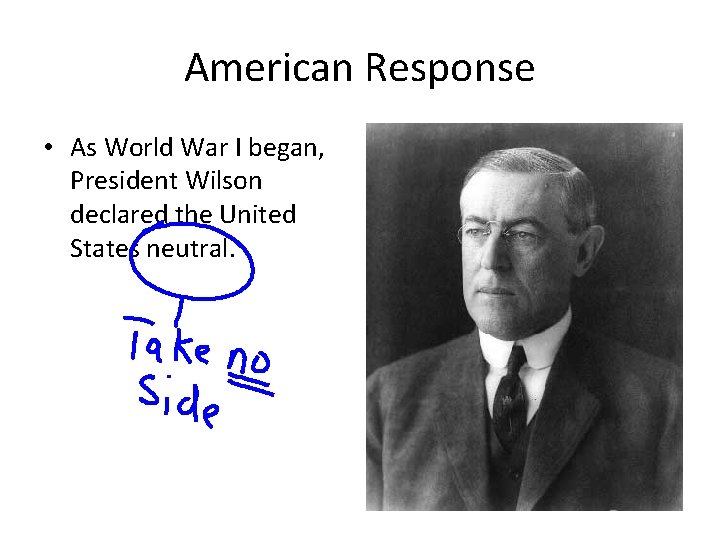
American Response • As World War I began, President Wilson declared the United States neutral.
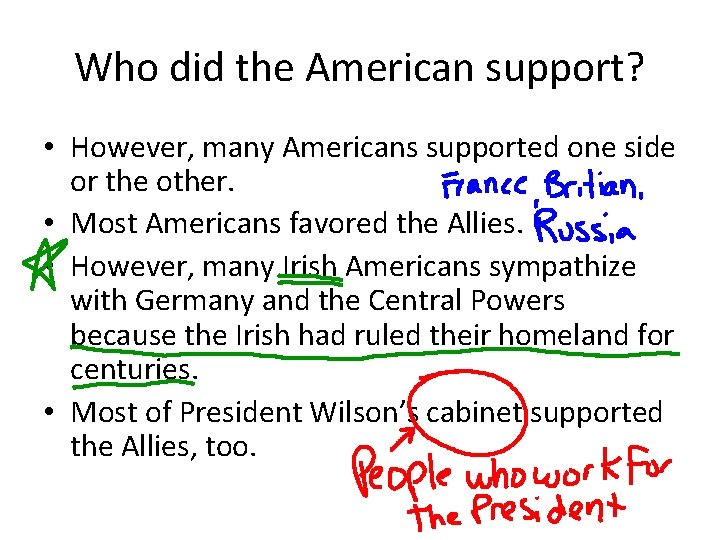
Who did the American support? • However, many Americans supported one side or the other. • Most Americans favored the Allies. • However, many Irish Americans sympathize with Germany and the Central Powers because the Irish had ruled their homeland for centuries. • Most of President Wilson’s cabinet supported the Allies, too.
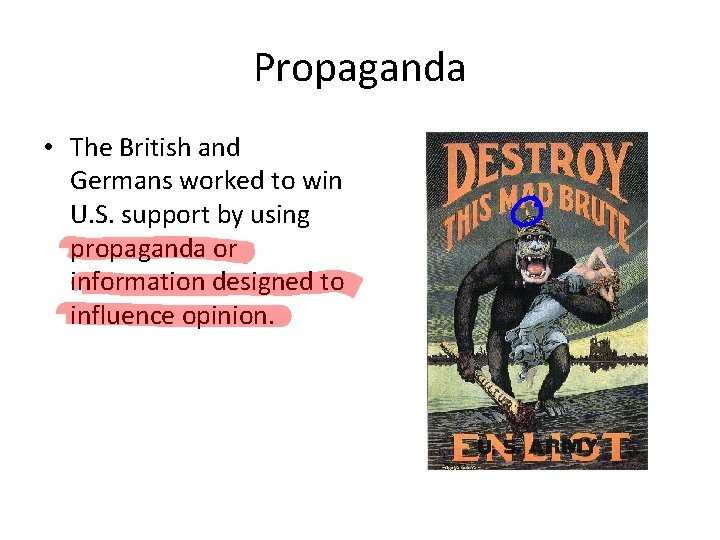
Propaganda • The British and Germans worked to win U. S. support by using propaganda or information designed to influence opinion.
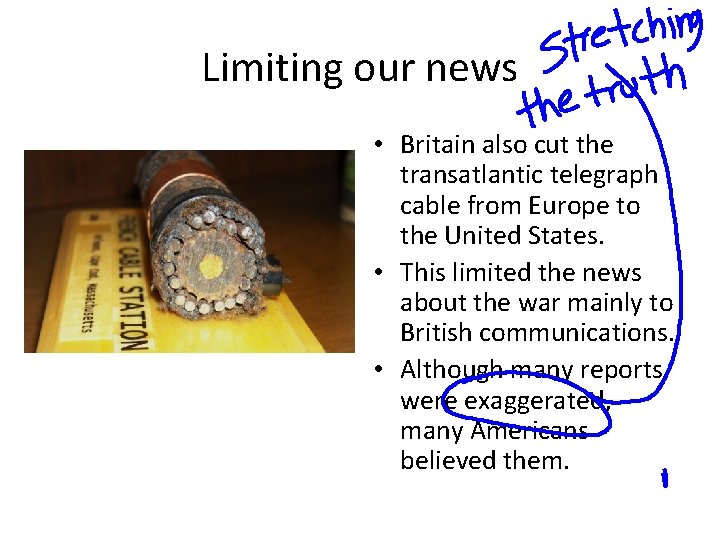
Limiting our news • Britain also cut the transatlantic telegraph cable from Europe to the United States. • This limited the news about the war mainly to British communications. • Although many reports were exaggerated, many Americans believed them.
Businesses Supporting the Allies • Businesses also supported the Allies because they had ties with businesses in the Allied countries. • America's prosperity intertwined with the military fortunes of Britain, France, and Russia because American banks had heavily invested in an Allied victory. • If the Allies won, the money would be paid back. • If they lost, the money would be, too.
• Although most Americans did not want to enter the war, many events drew the United States into it. • The British navy had blockaded Germany. • They stopped neutral ships to inspect them for contraband, or prohibited materials, headed for Germany or its allies.
• In response, Germany respond to Britain's blockade by announcing that it would sink without warning any ships in the waters around Britain. • Attacking civilian ships without warning was against international law.
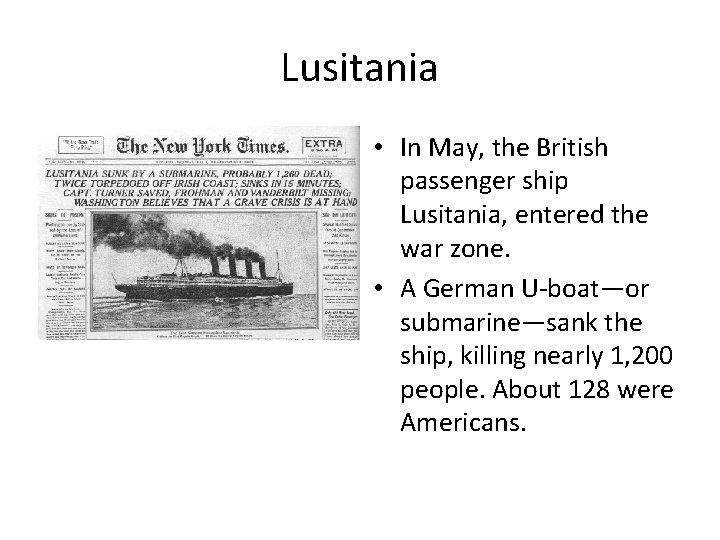
Lusitania • In May, the British passenger ship Lusitania, entered the war zone. • A German U-boat—or submarine—sank the ship, killing nearly 1, 200 people. About 128 were Americans.
Sussex Pledge • President Wilson still tried to stay out of the war. • However, he did send notes to Germany telling it to stop endangering the lives of civilians in war zones. • After a U-boat shot at the French passenger ship Sussex, Wilson warned Germany to stop its submarine warfare or risk war with the United States. • Germany did not want the United States to join the Allies and to keep the United States from breaking off diplomatic relations, they signed the Sussex pledge. – In the Sussex Pledge, Germany promised not to sink any merchant ships without warning.
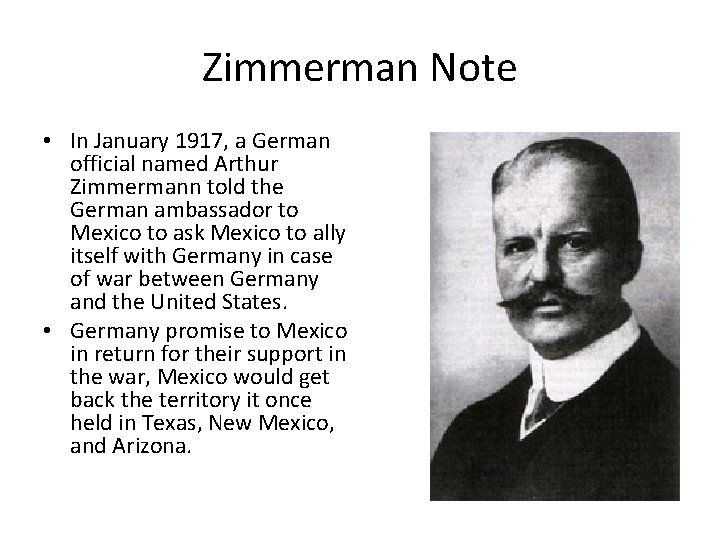
Zimmerman Note • In January 1917, a German official named Arthur Zimmermann told the German ambassador to Mexico to ask Mexico to ally itself with Germany in case of war between Germany and the United States. • Germany promise to Mexico in return for their support in the war, Mexico would get back the territory it once held in Texas, New Mexico, and Arizona.
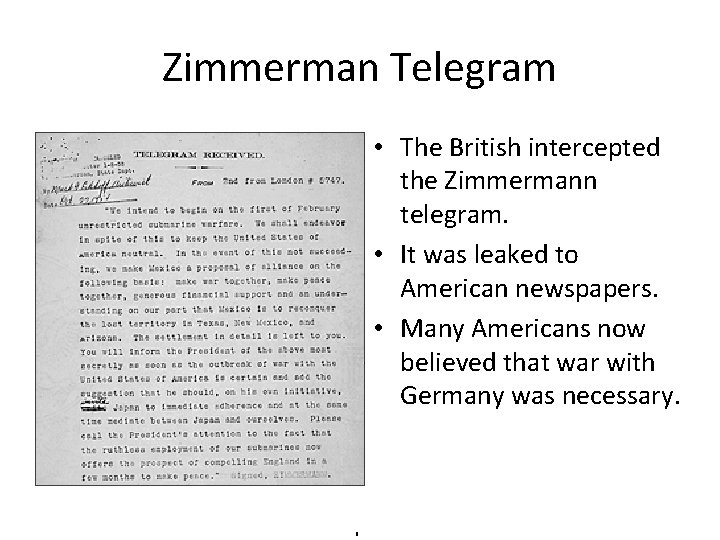
Zimmerman Telegram • The British intercepted the Zimmermann telegram. • It was leaked to American newspapers. • Many Americans now believed that war with Germany was necessary.
Last Straw… • When Germany again began unrestricted submarine warfare, it was the event that finally drew the United States into the war • February 1917, Germany sank six American merchant ships, Wilson asked Congress to declare war on Germany. – It did so on April 6, 1917.