
Chapter 9 Reactions of Alcohols Ethers Epoxides Amines
- Slides: 16
Chapter 9 Reactions of Alcohols, Ethers, Epoxides, Amines, and Thiols Paula Yurkanis Bruice University of California, Santa Barbara
Contents of Chapter 9 n n n Naming Alcohols Substitution and Dehydration of Alcohols Oxidation of Alcohols Naming Ethers Epoxides Skip Thiols and SAM Methylation Chapter 10 2
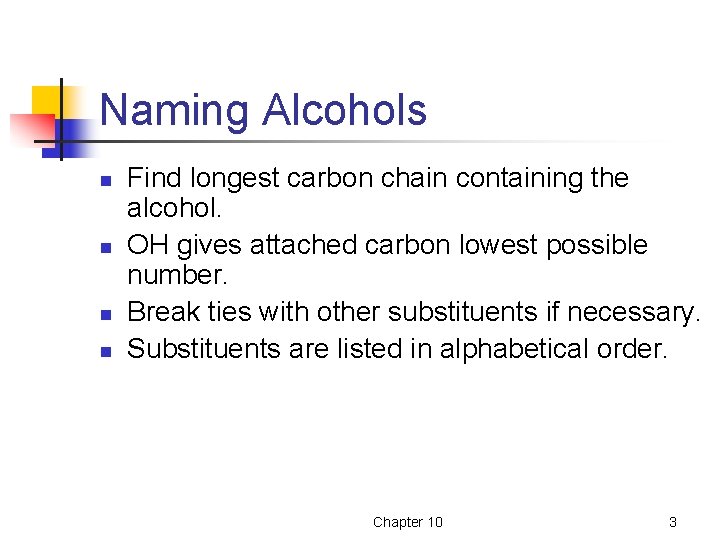
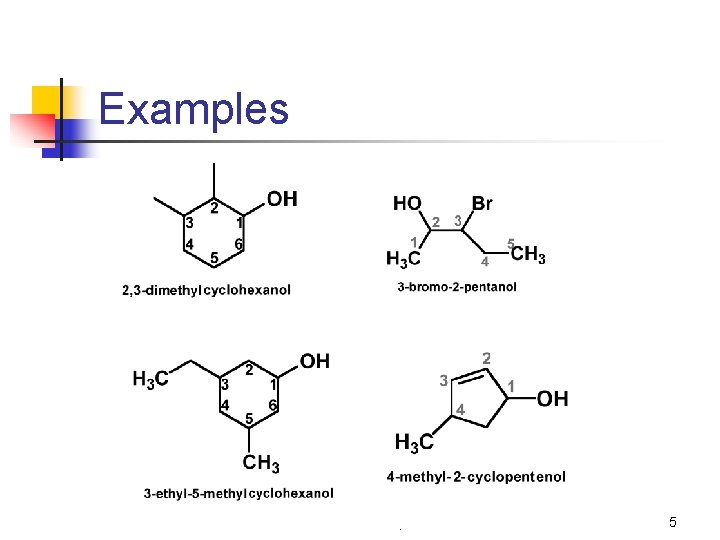
Naming Alcohols n n Find longest carbon chain containing the alcohol. OH gives attached carbon lowest possible number. Break ties with other substituents if necessary. Substituents are listed in alphabetical order. Chapter 10 3
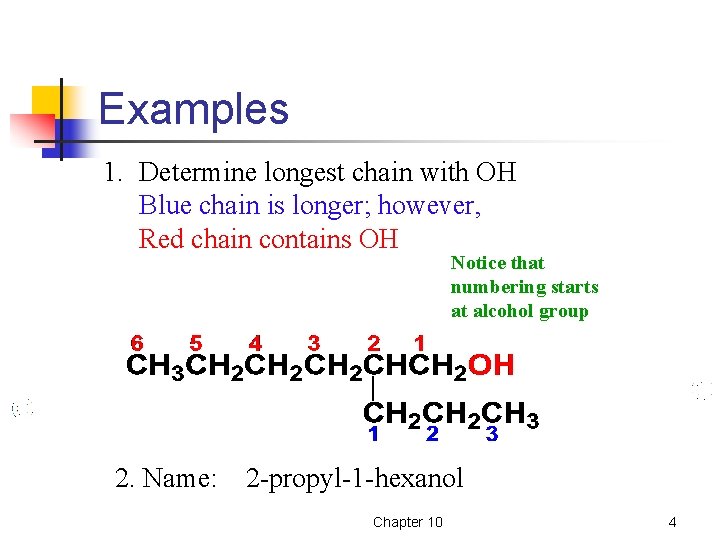
Examples 1. Determine longest chain with OH Blue chain is longer; however, Red chain contains OH Notice that numbering starts at alcohol group 2. Name: 2 -propyl-1 -hexanol Chapter 10 4
Examples Chapter 10 5
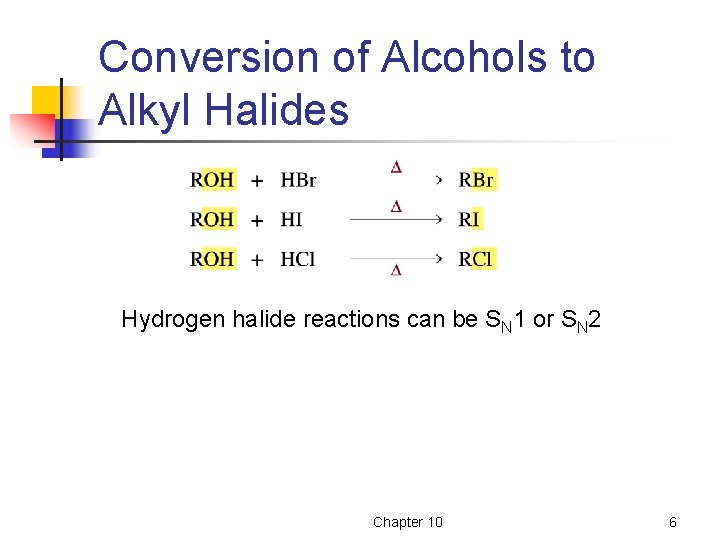
Conversion of Alcohols to Alkyl Halides Hydrogen halide reactions can be SN 1 or SN 2 Chapter 10 6
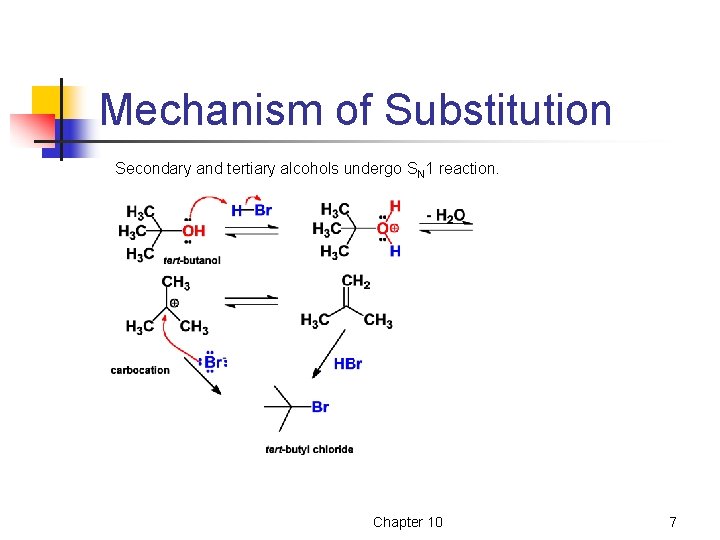
Mechanism of Substitution Secondary and tertiary alcohols undergo SN 1 reaction. Chapter 10 7
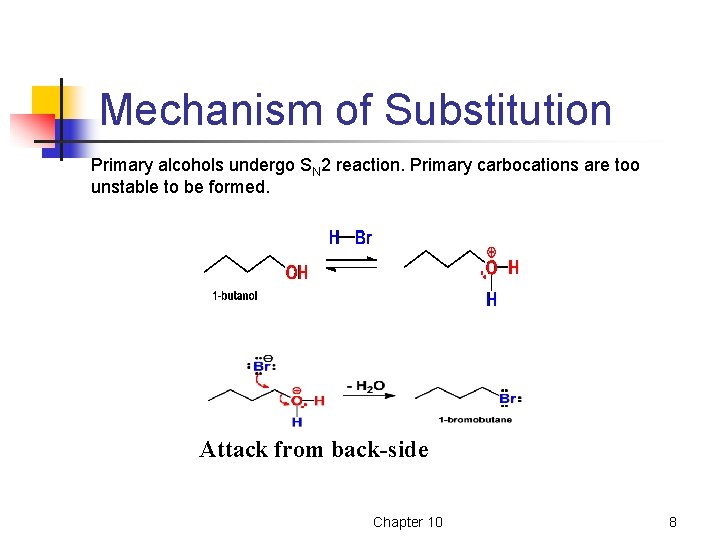
Mechanism of Substitution Primary alcohols undergo SN 2 reaction. Primary carbocations are too unstable to be formed. Attack from back-side Chapter 10 8
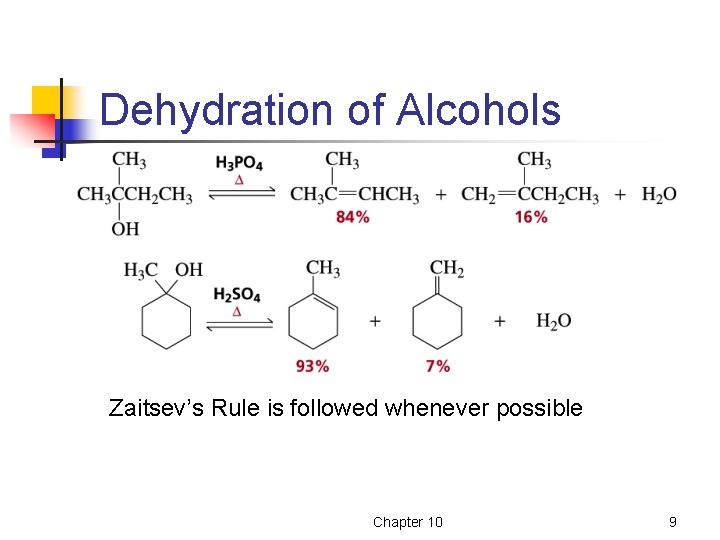
Dehydration of Alcohols Zaitsev’s Rule is followed whenever possible Chapter 10 9
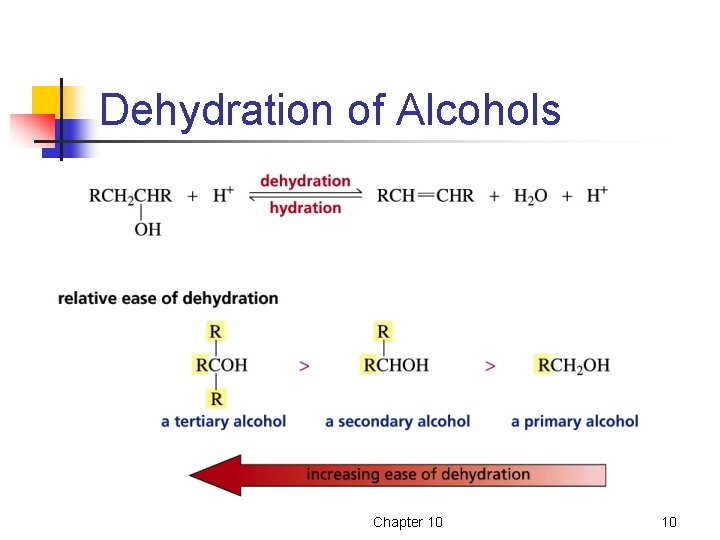
Dehydration of Alcohols Chapter 10 10
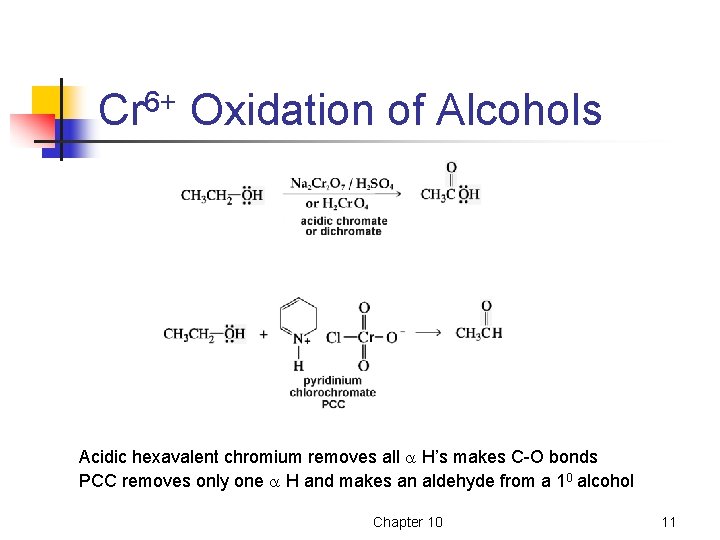
6+ Cr Oxidation of Alcohols Acidic hexavalent chromium removes all H’s makes C-O bonds PCC removes only one H and makes an aldehyde from a 10 alcohol Chapter 10 11
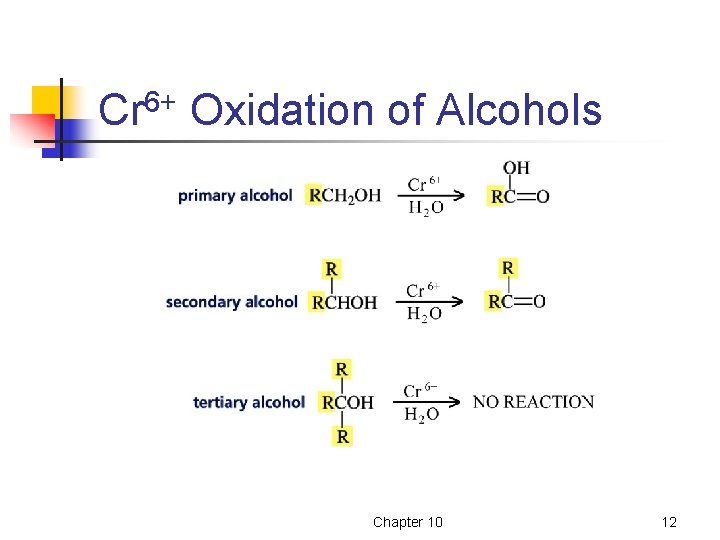
6+ Cr Oxidation of Alcohols Chapter 10 12
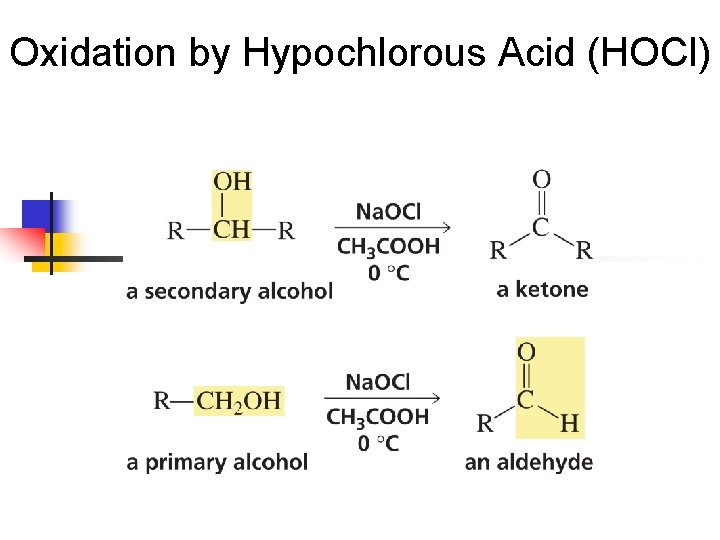
Oxidation by Hypochlorous Acid (HOCl)
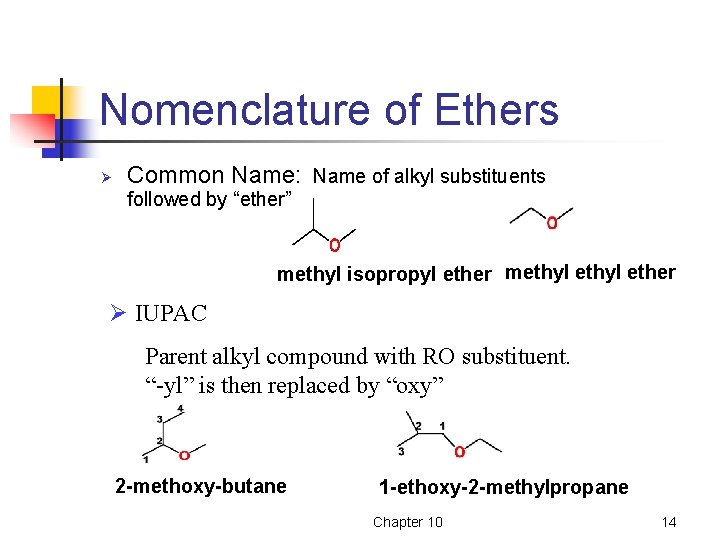
Nomenclature of Ethers Ø Common Name: Name of alkyl substituents followed by “ether” methyl isopropyl ether methyl ether Ø IUPAC Parent alkyl compound with RO substituent. “-yl” is then replaced by “oxy” 2 -methoxy-butane 1 -ethoxy-2 -methylpropane Chapter 10 14
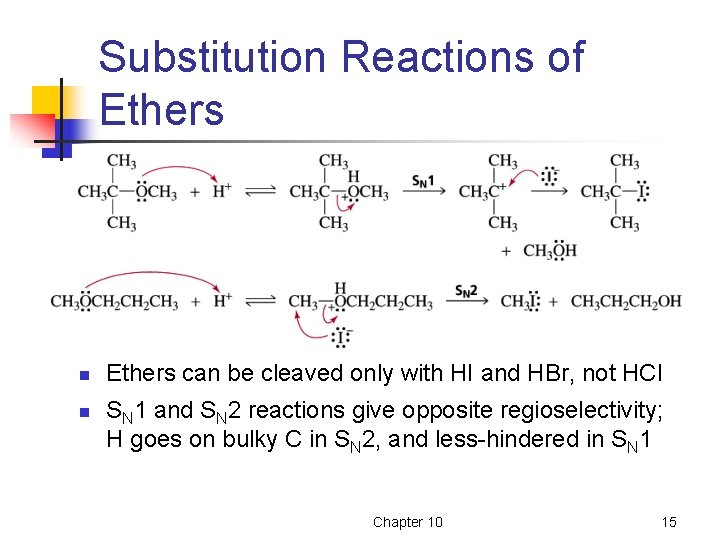
Substitution Reactions of Ethers n n Ethers can be cleaved only with HI and HBr, not HCl SN 1 and SN 2 reactions give opposite regioselectivity; H goes on bulky C in SN 2, and less-hindered in SN 1 Chapter 10 15
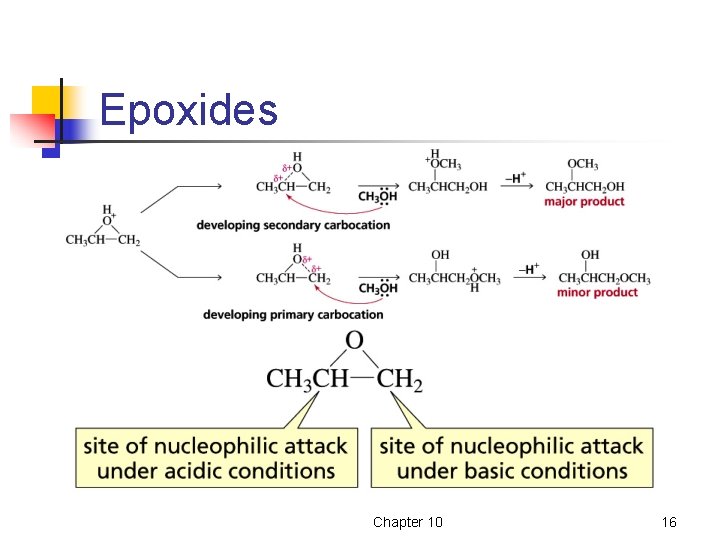
Epoxides Chapter 10 16