
Chapter 9 Programming Languages BrooksCole 2003 OBJECTIVES After
Chapter 9 Programming Languages ©Brooks/Cole, 2003
OBJECTIVES After reading this chapter, the reader should be able to: Have a vision of computer language evolution. Distinguish between machine, assembly, and highlevel languages. Understand the process of creating and running a program. Distinguish between the different categories of languages: procedural, object-oriented, functional, declarative, and special. Become familiar with elements of the procedural language C.
9. 1 EVOLUTION ©Brooks/Cole, 2003
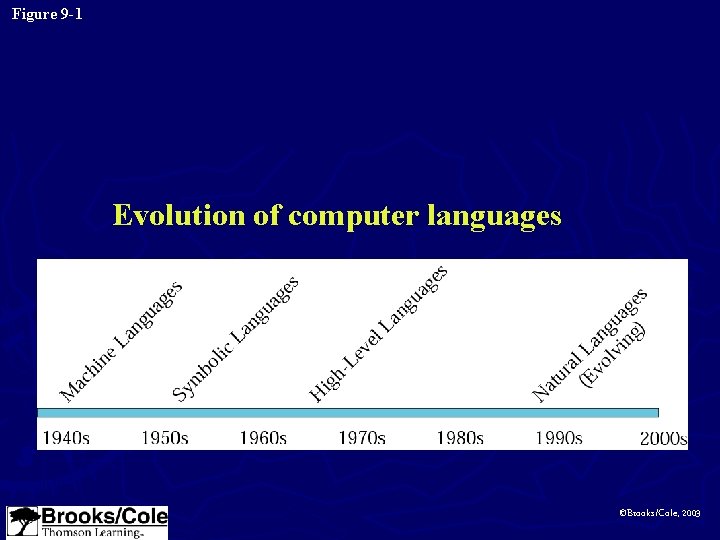
Figure 9 -1 Evolution of computer languages ©Brooks/Cole, 2003
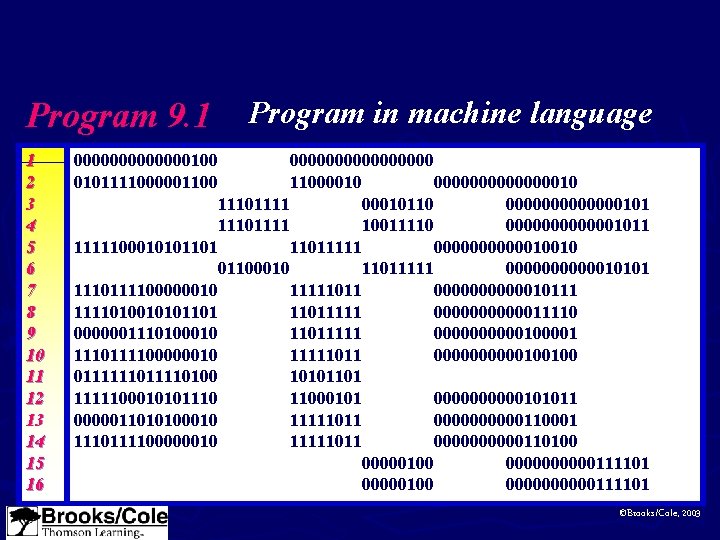
Program 9. 1 Program in machine language 1 2 3 4 5 6 7 8 9 10 11 12 13 14 15 16 0000000100 0101111000001100 00000000 11000010 000000010 11101111 00010110 0000000101 11101111 10011110 0000001011 11111000101011011111 00000010010 01100010 11011111 00000010101 1110111100000010 11111011 00000010111 11110100101011011111 00000011110 0000001110100010 11011111 00000100001 1110111100000010 11111011 00000100100 01111110100 10101101 1111100010101110 11000101 00000101011 0000011010100010 11111011 00000110001 1110111100000010 11111011 00000110100 0000000000111101 00000100 00000111101 ©Brooks/Cole, 2003
Note: The only language understood by a computer is machine language. ©Brooks/Cole, 2003
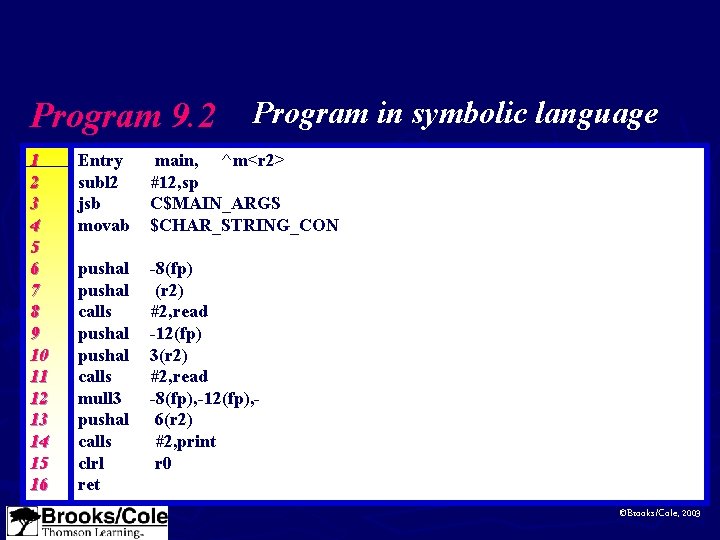
Program 9. 2 Program in symbolic language 1 2 3 4 5 6 7 8 9 10 11 12 13 14 15 16 Entry subl 2 jsb movab main, ^m<r 2> #12, sp C$MAIN_ARGS $CHAR_STRING_CON pushal calls mull 3 pushal calls clrl ret -8(fp) (r 2) #2, read -12(fp) 3(r 2) #2, read -8(fp), -12(fp), 6(r 2) #2, print r 0 ©Brooks/Cole, 2003
Symbolic languages ► Assembly language is a symbolic language. ► An assembler is used to translate symbolic code into machine language. ©Brooks/Cole, 2003
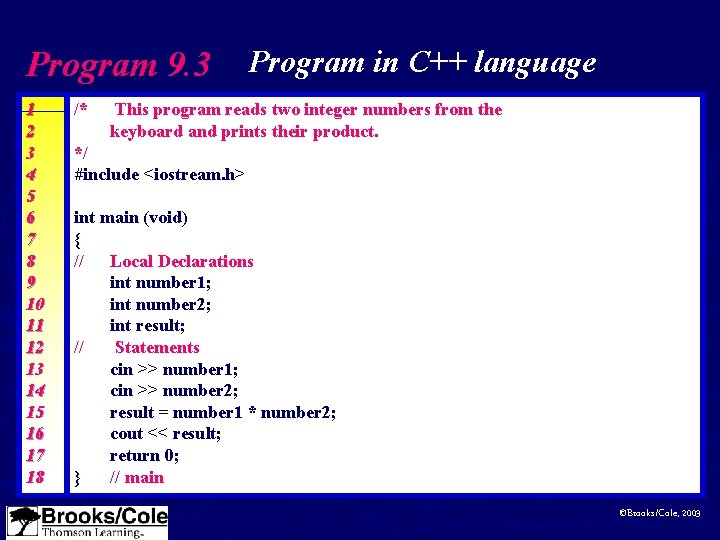
Program 9. 3 Program in C++ language 1 2 3 4 5 6 7 8 9 10 11 12 13 14 15 16 17 18 /* This program reads two integer numbers from the keyboard and prints their product. */ #include <iostream. h> int main (void) { // Local Declarations int number 1; int number 2; int result; // Statements cin >> number 1; cin >> number 2; result = number 1 * number 2; cout << result; return 0; } // main ©Brooks/Cole, 2003
9. 2 BUILDING A PROGRAM ©Brooks/Cole, 2003
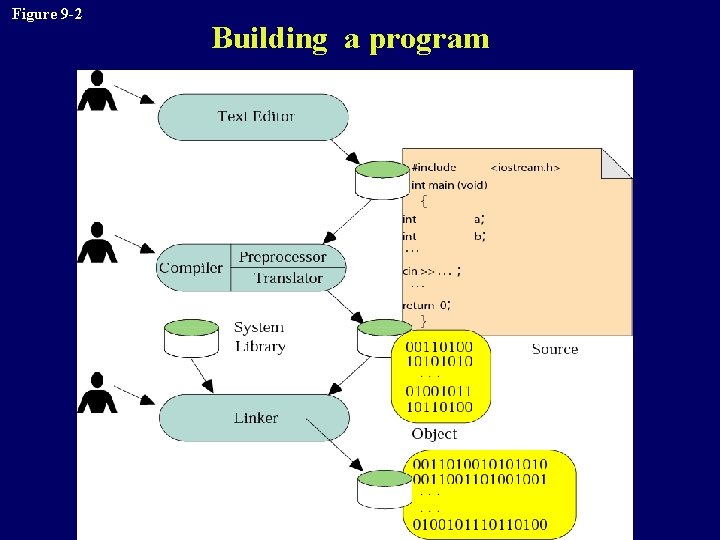
Figure 9 -2 Building a program
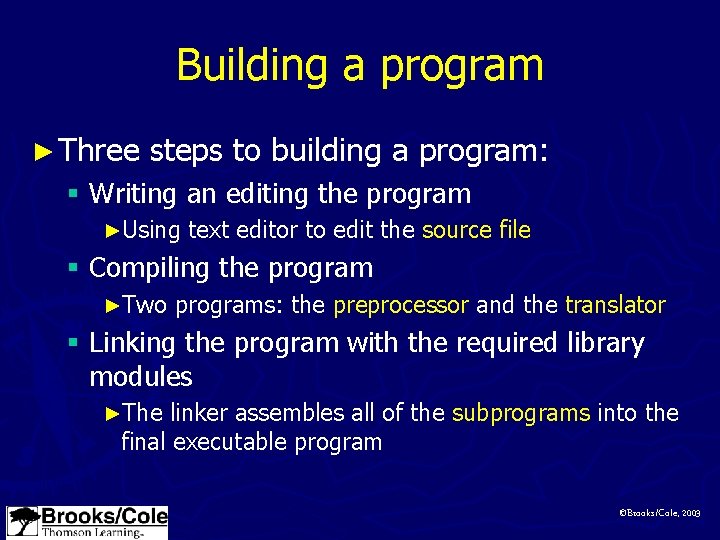
Building a program ► Three steps to building a program: § Writing an editing the program ►Using text editor to edit the source file § Compiling the program ►Two programs: the preprocessor and the translator § Linking the program with the required library modules ►The linker assembles all of the subprograms into the final executable program ©Brooks/Cole, 2003
9. 3 PROGRAM EXECUTION ©Brooks/Cole, 2003
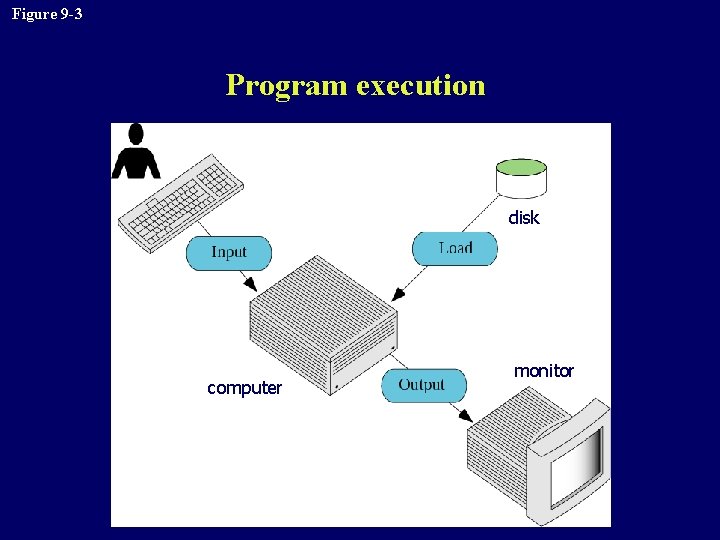
Figure 9 -3 Program execution disk computer monitor
9. 4 CATEGORIES OF LANGUAGES ©Brooks/Cole, 2003
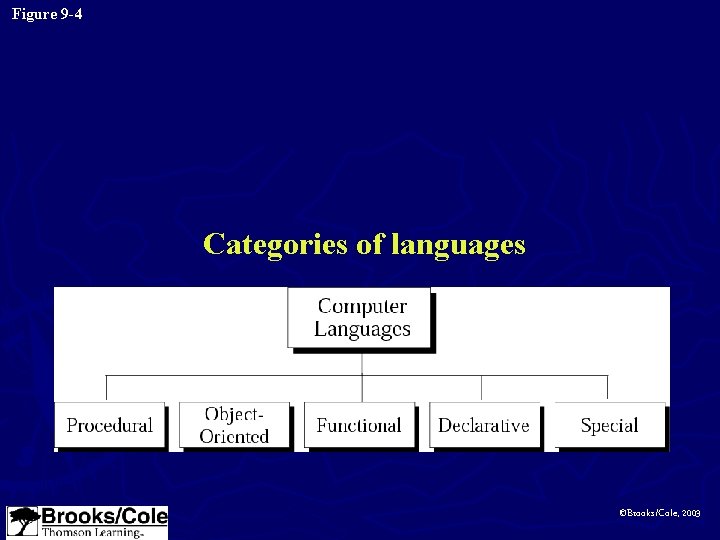
Figure 9 -4 Categories of languages ©Brooks/Cole, 2003
Procedural language ►A procedural (imperative 命令) language is a set of instructions that are executed one by one from beginning to end unless an instruction forces the control elsewhere. § FORTRAN § COBOL § Pascal §C § Ada ©Brooks/Cole, 2003
FORTRAN ► FORTRAN: FORmula TRANslation § Designed by a group of IBM engineers (1957) § The first high-level language § Features: ►High-precision arithmetic (高精確度的計算) ►Capability of handling complex numbers (複數) ►Exponentiation computation (ab) (指數) ©Brooks/Cole, 2003
COBOL ► COBOL: COmmon Business-Oriented language § Designed by Grace Hopper group § A business programming language § Features: ►Fast access to files and databases ►Fast updating of files and databases ►Large amounts of generated reports ►User-friendly formatted output ©Brooks/Cole, 2003

Pascal ► Pascal § Invented by Niklaus Wirth (1971) § Pascal was designed --►To teach programming to novices by emphasizing the structured programming approach § Pascal became the most popular language in academic (學術界) ©Brooks/Cole, 2003
C ►C § Developed by Dennis Ritchie at Bell Laboratories (1970 s) § Most of the UNIX operating system is written in C § Features: ►C has all the high-level instructions ►C has some low-level instructions ►C is a very efficient language; its instructions are short ►C has been standardized by ANSI (專門認定語言標準 的機構) and ISO ©Brooks/Cole, 2003
Ada ► Ada: § Created for the U. S. Department of Defense (Do. D 美國國防部) § Features: ►Ada has high-level instructions. ►Ada has instructions to allow real-time processing. This make it suitable for process control. ►Ada has parallel-processing capabilities. It can run on mainframe computers with multiple processors. ©Brooks/Cole, 2003
Object-Oriented languages ► In object-oriented programming, the objects and the operations to be applied to them are tied together. ► The objects in object-oriented programming are active. § C++ § Java ©Brooks/Cole, 2003
C++ ► C++: developed by Bjarne Stroustrup at Bell Lab ► Three principles: § Encapsulation (封裝) ►The user knows what to do with the data without knowing how it is done. § Inheritance (繼承) ►When a general class is defined, you can define a more specific class that inherits some of the characteristics of the general class but also has some new characteristics. § Polymorphism (多型) ►You can define several operations with the same name that can do different things in related classes.
Java ► Java: § Developed at Sun Microsystems, , Inc. § The language is totally class oriented. § Every data item belongs to a class. § The browser can download the applet (小小的應 用程式) and run it locally. § Features: ►Class library ►Multithreading ©Brooks/Cole, 2003
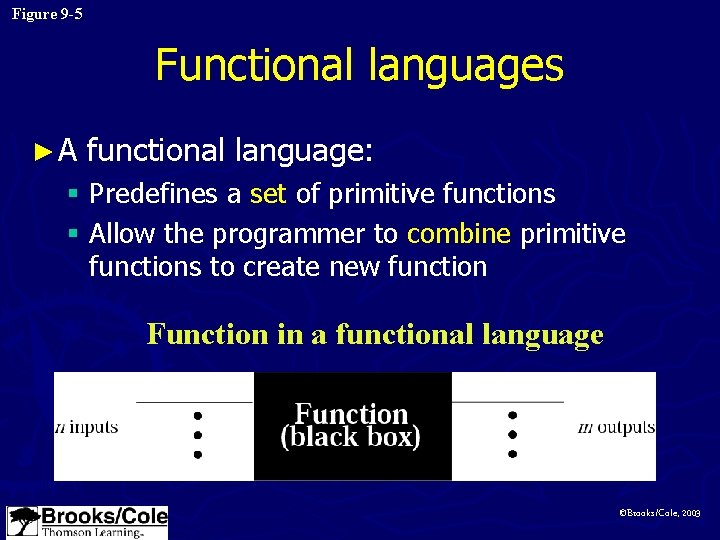
Figure 9 -5 Functional languages ►A functional language: § Predefines a set of primitive functions § Allow the programmer to combine primitive functions to create new function Function in a functional language ©Brooks/Cole, 2003
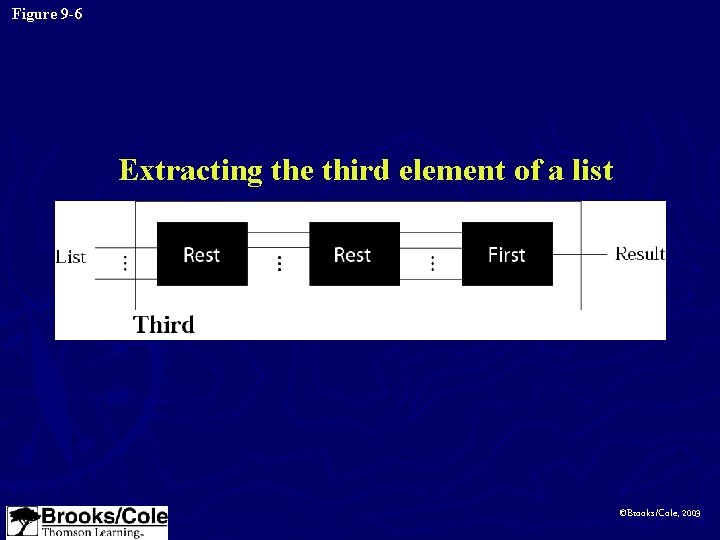
Figure 9 -6 Extracting the third element of a list ©Brooks/Cole, 2003
Functional languages ► Advantages: § Encourage modular programming § Allow the programmer to make new functions out of existing ones ► Examples: § LISP: designed at MIT § Scheme: LISP similar ©Brooks/Cole, 2003
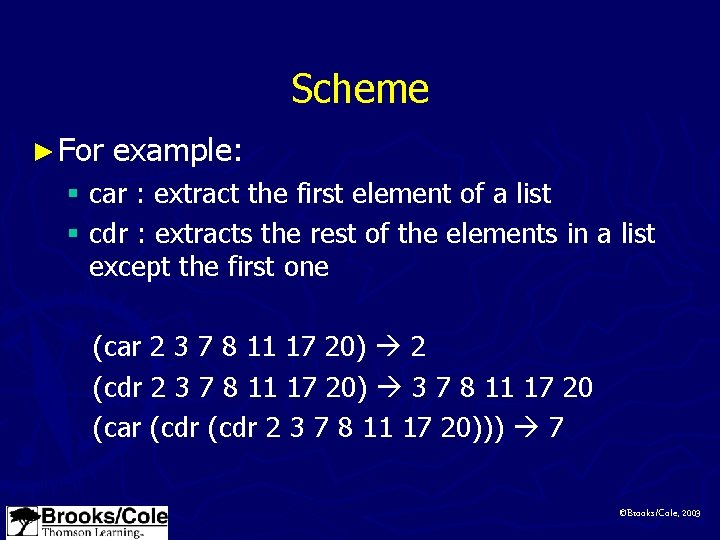
Scheme ► For example: § car : extract the first element of a list § cdr : extracts the rest of the elements in a list except the first one (car 2 3 7 8 11 17 20) 2 (cdr 2 3 7 8 11 17 20) 3 7 8 11 17 20 (car (cdr 2 3 7 8 11 17 20))) 7 ©Brooks/Cole, 2003

Declarative language ►A declarative language uses the principle of logical reasoning to answer queries. ► Logical reasoning is based on deduction (歸納). ► For example: If (A is B) and (B is C), then (A is C) ► Problem: § Collecting all the facts into one program make the program huge. ©Brooks/Cole, 2003
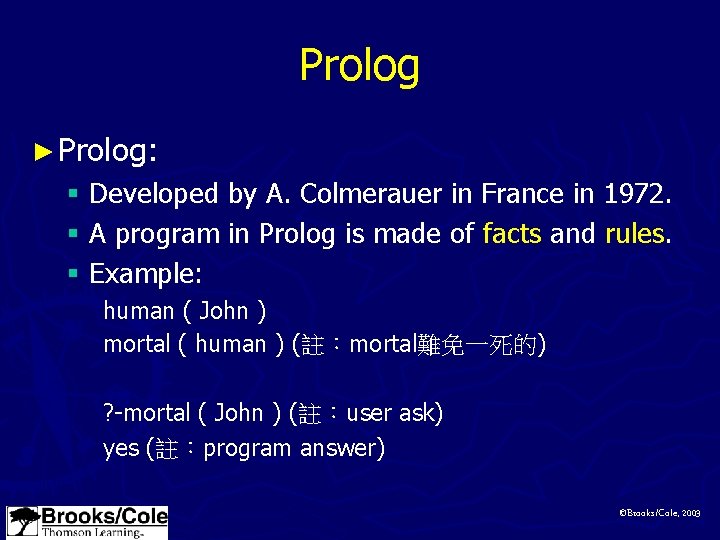
Prolog ► Prolog: § Developed by A. Colmerauer in France in 1972. § A program in Prolog is made of facts and rules. § Example: human ( John ) mortal ( human ) (註:mortal難免一死的) ? -mortal ( John ) (註:user ask) yes (註:program answer) ©Brooks/Cole, 2003
Special languages ► HTML (Hypertext Markup Language) § An HTML file is stored on the server and can be downloaded by a browser. § The instructions are stored with the text. § Any browser can read the instructions and format the text according to the workstation being used. § HTML lets you use only ASCII characters for both the main text and formatting instructions. § Head, Body, and Tags ©Brooks/Cole, 2003
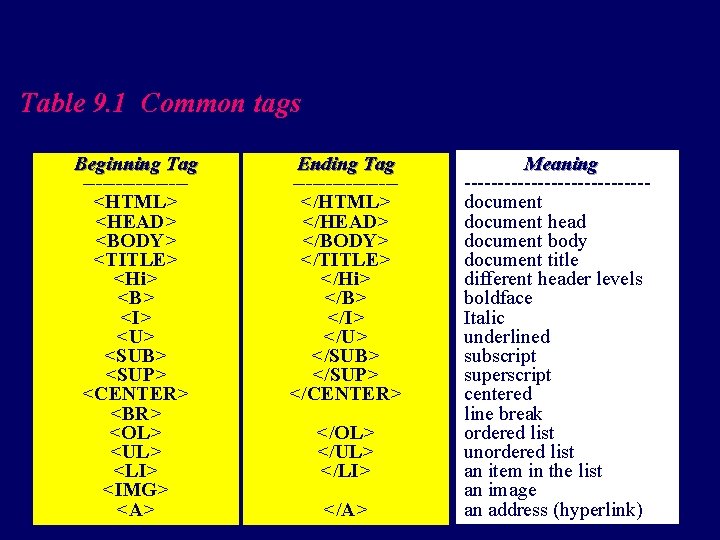
Table 9. 1 Common tags Beginning Tag --------<HTML> <HEAD> <BODY> <TITLE> <Hi> <B> <I> <U> <SUB> <SUP> <CENTER> <BR> <OL> <UL> <LI> <IMG> <A> Ending Tag --------</HTML> </HEAD> </BODY> </TITLE> </Hi> </B> </I> </U> </SUB> </SUP> </CENTER> </OL> </UL> </LI> </A> Meaning --------------document head document body document title different header levels boldface Italic underlined subscript superscript centered line break ordered list unordered list an item in the list an image an address (hyperlink)
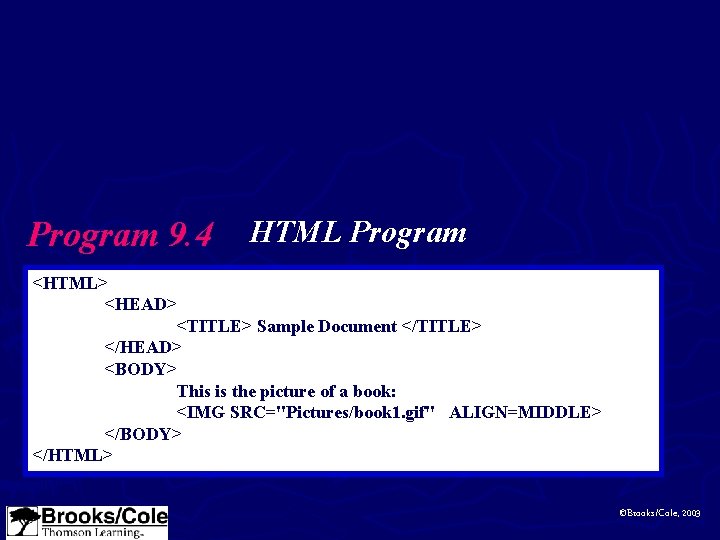
Program 9. 4 HTML Program <HTML> <HEAD> <TITLE> Sample Document </TITLE> </HEAD> <BODY> This is the picture of a book: <IMG SRC="Pictures/book 1. gif" ALIGN=MIDDLE> </BODY> </HTML> ©Brooks/Cole, 2003
Special languages ► PERL (Practical Extraction and Report Language) § A high-level language with a syntax similar to the C but more efficient § The power of PERL lies in its well-designed use of regular expressions. ► SQL (Structured query Language) § A language used to answer queries about databases. § See Chapter 14. ©Brooks/Cole, 2003
9. 5 A PROCEDURAL LANGUAGE: C ©Brooks/Cole, 2003
C — Identifiers ► Identifiers (識別字) § Identifiers allow you to name data and other objects in the program § Different programming languages use different rules form identifiers § The first character of the identifier cannot be a digit. § Reserved words (key words): about 50 words. ©Brooks/Cole, 2003
C — Data types ► Data types § A data type defines a set of values and a set of operations that can be applied to those values. § Standard types: ► integer, char, float § Derived (衍生的) types: ►pointer, enumerated type, union, array, and structure. ©Brooks/Cole, 2003
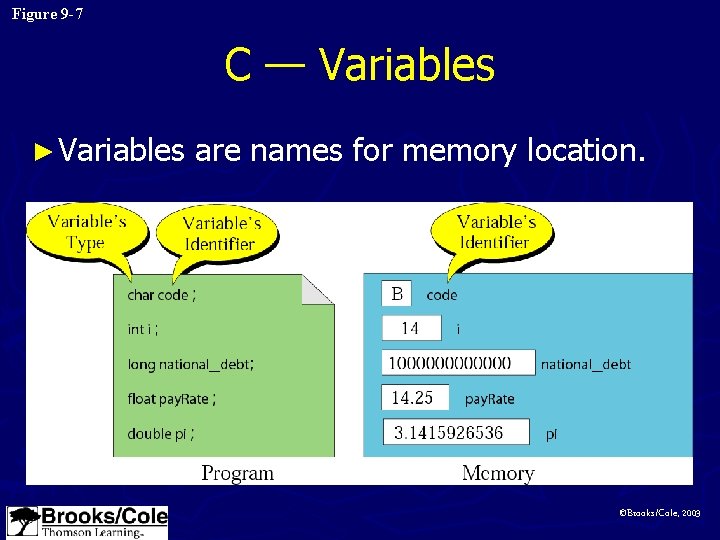
Figure 9 -7 C — Variables ► Variables are names for memory location. ©Brooks/Cole, 2003
Variables ► Declaration (宣告) § A declaration is used to name a variable. ► Definitions § Definitions are used to create the variable and to allocate a memory location for it. § Example: float price; ► Initialization § The initializer establishes the first value that the variable will contain. § Example: float price = 23. 45; ©Brooks/Cole, 2003
C — Constants ► Constants are data values that cannot be changed during the execution of a program. ► Three types: § Literal constant circumference = 2 * length * width ; § Named constant const pi = 3. 14; § Symbolic constant #define tax. Rate 0. 0825 ©Brooks/Cole, 2003
C — Input and output ► Input § Example: scanf (“%d”, &num); ► Output § Example: printf (“The value of the number is: %d” , num); ©Brooks/Cole, 2003
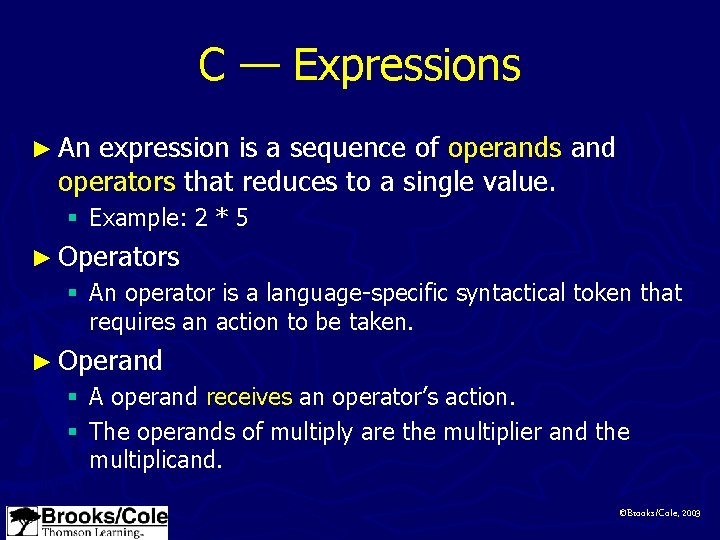
C — Expressions ► An expression is a sequence of operands and operators that reduces to a single value. § Example: 2 * 5 ► Operators § An operator is a language-specific syntactical token that requires an action to be taken. ► Operand § A operand receives an operator’s action. § The operands of multiply are the multiplier and the multiplicand. ©Brooks/Cole, 2003
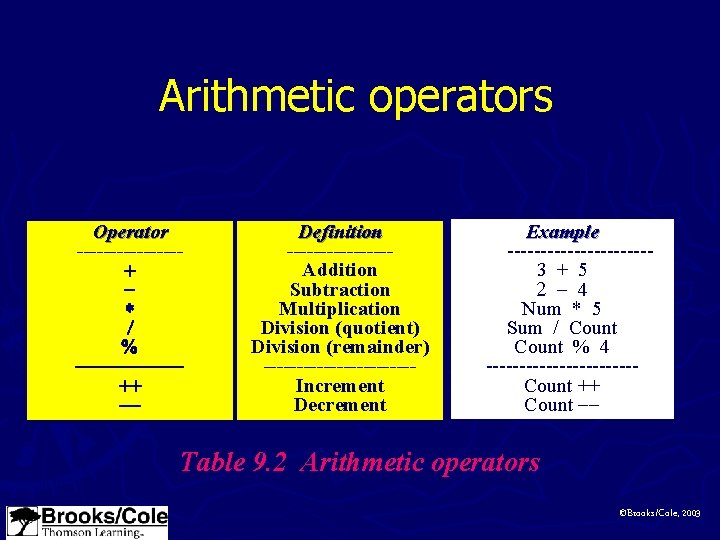
Arithmetic operators Operator --------+ * / % -----++ -- Definition --------Addition Subtraction Multiplication Division (quotient) Division (remainder) -----------Increment Decrement Example -----------3 + 5 2 - 4 Num * 5 Sum / Count % 4 -----------Count ++ Count -- Table 9. 2 Arithmetic operators ©Brooks/Cole, 2003
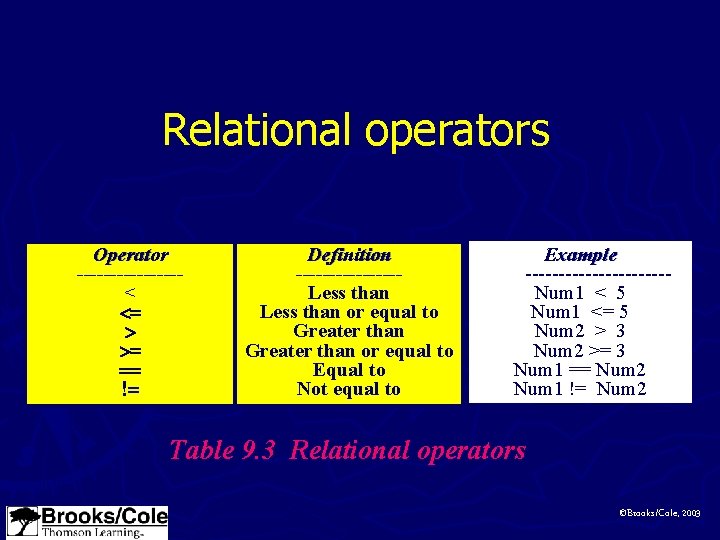
Relational operators Operator --------< <= > >= == != Definition --------Less than or equal to Greater than or equal to Equal to Not equal to Example -----------Num 1 < 5 Num 1 <= 5 Num 2 > 3 Num 2 >= 3 Num 1 == Num 2 Num 1 != Num 2 Table 9. 3 Relational operators ©Brooks/Cole, 2003
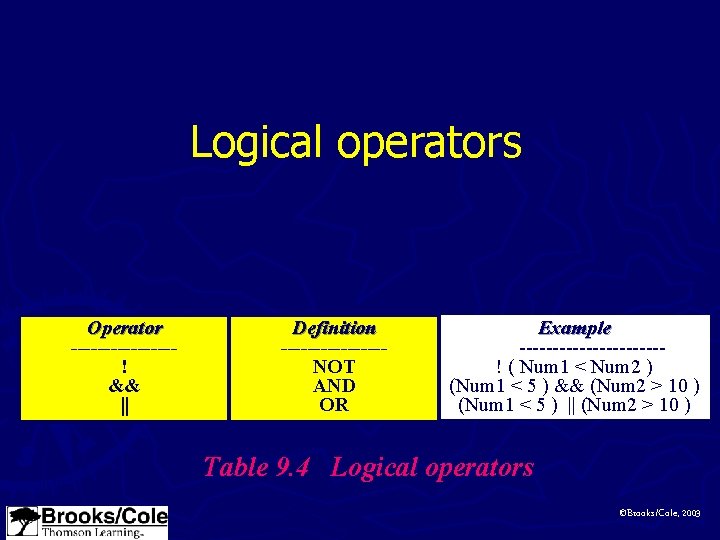
Logical operators Operator --------! && || Definition --------NOT AND OR Example -----------! ( Num 1 < Num 2 ) (Num 1 < 5 ) && (Num 2 > 10 ) (Num 1 < 5 ) || (Num 2 > 10 ) Table 9. 4 Logical operators ©Brooks/Cole, 2003
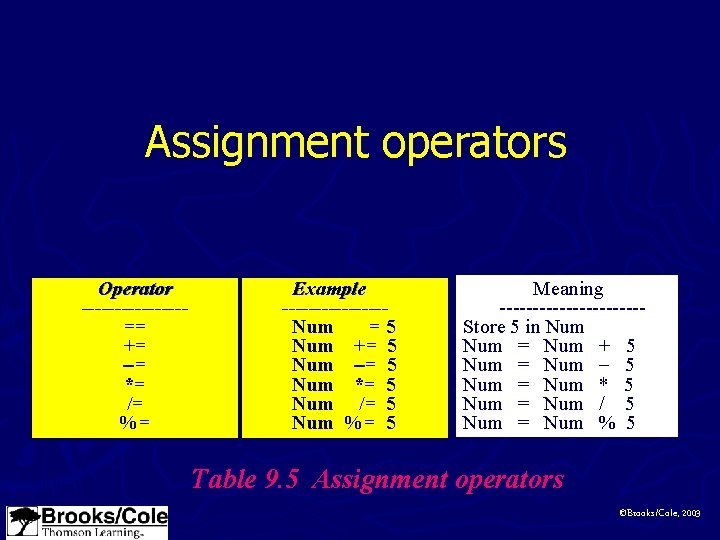
Assignment operators Operator --------== += -= *= /= %= Example --------Num =5 Num += 5 Num -= 5 Num *= 5 Num /= 5 Num %= 5 Meaning -----------Store 5 in Num = Num + 5 Num = Num - 5 Num = Num * 5 Num = Num / 5 Num = Num % 5 Table 9. 5 Assignment operators ©Brooks/Cole, 2003
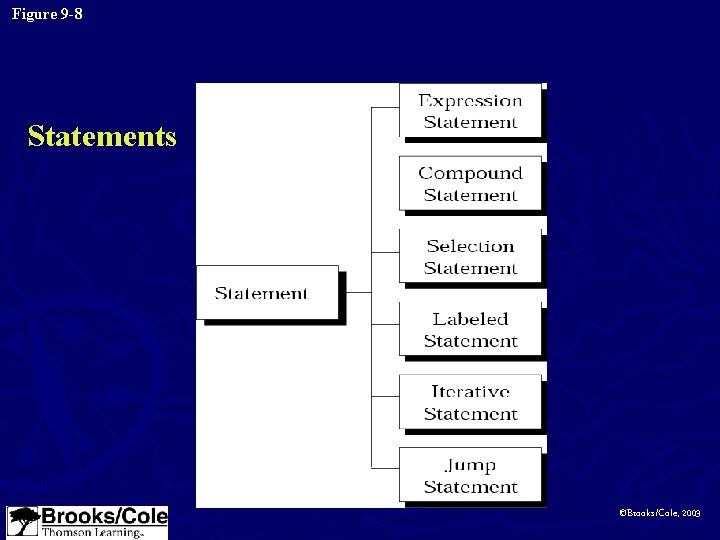
Figure 9 -8 Statements ©Brooks/Cole, 2003
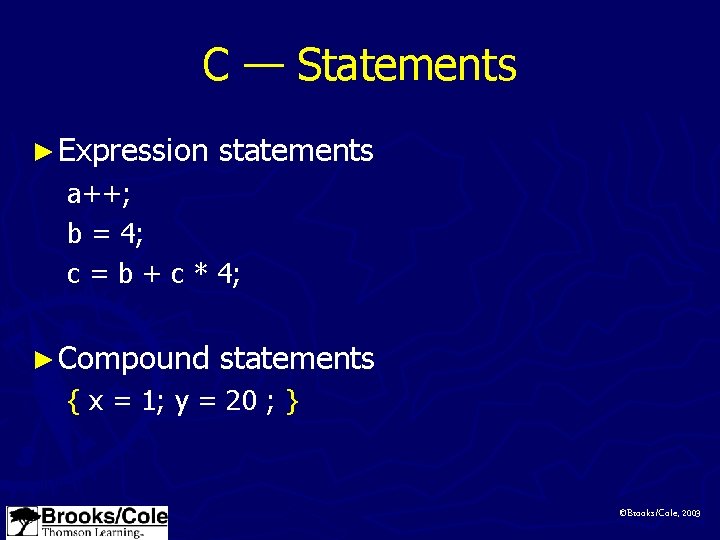
C — Statements ► Expression statements a++; b = 4; c = b + c * 4; ► Compound statements { x = 1; y = 20 ; } ©Brooks/Cole, 2003
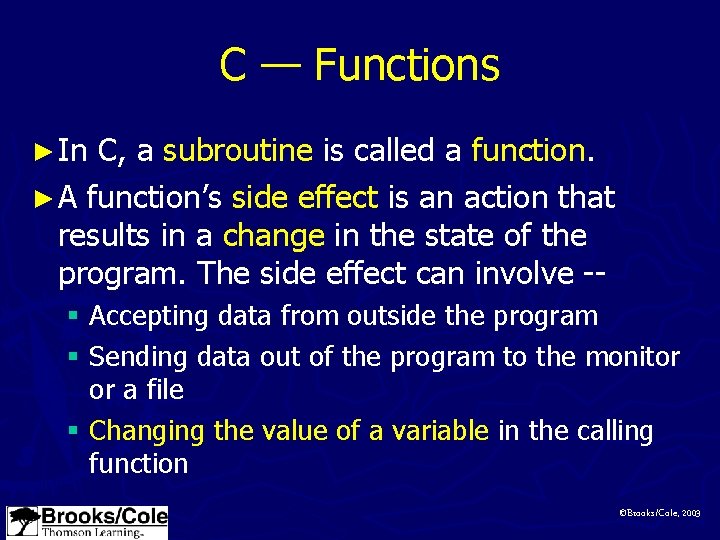
C — Functions ► In C, a subroutine is called a function. ► A function’s side effect is an action that results in a change in the state of the program. The side effect can involve -§ Accepting data from outside the program § Sending data out of the program to the monitor or a file § Changing the value of a variable in the calling function ©Brooks/Cole, 2003
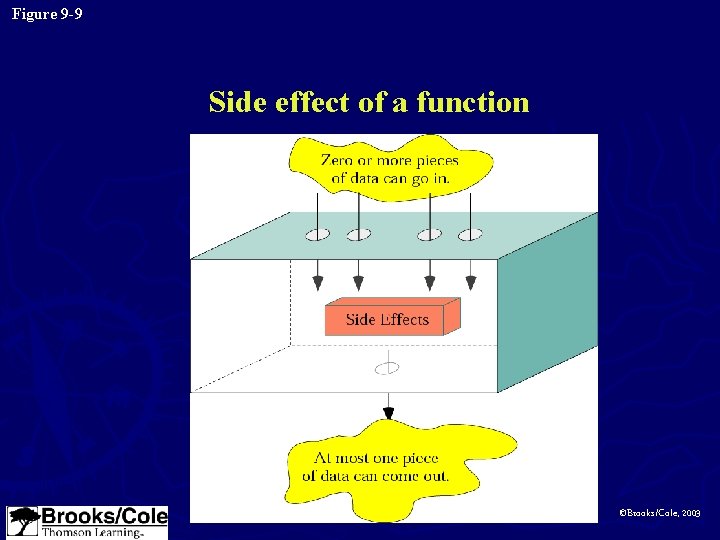
Figure 9 -9 Side effect of a function ©Brooks/Cole, 2003
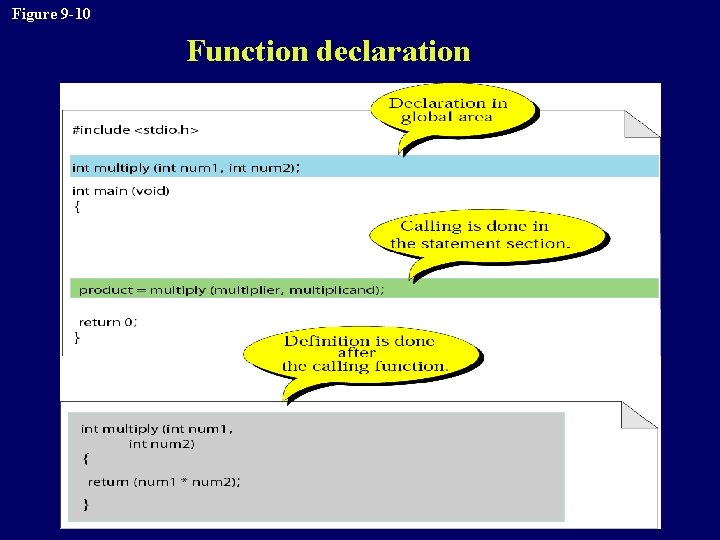
Figure 9 -10 Function declaration
Parameter passing ► Pass by value § When you pass by value, a copy of the data is created and placed in a local variable in the called function. § The original data in the calling function are safe and unchanged. ► Pass by reference § Pass by reference send the address of a variable to the called function. § When you want to change the contents in a variable in the calling function, you must pass by reference.
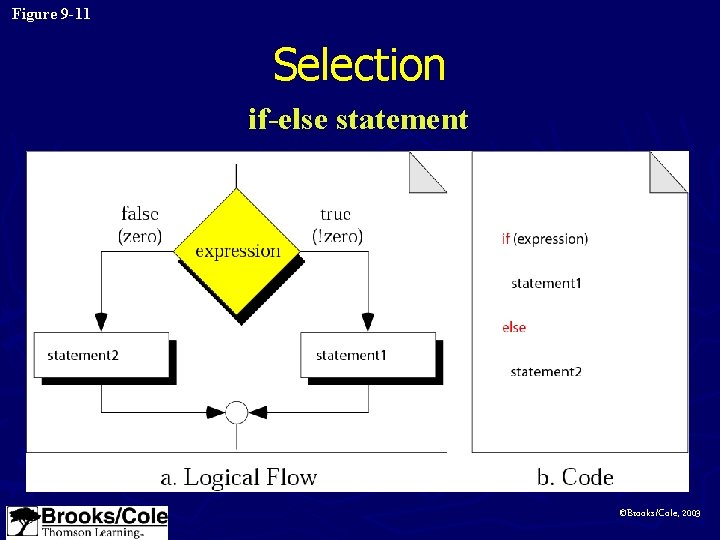
Figure 9 -11 Selection if-else statement ©Brooks/Cole, 2003
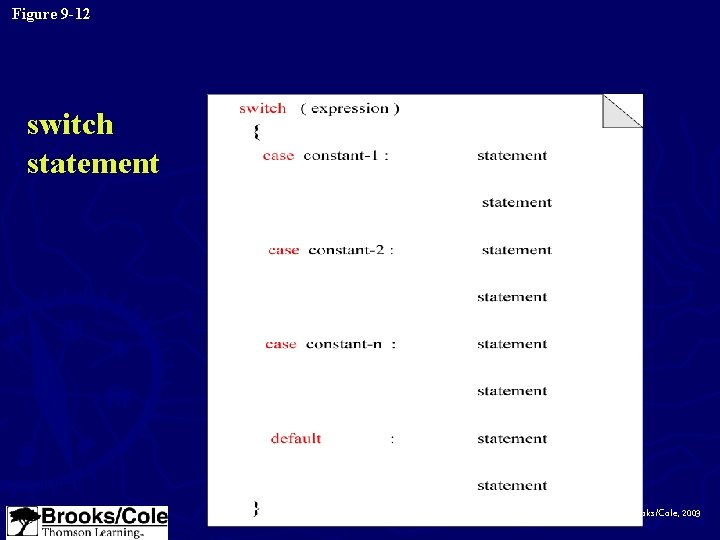
Figure 9 -12 switch statement ©Brooks/Cole, 2003
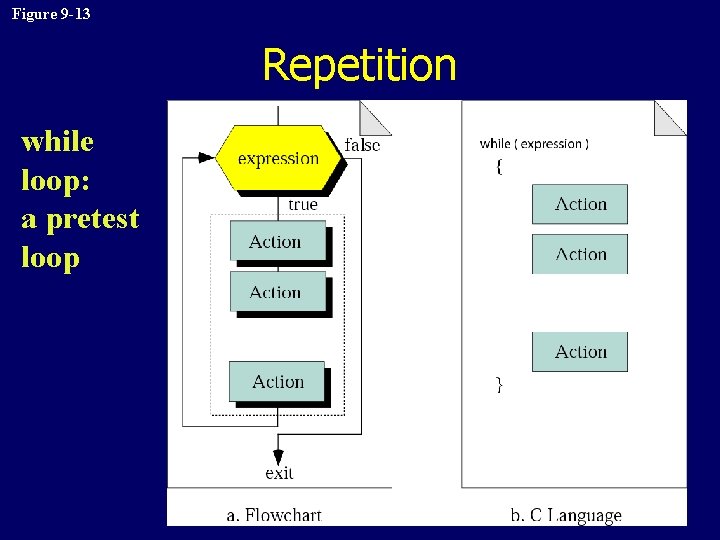
Figure 9 -13 Repetition while loop: a pretest loop
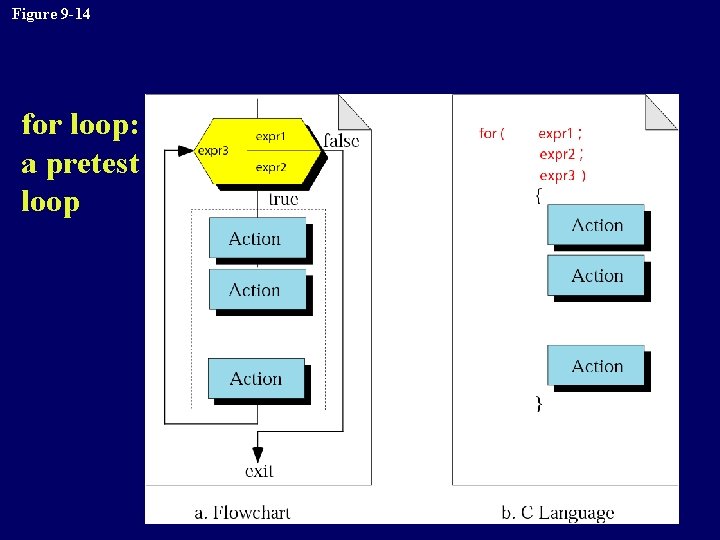
Figure 9 -14 for loop: a pretest loop
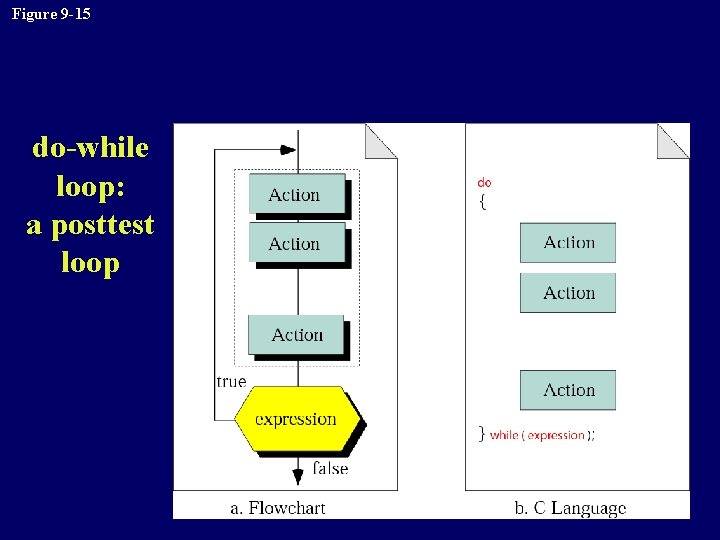
Figure 9 -15 do-while loop: a posttest loop
Key terms ► ► ► ► Ada Arithmetic operator Assembler Assembly language Assignment operator C C++ Class COBOL Compiler Compound statement Computer language Constant ► ► ► ► Data type Declaration Declarative language Definition Derived types Executable file Expression statement FORTAN Functional language High-level language HTML ©Brooks/Cole, 2003
► ► ► ► Identifier Imperative language Inheritance Java Keyword Linker LISP Loader Logical operator Machine language Natural language Object-oriented language Operand Operation Operator Pascal ► ► ► ► Pass by reference Pass by value PERL Processor Procedural language Programming language Prolog Relational operator Reserved word Scheme Side effect Source file SQL Symbolic language Text editor variable ©Brooks/Cole, 2003
- Slides: 60