
Chapter 9 PLANT AND INTANGIBLE ASSETS Non current
Chapter 9 PLANT AND INTANGIBLE ASSETS – Non current assets 1
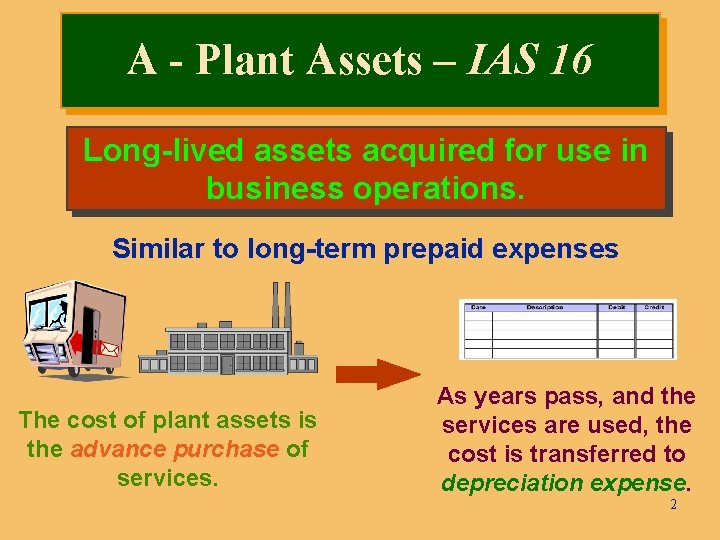
A - Plant Assets – IAS 16 Long-lived assets acquired for use in business operations. Similar to long-term prepaid expenses The cost of plant assets is the advance purchase of services. As years pass, and the services are used, the cost is transferred to depreciation expense. 2
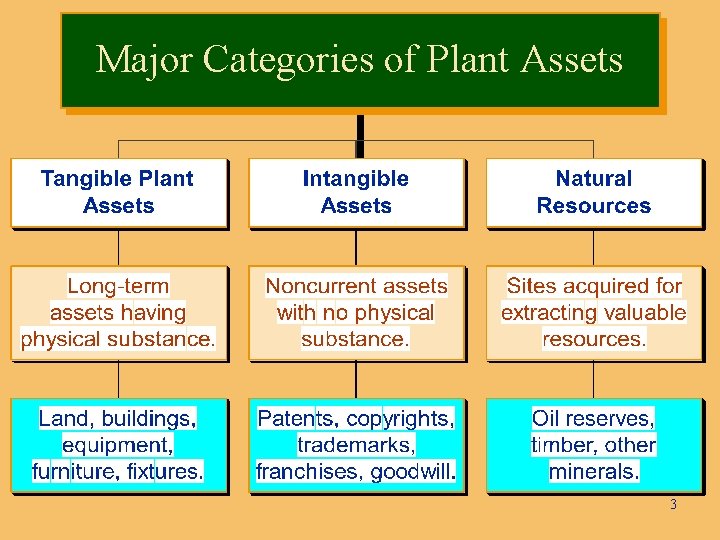
Major Categories of Plant Assets 3
Accountable Events ÊAcquisition. ËAllocation of the acquisition cost to expense over the asset’s useful life (depreciation). ÌSale or disposal. 4
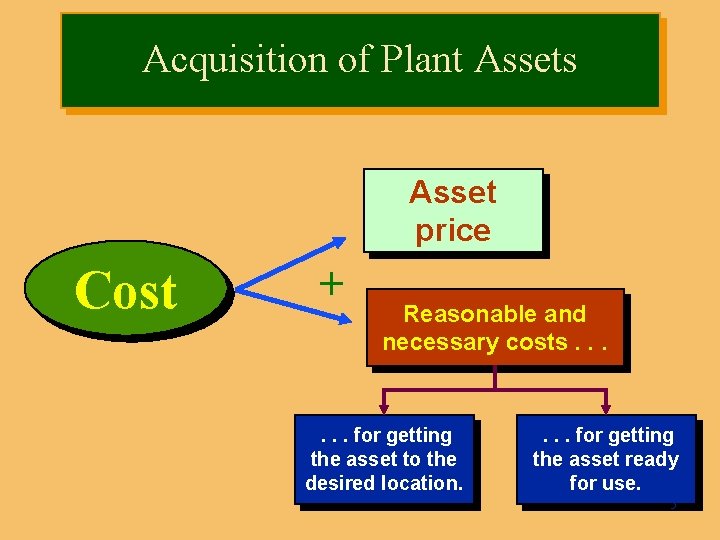
Acquisition of Plant Assets Asset price Cost + Reasonable and necessary costs. . . for getting the asset to the desired location. . for getting the asset ready for use. 5
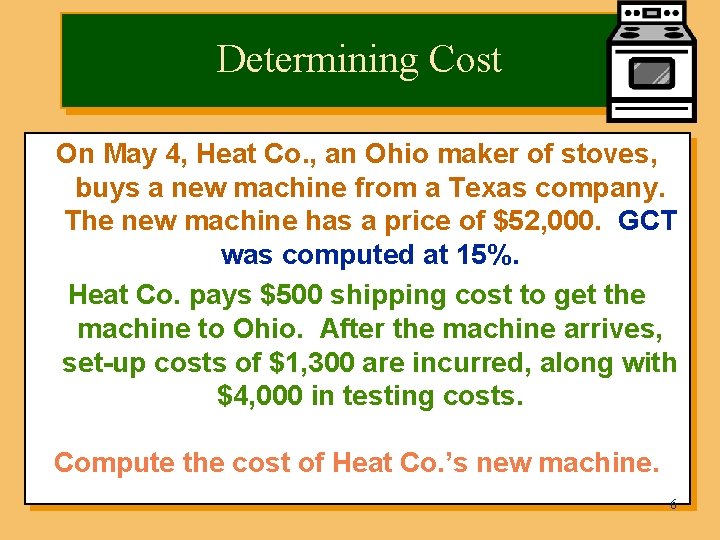
Determining Cost On May 4, Heat Co. , an Ohio maker of stoves, buys a new machine from a Texas company. The new machine has a price of $52, 000. GCT was computed at 15%. Heat Co. pays $500 shipping cost to get the machine to Ohio. After the machine arrives, set-up costs of $1, 300 are incurred, along with $4, 000 in testing costs. Compute the cost of Heat Co. ’s new machine. 6
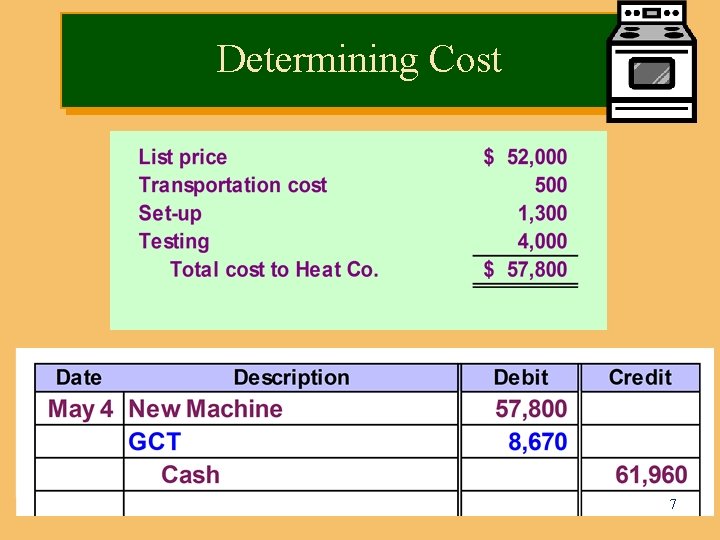
Determining Cost Prepare the journal entry. 7
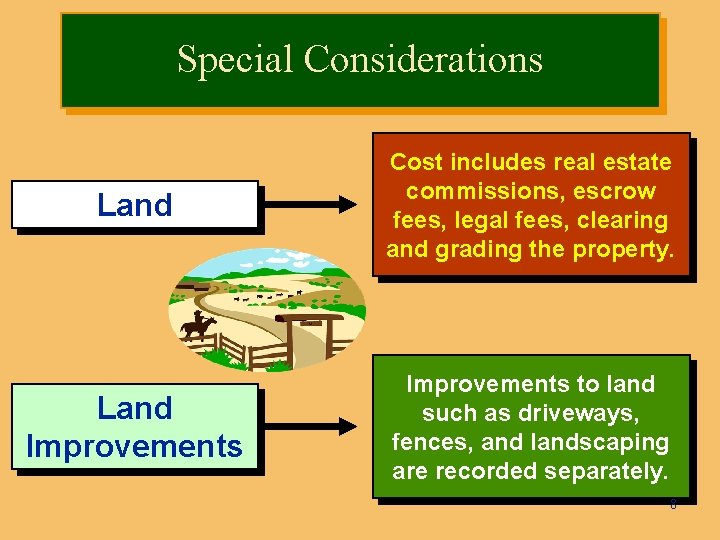
Special Considerations Land Cost includes real estate commissions, escrow fees, legal fees, clearing and grading the property. Land Improvements to land such as driveways, fences, and landscaping are recorded separately. 8
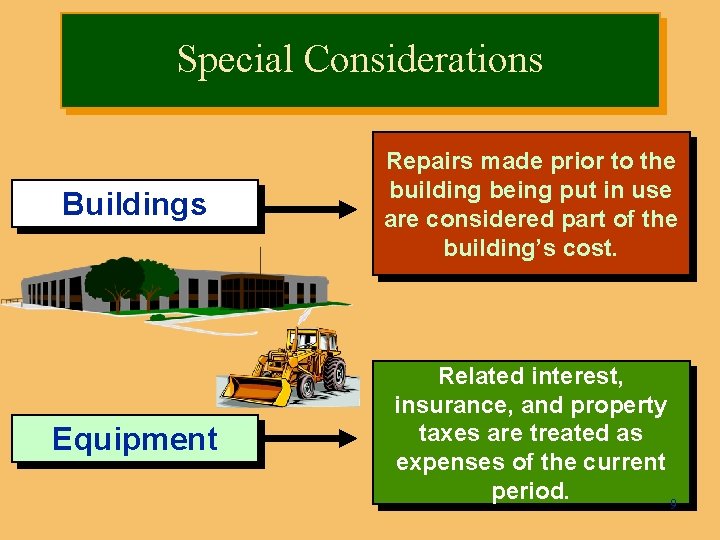
Special Considerations Buildings Repairs made prior to the building being put in use are considered part of the building’s cost. Equipment Related interest, insurance, and property taxes are treated as expenses of the current period. 9
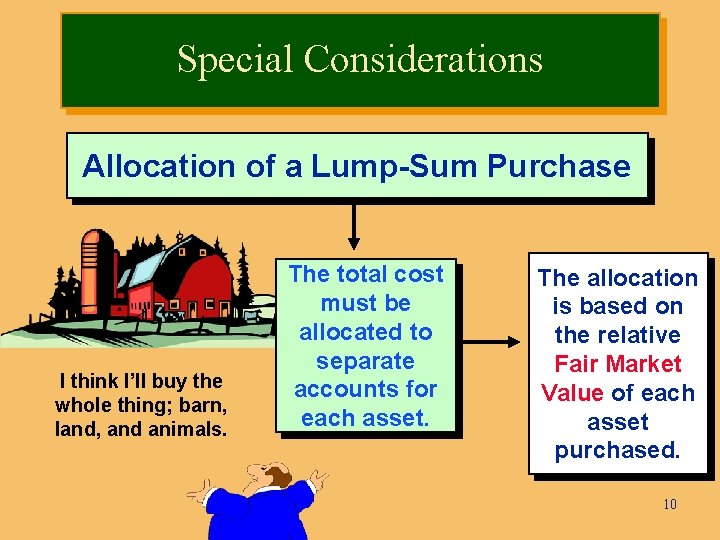
Special Considerations Allocation of a Lump-Sum Purchase I think I’ll buy the whole thing; barn, land, and animals. The total cost must be allocated to separate accounts for each asset. The allocation is based on the relative Fair Market Value of each asset purchased. 10
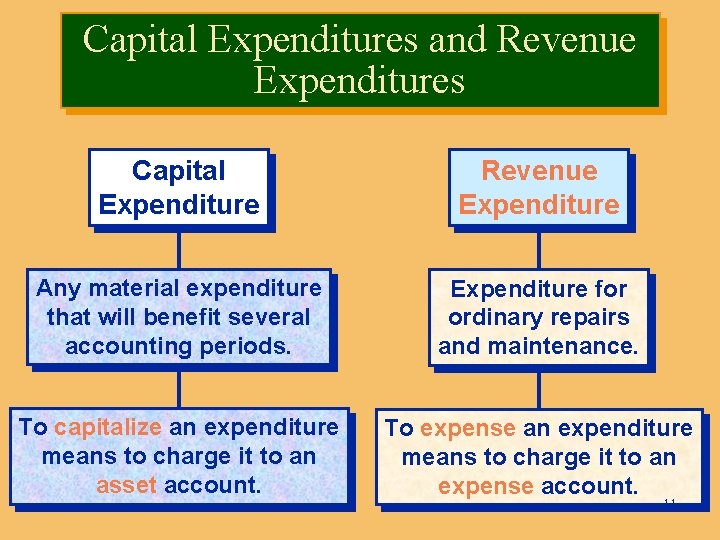
Capital Expenditures and Revenue Expenditures Capital Expenditure Revenue Expenditure Any material expenditure that will benefit several accounting periods. Expenditure for ordinary repairs and maintenance. To capitalize an expenditure means to charge it to an asset account. To expense an expenditure means to charge it to an expense account. 11
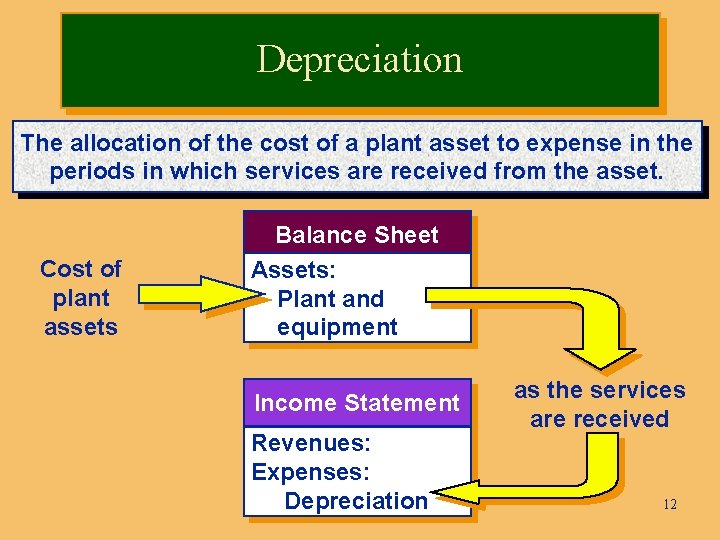
Depreciation The allocation of the cost of a plant asset to expense in the periods in which services are received from the asset. Cost of plant assets Balance Sheet Assets: Plant and equipment Income Statement Revenues: Expenses: Depreciation as the services are received 12
Depreciation Book Value l Cost – Accumulated Depreciation l l Contra-asset Represents the portion of an asset’s cost that has already been allocated to expense. Causes of Depreciation l l Physical deterioration Obsolescence 13
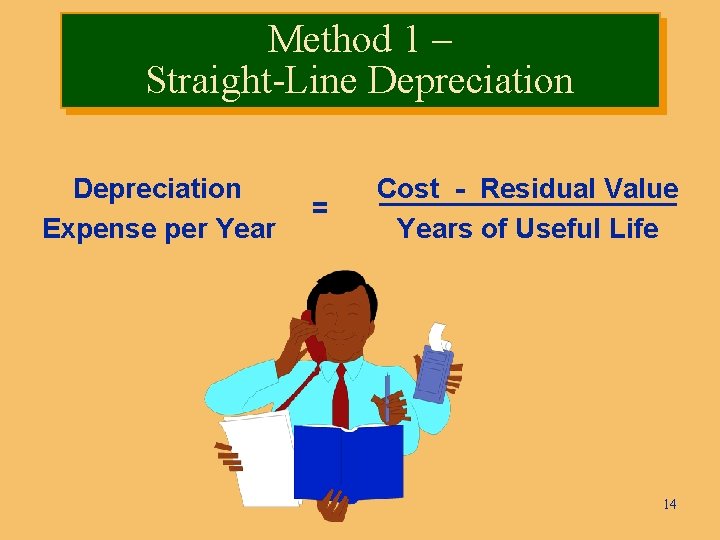
Method 1 – Straight-Line Depreciation Expense per Year = Cost - Residual Value Years of Useful Life 14
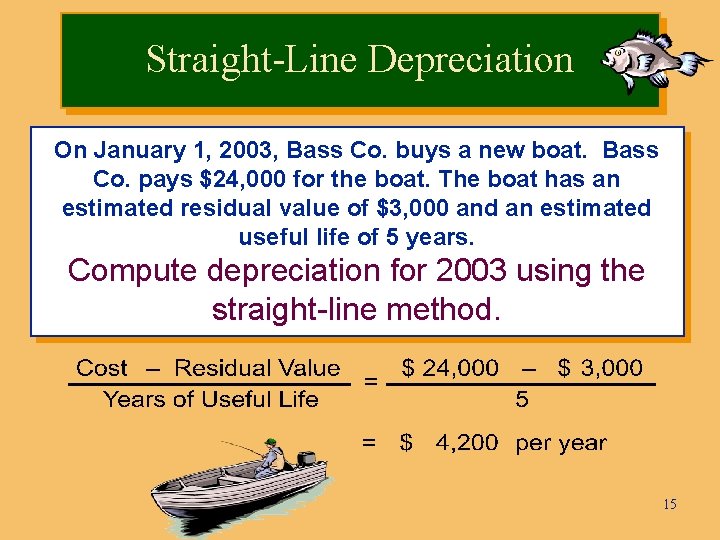
Straight-Line Depreciation On January 1, 2003, Bass Co. buys a new boat. Bass Co. pays $24, 000 for the boat. The boat has an estimated residual value of $3, 000 and an estimated useful life of 5 years. Compute depreciation for 2003 using the straight-line method. 15
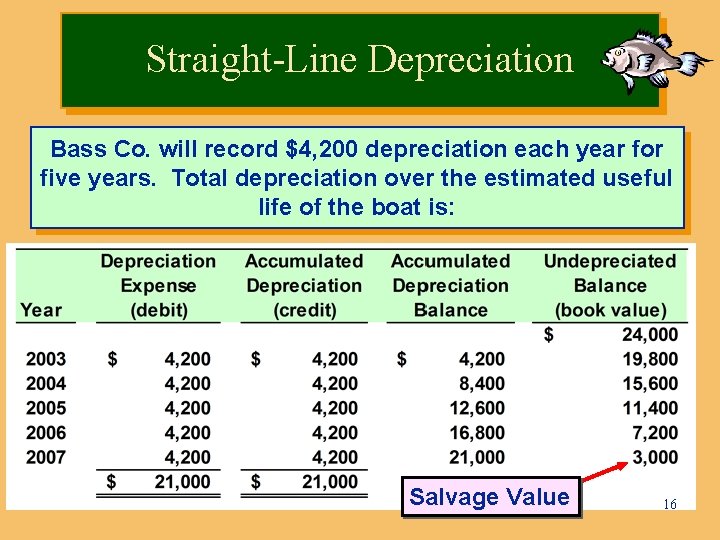
Straight-Line Depreciation Bass Co. will record $4, 200 depreciation each year for five years. Total depreciation over the estimated useful life of the boat is: Salvage Value 16
Depreciation for Assets bought during the year Depends on the Company’s policy: • Some charge a full year • While some prorate it 17
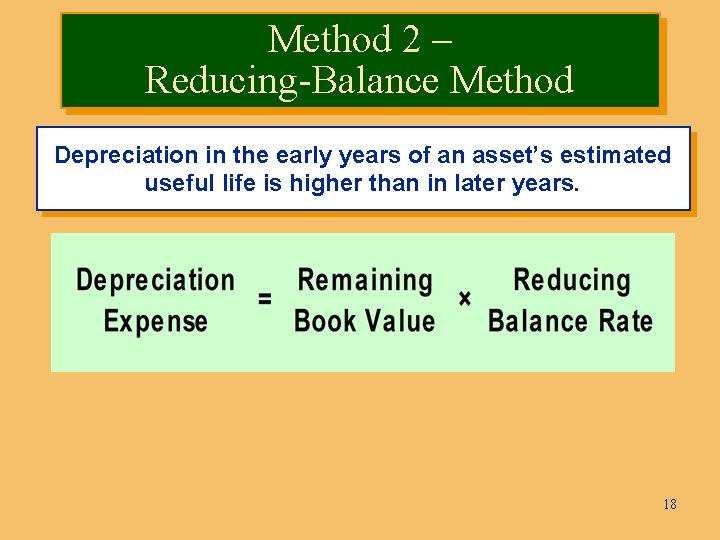
Method 2 – Reducing-Balance Method Depreciation in the early years of an asset’s estimated useful life is higher than in later years. 18
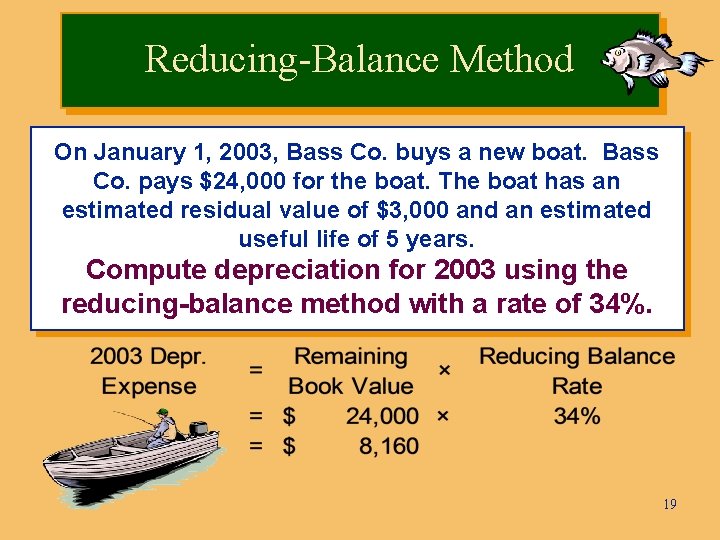
Reducing-Balance Method On January 1, 2003, Bass Co. buys a new boat. Bass Co. pays $24, 000 for the boat. The boat has an estimated residual value of $3, 000 and an estimated useful life of 5 years. Compute depreciation for 2003 using the reducing-balance method with a rate of 34%. 19
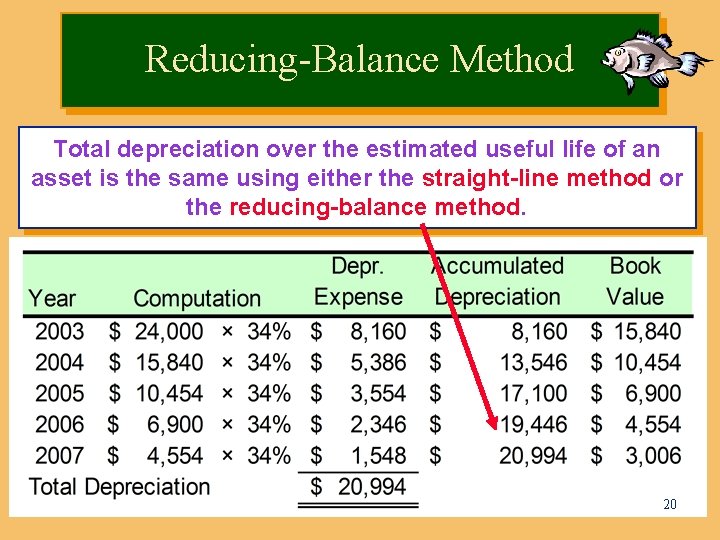
Reducing-Balance Method Total depreciation over the estimated an Compute depreciation for theuseful restlife ofofthe asset is the same using either the straight-line method or boat’s estimated useful life. the reducing-balance method. 20
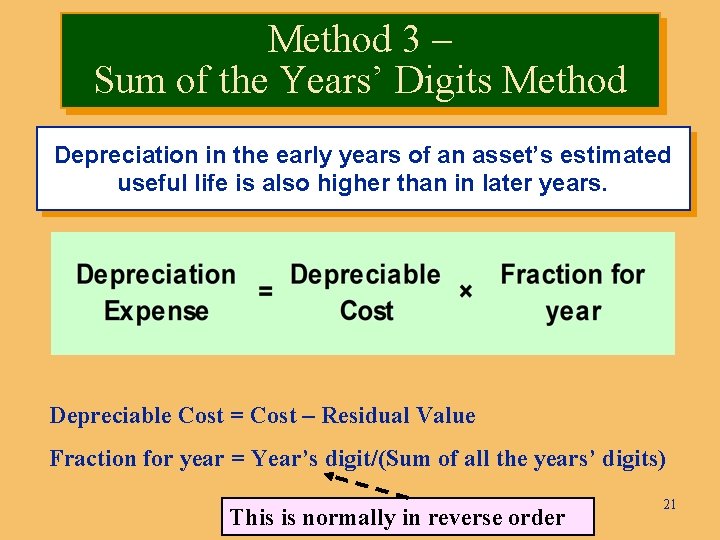
Method 3 – Sum of the Years’ Digits Method Depreciation in the early years of an asset’s estimated useful life is also higher than in later years. Depreciable Cost = Cost – Residual Value Fraction for year = Year’s digit/(Sum of all the years’ digits) This is normally in reverse order 21
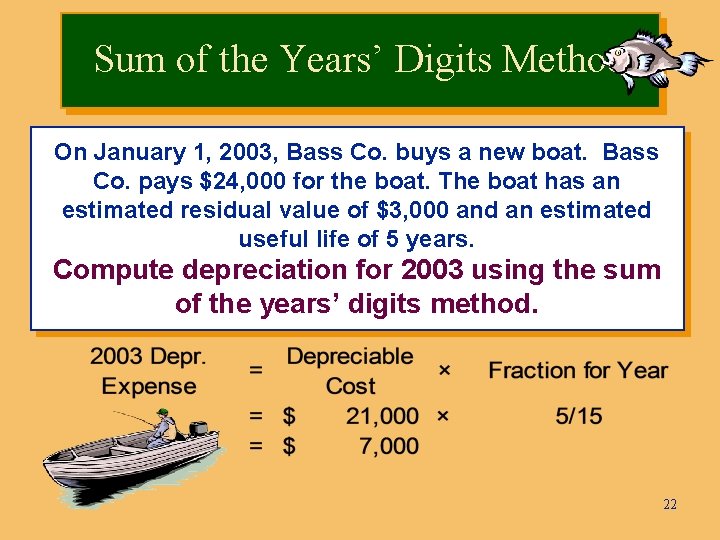
Sum of the Years’ Digits Method On January 1, 2003, Bass Co. buys a new boat. Bass Co. pays $24, 000 for the boat. The boat has an estimated residual value of $3, 000 and an estimated useful life of 5 years. Compute depreciation for 2003 using the sum of the years’ digits method. 22
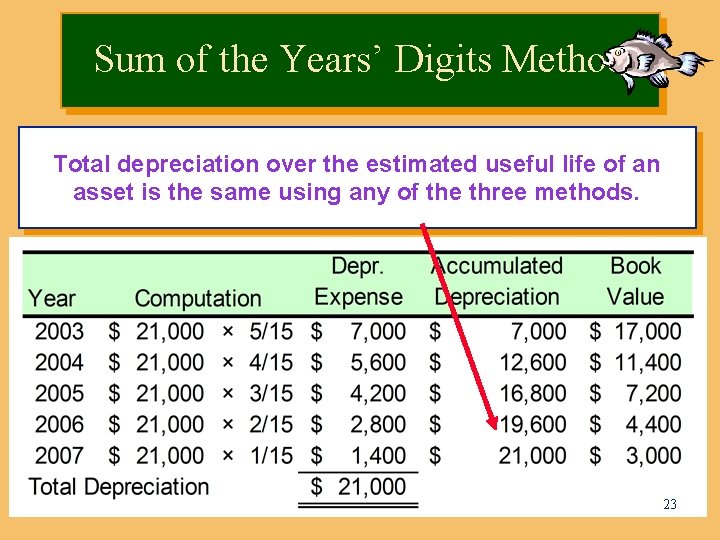
Sum of the Years’ Digits Method Compute depreciation for theuseful restlife ofofthe Total depreciation over the estimated an asset is the same using any ofuseful the three methods. boat’s estimated life. 23
Financial Statement Disclosures ØEstimates of Useful Life and Residual Value l l May differ from company to company. The reasonableness of management’s estimates is evaluated by external auditors. ØPrinciple of Consistency l Companies should avoid switching depreciation methods from period to period. 24
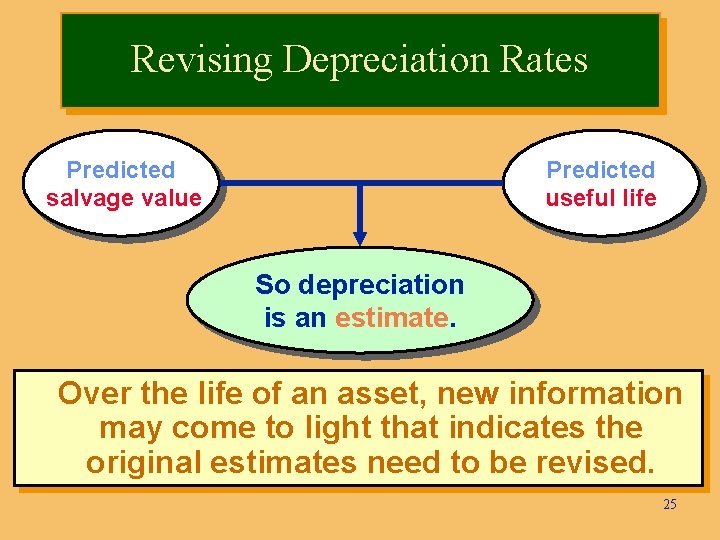
Revising Depreciation Rates Predicted salvage value Predicted useful life So depreciation is an estimate. Over the life of an asset, new information may come to light that indicates the original estimates need to be revised. 25
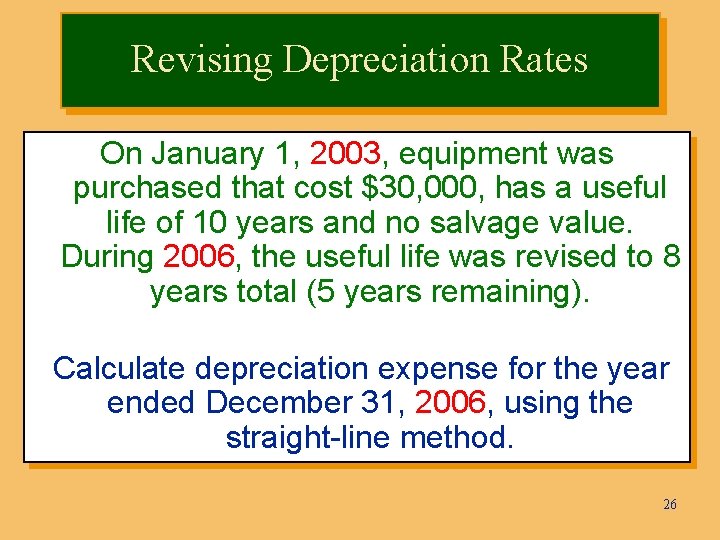
Revising Depreciation Rates On January 1, 2003, equipment was purchased that cost $30, 000, has a useful life of 10 years and no salvage value. During 2006, the useful life was revised to 8 years total (5 years remaining). Calculate depreciation expense for the year ended December 31, 2006, using the straight-line method. 26
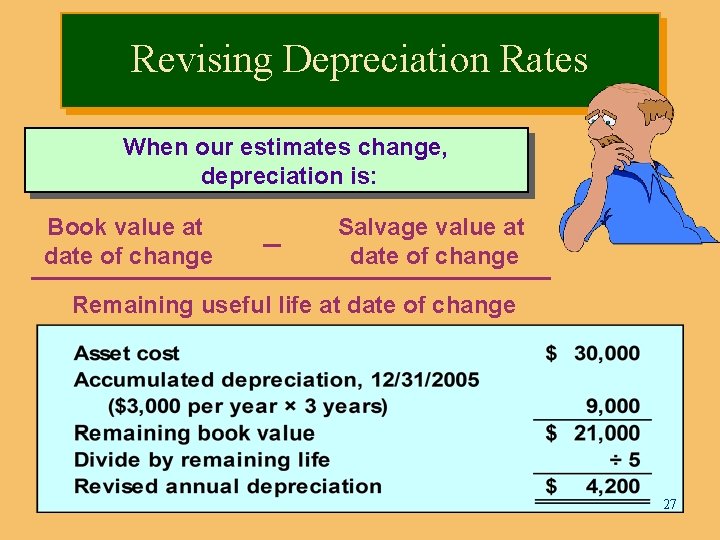
Revising Depreciation Rates When our estimates change, depreciation is: Book value at date of change – Salvage value at date of change Remaining useful life at date of change 27
Impairment of Assets – IAS 36 If the cost of an asset cannot be recovered through future use or sale, the asset should be written down to its net realizable value. 28
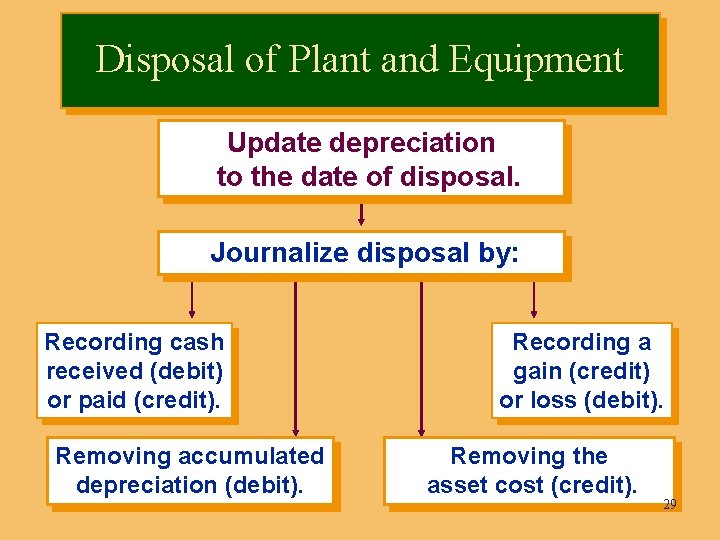
Disposal of Plant and Equipment Update depreciation to the date of disposal. Journalize disposal by: Recording cash received (debit) or paid (credit). Removing accumulated depreciation (debit). Recording a gain (credit) or loss (debit). Removing the asset cost (credit). 29
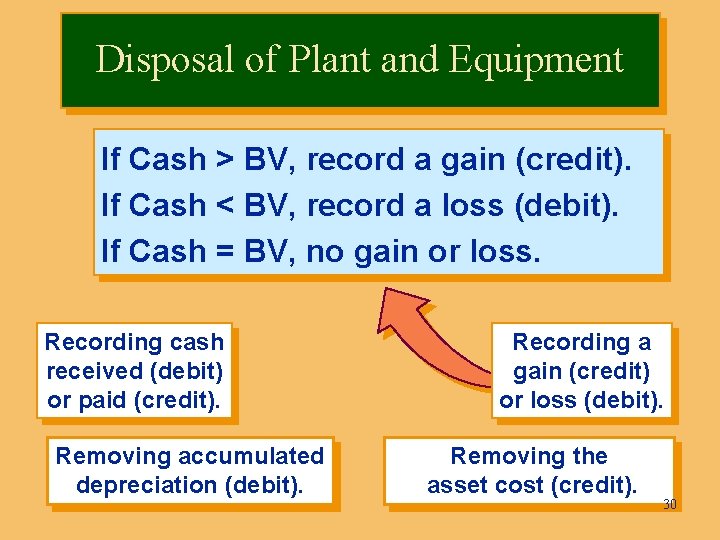
Disposal of Plant and Equipment If Cash > BV, record a gain (credit). If Cash < BV, record a loss (debit). If Cash = BV, no gain or loss. Recording cash received (debit) or paid (credit). Removing accumulated depreciation (debit). Recording a gain (credit) or loss (debit). Removing the asset cost (credit). 30
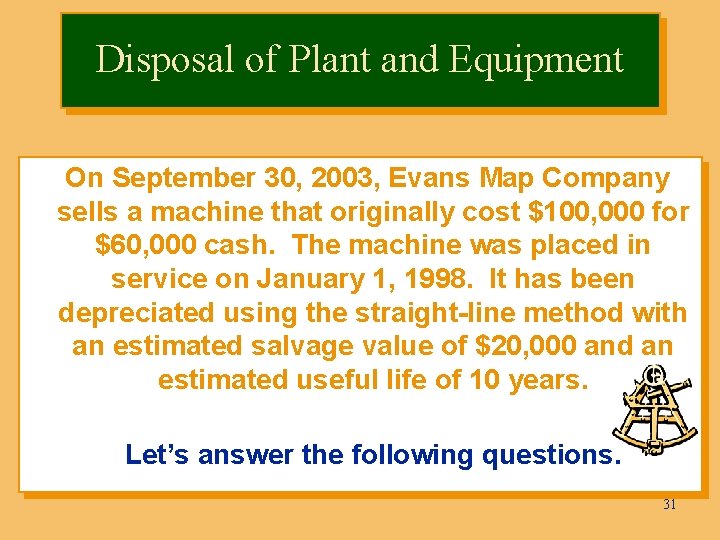
Disposal of Plant and Equipment On September 30, 2003, Evans Map Company sells a machine that originally cost $100, 000 for $60, 000 cash. The machine was placed in service on January 1, 1998. It has been depreciated using the straight-line method with an estimated salvage value of $20, 000 and an estimated useful life of 10 years. Let’s answer the following questions. 31
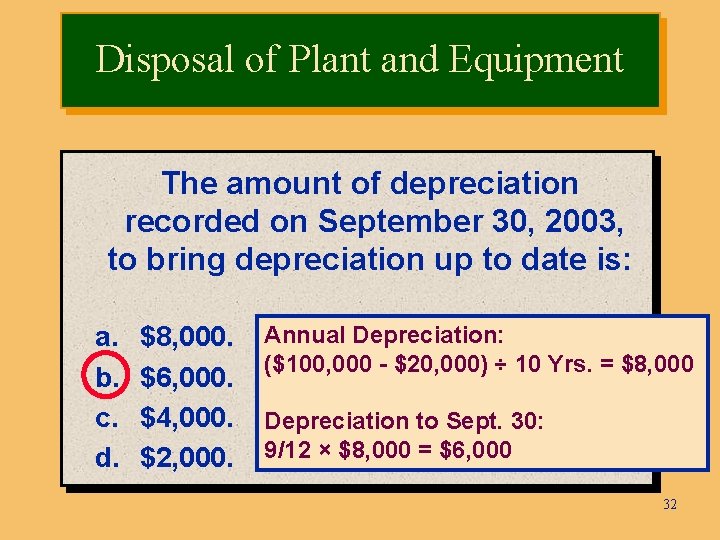
Disposal of Plant and Equipment The amount of depreciation recorded on September 30, 2003, to bring depreciation up to date is: a. b. c. d. $8, 000. $6, 000. $4, 000. $2, 000. Annual Depreciation: ($100, 000 - $20, 000) ÷ 10 Yrs. = $8, 000 Depreciation to Sept. 30: 9/12 × $8, 000 = $6, 000 32
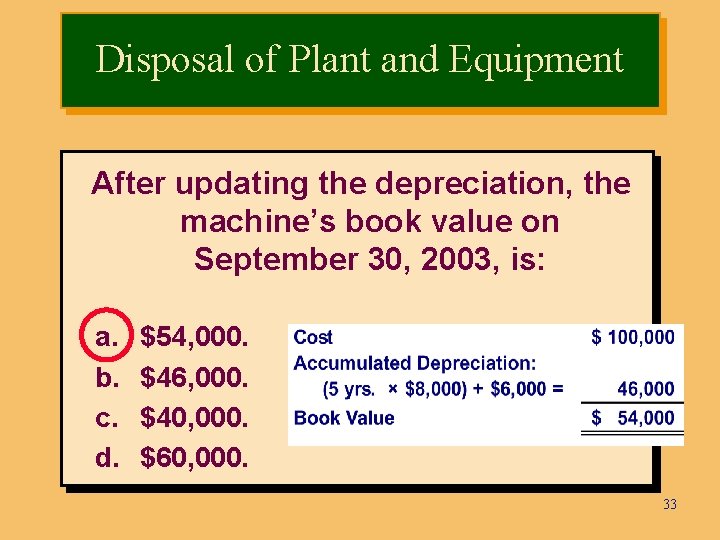
Disposal of Plant and Equipment After updating the depreciation, the machine’s book value on September 30, 2003, is: a. b. c. d. $54, 000. $46, 000. $40, 000. $60, 000. 33
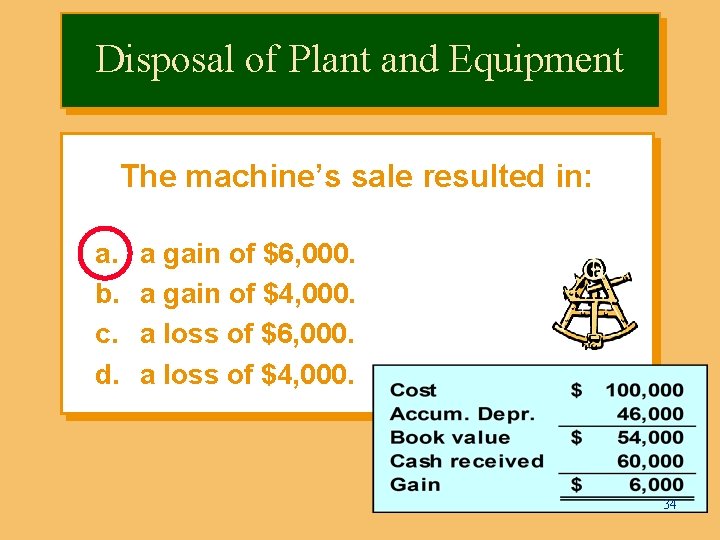
Disposal of Plant and Equipment The machine’s sale resulted in: a. b. c. d. a gain of $6, 000. a gain of $4, 000. a loss of $6, 000. a loss of $4, 000. 34
Trading in Used Assets for New Ones On May 30, 2003, Essex Company exchanged a used airplane and $35, 000 cash for a new airplane. The old airplane originally cost $40, 000, had up-to-date accumulated depreciation of $30, 000, and a fair value of $4, 000. 35
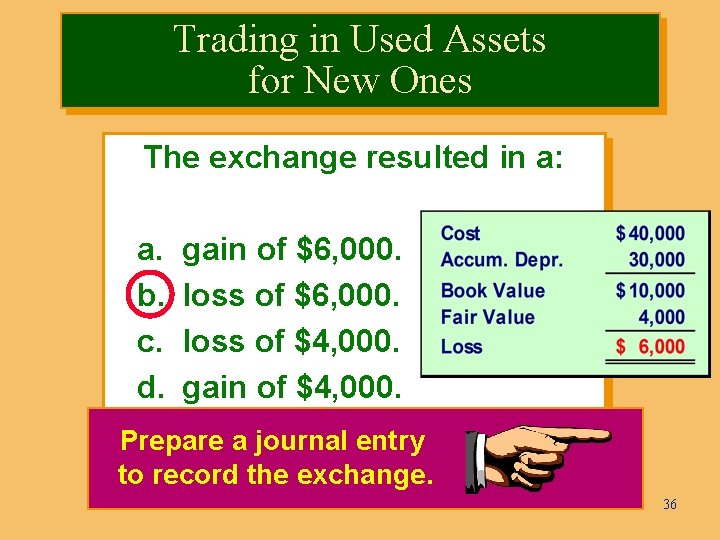
Trading in Used Assets for New Ones The exchange resulted in a: a. b. c. d. gain of $6, 000. loss of $4, 000. gain of $4, 000. Prepare a journal entry to record the exchange. 36
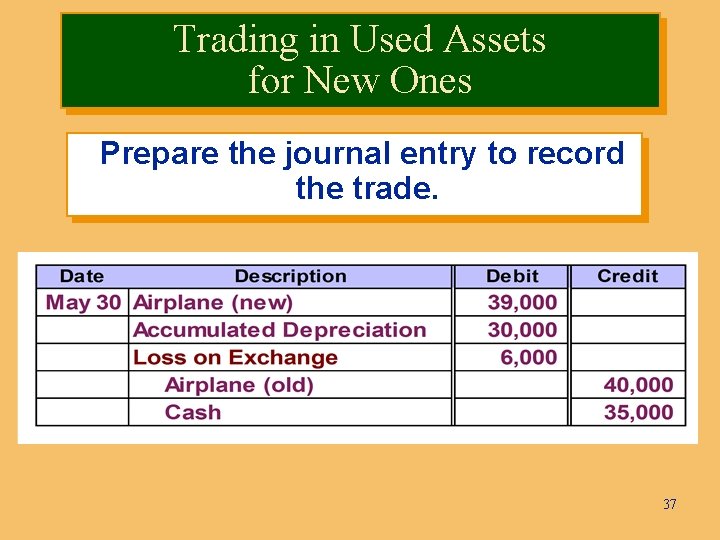
Trading in Used Assets for New Ones Prepare the journal entry to record the trade. 37
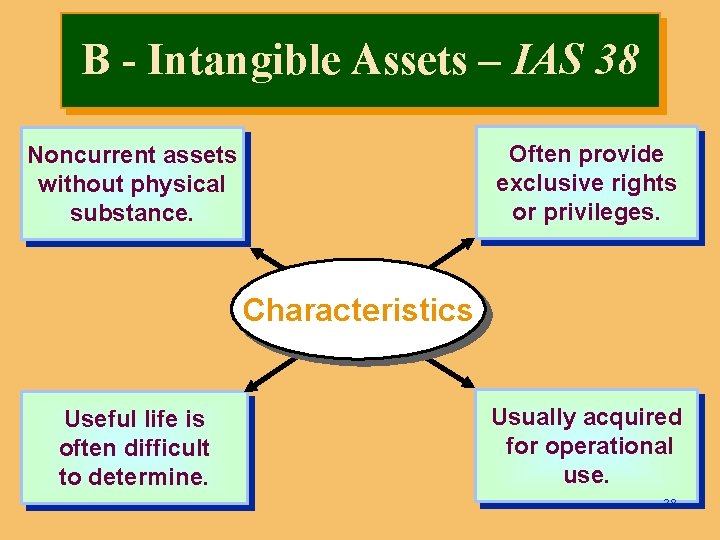
B - Intangible Assets – IAS 38 Often provide exclusive rights or privileges. Noncurrent assets without physical substance. Characteristics Useful life is often difficult to determine. Usually acquired for operational use. 38
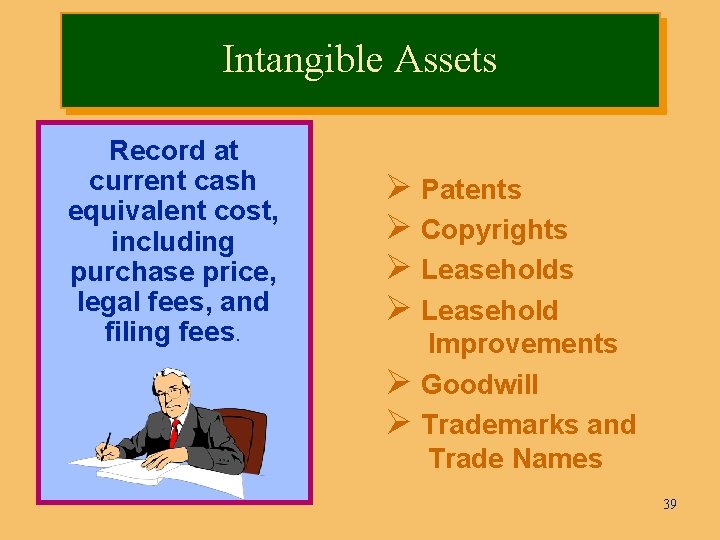
Intangible Assets Record at current cash equivalent cost, including purchase price, legal fees, and filing fees. Ø Patents Ø Copyrights Ø Leasehold Improvements Ø Goodwill Ø Trademarks and Trade Names 39

Intangible Assets ØFor those with finite lives, amortize according to pattern of use. ØIf pattern of use is unclear, use straight -line method. ØResearch development costs are normally expensed as incurred. ØOnly under strict conditions can development costs be capitalized 40
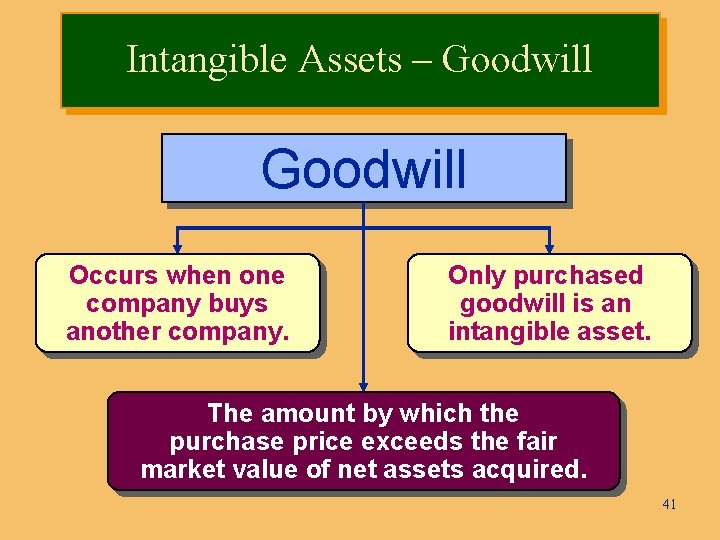
Intangible Assets – Goodwill Occurs when one company buys another company. Only purchased goodwill is an intangible asset. The amount by which the purchase price exceeds the fair market value of net assets acquired. 41
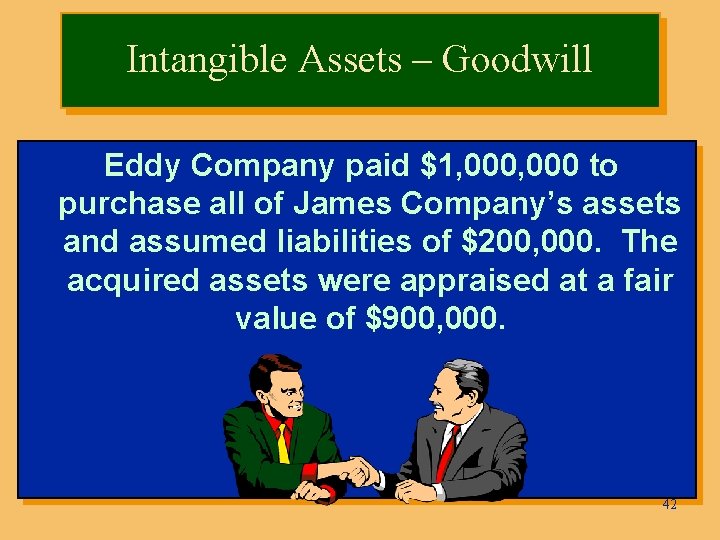
Intangible Assets – Goodwill Eddy Company paid $1, 000 to purchase all of James Company’s assets and assumed liabilities of $200, 000. The acquired assets were appraised at a fair value of $900, 000. 42
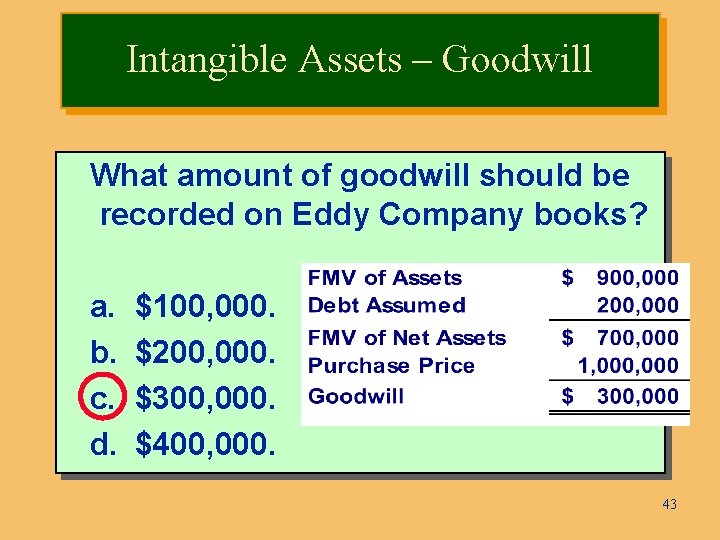
Intangible Assets –– Goodwill What amount of goodwill should be recorded on Eddy Company books? a. b. c. d. $100, 000. $200, 000. $300, 000. $400, 000. 43
Intangible Assets – Patents Exclusive right granted by federal government to sell or manufacture an invention. Cost is purchase price plus legal cost to defend. 44
Intangible Assets – Trademarks and Trade Names A symbol, design, or logo associated with a business. Internally developed trademarks have no recorded asset cost. Purchased trademarks are recorded at cost. 45
Intangible Assets – Franchises Legally protected right to sell products or provide services purchased by franchisee from franchisor. 46
Intangible Assets – Copyrights Exclusive right granted by the federal government to protect artistic or intellectual properties. 47
Natural Resources Total cost, including exploration and development, is charged to depletion expense over periods benefited. Extracted from the natural environment and reported at cost less accumulated depletion. Examples: oil, coal, gold 48

Depletion of Natural Resources Depletion is calculated using the units-of-production method. Unit depletion rate is calculated as follows: Cost – Salvage Value Total Units of Capacity 49

Depletion of Natural Resources Total depletion cost for a period is: Unit Depletion Rate × Number of Units Extracted in Period 50
Depletion of Natural Resources Specialized plant assets may be required to extract the natural resource. These assets are recorded in a separate account and depreciated. 51
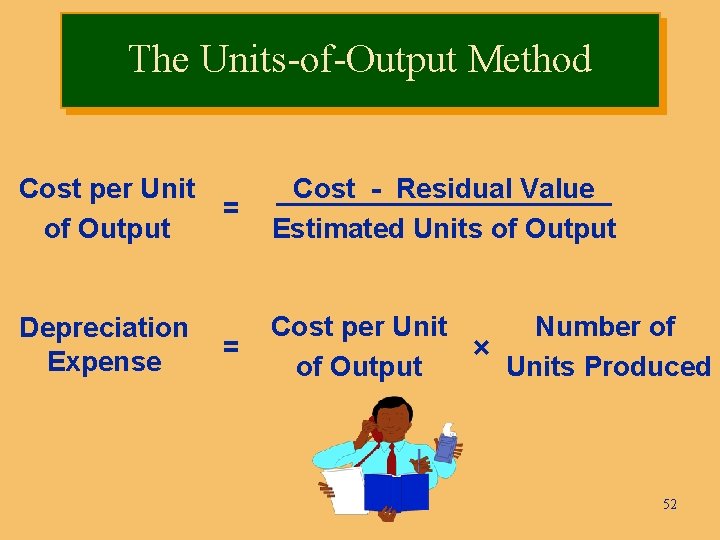
The Units-of-Output Method Cost per Unit of Output Depreciation Expense = Cost - Residual Value Estimated Units of Output = Cost per Unit Number of × of Output Units Produced 52
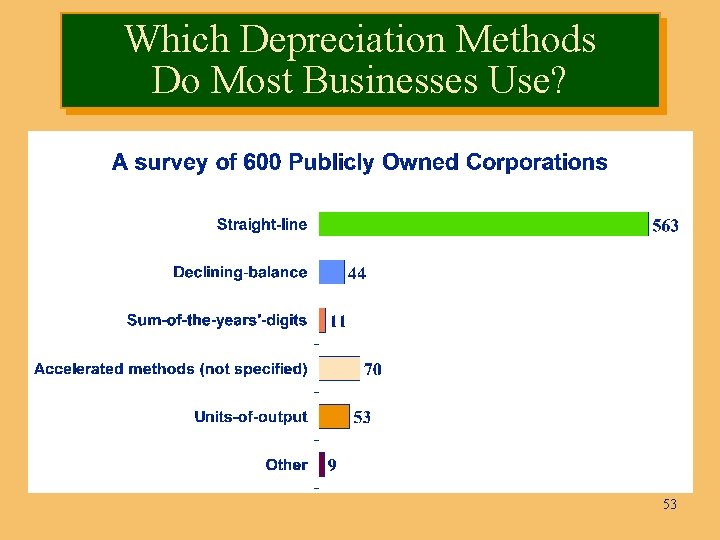
Which Depreciation Methods Do Most Businesses Use? 53
End of Chapter 9 54
- Slides: 54