
Chapter 9 Physical and Chemical Agents for Microbial
Chapter 9 Physical and Chemical Agents for Microbial Control © 2014 Pearson Education, Inc.
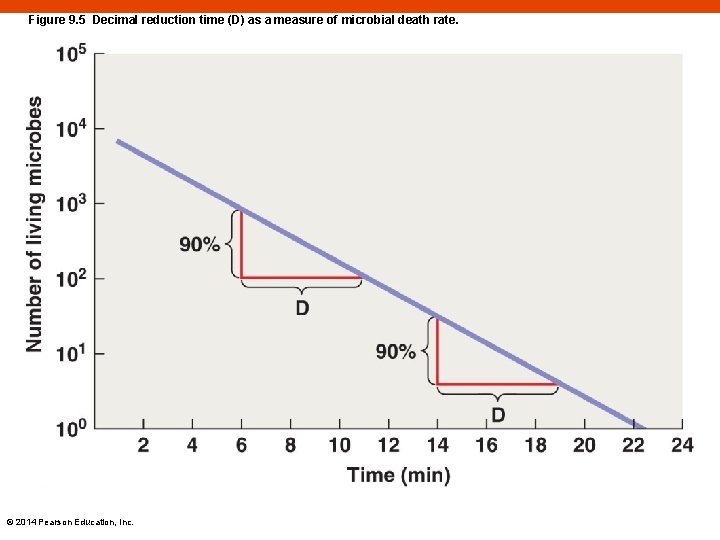
Figure 9. 5 Decimal reduction time (D) as a measure of microbial death rate. © 2014 Pearson Education, Inc.
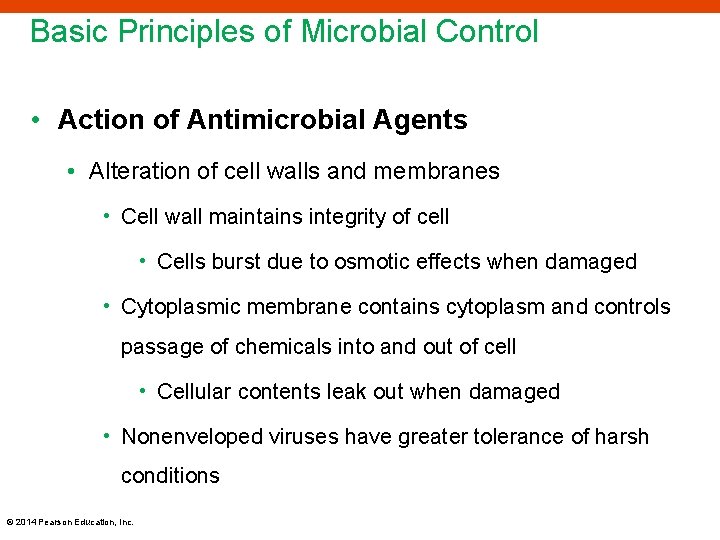
Basic Principles of Microbial Control • Action of Antimicrobial Agents • Alteration of cell walls and membranes • Cell wall maintains integrity of cell • Cells burst due to osmotic effects when damaged • Cytoplasmic membrane contains cytoplasm and controls passage of chemicals into and out of cell • Cellular contents leak out when damaged • Nonenveloped viruses have greater tolerance of harsh conditions © 2014 Pearson Education, Inc.
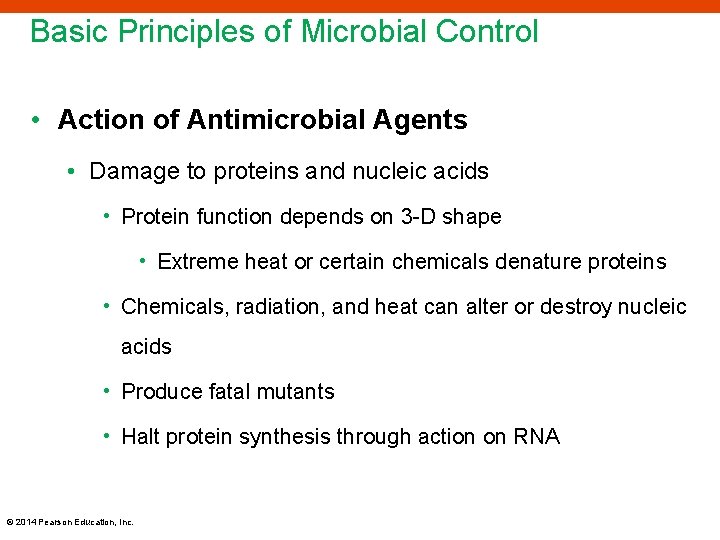
Basic Principles of Microbial Control • Action of Antimicrobial Agents • Damage to proteins and nucleic acids • Protein function depends on 3 -D shape • Extreme heat or certain chemicals denature proteins • Chemicals, radiation, and heat can alter or destroy nucleic acids • Produce fatal mutants • Halt protein synthesis through action on RNA © 2014 Pearson Education, Inc.
The Selection of Microbial Control Methods • Factors Affecting the Efficacy of Antimicrobial Methods • Site to be treated • Harsh chemicals and extreme heat cannot be used on humans, animals, and fragile objects • Method of microbial control based on site of medical procedure © 2014 Pearson Education, Inc.
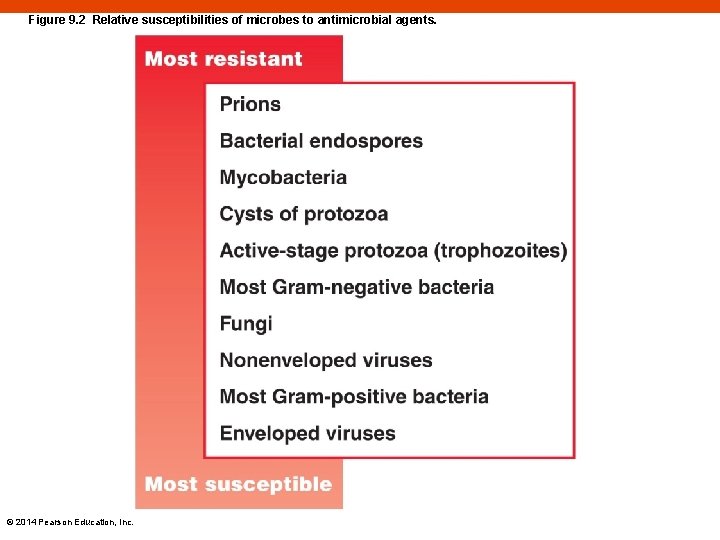
Figure 9. 2 Relative susceptibilities of microbes to antimicrobial agents. © 2014 Pearson Education, Inc.
The Selection of Microbial Control Methods • Factors Affecting the Efficacy of Antimicrobial Methods • Relative susceptibility of microorganisms • Germicide classification • High-level germicides • Kill all pathogens, including endospores • Intermediate-level germicides • Kill fungal spores, protozoan cysts, viruses, and pathogenic bacteria • Low-level germicides • Kill vegetative bacteria, fungi, protozoa, and some viruses © 2014 Pearson Education, Inc.
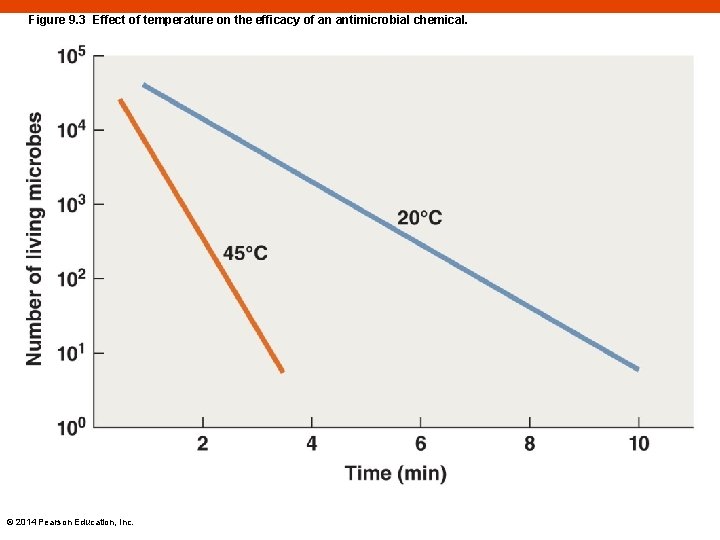
Figure 9. 3 Effect of temperature on the efficacy of an antimicrobial chemical. © 2014 Pearson Education, Inc.
The Selection of Microbial Control Methods • Biosafety Levels • Four levels of safety in labs dealing with pathogens • Biosafety Level 1 (BSL-1) • Handling pathogens that do not cause disease in healthy humans • Biosafety Level 2 (BSL-2) • Handling moderately hazardous agents • Biosafety Level 3 (BSL-3) • Handling microbes in safety cabinets • Biosafety Level 4 (BSL-4) • Handling microbes that cause severe or fatal disease © 2014 Pearson Education, Inc.
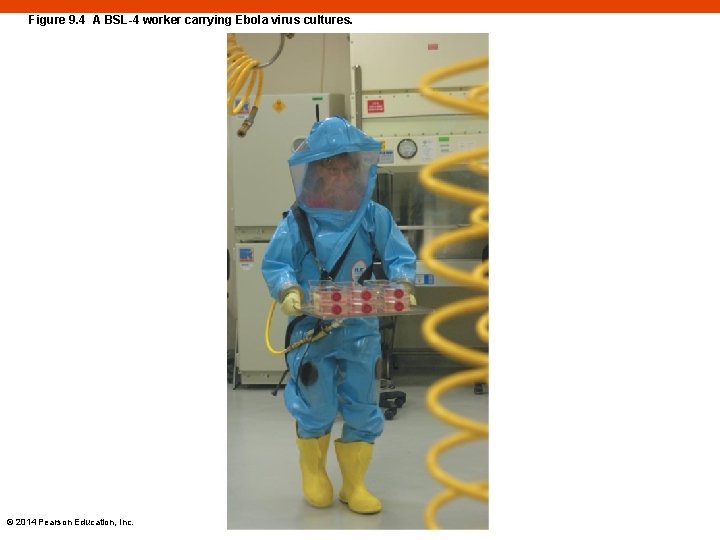
Figure 9. 4 A BSL-4 worker carrying Ebola virus cultures. © 2014 Pearson Education, Inc.
Physical Methods of Microbial Control • Heat-Related Methods • Effects of high temperatures • Denature proteins • Interfere with integrity of cytoplasmic membrane and cell wall • Disrupt structure and function of nucleic acids • Thermal death point • Lowest temperature that kills all cells in broth in 10 min • Thermal death time • Time to sterilize volume of liquid at set temperature © 2014 Pearson Education, Inc.
Physical Methods of Microbial Control • Heat-Related Methods • Moist heat • Used to disinfect, sanitize, sterilize, and pasteurize • Denatures proteins and destroys cytoplasmic membranes • More effective than dry heat • Methods of microbial control using moist heat • Boiling • Autoclaving • Pasteurization • Ultrahigh-temperature sterilization © 2014 Pearson Education, Inc.
Physical Methods of Microbial Control • Heat-Related Methods • Moist heat • Boiling • Kills vegetative cells of bacteria and fungi, protozoan trophozoites, and most viruses • Endospores, protozoan cysts, and some viruses can survive boiling © 2014 Pearson Education, Inc.
Physical Methods of Microbial Control • Heat-Related Methods • Moist heat • Autoclaving • Pressure applied to boiling water prevents steam from escaping • Boiling temperature increases as pressure increases • Autoclave conditions: 121ºC, 15 psi, 15 minutes © 2014 Pearson Education, Inc.
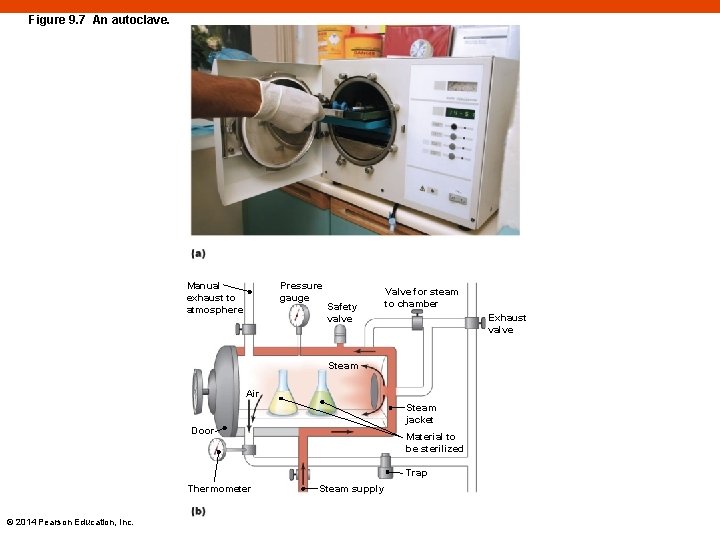
Figure 9. 7 An autoclave. Manual exhaust to atmosphere Pressure gauge Safety valve Valve for steam to chamber Exhaust valve Steam Air Steam jacket Door Material to be sterilized Trap Thermometer © 2014 Pearson Education, Inc. Steam supply
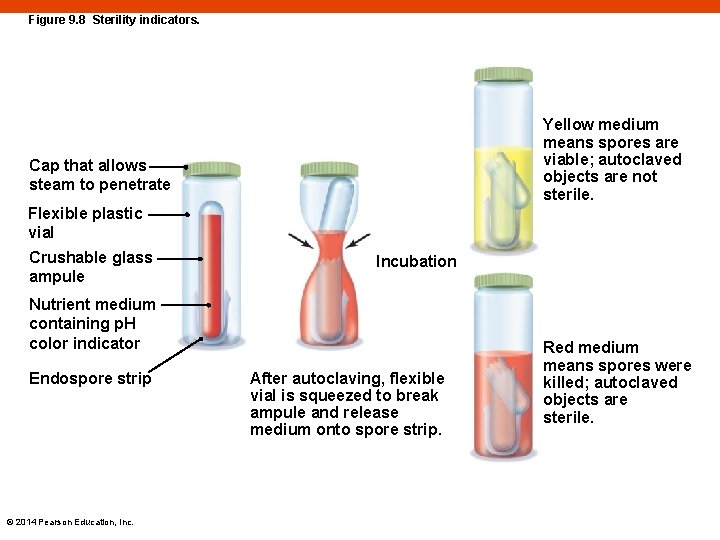
Figure 9. 8 Sterility indicators. Yellow medium means spores are viable; autoclaved objects are not sterile. Cap that allows steam to penetrate Flexible plastic vial Crushable glass ampule Incubation Nutrient medium containing p. H color indicator Endospore strip © 2014 Pearson Education, Inc. After autoclaving, flexible vial is squeezed to break ampule and release medium onto spore strip. Red medium means spores were killed; autoclaved objects are sterile.
Physical Methods of Microbial Control • Heat-Related Methods • Moist heat • Pasteurization • Used for milk, ice cream, yogurt, and fruit juices • Not sterilization • Heat-tolerant microbes survive © 2014 Pearson Education, Inc.
Physical Methods of Microbial Control • Heat-Related Methods • Moist heat • Ultrahigh-temperature sterilization • 140ºC for 1 to 3 seconds, then rapid cooling • Treated liquids can be stored at room temperature © 2014 Pearson Education, Inc.
Physical Methods of Microbial Control • Heat-Related Methods • Dry heat • Used for materials that cannot be sterilized with moist heat • Denatures proteins and oxidizes metabolic and structural chemicals • Requires higher temperatures for longer time than moist heat • Incineration is ultimate means of sterilization © 2014 Pearson Education, Inc.
Physical Methods of Microbial Control • Refrigeration and Freezing • Decrease microbial metabolism, growth, and reproduction • Chemical reactions occur slower at low temperatures • Liquid water not available • Refrigeration halts growth of most pathogens • Some microbes can multiply in refrigerated foods • Slow freezing more effective than quick freezing • Organisms vary in susceptibility to freezing © 2014 Pearson Education, Inc.
Physical Methods of Microbial Control • Desiccation and Lyophilization • Desiccation (drying) inhibits growth due to removal of water • Lyophilization (freeze-drying) used for long-term preservation of microbial cultures • Prevents formation of damaging ice crystals © 2014 Pearson Education, Inc.
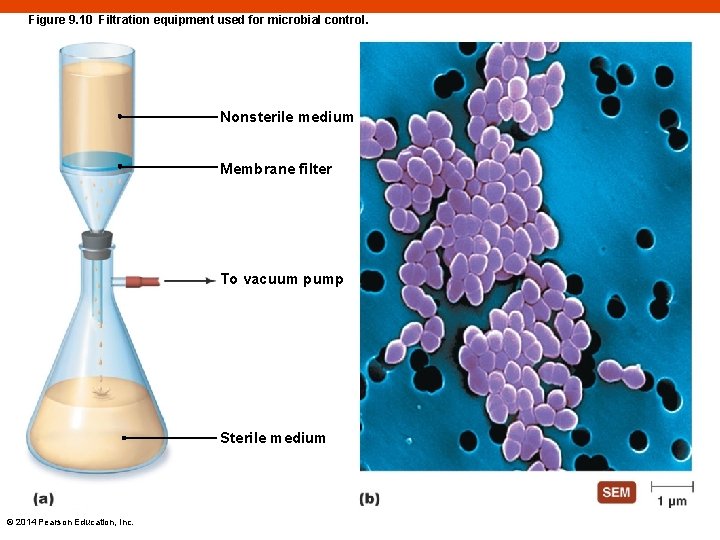
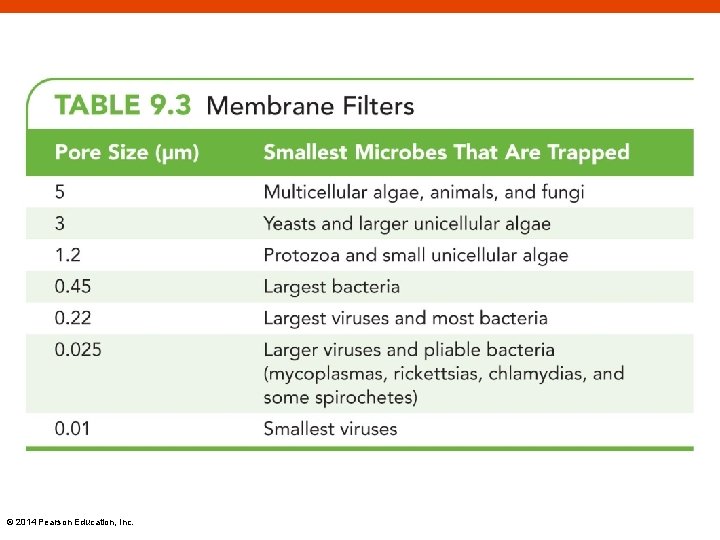
Figure 9. 10 Filtration equipment used for microbial control. Nonsterile medium Membrane filter To vacuum pump Sterile medium © 2014 Pearson Education, Inc.
© 2014 Pearson Education, Inc.
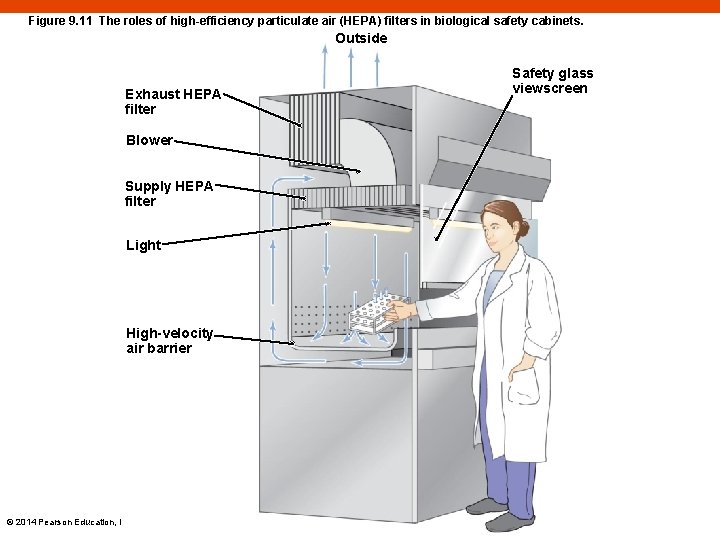
Figure 9. 11 The roles of high-efficiency particulate air (HEPA) filters in biological safety cabinets. Outside Exhaust HEPA filter Blower Supply HEPA filter Light High-velocity air barrier © 2014 Pearson Education, Inc. Safety glass viewscreen
Physical Methods of Microbial Control • Osmotic Pressure • High concentrations of salt or sugar in foods to inhibit growth • Cells in hypertonic solution of salt or sugar lose water • Fungi have greater ability than bacteria to survive hypertonic environments © 2014 Pearson Education, Inc.
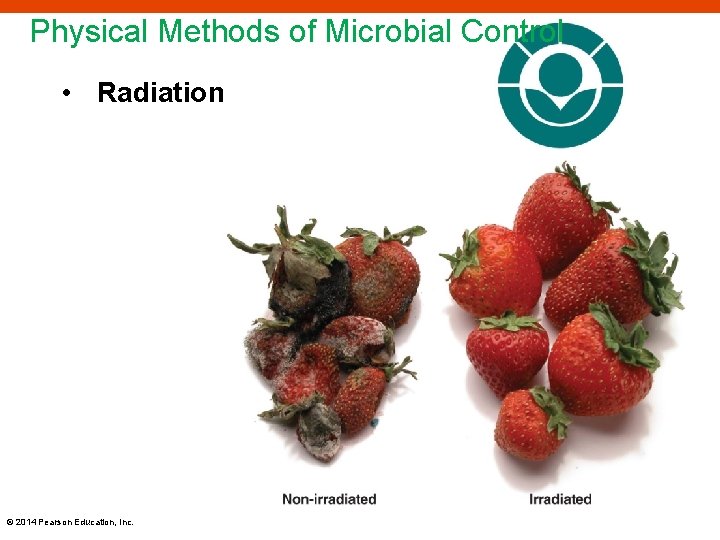
Physical Methods of Microbial Control • Radiation © 2014 Pearson Education, Inc.
Physical Methods of Microbial Control • Radiation • Nonionizing radiation • Wavelengths greater than 1 nm • Excites electrons, causing them to make new covalent bonds • Affects 3 -D structure of proteins and nucleic acids • UV light causes pyrimidine dimers in DNA • UV light does not penetrate well • Suitable for disinfecting air, transparent fluids, and surfaces of objects © 2014 Pearson Education, Inc.
Chemical Methods of Microbial Control • Affect microbes' cell walls, cytoplasmic membranes, proteins, or DNA • Effect varies with differing environmental conditions • Often more effective against enveloped viruses and vegetative cells of bacteria, fungi, and protozoa © 2014 Pearson Education, Inc.
Chemical Methods of Microbial Control • Phenol and Phenolics • Denature proteins and disrupt cell membranes • Effective in presence of organic matter • Remain active for prolonged time • Commonly used in health care settings, labs, and homes • Have disagreeable odor and possible side effects © 2014 Pearson Education, Inc.
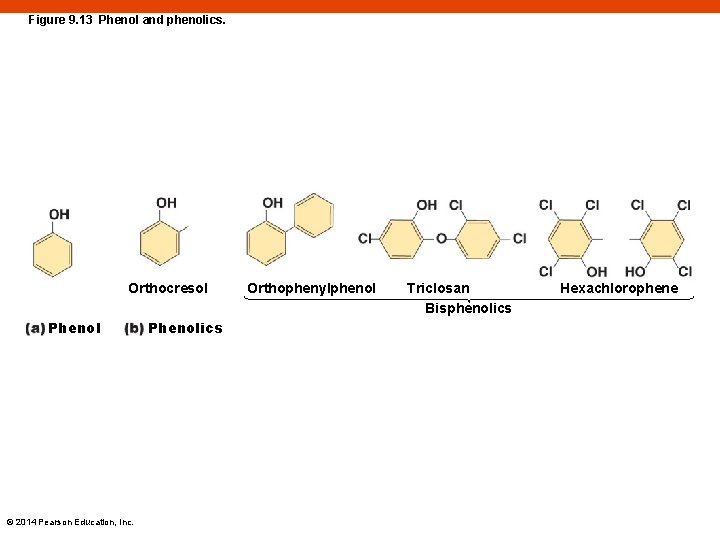
Figure 9. 13 Phenol and phenolics. Orthocresol Phenol © 2014 Pearson Education, Inc. Phenolics Orthophenylphenol Triclosan Bisphenolics Hexachlorophene
Chemical Methods of Microbial Control • Alcohols • Intermediate-level disinfectants • Denature proteins and disrupt cytoplasmic membranes • More effective than soap in removing bacteria from hands • Swabbing of skin with alcohol prior to injection removes most microbes © 2014 Pearson Education, Inc.
Chemical Methods of Microbial Control • Halogens • Intermediate-level antimicrobial chemicals • Damage enzymes by denaturation • Widely used in numerous applications • Iodine tablets, iodophores, chlorine treatment, bleach, chloramines, and bromine disinfection © 2014 Pearson Education, Inc.
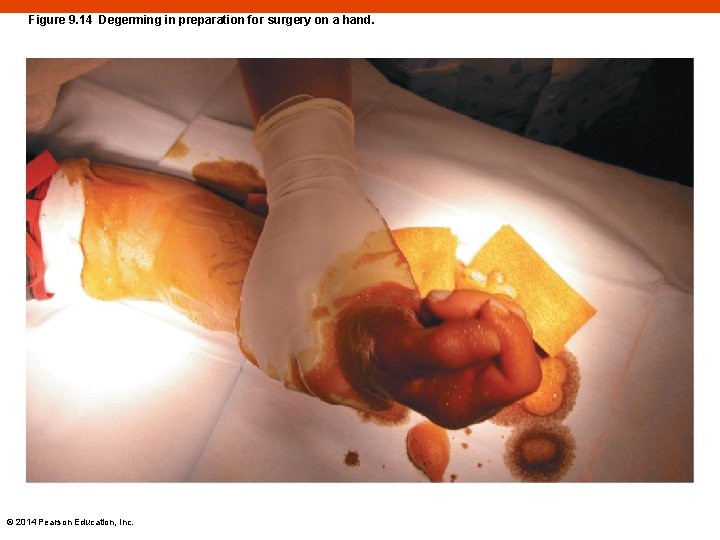
Figure 9. 14 Degerming in preparation for surgery on a hand. © 2014 Pearson Education, Inc.
Chemical Methods of Microbial Control • Oxidizing Agents • Peroxides, ozone, and peracetic acid • Kill by oxidation of microbial enzymes • High-level disinfectants and antiseptics • Hydrogen peroxide can disinfect and sterilize surfaces • Not useful for treating open wounds due to catalase activity • Ozone treatment of drinking water • Peracetic acid is effective sporicide used to sterilize equipment © 2014 Pearson Education, Inc.
Chemical Methods of Microbial Control • Surfactants • "Surface active" chemicals • Reduce surface tension of solvents • Soaps and detergents (e. g. , SDS –anionic surfactant( • Soaps have hydrophilic and hydrophobic ends • Good degerming agents but not antimicrobial • Detergents are positively charged organic surfactants • Quats • Low-level disinfectants • Disrupt cellular membranes • Ideal for many medical and industrial applications © 2014 Pearson Education, Inc.
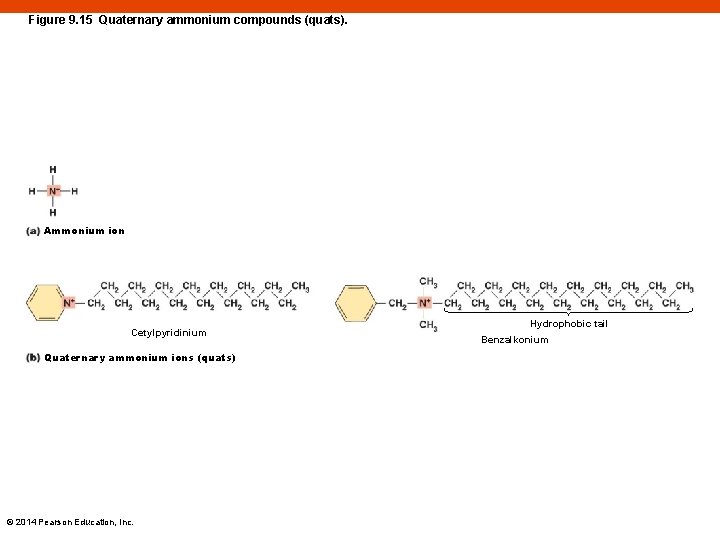
Figure 9. 15 Quaternary ammonium compounds (quats). Ammonium ion Cetylpyridinium Quaternary ammonium ions (quats) © 2014 Pearson Education, Inc. Hydrophobic tail Benzalkonium
Chemical Methods of Microbial Control • Heavy Metals • Heavy-metal ions denature proteins • Low-level bacteriostatic and fungistatic agents • 1% silver nitrate to prevent blindness caused by N. gonorrhoeae • Thimerosal used to preserve vaccines • Copper controls algal growth © 2014 Pearson Education, Inc.
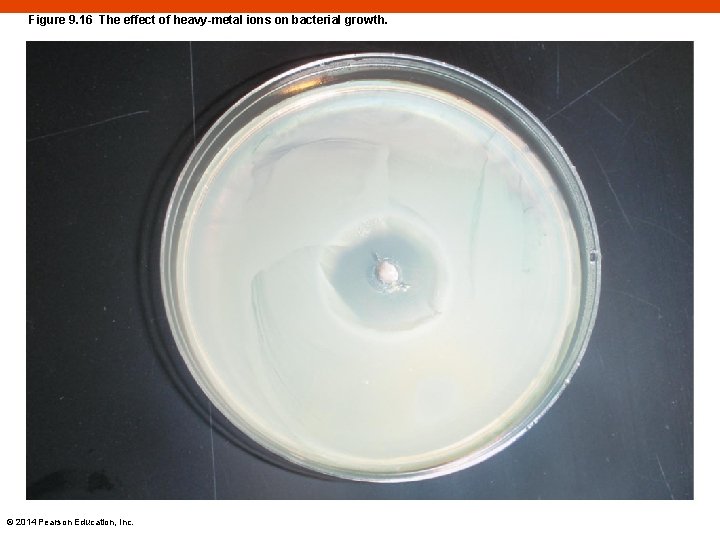
Figure 9. 16 The effect of heavy-metal ions on bacterial growth. © 2014 Pearson Education, Inc.
Chemical Methods of Microbial Control • Aldehydes • Compounds containing terminal –CHO groups • Cross-link functional groups to denature proteins and inactivate nucleic acids • Glutaraldehyde disinfects and sterilizes • Formalin used in embalming and disinfection of rooms and instruments. © 2014 Pearson Education, Inc.
Chemical Methods of Microbial Control • Gaseous Agents • Microbicidal and sporicidal gases used in closed chambers to sterilize items • Denature proteins and DNA by cross-linking functional groups • Used in hospitals and dental offices • Disadvantages • Can be hazardous to people • Often highly explosive • Extremely poisonous • Potentially carcinogenic © 2014 Pearson Education, Inc.
Chemical Methods of Microbial Control • Enzymes • Antimicrobial enzymes act against microorganisms • Human tears contain lysozyme • Digests peptidoglycan cell wall of bacteria • Use enzymes to control microbes in the environment • Lysozyme used to reduce the number of bacteria in cheese • Prionzyme can remove prions on medical instruments © 2014 Pearson Education, Inc.
Chemical Methods of Microbial Control • Antimicrobials • Antibiotics and semisynthetic and synthetic chemicals • Typically used for treatment of disease • Some used for antimicrobial control outside the body © 2014 Pearson Education, Inc.
Chemical Methods of Microbial Control • Methods for Evaluating Disinfectants and Antiseptics • Phenol coefficient • Evaluates efficacy of disinfectants and antiseptics • Compares an agent's ability to control microbes to phenol • Greater than 1. 0 indicates agent is more effective than phenol • Has been replaced by newer methods © 2014 Pearson Education, Inc.
Chemical Methods of Microbial Control • Methods for Evaluating Disinfectants and Antiseptics • Use-dilution test • Metal cylinders dipped into broth cultures of bacteria • Contaminated cylinder immersed into dilution of disinfectant • Cylinders removed, washed, and placed into tube of medium • Most effective agents entirely prevent growth at highest dilution • Current standard test in the U. S. © 2014 Pearson Education, Inc.
Chemical Methods of Microbial Control • Methods for Evaluating Disinfectants and Antiseptics • Kelsey-Sykes capacity test • Bacterial suspensions added to the chemical being tested • Samples removed at predetermined times and incubated • Lack of bacterial reproduction reveals minimum time required for the disinfectant to be effective © 2014 Pearson Education, Inc.
Chemical Methods of Microbial Control • Methods for Evaluating Disinfectants and Antiseptics • In-use test • Swabs taken from objects before and after application of disinfectant or antiseptic • Swabs inoculated into growth medium and incubated • Medium monitored for growth © 2014 Pearson Education, Inc.
Chemical Methods of Microbial Control • Development of Resistant Microbes • Little evidence that products containing antiseptic and disinfecting chemicals compromise human or animal health • Use of such products promotes development of resistant microbes © 2014 Pearson Education, Inc.
- Slides: 47