
Chapter 9 Overview of Energy Respiration vs Breathing
Chapter 9: Overview of Energy
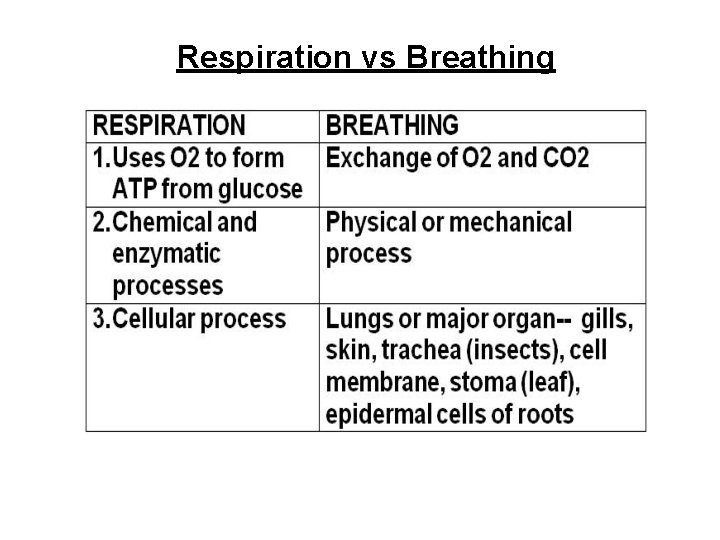
Respiration vs Breathing
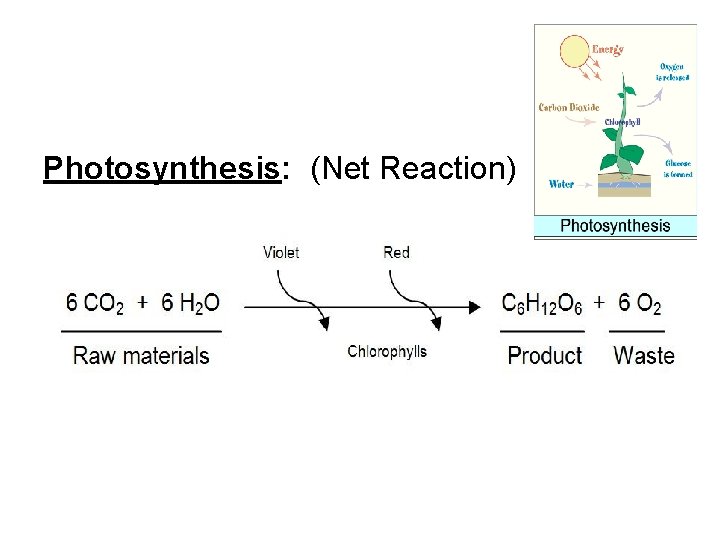
Photosynthesis: (Net Reaction)
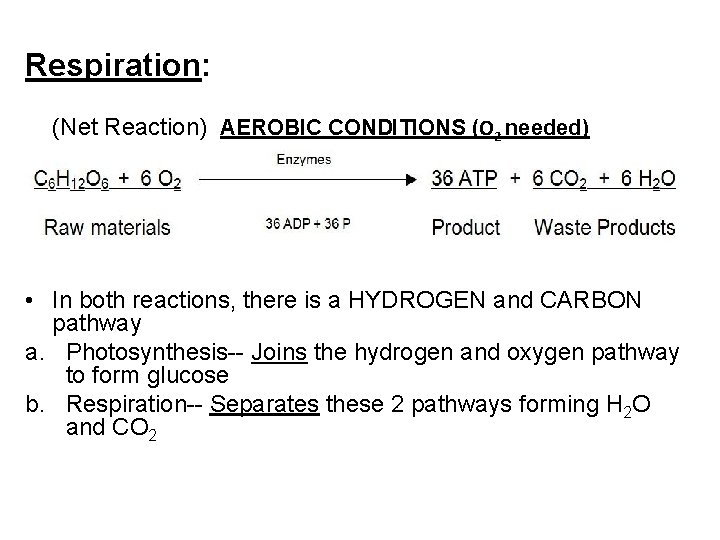
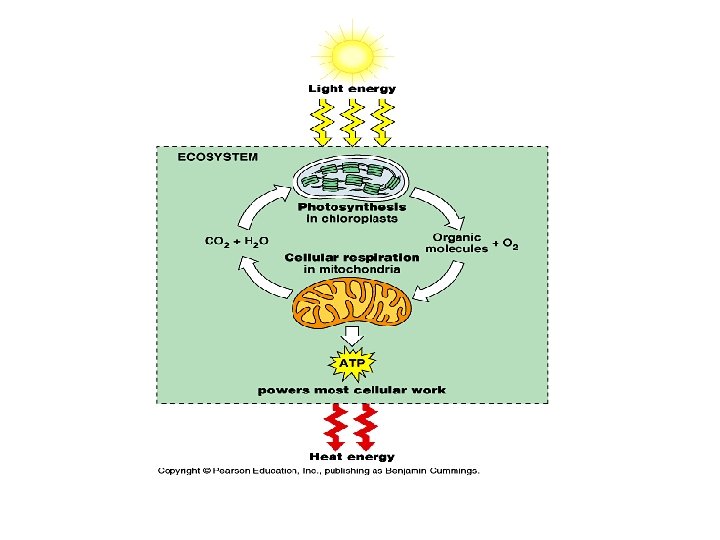
Respiration: (Net Reaction) AEROBIC CONDITIONS (O 2 needed) • In both reactions, there is a HYDROGEN and CARBON pathway a. Photosynthesis-- Joins the hydrogen and oxygen pathway to form glucose b. Respiration-- Separates these 2 pathways forming H 2 O and CO 2
Chapter 9: Cell Respiration Notes
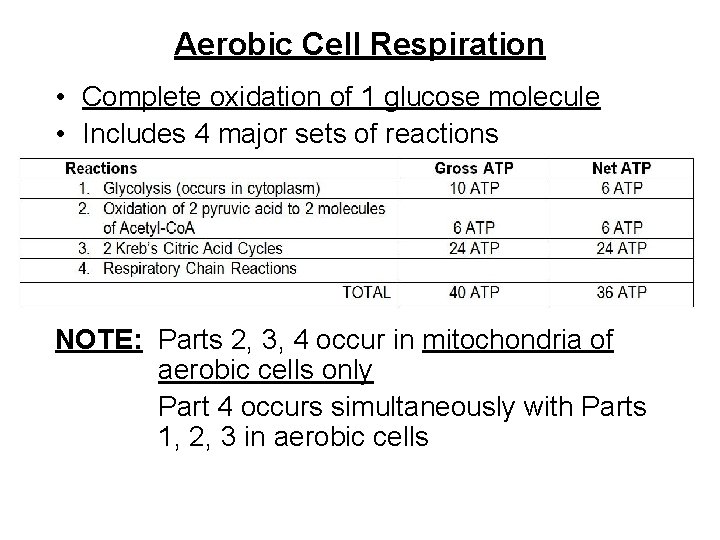
Aerobic Cell Respiration • Complete oxidation of 1 glucose molecule • Includes 4 major sets of reactions NOTE: Parts 2, 3, 4 occur in mitochondria of aerobic cells only Part 4 occurs simultaneously with Parts 1, 2, 3 in aerobic cells
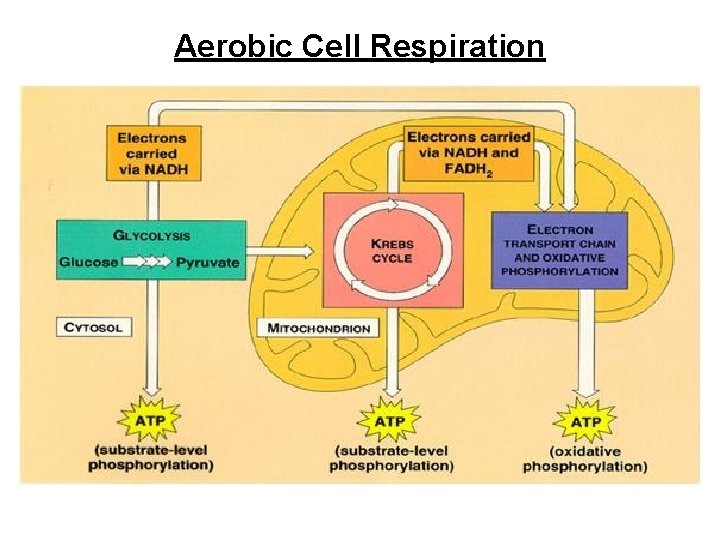
Aerobic Cell Respiration
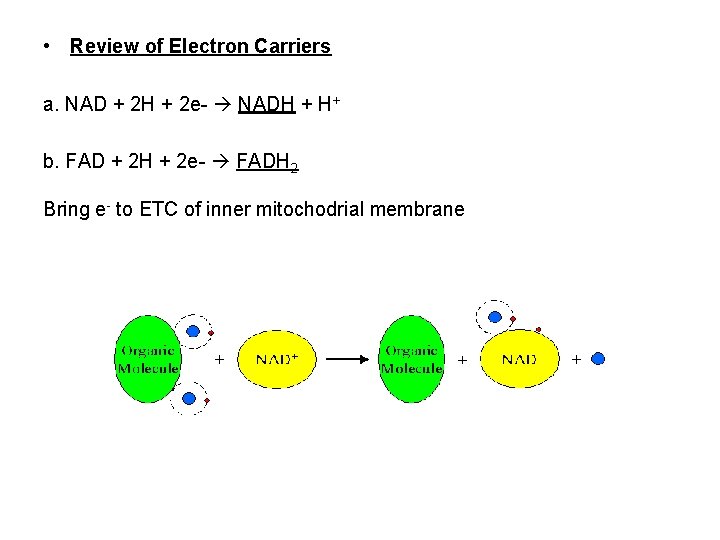
• Review of Electron Carriers a. NAD + 2 H + 2 e- NADH + H+ b. FAD + 2 H + 2 e- FADH 2 Bring e- to ETC of inner mitochodrial membrane
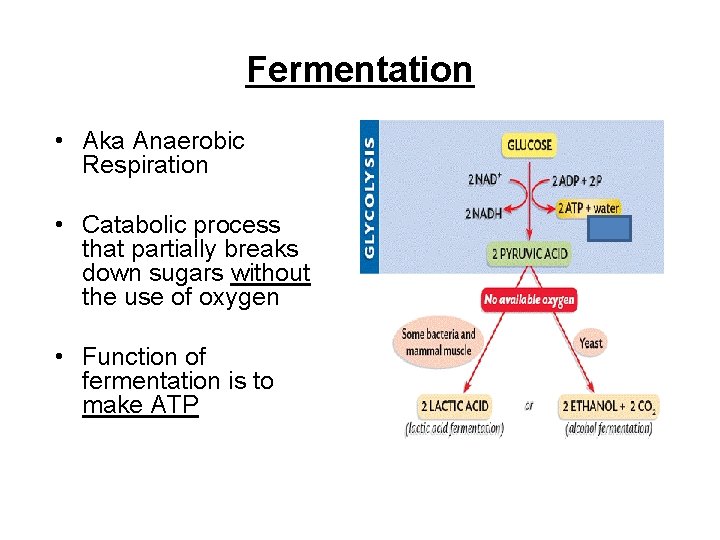
Fermentation • Aka Anaerobic Respiration • Catabolic process that partially breaks down sugars without the use of oxygen • Function of fermentation is to make ATP
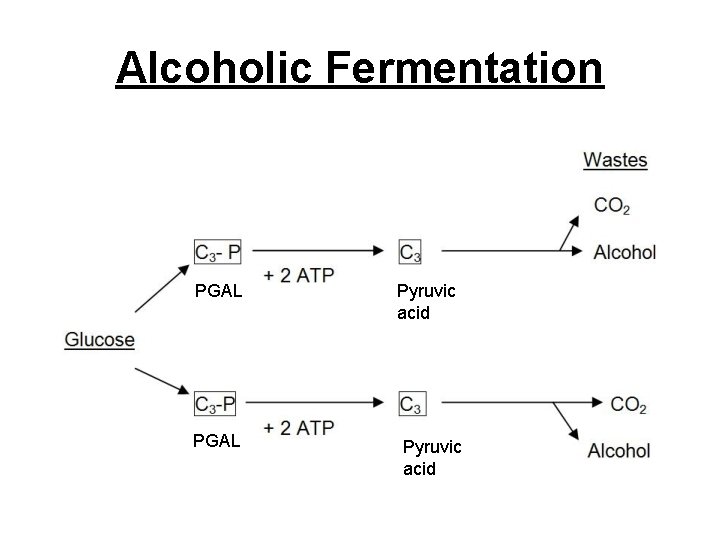
Alcoholic Fermentation PGAL Pyruvic acid
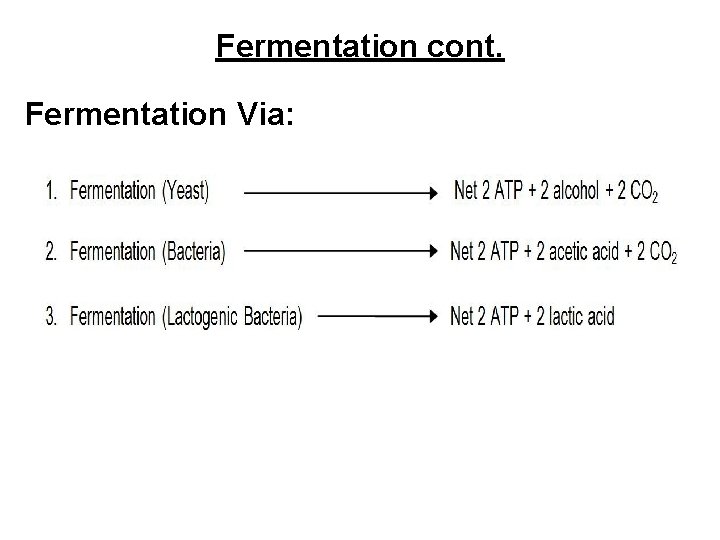
Fermentation cont. Fermentation Via:
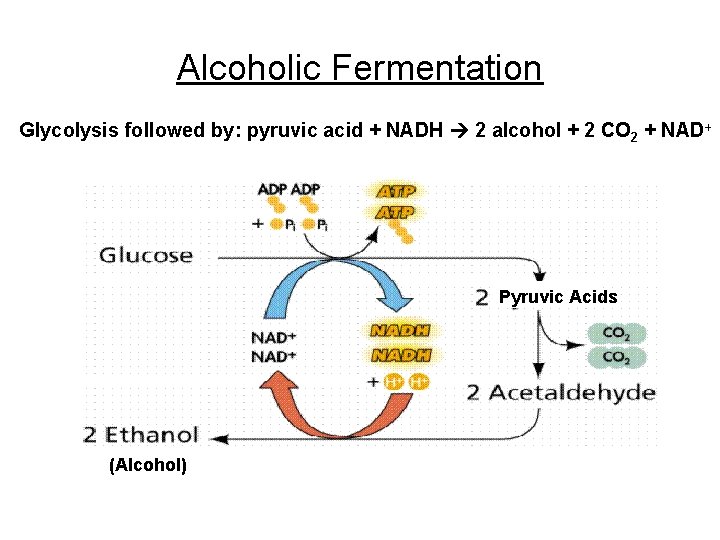
Alcoholic Fermentation Glycolysis followed by: pyruvic acid + NADH 2 alcohol + 2 CO 2 + NAD+ Pyruvic Acids (Alcohol)
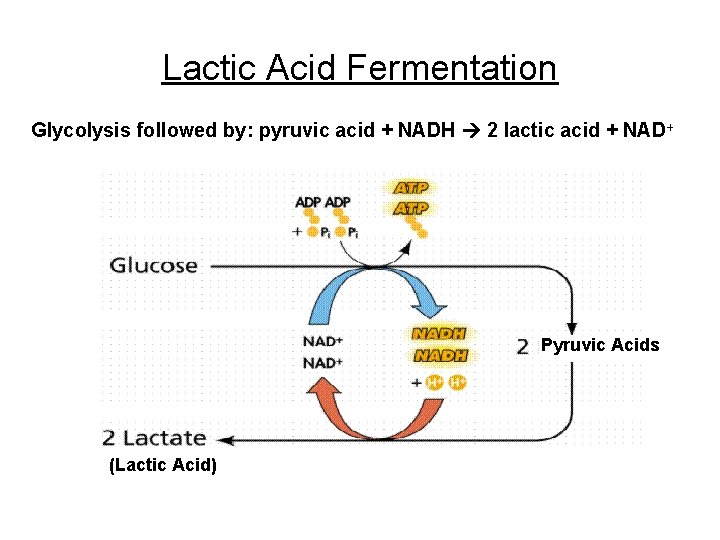
Lactic Acid Fermentation Glycolysis followed by: pyruvic acid + NADH 2 lactic acid + NAD+ Pyruvic Acids (Lactic Acid)
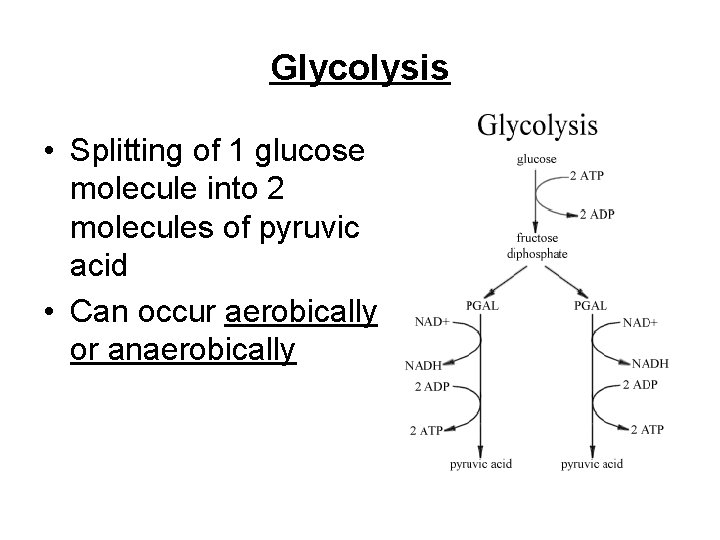
Glycolysis • Splitting of 1 glucose molecule into 2 molecules of pyruvic acid • Can occur aerobically or anaerobically
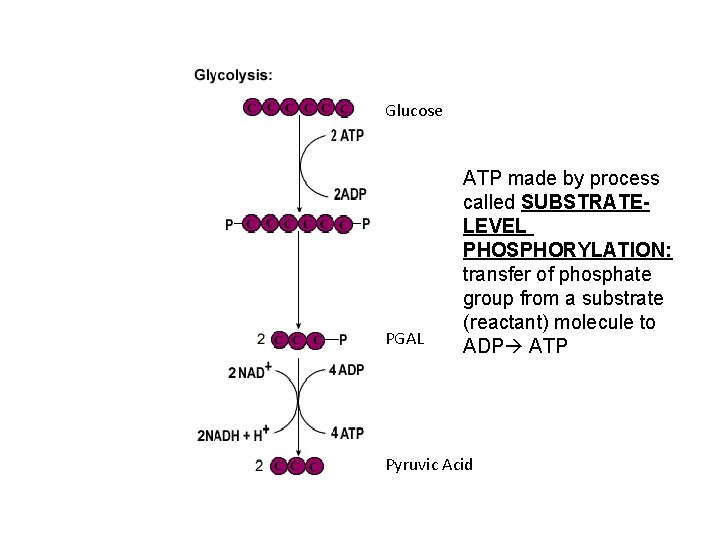
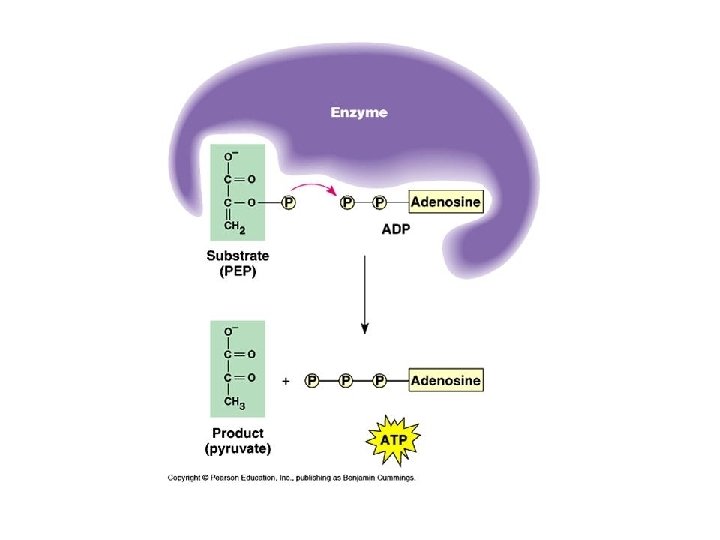
Glucose PGAL ATP made by process called SUBSTRATELEVEL PHOSPHORYLATION: transfer of phosphate group from a substrate (reactant) molecule to ADP ATP Pyruvic Acid
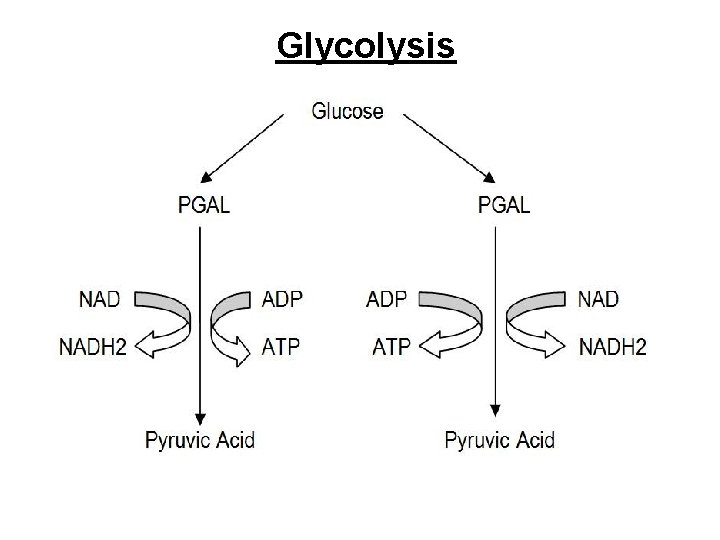
Glycolysis
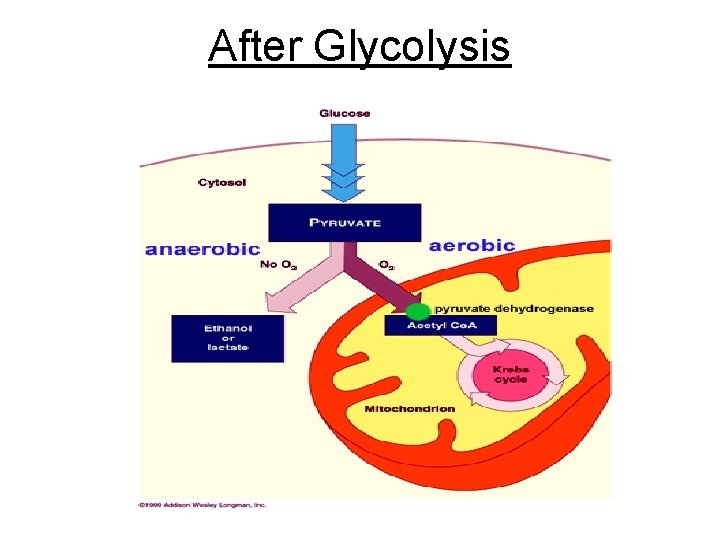
After Glycolysis
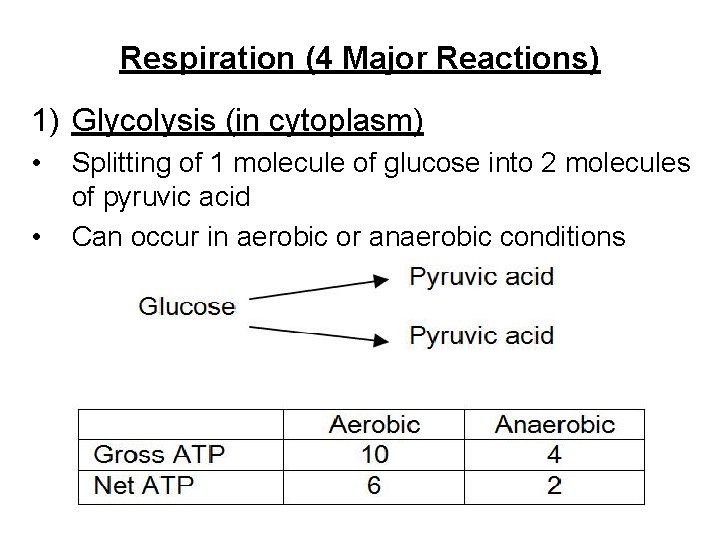
Respiration (4 Major Reactions) 1) Glycolysis (in cytoplasm) • • Splitting of 1 molecule of glucose into 2 molecules of pyruvic acid Can occur in aerobic or anaerobic conditions
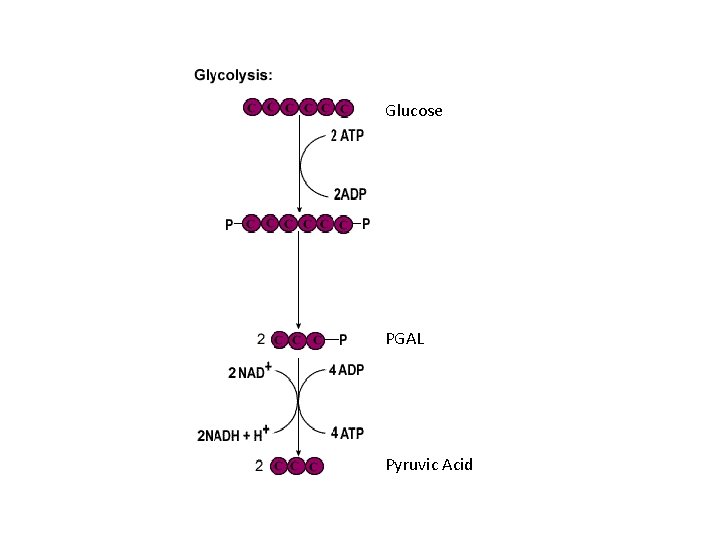
Glucose PGAL Pyruvic Acid
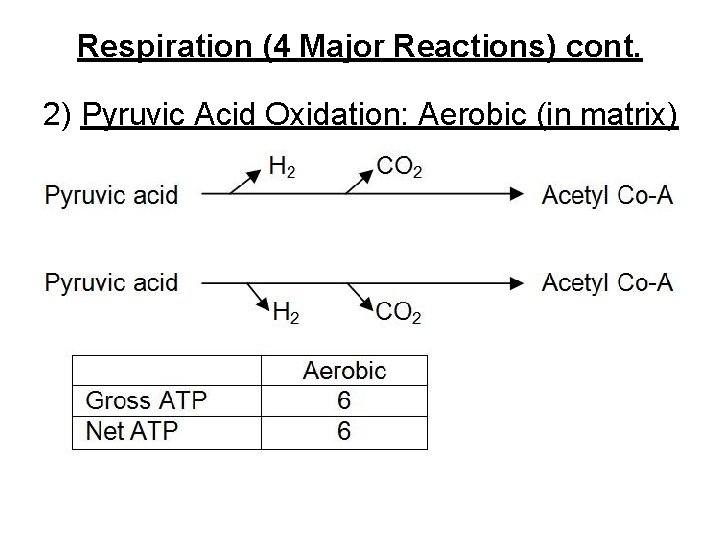
Respiration (4 Major Reactions) cont. 2) Pyruvic Acid Oxidation: Aerobic (in matrix)
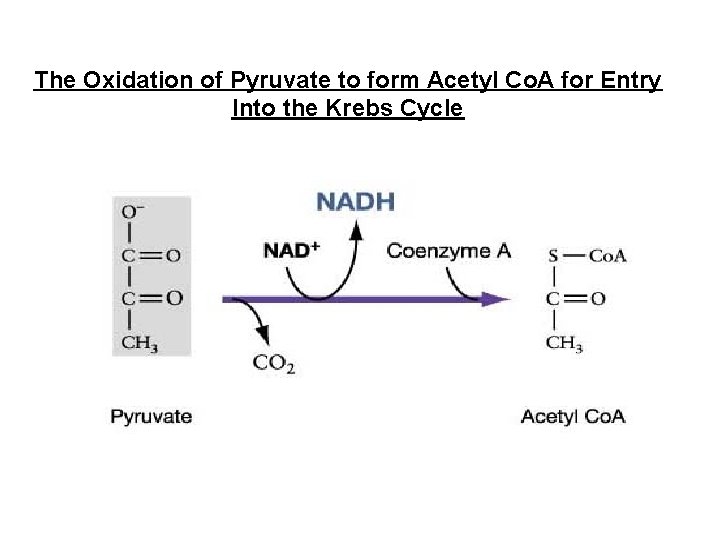
The Oxidation of Pyruvate to form Acetyl Co. A for Entry Into the Krebs Cycle
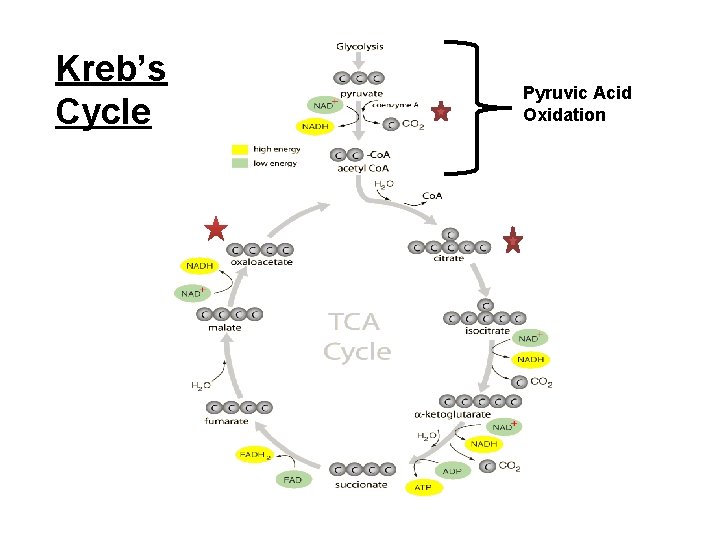
Kreb’s Cycle Pyruvic Acid Oxidation
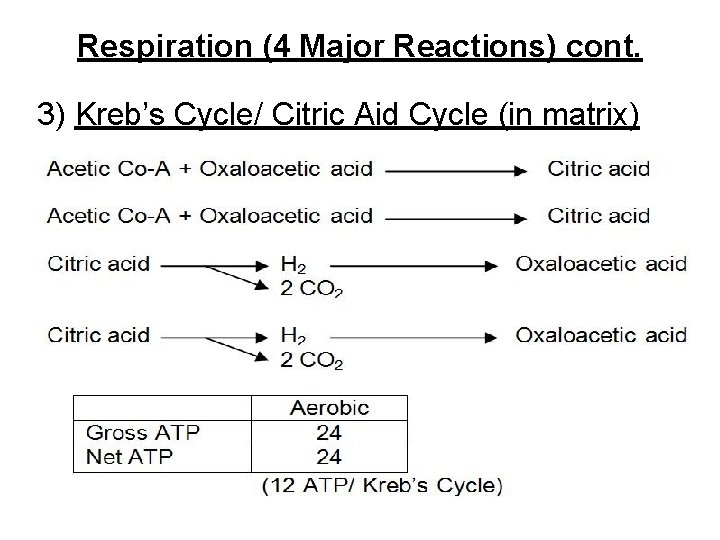
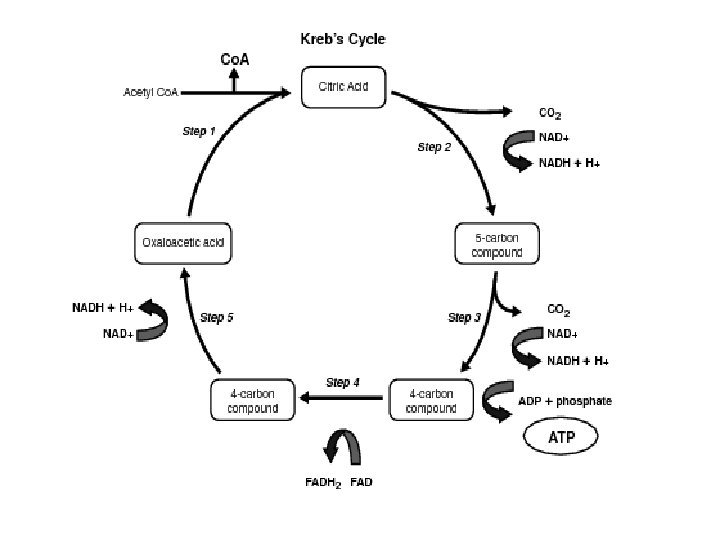
Respiration (4 Major Reactions) cont. 3) Kreb’s Cycle/ Citric Aid Cycle (in matrix)
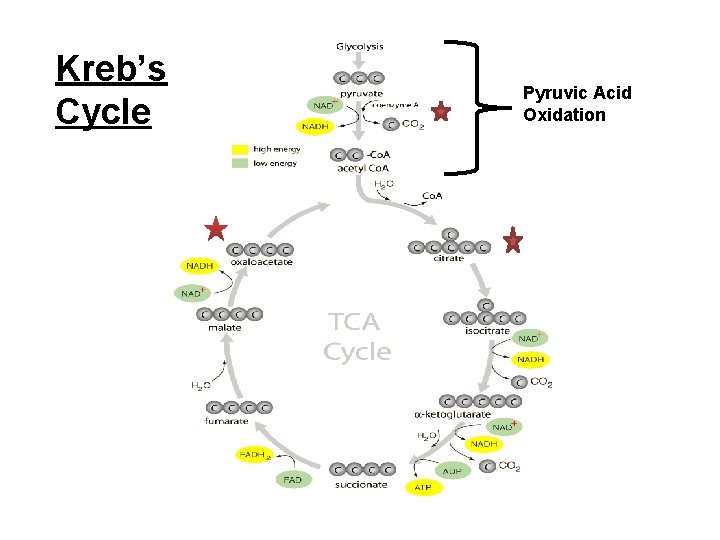
Kreb’s Cycle Pyruvic Acid Oxidation
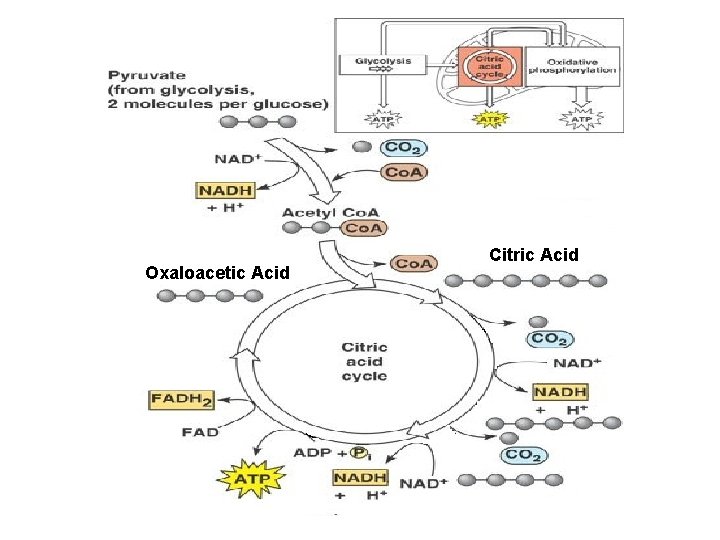
Oxaloacetic Acid Citric Acid
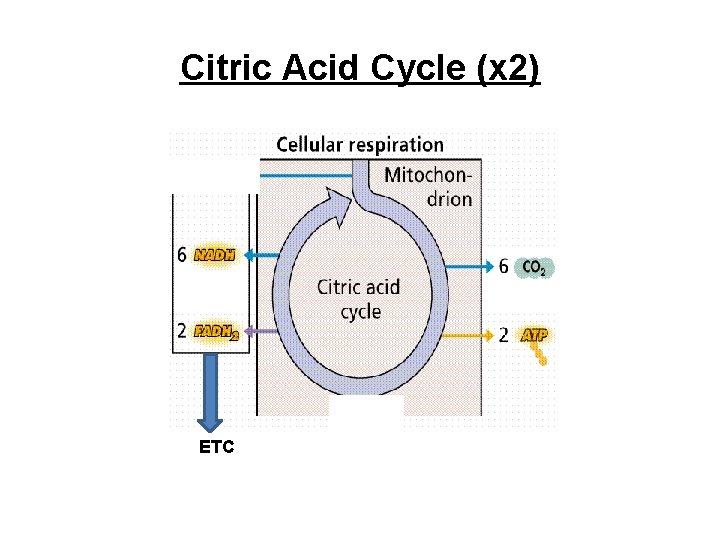
Citric Acid Cycle (x 2) ETC

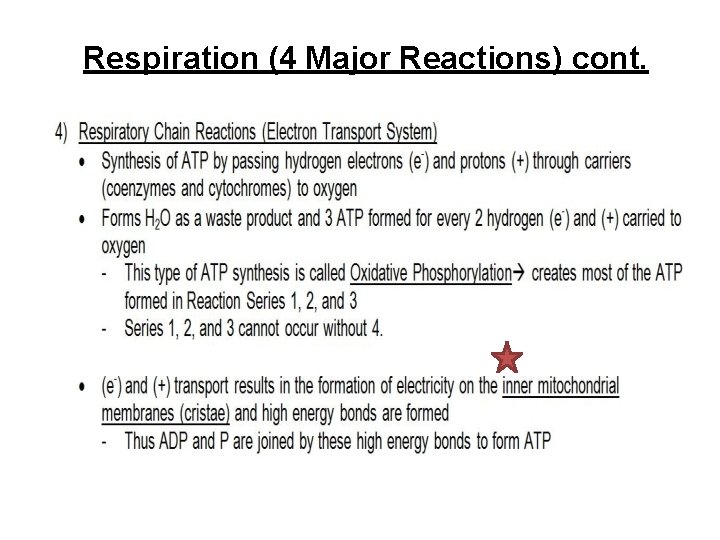
Respiration (4 Major Reactions) cont.
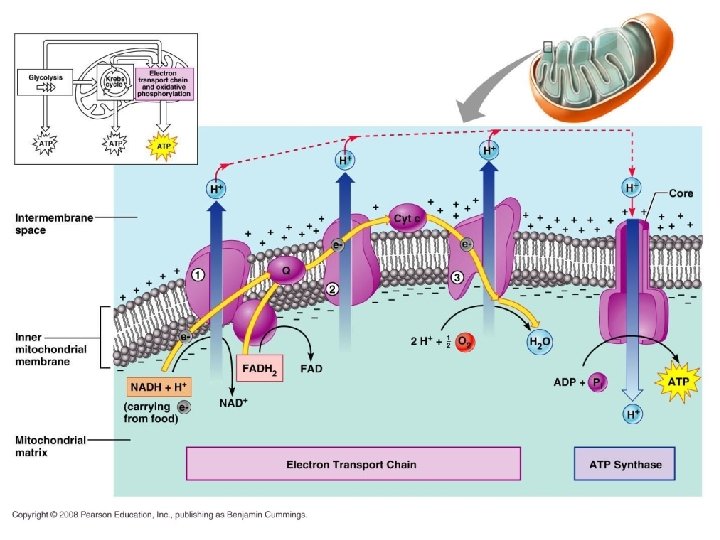
![Oxidative Phosphorylation High [H+] Low p. H Low [H+] High p. H](http://slidetodoc.com/presentation_image_h2/46266259c07c6012faaaa673dc28b9bc/image-32.jpg "Oxidative Phosphorylation High [H+] Low p. H Low [H+] High p. H")
Oxidative Phosphorylation High [H+] Low p. H Low [H+] High p. H
Chapter 9: Methods of ATP Synthesis Notes
3 Methods of ATP Synthesis 1) Photosynthetic Phosphorylation • Process of making ATP (~P) with light energy using electrons from hydrogen and chlorophyll • Occurs during PSII • On thylakoid membranes- in grana within chloroplast • Need enzyme (ATP synthetase & proton pumps)- chemiosmosis • Has ETC-- Electron Transport Chain-- PSII and PSI
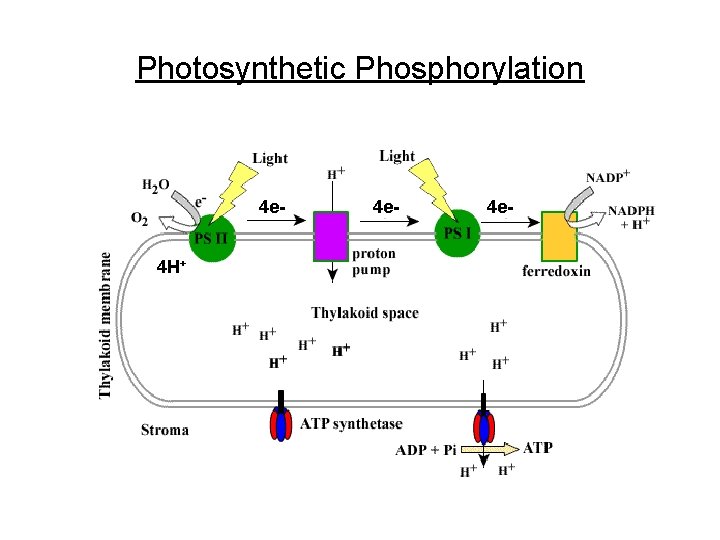
Photosynthetic Phosphorylation 4 e 4 H+ 4 e-
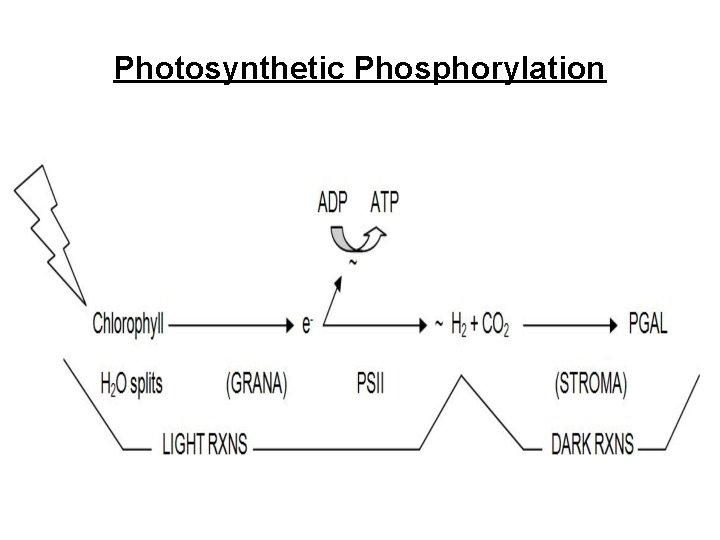
Photosynthetic Phosphorylation
3 Methods of ATP Synthesis cont. 2) Substrate Phosphorylation • Process of making ATP by rearrangement of bonds of substrates during glycolysis or Krebs Cycle (No energy added!) a. Glycolysis (in cytoplasm) o Occurs in aerobic and anaerobic conditions o No enzyme (ATP synthetase & proton pump) o No ETC-- no H 2 O made
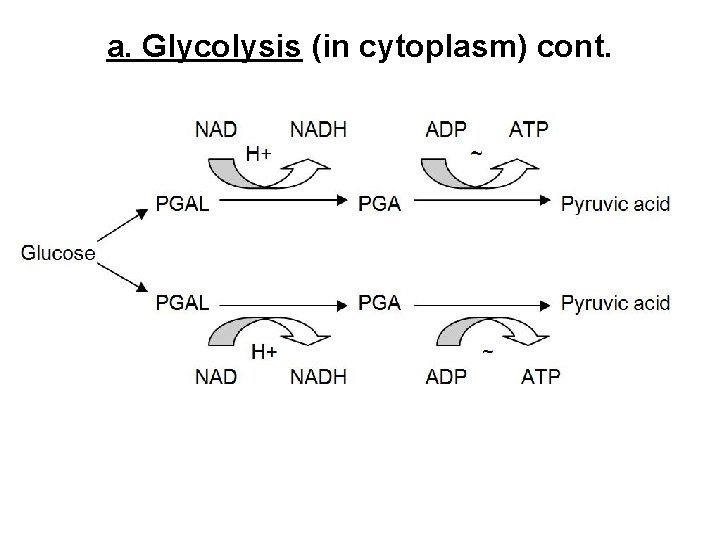
a. Glycolysis (in cytoplasm) cont.
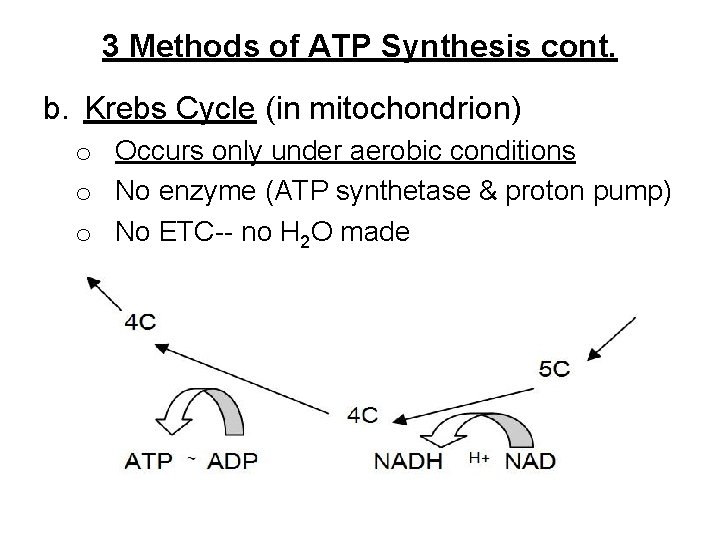
3 Methods of ATP Synthesis cont. b. Krebs Cycle (in mitochondrion) o Occurs only under aerobic conditions o No enzyme (ATP synthetase & proton pump) o No ETC-- no H 2 O made
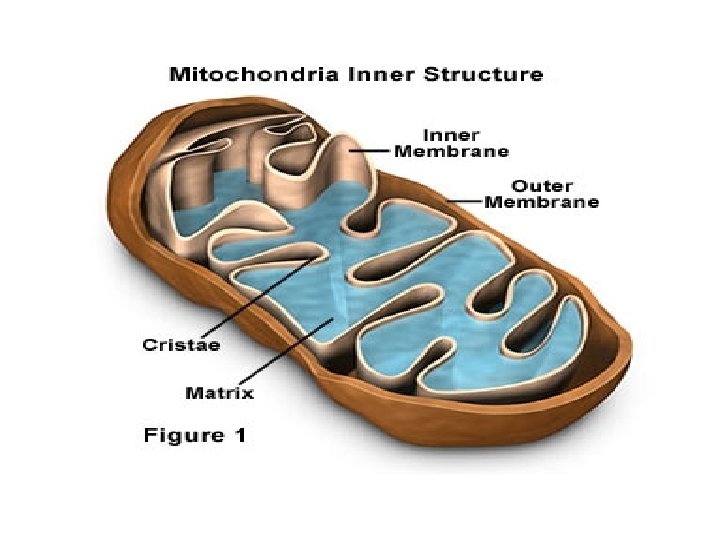
3 Methods of ATP Synthesis cont. 3) Oxidative Phosphorylation • Process of making ATP (~) from energy released from hydrogen electrons (e-) as they are carried to O 2 by coenzymes via the ETC or respiratory chain • Occurs only under aerobic conditions • Occurs only inside mitochondria (on cristae membranes)
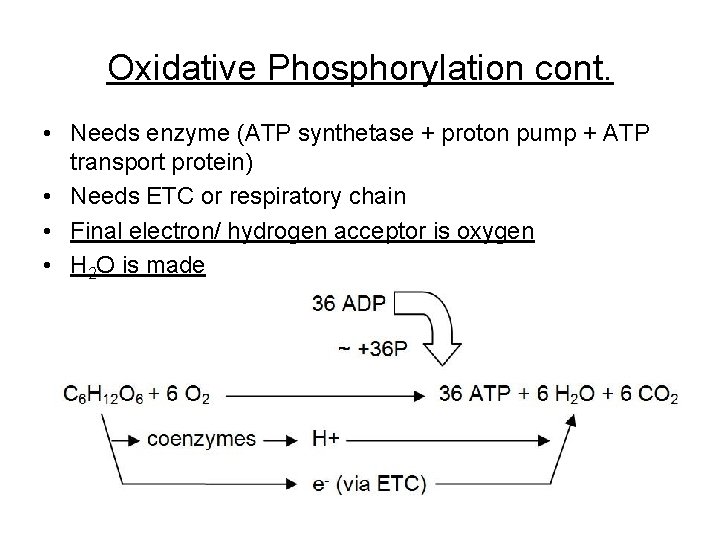
Oxidative Phosphorylation cont. • Needs enzyme (ATP synthetase + proton pump + ATP transport protein) • Needs ETC or respiratory chain • Final electron/ hydrogen acceptor is oxygen • H 2 O is made
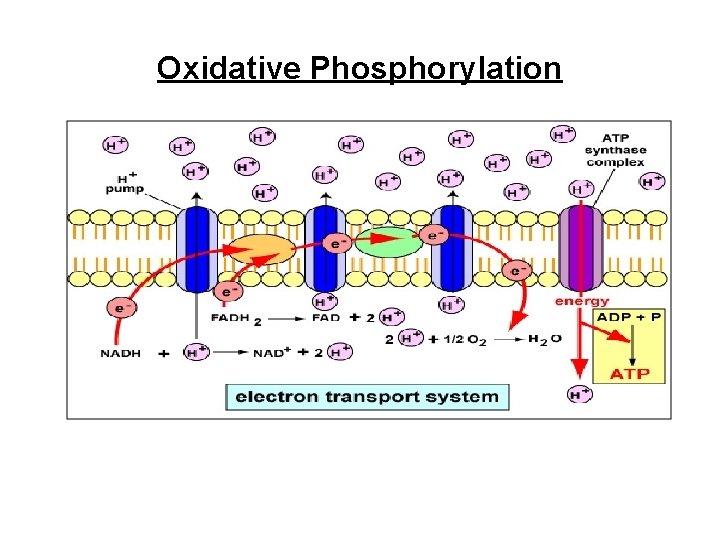
Oxidative Phosphorylation
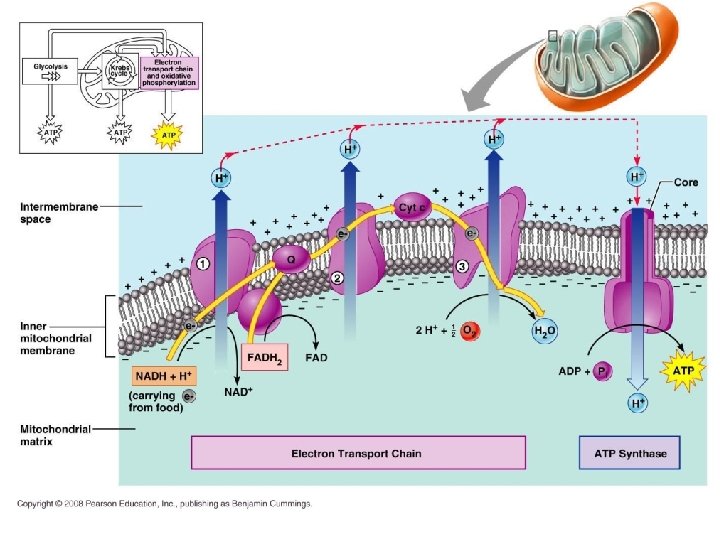
Oxidative Phosphorylation
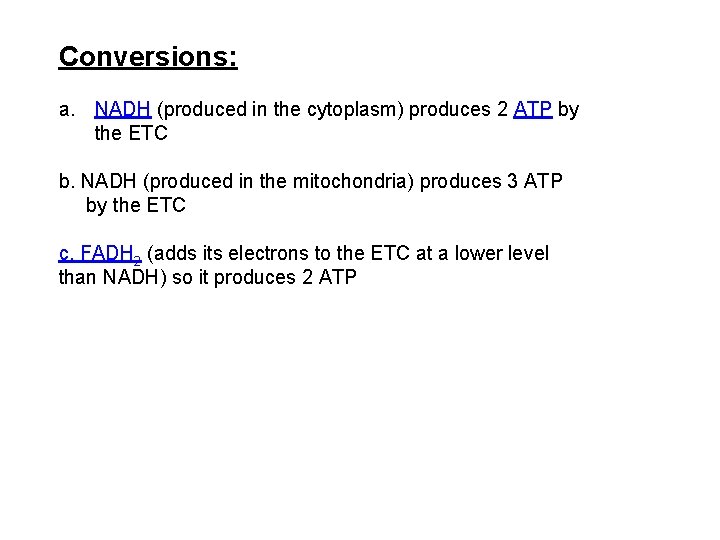
Conversions: a. NADH (produced in the cytoplasm) produces 2 ATP by the ETC b. NADH (produced in the mitochondria) produces 3 ATP by the ETC c. FADH 2 (adds its electrons to the ETC at a lower level than NADH) so it produces 2 ATP
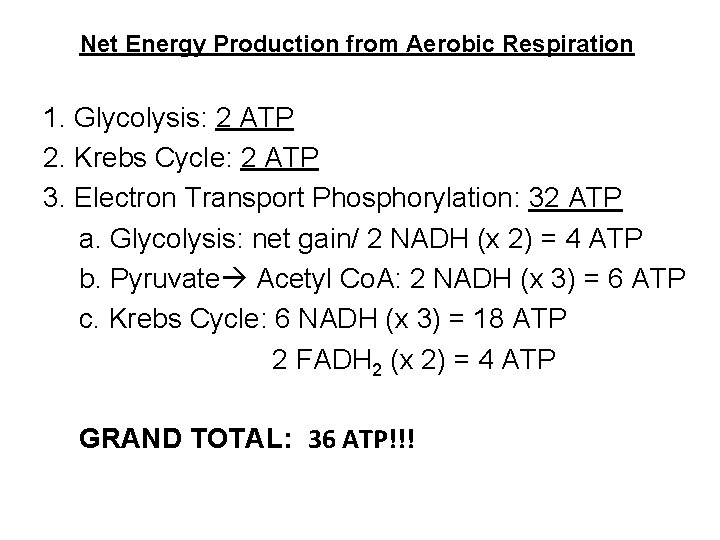
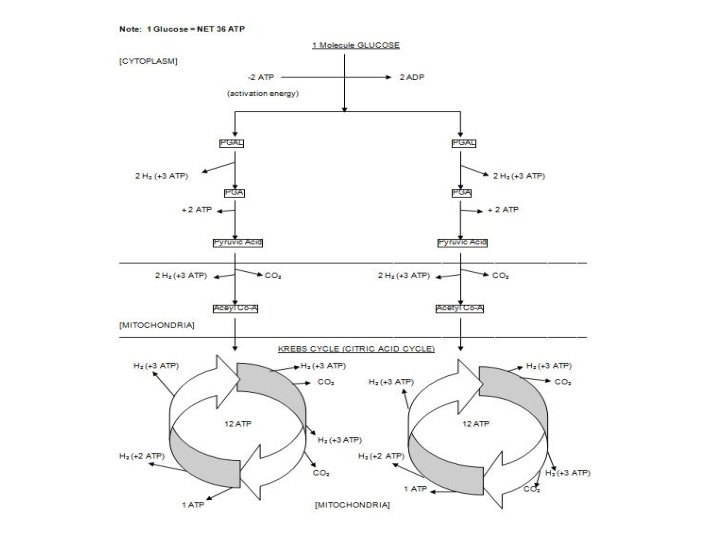
Net Energy Production from Aerobic Respiration 1. Glycolysis: 2 ATP 2. Krebs Cycle: 2 ATP 3. Electron Transport Phosphorylation: 32 ATP a. Glycolysis: net gain/ 2 NADH (x 2) = 4 ATP b. Pyruvate Acetyl Co. A: 2 NADH (x 3) = 6 ATP c. Krebs Cycle: 6 NADH (x 3) = 18 ATP 2 FADH 2 (x 2) = 4 ATP GRAND TOTAL: 36 ATP!!!
- Slides: 48