
Chapter 9 Overview b Specific hazards working in
Chapter 9 Overview b Specific hazards working in die casting plant b By being aware, they can be avoided, ensuring a safe work environment b Obvious hazards are liquid metal and large powerful machines 1

Chapter 9 Objectives b Correctly identify personal protective equipment b List eight hazards in the die casting workplace b List seven steps to safely use compressed air b List six steps to safe handling of castings 2
Safety in the Workplace b Safety is a defensive attitude b Pursuit of safety requires top management to be fully committed to safety b Hazards occurring in the die casting plant: • Pinch, snag, strike, burn, electric shock, pierce, slip-fall, trip-fall and fire 3
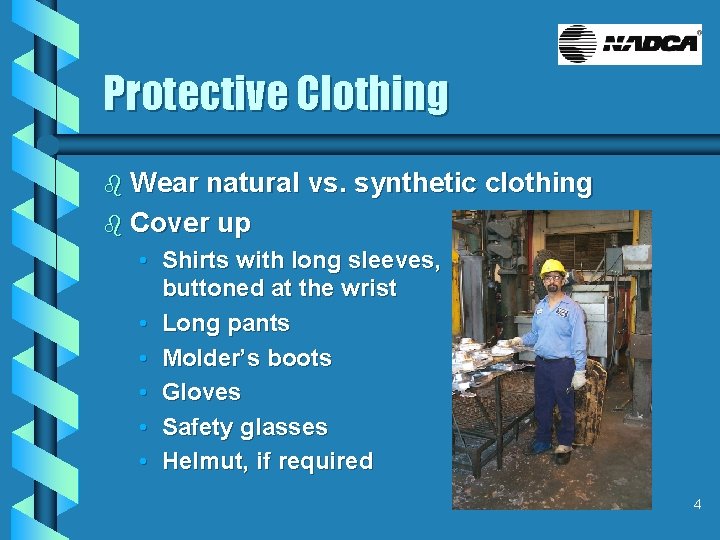
Protective Clothing b Wear natural vs. synthetic clothing b Cover up • Shirts with long sleeves, buttoned at the wrist • Long pants • Molder’s boots • Gloves • Safety glasses • Helmut, if required 4
Machine Safety b DCM has: • Moving parts, pinch and shear points, lubricants, hydraulic fluid, and electrical controls b Particular areas of the machine may be hot b Die casting die • Hot at operating temperatures, can have pinch and shear points 5
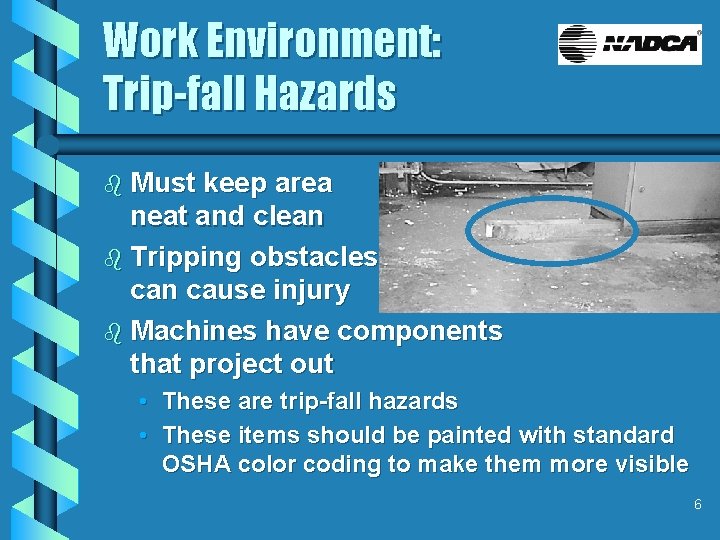
Work Environment: Trip-fall Hazards b Must keep area neat and clean b Tripping obstacles can cause injury b Machines have components that project out • These are trip-fall hazards • These items should be painted with standard OSHA color coding to make them more visible 6
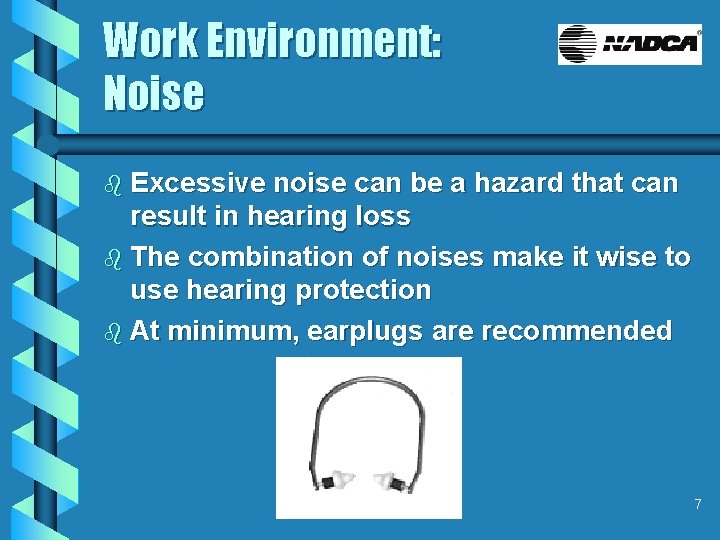
Work Environment: Noise b Excessive noise can be a hazard that can result in hearing loss b The combination of noises make it wise to use hearing protection b At minimum, earplugs are recommended 7
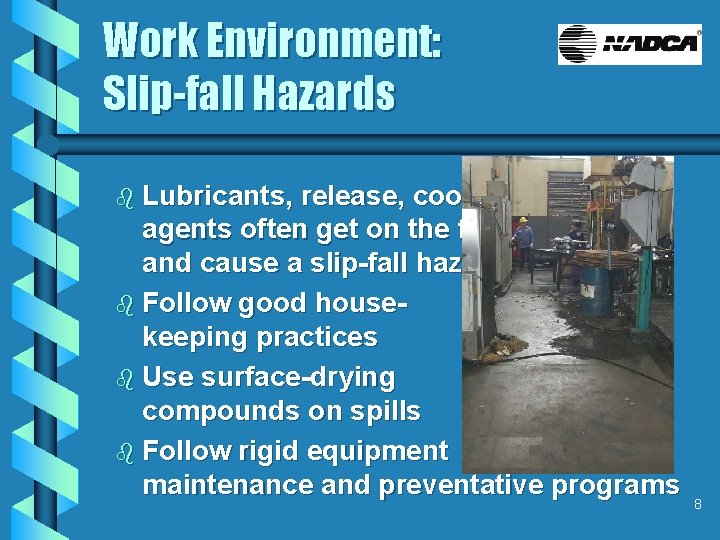
Work Environment: Slip-fall Hazards b Lubricants, release, cooling agents often get on the floor and cause a slip-fall hazard b Follow good housekeeping practices b Use surface-drying compounds on spills b Follow rigid equipment maintenance and preventative programs 8
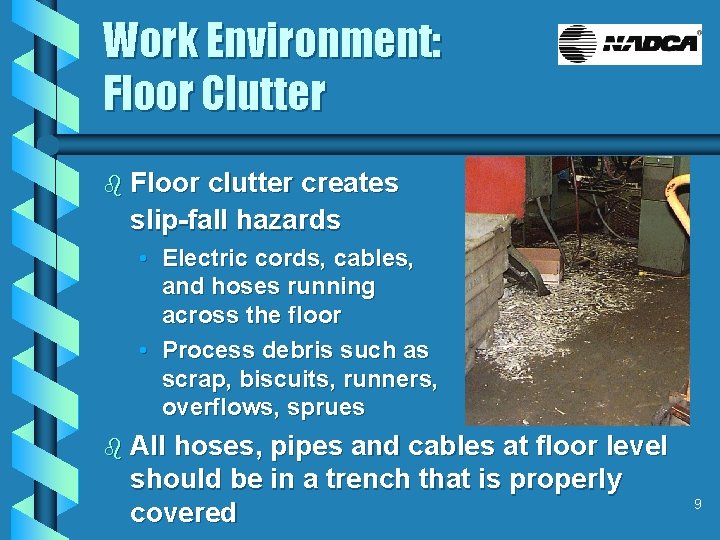
Work Environment: Floor Clutter b Floor clutter creates slip-fall hazards • Electric cords, cables, and hoses running across the floor • Process debris such as scrap, biscuits, runners, overflows, sprues b All hoses, pipes and cables at floor level should be in a trench that is properly covered 9
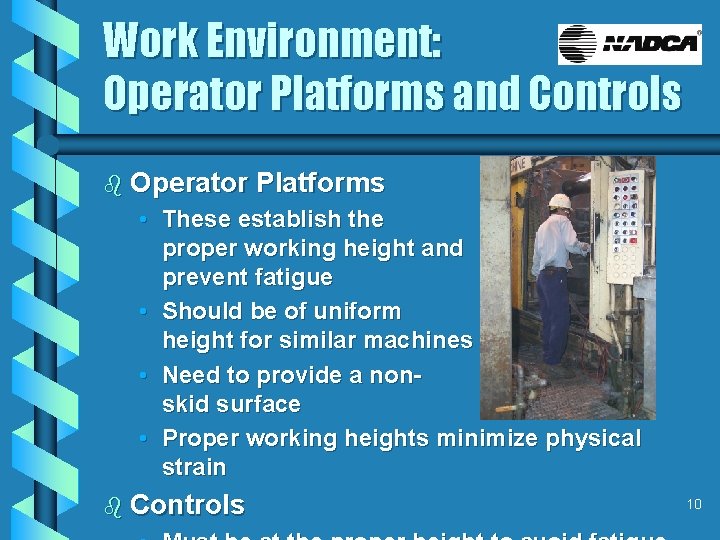
Work Environment: Operator Platforms and Controls b Operator Platforms • These establish the proper working height and prevent fatigue • Should be of uniform height for similar machines • Need to provide a nonskid surface • Proper working heights minimize physical strain b Controls 10
High Pressure Air b Escaping air can be noisy and an air blast can carry small particles of dirt or metal b Air connections should be secured by strong couplings and connectors b Air hoses should be arranged to prevent tripping hazards 11
Steps of High Pressure Air Safety b Check all air hose connections before turning on the air or pressurizing the lines b When turning air on or off, hold nozzle end of the hose to prevent whipping of the air line b Shut off the air before adjusting air tools b Never point an air nozzle at anyone 12
Steps of High Pressure Air Safety cont. b Do not use air to dust off hair or clothing, or to sweep the floor b Wear safety glasses when using high -pressure air b Inspect air hoses regularly and request prompt repair of defective lines 13
Material Handling b Inspect materials b Get a firm grip on the object b Keep fingers away from pinch points b Keep hands away from the ends of long objects to prevent pinching hands b Wipe off greasy, wet, slippery or dirty objects before trying to handle them 14
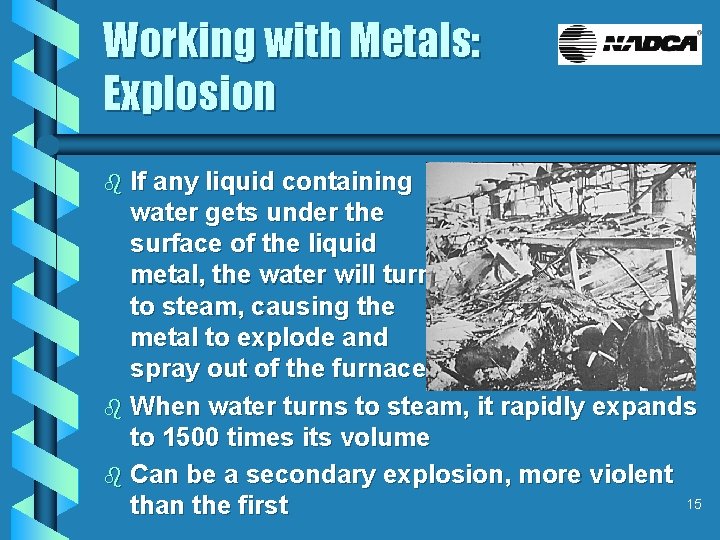
Working with Metals: Explosion If any liquid containing water gets under the surface of the liquid metal, the water will turn to steam, causing the metal to explode and spray out of the furnace b When water turns to steam, it rapidly expands to 1500 times its volume b Can be a secondary explosion, more violent 15 than the first b
Industry Safety b Incidence rate for lost work injuries • In aluminum die casting at 7. 8 per 100 workers • 6. 4 per 100 workers in “other nonferrous die casting” b These rates are almost double those for all manufacturing sectors at 4. 2 incidents per 100 workers 16
Summary b Many hazards are associated with working in a die casting plant b Safety is a defensive attitude, requiring commitment from top management down b Personal protective clothing and accessories helps minimize your risk to certain hazards 17 b Several places on the DCM can
Summary b Work environment hazards include cords, hoses, floor clutter, and obstacles b High pressure air can be hazardous; follow safety guidelines when using it b Always follow the safety guidelines when handling materials 18 b Liquid metals can explode if any
- Slides: 18