
Chapter 9 Outline 9 1 Chromosome Mutations Include


- Slides: 44
Chapter 9 Outline • 9. 1 Chromosome Mutations Include Rearrangements, Aneuploids, and Polyploids, 238 • 9. 2 Chromosome Rearrangements Alter Chromosome Structure, 240 • 9. 3 Aneuploidy Is an Increase or Decrease in the Number of Individual Chromosomes, 249 • 9. 4 Polyploidy Is the Presence of More than Two Sets of Chromosomes, 255 • 9. 5 Chromosome Variation Plays an Important Role in Evolution, 260
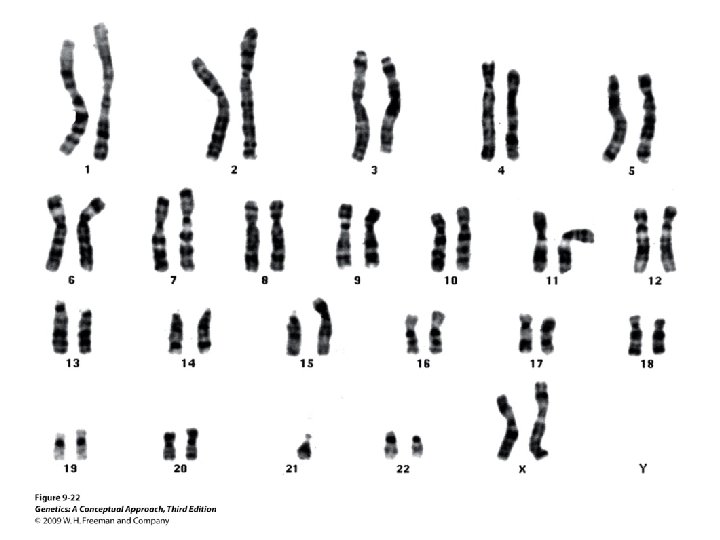
9. 1 Chromosome Mutations Include Rearrangements, Aneuploids, and Polyploids • Chromosome Morphology (position of the centromere on the chromosome): • Metacentric • Submetacentric • Acrocentric • Telocentric
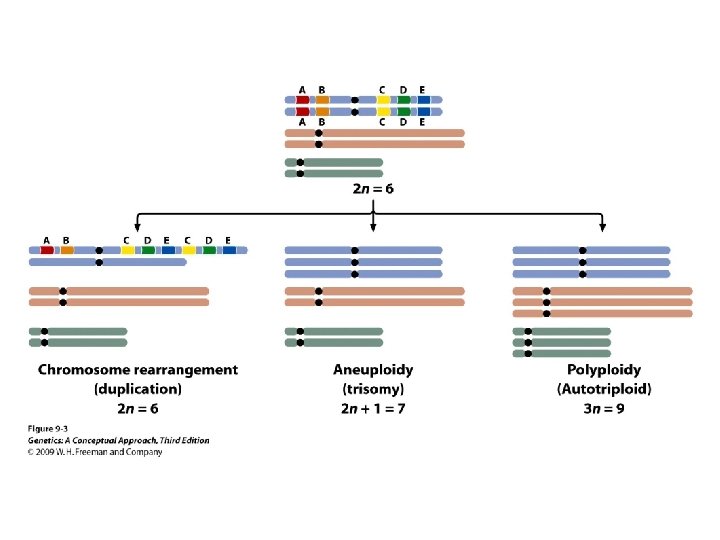
Types of Chromosome Mutations • Rearrangements: • Aneuploidy • Polyploidy
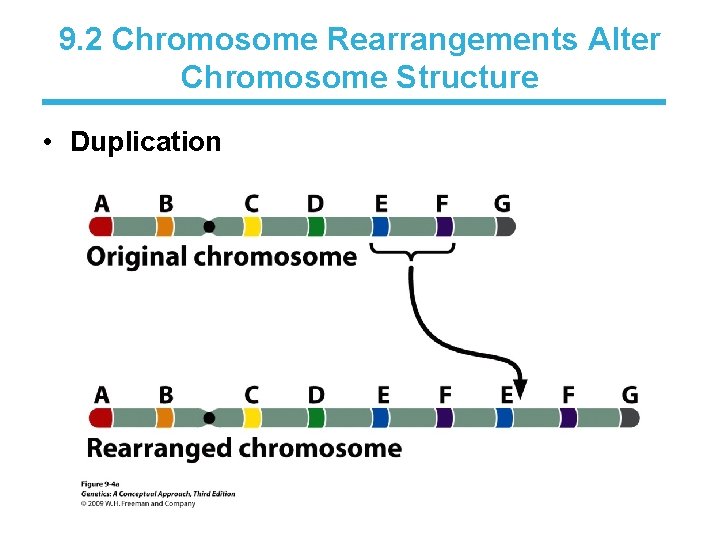
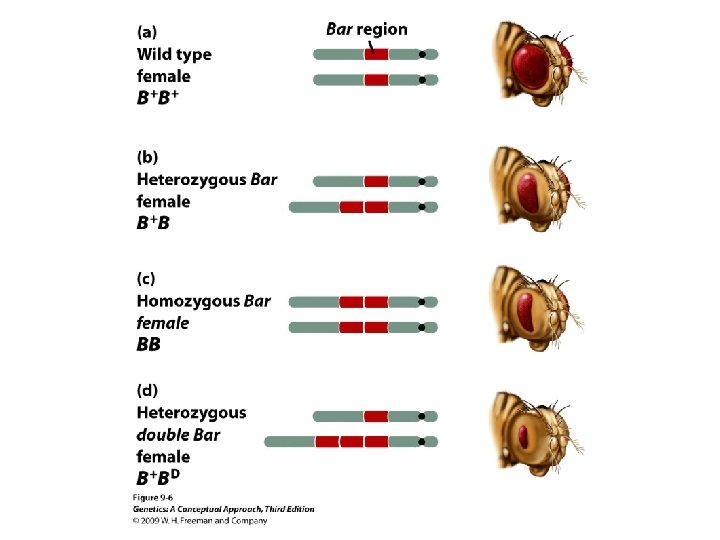
9. 2 Chromosome Rearrangements Alter Chromosome Structure • Duplication
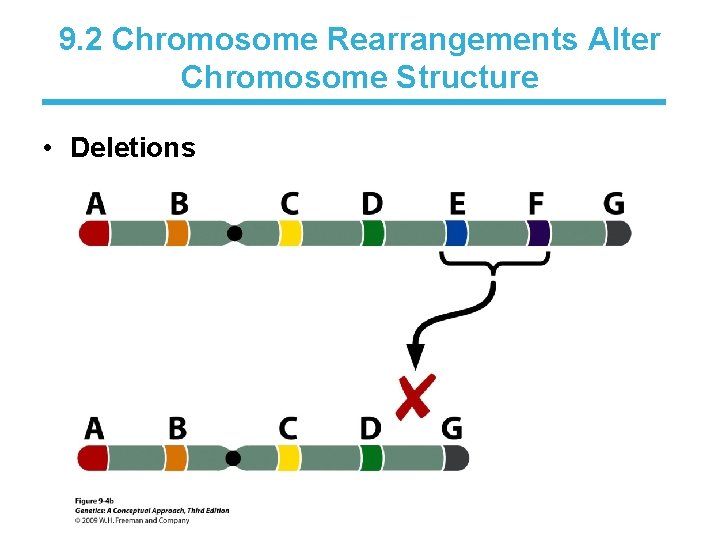
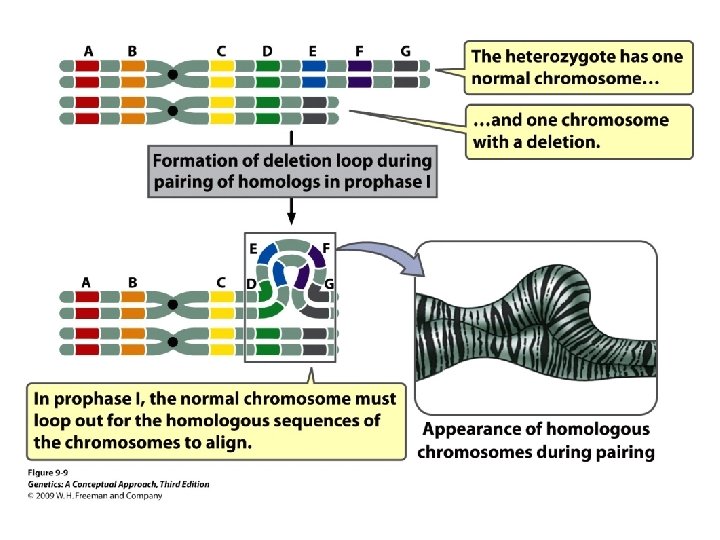
9. 2 Chromosome Rearrangements Alter Chromosome Structure • Deletions
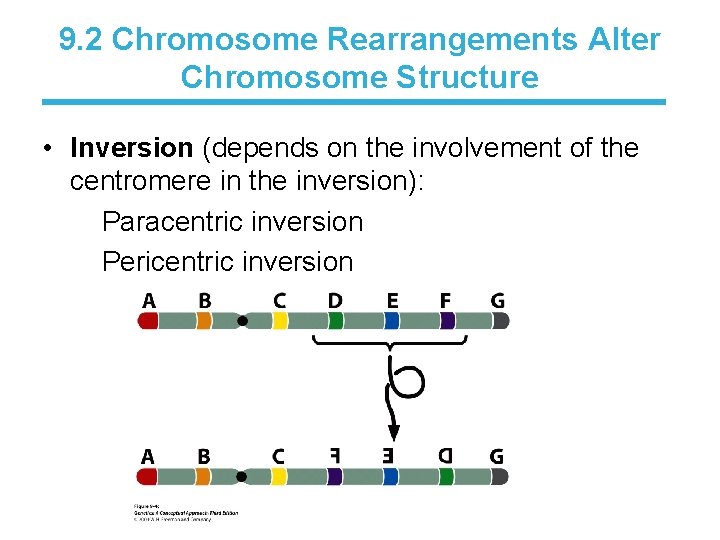
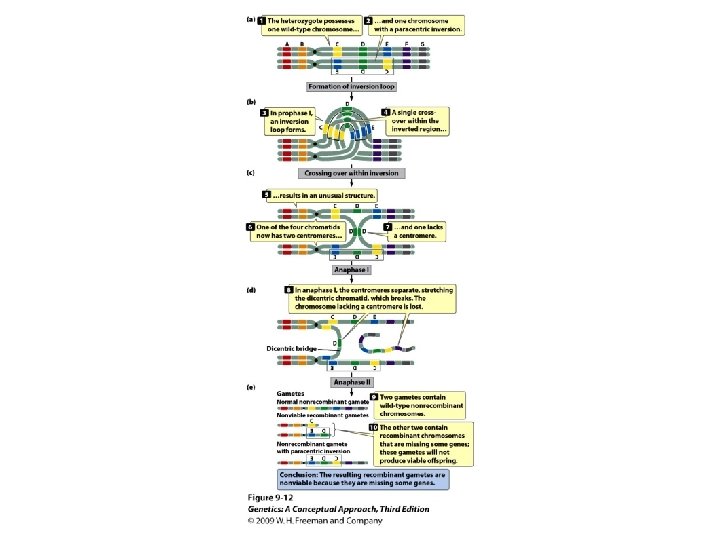
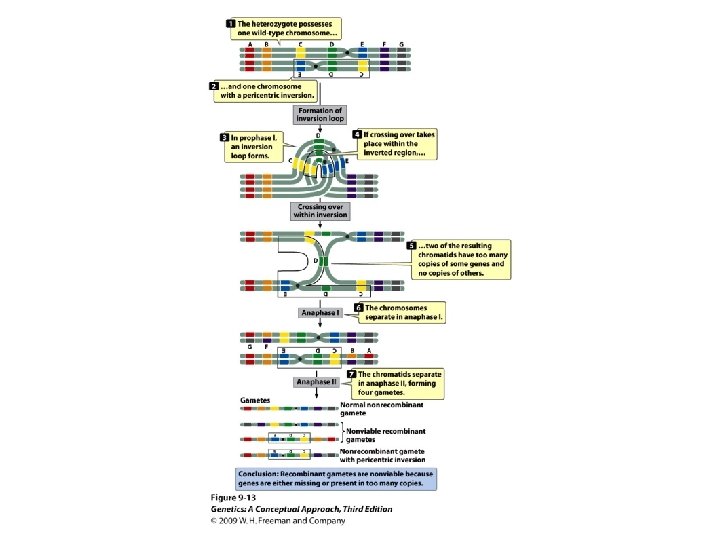
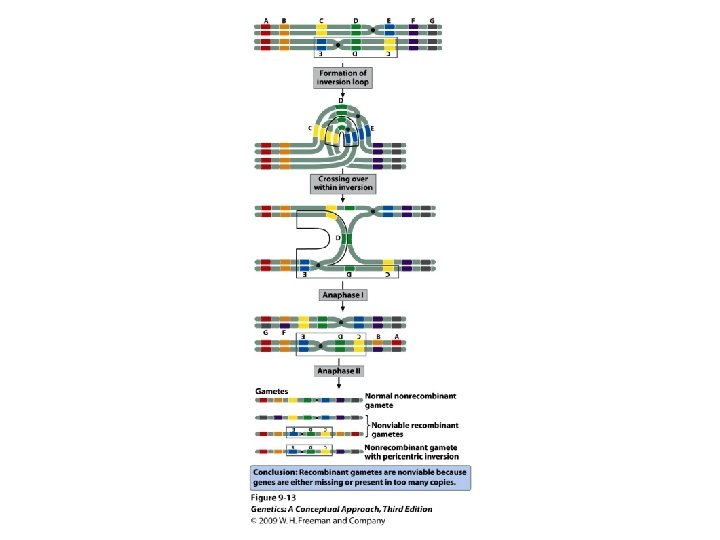
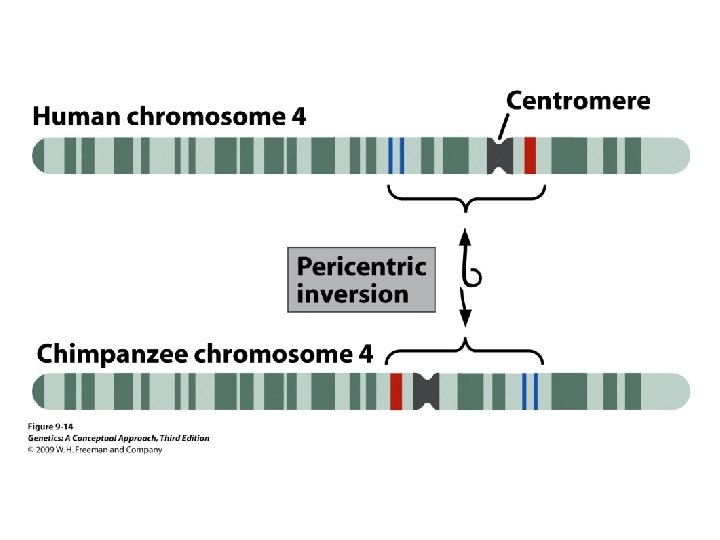
9. 2 Chromosome Rearrangements Alter Chromosome Structure • Inversion (depends on the involvement of the centromere in the inversion): Paracentric inversion Pericentric inversion
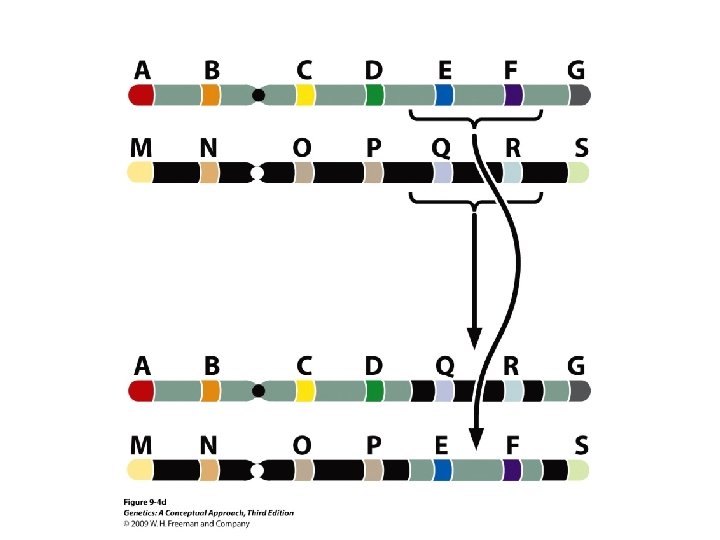
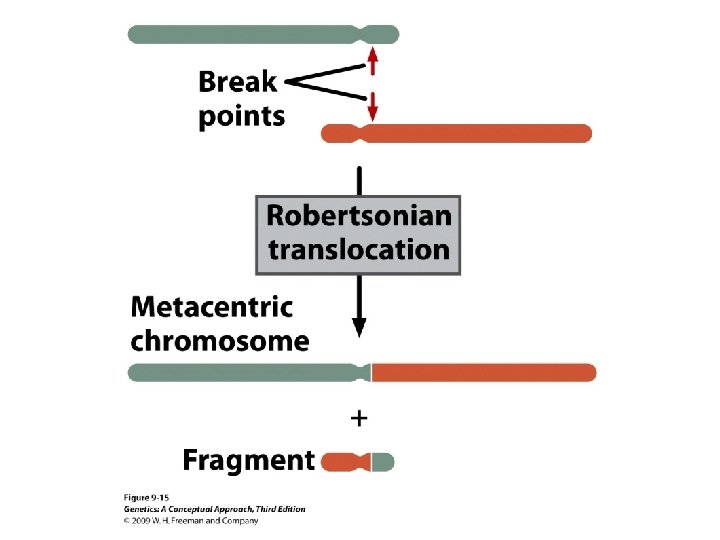
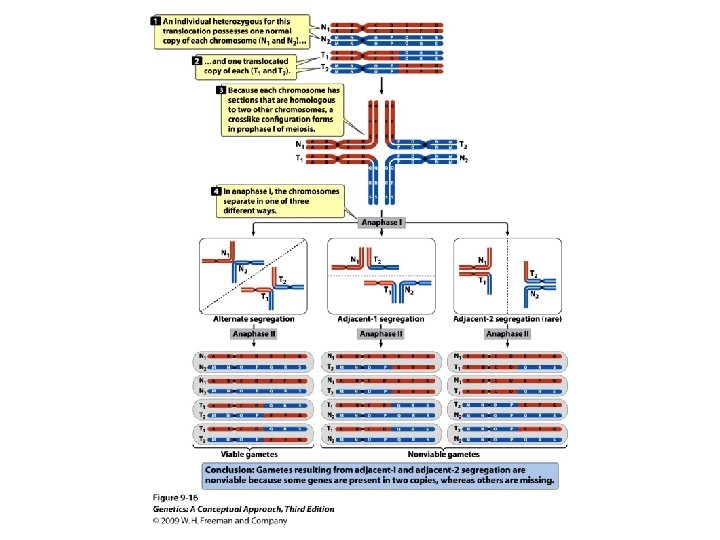
Translocation • Nonreciprocal translocation • Robertsonian translocation
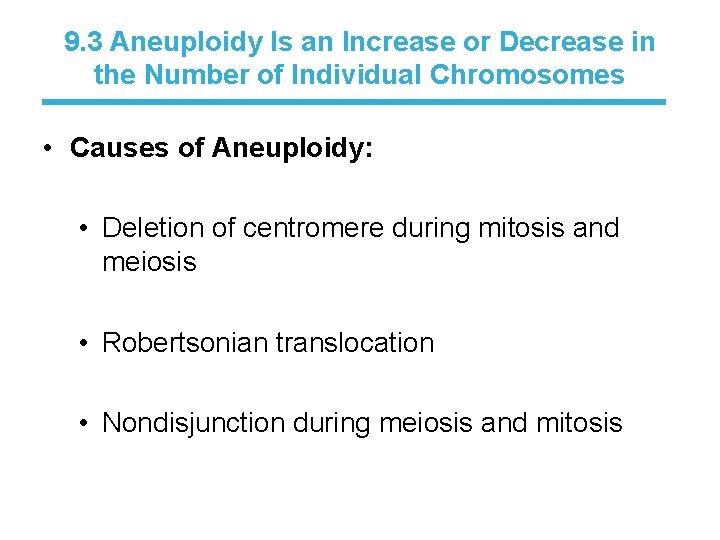
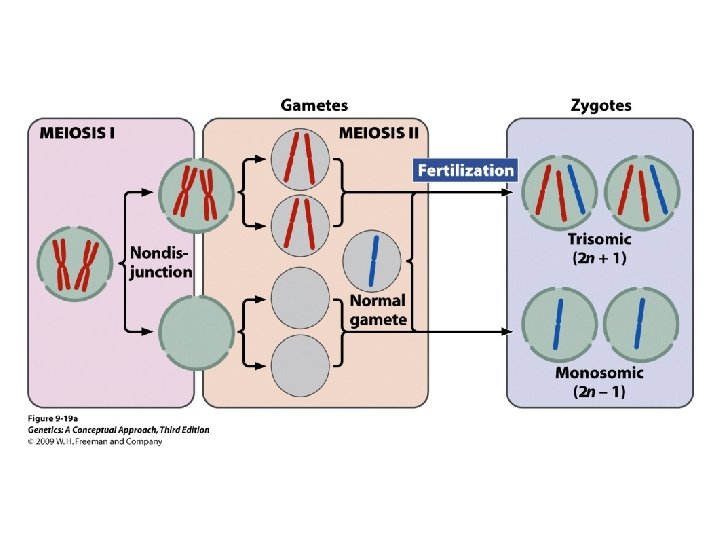
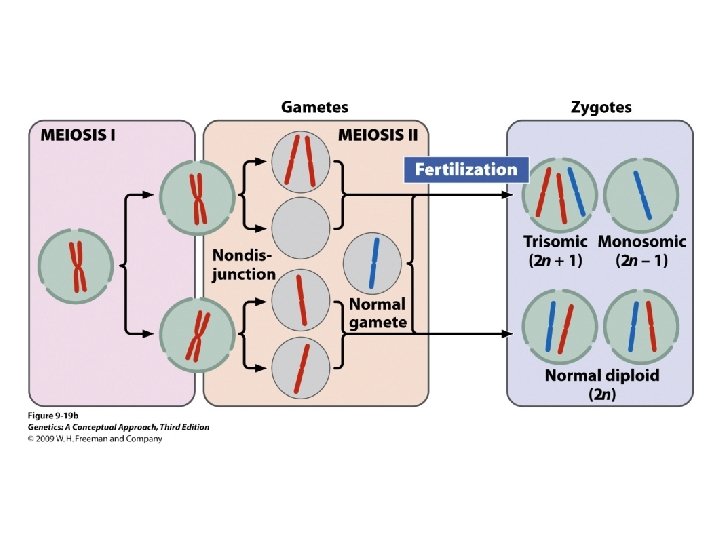
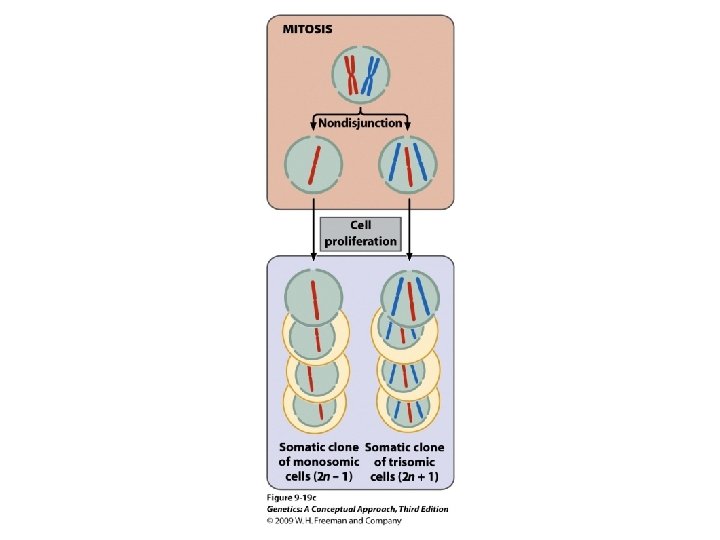
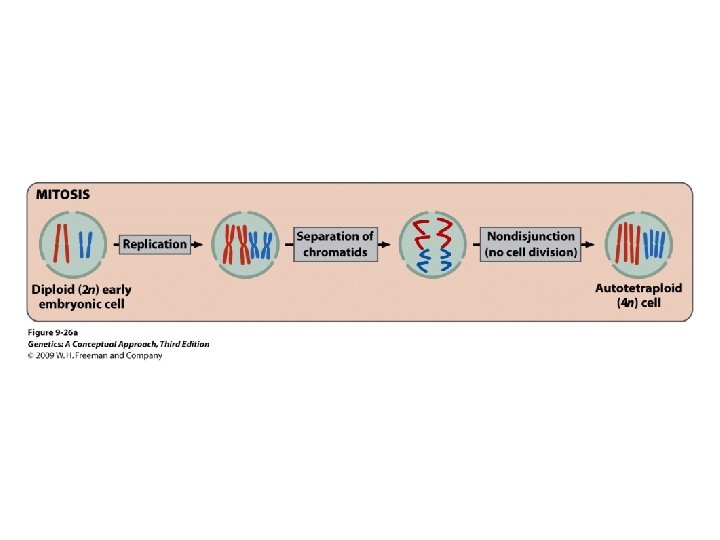
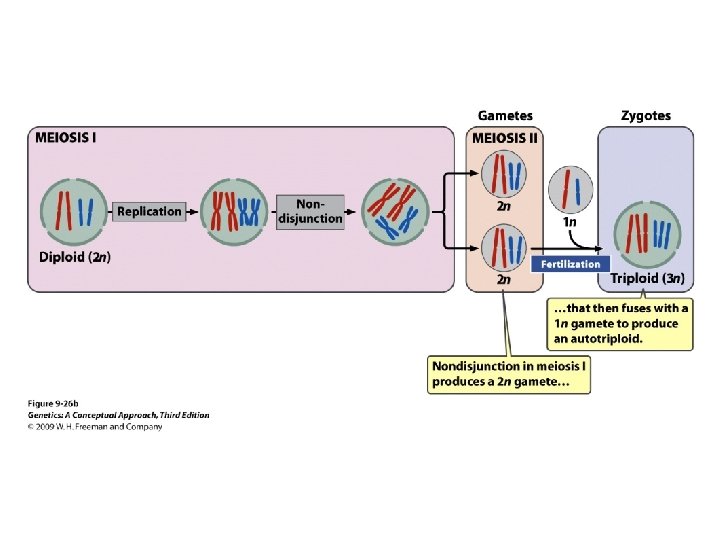
9. 3 Aneuploidy Is an Increase or Decrease in the Number of Individual Chromosomes • Causes of Aneuploidy: • Deletion of centromere during mitosis and meiosis • Robertsonian translocation • Nondisjunction during meiosis and mitosis
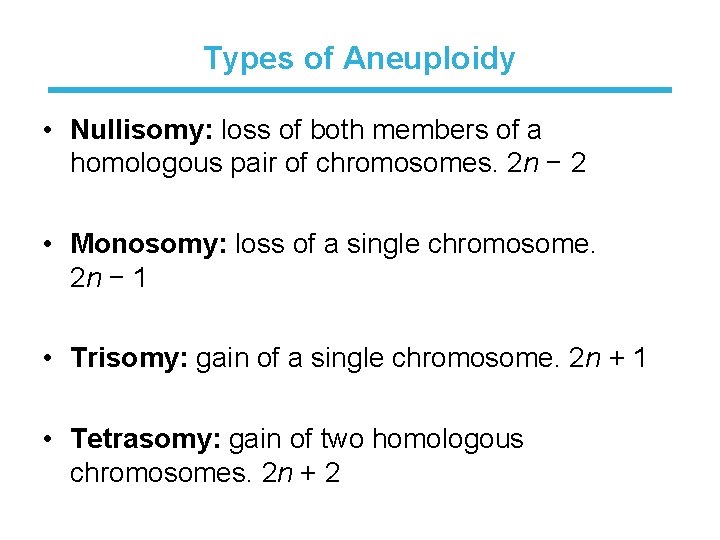
Types of Aneuploidy • Nullisomy: loss of both members of a homologous pair of chromosomes. 2 n − 2 • Monosomy: loss of a single chromosome. 2 n − 1 • Trisomy: gain of a single chromosome. 2 n + 1 • Tetrasomy: gain of two homologous chromosomes. 2 n + 2
Concept Check 3 A diploid organism has 2 n = 36 chromosomes. How many chromosomes will be found in a trisomic member of this species?
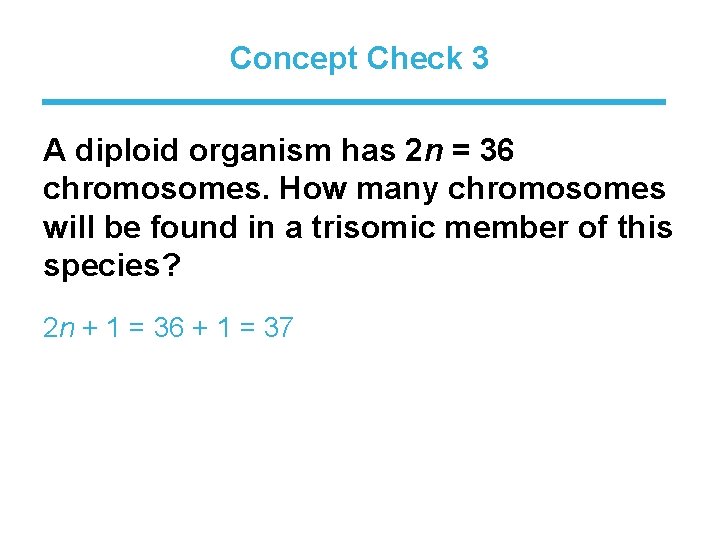
Concept Check 3 A diploid organism has 2 n = 36 chromosomes. How many chromosomes will be found in a trisomic member of this species? 2 n + 1 = 36 + 1 = 37
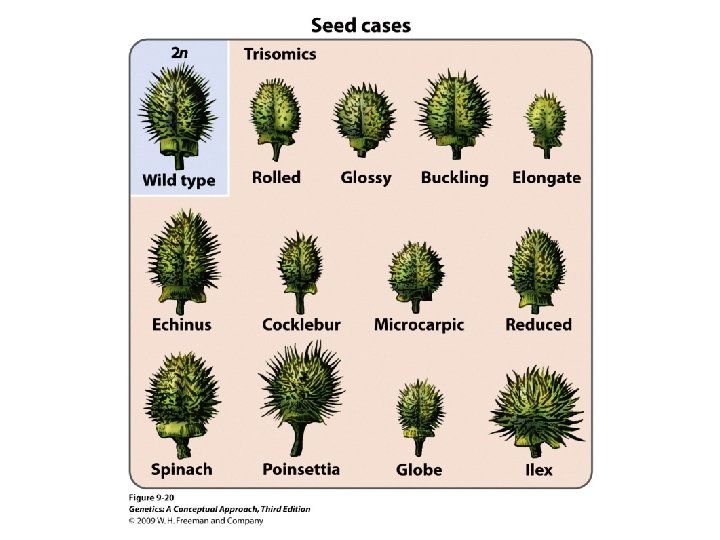
Effects of Aneuploidy in Plants
Effects of Aneuploidy in Humans • Sex-chromosome aneuploids: • Turner syndrome. XO • Klinefelter sydrome. XXY
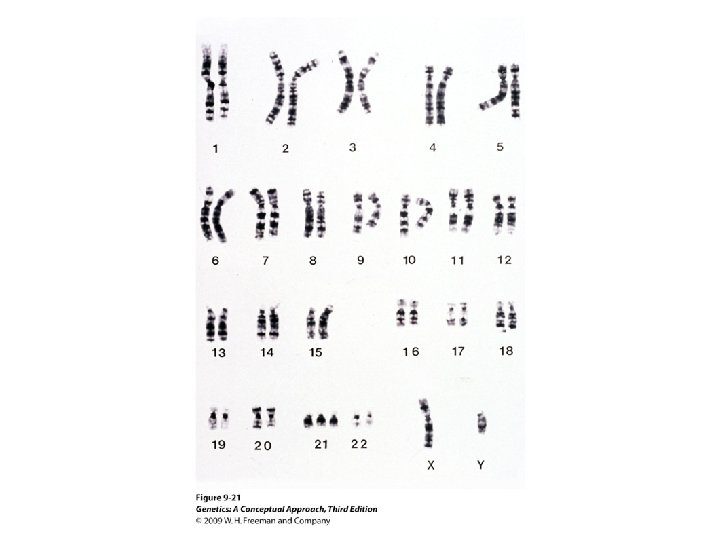
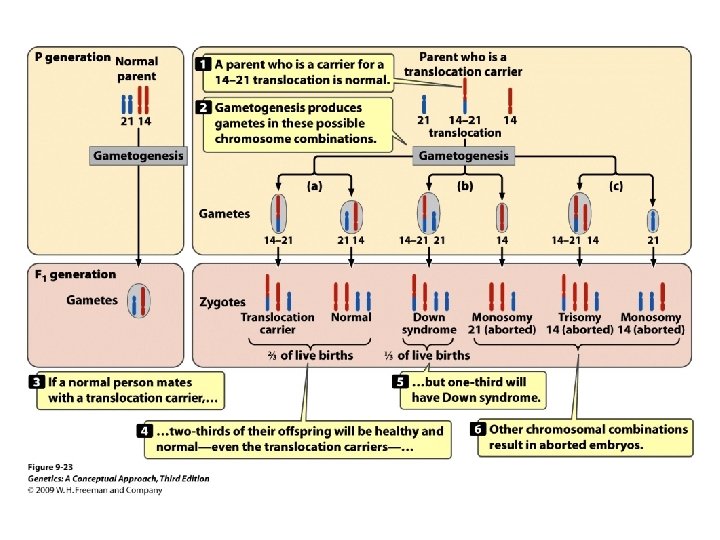
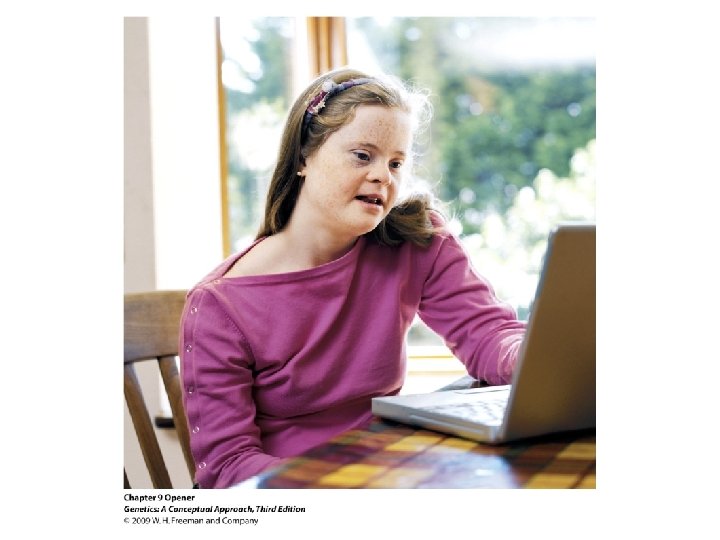
Effects of Aneuploidy in Humans • Autosomal aneuploids: • Trisomy 21 – Down syndrome • Primary Down syndrome, 75% random nondisjunction in egg formation • Familial Down syndrome, Robertsonian translocation between chromosomes 14 and 21
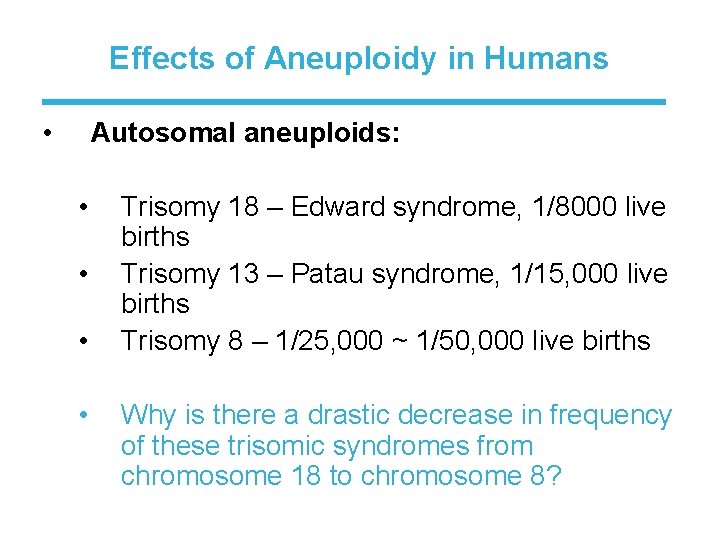
Effects of Aneuploidy in Humans • Autosomal aneuploids: • • Trisomy 18 – Edward syndrome, 1/8000 live births Trisomy 13 – Patau syndrome, 1/15, 000 live births Trisomy 8 – 1/25, 000 ~ 1/50, 000 live births Why is there a drastic decrease in frequency of these trisomic syndromes from chromosome 18 to chromosome 8?
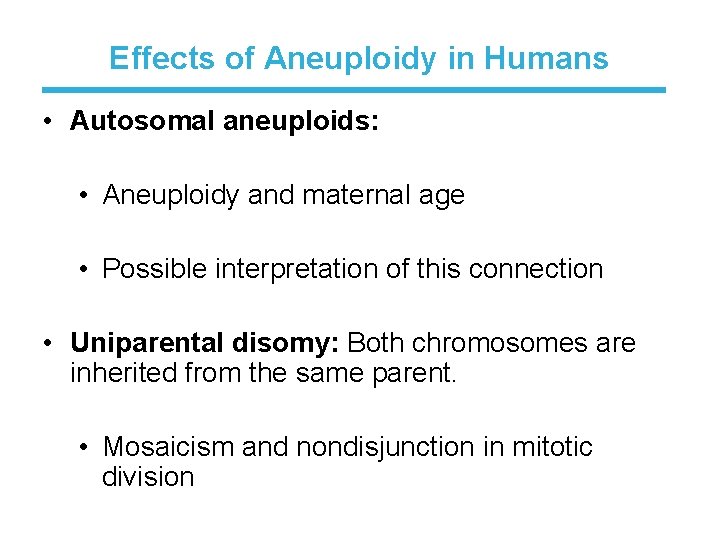
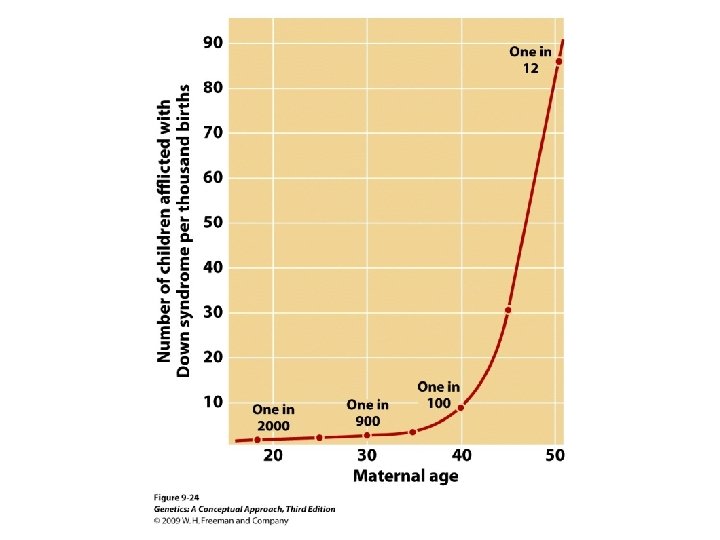
Effects of Aneuploidy in Humans • Autosomal aneuploids: • Aneuploidy and maternal age • Possible interpretation of this connection • Uniparental disomy: Both chromosomes are inherited from the same parent. • Mosaicism and nondisjunction in mitotic division
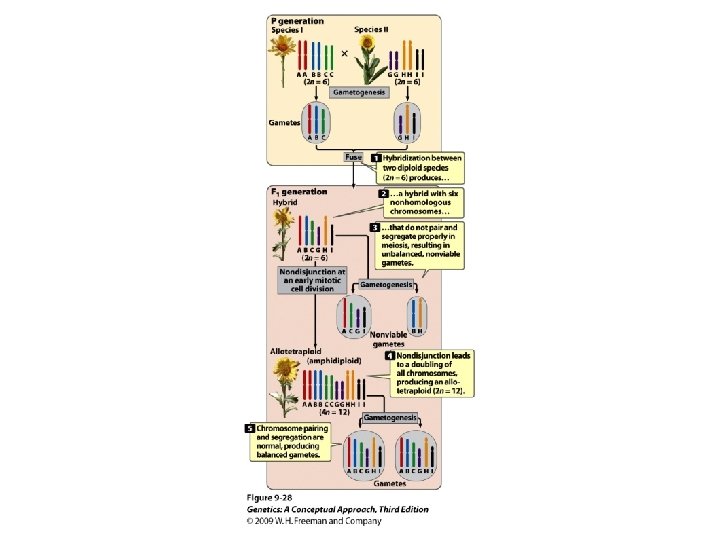
9. 4 Polyploidy Is the Presence of More than Two Sets of Chromosomes • Autopolyploidy: From single species • Allopolyploidy: From two species
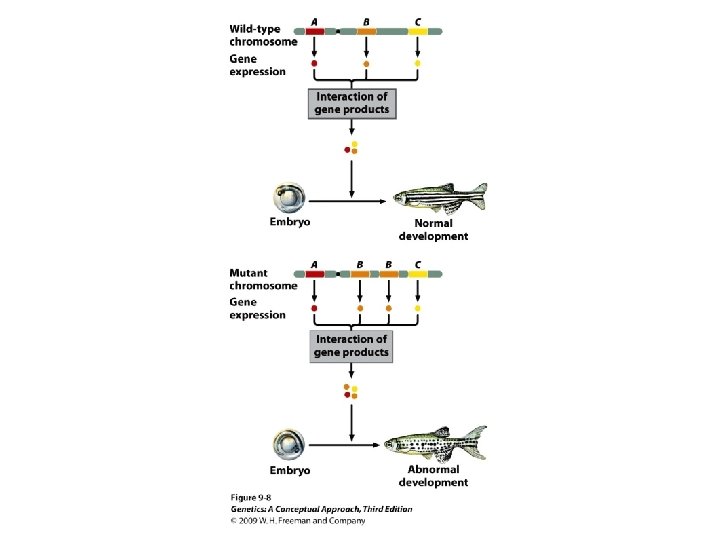
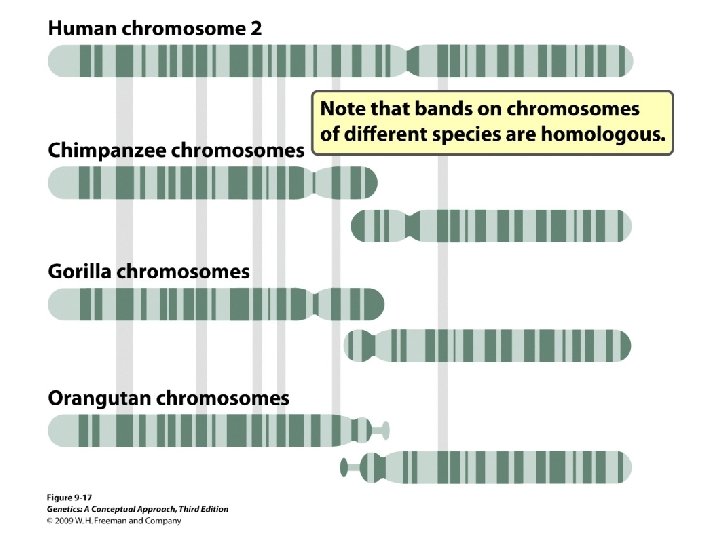
9. 5 Chromosome Variation Plays an Important Role in Evolution • New and extra copies of genes give rise to new functions. • New and extra sets of genes may give rise to new species.