
Chapter 9 Origin of Primates Rise First Primates



- Slides: 22
Chapter 9: Origin of Primates
Rise
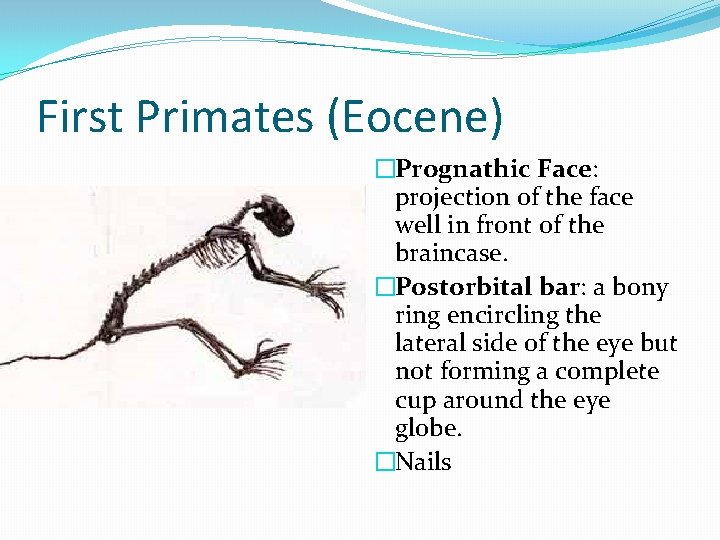
First Primates (Eocene) �Prognathic Face: projection of the face well in front of the braincase. �Postorbital bar: a bony ring encircling the lateral side of the eye but not forming a complete cup around the eye globe. �Nails
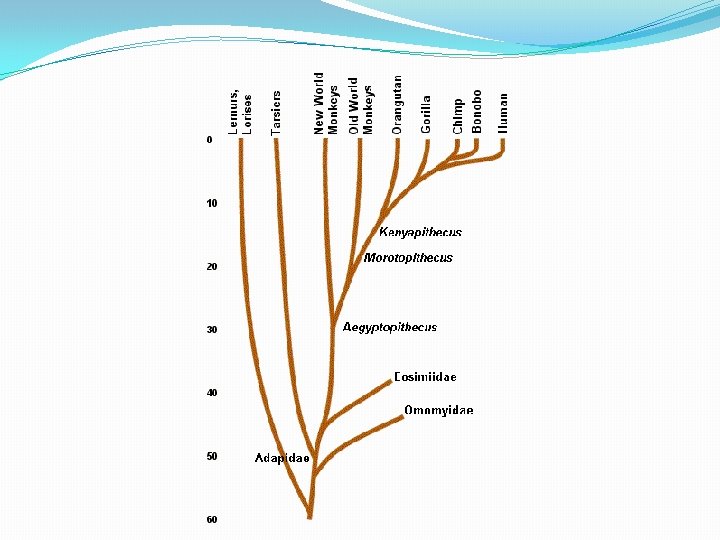
Ancient Ancestors Adapoids Omomyoids �Family of mostly Eocene primates, probably ancestral to all strepsirhines. �Controversy? �Family of mostly Eocene primates probably ancestral to all haplorhines.
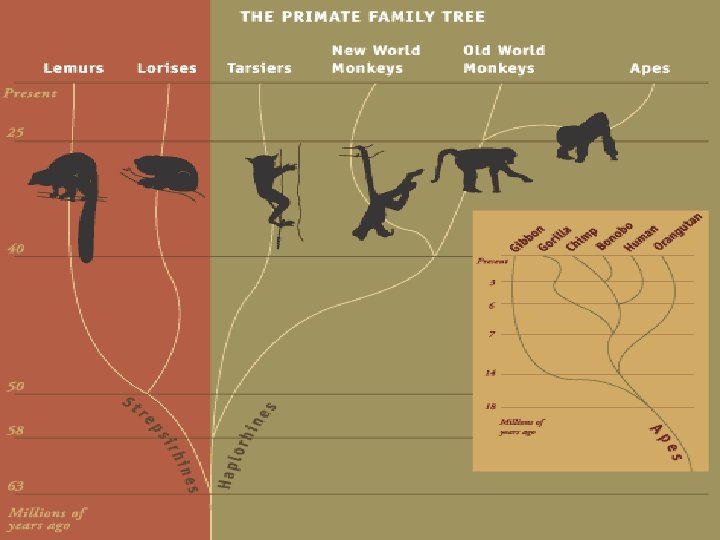
Evolution of Higher Primates
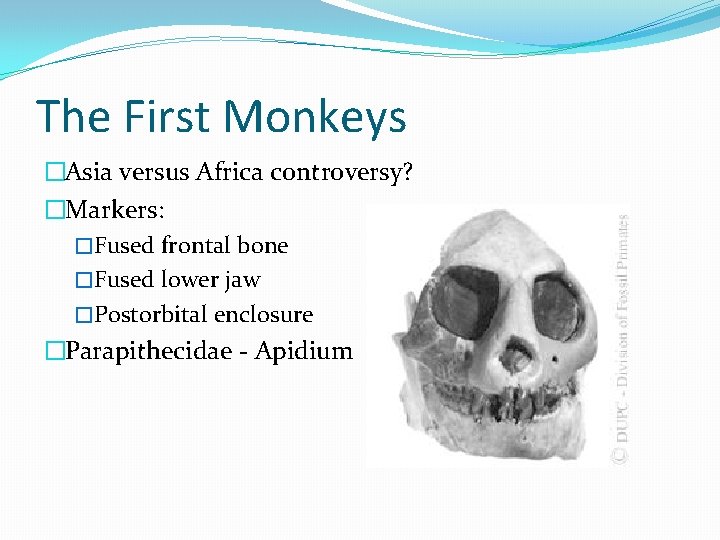
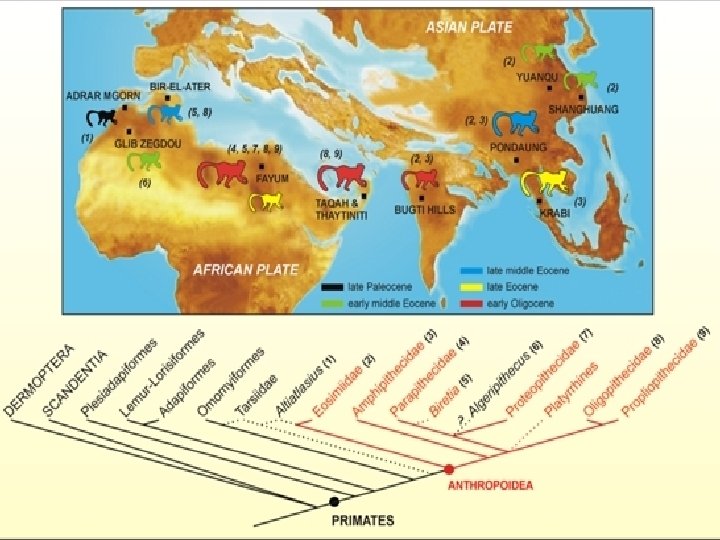
The First Monkeys �Asia versus Africa controversy? �Markers: �Fused frontal bone �Fused lower jaw �Postorbital enclosure �Parapithecidae - Apidium
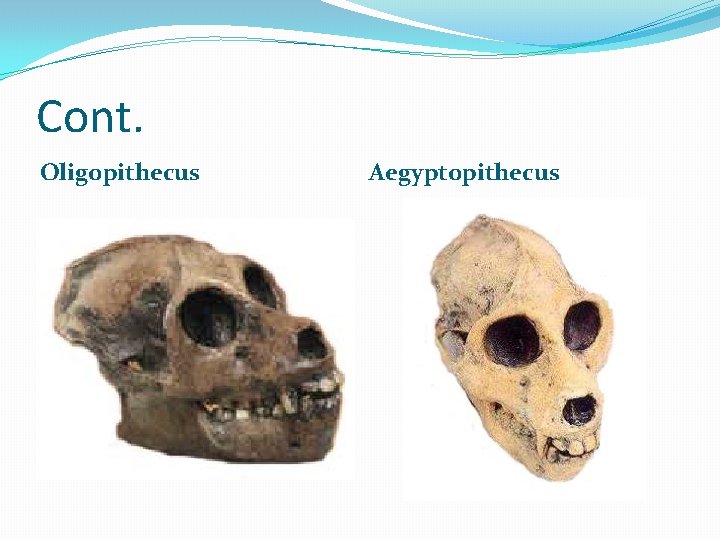
Cont. Oligopithecus Aegyptopithecus
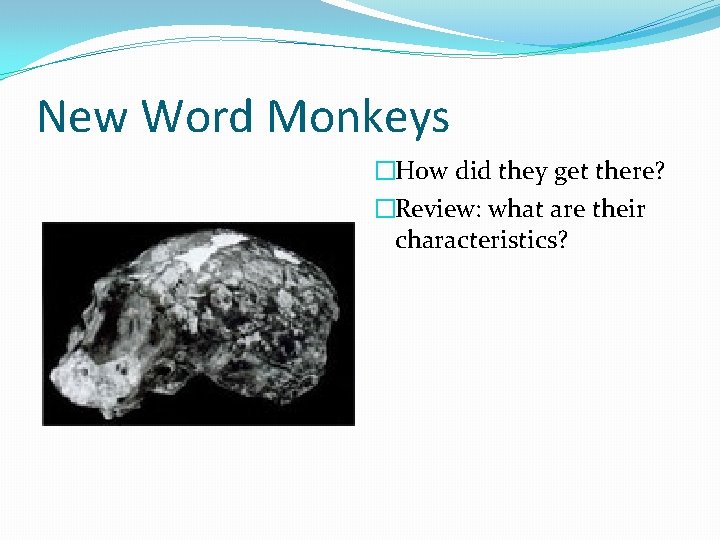
New Word Monkeys �How did they get there? �Review: what are their characteristics?
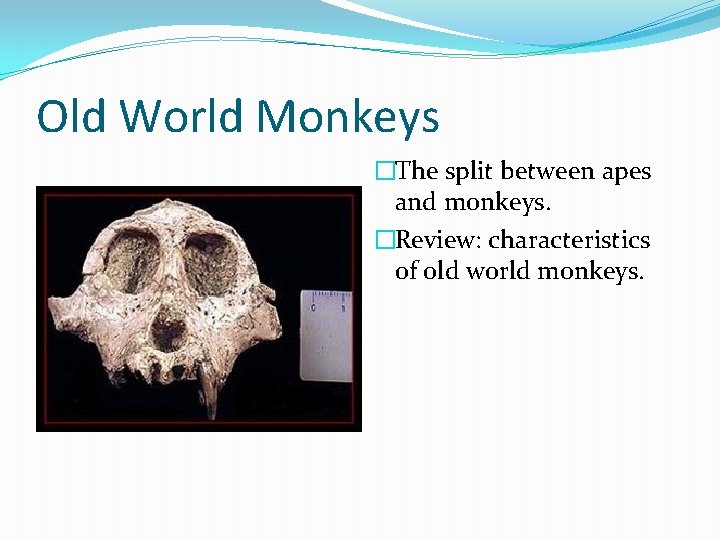
Old World Monkeys �The split between apes and monkeys. �Review: characteristics of old world monkeys.
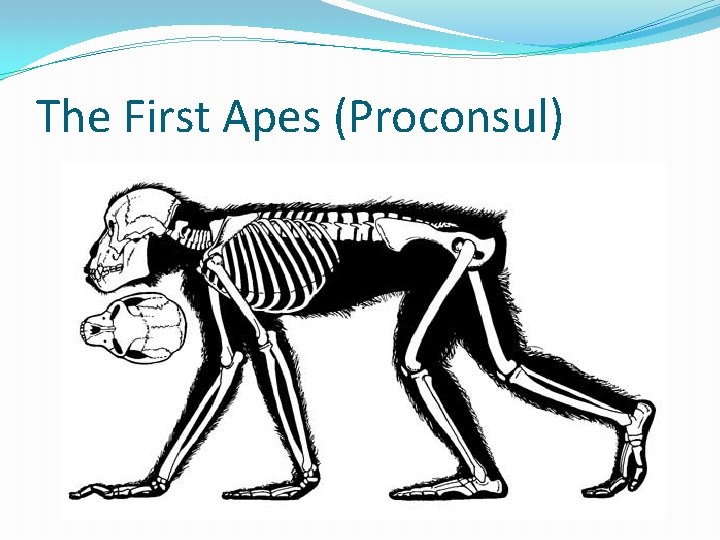
The First Apes (Proconsul)
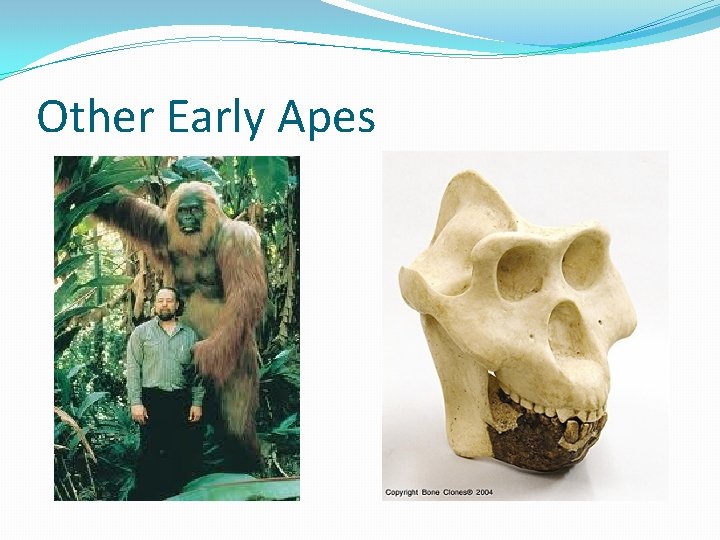
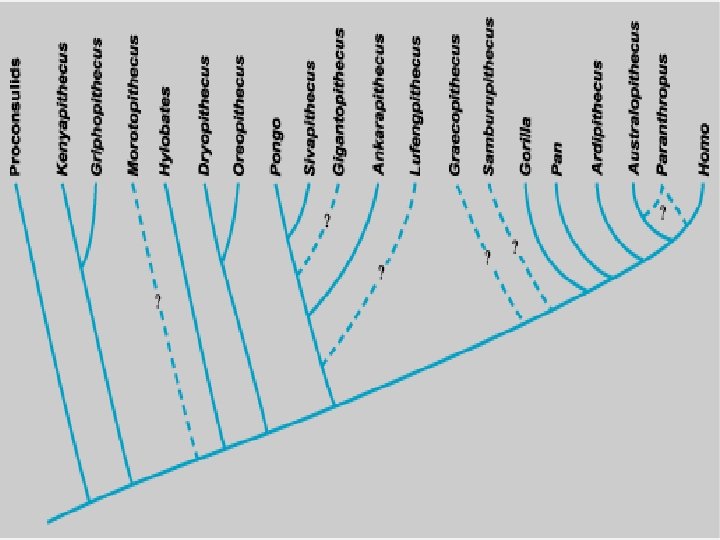
Other Early Apes
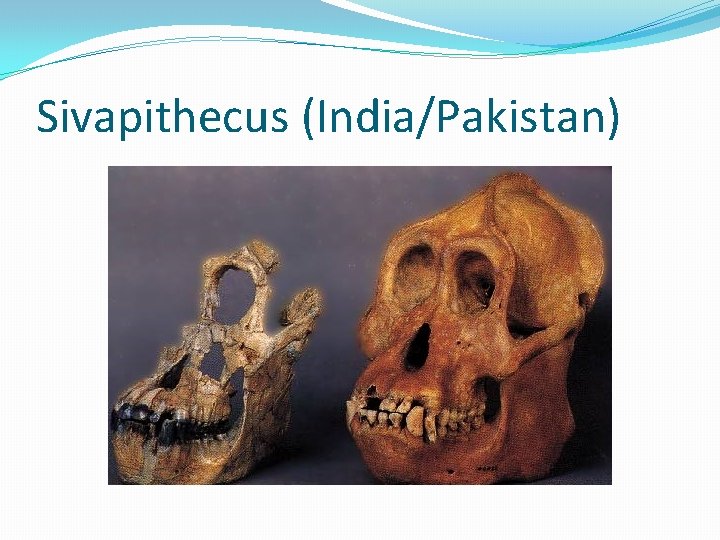
Sivapithecus (India/Pakistan)
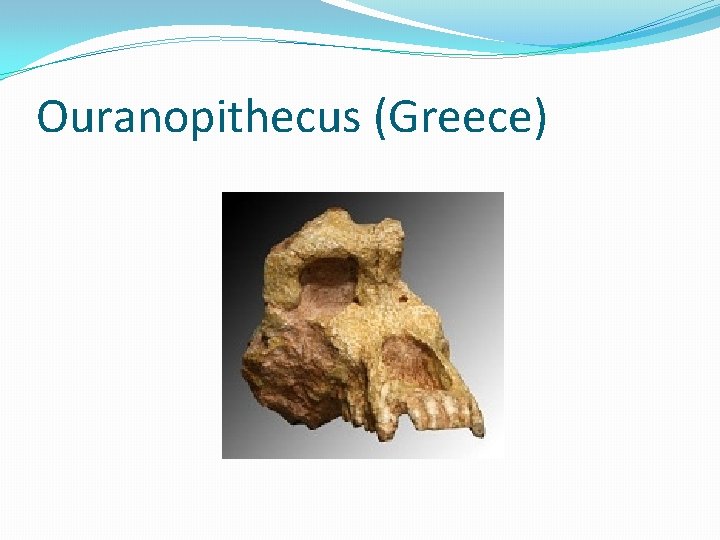
Ouranopithecus (Greece)
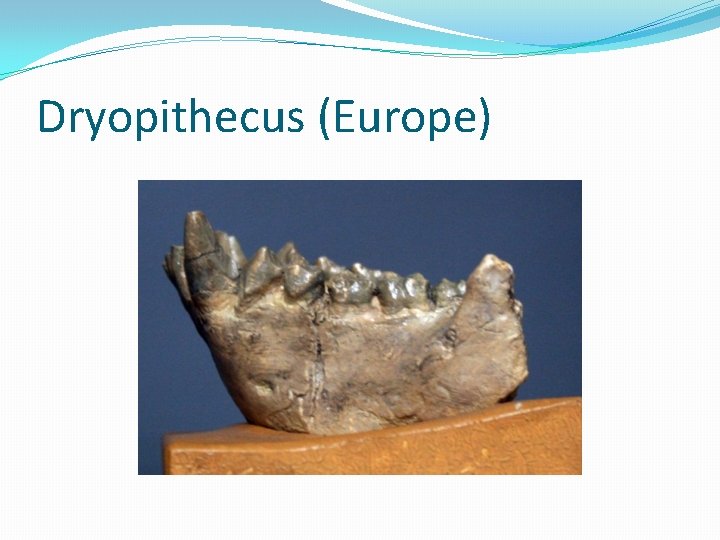
Dryopithecus (Europe)
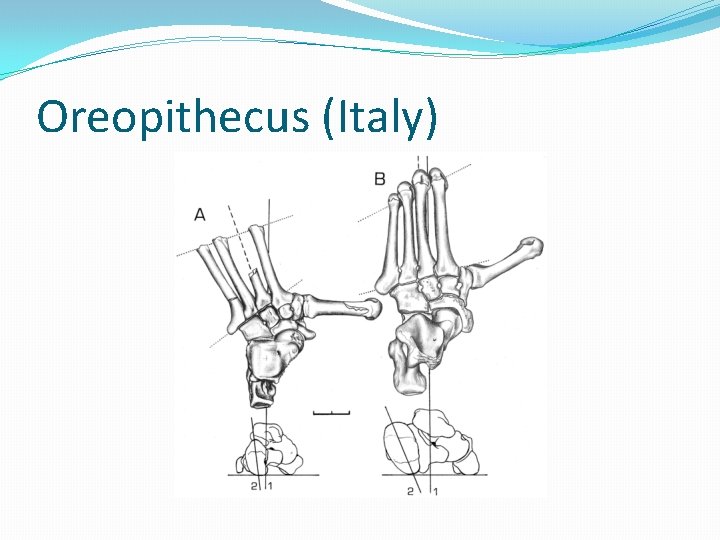
Oreopithecus (Italy)
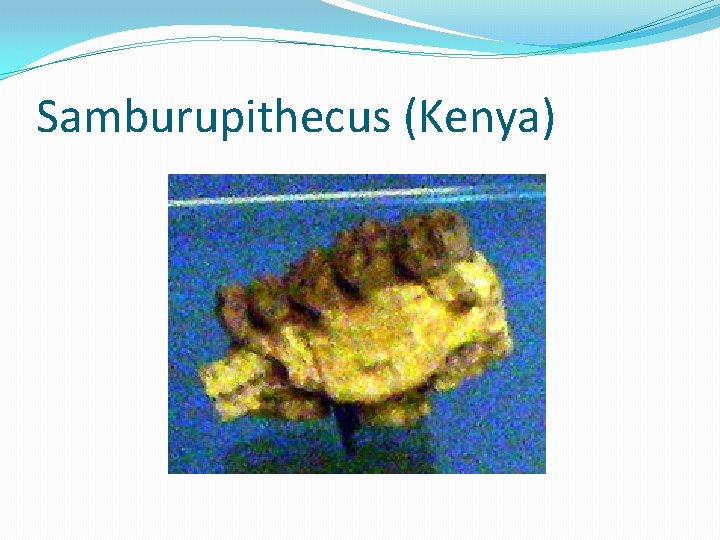
Samburupithecus (Kenya)
Climate change and ape/monkey diversfication �Miocene – shift from forests to grasslands �R-selected: reproductive strategy in which females have many offspring, interbirth intervals are short, and maternal investment per offspring is low. �K-selected: reproductive strategy in which fewer offspring are produced per female, interbirth intervals are long, and maternal investment is high.
Molecular Clock Hypothesis