
Chapter 9 Nonaqueous media TOPICS Relative permittivity Acidbase
Chapter 9 Non-aqueous media TOPICS § Relative permittivity § Acid--base behaviour in non-aqueous solvents § Liquid ammonia § Liquid hydrogen fluoride § Sulfuric acid § Fluorosulfonic acid § Bromine trifluoride § Dinitrogen tetraoxide § Ionic liquids § Supercritical fluids
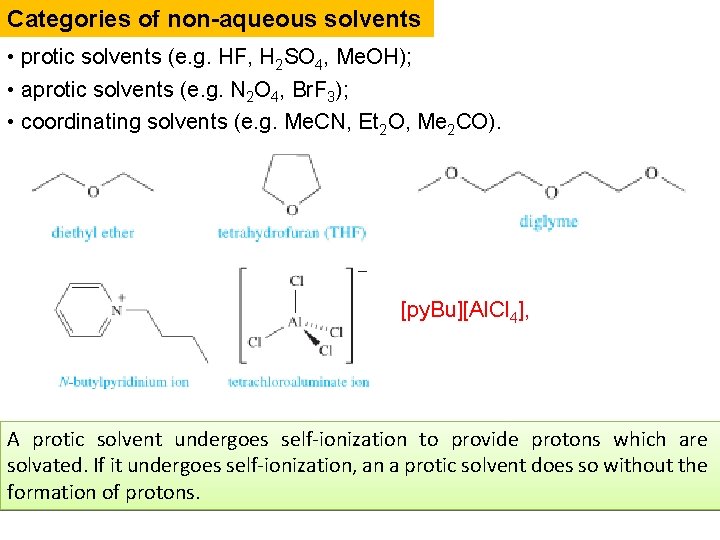
Categories of non-aqueous solvents • protic solvents (e. g. HF, H 2 SO 4, Me. OH); • aprotic solvents (e. g. N 2 O 4, Br. F 3); • coordinating solvents (e. g. Me. CN, Et 2 O, Me 2 CO). [py. Bu][Al. Cl 4], A protic solvent undergoes self-ionization to provide protons which are solvated. If it undergoes self-ionization, an a protic solvent does so without the formation of protons.
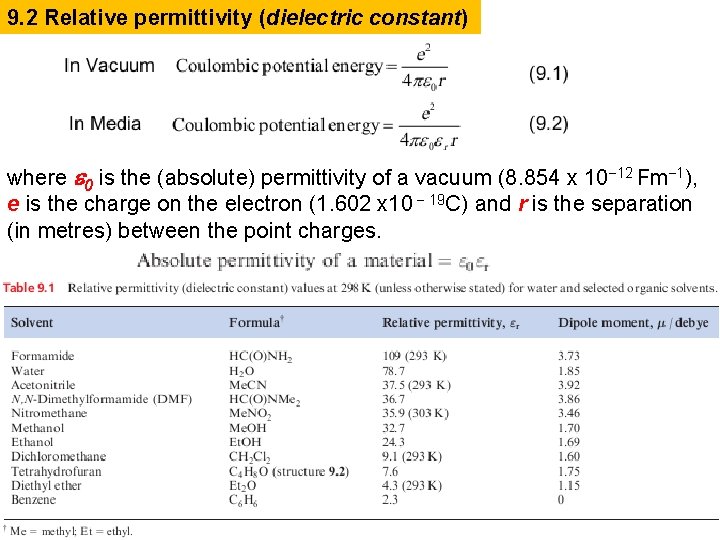
9. 2 Relative permittivity (dielectric constant) where 0 is the (absolute) permittivity of a vacuum (8. 854 x 10 12 Fm 1), e is the charge on the electron (1. 602 x 10 19 C) and r is the separation (in metres) between the point charges.
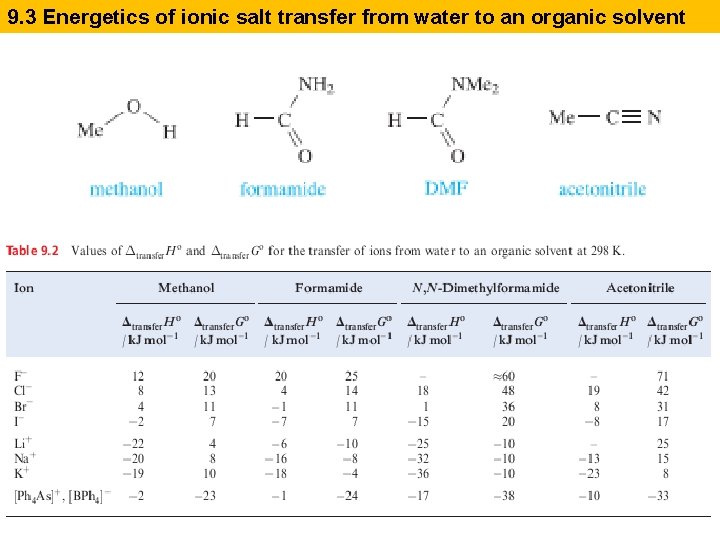
9. 3 Energetics of ionic salt transfer from water to an organic solvent
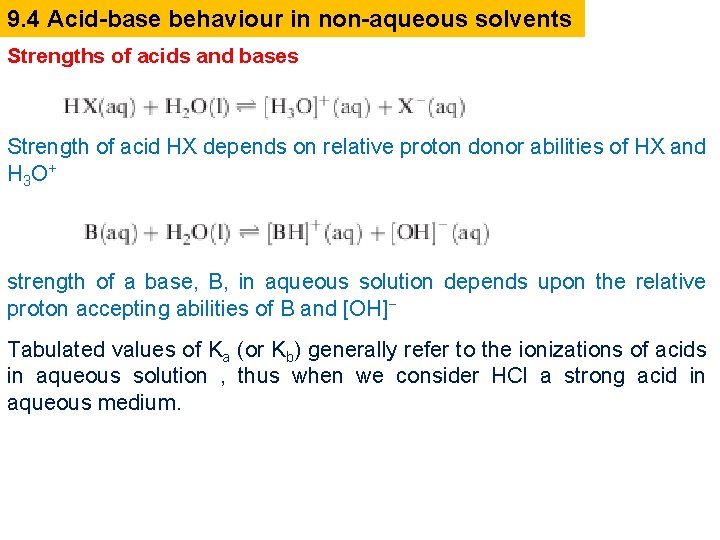
9. 4 Acid-base behaviour in non-aqueous solvents Strengths of acids and bases Strength of acid HX depends on relative proton donor abilities of HX and H 3 O + strength of a base, B, in aqueous solution depends upon the relative proton accepting abilities of B and [OH] Tabulated values of Ka (or Kb) generally refer to the ionizations of acids in aqueous solution , thus when we consider HCl a strong acid in aqueous medium.
Levelling and differentiating effects § Non-aqueous solvents that are good proton acceptors (e. g. NH 3) encourage acids to ionize in them. § In a basic solvent, all acids are strong. § The solvent is said to exhibit a levelling effect on the acid, since the strength of the dissolved acid cannot exceed that of the protonated solvent. § In aqueous solution, no acidic species can exist that is a stronger acid than H 3 O+. § Note, because of the common ion effect, if HCl is dissolved in acetic acid, the extent of ionization is less than in water and HCl acts as a weak acid. Hydrogen bromide and iodide behave similarly but the extent of ionization of the three hydrogen halides varies along the series: HI > HBr > HCl. This contrasts with the fact that all three compounds are classed as strong acids (i. e. fully ionized) in aqueous solution. Thus, acetic acid exerts a differentiating effect on the acidic behaviour of HCl, HBr and HI, whereas water does not.

‘Acids’ in acidic solvents Effect of dissolving ‘acids’ in acidic non-aqueous solvents enables us to realize that just because a compound is named an ‘acid’, it may not behave as one in non-aqueous media. The above reaction may be described as the sum of: Formation of [NO 2]+ is important in the nitration of aromatic compounds
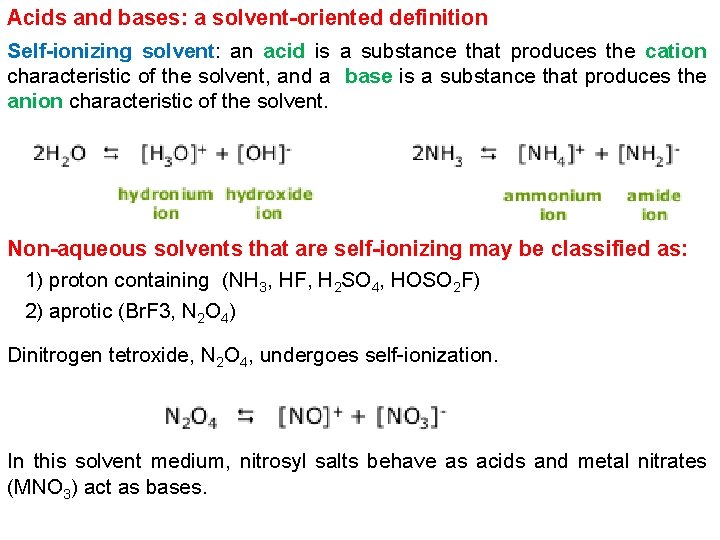
Acids and bases: a solvent-oriented definition Self-ionizing solvent: an acid is a substance that produces the cation characteristic of the solvent, and a base is a substance that produces the anion characteristic of the solvent. Non-aqueous solvents that are self-ionizing may be classified as: 1) proton containing (NH 3, HF, H 2 SO 4, HOSO 2 F) 2) aprotic (Br. F 3, N 2 O 4) Dinitrogen tetroxide, N 2 O 4, undergoes self-ionization. In this solvent medium, nitrosyl salts behave as acids and metal nitrates (MNO 3) act as bases.
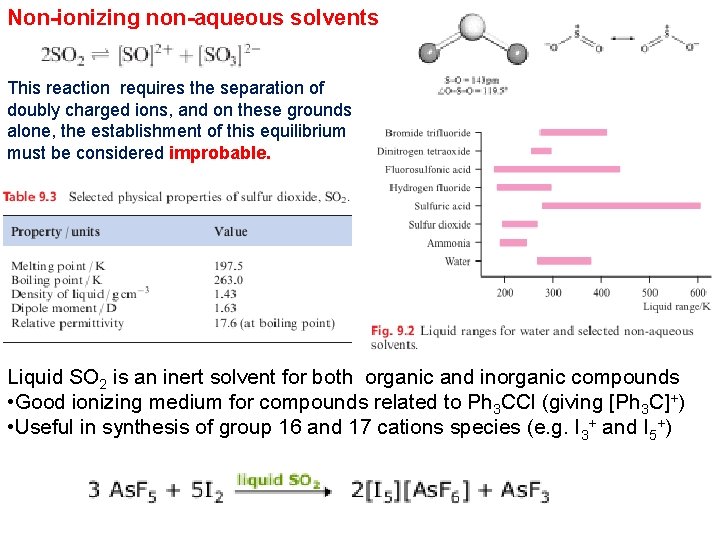
Non-ionizing non-aqueous solvents This reaction requires the separation of doubly charged ions, and on these grounds alone, the establishment of this equilibrium must be considered improbable. Liquid SO 2 is an inert solvent for both organic and inorganic compounds • Good ionizing medium for compounds related to Ph 3 CCl (giving [Ph 3 C]+) • Useful in synthesis of group 16 and 17 cations species (e. g. I 3+ and I 5+)
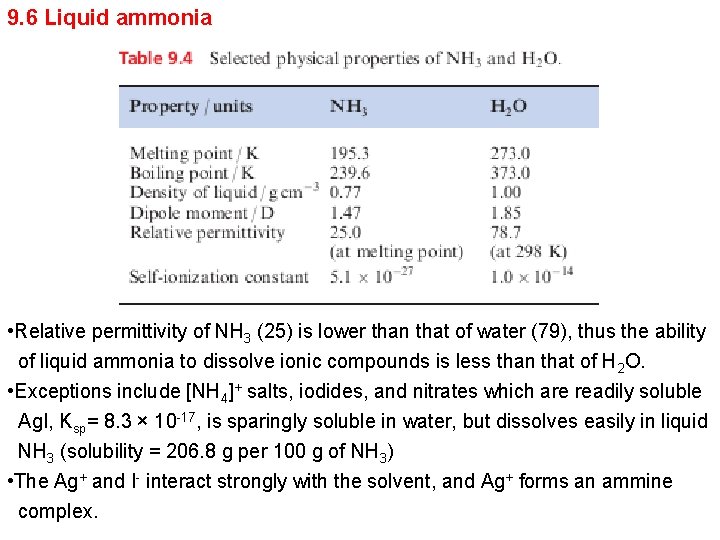
9. 6 Liquid ammonia • Relative permittivity of NH 3 (25) is lower than that of water (79), thus the ability of liquid ammonia to dissolve ionic compounds is less than that of H 2 O. • Exceptions include [NH 4]+ salts, iodides, and nitrates which are readily soluble Ag. I, Ksp= 8. 3 × 10 -17, is sparingly soluble in water, but dissolves easily in liquid NH 3 (solubility = 206. 8 g per 100 g of NH 3) • The Ag+ and I- interact strongly with the solvent, and Ag+ forms an ammine complex.
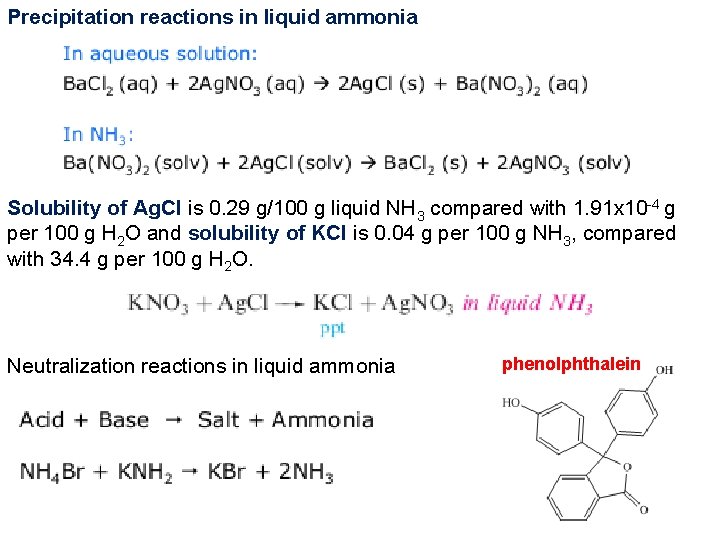
Precipitation reactions in liquid ammonia Solubility of Ag. Cl is 0. 29 g/100 g liquid NH 3 compared with 1. 91 x 10 -4 g per 100 g H 2 O and solubility of KCl is 0. 04 g per 100 g NH 3, compared with 34. 4 g per 100 g H 2 O. Neutralization reactions in liquid ammonia phenolphthalein
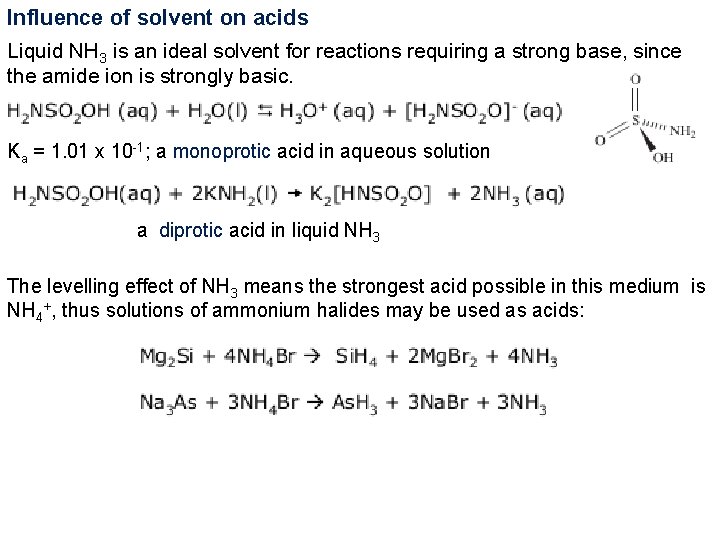
Influence of solvent on acids Liquid NH 3 is an ideal solvent for reactions requiring a strong base, since the amide ion is strongly basic. Ka = 1. 01 x 10 -1; a monoprotic acid in aqueous solution a diprotic acid in liquid NH 3 The levelling effect of NH 3 means the strongest acid possible in this medium is NH 4+, thus solutions of ammonium halides may be used as acids:
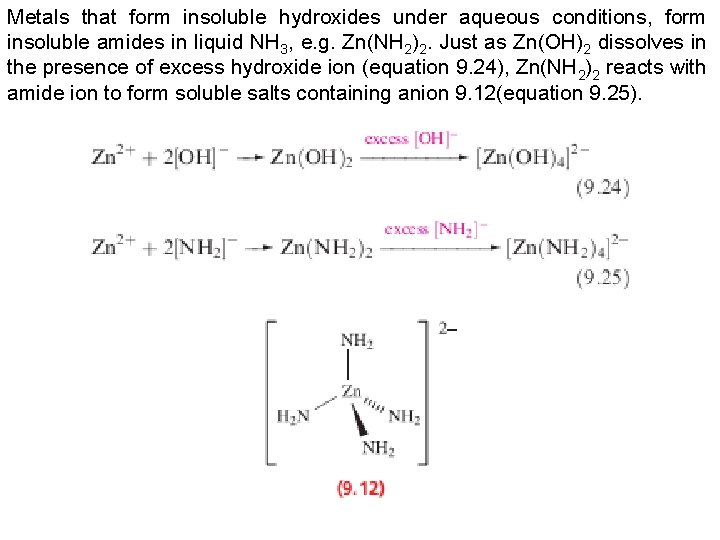
Metals that form insoluble hydroxides under aqueous conditions, form insoluble amides in liquid NH 3, e. g. Zn(NH 2)2. Just as Zn(OH)2 dissolves in the presence of excess hydroxide ion (equation 9. 24), Zn(NH 2)2 reacts with amide ion to form soluble salts containing anion 9. 12(equation 9. 25).
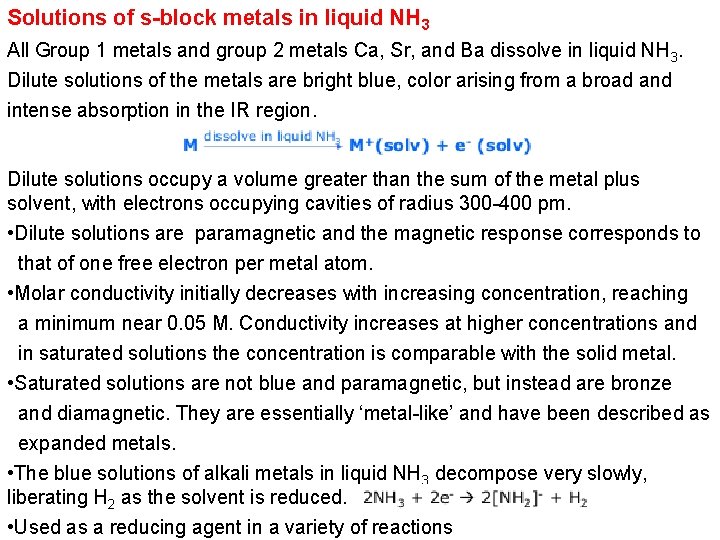
Solutions of s-block metals in liquid NH 3 All Group 1 metals and group 2 metals Ca, Sr, and Ba dissolve in liquid NH 3. Dilute solutions of the metals are bright blue, color arising from a broad and intense absorption in the IR region. Dilute solutions occupy a volume greater than the sum of the metal plus solvent, with electrons occupying cavities of radius 300 -400 pm. • Dilute solutions are paramagnetic and the magnetic response corresponds to that of one free electron per metal atom. • Molar conductivity initially decreases with increasing concentration, reaching a minimum near 0. 05 M. Conductivity increases at higher concentrations and in saturated solutions the concentration is comparable with the solid metal. • Saturated solutions are not blue and paramagnetic, but instead are bronze and diamagnetic. They are essentially ‘metal-like’ and have been described as expanded metals. • The blue solutions of alkali metals in liquid NH 3 decompose very slowly, liberating H 2 as the solvent is reduced. • Used as a reducing agent in a variety of reactions
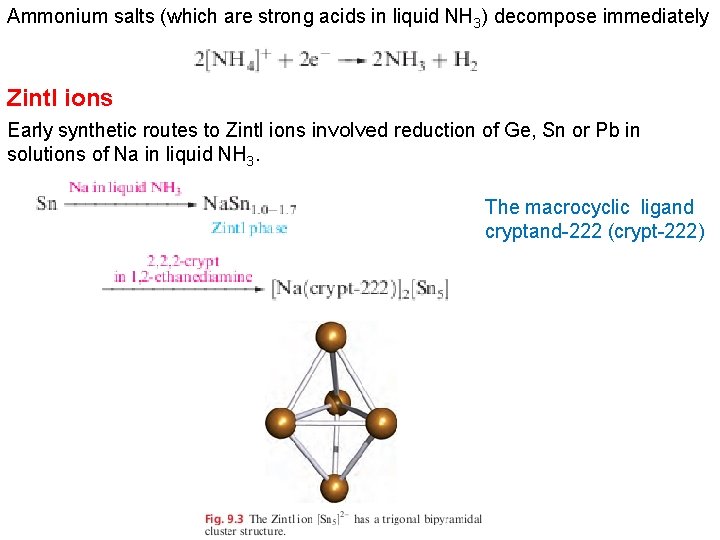
Ammonium salts (which are strong acids in liquid NH 3) decompose immediately Zintl ions Early synthetic routes to Zintl ions involved reduction of Ge, Sn or Pb in solutions of Na in liquid NH 3. The macrocyclic ligand cryptand-222 (crypt-222)
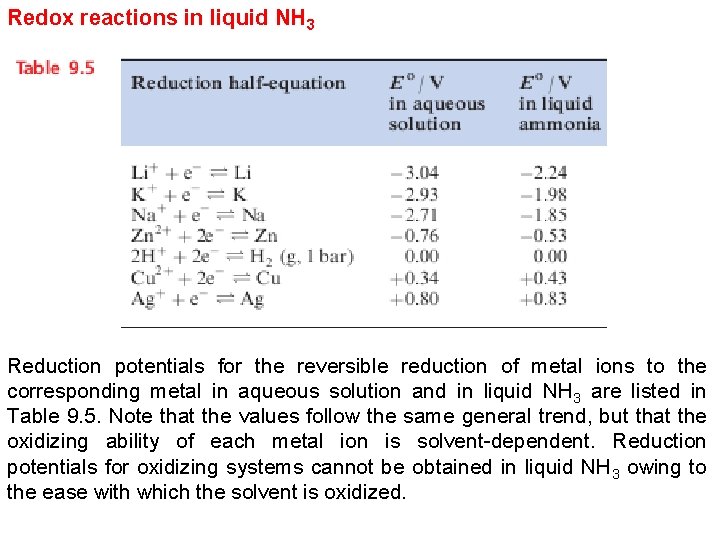
Redox reactions in liquid NH 3 Reduction potentials for the reversible reduction of metal ions to the corresponding metal in aqueous solution and in liquid NH 3 are listed in Table 9. 5. Note that the values follow the same general trend, but that the oxidizing ability of each metal ion is solvent-dependent. Reduction potentials for oxidizing systems cannot be obtained in liquid NH 3 owing to the ease with which the solvent is oxidized.
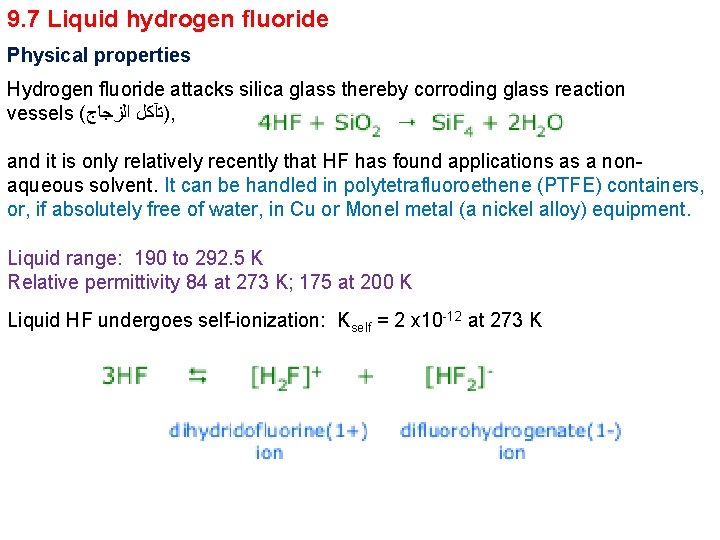
9. 7 Liquid hydrogen fluoride Physical properties Hydrogen fluoride attacks silica glass thereby corroding glass reaction vessels ( )ﺗآﻜﻞ ﺍﻟﺰﺟﺎﺝ , and it is only relatively recently that HF has found applications as a nonaqueous solvent. It can be handled in polytetrafluoroethene (PTFE) containers, or, if absolutely free of water, in Cu or Monel metal (a nickel alloy) equipment. Liquid range: 190 to 292. 5 K Relative permittivity 84 at 273 K; 175 at 200 K Liquid HF undergoes self-ionization: Kself = 2 x 10 -12 at 273 K
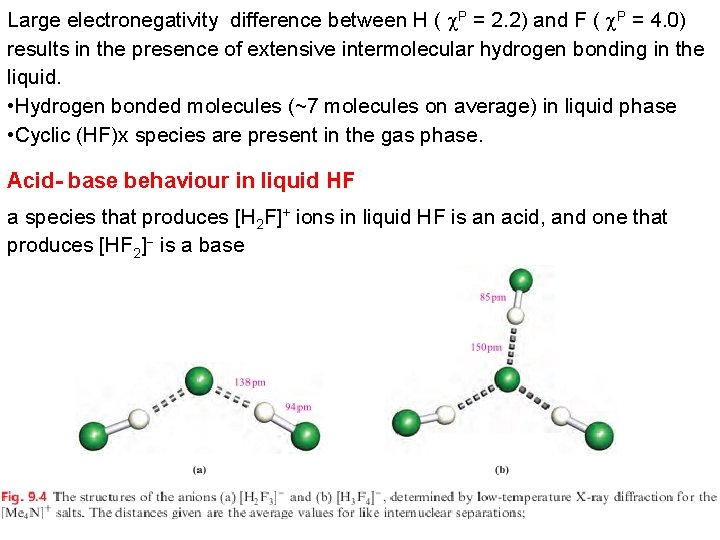
Large electronegativity difference between H ( P = 2. 2) and F ( P = 4. 0) results in the presence of extensive intermolecular hydrogen bonding in the liquid. • Hydrogen bonded molecules (~7 molecules on average) in liquid phase • Cyclic (HF)x species are present in the gas phase. Acid- base behaviour in liquid HF a species that produces [H 2 F]+ ions in liquid HF is an acid, and one that produces [HF 2] is a base
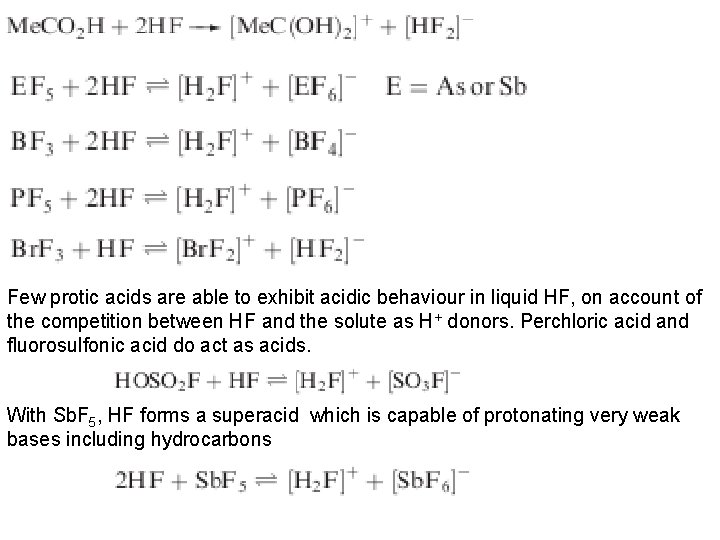
Few protic acids are able to exhibit acidic behaviour in liquid HF, on account of the competition between HF and the solute as H+ donors. Perchloric acid and fluorosulfonic acid do act as acids. With Sb. F 5, HF forms a superacid which is capable of protonating very weak bases including hydrocarbons
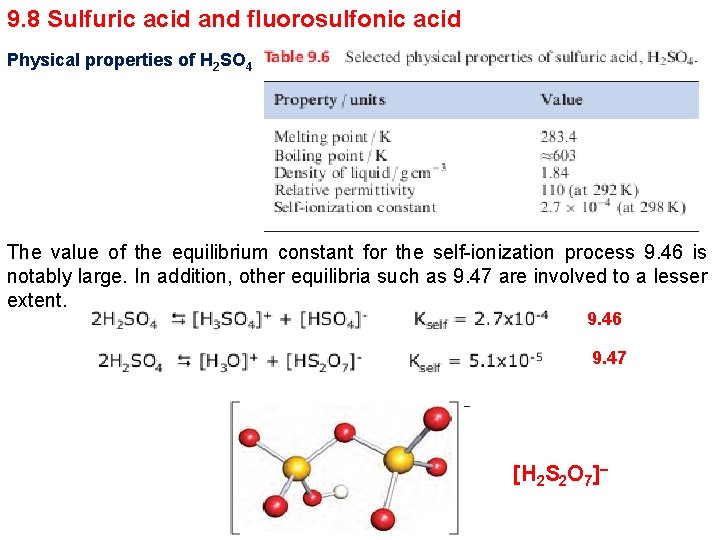
9. 8 Sulfuric acid and fluorosulfonic acid Physical properties of H 2 SO 4 The value of the equilibrium constant for the self-ionization process 9. 46 is notably large. In addition, other equilibria such as 9. 47 are involved to a lesser extent. 9. 46 9. 47 [H 2 S 2 O 7]
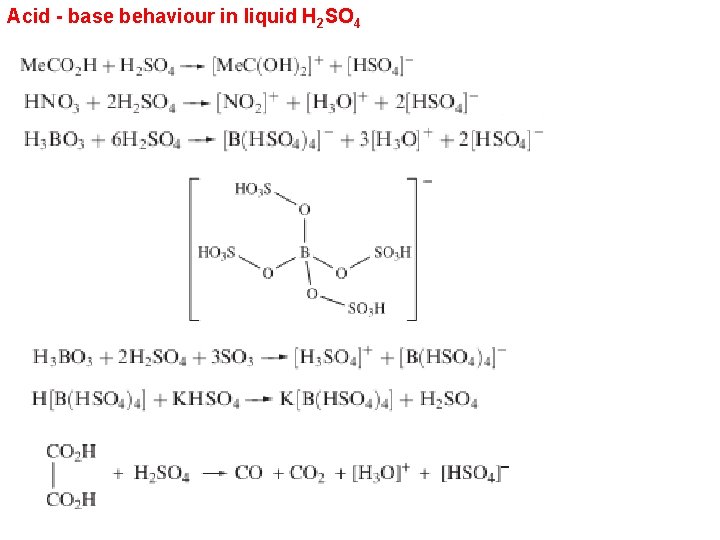
Acid - base behaviour in liquid H 2 SO 4
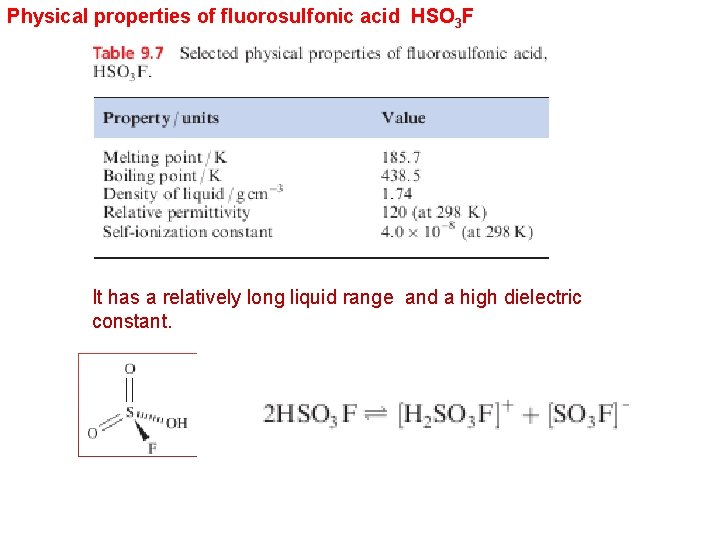
Physical properties of fluorosulfonic acid HSO 3 F It has a relatively long liquid range and a high dielectric constant.
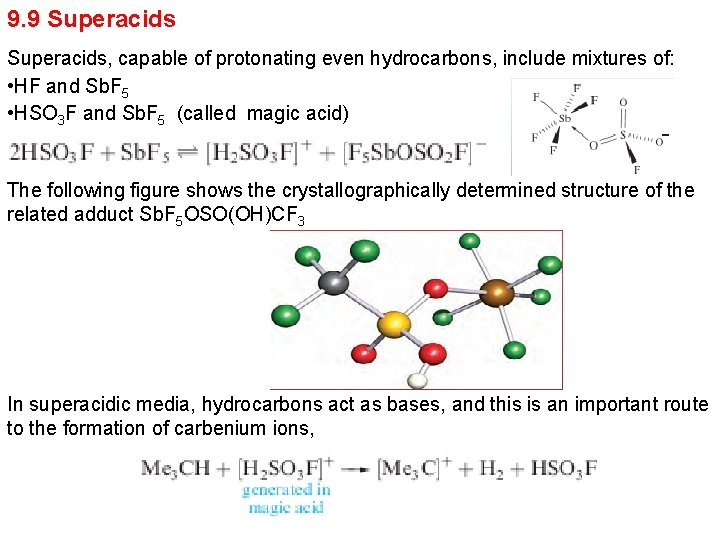
9. 9 Superacids, capable of protonating even hydrocarbons, include mixtures of: • HF and Sb. F 5 • HSO 3 F and Sb. F 5 (called magic acid) The following figure shows the crystallographically determined structure of the related adduct Sb. F 5 OSO(OH)CF 3 In superacidic media, hydrocarbons act as bases, and this is an important route to the formation of carbenium ions,
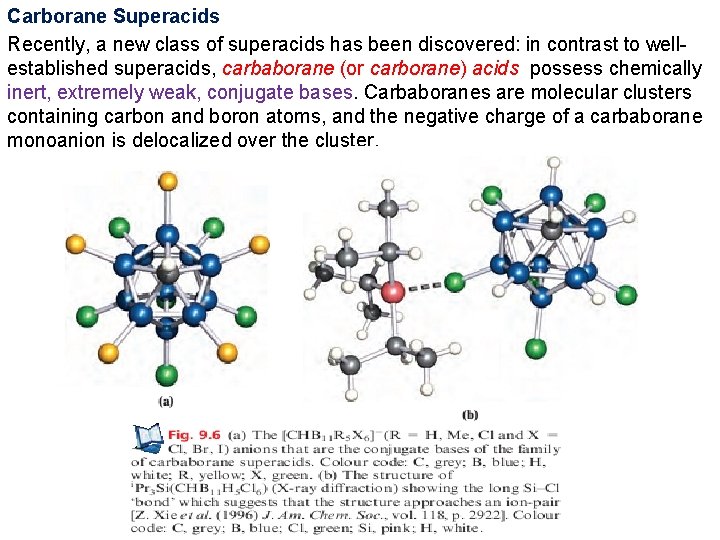
Carborane Superacids Recently, a new class of superacids has been discovered: in contrast to wellestablished superacids, carbaborane (or carborane) acids possess chemically inert, extremely weak, conjugate bases. Carbaboranes are molecular clusters containing carbon and boron atoms, and the negative charge of a carbaborane monoanion is delocalized over the cluster.
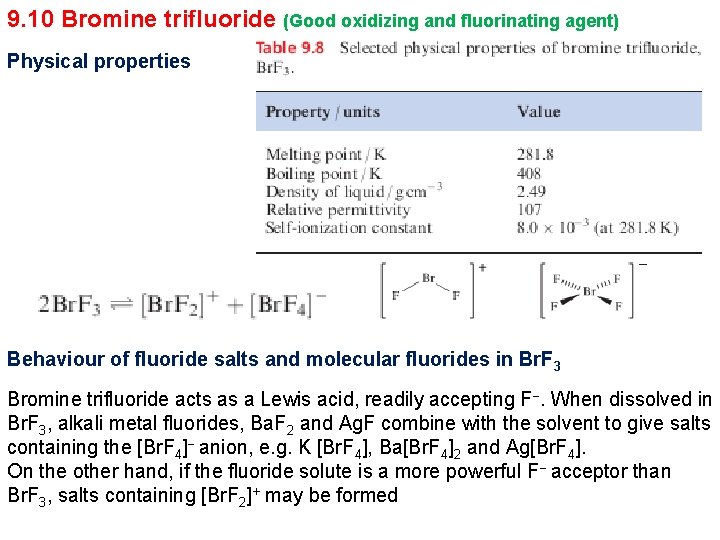
9. 10 Bromine trifluoride (Good oxidizing and fluorinating agent) Physical properties Behaviour of fluoride salts and molecular fluorides in Br. F 3 Bromine trifluoride acts as a Lewis acid, readily accepting F. When dissolved in Br. F 3, alkali metal fluorides, Ba. F 2 and Ag. F combine with the solvent to give salts containing the [Br. F 4] anion, e. g. K [Br. F 4], Ba[Br. F 4]2 and Ag[Br. F 4]. On the other hand, if the fluoride solute is a more powerful F acceptor than Br. F 3, salts containing [Br. F 2]+ may be formed
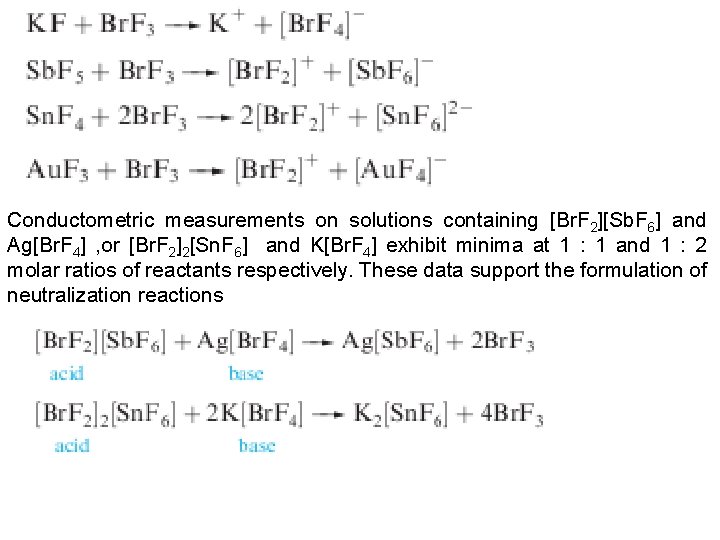
Conductometric measurements on solutions containing [Br. F 2][Sb. F 6] and Ag[Br. F 4] , or [Br. F 2]2[Sn. F 6] and K[Br. F 4] exhibit minima at 1 : 1 and 1 : 2 molar ratios of reactants respectively. These data support the formulation of neutralization reactions
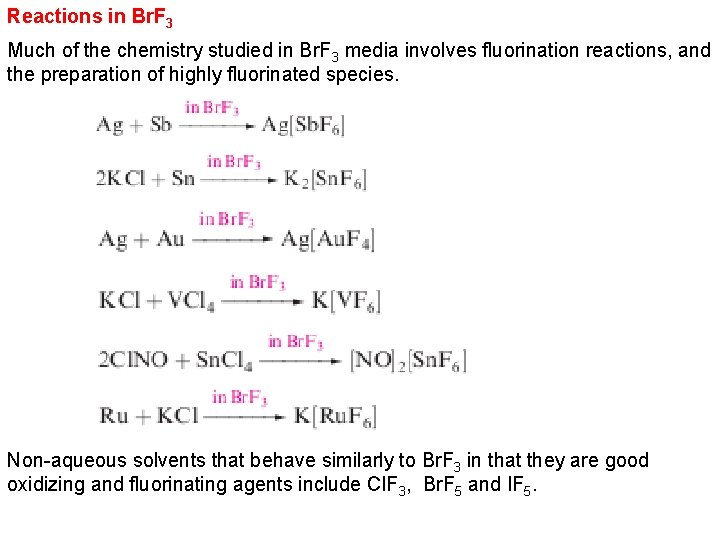
Reactions in Br. F 3 Much of the chemistry studied in Br. F 3 media involves fluorination reactions, and the preparation of highly fluorinated species. Non-aqueous solvents that behave similarly to Br. F 3 in that they are good oxidizing and fluorinating agents include Cl. F 3, Br. F 5 and IF 5.
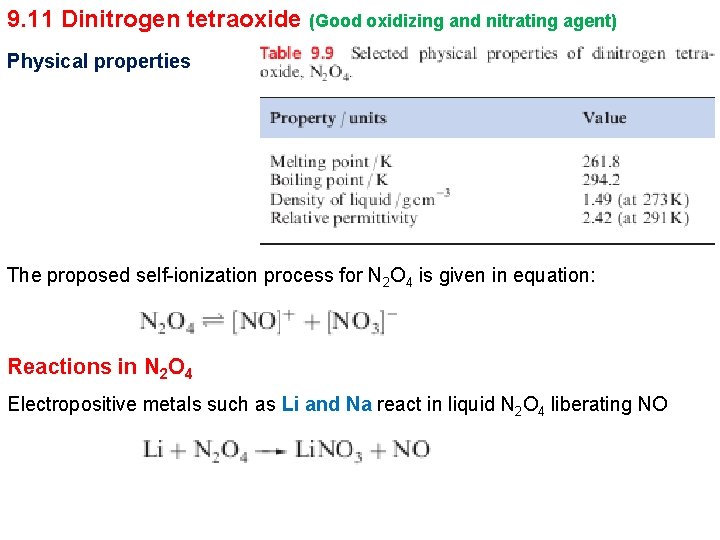
9. 11 Dinitrogen tetraoxide (Good oxidizing and nitrating agent) Physical properties The proposed self-ionization process for N 2 O 4 is given in equation: Reactions in N 2 O 4 Electropositive metals such as Li and Na react in liquid N 2 O 4 liberating NO
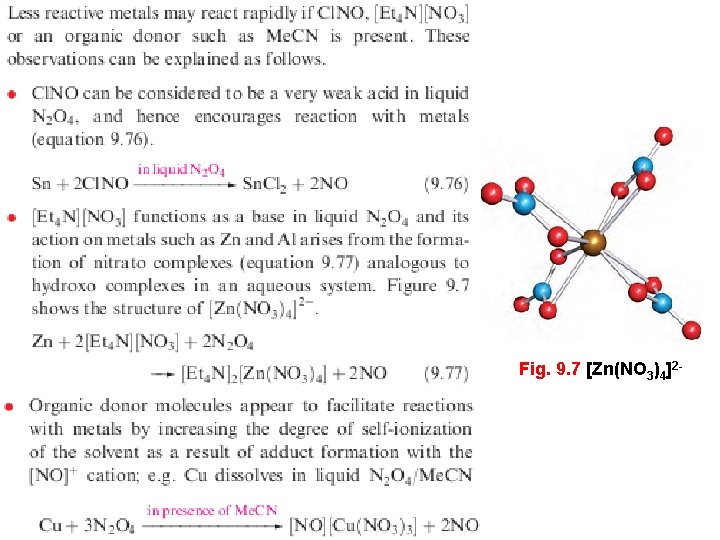
Fig. 9. 7 [Zn(NO 3)4]2 -
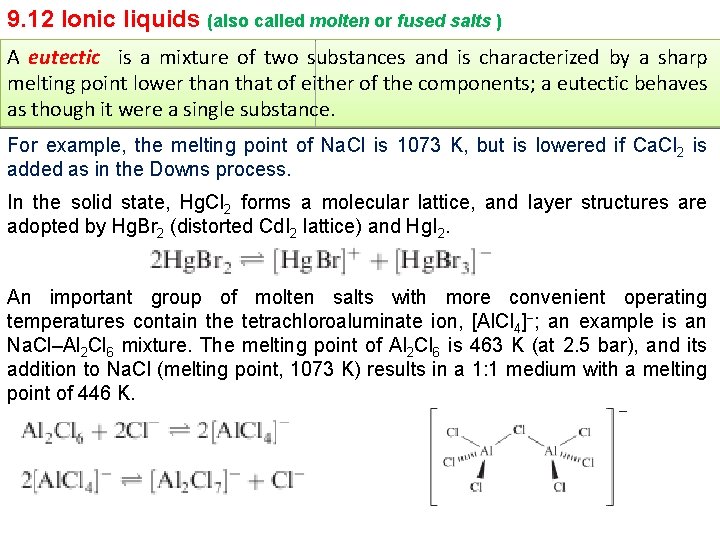
9. 12 Ionic liquids (also called molten or fused salts ) A eutectic is a mixture of two substances and is characterized by a sharp melting point lower than that of either of the components; a eutectic behaves as though it were a single substance. For example, the melting point of Na. Cl is 1073 K, but is lowered if Ca. Cl 2 is added as in the Downs process. In the solid state, Hg. Cl 2 forms a molecular lattice, and layer structures are adopted by Hg. Br 2 (distorted Cd. I 2 lattice) and Hg. I 2. An important group of molten salts with more convenient operating temperatures contain the tetrachloroaluminate ion, [Al. Cl 4] ; an example is an Na. Cl–Al 2 Cl 6 mixture. The melting point of Al 2 Cl 6 is 463 K (at 2. 5 bar), and its addition to Na. Cl (melting point, 1073 K) results in a 1: 1 medium with a melting point of 446 K.
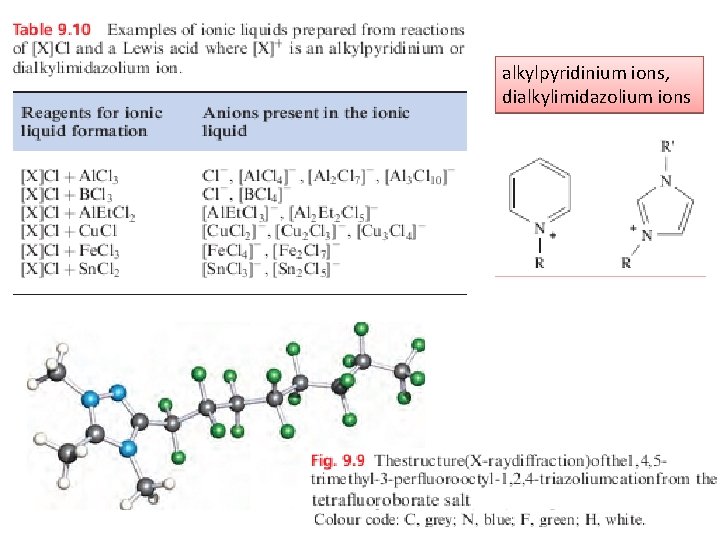
alkylpyridinium ions, dialkylimidazolium ions
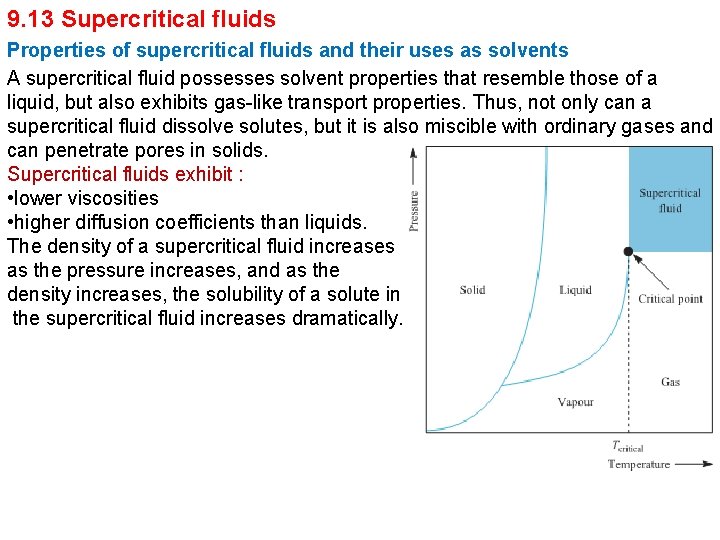
9. 13 Supercritical fluids Properties of supercritical fluids and their uses as solvents A supercritical fluid possesses solvent properties that resemble those of a liquid, but also exhibits gas-like transport properties. Thus, not only can a supercritical fluid dissolve solutes, but it is also miscible with ordinary gases and can penetrate pores in solids. Supercritical fluids exhibit : • lower viscosities • higher diffusion coefficients than liquids. The density of a supercritical fluid increases as the pressure increases, and as the density increases, the solubility of a solute in the supercritical fluid increases dramatically.
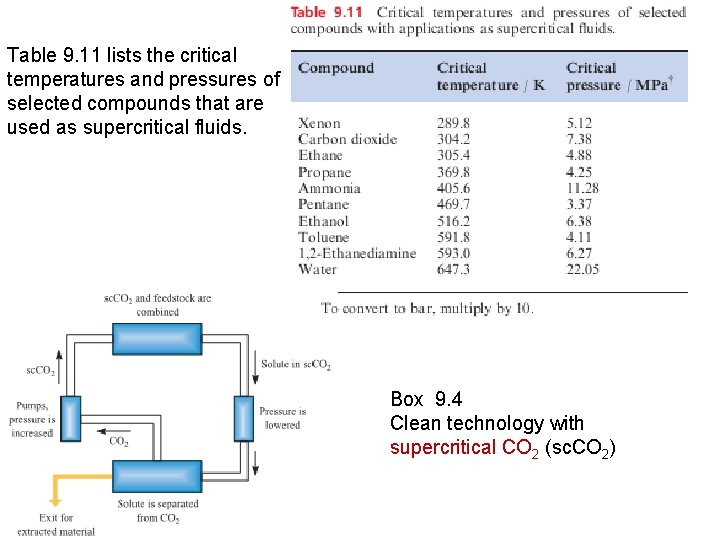
Table 9. 11 lists the critical temperatures and pressures of selected compounds that are used as supercritical fluids. Box 9. 4 Clean technology with supercritical CO 2 (sc. CO 2)
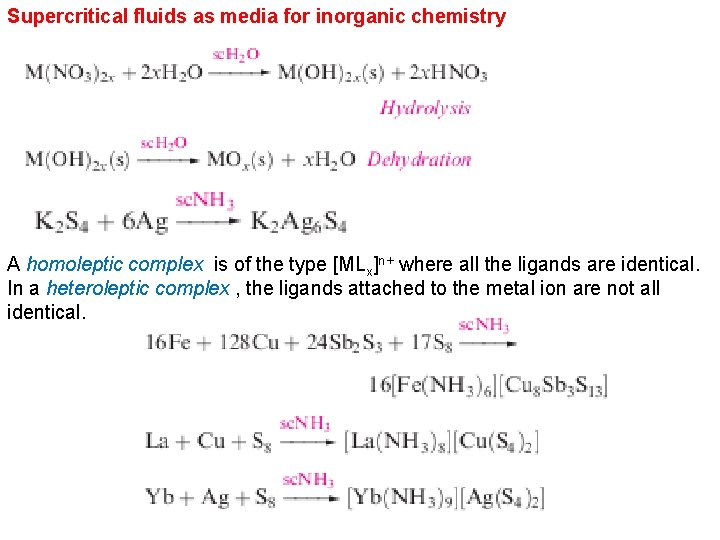
Supercritical fluids as media for inorganic chemistry A homoleptic complex is of the type [MLx]n+ where all the ligands are identical. In a heteroleptic complex , the ligands attached to the metal ion are not all identical.
- Slides: 36