
Chapter 9 Muscular System Three Types of Muscle
- Slides: 24
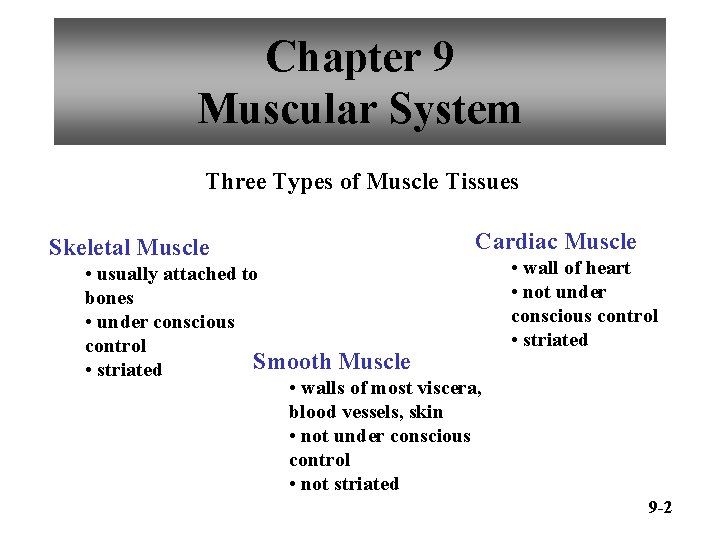
Chapter 9 Muscular System Three Types of Muscle Tissues Skeletal Muscle Cardiac Muscle • usually attached to bones • under conscious control Smooth Muscle • striated • walls of most viscera, blood vessels, skin • not under conscious control • not striated • wall of heart • not under conscious control • striated 9 -2
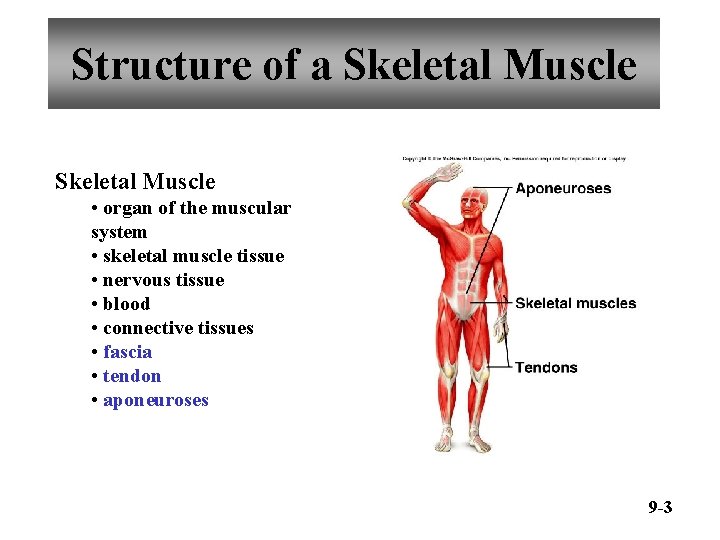
Structure of a Skeletal Muscle • organ of the muscular system • skeletal muscle tissue • nervous tissue • blood • connective tissues • fascia • tendon • aponeuroses 9 -3
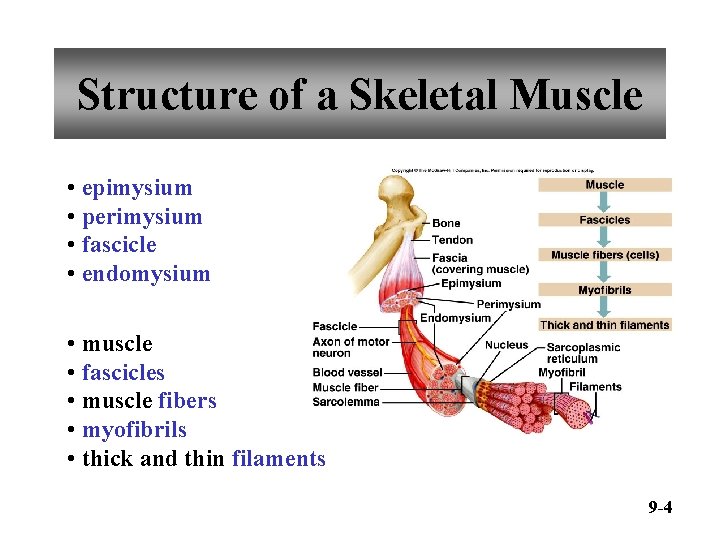
Structure of a Skeletal Muscle • epimysium • perimysium • fascicle • endomysium • muscle • fascicles • muscle fibers • myofibrils • thick and thin filaments 9 -4
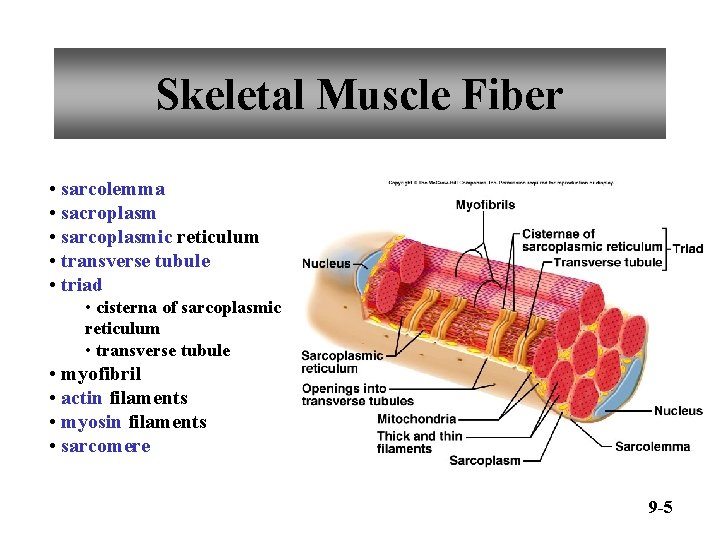
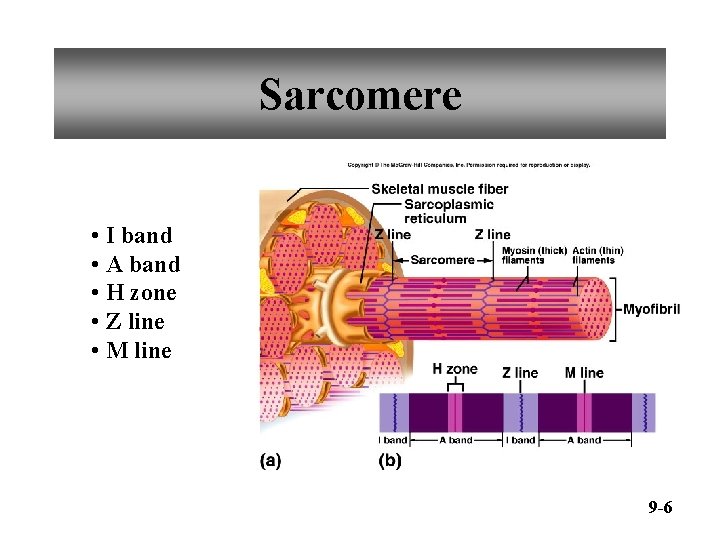
Skeletal Muscle Fiber • sarcolemma • sacroplasm • sarcoplasmic reticulum • transverse tubule • triad • cisterna of sarcoplasmic reticulum • transverse tubule • myofibril • actin filaments • myosin filaments • sarcomere 9 -5
Sarcomere • I band • A band • H zone • Z line • M line 9 -6
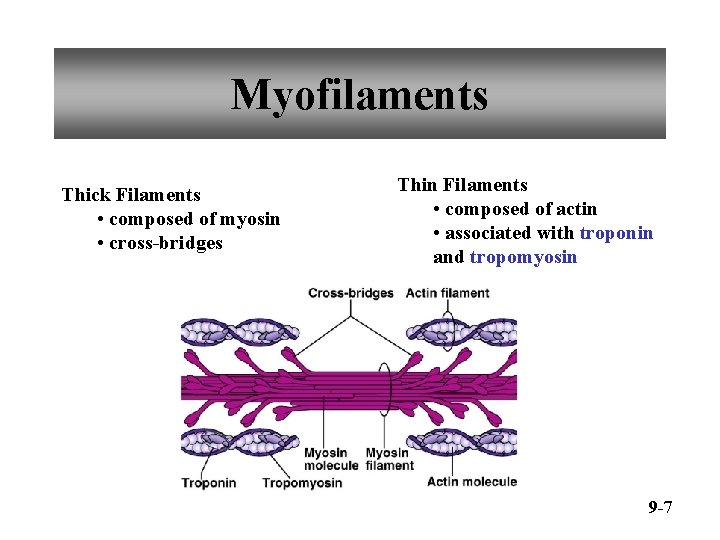
Myofilaments Thick Filaments • composed of myosin • cross-bridges Thin Filaments • composed of actin • associated with troponin and tropomyosin 9 -7
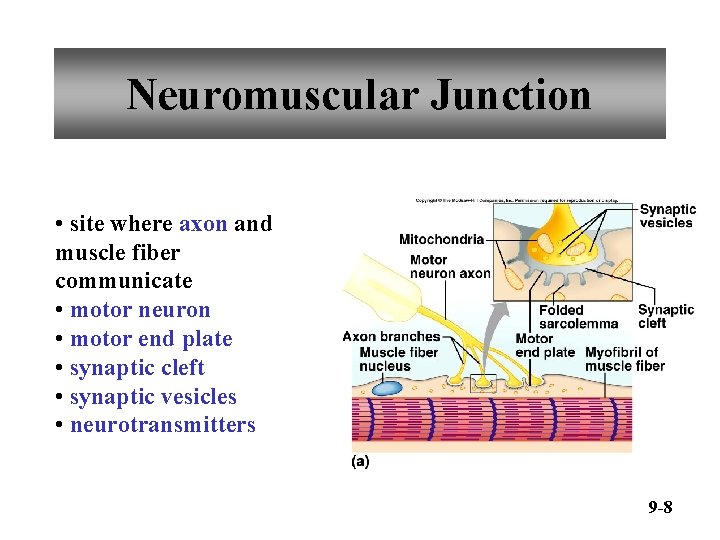
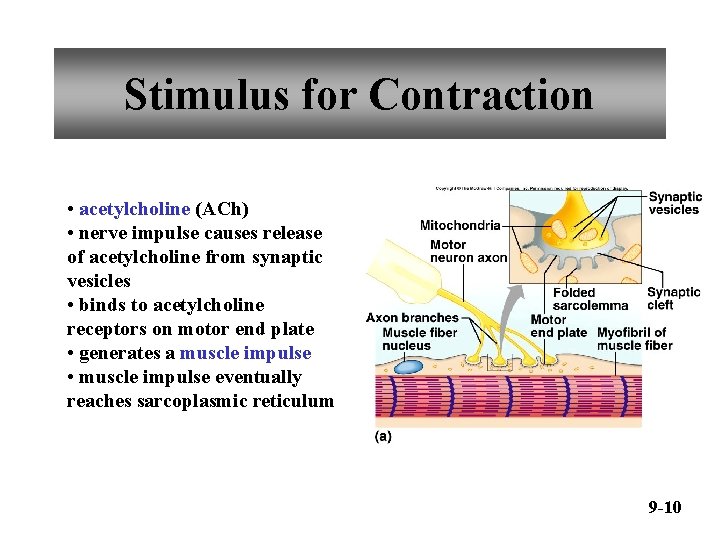
Neuromuscular Junction • site where axon and muscle fiber communicate • motor neuron • motor end plate • synaptic cleft • synaptic vesicles • neurotransmitters 9 -8
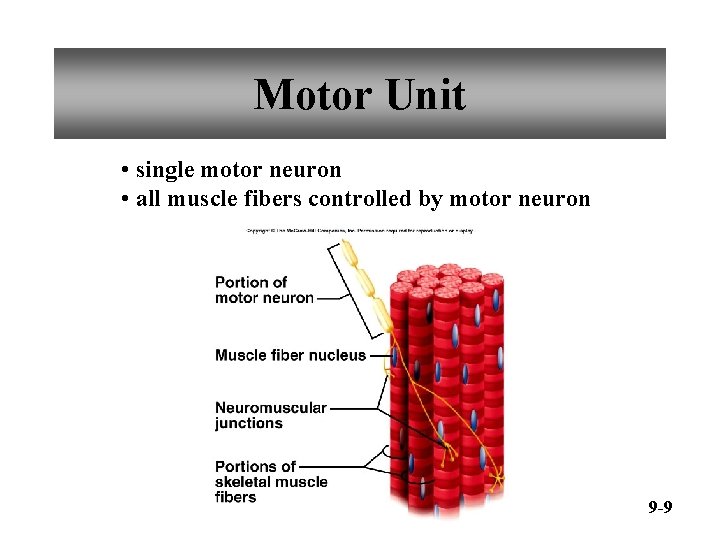
Motor Unit • single motor neuron • all muscle fibers controlled by motor neuron 9 -9
Stimulus for Contraction • acetylcholine (ACh) • nerve impulse causes release of acetylcholine from synaptic vesicles • binds to acetylcholine receptors on motor end plate • generates a muscle impulse • muscle impulse eventually reaches sarcoplasmic reticulum 9 -10
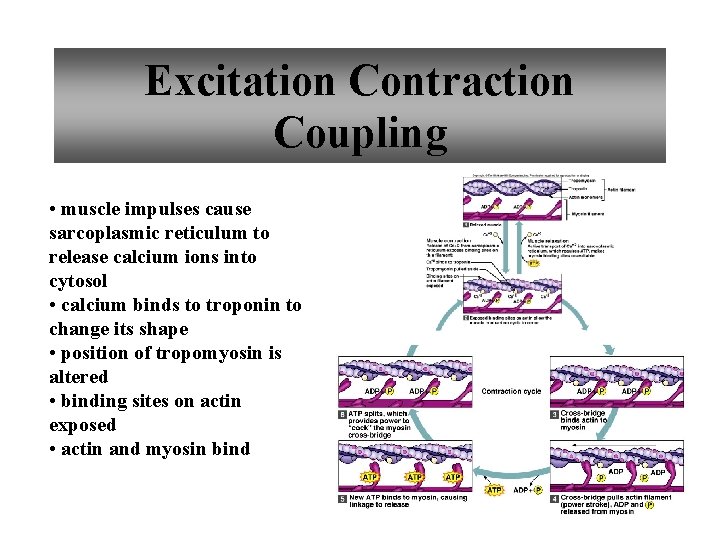
Excitation Contraction Coupling • muscle impulses cause sarcoplasmic reticulum to release calcium ions into cytosol • calcium binds to troponin to change its shape • position of tropomyosin is altered • binding sites on actin exposed • actin and myosin bind 9 -11
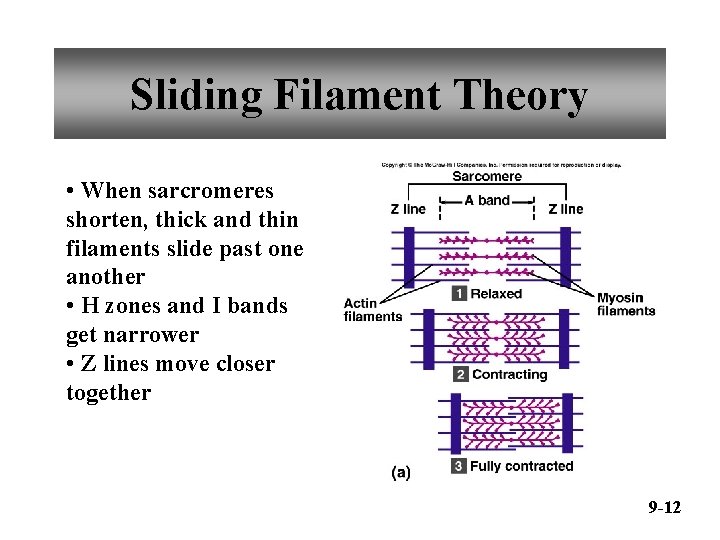
Sliding Filament Theory • When sarcromeres shorten, thick and thin filaments slide past one another • H zones and I bands get narrower • Z lines move closer together 9 -12
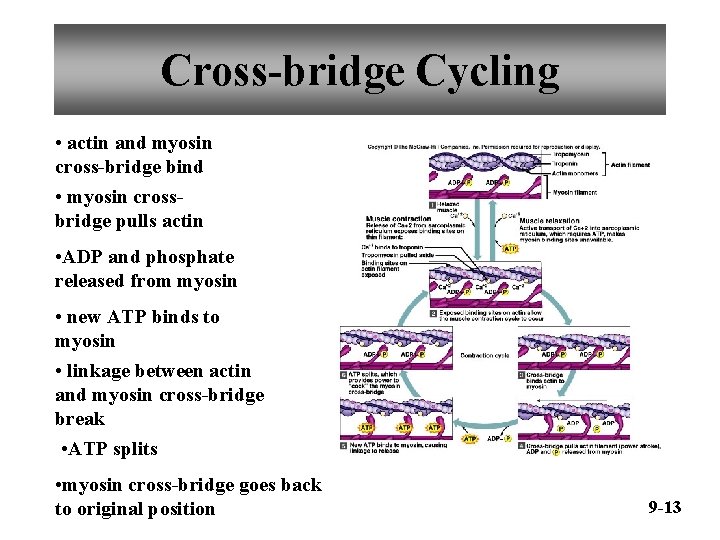
Cross-bridge Cycling • actin and myosin cross-bridge bind • myosin crossbridge pulls actin • ADP and phosphate released from myosin • new ATP binds to myosin • linkage between actin and myosin cross-bridge break • ATP splits • myosin cross-bridge goes back to original position 9 -13
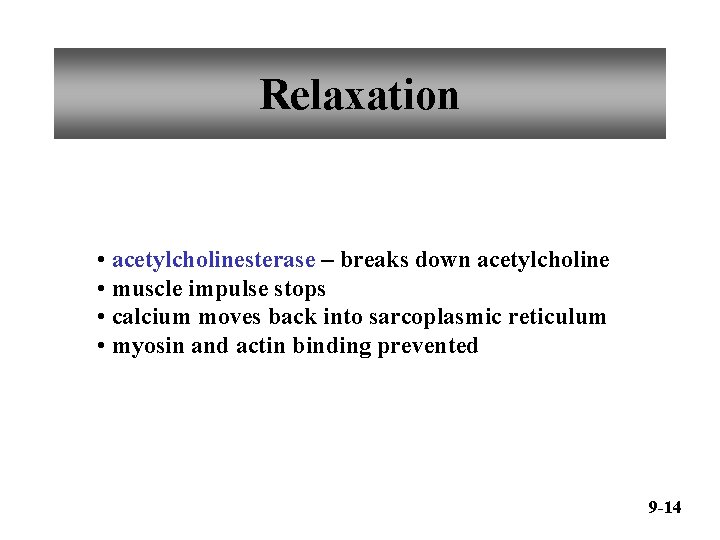
Relaxation • acetylcholinesterase – breaks down acetylcholine • muscle impulse stops • calcium moves back into sarcoplasmic reticulum • myosin and actin binding prevented 9 -14
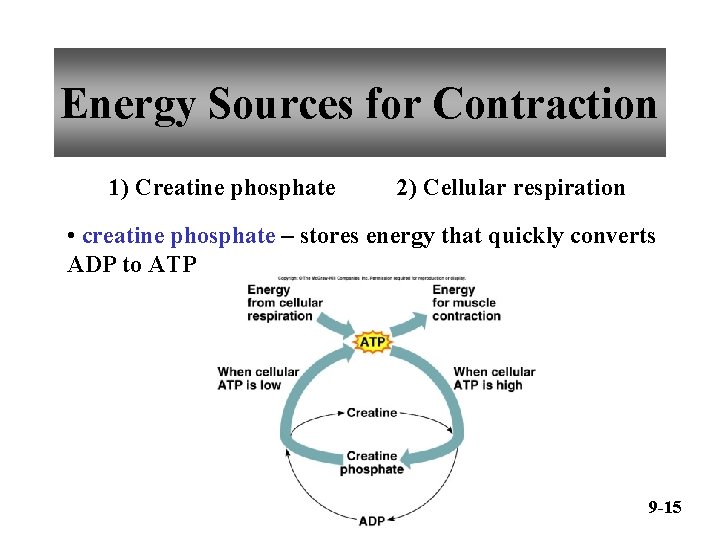
Energy Sources for Contraction 1) Creatine phosphate 2) Cellular respiration • creatine phosphate – stores energy that quickly converts ADP to ATP 9 -15
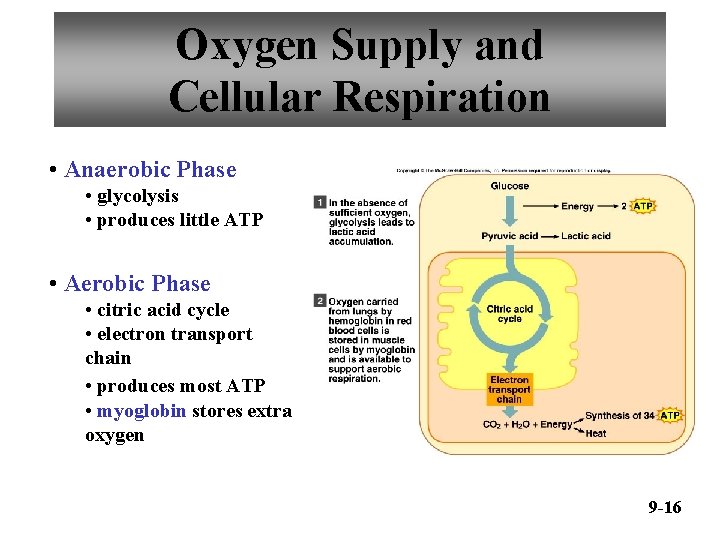
Oxygen Supply and Cellular Respiration • Anaerobic Phase • glycolysis • produces little ATP • Aerobic Phase • citric acid cycle • electron transport chain • produces most ATP • myoglobin stores extra oxygen 9 -16
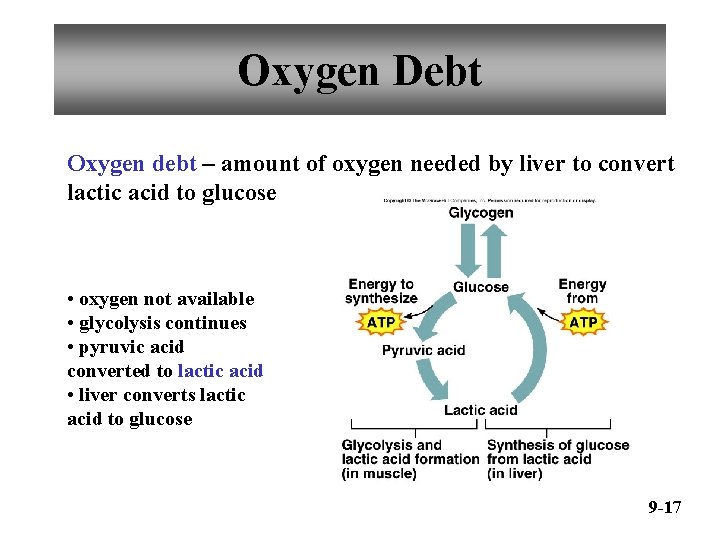
Oxygen Debt Oxygen debt – amount of oxygen needed by liver to convert lactic acid to glucose • oxygen not available • glycolysis continues • pyruvic acid converted to lactic acid • liver converts lactic acid to glucose 9 -17
Muscle Fatigue • inability to contract • commonly caused from • decreased blood flow • ion imbalances • accumulation of lactic acid • cramp – sustained, involuntary contraction 9 -18
Heat Production • by-product of cellular respiration • muscle cells are major source of body heat • blood transports heat throughout body 9 -19
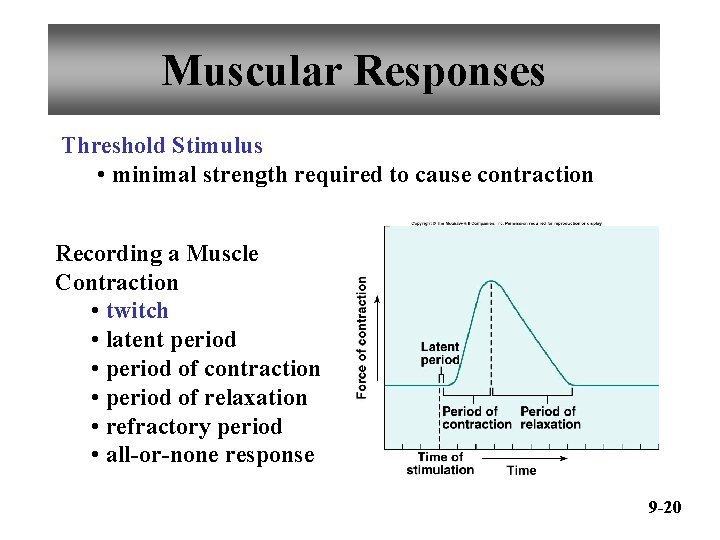
Muscular Responses Threshold Stimulus • minimal strength required to cause contraction Recording a Muscle Contraction • twitch • latent period • period of contraction • period of relaxation • refractory period • all-or-none response 9 -20
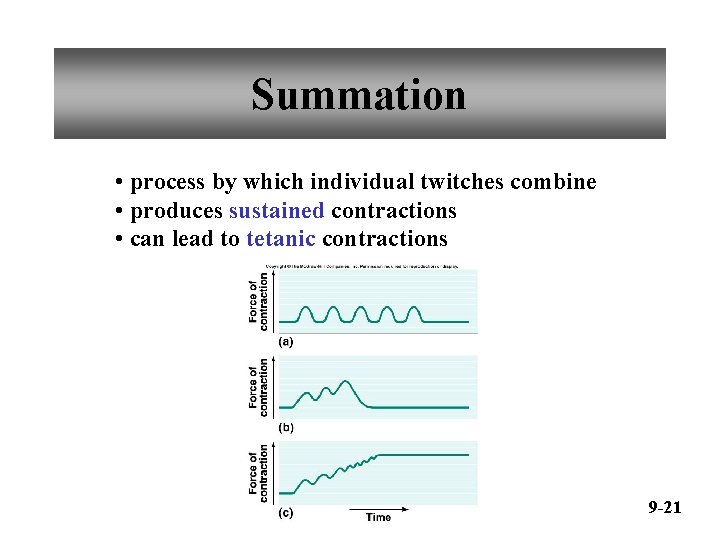
Summation • process by which individual twitches combine • produces sustained contractions • can lead to tetanic contractions 9 -21
Recruitment of Motor Units • recruitment - increase in the number of motor units activated • whole muscle composed of many motor units • as intensity of stimulation increases, recruitment of motor units continues until all motor units are activated 9 -22
Sustained Contractions • smaller motor units recruited first • larger motor units recruited later • produces smooth movements • muscle tone – continuous state of partial contraction 9 -23
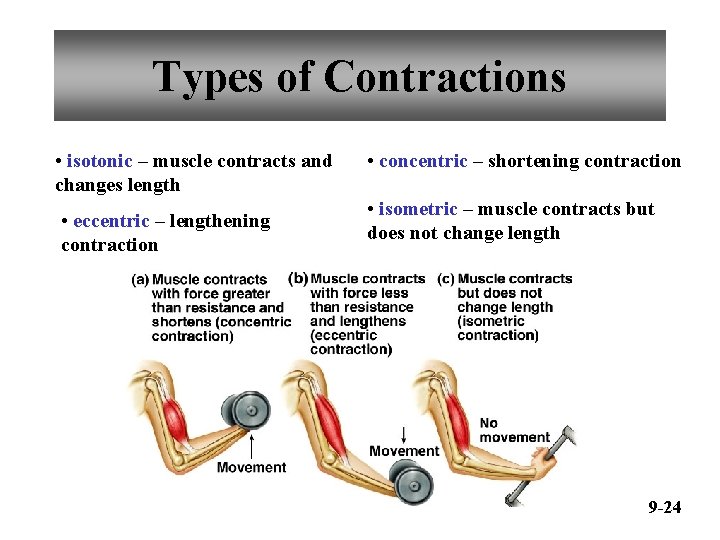
Types of Contractions • isotonic – muscle contracts and changes length • eccentric – lengthening contraction • concentric – shortening contraction • isometric – muscle contracts but does not change length 9 -24
Fast and Slow Twitch Muscle Fibers Slow-twitch fibers (type I) • always oxidative • resistant to fatigue • red fibers • most myoglobin • good blood supply Fast-twitch glycolytic fibers (type II) • white fibers (less myoglobin) • poorer blood supply • susceptible to fatigue Fast-twitch fatigueresistant fibers (type IIb) • intermediate fibers • oxidative • intermediate amount of myoglobin • pink to red in color 9 -25