
Chapter 9 Molecular Geometry Molecular Shapes n Lewis








- Slides: 65
Chapter 9 Molecular Geometry
Molecular Shapes n Lewis Structures do not account for shape of molecules rather they only show the number and types of bonds between atoms
Molecular Shapes n The overall shape is determined by the bond angle, the angle made by the lines joining the nuclei of the atoms in a molecule
Molecular Shapes n We will focus on atoms with ABn format, a central atom A has n B atoms bonded to it
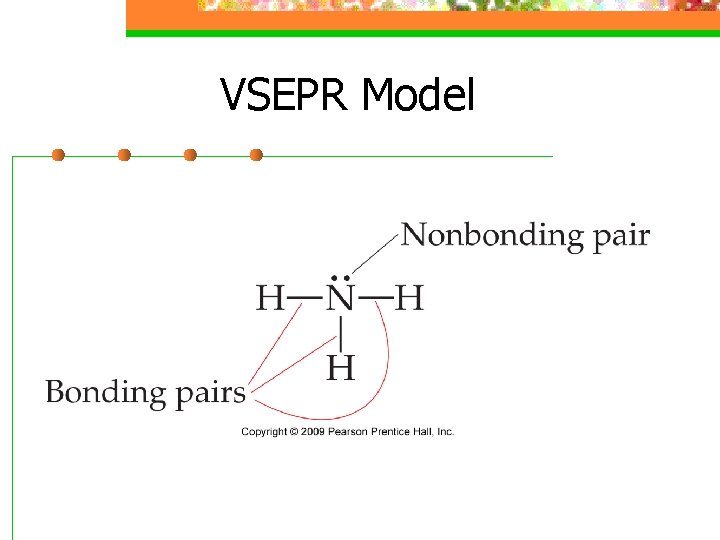
VSEPR Model n An electron domain consists of nonbonding pairs, single bonds, or multiple bonds
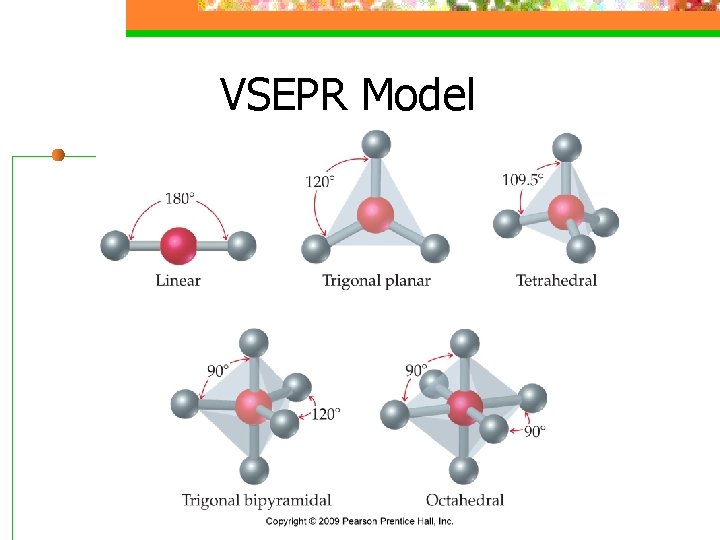
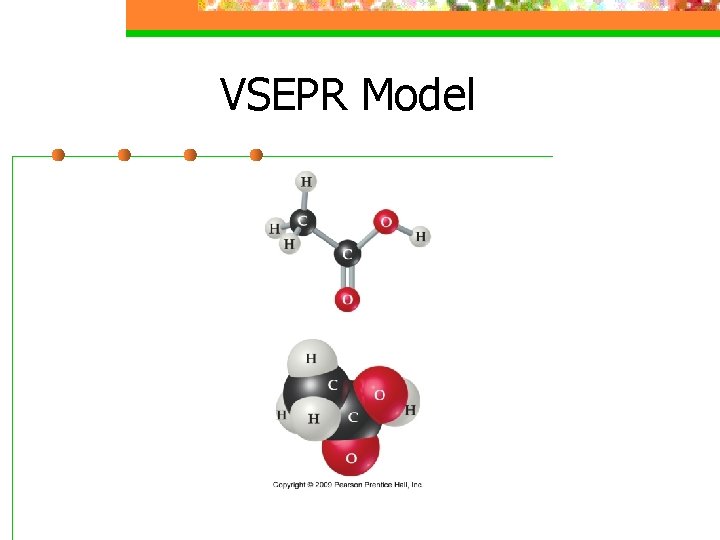
VSEPR Model
VSEPR Model n Electron domains are negatively charged, so they repel each other, and stay out of each other’s way
VSEPR Model n the best arrangement of a given number of electron domains is the one that minimizes the repulsions among them
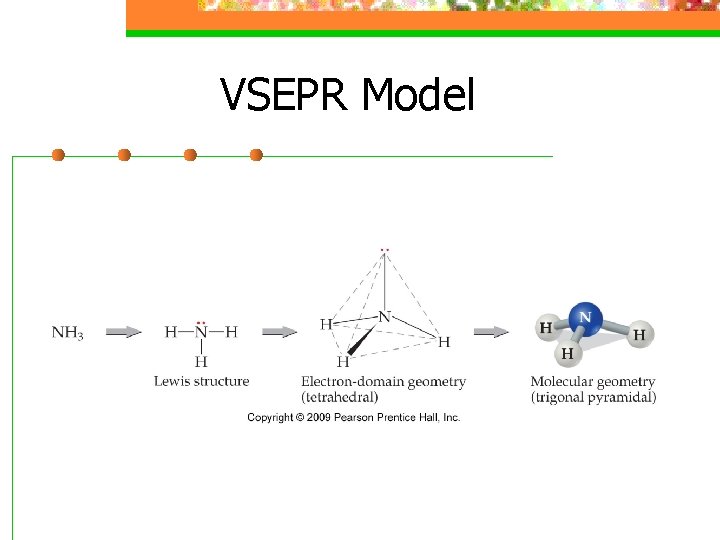
VSEPR Model n The shape of the substance in the ABn format depends on the number of electron domains surrounding the central atom (Electrondomain geometry)
VSEPR Model n Molecular shape describes the arrangement of atoms, not the electron domains (molecular geometry)
VSEPR Model n To Predict Shapes: n 1. Draw Lewis structure and count e-d n 2. Determine e-d geometry n 3. Predict molecular geometry
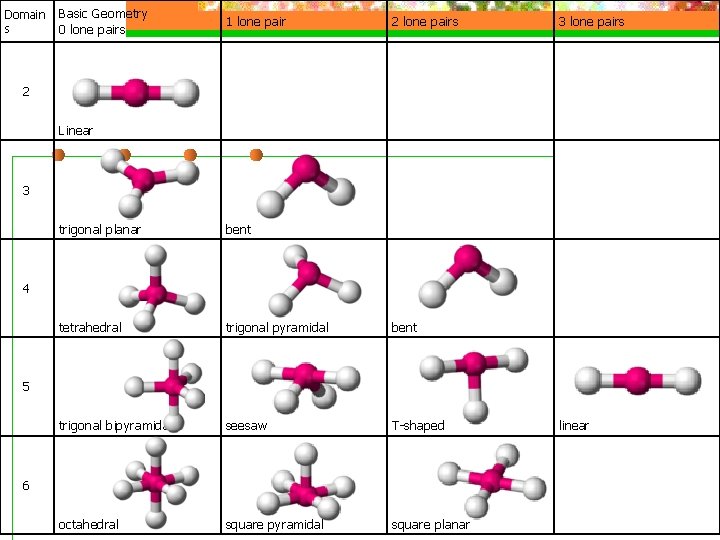
VSEPR Model n See table
VSEPR Model
Domain s Basic Geometry 0 lone pairs 1 lone pair 2 lone pairs 3 lone pairs Linear trigonal planar bent tetrahedral trigonal pyramidal bent trigonal bipyramidal seesaw T-shaped linear octahedral square pyramidal square planar 2 3 4 5 6
VSEPR Model
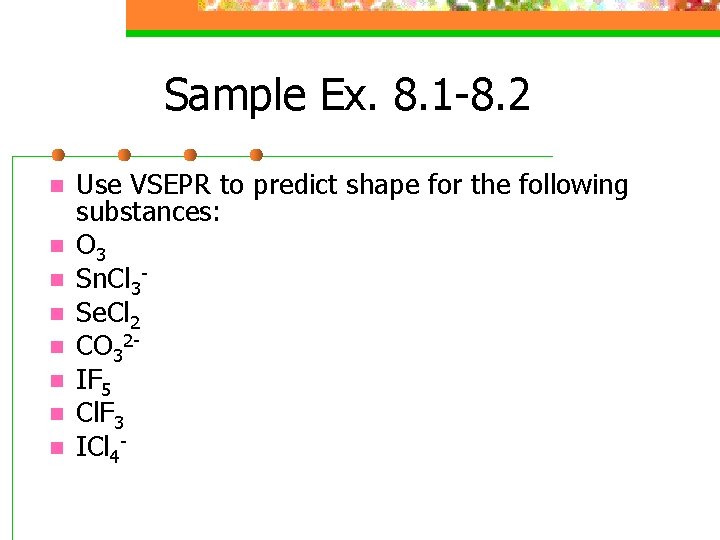
Sample Ex. 8. 1 -8. 2 n n n n Use VSEPR to predict shape for the following substances: O 3 Sn. Cl 3 Se. Cl 2 CO 32 IF 5 Cl. F 3 ICl 4 -
VSEPR Model n video
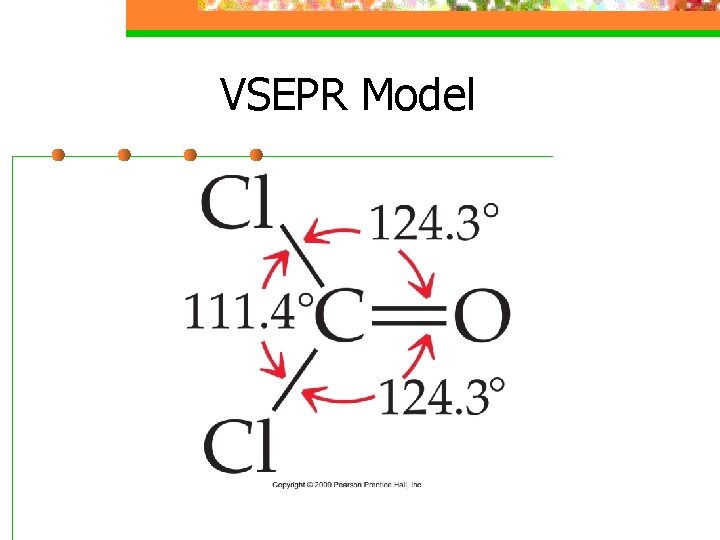
VSEPR Model n Nonbonding Electrons and Multiple Bonds can affect bond angles
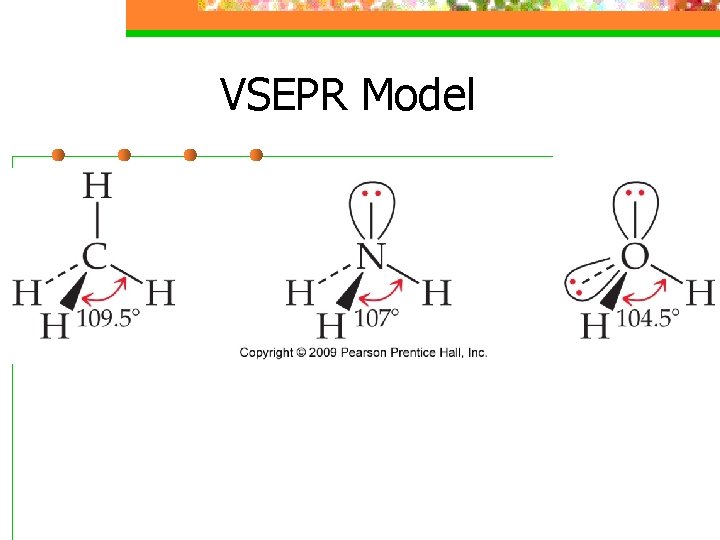
VSEPR Model n E-ds for nonbonding electron pairs exert greater repulsive forces on adjacent e-ds and thus tend to compress bond angles
VSEPR Model
VSEPR Model n Electron domains for multiple bonds exert a greater repulsive force on adjacent electron domains than single bonds
VSEPR Model
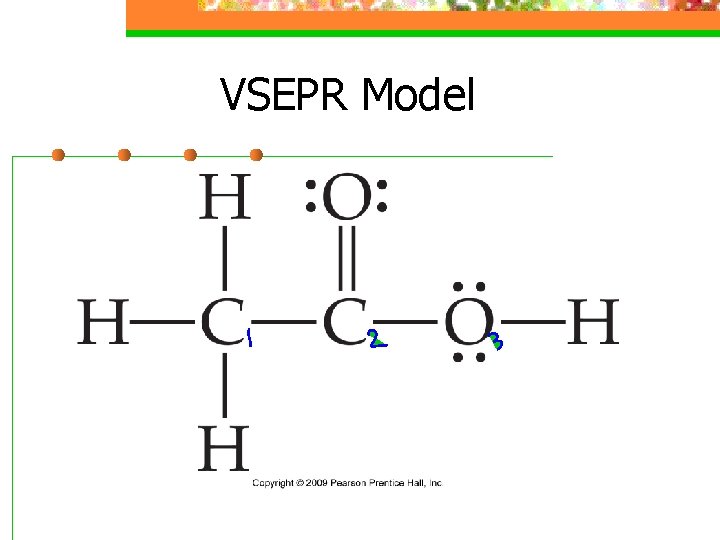
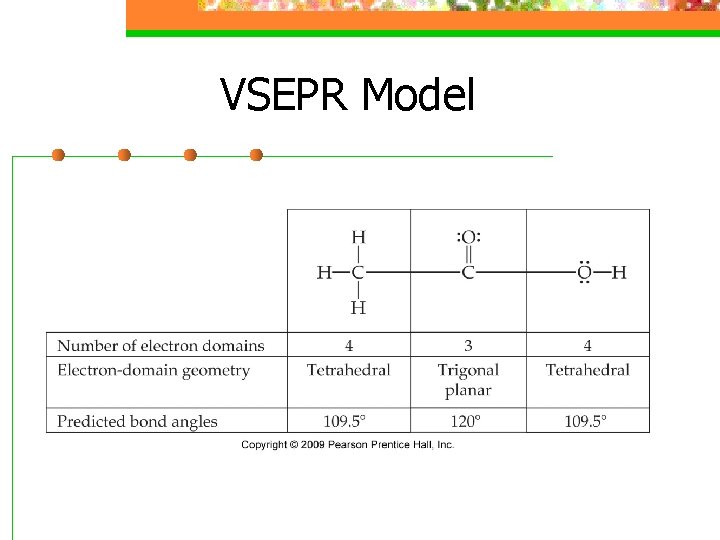
VSEPR Model n VSEPR can be applied to larger molecules as well n The shape can be predicted around individual atoms
VSEPR Model
VSEPR Model
VSEPR Model
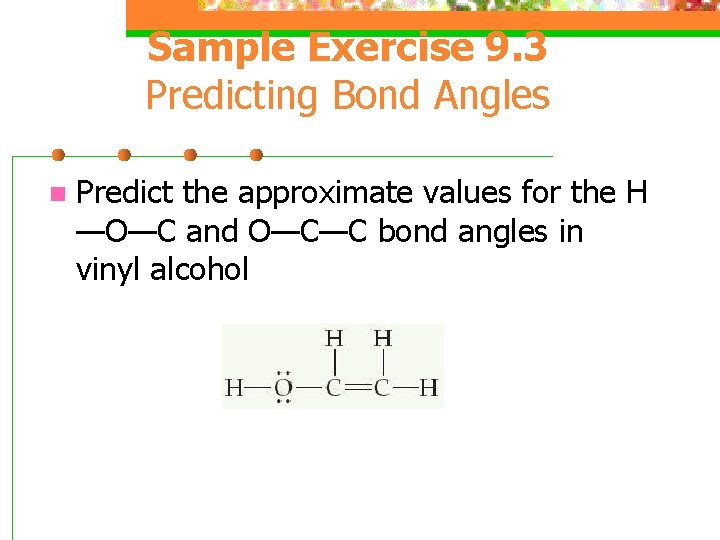
Sample Exercise 9. 3 Predicting Bond Angles n Predict the approximate values for the H —O—C and O—C—C bond angles in vinyl alcohol
Bond Polarity n a measure of how equally electrons in a bond are shared based on electronegativity
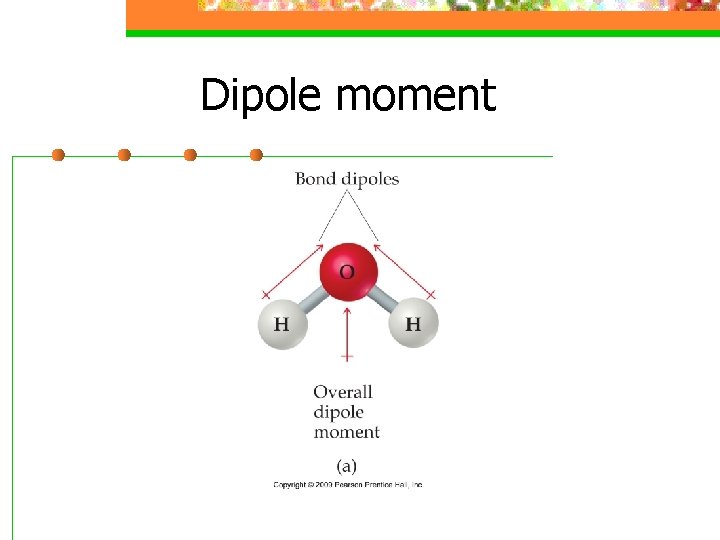
Dipole moment n a measure of the charge separation in a molecule
Dipole moment n For a molecule with more than 2 atoms, the dipole moment depends on both polarities of the bonds and the geometry of the molecule.
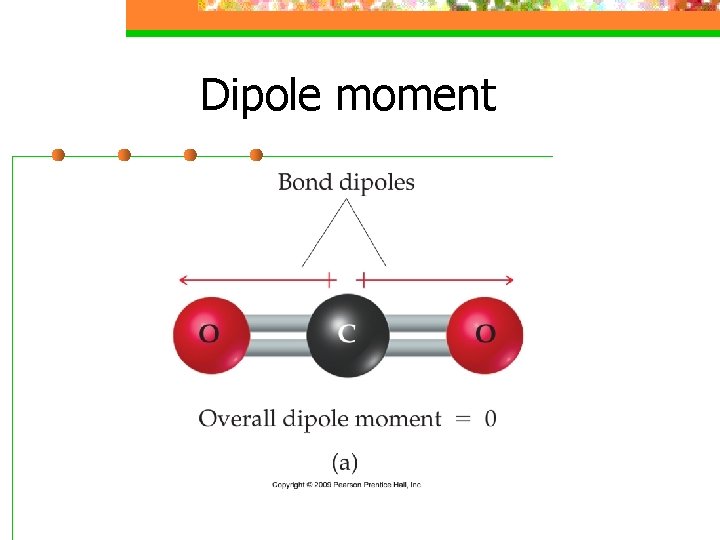
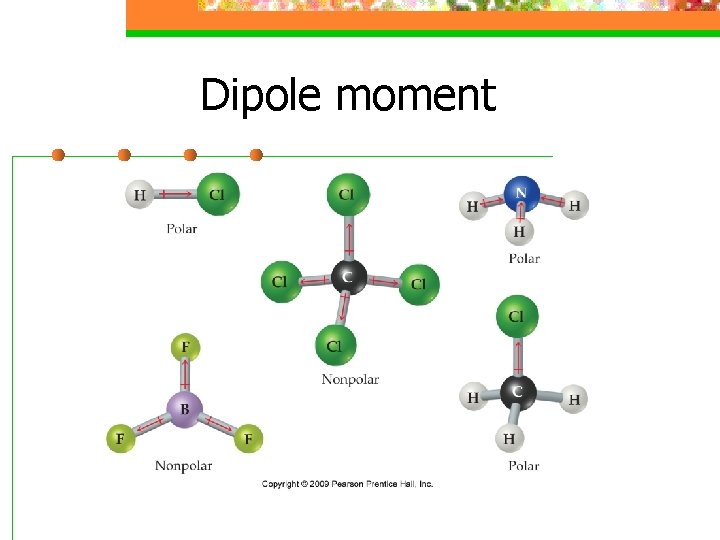
Dipole moment n For ABn molecules in which all the B atoms are the same, certain symmetrical shapes will lead to nonpolar molecules even though the individual bonds are polar
Dipole moment n Nonpolar symmetrical shapes are linear, trigonal planar, tetrahedral, square planar, trigonal bipyramidal, and octahedral
Dipole moment
Dipole moment
Dipole moment
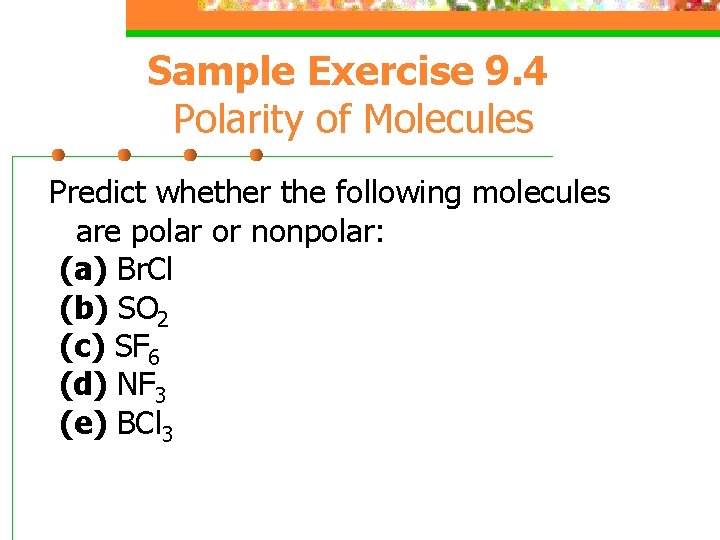
Sample Exercise 9. 4 Polarity of Molecules Predict whether the following molecules are polar or nonpolar: (a) Br. Cl (b) SO 2 (c) SF 6 (d) NF 3 (e) BCl 3
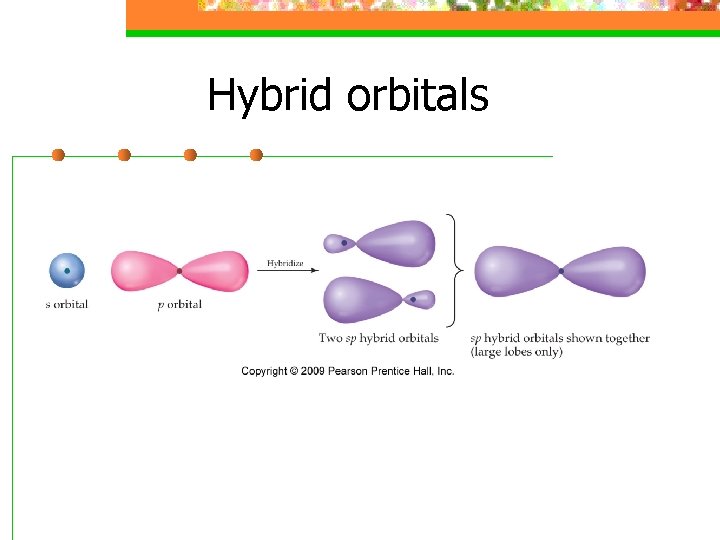
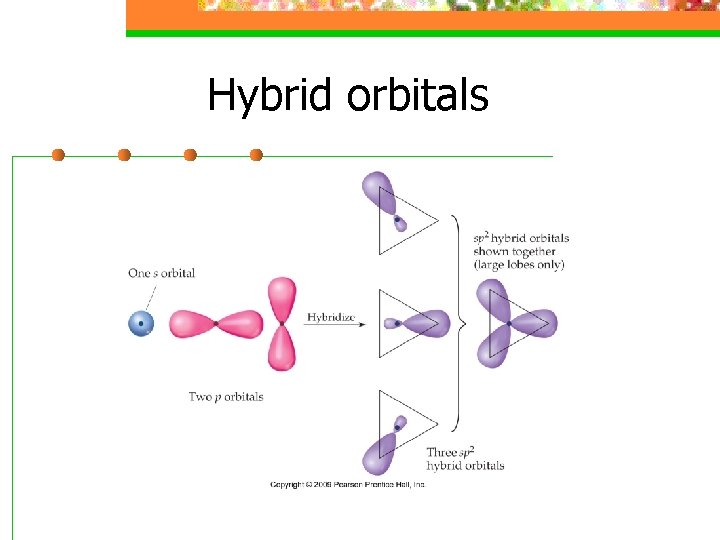
Hybrid orbitals n Hybridization is a process that occurs when atomic orbitals mix to form new orbitals called hybrid orbitals and form bonds
Hybrid orbitals
Hybrid orbitals
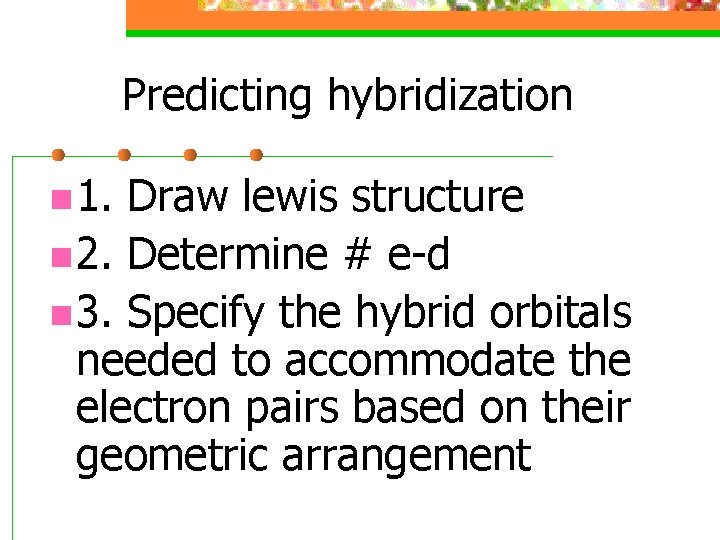
Predicting hybridization n 1. Draw lewis structure n 2. Determine # e-d n 3. Specify the hybrid orbitals needed to accommodate the electron pairs based on their geometric arrangement
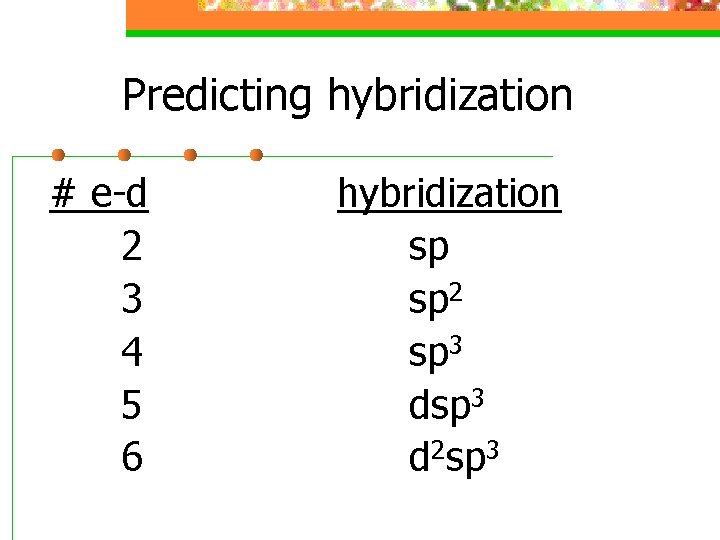
Predicting hybridization # e-d 2 3 4 5 6 hybridization sp sp 2 sp 3 d 2 sp 3
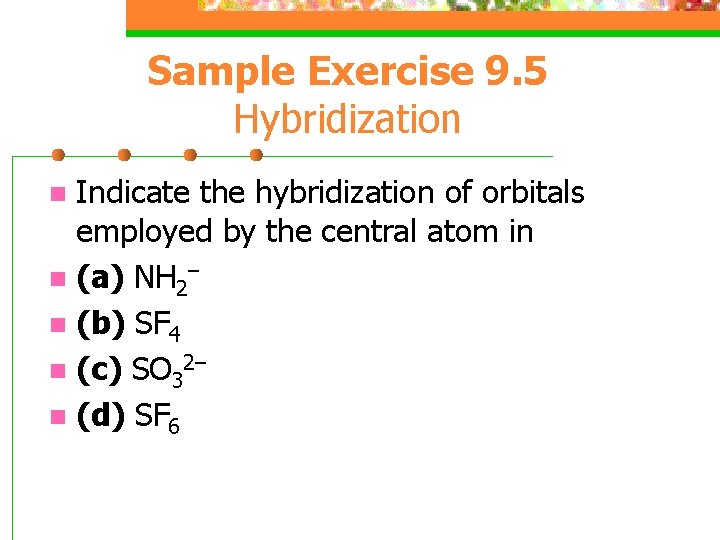
Sample Exercise 9. 5 Hybridization Indicate the hybridization of orbitals employed by the central atom in n (a) NH 2– n (b) SF 4 n (c) SO 32– n (d) SF 6 n
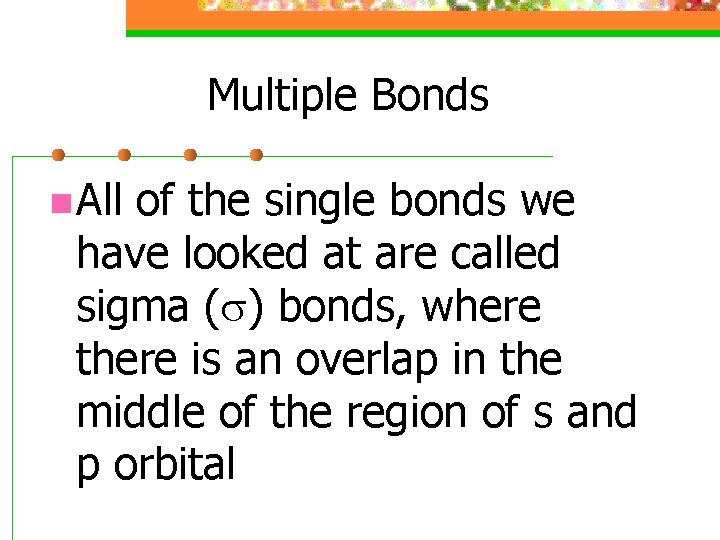
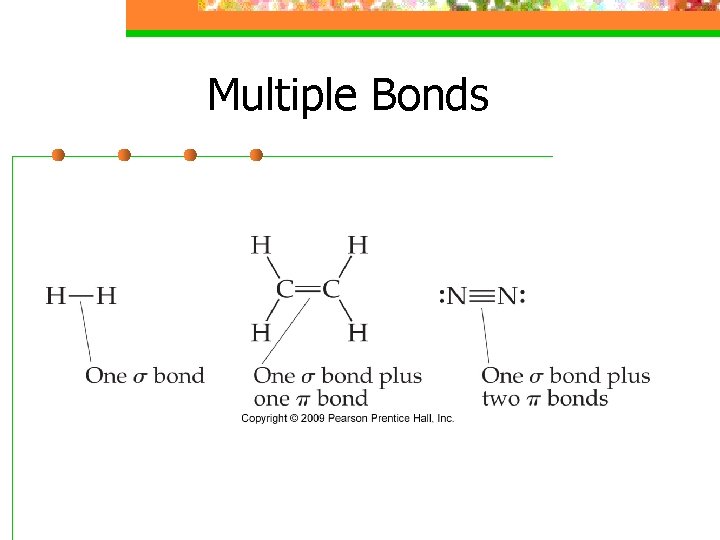
Multiple Bonds n All of the single bonds we have looked at are called sigma (s) bonds, where there is an overlap in the middle of the region of s and p orbital
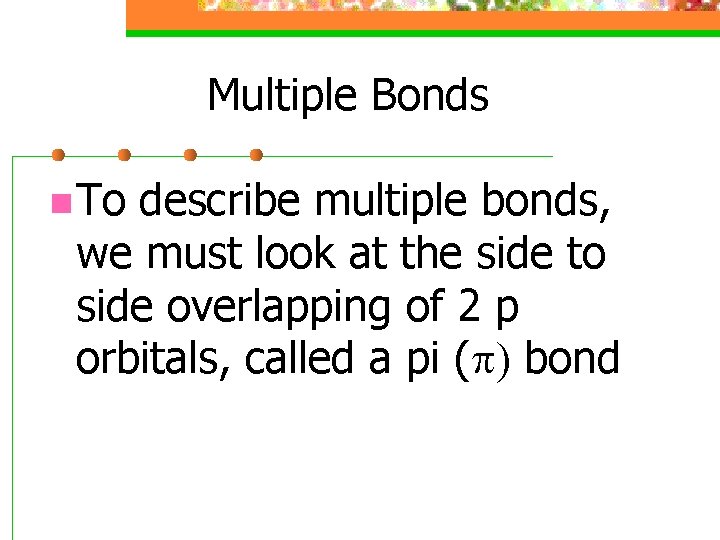
Multiple Bonds n To describe multiple bonds, we must look at the side to side overlapping of 2 p orbitals, called a pi (p) bond
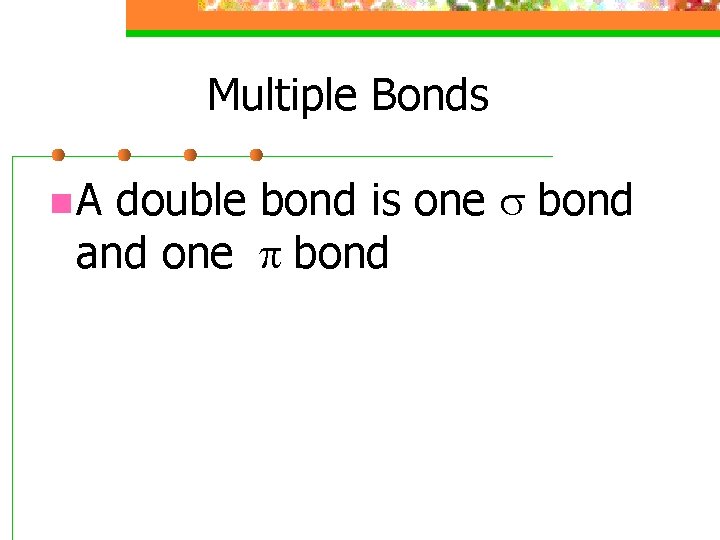
Multiple Bonds n A double bond is one s and one p bond
Multiple Bonds n A triple bond is one s and two p bonds bond
Multiple Bonds
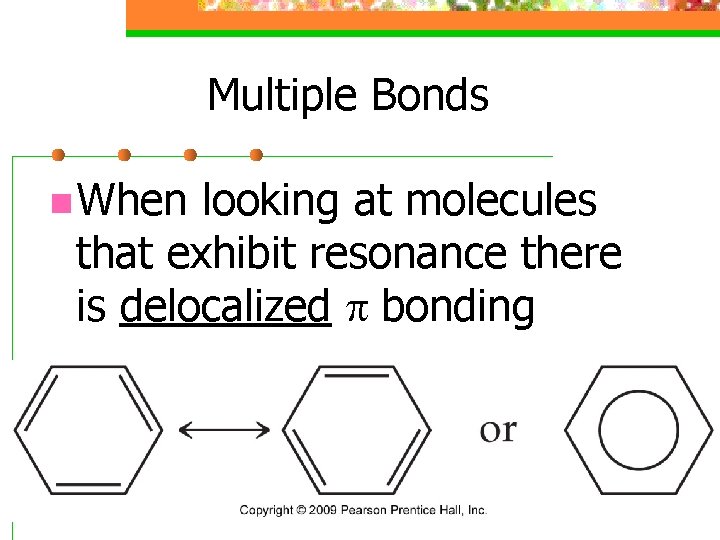
Multiple Bonds n When looking at molecules that exhibit resonance there is delocalized p bonding
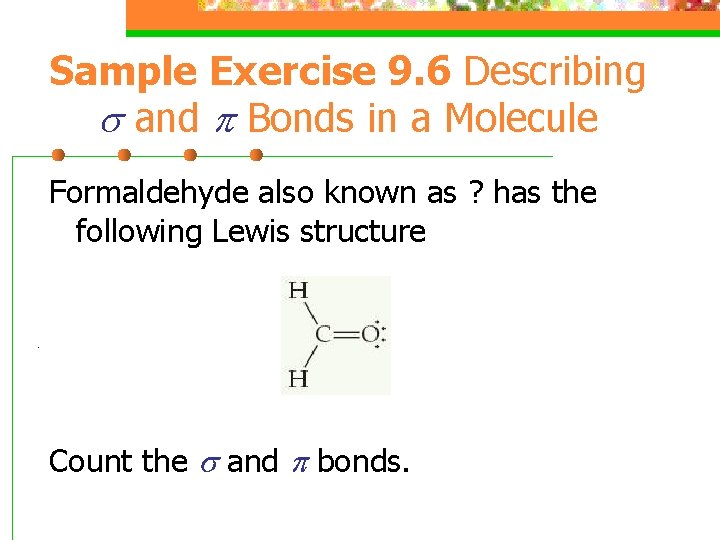
Sample Exercise 9. 6 Describing and Bonds in a Molecule Formaldehyde also known as ? has the following Lewis structure . Count the and bonds.
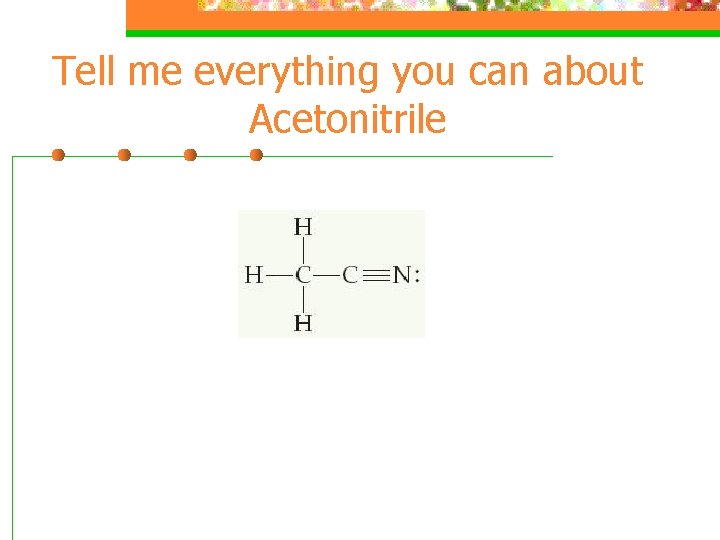
Tell me everything you can about Acetonitrile
Review PF 5
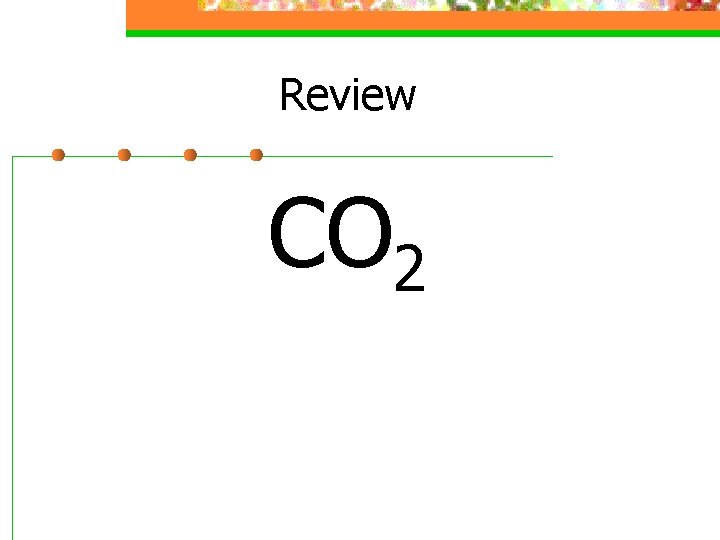
Review CO 2
Review ICl 4 -
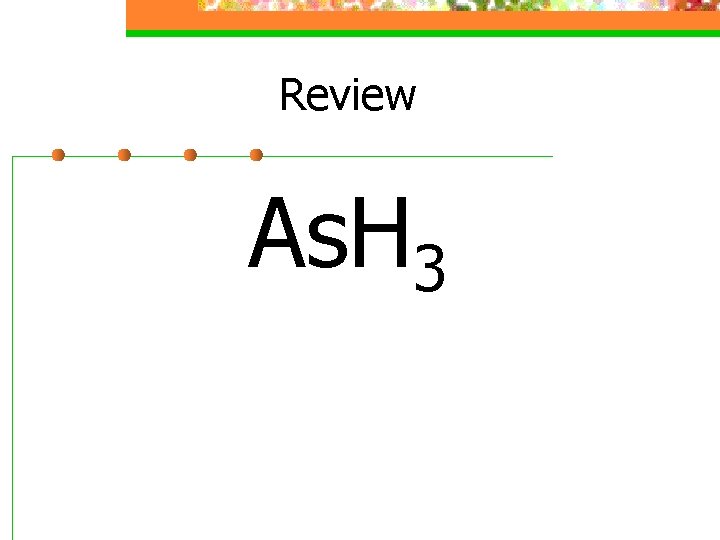
Review As. H 3
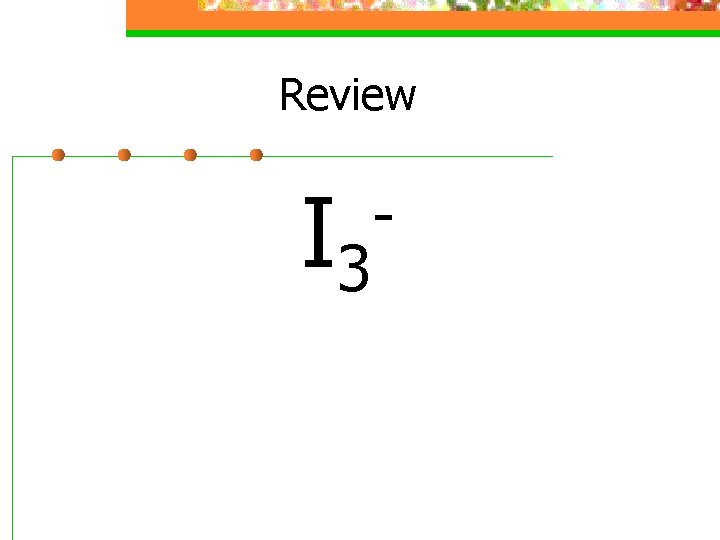
Review I 3 -
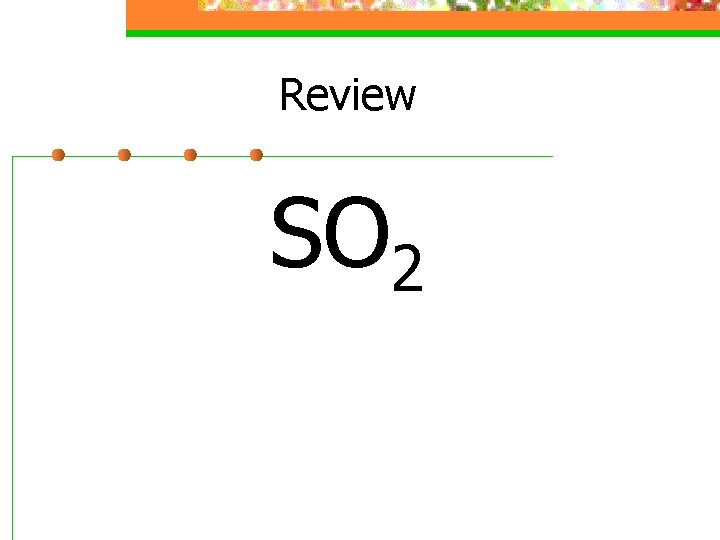
Review SO 2
Review IF 5
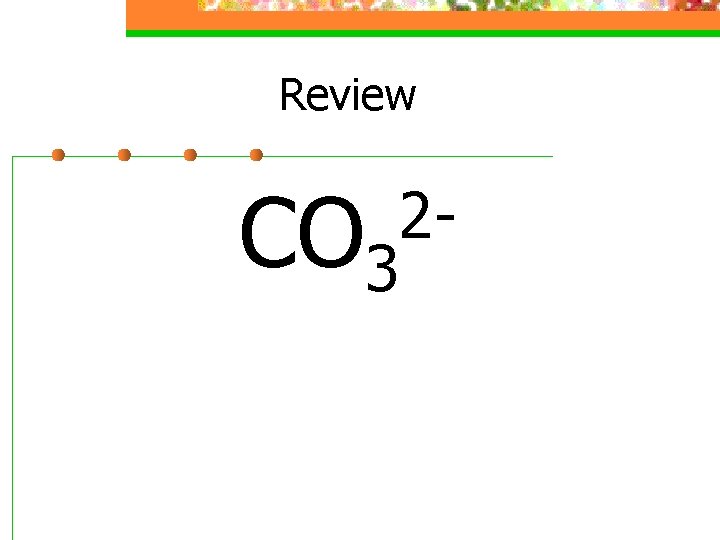
Review CO 3 2 -
Review SF 6
Review Cl. O 4 -
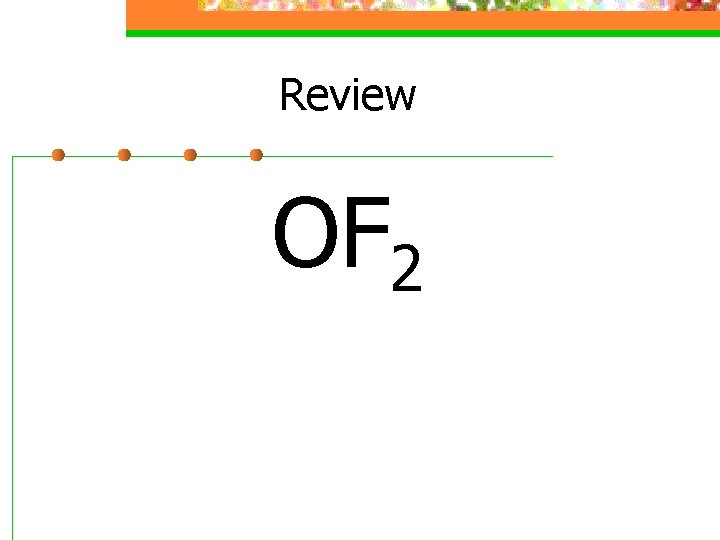
Review OF 2
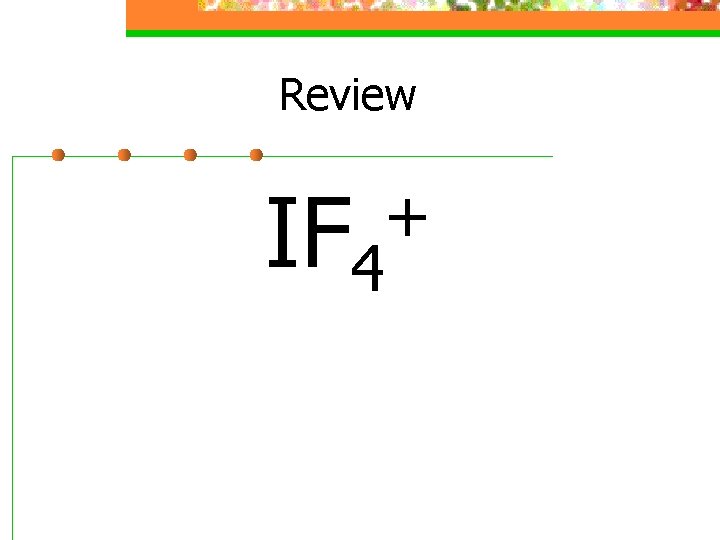
Review IF 4 +
Review Cl. F 3
Review NCS
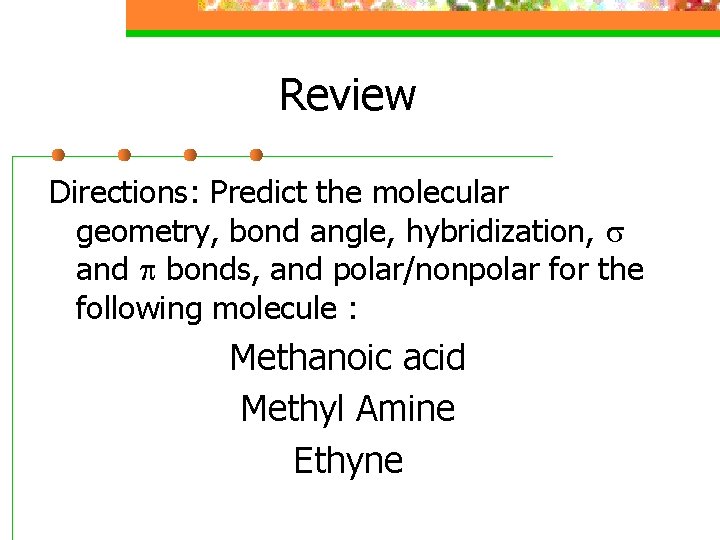
Review Directions: Predict the molecular geometry, bond angle, hybridization, s and p bonds, and polar/nonpolar for the following molecule : Methanoic acid Methyl Amine Ethyne