
Chapter 9 Mobile systems and networks Mobile Network
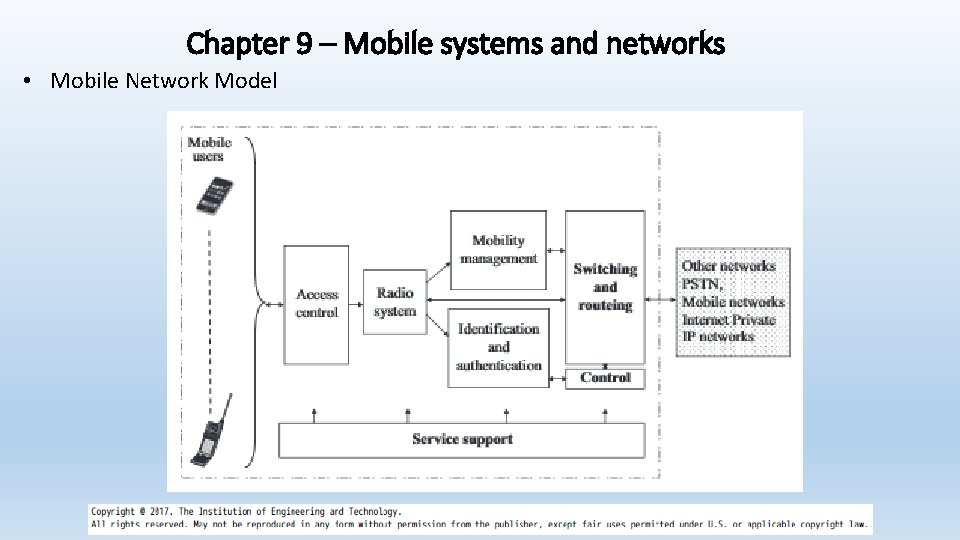
Chapter 9 – Mobile systems and networks • Mobile Network Model
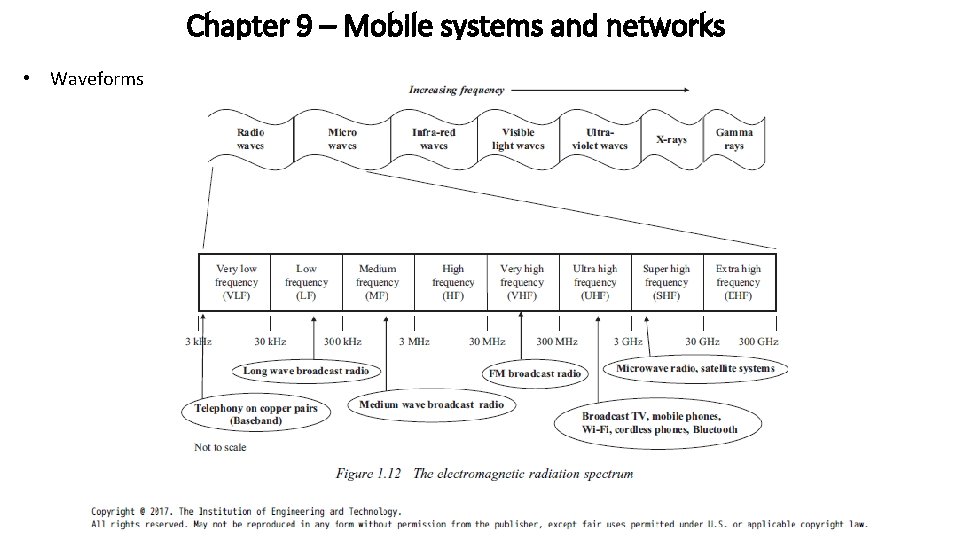
Chapter 9 – Mobile systems and networks • Waveforms
Chapter 9 – Mobile systems and networks • How radio works: • Paths setup between vibrating electromagnetic energy (waves) transmitting and receiving antennas • Frequency – 3000 Hz – 300, 000, 000 Hz (300 GHz) • Mobile radio systems – 300 MHz – 3 GHz • Radio systems have to deal with loss/attenuation • • • Free space loss Blocking – buildings, walls, etc. – worse at higher frequencies Reflection – strength of reflection depends on degree of absorption by obstacle Rain fade – water droplets and fog cause scattering and loss Multi-path – waves reaching receiver via different paths – times and strengths different than transmitted Interference
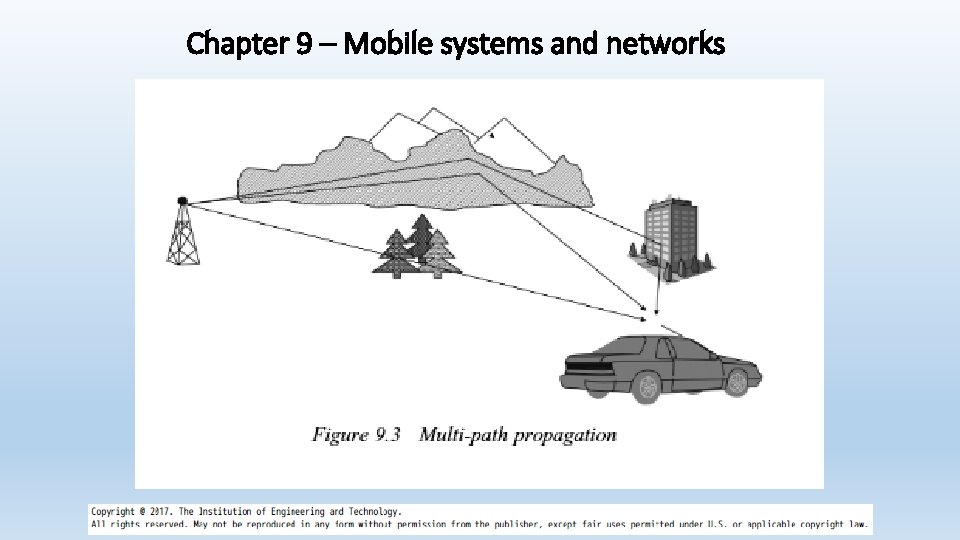
Chapter 9 – Mobile systems and networks
Chapter 9 – Mobile systems and networks • RF engineers design network to deal with loss/attenuation (link budget) • Continually optimizing network • Mobile radio frequency bands • • 450 MHz, 900 MHz, 1. 8 GHz, 1. 9 GHz, 2. 1 GHz 700 MHz Biggest asset Engineering and planning to use efficiently • Large scale mobile networks start in 1970 s – analog AMPS • Evolution/2 nd generation (2 G) – 1990’s • TDMA, CDPD, CDMA, GSM • 3 G • 4 G/LTE • 5 G
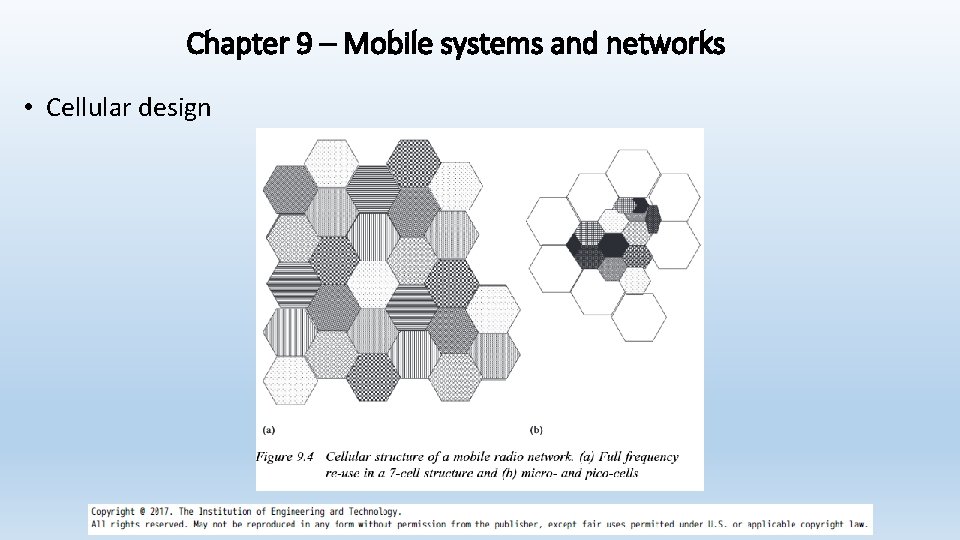
Chapter 9 – Mobile systems and networks • Cellular design
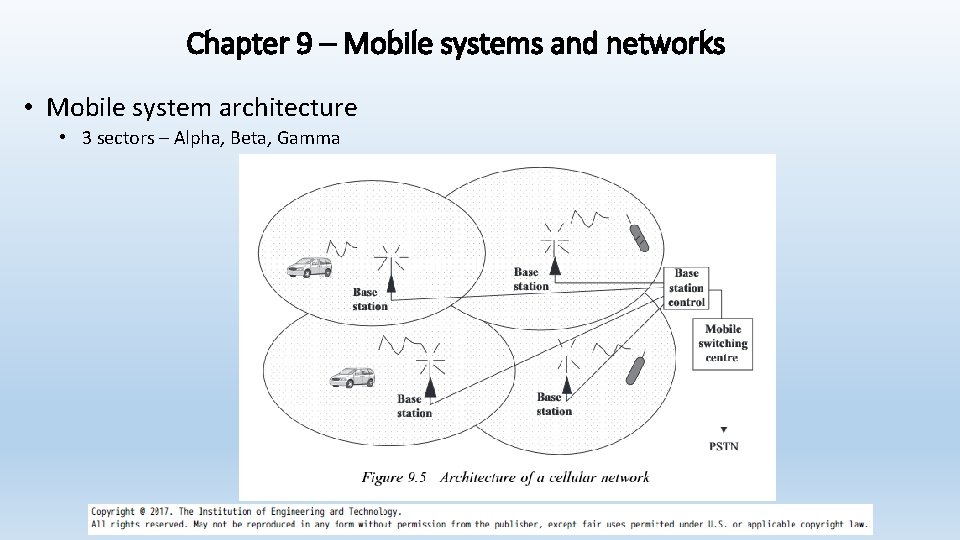
Chapter 9 – Mobile systems and networks • Mobile system architecture • 3 sectors – Alpha, Beta, Gamma
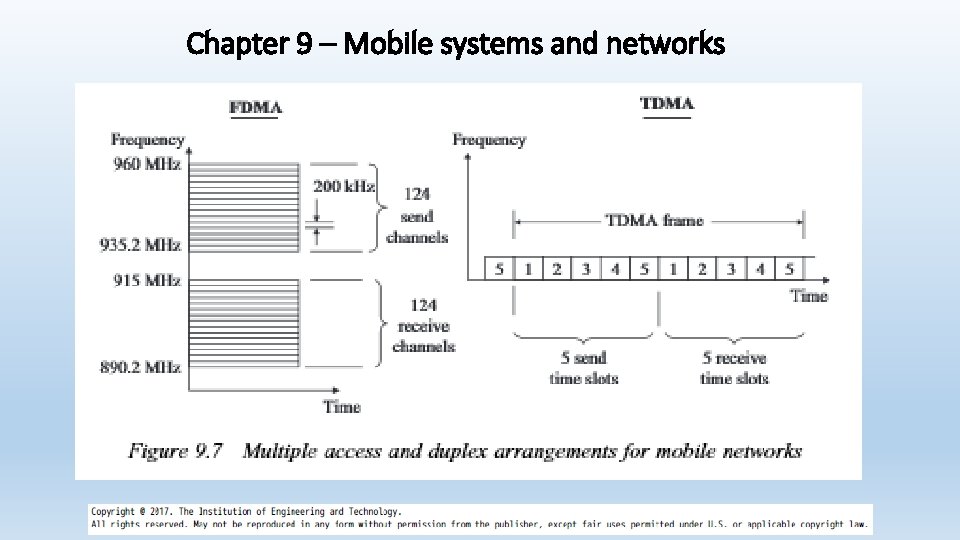
Chapter 9 – Mobile systems and networks • Mobile systems access • Frequency-division multiple access (FDMA) • The allocated frequency band is divided into a set of frequency blocks with the transmit and receive blocks separated (Frequency Division Duplex – FDD). Handsets are assigned frequency bands for access. • Time-division multiple access (TDMA) • Frequencies are split into transmit and receive and shared across a set of time slots. Handsets are assigned time slots for access. • Example figure next page
Chapter 9 – Mobile systems and networks
Chapter 9 – Mobile systems and networks • Code-division multiple access (CDMA) • Channels are separated by the application of a different code • Send and receive channels/frequencies are split as in FDD • Orthogonal frequency division multiple access (OFDMA) • Traffic carried over subcarriers of the frequency block • Global Systems for Mobile (GSM) • • • Developed in Europe to allow seamless roaming between European countries Adopted worldwide 2 nd generation 2 G system 900 MHz, 1800 MHz, 1900 MHz Auto handoff, roaming 13 kb/s vs 64 kb/s voice channels
Chapter 9 – Mobile systems and networks
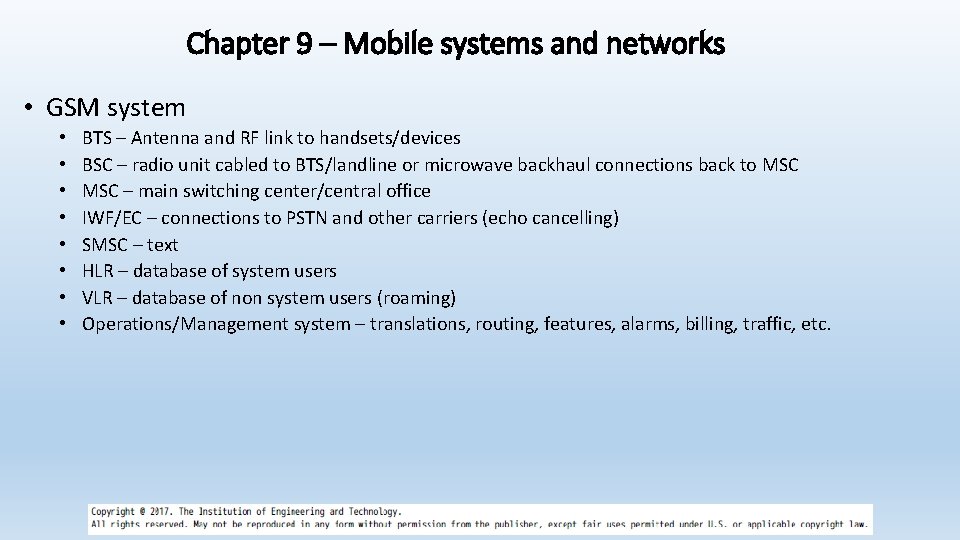
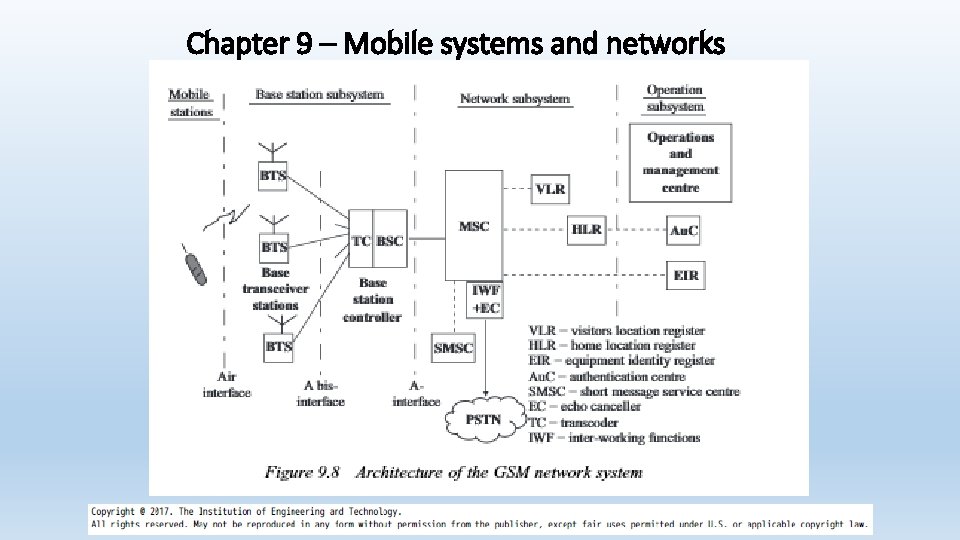
Chapter 9 – Mobile systems and networks • GSM system • • BTS – Antenna and RF link to handsets/devices BSC – radio unit cabled to BTS/landline or microwave backhaul connections back to MSC – main switching center/central office IWF/EC – connections to PSTN and other carriers (echo cancelling) SMSC – text HLR – database of system users VLR – database of non system users (roaming) Operations/Management system – translations, routing, features, alarms, billing, traffic, etc.
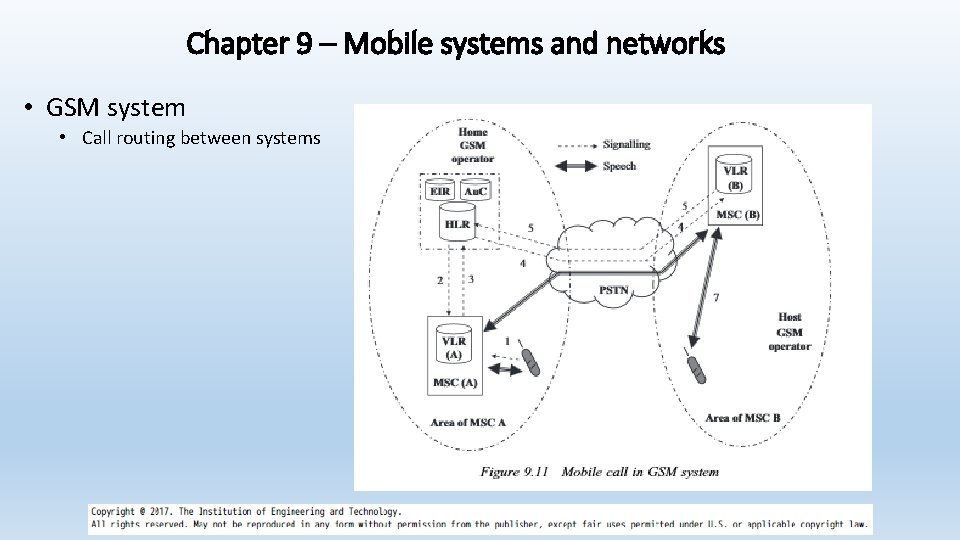
Chapter 9 – Mobile systems and networks • GSM system • Call routing between systems
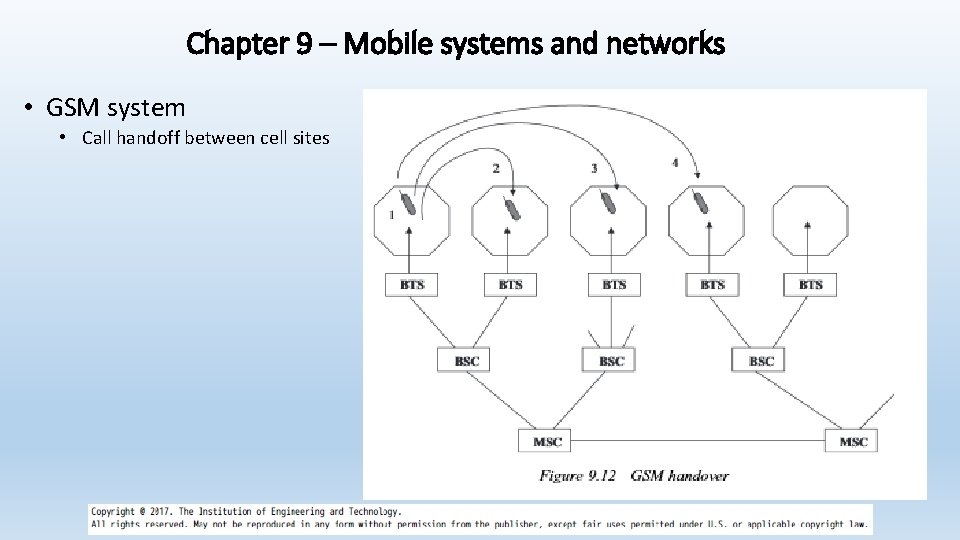
Chapter 9 – Mobile systems and networks • GSM system • Call handoff between cell sites
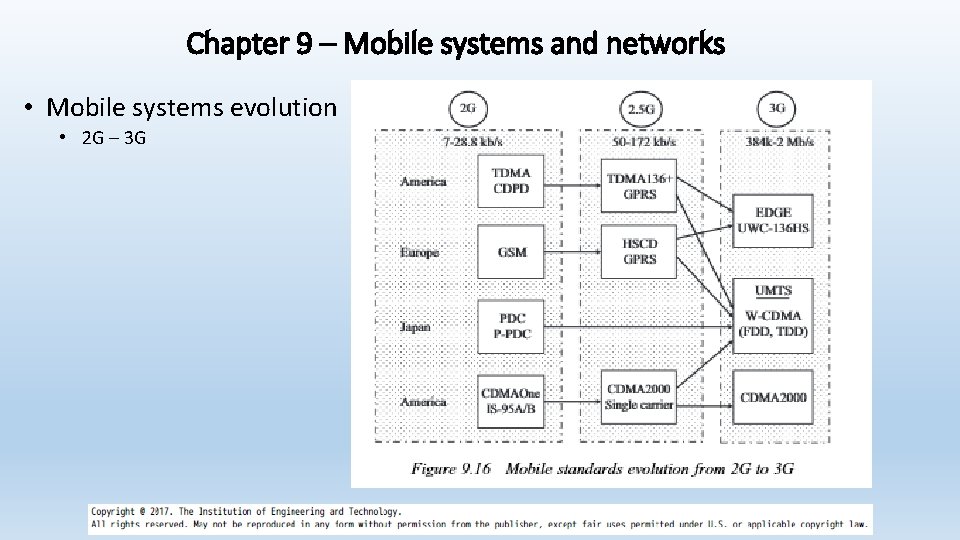
Chapter 9 – Mobile systems and networks • Mobile systems evolution • 2 G – 3 G
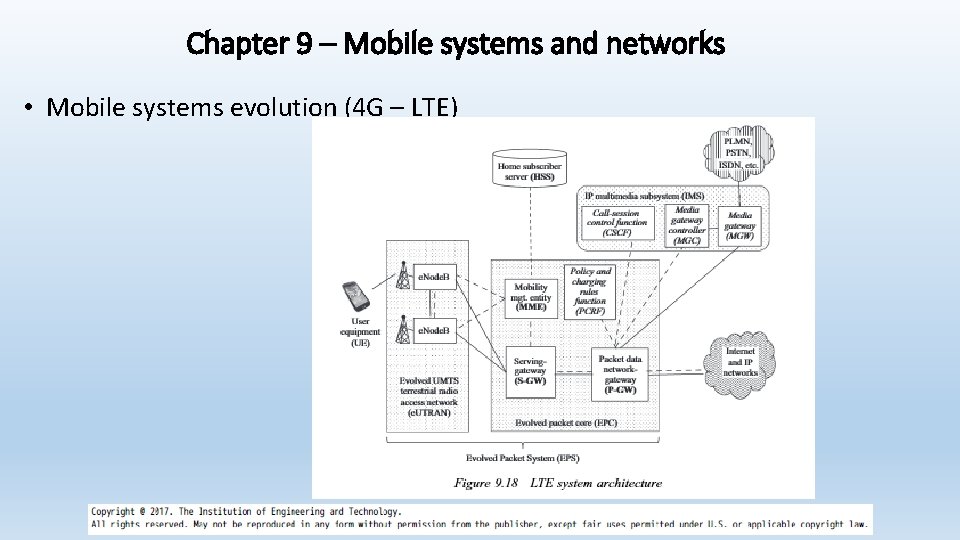
Chapter 9 – Mobile systems and networks • Mobile systems evolution (4 G – LTE)
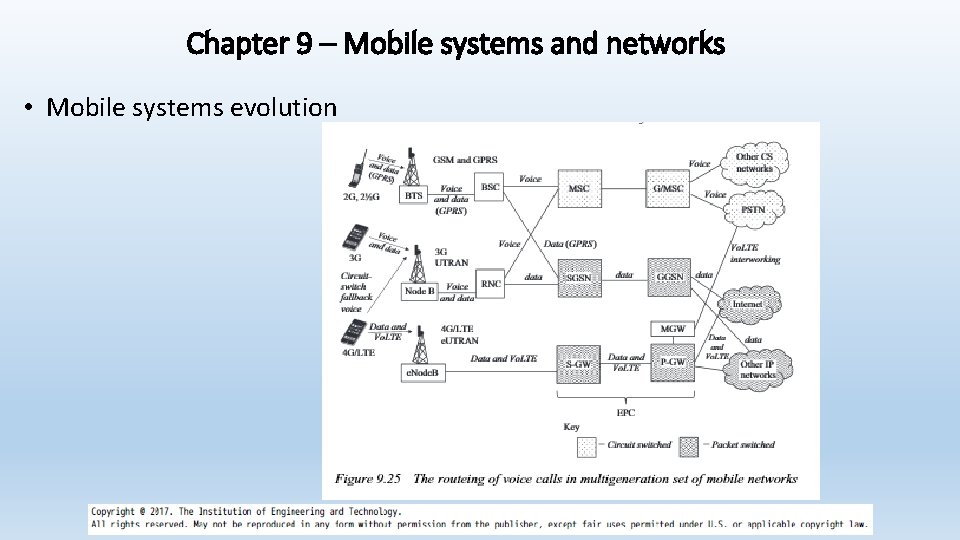
Chapter 9 – Mobile systems and networks • Mobile systems evolution
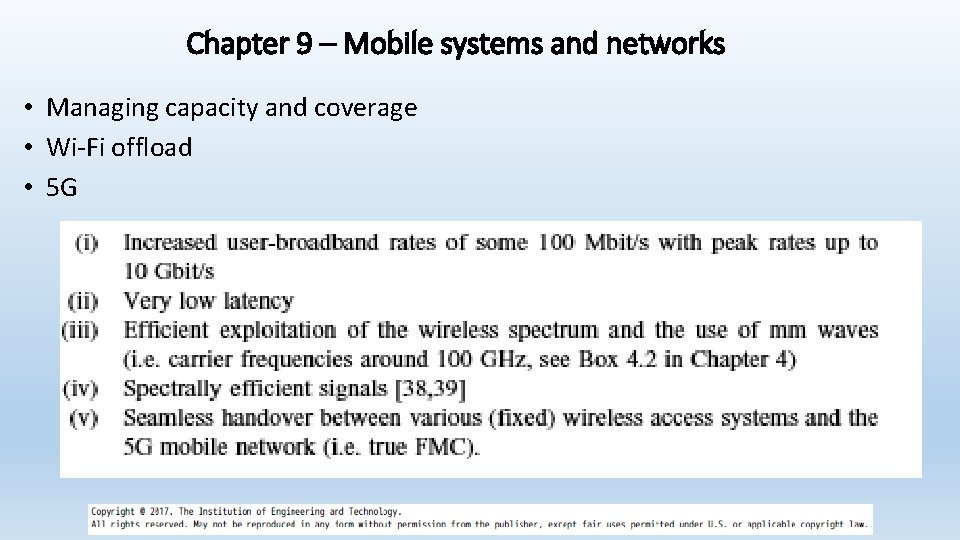
Chapter 9 – Mobile systems and networks • Managing capacity and coverage • Wi-Fi offload • 5 G
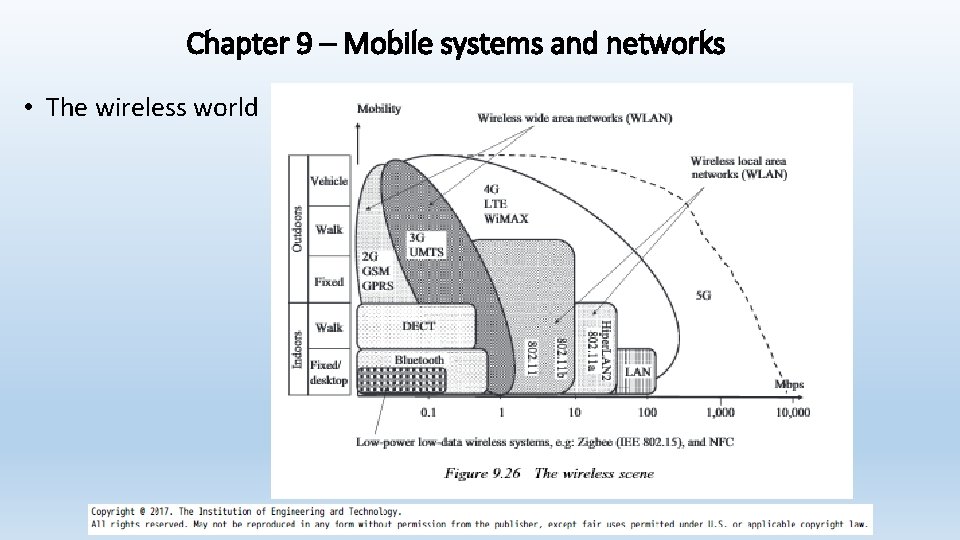
Chapter 9 – Mobile systems and networks • The wireless world
- Slides: 19