
Chapter 9 MidLatitude Cyclones Introduction midlatitude cyclones produce
- Slides: 32
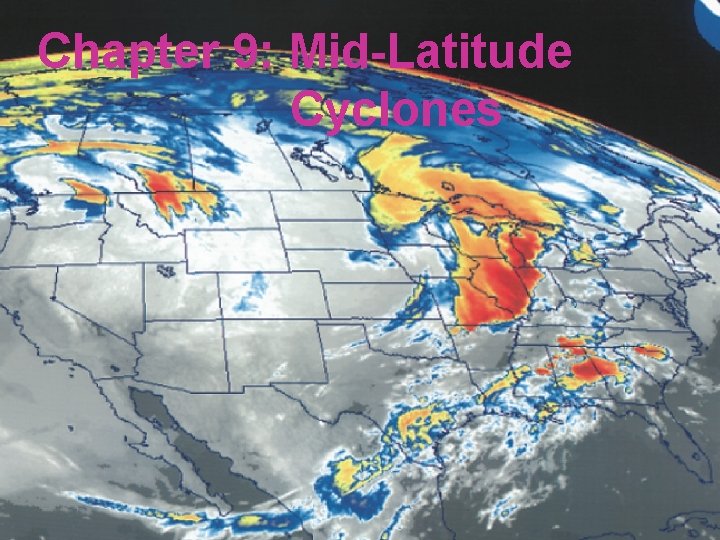
Chapter 9: Mid-Latitude Cyclones
Introduction • mid-latitude cyclones produce winds as strong as some hurricanes but different mechanisms • contain well defined fronts separating two contrasting air masses • form along a front in mid- and high-latitudes separating polar air and warmer southerly air masses • polar front theory – Bjerknes (Norwegian Geophysical Institute – Bergen) • Surface and Upper Atmosphere processes
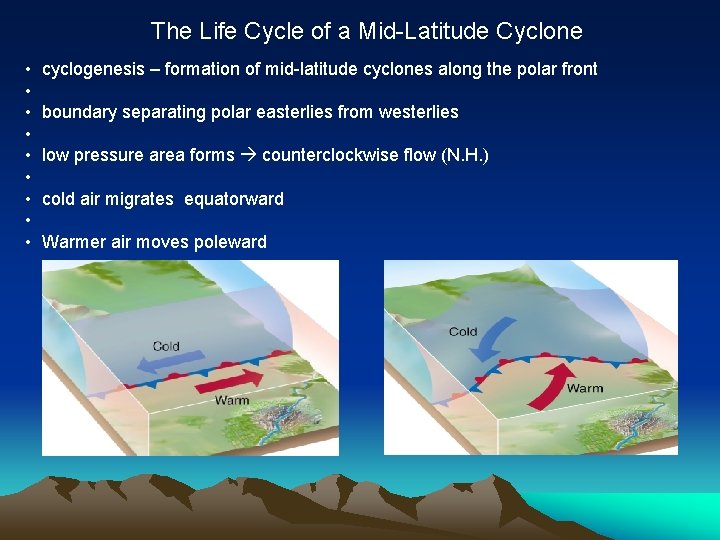
The Life Cycle of a Mid-Latitude Cyclone • • • cyclogenesis – formation of mid-latitude cyclones along the polar front boundary separating polar easterlies from westerlies low pressure area forms counterclockwise flow (N. H. ) cold air migrates equatorward Warmer air moves poleward
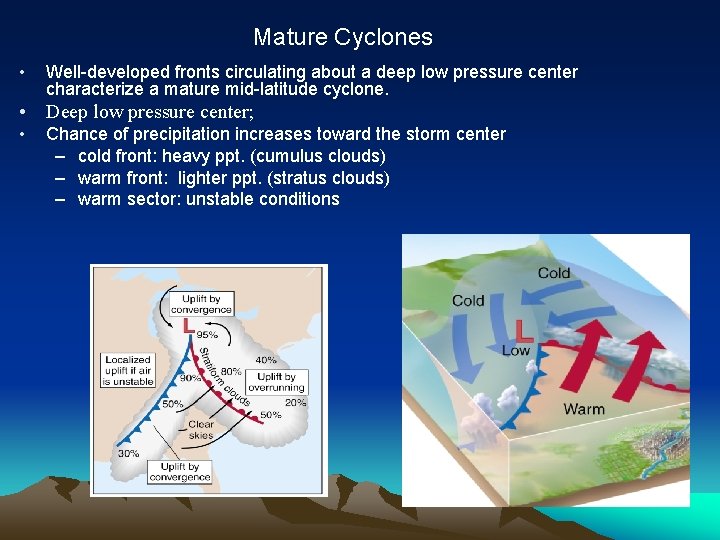
Mature Cyclones • Well-developed fronts circulating about a deep low pressure center characterize a mature mid-latitude cyclone. • Deep low pressure center; • Chance of precipitation increases toward the storm center – cold front: heavy ppt. (cumulus clouds) – warm front: lighter ppt. (stratus clouds) – warm sector: unstable conditions
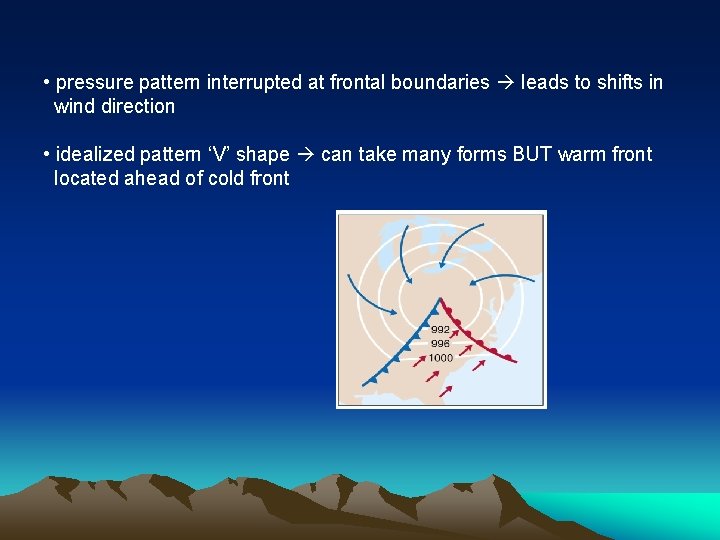
• pressure pattern interrupted at frontal boundaries leads to shifts in wind direction • idealized pattern ‘V’ shape can take many forms BUT warm front located ahead of cold front
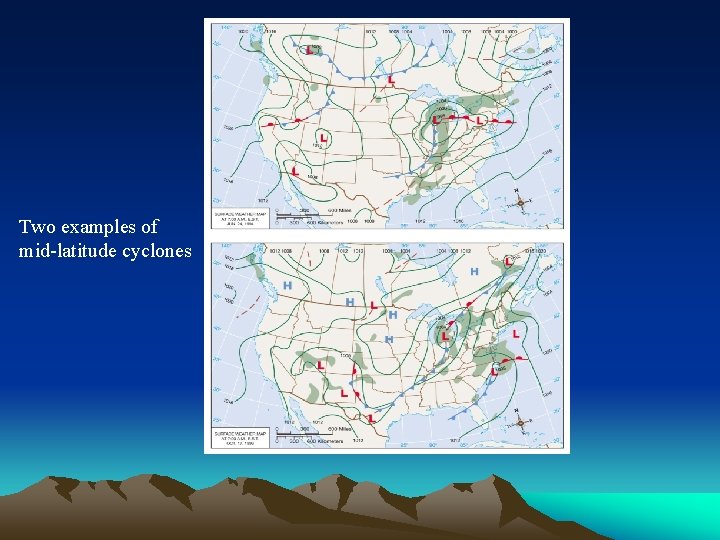
Two examples of mid-latitude cyclones
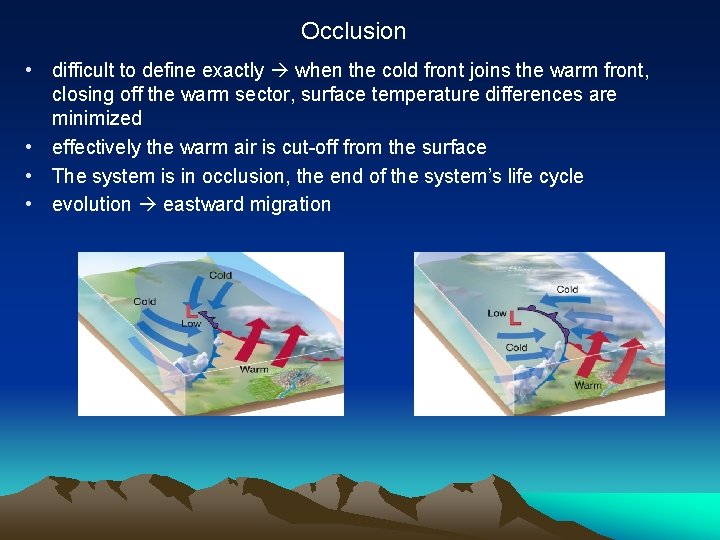
Occlusion • difficult to define exactly when the cold front joins the warm front, closing off the warm sector, surface temperature differences are minimized • effectively the warm air is cut-off from the surface • The system is in occlusion, the end of the system’s life cycle • evolution eastward migration
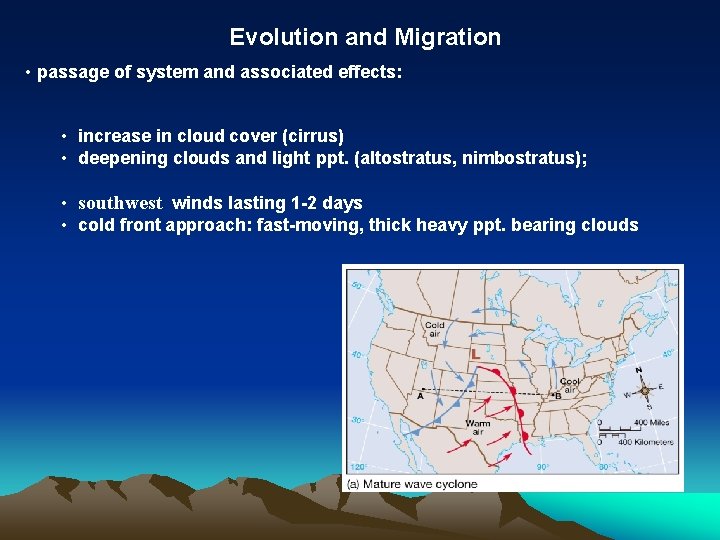
Evolution and Migration • passage of system and associated effects: • increase in cloud cover (cirrus) • deepening clouds and light ppt. (altostratus, nimbostratus); • southwest winds lasting 1 -2 days • cold front approach: fast-moving, thick heavy ppt. bearing clouds
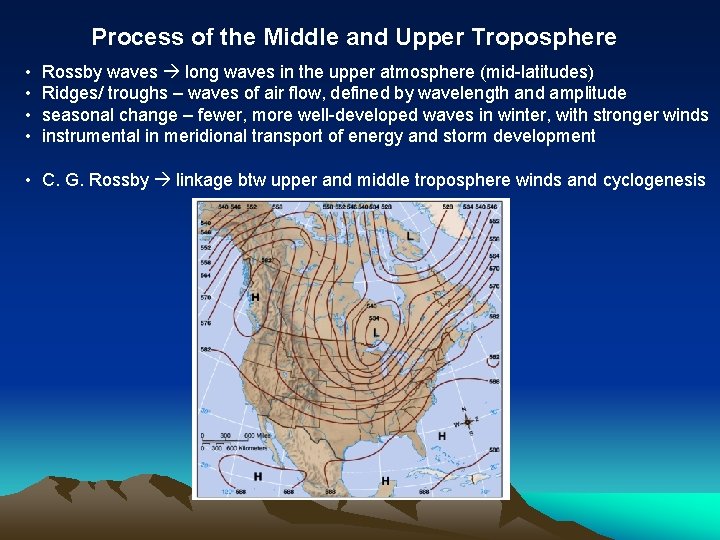
Process of the Middle and Upper Troposphere • • Rossby waves long waves in the upper atmosphere (mid-latitudes) Ridges/ troughs – waves of air flow, defined by wavelength and amplitude seasonal change – fewer, more well-developed waves in winter, with stronger winds instrumental in meridional transport of energy and storm development • C. G. Rossby linkage btw upper and middle troposphere winds and cyclogenesis
• Vorticity: describes the tendency of a fluid to rotate. clockwise rotation => negative vorticity counterclockwise rotation => positive vorticity voticity is an attribute of rotation. Any rotation generates vorticity.
• The vorticity generated by the earth rotation is called planetary vorticity. Any object in a place between the equator and poles has vorticity. Planetary vorticity = f (Coriolis force). The other rotations rather than the earth rotation also generate vorticity, called relative vorticity.
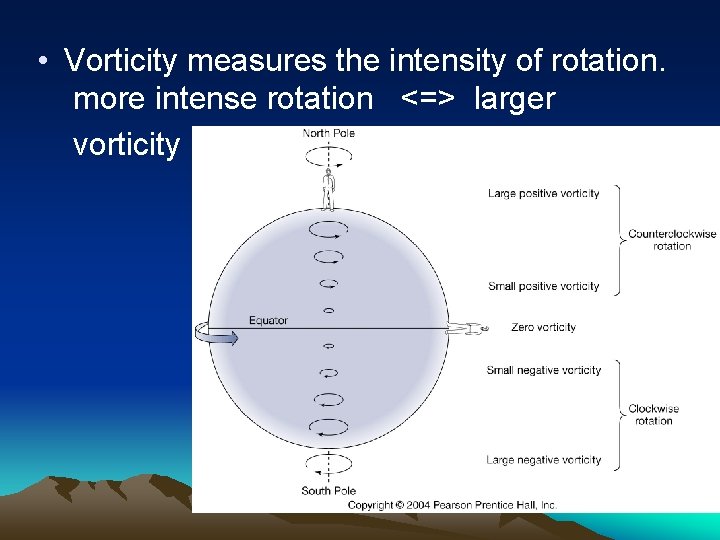
• Vorticity measures the intensity of rotation. more intense rotation <=> larger vorticity
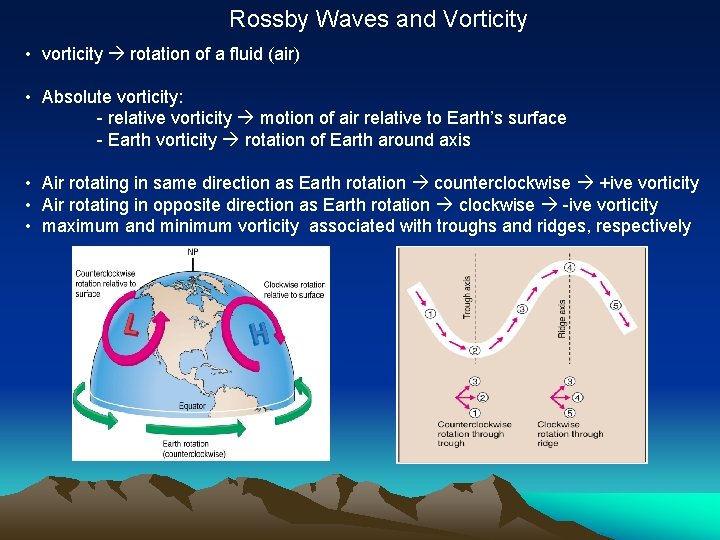
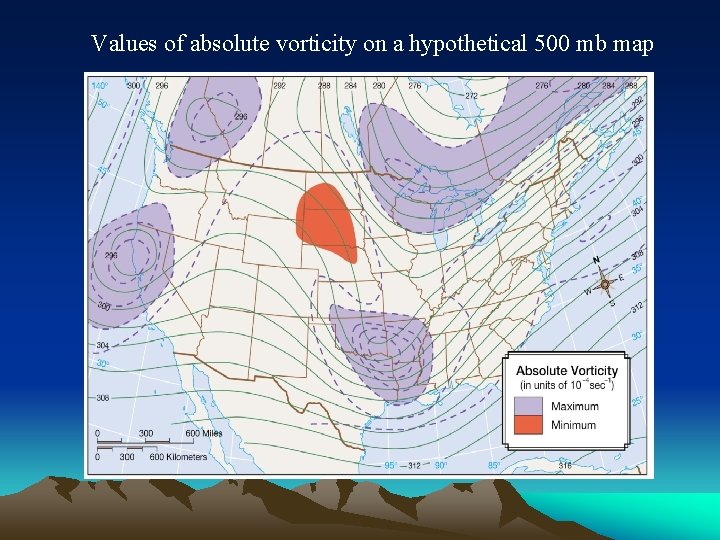
Rossby Waves and Vorticity • vorticity rotation of a fluid (air) • Absolute vorticity: - relative vorticity motion of air relative to Earth’s surface - Earth vorticity rotation of Earth around axis • Air rotating in same direction as Earth rotation counterclockwise +ive vorticity • Air rotating in opposite direction as Earth rotation clockwise -ive vorticity • maximum and minimum vorticity associated with troughs and ridges, respectively
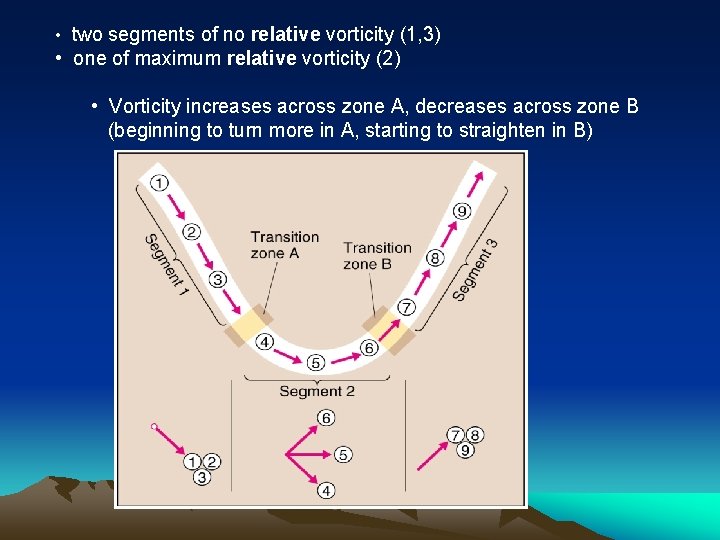
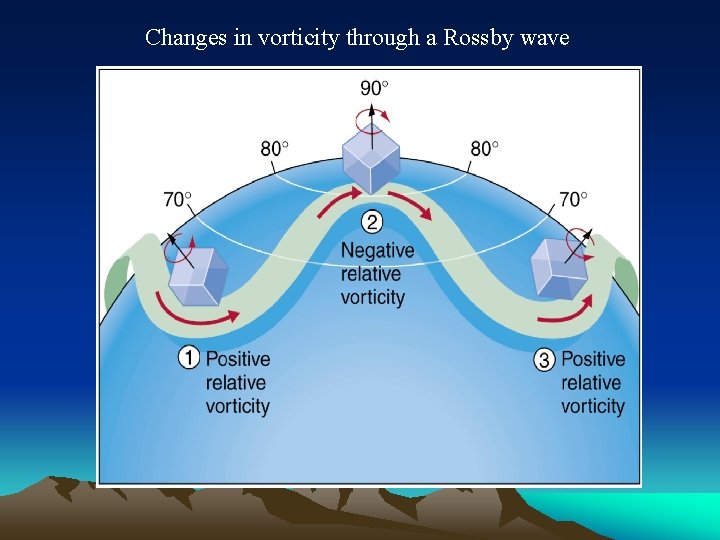
• two segments of no relative vorticity (1, 3) • one of maximum relative vorticity (2) • Vorticity increases across zone A, decreases across zone B (beginning to turn more in A, starting to straighten in B)
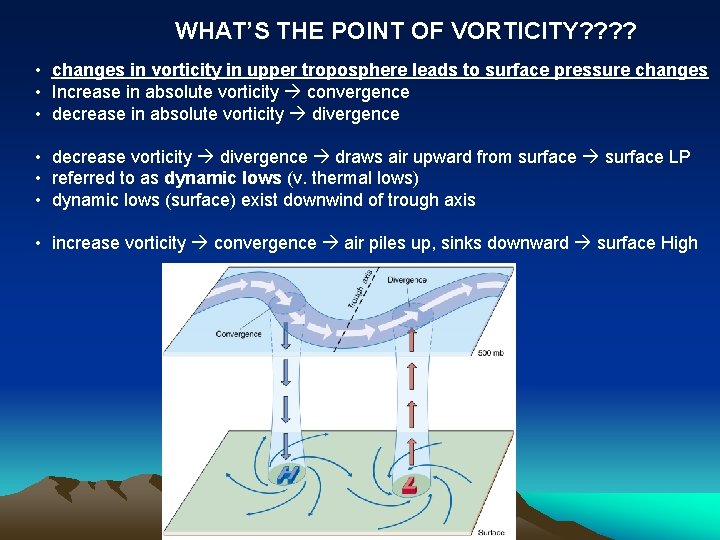
WHAT’S THE POINT OF VORTICITY? ? • changes in vorticity in upper troposphere leads to surface pressure changes • Increase in absolute vorticity convergence • decrease in absolute vorticity divergence • decrease vorticity divergence draws air upward from surface LP • referred to as dynamic lows (v. thermal lows) • dynamic lows (surface) exist downwind of trough axis • increase vorticity convergence air piles up, sinks downward surface High
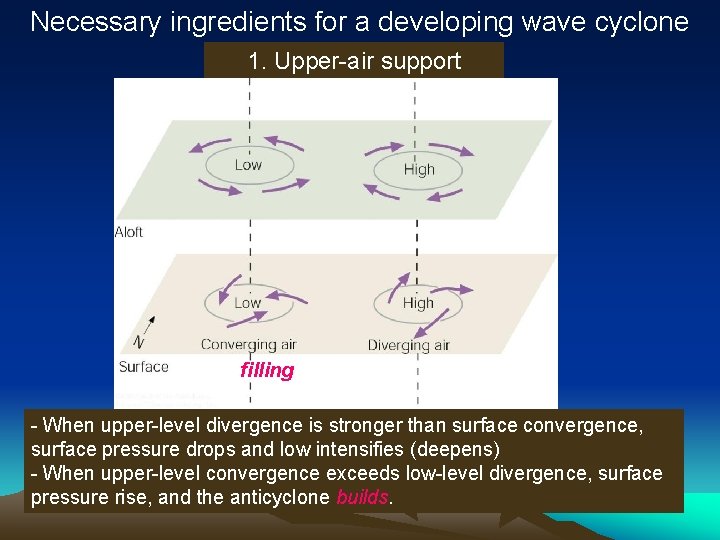
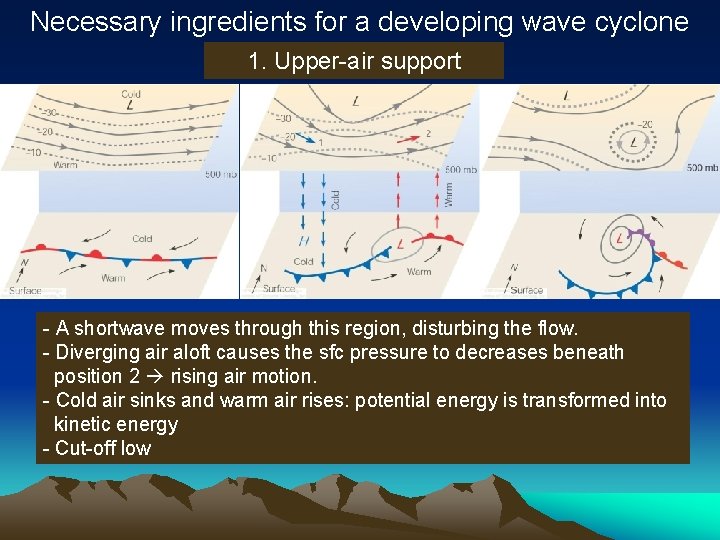
Necessary ingredients for a developing wave cyclone 1. Upper-air support filling - When upper-level divergence is stronger than surface convergence, surface pressure drops and low intensifies (deepens) - When upper-level convergence exceeds low-level divergence, surface pressure rise, and the anticyclone builds.
Values of absolute vorticity on a hypothetical 500 mb map
Changes in vorticity through a Rossby wave
Necessary ingredients for a developing wave cyclone 1. Upper-air support - A shortwave moves through this region, disturbing the flow. - Diverging air aloft causes the sfc pressure to decreases beneath position 2 rising air motion. - Cold air sinks and warm air rises: potential energy is transformed into kinetic energy - Cut-off low
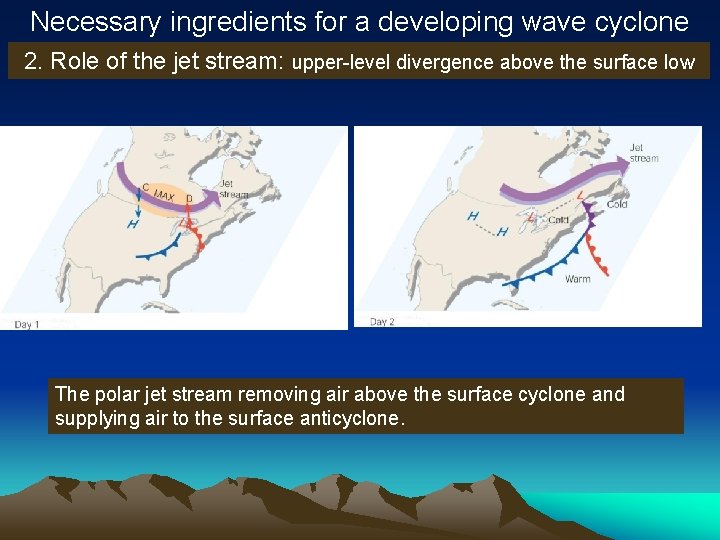
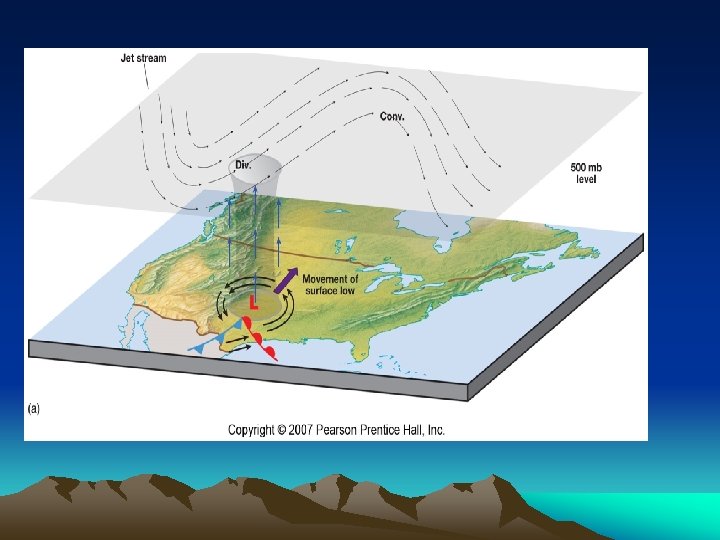
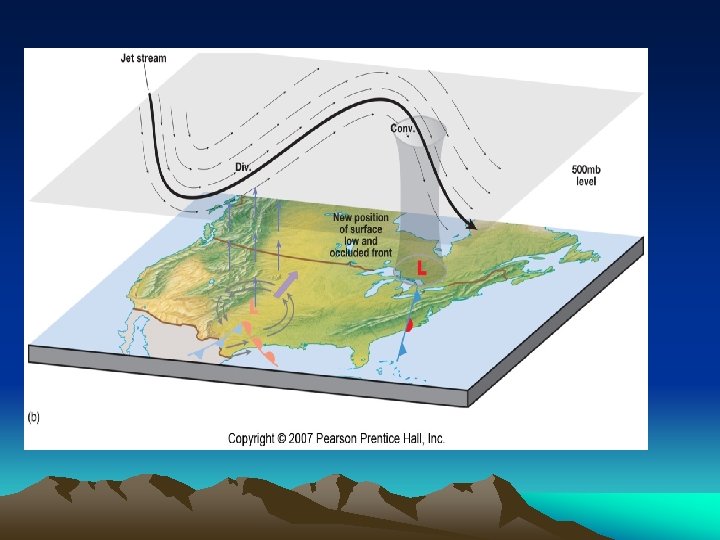
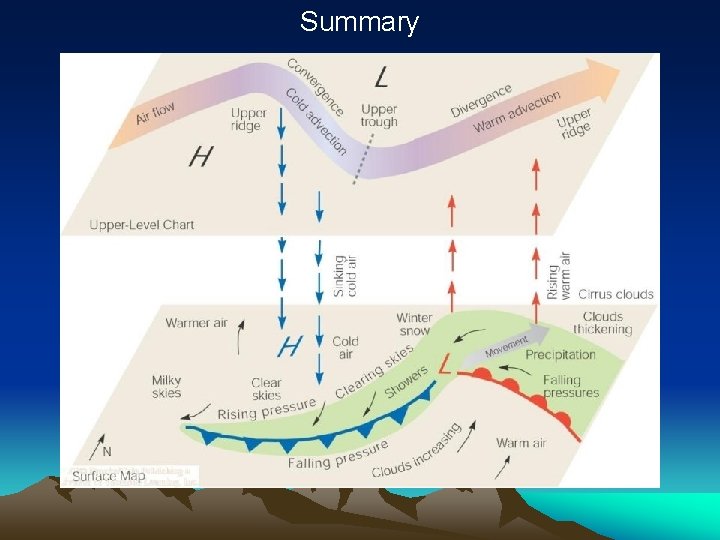
Necessary ingredients for a developing wave cyclone 2. Role of the jet stream: upper-level divergence above the surface low The polar jet stream removing air above the surface cyclone and supplying air to the surface anticyclone.
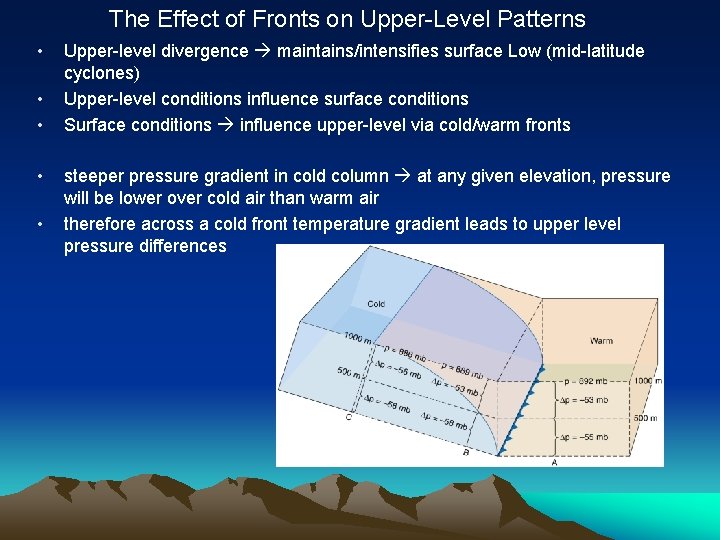
The Effect of Fronts on Upper-Level Patterns • • • Upper-level divergence maintains/intensifies surface Low (mid-latitude cyclones) Upper-level conditions influence surface conditions Surface conditions influence upper-level via cold/warm fronts steeper pressure gradient in cold column at any given elevation, pressure will be lower over cold air than warm air therefore across a cold front temperature gradient leads to upper level pressure differences
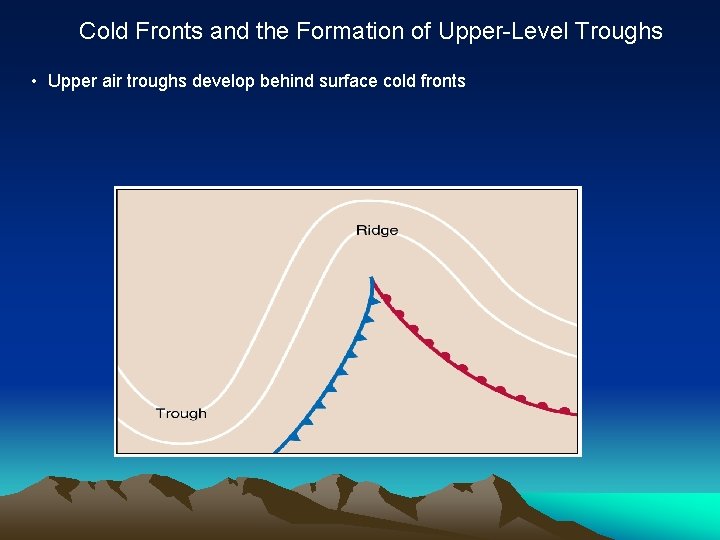
Cold Fronts and the Formation of Upper-Level Troughs • Upper air troughs develop behind surface cold fronts
Interaction of Surface and Upper-Level Patterns • upper atmosphere and surface conditions are inherently connected and linked • Divergence/ convergence surface pressure differences in cyclones and anticyclones, respectively • Surface temperatures influence VPG and upper atmospheric winds • Upper level flow patterns explain why mid-latitude cyclones exist • E. g. : typical position of mid-latitude cyclones downwind of trough axes in the area of decreasing vorticity and upper-level divergence
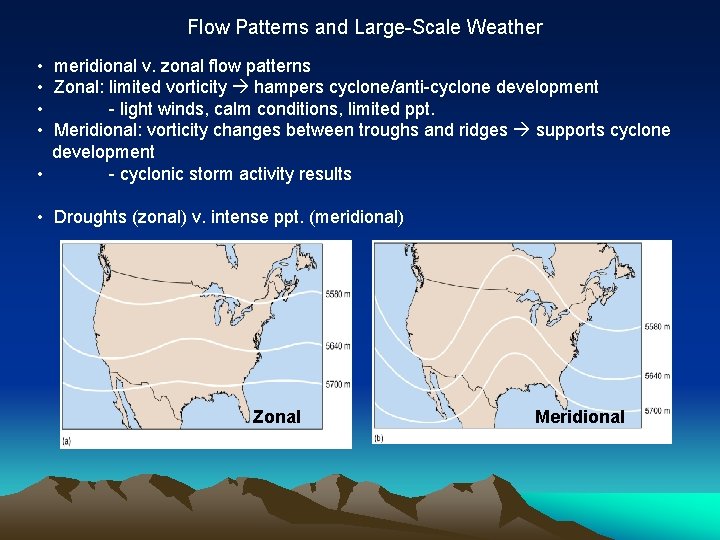
Flow Patterns and Large-Scale Weather • meridional v. zonal flow patterns • Zonal: limited vorticity hampers cyclone/anti-cyclone development • - light winds, calm conditions, limited ppt. • Meridional: vorticity changes between troughs and ridges supports cyclone development • - cyclonic storm activity results • Droughts (zonal) v. intense ppt. (meridional) Zonal Meridional
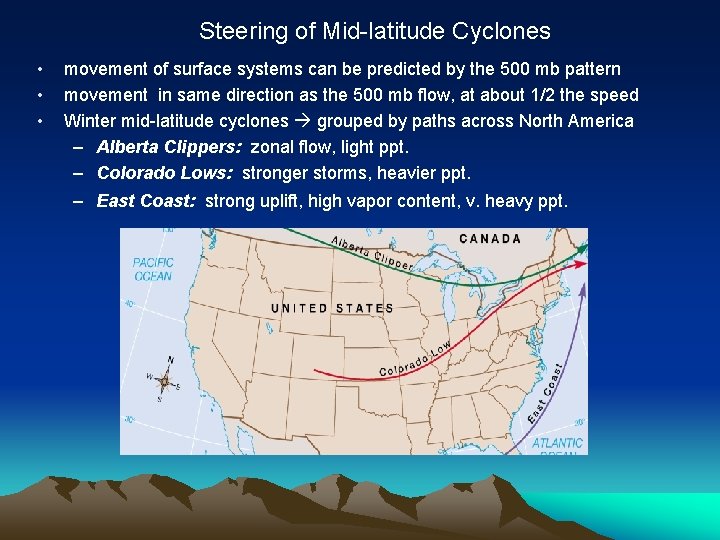
Steering of Mid-latitude Cyclones • • • movement of surface systems can be predicted by the 500 mb pattern movement in same direction as the 500 mb flow, at about 1/2 the speed Winter mid-latitude cyclones grouped by paths across North America – Alberta Clippers: zonal flow, light ppt. – Colorado Lows: stronger storms, heavier ppt. – East Coast: strong uplift, high vapor content, v. heavy ppt.
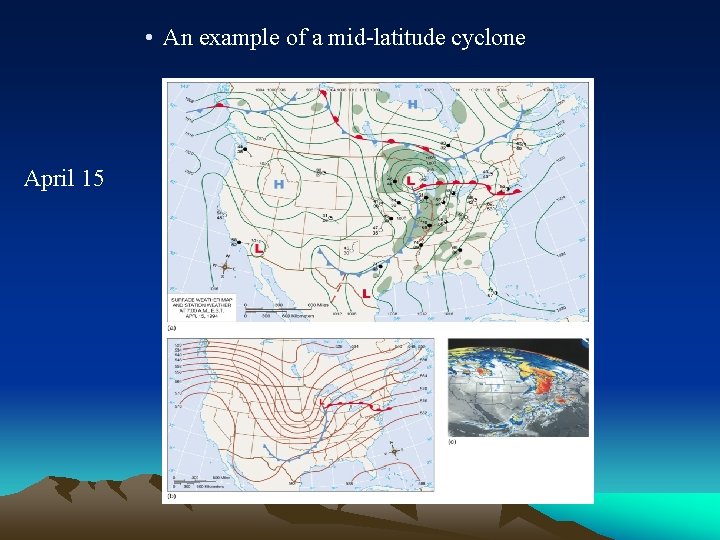
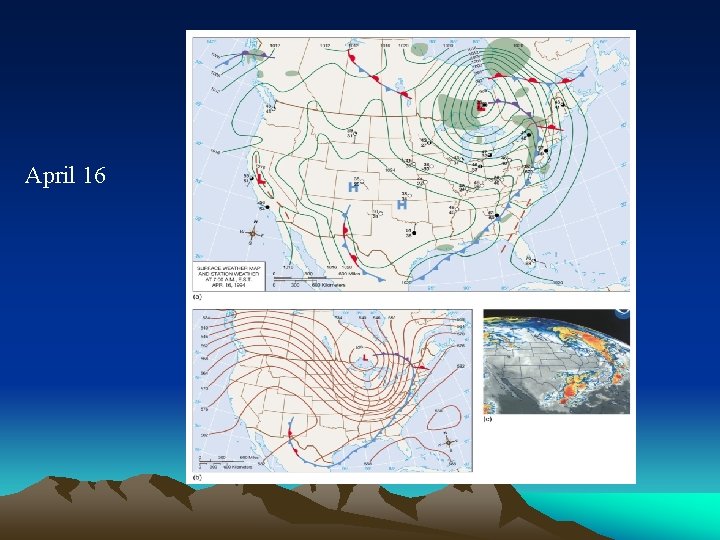
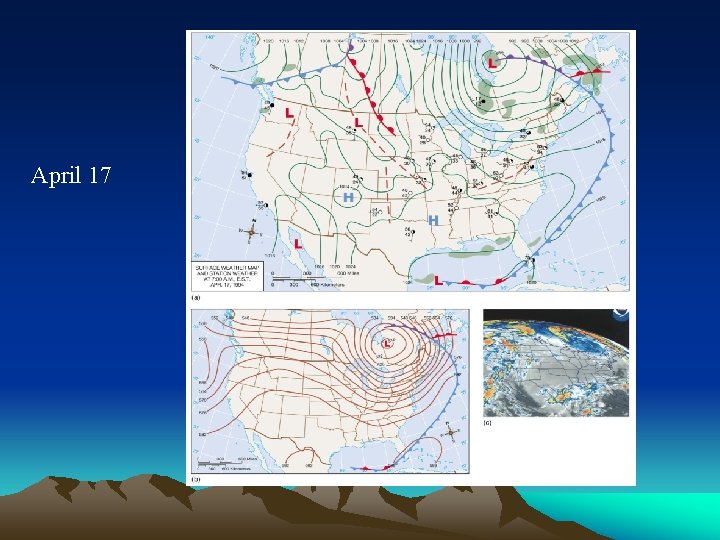
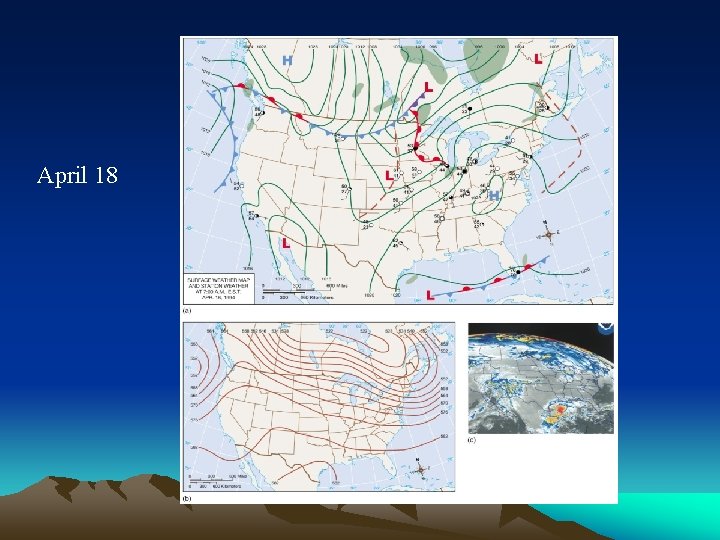
• An example of a mid-latitude cyclone April 15
April 16
April 17
April 18
Summary