
Chapter 9 Life Span Development National EMS Education

- Slides: 56
Chapter 9 Life Span Development
National EMS Education Standard Competencies Life Span Development Integrates comprehensive knowledge of life span development.
Introduction • Humans evolve over their life span. − Paramedics must be aware of the changes that occur at each stage of life. − Paramedics may need to adjust care based on patient’s life stage.
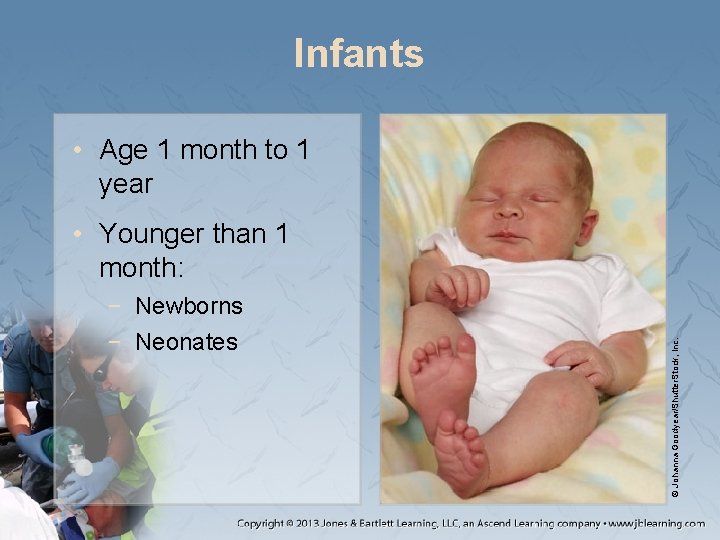
Infants • Age 1 month to 1 year − Newborns − Neonates © Johanna Goodyear/Shutter. Stock, Inc. • Younger than 1 month:
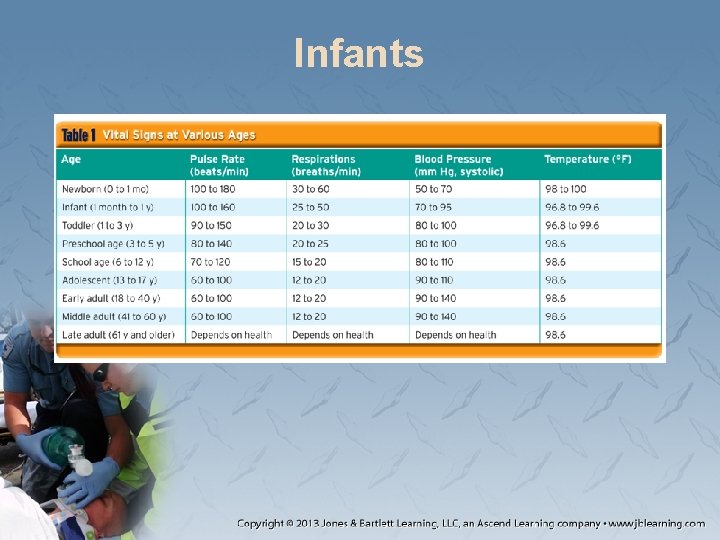
Infants
Infants • Weight − Generally 6– 8 pounds at birth − Lose 5– 10% of body weight in week 1 − Begin weight gain during week 2 • Cardiovascular system − Switch to own vasculature system
Infants • Pulmonary system • First breath inflates lungs for first time • Under 1 month, nose breathers • Under 6 months, prone to nasal congestion
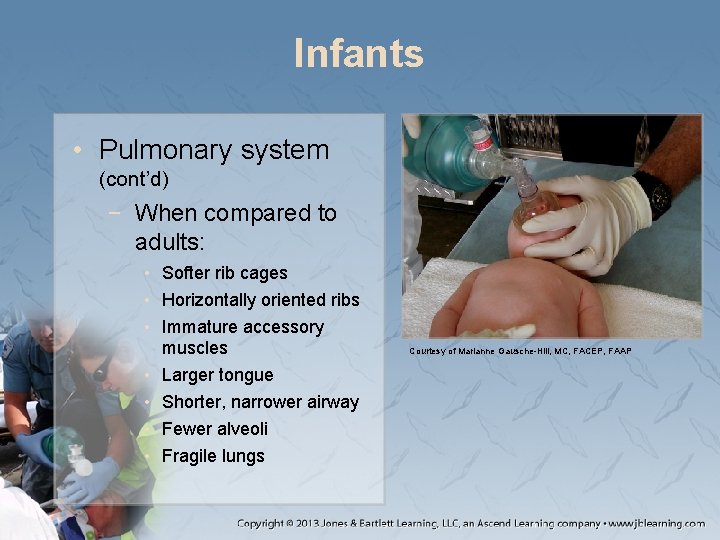
Infants • Pulmonary system (cont’d) − When compared to adults: • Softer rib cages • Horizontally oriented ribs • Immature accessory muscles • Larger tongue • Shorter, narrower airway • Fewer alveoli • Fragile lungs Courtesy of Marianne Gausche-Hill, MC, FACEP, FAAP
Infants • Renal system − Consider: • Dehydration • Electrolyte imbalances • Immune system − Passive immunity helps protect up to 1 year • Nervous system − Continues to evolve following birth − Born with: • Moro reflex • Palmar grasp • Rooting reflex • Sucking reflex
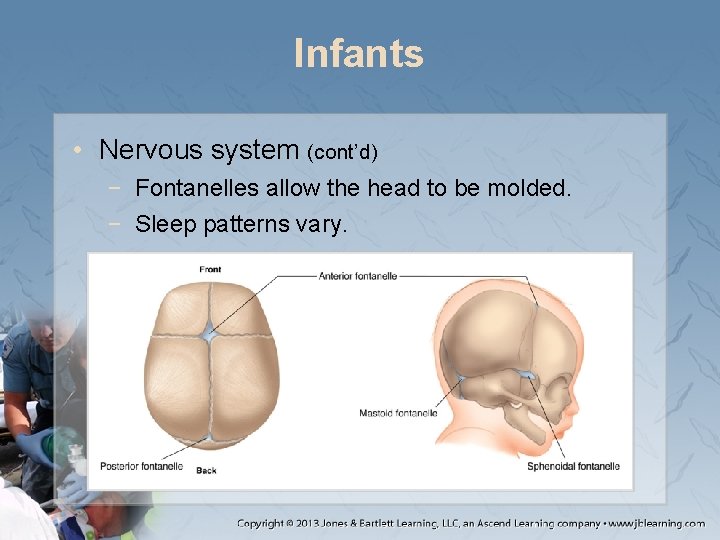
Infants • Nervous system (cont’d) − Fontanelles allow the head to be molded. − Sleep patterns vary.
Infants • Musculoskeletal system − Growth and epiphyseal plates help bones grow. − Muscles account for 25% of weight. − Growth charts track growth. • Dental system − Teething begins at 4– 7 months. • Baby teeth are in by age 3 years. • Permanent teeth come in around age 6.
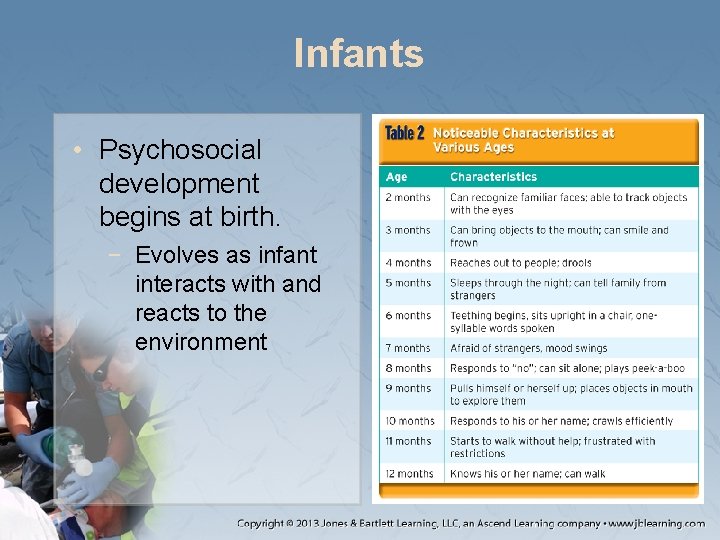
Infants • Psychosocial development begins at birth. − Evolves as infant interacts with and reacts to the environment
Infants • Infants typically have their own timetable for development. − Bonding based on a secure attachment − Anxious avoidant attachment based on rejection • Most infants use crying as the primary method of communicating distress.
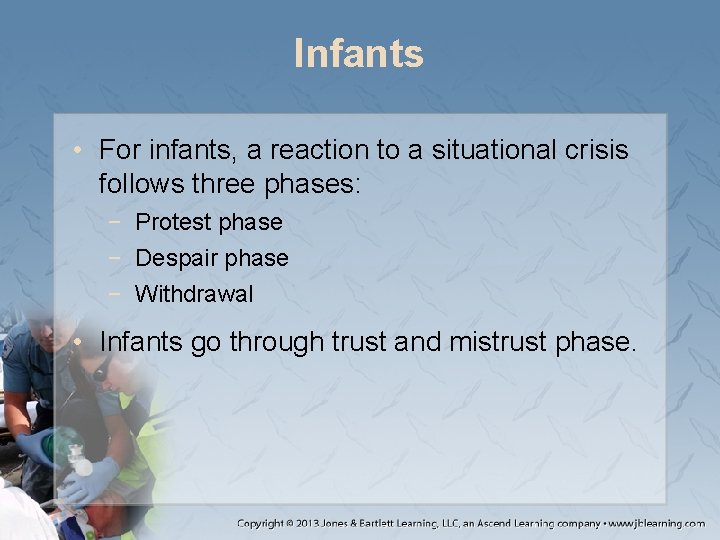
Infants • For infants, a reaction to a situational crisis follows three phases: − Protest phase − Despair phase − Withdrawal • Infants go through trust and mistrust phase.
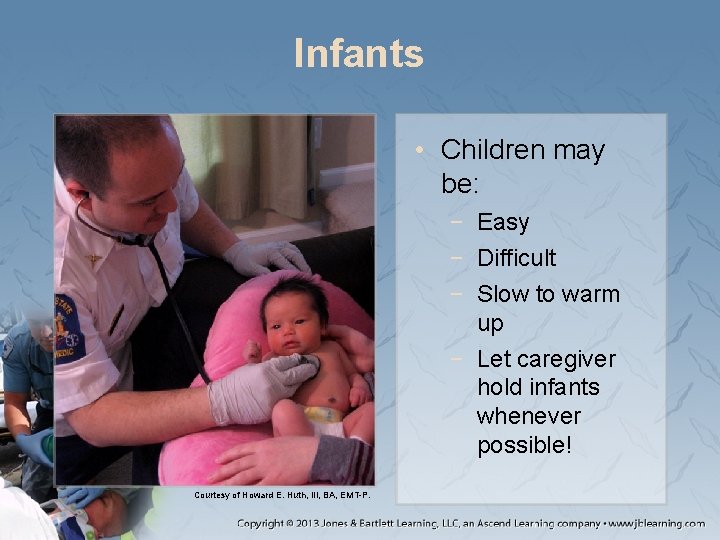
Infants • Children may be: − Easy − Difficult − Slow to warm up − Let caregiver hold infants whenever possible! Courtesy of Howard E. Huth, III, BA, EMT-P.
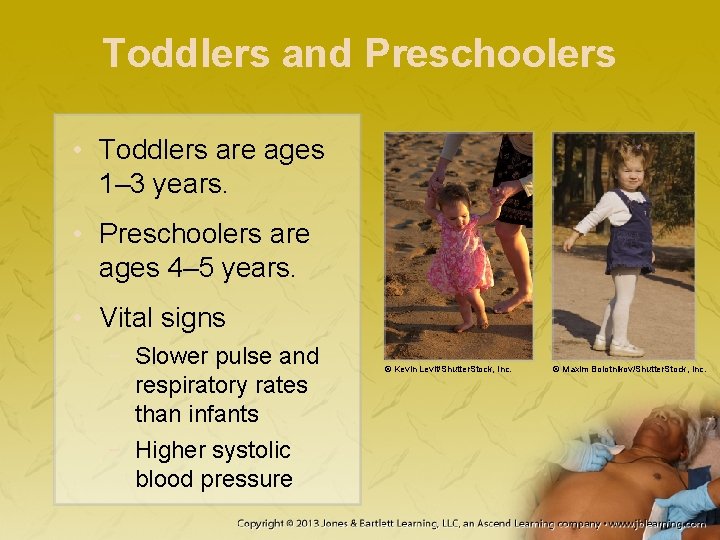
Toddlers and Preschoolers • Toddlers are ages 1– 3 years. • Preschoolers are ages 4– 5 years. • Vital signs − Slower pulse and respiratory rates than infants − Higher systolic blood pressure © Kevin Levit/Shutter. Stock, Inc. © Maxim Bolotnikov/Shutter. Stock, Inc.
Toddlers and Preschoolers • Cardiovascular system − Similar to adult’s, but lacks well-developed lung musculature • Immune system − Passive immunity loss leads to acquired immunity.
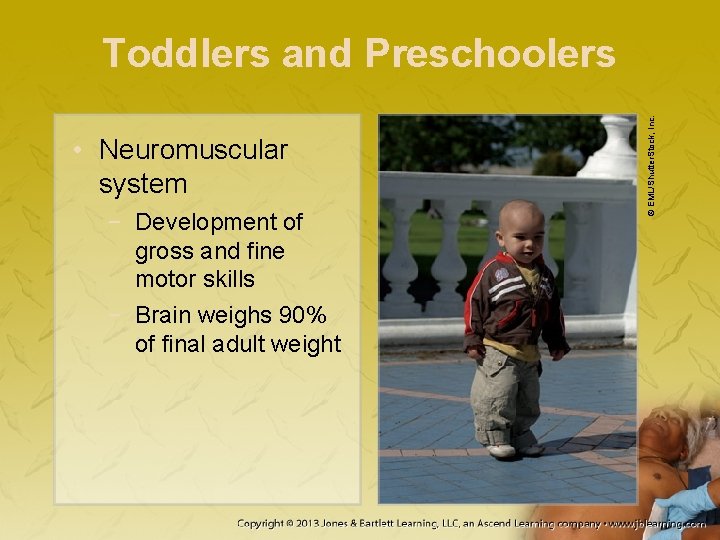
• Neuromuscular system − Development of gross and fine motor skills − Brain weighs 90% of final adult weight © EML/Shutter. Stock, Inc. Toddlers and Preschoolers
Toddlers and Preschoolers • Renal system − Begin bladder control • Teething process may be painful and include fever. • Sensory development makes tickling fun.
Toddlers and Preschoolers • Psychosocial changes − Separation anxiety peaks. − Language development occurs. − Peer interactions result in: • Learning control, following rules, competitiveness • Modeling behavior • Recognizing sexual differences
Toddlers and Preschoolers • Tips for paramedic: − − Always include caregiver! Position yourself at eye level. Explain what you are going to do. Save the worst for last.
Toddlers and Preschoolers • Development is a reflection of parents − Styles: • Authoritarian: expects complete obedience • Authoritative: balances authority with freedom • Permissive: no imposition of rules − Divorce may affect self-esteem and well-being.
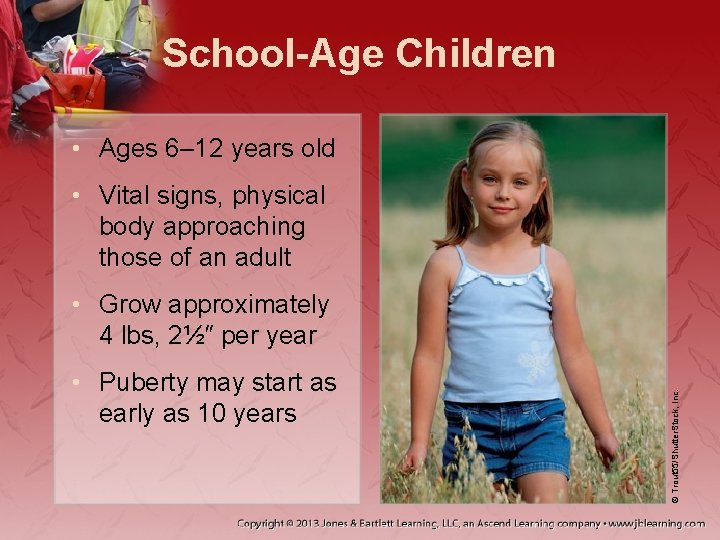
School-Age Children • Ages 6– 12 years old • Vital signs, physical body approaching those of an adult • Puberty may start as early as 10 years © Trout 55/Shutter. Stock, Inc. • Grow approximately 4 lbs, 2½″ per year
School-Age Children • Psychosocial changes − Three stages of reasoning • Preconventional: avoid punishment • Conventional: obtain approval • Postconventional: conscience − Self-concept develops − Self-esteem develops
School-Age Children • Tips for paramedics: − Use same techniques as for preschoolers. − Gaining (and losing) trust is a huge issue. − Be direct, assertive, and open!
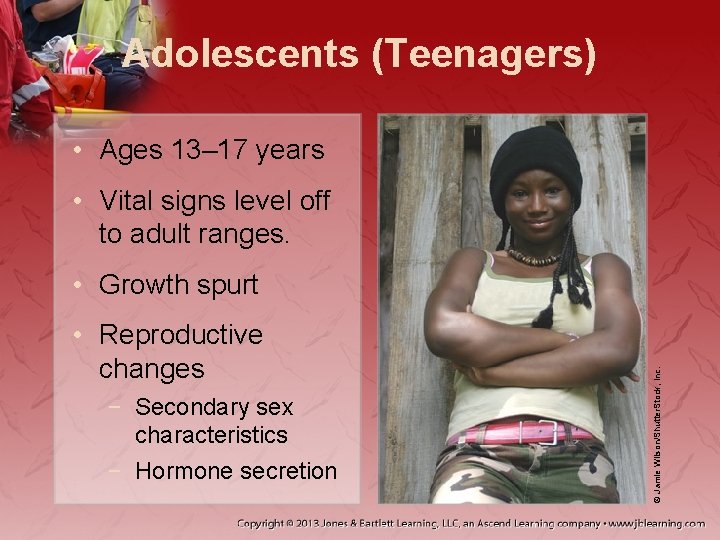
Adolescents (Teenagers) • Ages 13– 17 years • Vital signs level off to adult ranges. • Reproductive changes − Secondary sex characteristics − Hormone secretion © Jamie Wilson/Shutter. Stock, Inc. • Growth spurt
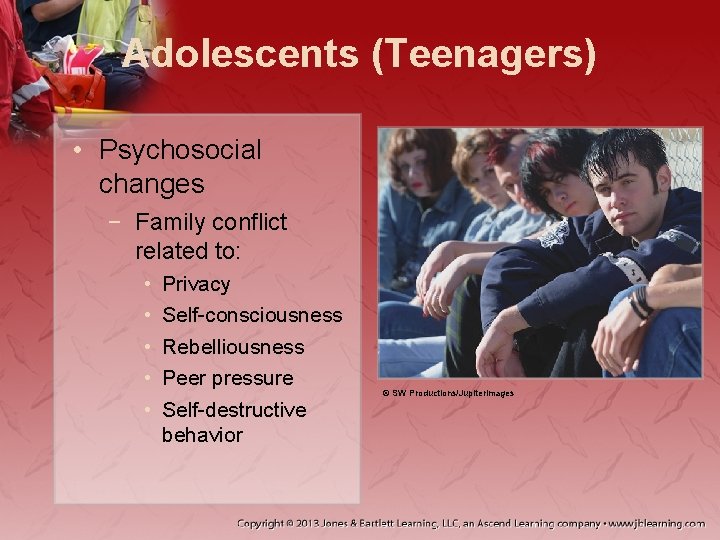
Adolescents (Teenagers) • Psychosocial changes − Family conflict related to: • • • Privacy Self-consciousness Rebelliousness Peer pressure Self-destructive behavior © SW Productions/Jupiterimages
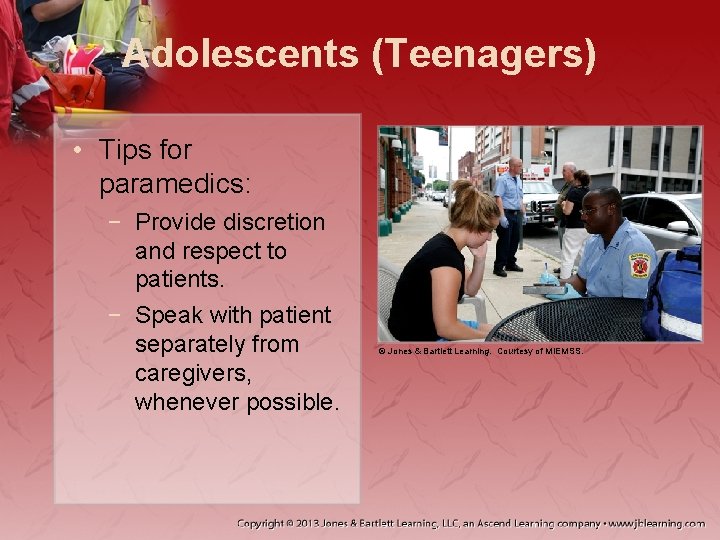
Adolescents (Teenagers) • Tips for paramedics: − Provide discretion and respect to patients. − Speak with patient separately from caregivers, whenever possible. © Jones & Bartlett Learning. Courtesy of MIEMSS.
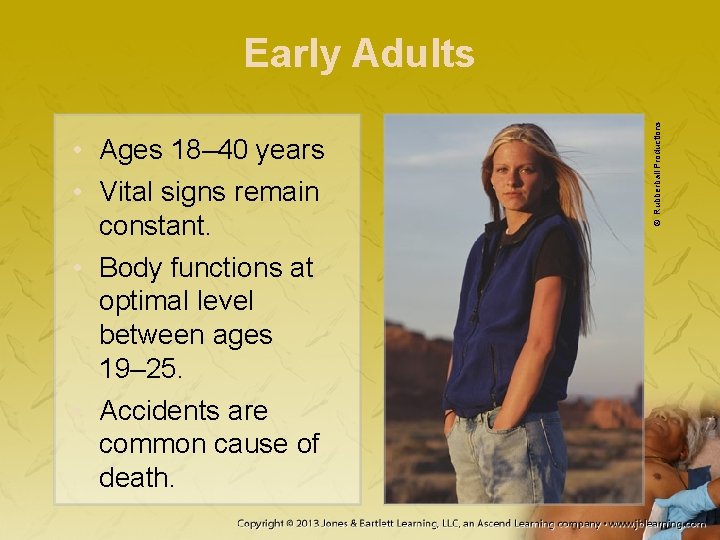
• Ages 18– 40 years • Vital signs remain constant. • Body functions at optimal level between ages 19– 25. • Accidents are common cause of death. © Rubberball Productions Early Adults
Early Adults • Psychosocial changes − Work, family, and stress are main focus • Want to “settle down” • Seek and find love − One of the most stable life periods, with less psychological problems than other stages
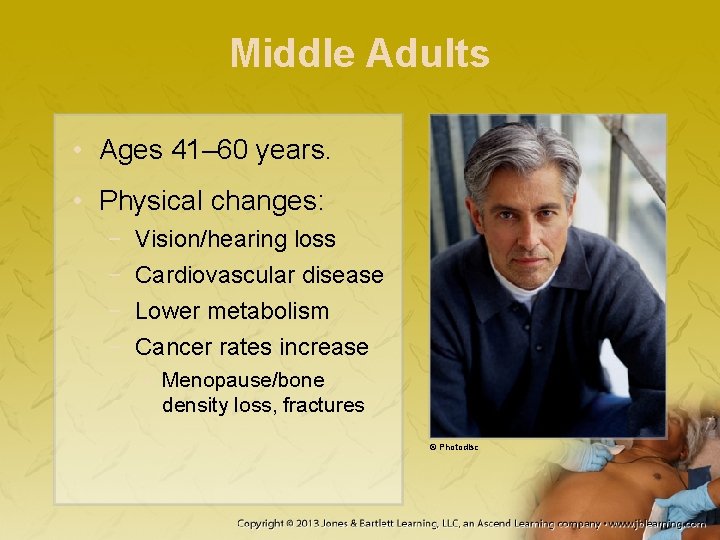
Middle Adults • Ages 41– 60 years. • Physical changes: − − Vision/hearing loss Cardiovascular disease Lower metabolism Cancer rates increase • Menopause/bone density loss, fractures © Photodisc
Middle Adults • Psychosocial changes − Focus on meeting life goals • “Empty nest” syndrome • Financial worries related to retirement • May see crisis as a challenge, not a threat
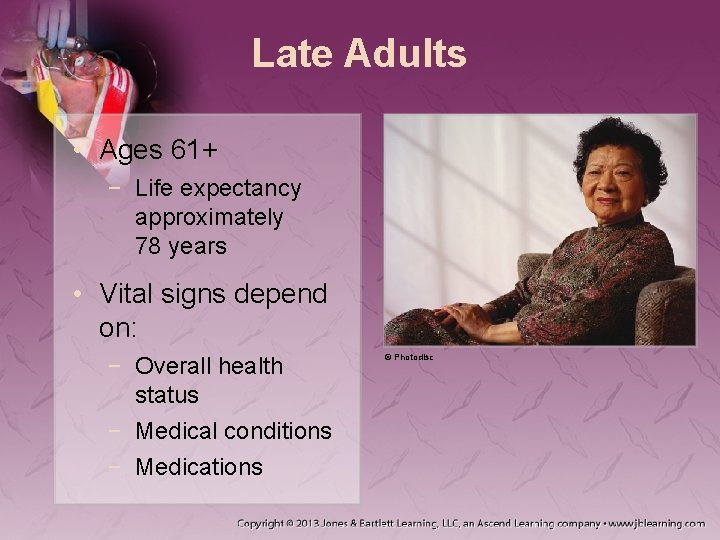
Late Adults • Ages 61+ − Life expectancy approximately 78 years • Vital signs depend on: − Overall health status − Medical conditions − Medications © Photodisc
Late Adults • Cardiovascular system − Atherosclerosis leads to blood vessel blockage. • May lead to aneurysms − Hearts are less able to deal with exercise or disease due to: • Decreased pulse rate • Declining cardiac output • Inability to elevate cardiac output
Late Adults • Cardiovascular system (cont’d) − Vascular system becomes stiff due to: • • • Increased diastolic blood pressure Decreased cardiac output Impeded blood flow Reduced elasticity of peripheral vessels Reduced ability to compensate for changes
Late Adults • Respiratory system − Changes make breathing more difficult: • Larger airway; smaller alveoli • Reduced lung elasticity; increased use of intercostal muscles • Rigid chest as ribs calcify to sternum • Decrease in intercostal muscle strength
Late Adults • Respiratory system (cont’d) − Changes in mouth and nose leave airway less protected. • Difficult to clear secretions • Cough and gag reflexes decline • Less responsive to smoke and dust due to decline in cilia
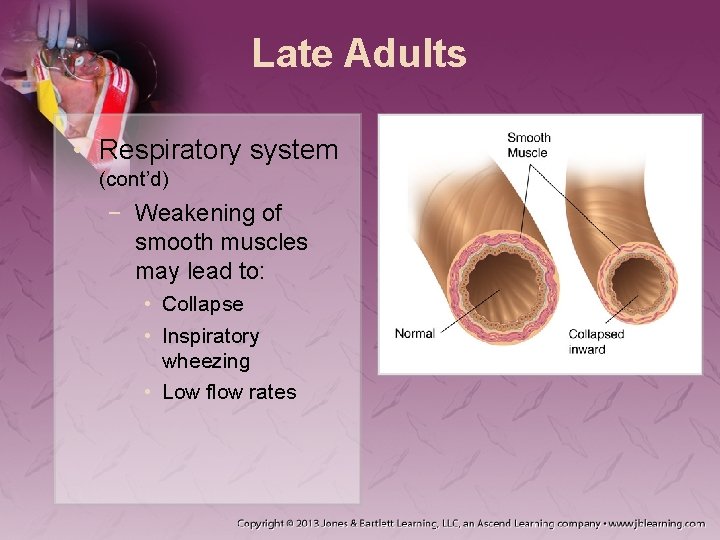
Late Adults • Respiratory system (cont’d) − Weakening of smooth muscles may lead to: • Collapse • Inspiratory wheezing • Low flow rates
Late Adults • Respiratory system (cont’d) − Vital capacity only 50% of younger adult’s • Loss of respiratory muscle mass • Increased stiffness of thoracic cage • Decreased surface area for air exchange − Residual volume increases causing air to hamper gas exchange in alveoli.
Late Adults • Endocrine system − Diabetes related to weight gain − Males lose penis rigidity; females experience atrophy of uterus and vagina
Late Adults • Renal system − Functional changes of the kidneys: • Declining filtration function • Decreasing kidney mass • Declining number of nephrons − Decreased response to hemodynamic stress
Late Adults • Gastrointestinal system − − − Decreased sense of taste, weaker teeth Decreased saliva production Slower gastric motility Diminishing acid secretion Decreased ability to extract nutrients Fecal incontinence
Late Adults • Nervous system − Central nervous system changes: • • Brain weight loss of 10%– 20% Loss of 5%– 50% neurons Loss of 20% frontal lobe synapses Slower motor and sensory neural networks − Change to biphasic sleep patterns
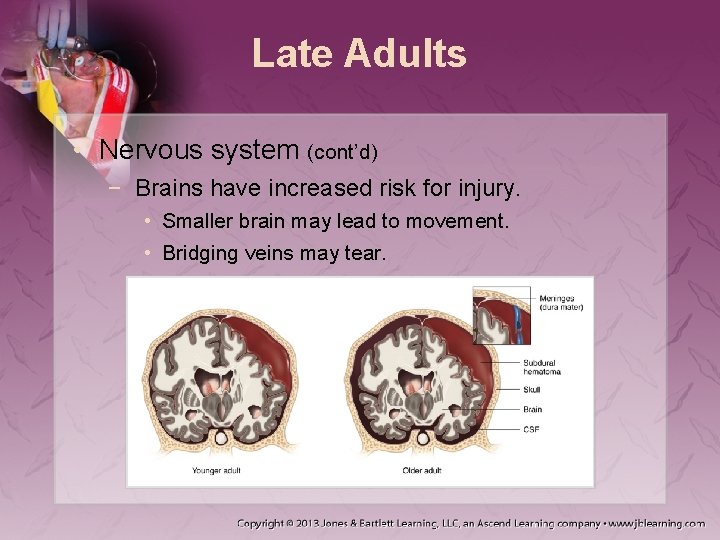
Late Adults • Nervous system (cont’d) − Brains have increased risk for injury. • Smaller brain may lead to movement. • Bridging veins may tear.
Late Adults • Nervous system (cont’d) − Peripheral nervous system changes: • Diminished sensation • Diminished proprioception • Deteriorated nerve endings
Late Adults • Sensory changes: − Vision changes • • • Pupils less responsive to light Diminished visual acuity Restricted ocular movement Increased distortions Decreased ability to focus at close range Decreased peripheral vision
Late Adults • Sensory changes (cont’d): − Hearing changes • Loss of high-frequency hearing • Deafness − Loss of taste bud sensation and olfactory perception
Late Adults • Psychosocial changes − Up until five years preceding death, most late adults retain high-level brain function • Terminal drop hypothesis
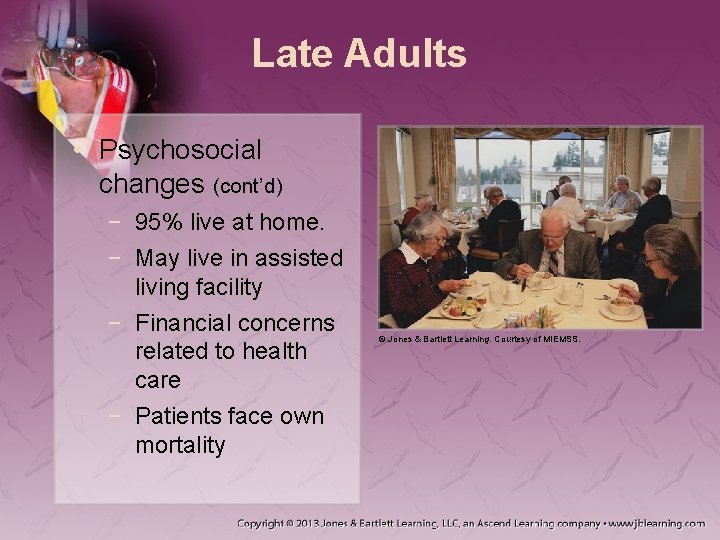
Late Adults • Psychosocial changes (cont’d) − 95% live at home. − May live in assisted living facility − Financial concerns related to health care − Patients face own mortality © Jones & Bartlett Learning. Courtesy of MIEMSS.
Summary • Developmental stages of life include infant, toddler, preschool age, adolescence, early adulthood, middle adulthood, and late adulthood. • Each developmental stage is marked by different physical and psychological changes and characteristics. • The vital signs of toddlers and preschoolers differ somewhat from those of an infant.
Summary • From ages 6 to 12 years, the school-age child’s vital signs and body gradually approach those observed in adulthood. • The vital signs of adolescents begin to level off within the adult ranges. • Vital signs do not vary greatly through adulthood; however, the vital signs of late adults do vary depending on each person’s health.
Summary • Infants develop at a startling rate. • Two important points regarding an infant’s airway are that an infant’s tongue can more easily occlude the airway, and the lungs are fragile. • Infants are classified as an easy child, difficult child, or slow to warm up. Their primary means of communication is crying.
Summary • Toddlers and preschoolers learn to speak and express themselves. Toilet training is usually accomplished around age 28 months. • A child’s development is affected by the parenting style employed by his or her parents. Parenting styles include authoritarian, authoritative, and permissive.
Summary • School-age children develop self-esteem and reasoning abilities and receive their permanent teeth. • Adolescents undergo significant reproductive development, focus on creating their self-image, are self-conscious, and may engage in self-destructive behavior.
Summary • Early adults focus on work and family. The body should function at an optimal level. • Middle adults focus on achieving life goals. Medical problems become more common. • Late adults undergo significant physical changes. They also focus on their mortality.
Credits • Chapter opener: © digitalskillet/Shutter. Stock, Inc. • Backgrounds: Blue—Courtesy of Rhonda Beck; Gold—Jones & Bartlett Learning. Courtesy of MIEMSS; Red—© Margo Harrison/Shutter. Stock, Inc; Purple—Courtesy of Rhonda Beck. • Unless otherwise indicated, all photographs and illustrations are under copyright of Jones & Bartlett Learning, courtesy of Maryland Institute for Emergency Medical Services Systems, or have been provided by the American Academy of Orthopaedic Surgeons.