
Chapter 9 Life in the Industrial Age 1800



- Slides: 9
Chapter 9: Life in the Industrial Age (1800 -1914) Section 2: The World of Cities • • As population grew people moved to urban areas for jobs Learning Targets: What was the impact of the medical advances in the late 1800 s? • How had cities changed by 1900? • How did working-class struggles lead to improved?
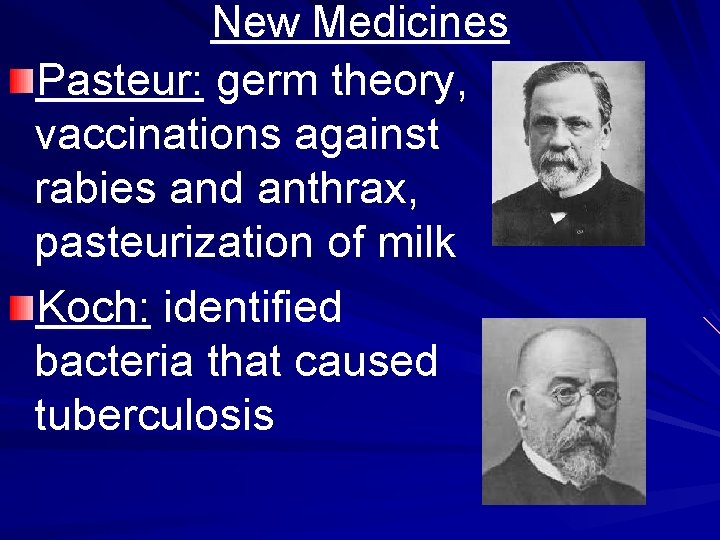
New Medicines Pasteur: germ theory, vaccinations against rabies and anthrax, pasteurization of milk Koch: identified bacteria that caused tuberculosis
What impact did medical advances have in the 1800 s? People bathed and changed clothes more often Better hygiene caused a decrease in disease and death
What were hospitals like? Dirty instruments used in surgery Patients died of infection Wealthy and middle class treated at home
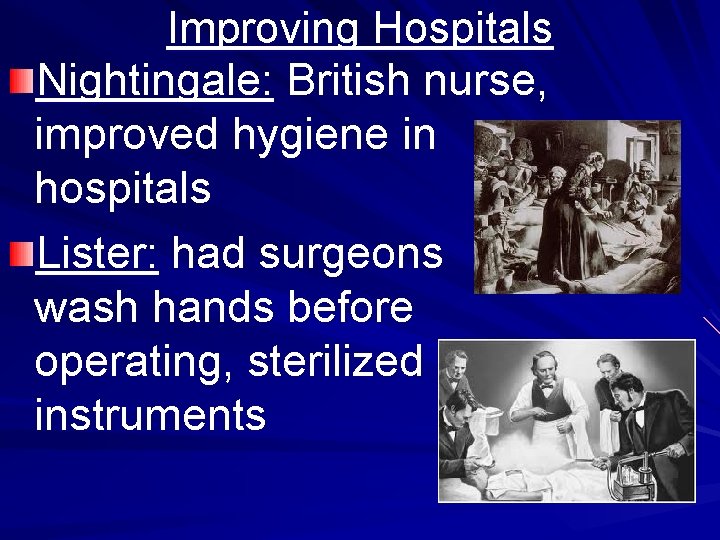
Improving Hospitals Nightingale: British nurse, improved hygiene in hospitals Lister: had surgeons wash hands before operating, sterilized instruments
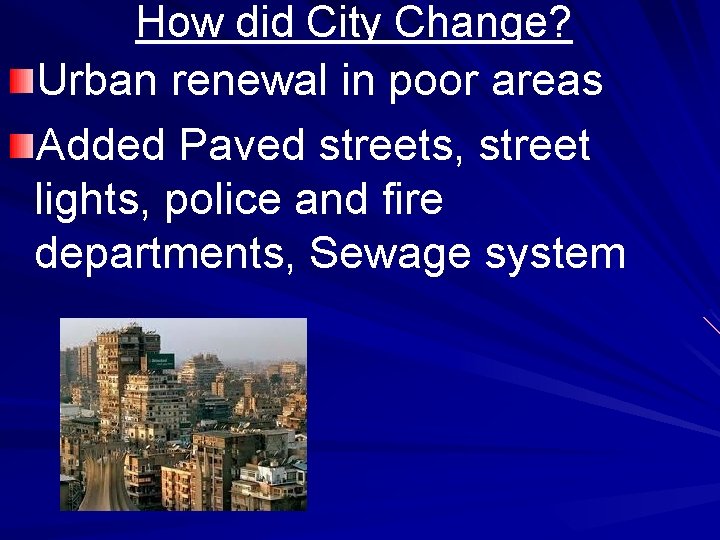
How did City Change? Urban renewal in poor areas Added Paved streets, street lights, police and fire departments, Sewage system
Why did people like cities? For jobs and exciting Music halls, theaters, museums, libraries, sports
Labor Union Goals Improve working conditions Improve pay Work less hours
What laws helped workers? Regulated working conditions Limited child labor Set up old age pensions Set up disability insurance