
Chapter 9 Lesson 3 Islamic Civilization UNIT 1
- Slides: 12
Chapter 9 Lesson 3: Islamic Civilization UNIT 1: CHRISTIANITY, JUDAISM, AND ISLAM
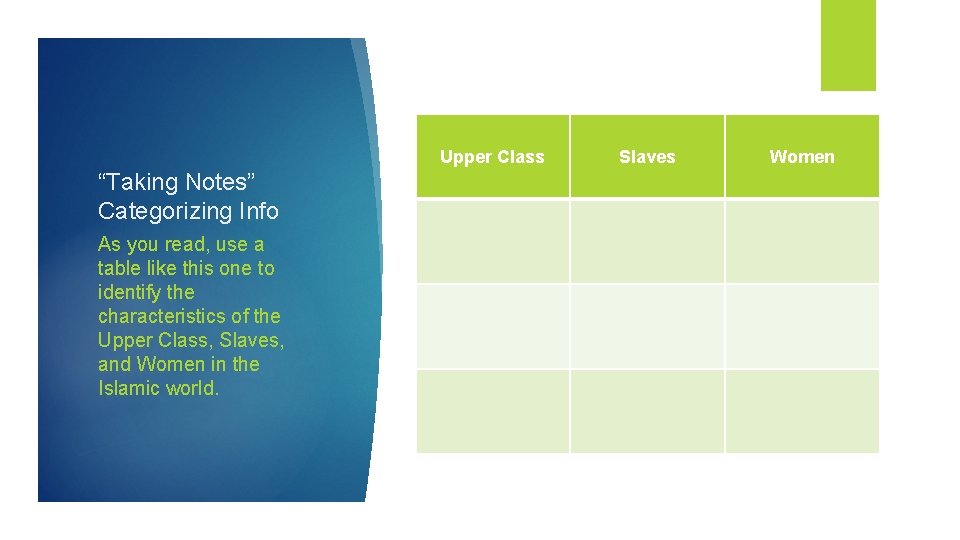
Upper Class “Taking Notes” Categorizing Info As you read, use a table like this one to identify the characteristics of the Upper Class, Slaves, and Women in the Islamic world. Slaves Women
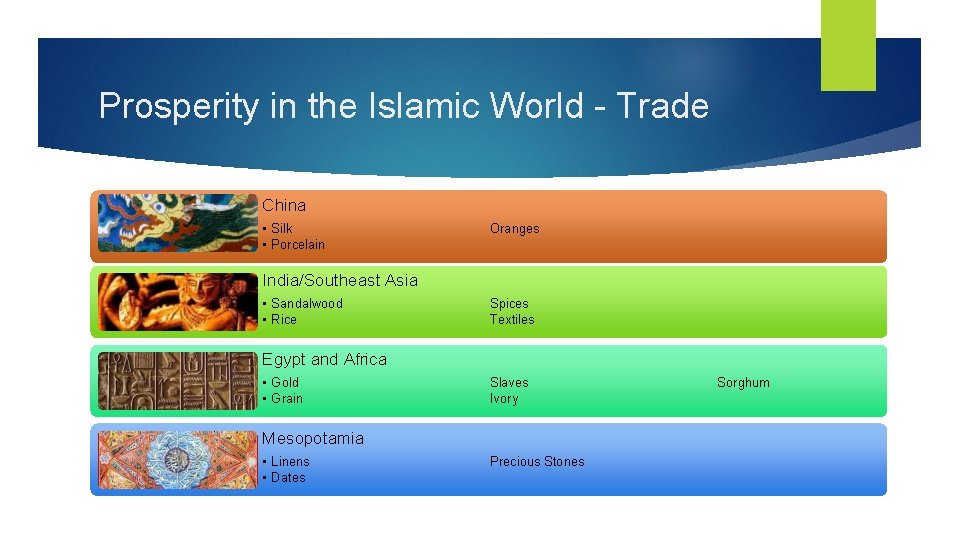
Prosperity in the Islamic World - Trade China • Silk • Porcelain Oranges India/Southeast Asia • Sandalwood • Rice Spices Textiles Egypt and Africa • Gold • Grain Slaves Ivory Mesopotamia • Linens • Dates Precious Stones Sorghum
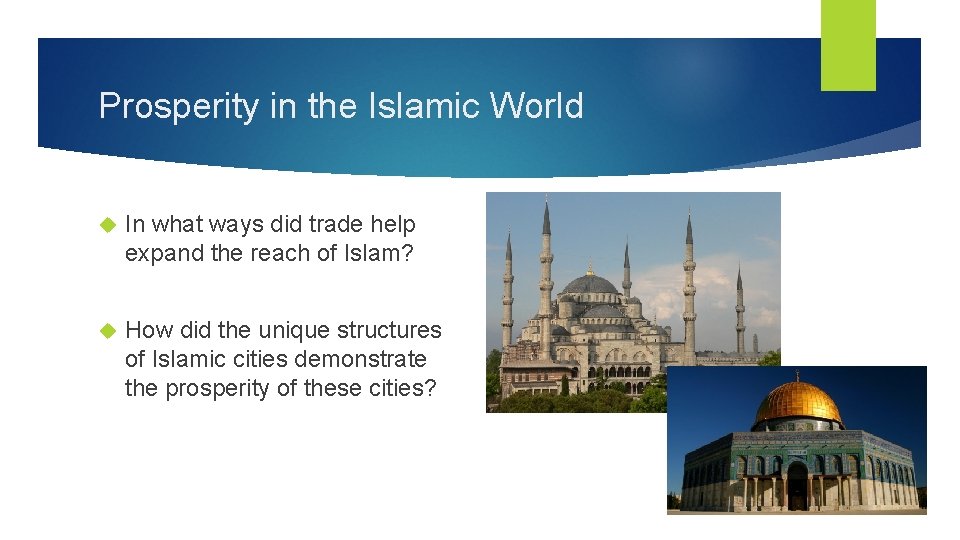
Prosperity in the Islamic World In what ways did trade help expand the reach of Islam? How did the unique structures of Islamic cities demonstrate the prosperity of these cities?
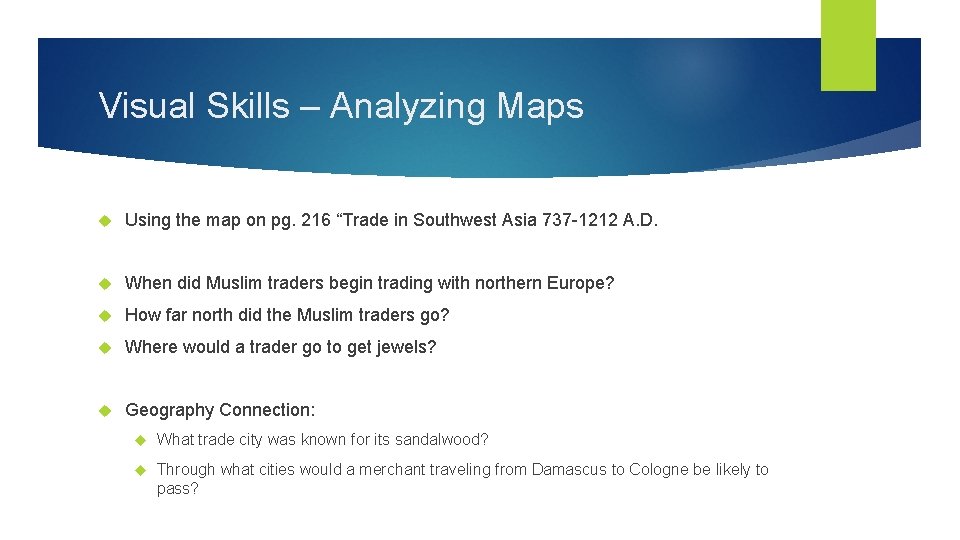
Visual Skills – Analyzing Maps Using the map on pg. 216 “Trade in Southwest Asia 737 -1212 A. D. When did Muslim traders begin trading with northern Europe? How far north did the Muslim traders go? Where would a trader go to get jewels? Geography Connection: What trade city was known for its sandalwood? Through what cities would a merchant traveling from Damascus to Cologne be likely to pass?
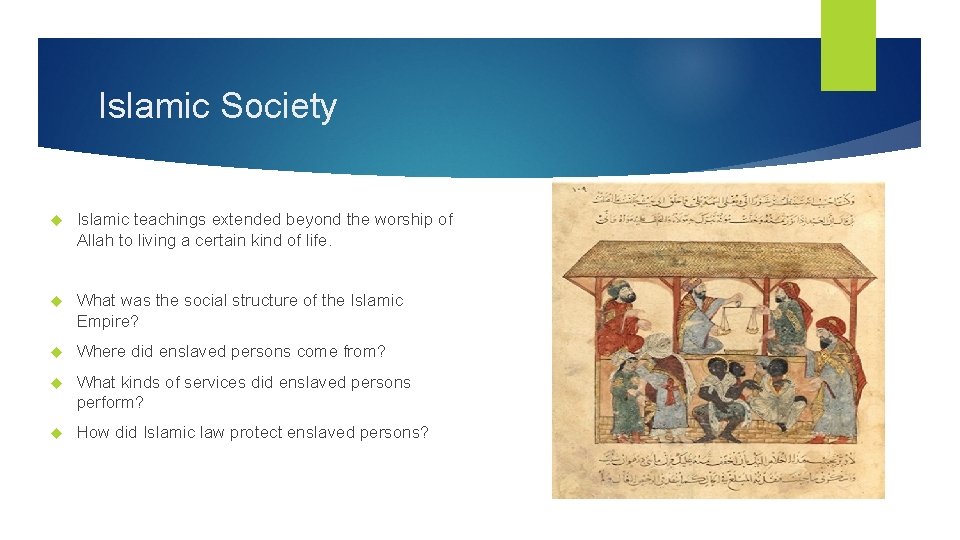
Islamic Society Islamic teachings extended beyond the worship of Allah to living a certain kind of life. What was the social structure of the Islamic Empire? Where did enslaved persons come from? What kinds of services did enslaved persons perform? How did Islamic law protect enslaved persons?
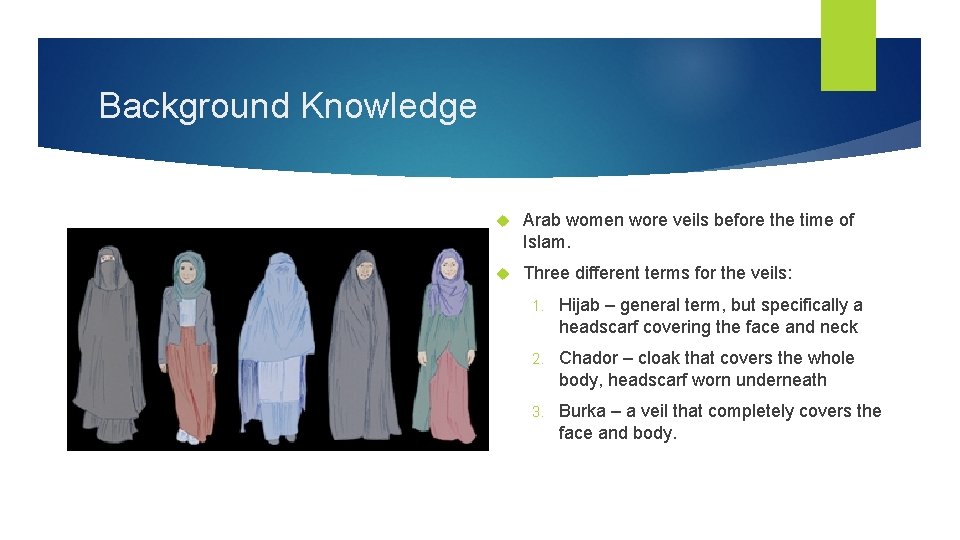
Background Knowledge Arab women wore veils before the time of Islam. Three different terms for the veils: 1. Hijab – general term, but specifically a headscarf covering the face and neck 2. Chador – cloak that covers the whole body, headscarf worn underneath 3. Burka – a veil that completely covers the face and body.
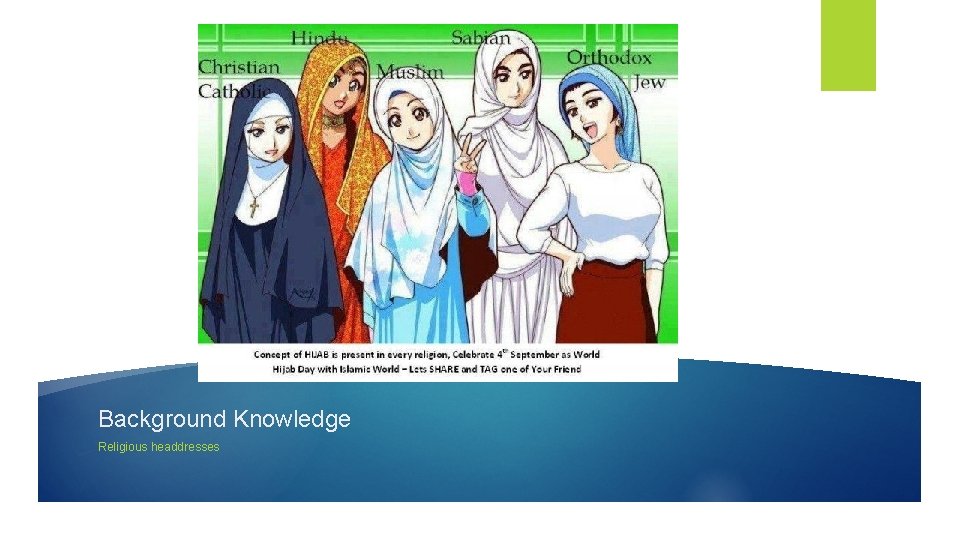
Background Knowledge Religious headdresses
Philosophy, Science, and History During the period from 600 -1400 A. D. , Europe was enduring the “Dark Ages, ” The Roman Empire had disintegrated in the West Learning in Europe had stagnated Knowledge of Greek learning had been lost, to a great extent. How did Arab scholarship help resurrect European learning?
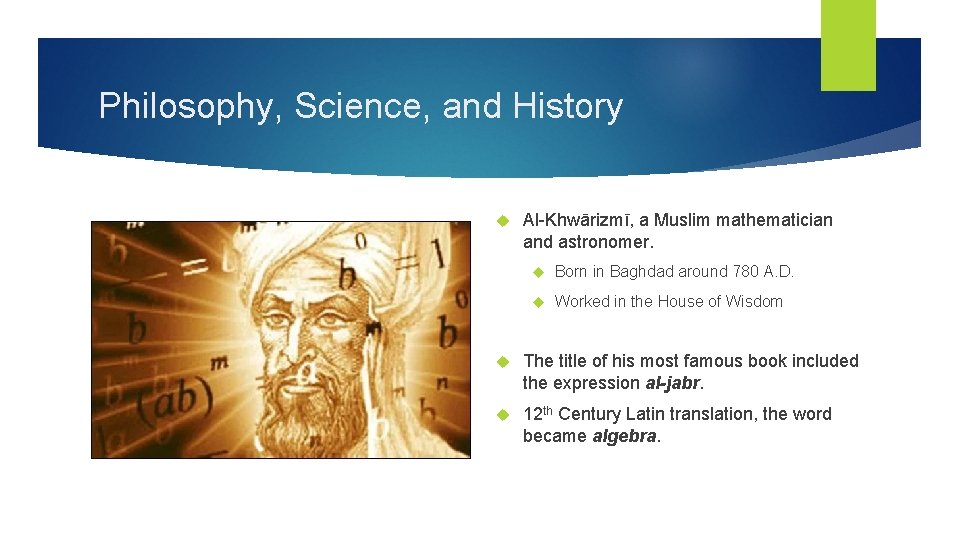
Philosophy, Science, and History Al-Khwārizmī, a Muslim mathematician and astronomer. Born in Baghdad around 780 A. D. Worked in the House of Wisdom The title of his most famous book included the expression al-jabr. 12 th Century Latin translation, the word became algebra.
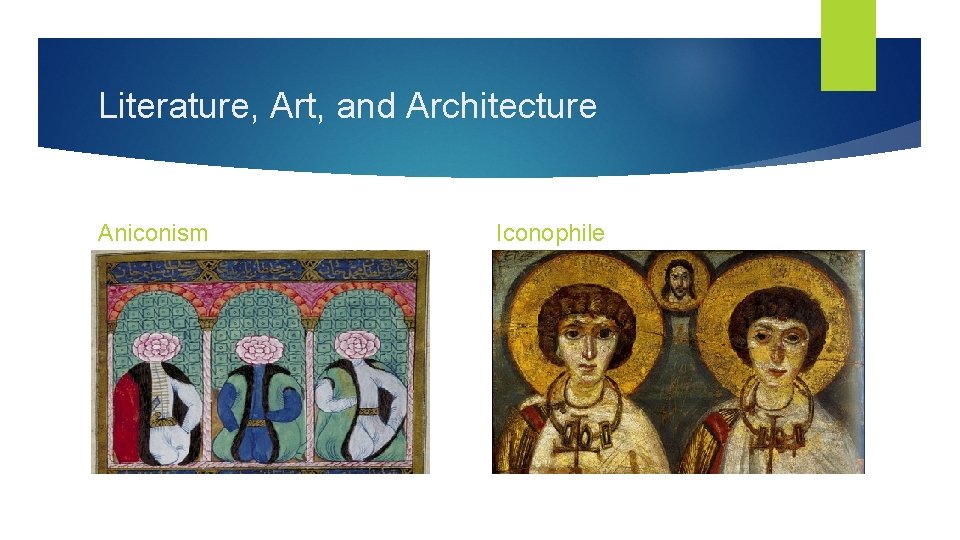
Literature, Art, and Architecture Aniconism Iconophile
Honors: Close and Reflect Evaluating: Consider how Islam influenced all aspects of life for Muslims. Answer all of the following questions in a paragraph (6 -8 complete sentences). How did Islam influence trade? How did it influence society and social behavior? How did Islam influence knowledge and learning? How did it influence art and architecture?