
Chapter 9 Lecture Nutrients Involved in Bone Health
Chapter 9 Lecture Nutrients Involved in Bone Health, and In Depth 9. 5, Osteoporosis © 2015 Pearson Education, Inc.
Bone Health Bone structure • Provides strength to support the body • Allows for flexibility • Contains about 65% minerals, providing the hardness of bone • Contains 35% organic structures for strength, durability, and flexibility • Collagen: fibrous protein in bone tissue © 2015 Pearson Education, Inc.
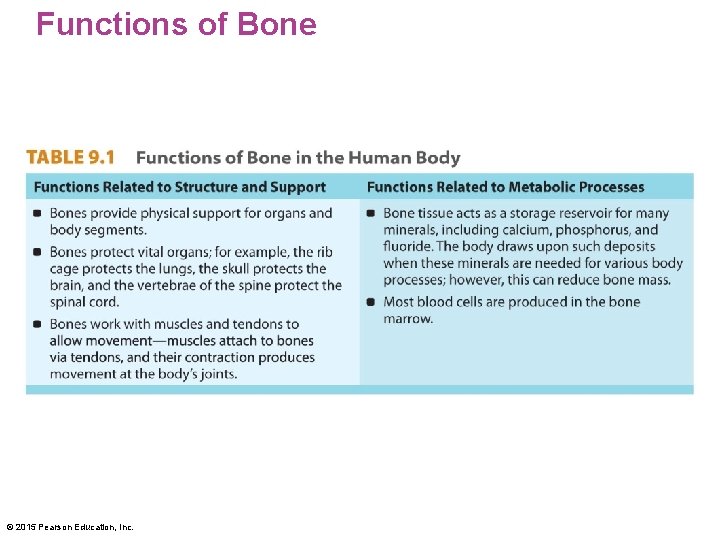
Functions of Bone © 2015 Pearson Education, Inc.
Bone Health Two types of bone tissue • Cortical bone (compact bone): very dense tissue making up 80% of the skeleton • Outer surface of all bones • Many of the small bones (wrists, hands, feet) • Trabecular bone (spongy bone): "scaffolding" on the inside of bones; supports cortical bone and makes up 20% of the skeleton • Faster turnover rate © 2015 Pearson Education, Inc.
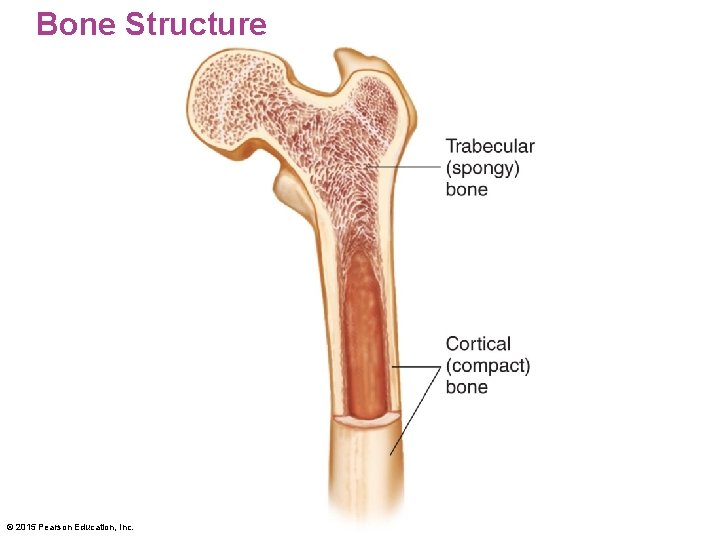
Bone Structure © 2015 Pearson Education, Inc.

© 2015 Pearson Education, Inc.
Bone Health Bones develop through three processes • Bone growth—increase in bone size • Bone modeling—shaping of bone • Size and shape do not change significantly after puberty • Bone density—degree of compactness of bone tissue; continues to develop into early adulthood • Bone remodeling—reshaping of bone; occurs throughout life © 2015 Pearson Education, Inc.

Bone Development © 2015 Pearson Education, Inc.

Bone Health Bone remodeling involves • Resorption: surface of bones is broken down • Osteoclasts: cells that erode the surface of bones • Formation of new bone by cells called osteoblasts • Osteoblasts produce the collagen-containing component of bone © 2015 Pearson Education, Inc.
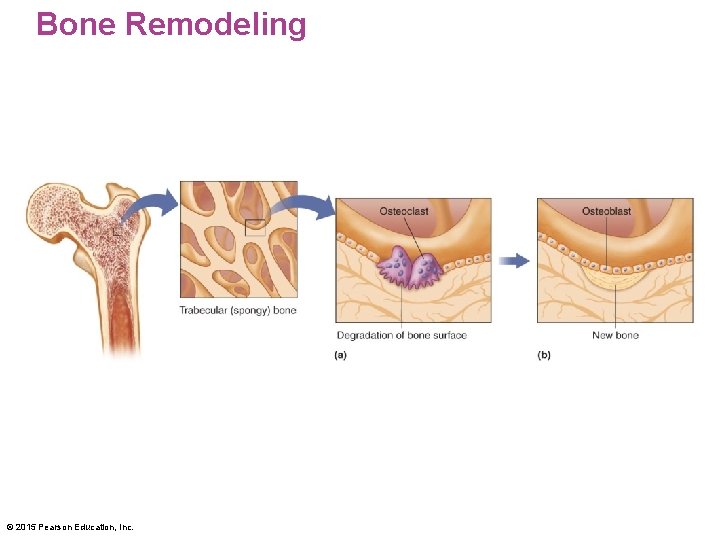
Bone Remodeling © 2015 Pearson Education, Inc.
Assessing Bone Health Dual-energy x-ray absorptiometry (DXA or DEXA) • Measures bone density • Uses very-low-level x-ray energy • Provides a full body scan or can be used to scan peripheral regions (wrist, heel) • Is a noninvasive procedure • Recommended for postmenopausal women • A T-score is obtained, which compares bone density to that of a healthy 30 -year-old © 2015 Pearson Education, Inc.
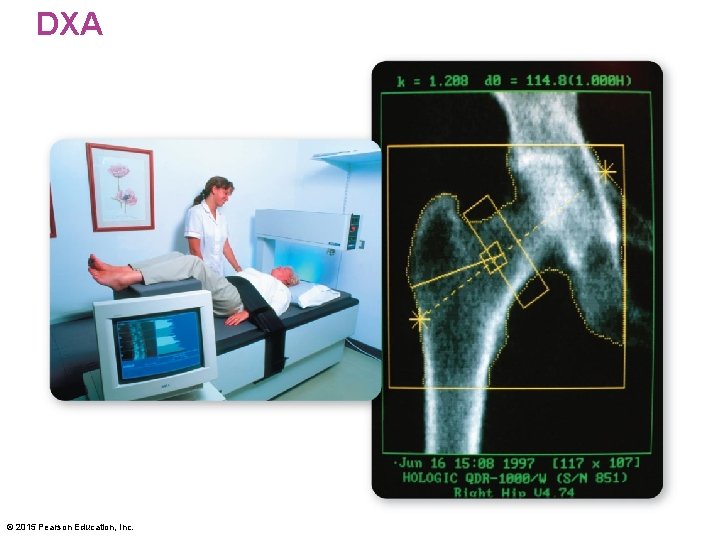
DXA © 2015 Pearson Education, Inc.

Nutrients in Bone Health: Calcium: the most abundant major mineral in the body • 99% of body calcium is found in bone Functions of calcium • Forms and maintains bones and teeth • Assists with acid–base balance • Critical for normal transmission of nerve impulses • Assists in muscle contraction © 2015 Pearson Education, Inc.
Nutrients in Bone Health: Calcium Blood calcium level is tightly controlled Low calcium level • Parathyroid hormone (PTH) is released • PTH stimulates activation of vitamin D • PTH and vitamin D cause • Kidneys to retain more calcium • Osteoclasts to break down bone and release calcium • Stimulation of calcium absorption from intestines © 2015 Pearson Education, Inc.
Nutrients in Bone Health: Calcium High calcium level • Thyroid gland releases calcitonin • Calcitonin functions to • Prevent calcium reabsorption from kidneys • Limit calcium absorption from intestines • Inhibit osteoclasts from breaking down bone © 2015 Pearson Education, Inc.
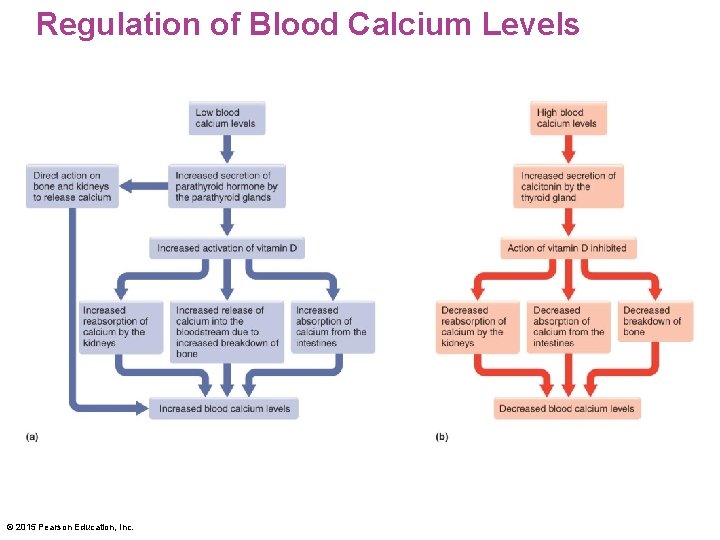
Regulation of Blood Calcium Levels © 2015 Pearson Education, Inc.
Nutrients in Bone Health: Calcium Bioavailability: degree to which a nutrient is absorbed Calcium bioavailability depends on need and age • Infants, children, and adolescents can absorb more than 60% • Pregnant and lactating women can absorb 50% • Healthy adults typically absorb 30% • Older adults absorb less • Bodies cannot absorb over 500 mg at one time • Numerous factors in food influence absorption © 2015 Pearson Education, Inc.
Nutrients in Bone Health: Calcium What if you consume too much calcium? • Excess calcium is excreted from the body • Calcium supplements can lead to mineral imbalances • Hypercalcemia (high blood calcium) can be caused by cancer and overproduction of PTH What if you don't consume enough calcium? • Hypocalcemia (low blood calcium) can be caused by kidney disease or vitamin D deficiency © 2015 Pearson Education, Inc.
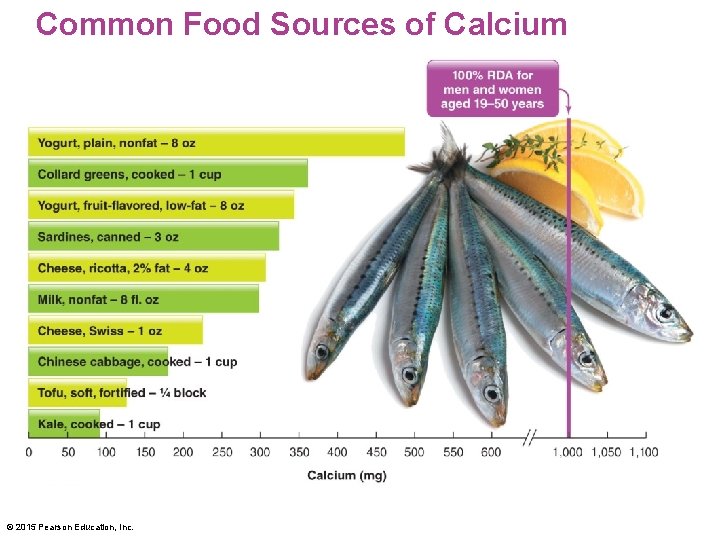
Common Food Sources of Calcium © 2015 Pearson Education, Inc.
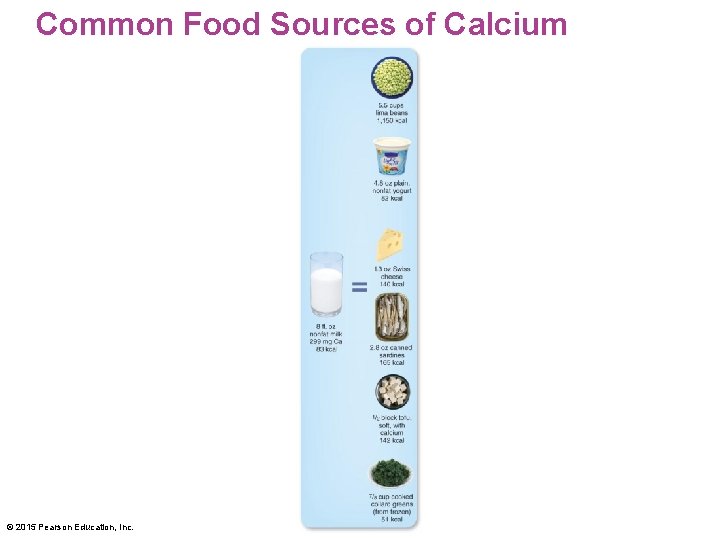
Common Food Sources of Calcium © 2015 Pearson Education, Inc.
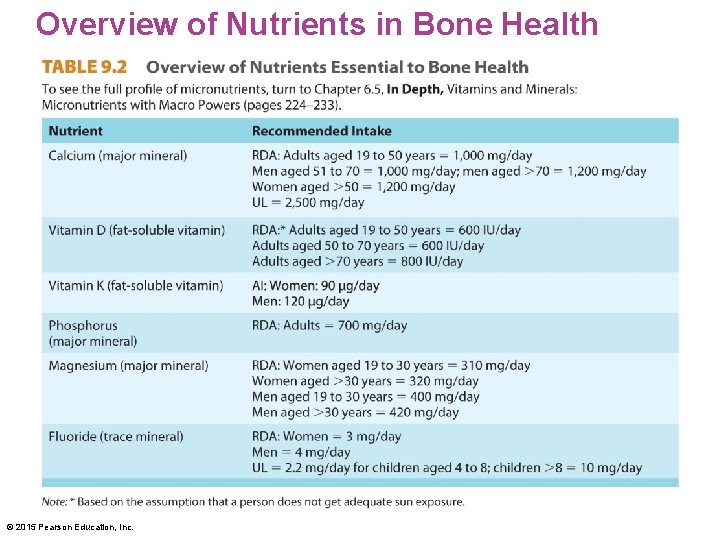
Overview of Nutrients in Bone Health © 2015 Pearson Education, Inc.
Nutrients in Bone Health: Vitamin D • Fat-soluble vitamin • Excess is stored in liver and fat tissue • Can be synthesized by the body by exposure to UV light from the sun • Is considered a hormone because it is synthesized in one location and acts in other locations © 2015 Pearson Education, Inc.
Nutrients in Bone Health: Vitamin D • Most foods naturally contain very little vitamin D • Vitamin D 2 or ergocalciferol is found in plant foods • Vitamin D 3 or cholecalciferol is found in animal foods • Most vitamin D is obtained from fortified foods such as milk and cereal products • Vegetarians not consuming dairy foods receive vitamin D from the sun, fortified soy products, or supplements © 2015 Pearson Education, Inc.
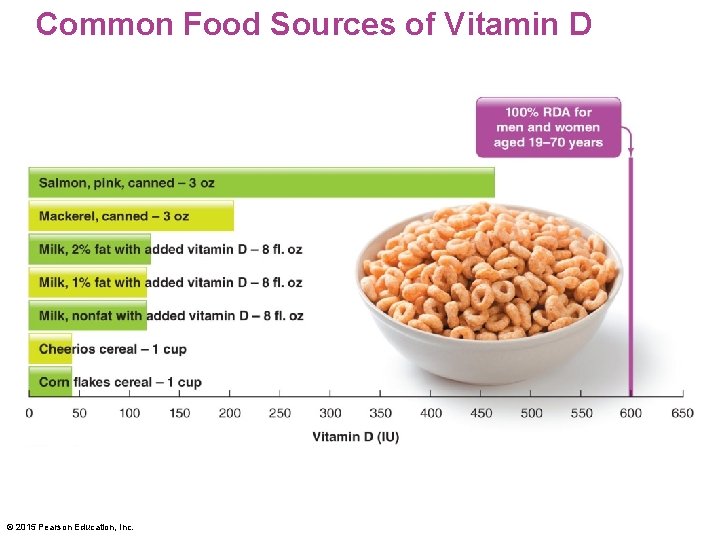
Common Food Sources of Vitamin D © 2015 Pearson Education, Inc.
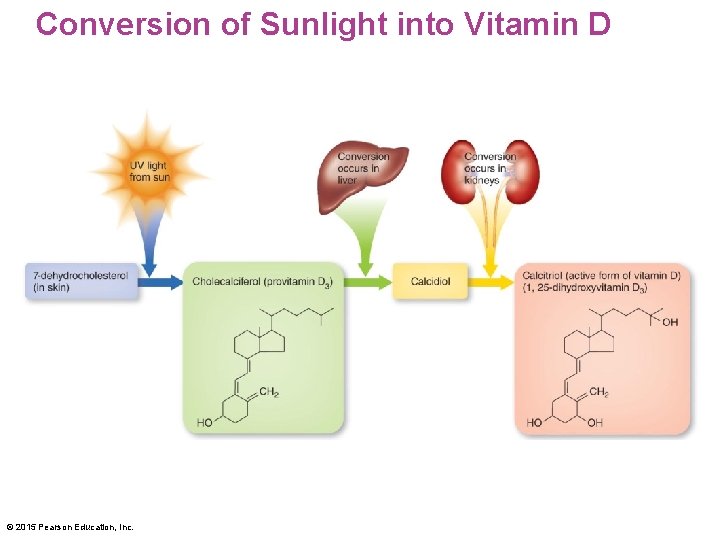
Conversion of Sunlight into Vitamin D © 2015 Pearson Education, Inc.
Nutrients in Bone Health: Vitamin D Functions of vitamin D • Required for calcium and phosphorus absorption • Regulates blood calcium levels • Stimulates osteoclasts • Necessary for calcification of bone © 2015 Pearson Education, Inc.
Nutrients in Bone Health: Vitamin D Recommended intake • The RDA is set for people who do not get adequate sun exposure: • 600 IU for ages 19– 70 years • 800 IU for ages 70+ years • Some evidence suggests the current RDA is inadequate for optimal bone health and reduced risk of disease • UL is 4, 000 IU for ages 9+ years • People in northern latitudes receive inadequate sunlight in the winter to make vitamin D © 2015 Pearson Education, Inc.

Sunlight-Mediated Vitamin D Synthesis © 2015 Pearson Education, Inc.
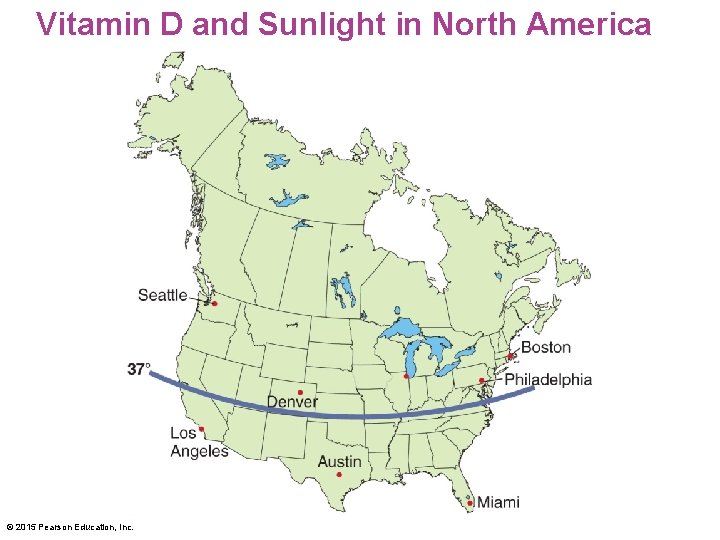
Vitamin D and Sunlight in North America © 2015 Pearson Education, Inc.
Nutrients in Bone Health: Vitamin D What if you consume too much vitamin D? • Occurs with vitamin supplements, not excessive exposure to sunlight • Results in hypercalcemia—high blood calcium What if you don't consume enough vitamin D? • Occurs with diseases that reduce intestinal absorption of fat and limited exposure to sunlight • Rickets—occurs in children; inadequate mineralization or demineralization of bones • Osteomalacia—loss of bone mass in adults © 2015 Pearson Education, Inc.
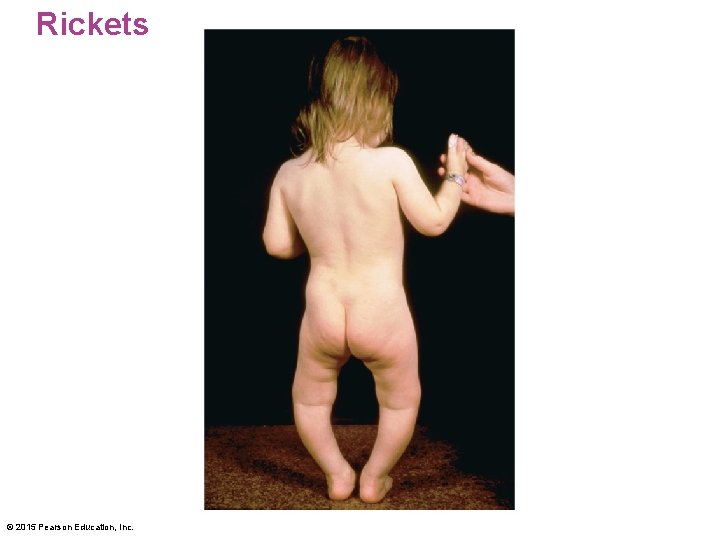
Rickets © 2015 Pearson Education, Inc.
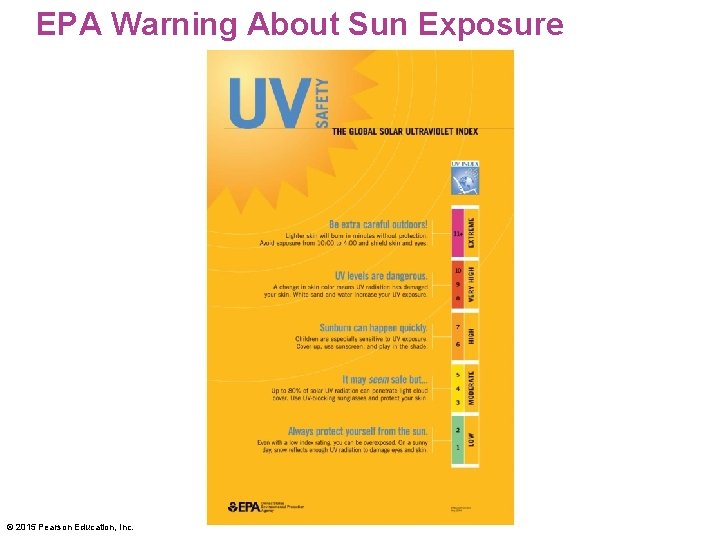
EPA Warning About Sun Exposure © 2015 Pearson Education, Inc.
Nutrients in Bone Health: Vitamin K • Fat-soluble vitamin • Stored primarily in the liver • Phylloquinone: plant form of vitamin K • Menaquinone: form of vitamin K produced by bacteria in the large intestine Functions of vitamin K • Blood clotting (prothrombin synthesis) • Bone metabolism (osteocalcin synthesis) © 2015 Pearson Education, Inc.
Nutrients in Bone Health: Vitamin K Recommended intake • There is no RDA for vitamin K • AI values are 120 µg/day for men and 90 µg/day for women Sources of vitamin K • Green leafy vegetables, vegetable oils © 2015 Pearson Education, Inc.
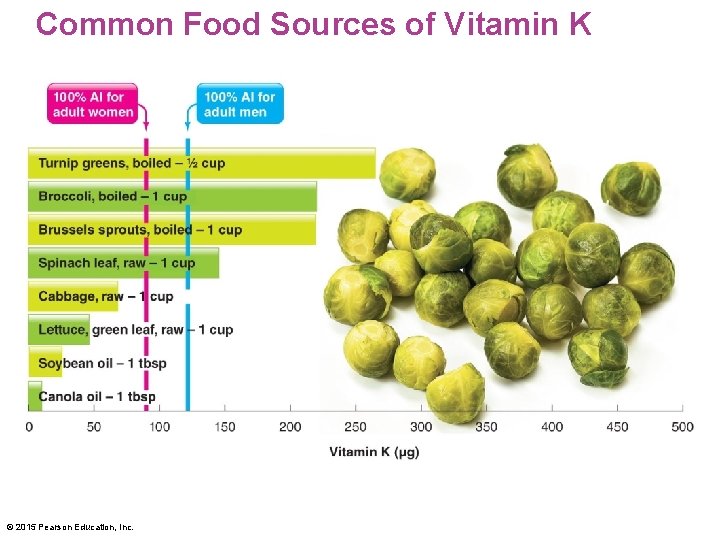
Common Food Sources of Vitamin K © 2015 Pearson Education, Inc.
Nutrients in Bone Health: Vitamin K What if you consume too much vitamin K? • No side effects from large quantities What if you don't consume enough vitamin K? • Reduced blood clotting, excessive bleeding • Occurs with diseases that limit absorption of fat in the small intestine © 2015 Pearson Education, Inc.
Nutrients in Bone Health: Phosphorus (as phosphate) is the primary intracellular negatively charged electrolyte Functions of phosphorus • Critical to mineral composition of bone • Required for proper fluid balance • Component of lipoproteins, cell membranes, DNA and RNA, and several energy molecules © 2015 Pearson Education, Inc.
Nutrients in Bone Health: Phosphorus Recommended intake • RDA for phosphorus is 700 mg/day Sources of phosphorus • High in protein-containing foods such as milk, meats, and eggs • In processed foods as a food additive • In soft drinks as phosphoric acid © 2015 Pearson Education, Inc.
Nutrients in Bone Health: Phosphorus What if you consume too much phosphorus? • Kidney disease and excessive vitamin D supplements or consumption of too many phosphorus-containing antacids can cause elevated phosphorus levels, muscle spasms, and convulsions What if you don't consume enough phosphorus? • Deficiencies are rare in healthy adults © 2015 Pearson Education, Inc.
Nutrients in Bone Health: Magnesium The bones contain 50– 60% of the body's magnesium Functions of magnesium • A mineral found in bone structure • Cofactor for over 300 enzyme systems • Required for the production of ATP • Plays an important role in DNA and protein synthesis and repair © 2015 Pearson Education, Inc.
Nutrients in Bone Health: Magnesium Recommended intake • RDA varies based on age and gender • 310 mg/day for women age 19– 30 • 400 mg/day for men age 19– 30 Sources of magnesium • Green leafy vegetables, whole grains, seeds, nuts, seafood, beans, some dairy products © 2015 Pearson Education, Inc.
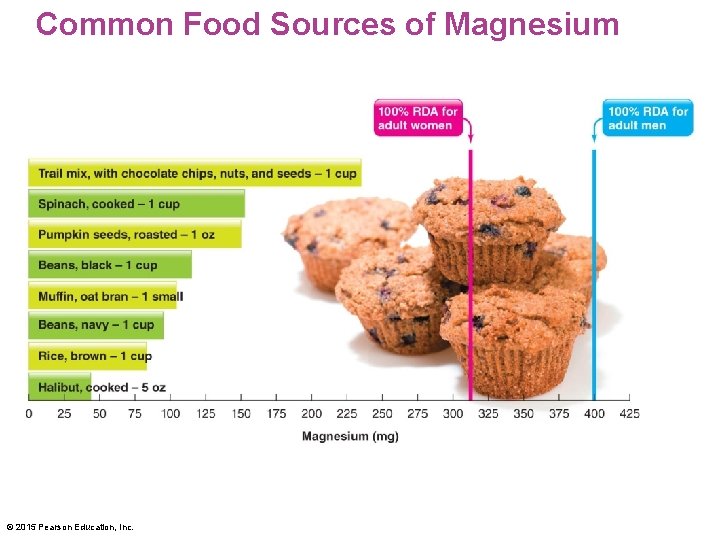
Common Food Sources of Magnesium © 2015 Pearson Education, Inc.
Nutrients in Bone Health: Magnesium What if you consume too much magnesium? • No toxicity from magnesium in food • Magnesium supplements can cause diarrhea, nausea, cramps, dehydration, and cardiac arrest • Hypermagnesemia: high blood magnesium levels What if you don't consume enough magnesium? • Hypomagnesemia can result in low blood calcium and osteoporosis • Other symptoms include muscle cramps, spasms, nausea, weakness, and confusion © 2015 Pearson Education, Inc.
Nutrients in Bone Health: Fluoride is a trace mineral • 99% of the body's fluoride is stored in teeth and bones Functions of fluoride • Development and maintenance of teeth and bones • Combines with calcium and phosphorus to make tooth enamel stronger, which protects teeth from dental caries (cavities) © 2015 Pearson Education, Inc.
Nutrients in Bone Health: Fluoride Recommended intake • RDA for women is 3 mg/day • RDA for men is 4 mg/day Sources of fluoride • Fluoridated dental products • Fluoridated water © 2015 Pearson Education, Inc.
Nutrients in Bone Health: Fluoride What if you consume too much fluoride? • Fluorosis (excess fluoride) creates porous tooth enamel; teeth become stained and pitted What if you don't consume enough fluoride? • Dental caries (cavities) © 2015 Pearson Education, Inc.
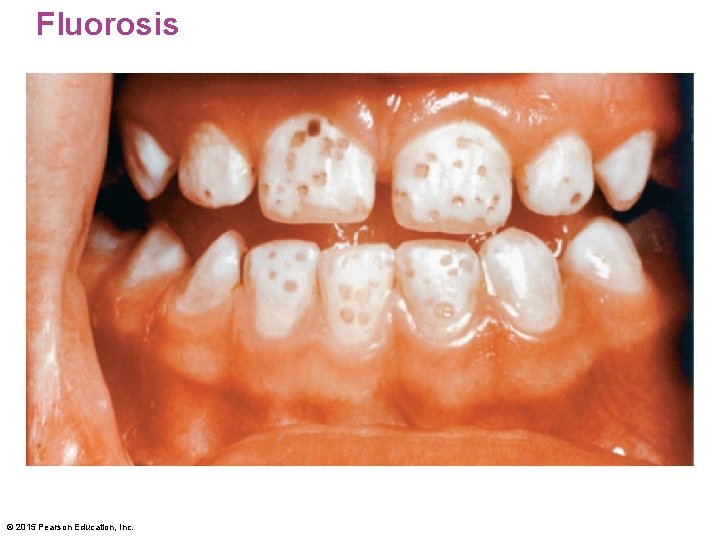
Fluorosis © 2015 Pearson Education, Inc.
In Depth: Osteoporosis is a disease characterized by • Low bone mass • Deterioration of bone tissue • Fragile bones, leading to bone fractures • Compaction of bone; decreased height • Shortening and hunching of the spine: dowager's hump © 2015 Pearson Education, Inc.
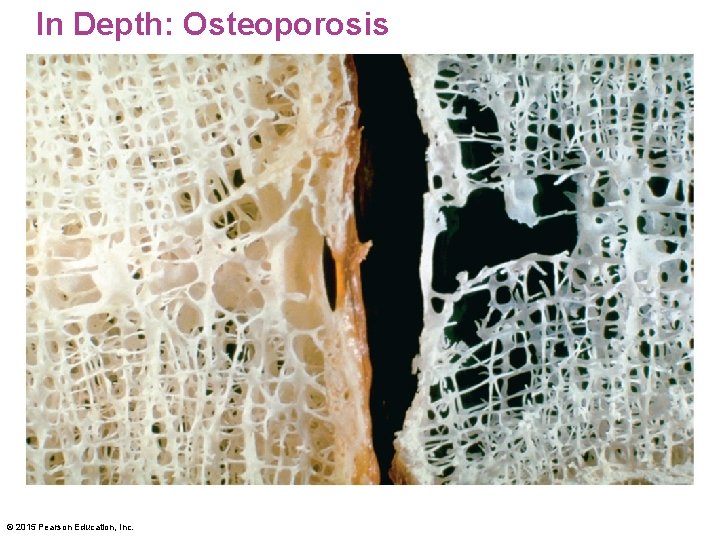
In Depth: Osteoporosis © 2015 Pearson Education, Inc.
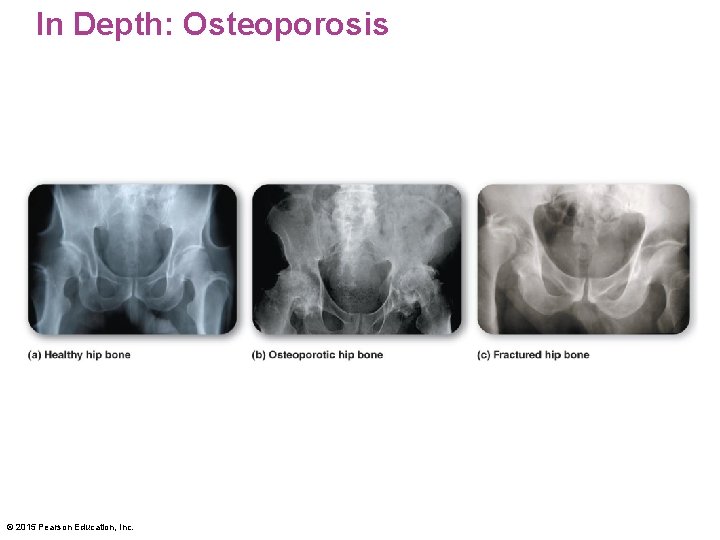
In Depth: Osteoporosis © 2015 Pearson Education, Inc.
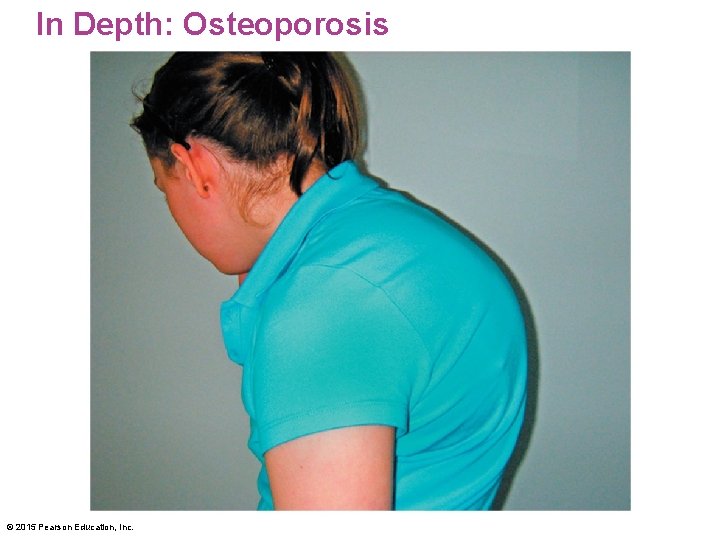
In Depth: Osteoporosis <insert In. Depth 9. 5 Figure 3 here> © 2015 Pearson Education, Inc.
In Depth: Osteoporosis Factors influencing the risk of osteoporosis include • Age • Gender • Genetics • Tobacco, alcohol, and caffeine use • Nutrition • Physical activity • History of amenorrhea (loss of menstrual function) © 2015 Pearson Education, Inc.
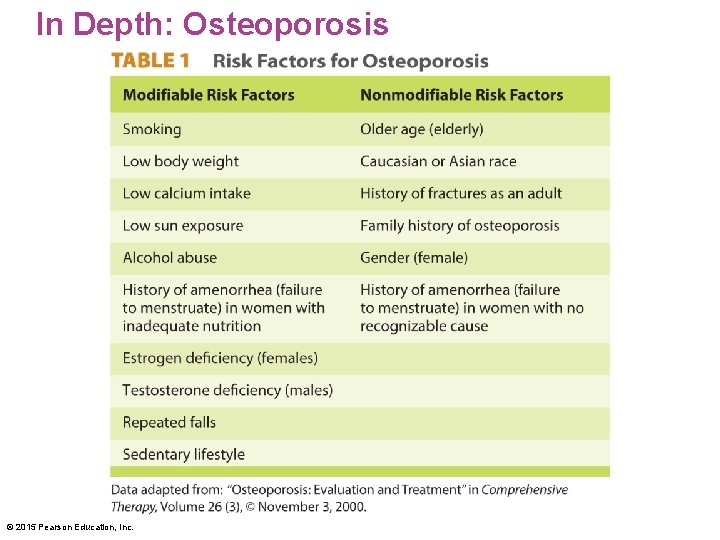
In Depth: Osteoporosis © 2015 Pearson Education, Inc.
In Depth: Osteoporosis Age is a factor for osteoporosis because • Bone mass decreases with age • Age-related hormonal changes influence bone density (reduced estrogen and testosterone production) • Older adults are less able to absorb vitamin D © 2015 Pearson Education, Inc.
In Depth: Osteoporosis Gender is a risk factor for osteoporosis • 80% of Americans with osteoporosis are women • Women have lower bone density than men • Estrogen loss in postmenopausal women causes increased bone loss • Women live longer than men • Social pressure on girls to be thin leads some to harmful dieting when bone mass is still building © 2015 Pearson Education, Inc.
In Depth: Osteoporosis Nutritional factors influence risk • Diets high in fruits and vegetables are associated with improved bone health Physical activity influences risk • Regular exercise causes stress to bones, leading to increased bone mass • Weight-bearing activities (walking, jogging) are especially helpful in increasing bone mass © 2015 Pearson Education, Inc.
In Depth: Osteoporosis There is no cure for osteoporosis The progression of osteoporosis may be slowed by • Adequate calcium and vitamin D intake • Regular exercise • Some medications, including hormone replacement therapy (HRT) © 2015 Pearson Education, Inc.
- Slides: 57