
Chapter 9 Heat Section 1 Temperature and Thermal
- Slides: 14
Chapter 9 – Heat Section 1: Temperature and Thermal Equilibrium St. Augustine Preparatory School January 10, 2017
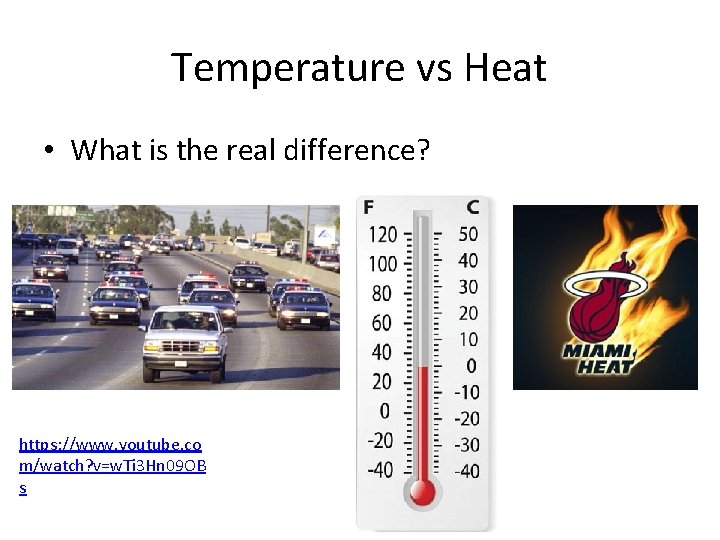
Temperature vs Heat • What is the real difference? https: //www. youtube. co m/watch? v=w. Ti 3 Hn 09 OB s
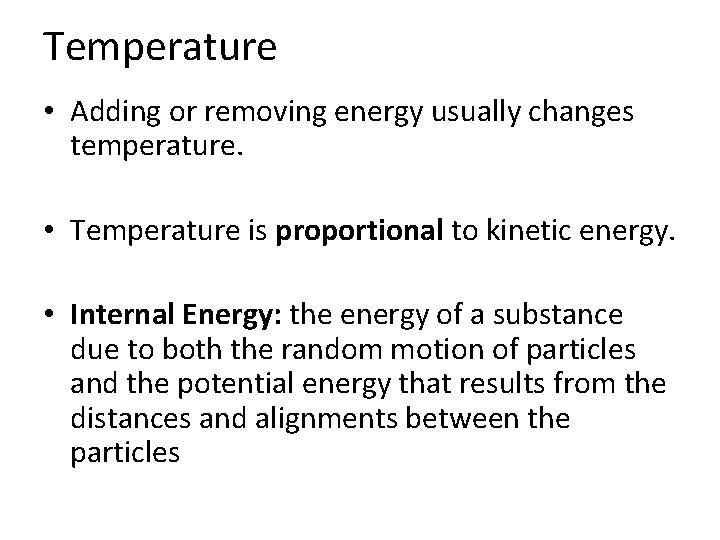
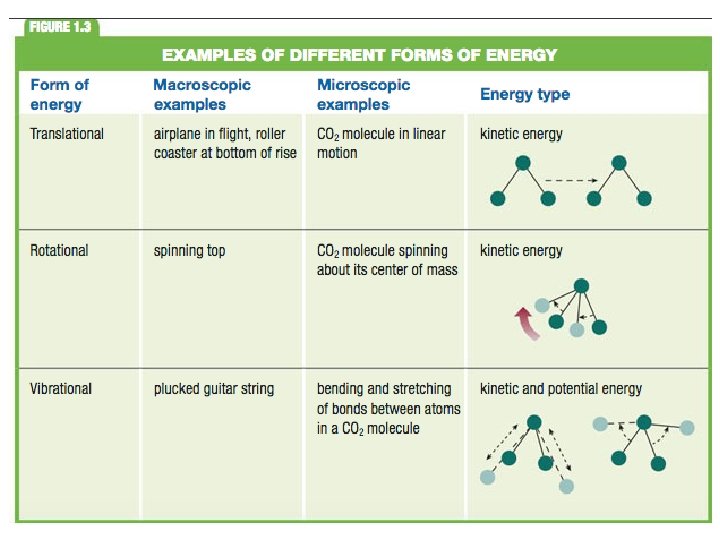
Temperature • Adding or removing energy usually changes temperature. • Temperature is proportional to kinetic energy. • Internal Energy: the energy of a substance due to both the random motion of particles and the potential energy that results from the distances and alignments between the particles
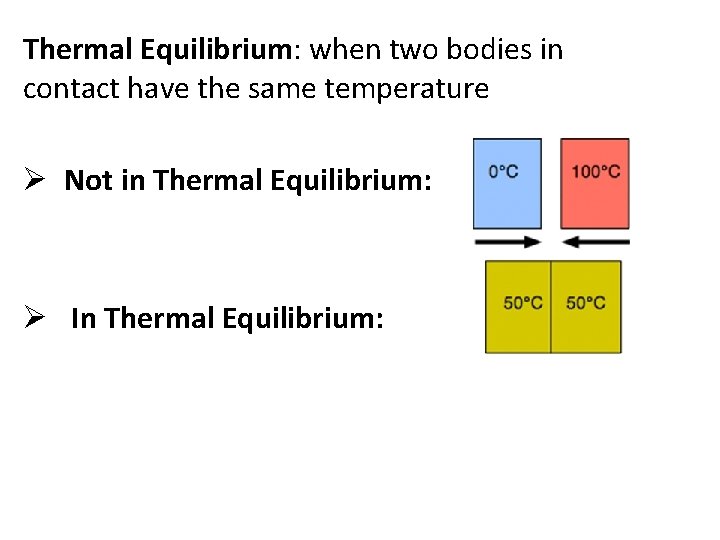
Thermal Equilibrium: when two bodies in contact have the same temperature Ø Not in Thermal Equilibrium: Ø In Thermal Equilibrium:
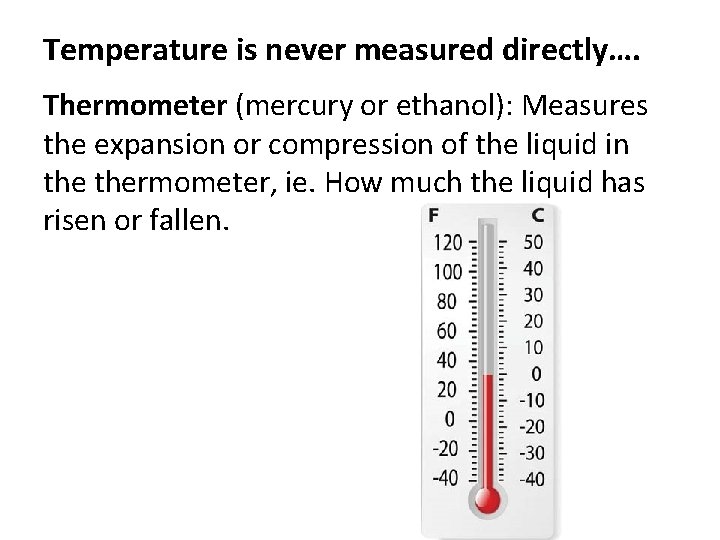
Temperature is never measured directly…. Thermometer (mercury or ethanol): Measures the expansion or compression of the liquid in thermometer, ie. How much the liquid has risen or fallen.
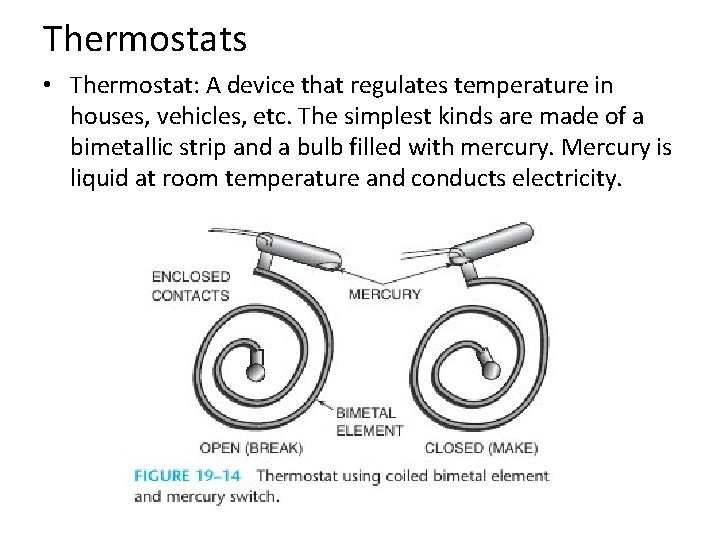
Thermostats • Thermostat: A device that regulates temperature in houses, vehicles, etc. The simplest kinds are made of a bimetallic strip and a bulb filled with mercury. Mercury is liquid at room temperature and conducts electricity.
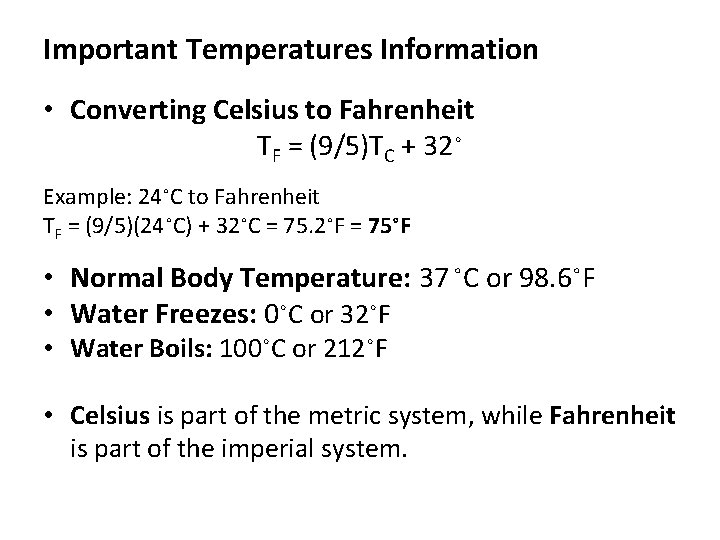
Important Temperatures Information • Converting Celsius to Fahrenheit TF = (9/5)TC + 32∘ Example: 24∘C to Fahrenheit TF = (9/5)(24∘C) + 32∘C = 75. 2∘F = 75∘F • Normal Body Temperature: 37 ∘C or 98. 6∘F • Water Freezes: 0∘C or 32∘F • Water Boils: 100∘C or 212∘F • Celsius is part of the metric system, while Fahrenheit is part of the imperial system.
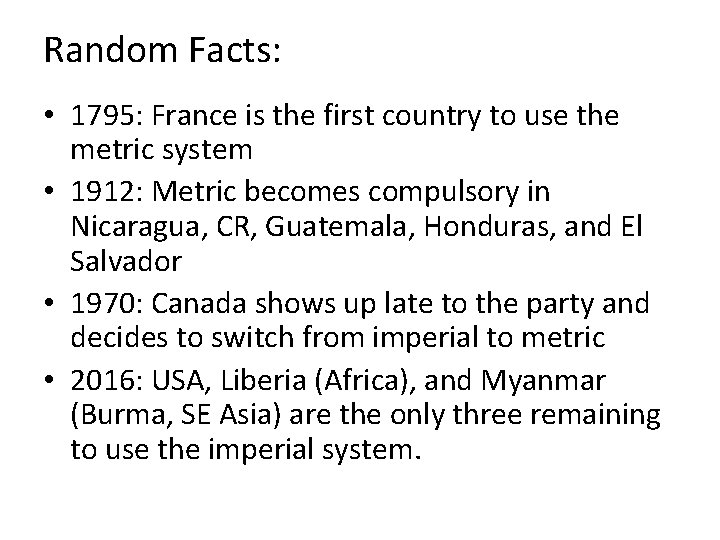
Random Facts: • 1795: France is the first country to use the metric system • 1912: Metric becomes compulsory in Nicaragua, CR, Guatemala, Honduras, and El Salvador • 1970: Canada shows up late to the party and decides to switch from imperial to metric • 2016: USA, Liberia (Africa), and Myanmar (Burma, SE Asia) are the only three remaining to use the imperial system.
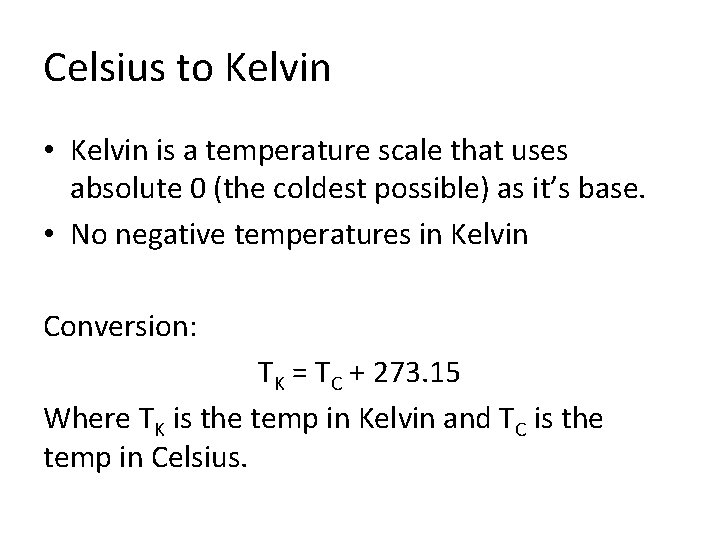
Celsius to Kelvin • Kelvin is a temperature scale that uses absolute 0 (the coldest possible) as it’s base. • No negative temperatures in Kelvin Conversion: TK = TC + 273. 15 Where TK is the temp in Kelvin and TC is the temp in Celsius.
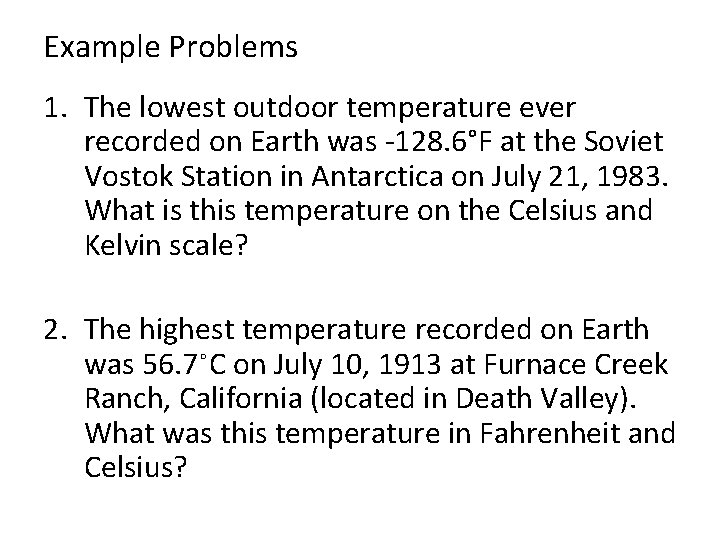
Example Problems 1. The lowest outdoor temperature ever recorded on Earth was -128. 6°F at the Soviet Vostok Station in Antarctica on July 21, 1983. What is this temperature on the Celsius and Kelvin scale? 2. The highest temperature recorded on Earth was 56. 7∘C on July 10, 1913 at Furnace Creek Ranch, California (located in Death Valley). What was this temperature in Fahrenheit and Celsius?
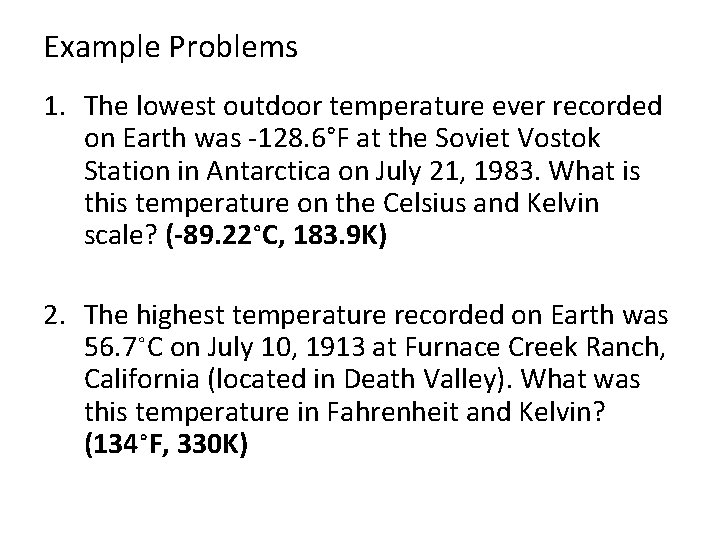
Example Problems 1. The lowest outdoor temperature ever recorded on Earth was -128. 6°F at the Soviet Vostok Station in Antarctica on July 21, 1983. What is this temperature on the Celsius and Kelvin scale? (-89. 22∘C, 183. 9 K) 2. The highest temperature recorded on Earth was 56. 7∘C on July 10, 1913 at Furnace Creek Ranch, California (located in Death Valley). What was this temperature in Fahrenheit and Kelvin? (134∘F, 330 K)
Temperature and Your Body Ø >41∘C (105. 8∘F): Proteins denature (melt). Good chance you’re going to die if your temp. rises much above 41∘C and remains there Ø 40∘C (104∘F) : Fainting, dehydration, weakness, vomiting, Ø 39∘C (102. 2∘F) : Severe sweating, flushed and red, increased heart rate, breathlessness Ø 37∘C (98. 6∘F) : Normal body temperature Ø 35∘C (95∘F) : Intense shivering, numbness and bluish/grayness of the skin Ø 32∘C(89. 6∘F) : Hallucinations, complete confusion, extreme sleepiness Ø 26 -24∘C(78. 8∘F-75. 2∘F) : Possible death from irregular heart beat or respiratory arrest
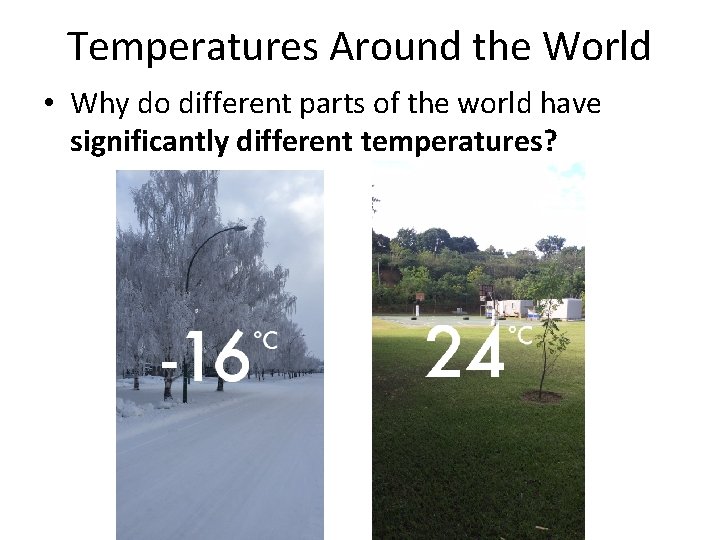
Temperatures Around the World • Why do different parts of the world have significantly different temperatures?