
Chapter 9 Glycolysis 9 1 Overview of Metabolism
Chapter 9 Glycolysis
9. 1 Overview of Metabolism n Metabolism is the collection of biochemical reactions in a free-living organism that converts chemical energy into work. Copyright © 2017 W. W. Norton & Company
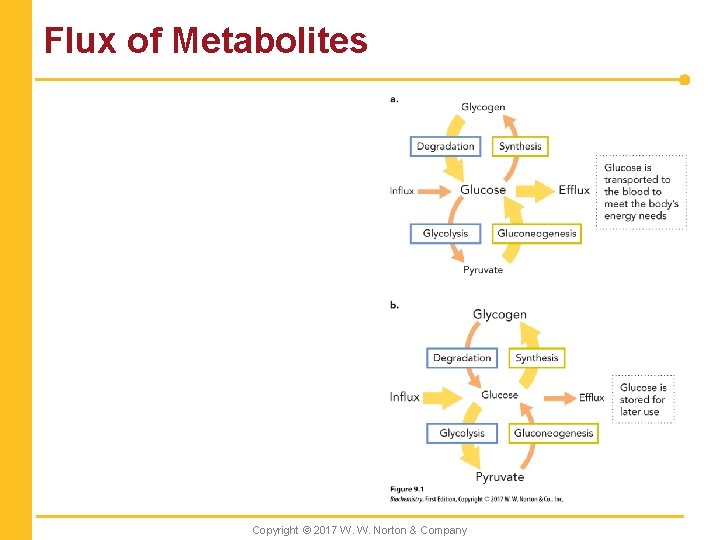
Flux of Metabolites Copyright © 2017 W. W. Norton & Company
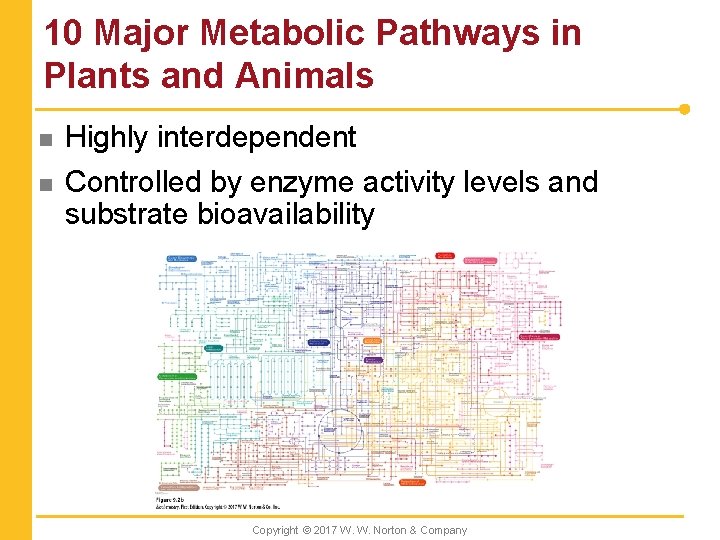
10 Major Metabolic Pathways in Plants and Animals n n Highly interdependent Controlled by enzyme activity levels and substrate bioavailability Copyright © 2017 W. W. Norton & Company

Basic Metabolic Map Emphasizing the Major Biomolecules n Many biomolecules and primary metabolites are shared. Copyright © 2017 W. W. Norton & Company
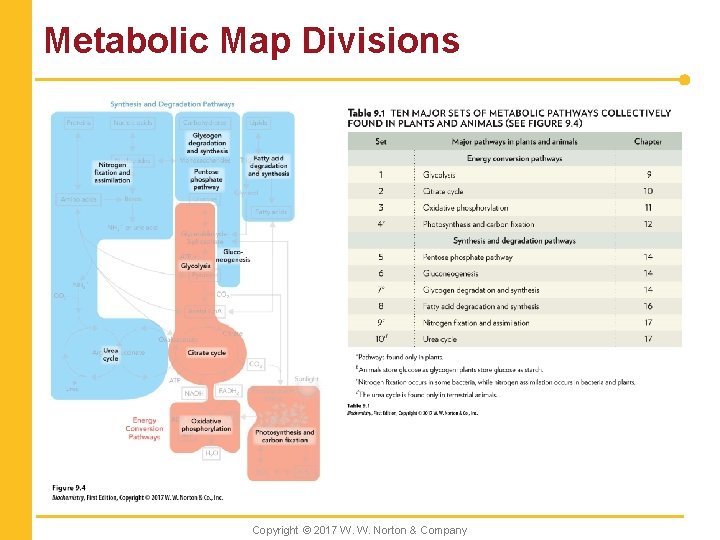
Metabolic Map Divisions Set Energy conversion pathways in plants and animals Chapter 1 Glycolysis 9 2 Citrate cycle 10 3 Oxidative phosphorylation 11 4 (footnote a) Photosynthesis and carbon fixation Synthesis and degradation pathways 12 Set Synthesis and degradation pathways in plants and animals Chapter 5 Pentose phosphate pathway 14 6 Gluconeogenesis 14 7 (footnote b) Glycogen degradation and synthesis 14 8 Fatty acid degradation and synthesis 16 9 (footnote c) Nitrogen fixation and assimilation 17 10 (footnote d) Urea cycle 17 Copyright © 2017 W. W. Norton & Company
Free Energy Is Key n The overall free energy of a reaction (ΔG') should be spontaneous. Copyright © 2017 W. W. Norton & Company
Concentration Is Also Important Copyright © 2017 W. W. Norton & Company
9. 2 Structures of Simple Sugars n Monosaccharide: one sugar containing an aldehyde (aldoses) or a ketone (ketoses) Copyright © 2017 W. W. Norton & Company
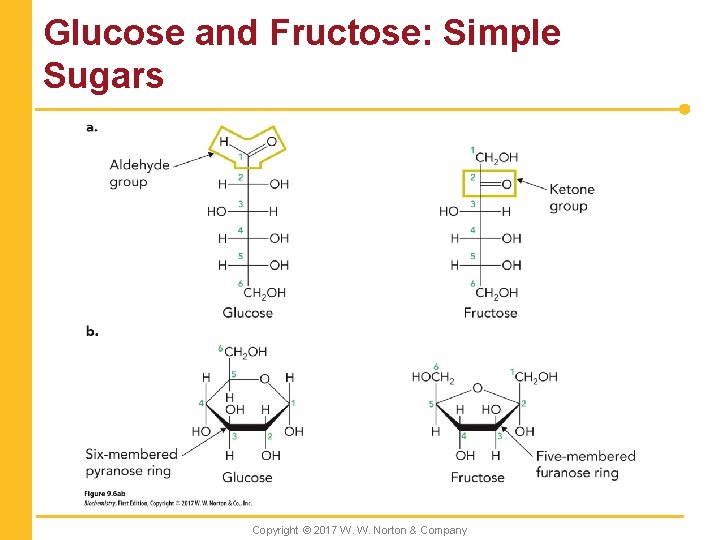
Glucose and Fructose: Simple Sugars Copyright © 2017 W. W. Norton & Company
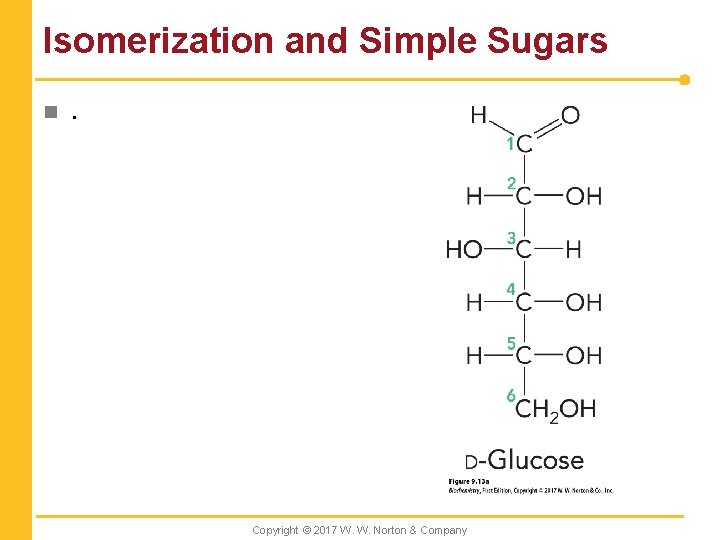
Isomerization and Simple Sugars n . Copyright © 2017 W. W. Norton & Company
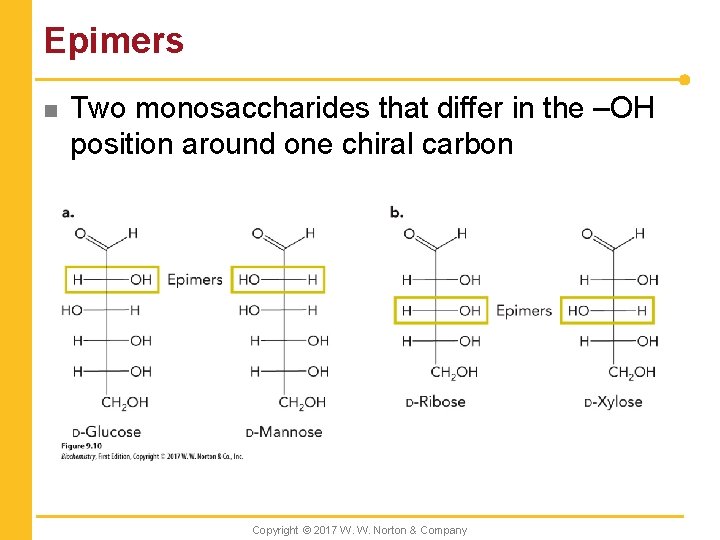
Epimers n Two monosaccharides that differ in the –OH position around one chiral carbon Copyright © 2017 W. W. Norton & Company

Haworth Projections n Simple sugars go through an intramolecular reaction to form either pyranose or furanose rings. Copyright © 2017 W. W. Norton & Company
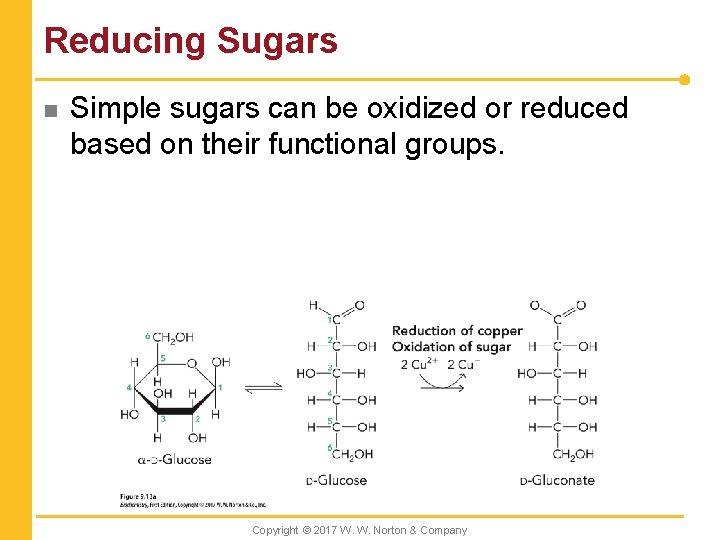
Reducing Sugars n Simple sugars can be oxidized or reduced based on their functional groups. Copyright © 2017 W. W. Norton & Company
Disaccharides n Two monosaccharides linked together through an O-glycosidic bond Copyright © 2017 W. W. Norton & Company
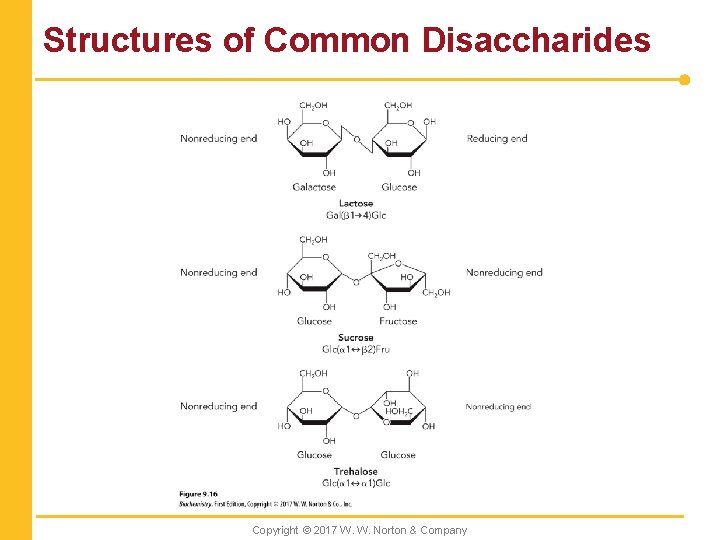
Structures of Common Disaccharides Copyright © 2017 W. W. Norton & Company
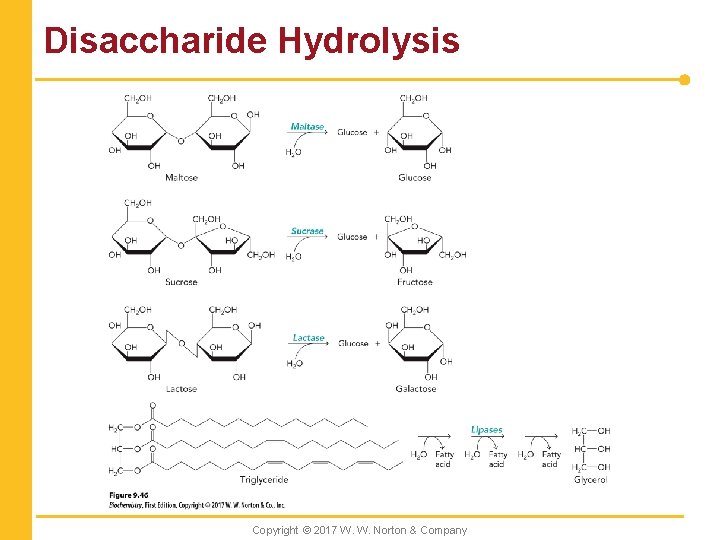
Disaccharide Hydrolysis Copyright © 2017 W. W. Norton & Company
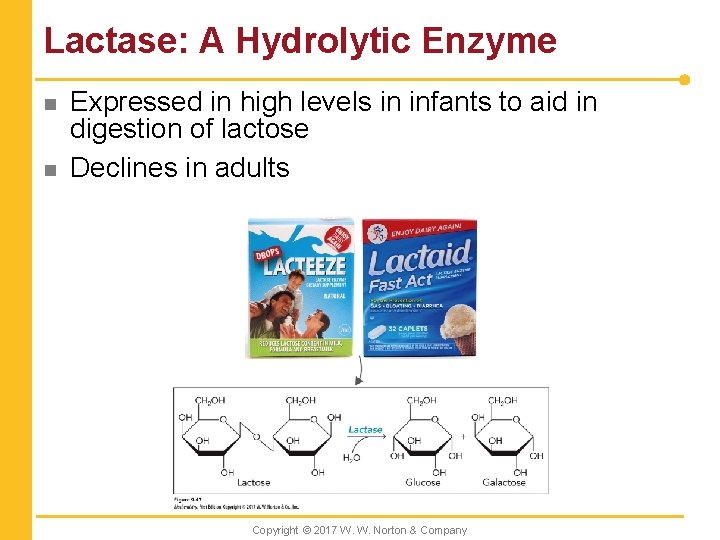
Lactase: A Hydrolytic Enzyme n n Expressed in high levels in infants to aid in digestion of lactose Declines in adults Copyright © 2017 W. W. Norton & Company
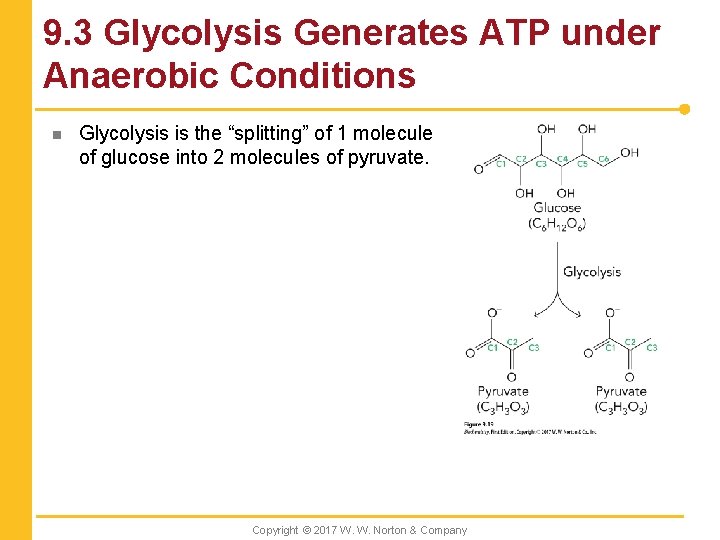
9. 3 Glycolysis Generates ATP under Anaerobic Conditions n Glycolysis is the “splitting” of 1 molecule of glucose into 2 molecules of pyruvate. Copyright © 2017 W. W. Norton & Company
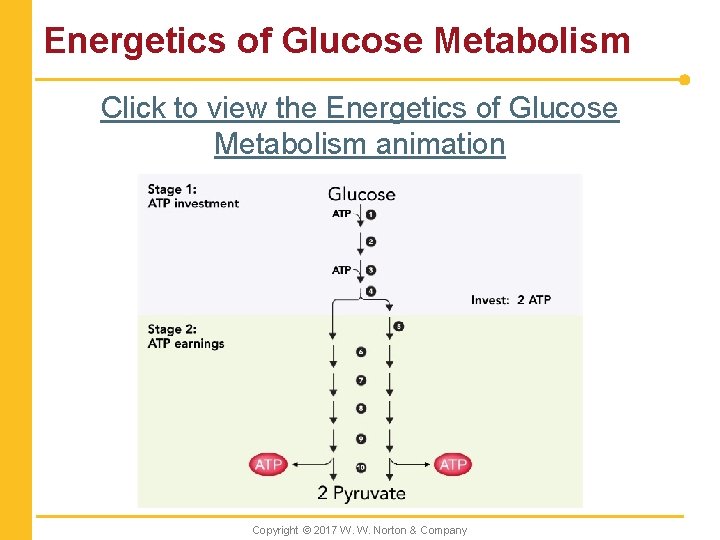
Energetics of Glucose Metabolism Click to view the Energetics of Glucose Metabolism animation Copyright © 2017 W. W. Norton & Company
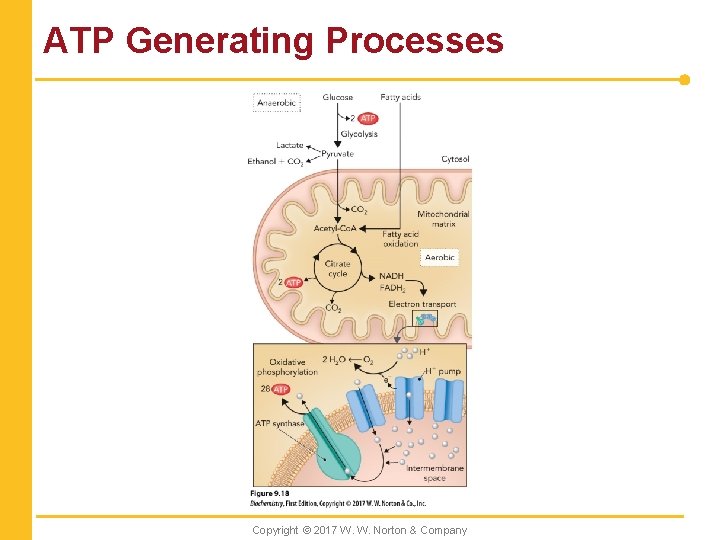
ATP Generating Processes Copyright © 2017 W. W. Norton & Company
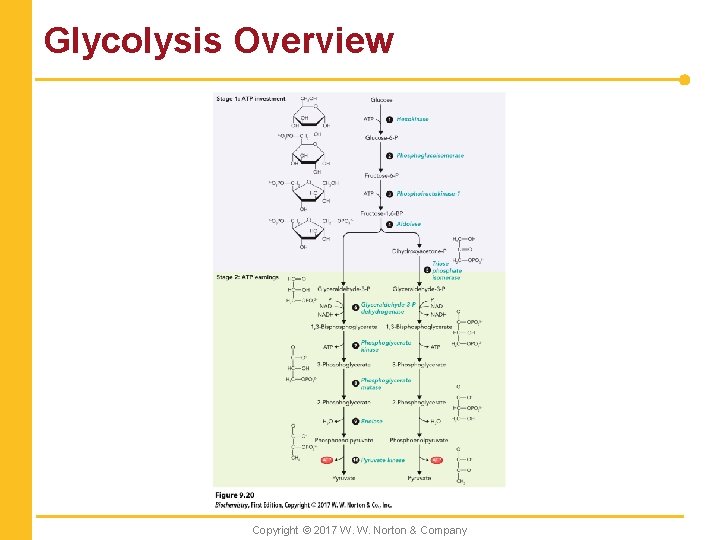
Glycolysis Overview Copyright © 2017 W. W. Norton & Company
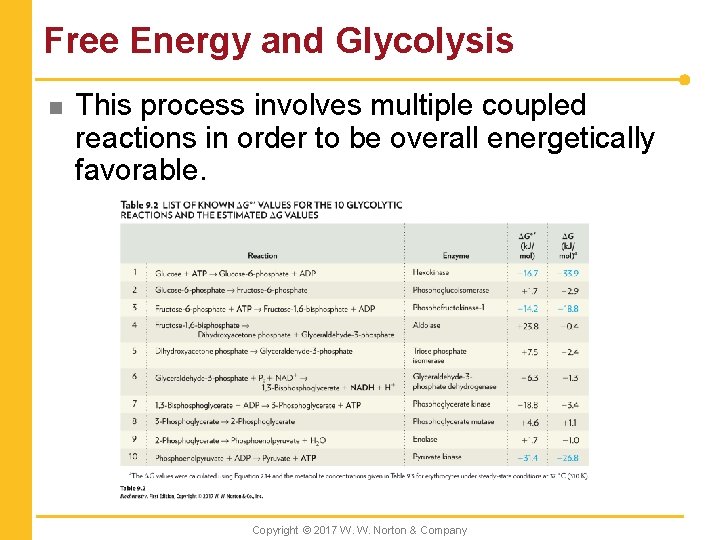
Free Energy and Glycolysis n This process involves multiple coupled reactions in order to be overall energetically favorable. Reaction number Reaction equation Enzyme 1 Glucose plus ATP yields Glucose-6 phosphate plus ADP Glucose-6 -phosphate yields Fructose-6 phosphate Fructose-6 -phosphate plus ATP yields Fructose-1, 6 -bisphosphate plus ADP Fructose-1, 6 -bisphosphate yields Dihydroxyacetone phosphate plus Glyceraldehyde-3 -phosphate Dihydroxyacetone phosphate yields Glyceraldehyde-3 -phosphate plus phosphate group plus positive 1 NAD ion yields 1, 3 -Bisphoglycerate plus NADH plus positive 1 Upper H ion 1, 3 -Bisphoglycerate plus ADP yields 3 -Phosphoglycerate plus ATP 3 -Phosphoglycerate yields 2 Phosphoglycerate 2 -Phosphoglycerate yields Phosphoenolpyruvate plus Upper H 2 Upper O Phosphoenolpyruvate plus ADP yields Pyruvate plus ATP 2 3 4 5 6 7 8 9 10 Hexokinase Delta Gibbs free energy naught prime (kilojoules per mole) Negative 16. 7 Negative 33. 9 Phosphoglucoisomerase 1. 7 Negative 2. 9 Phosphofructokinase-1 Negative 14. 2 Negative 18. 8 Aldolase +23. 8 Negative 0. 4 Triose phosphate isomerase Glyceraldehyde-3 phosphate dehydrogenase +7. 5 +2. 4 +6. 3 Negative 1. 3 Phosphoglycerate kinase Negative 18. 8 Negative 3. 4 Phosphoglycerate mutase Enolase +4. 6 +1. 1 +1. 7 Negative 1. 0 Pyruvate kinase Negative 31. 4 Negative 26. 8 Copyright © 2017 W. W. Norton & Company Delta Gibbs free energy (kilojoules per mole)
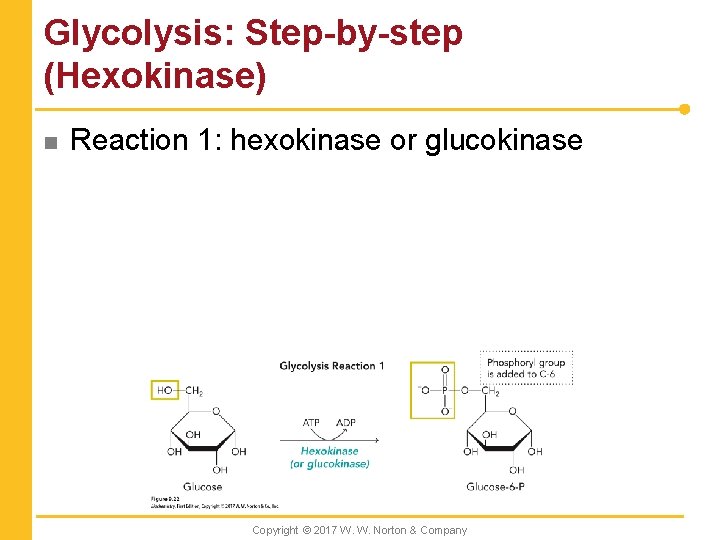
Glycolysis: Step-by-step (Hexokinase) n Reaction 1: hexokinase or glucokinase Copyright © 2017 W. W. Norton & Company
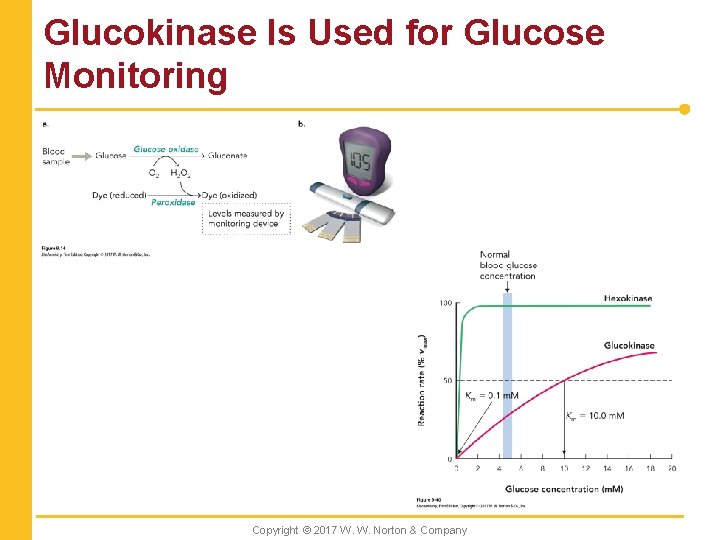
Glucokinase Is Used for Glucose Monitoring Copyright © 2017 W. W. Norton & Company
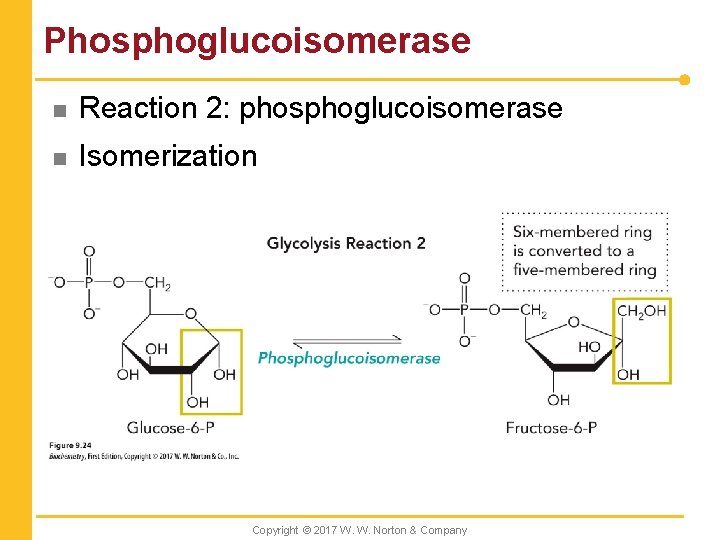
Phosphoglucoisomerase n Reaction 2: phosphoglucoisomerase n Isomerization Copyright © 2017 W. W. Norton & Company
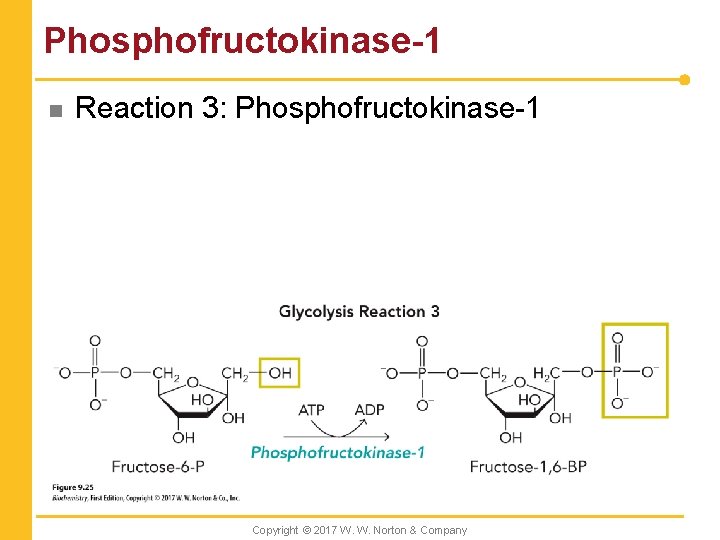
Phosphofructokinase-1 n Reaction 3: Phosphofructokinase-1 Copyright © 2017 W. W. Norton & Company
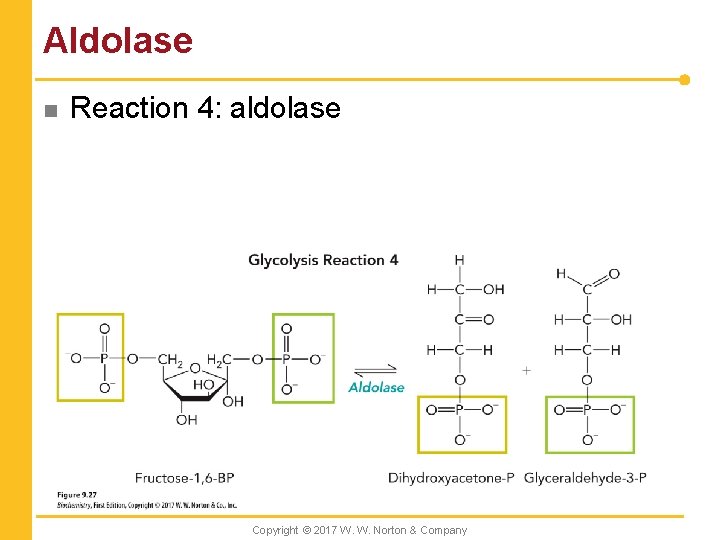
Aldolase n Reaction 4: aldolase Copyright © 2017 W. W. Norton & Company
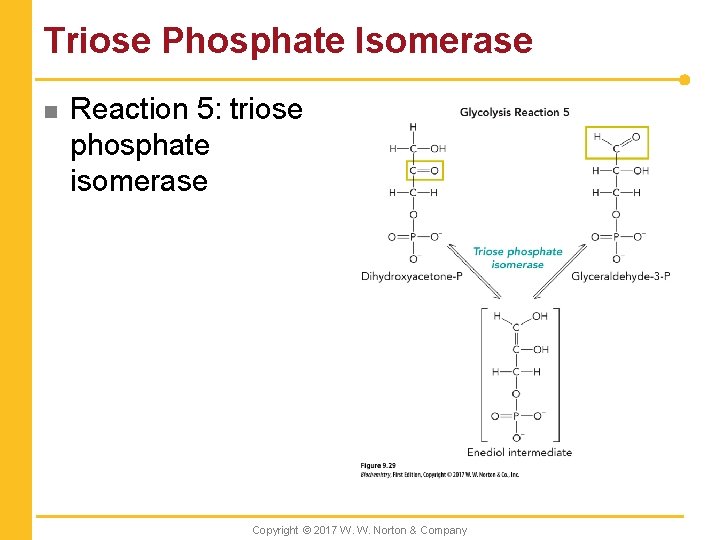
Triose Phosphate Isomerase n Reaction 5: triose phosphate isomerase Copyright © 2017 W. W. Norton & Company
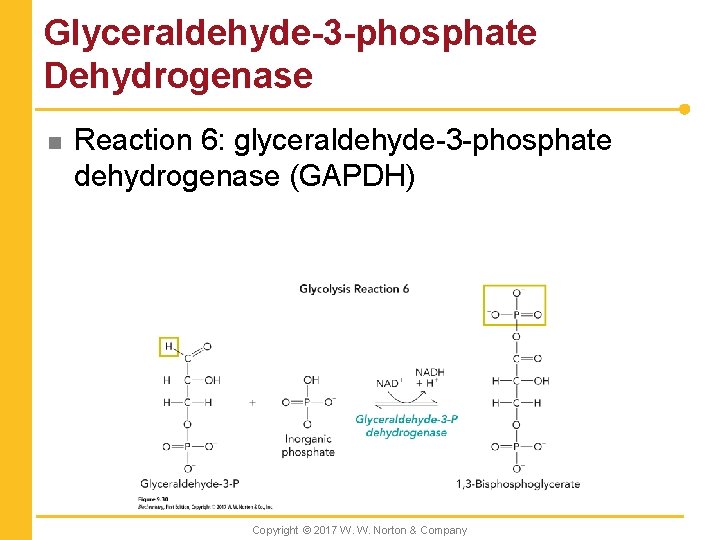
Glyceraldehyde-3 -phosphate Dehydrogenase n Reaction 6: glyceraldehyde-3 -phosphate dehydrogenase (GAPDH) Copyright © 2017 W. W. Norton & Company
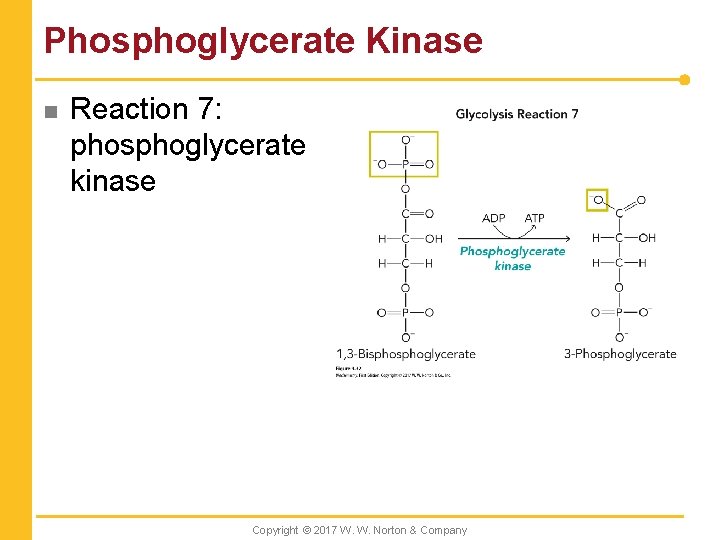
Phosphoglycerate Kinase n Reaction 7: phosphoglycerate kinase Copyright © 2017 W. W. Norton & Company
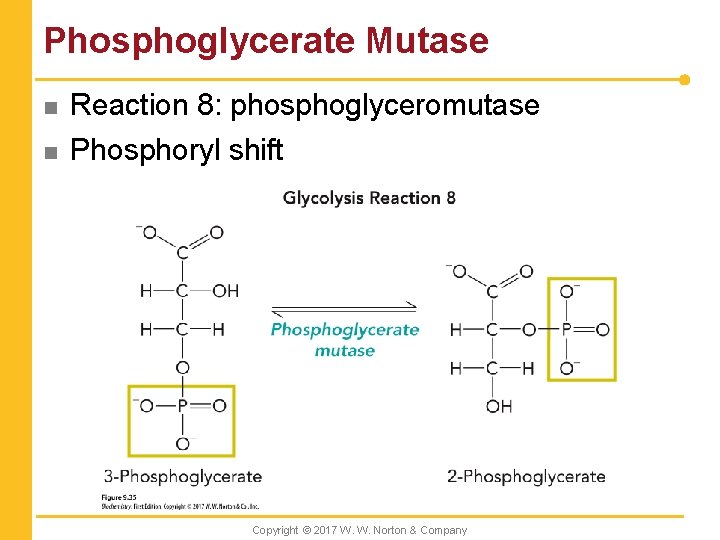
Phosphoglycerate Mutase n n Reaction 8: phosphoglyceromutase Phosphoryl shift Copyright © 2017 W. W. Norton & Company
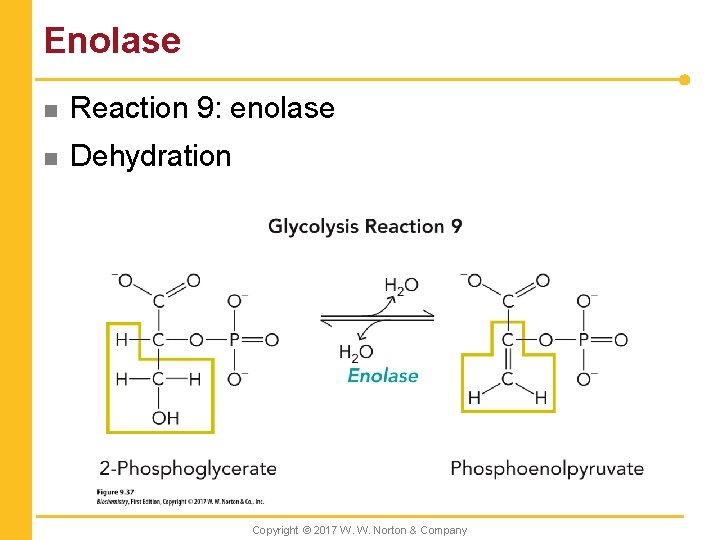
Enolase n Reaction 9: enolase n Dehydration Copyright © 2017 W. W. Norton & Company
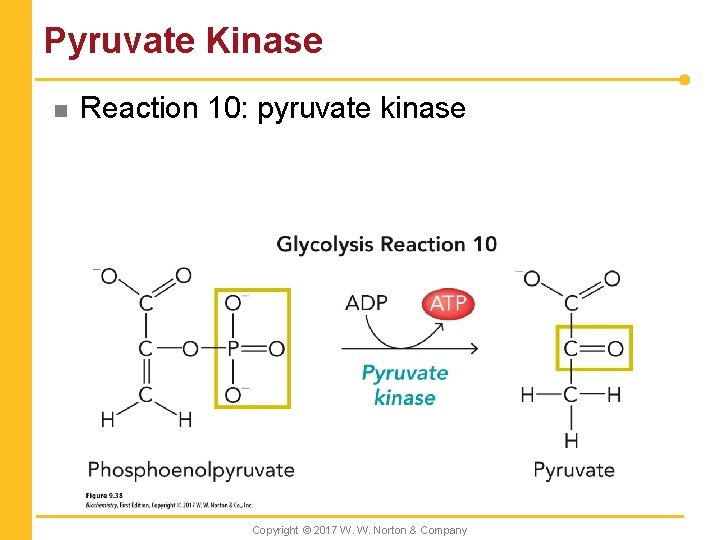
Pyruvate Kinase n Reaction 10: pyruvate kinase Copyright © 2017 W. W. Norton & Company
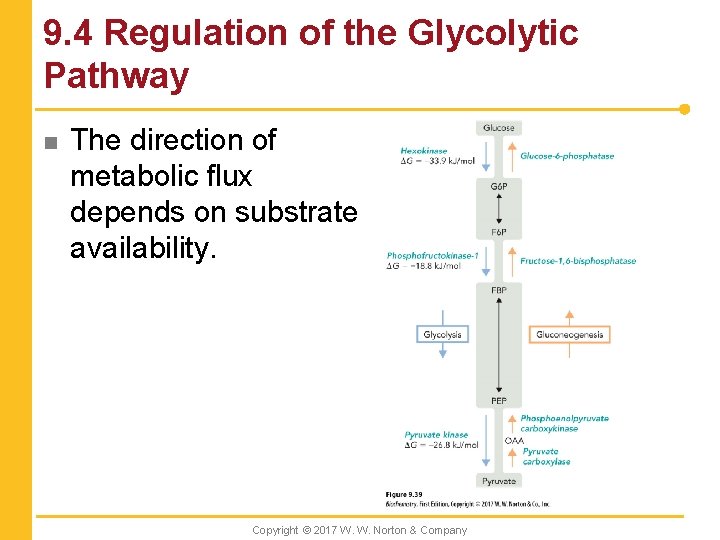
9. 4 Regulation of the Glycolytic Pathway n The direction of metabolic flux depends on substrate availability. Copyright © 2017 W. W. Norton & Company
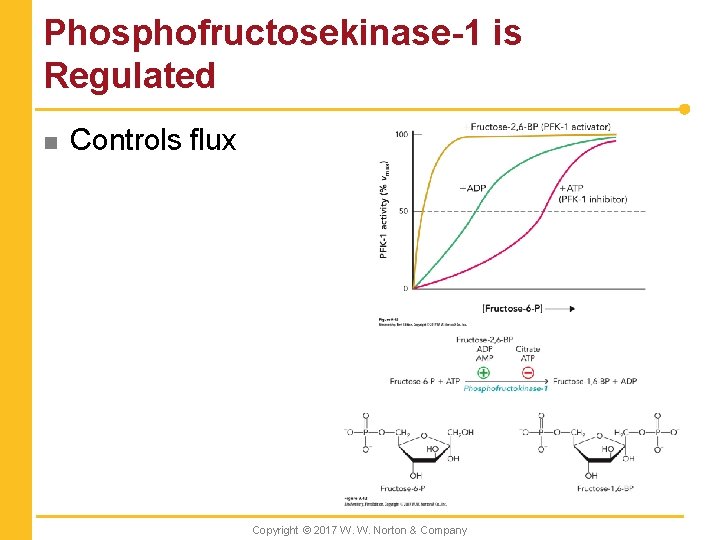
Phosphofructosekinase-1 is Regulated n Controls flux Copyright © 2017 W. W. Norton & Company
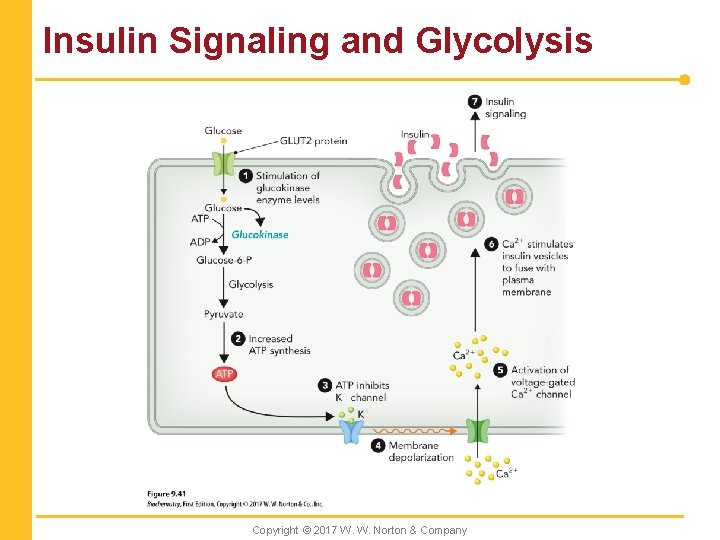
Insulin Signaling and Glycolysis Copyright © 2017 W. W. Norton & Company
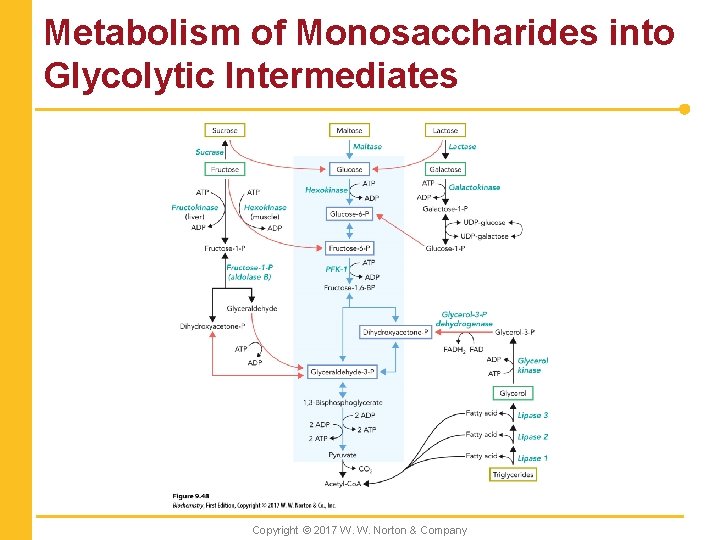
Metabolism of Monosaccharides into Glycolytic Intermediates Copyright © 2017 W. W. Norton & Company
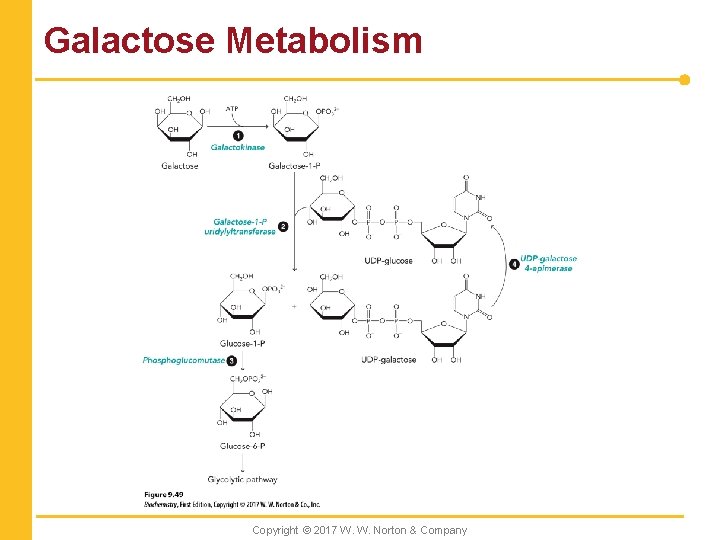
Galactose Metabolism Copyright © 2017 W. W. Norton & Company
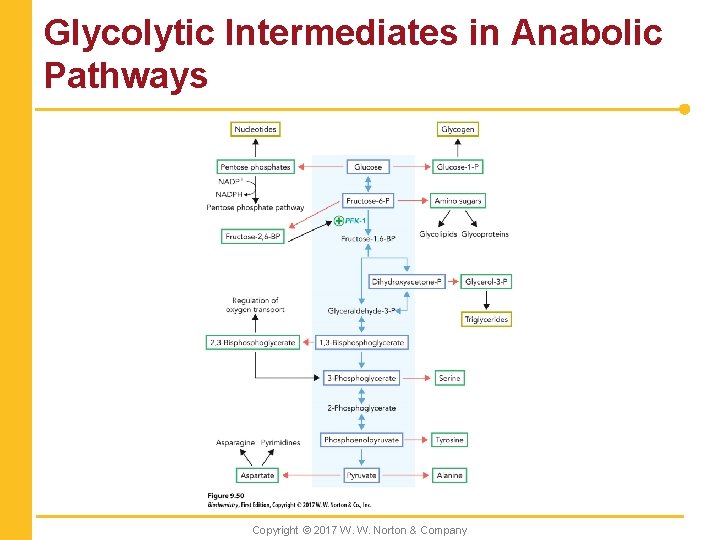
Glycolytic Intermediates in Anabolic Pathways Copyright © 2017 W. W. Norton & Company
9. 5 Metabolic Fate of Pyruvate n Metabolized in one of three ways depending on organism and availability of oxygen Copyright © 2017 W. W. Norton & Company
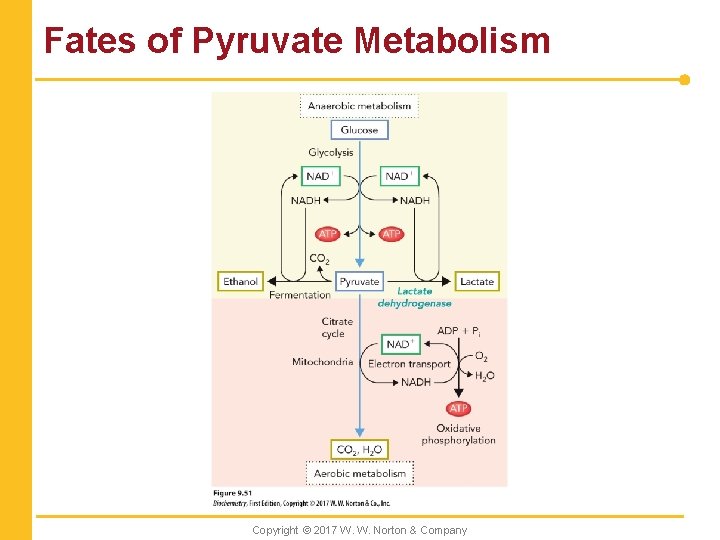
Fates of Pyruvate Metabolism Copyright © 2017 W. W. Norton & Company
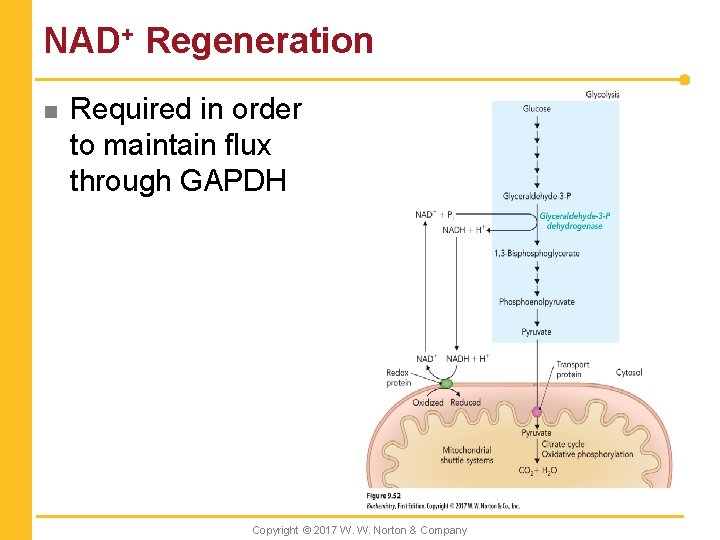
NAD+ Regeneration n Required in order to maintain flux through GAPDH Copyright © 2017 W. W. Norton & Company
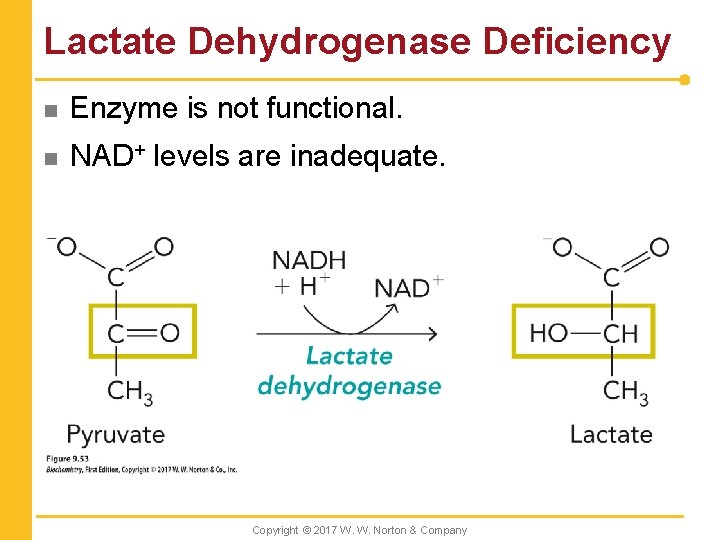
Lactate Dehydrogenase Deficiency n Enzyme is not functional. n NAD+ levels are inadequate. Copyright © 2017 W. W. Norton & Company
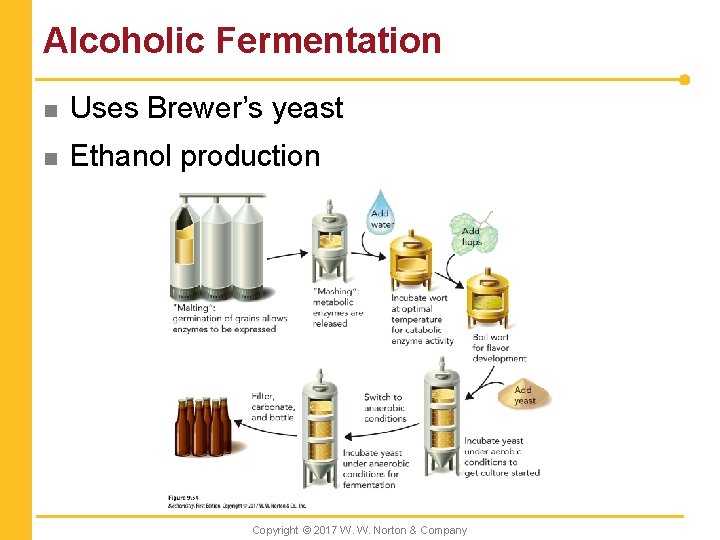
Alcoholic Fermentation n Uses Brewer’s yeast n Ethanol production Copyright © 2017 W. W. Norton & Company
- Slides: 45