
Chapter 9 Genes chromosomes and patterns of inheritance
- Slides: 77
Chapter 9: Genes, chromosomes and patterns of inheritance
Test yourself Write down what the following terms mean: §Gene §Locus §Allele §Trait §Phenotype §Genotype §Heredity §Genetics 2
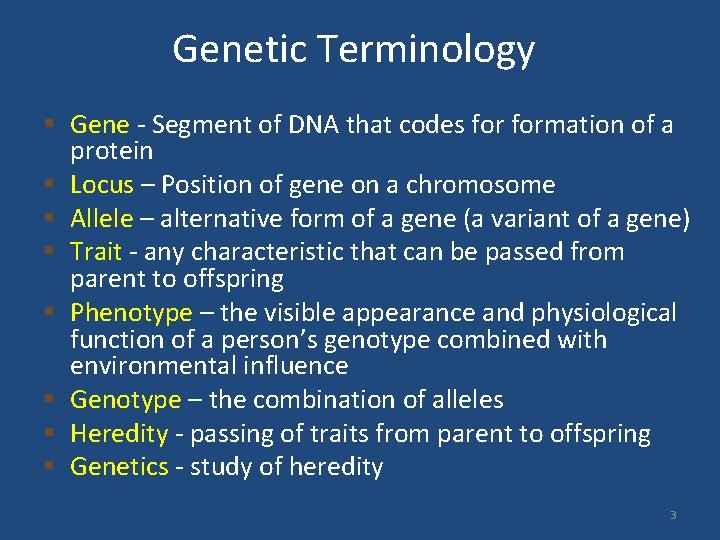
Genetic Terminology § Gene - Segment of DNA that codes formation of a protein § Locus – Position of gene on a chromosome § Allele – alternative form of a gene (a variant of a gene) § Trait - any characteristic that can be passed from parent to offspring § Phenotype – the visible appearance and physiological function of a person’s genotype combined with environmental influence § Genotype – the combination of alleles § Heredity - passing of traits from parent to offspring § Genetics - study of heredity 3
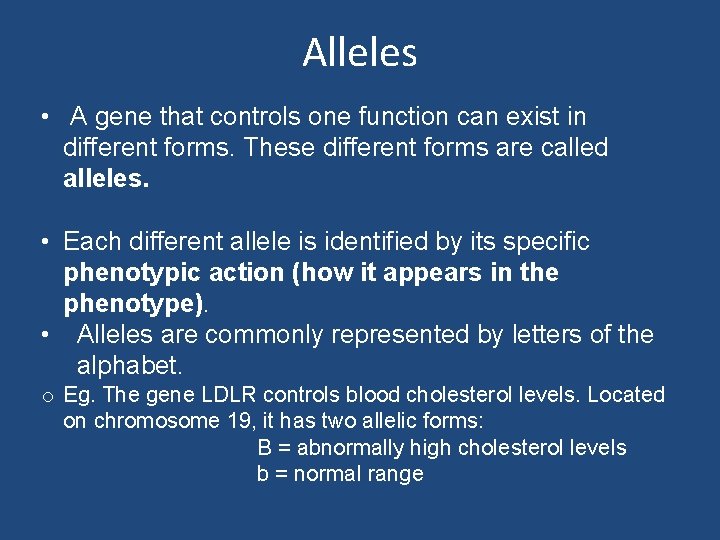
Alleles • A gene that controls one function can exist in different forms. These different forms are called alleles. • Each different allele is identified by its specific phenotypic action (how it appears in the phenotype). • Alleles are commonly represented by letters of the alphabet. o Eg. The gene LDLR controls blood cholesterol levels. Located on chromosome 19, it has two allelic forms: B = abnormally high cholesterol levels b = normal range
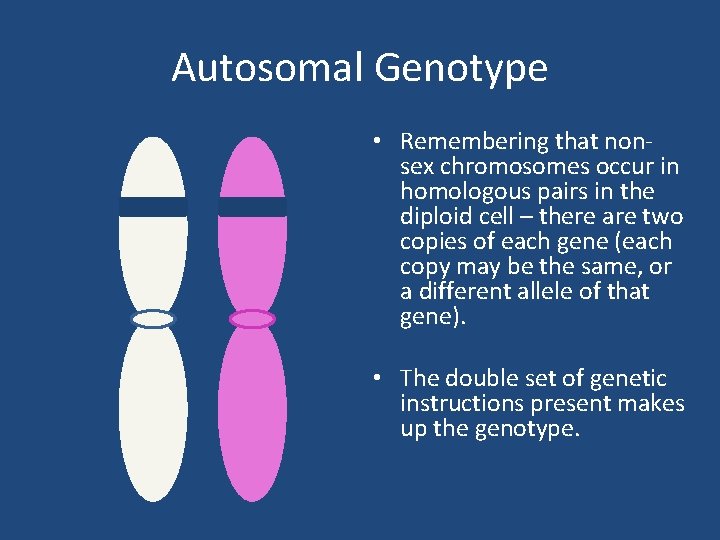
Autosomal Genotype • Remembering that nonsex chromosomes occur in homologous pairs in the diploid cell – there are two copies of each gene (each copy may be the same, or a different allele of that gene). • The double set of genetic instructions present makes up the genotype.
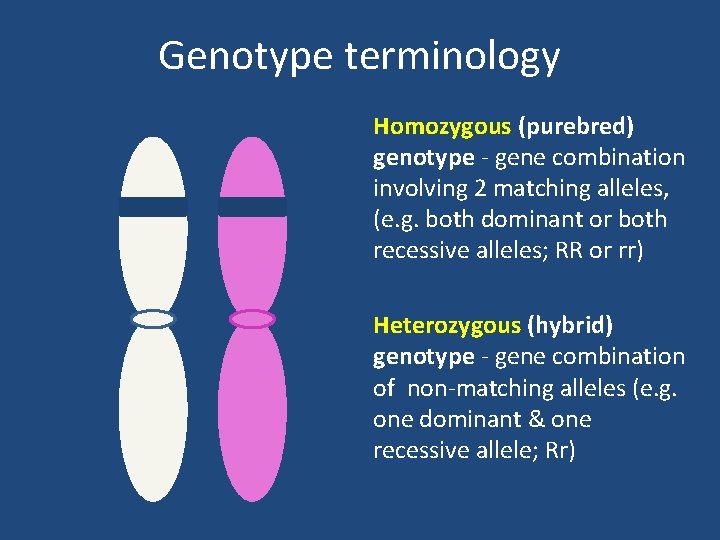
Genotype terminology Homozygous (purebred) genotype - gene combination involving 2 matching alleles, (e. g. both dominant or both recessive alleles; RR or rr) Heterozygous (hybrid) genotype - gene combination of non-matching alleles (e. g. one dominant & one recessive allele; Rr)
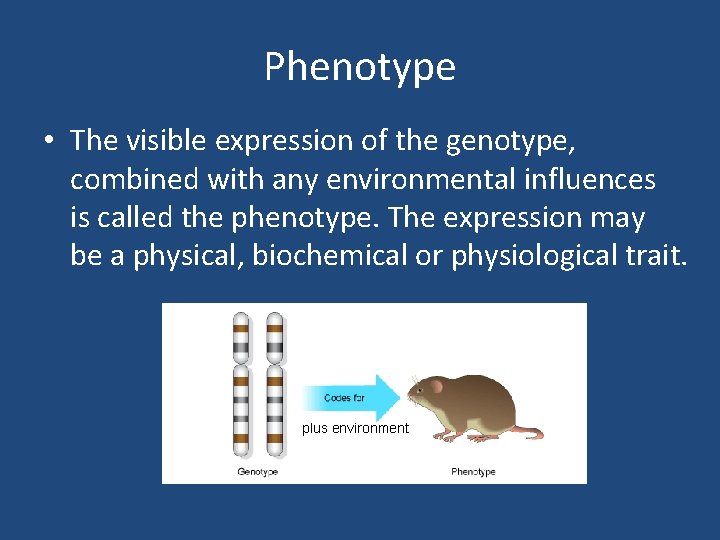
Phenotype • The visible expression of the genotype, combined with any environmental influences is called the phenotype. The expression may be a physical, biochemical or physiological trait. plus environment
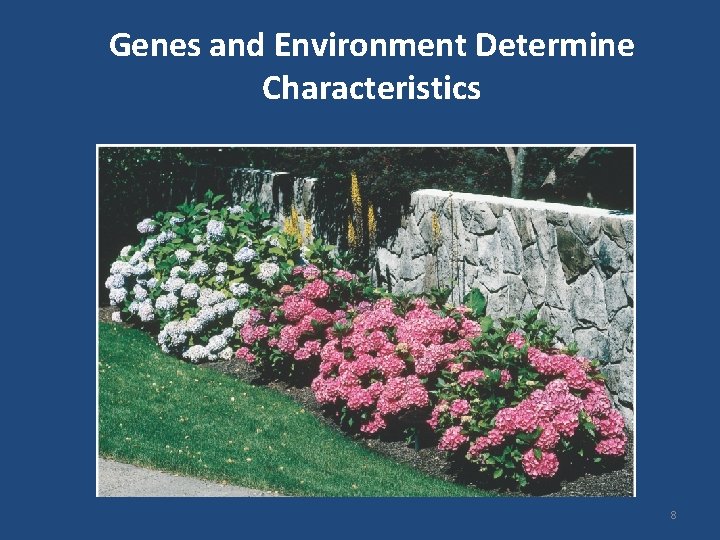
Genes and Environment Determine Characteristics 8
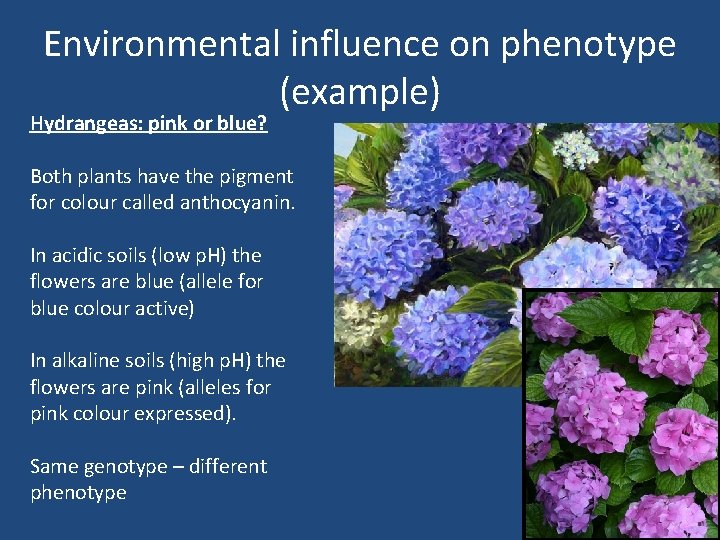
Environmental influence on phenotype (example) Hydrangeas: pink or blue? Both plants have the pigment for colour called anthocyanin. In acidic soils (low p. H) the flowers are blue (allele for blue colour active) In alkaline soils (high p. H) the flowers are pink (alleles for pink colour expressed). Same genotype – different phenotype
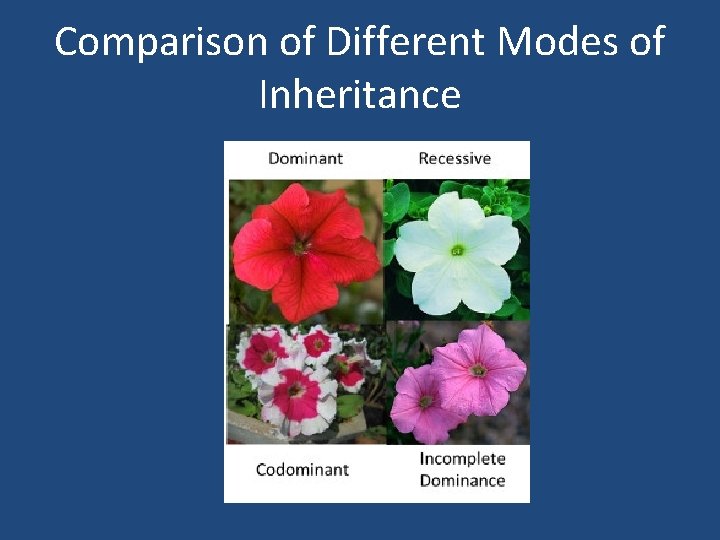
Different Modes of Inheritance • Complete/Full Dominance – Dominant trait: require only a single copy of the dominant allele for its phenotypic expression – Recessive trait: refers to a trait that is not expressed in a heterozygote (as it is masked by the presence of the dominant allele – e. g. black and white fur allele together will only display black or white fur, depending which is dominant) • Co-dominant – Co-dominant traits: this is where both alleles in the heterozygote are expressed in the phenotype – (e. g. black and white fur allele together give black and white spotted fur)
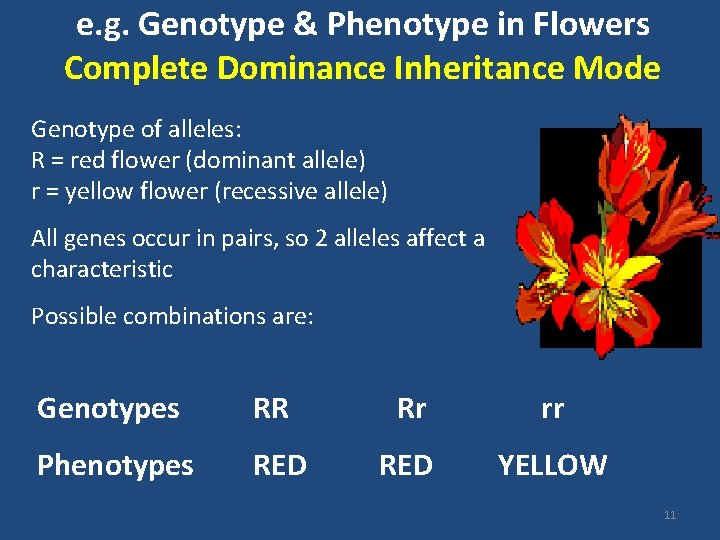
e. g. Genotype & Phenotype in Flowers Complete Dominance Inheritance Mode Genotype of alleles: R = red flower (dominant allele) r = yellow flower (recessive allele) All genes occur in pairs, so 2 alleles affect a characteristic Possible combinations are: Genotypes RR Rr rr Phenotypes RED YELLOW 11
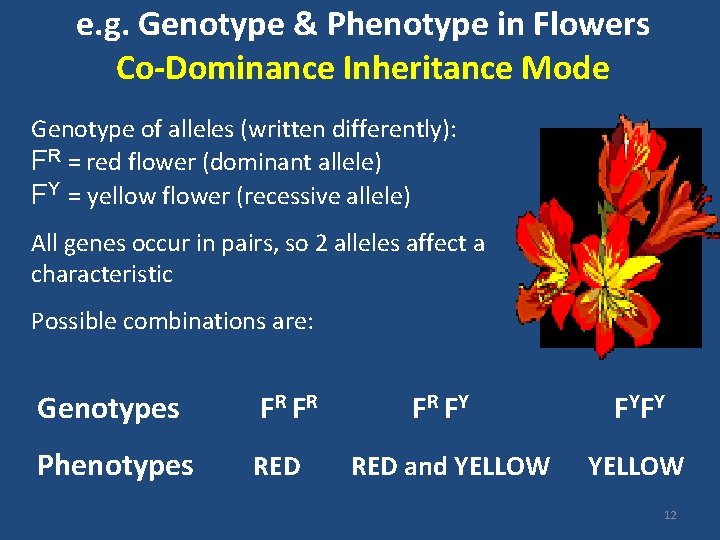
e. g. Genotype & Phenotype in Flowers Co-Dominance Inheritance Mode Genotype of alleles (written differently): FR = red flower (dominant allele) FY = yellow flower (recessive allele) All genes occur in pairs, so 2 alleles affect a characteristic Possible combinations are: Genotypes FR FR Phenotypes RED F R FY RED and YELLOW F YF Y YELLOW 12
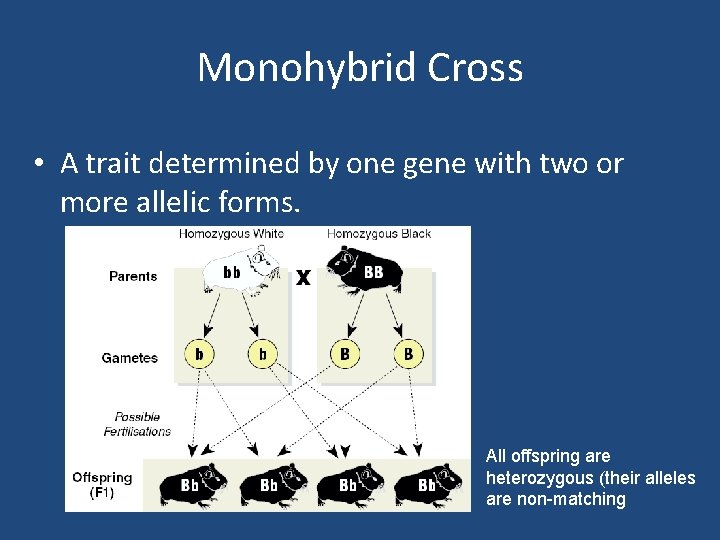
Monohybrid Cross • A trait determined by one gene with two or more allelic forms. All offspring are heterozygous (their alleles are non-matching
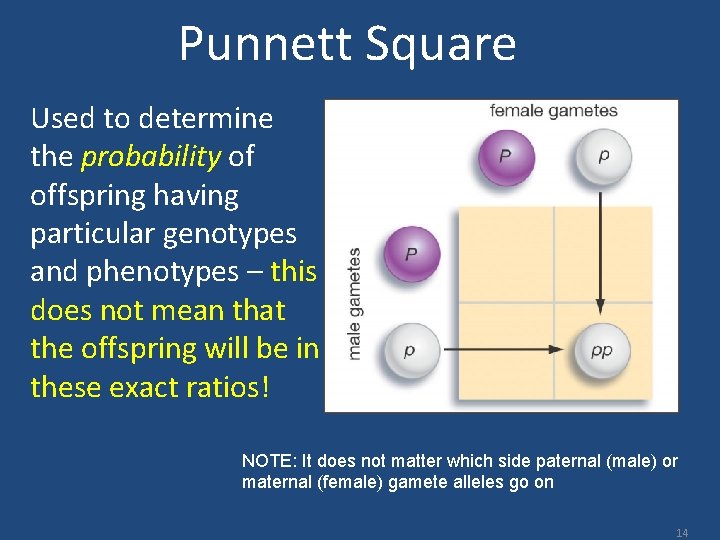
Punnett Square Used to determine the probability of offspring having particular genotypes and phenotypes – this does not mean that the offspring will be in these exact ratios! NOTE: It does not matter which side paternal (male) or maternal (female) gamete alleles go on 14
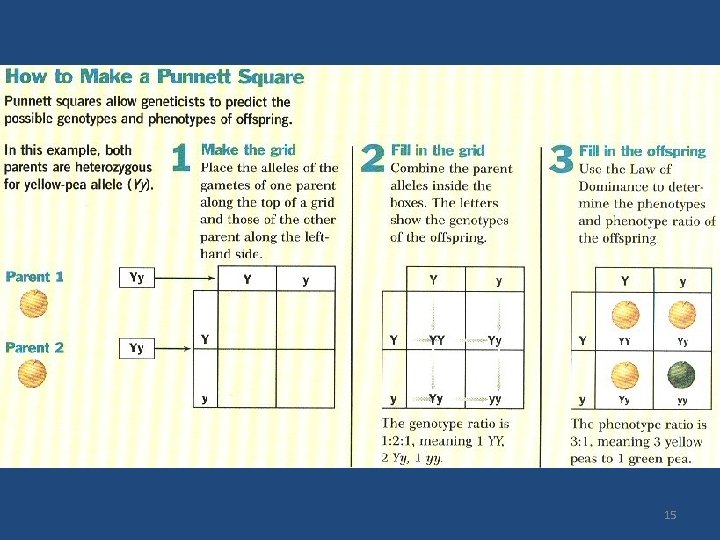
15
Generations • Parental P 1 Generation = the parental generation • F 1 generation = the first-generation offspring. (1 st filial generation) – From breeding individuals from the P 1 generation together • F 2 generation = the second-generation offspring in (2 nd filial generation) – From breeding individuals from the F 1 generation together 16
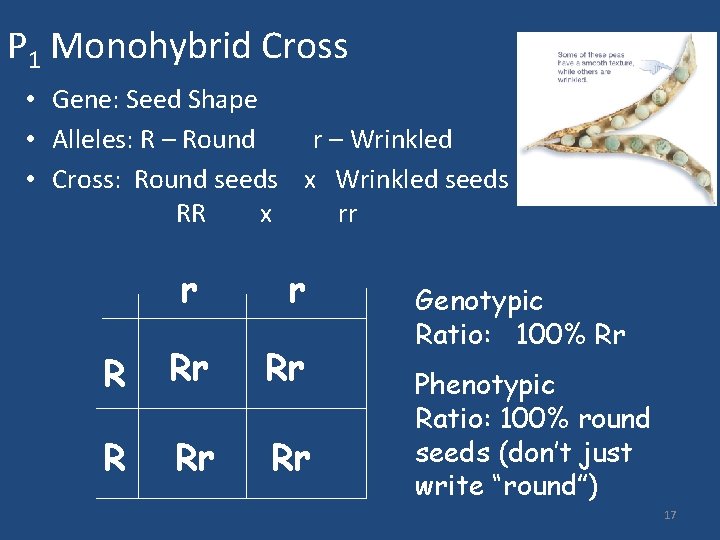
P 1 Monohybrid Cross • Gene: Seed Shape • Alleles: R – Round r – Wrinkled • Cross: Round seeds x Wrinkled seeds RR x rr r r R Rr Rr Genotypic Ratio: 100% Rr Phenotypic Ratio: 100% round seeds (don’t just write “round”) 17
P 1 Monohybrid Cross Review § Homozygous dominant x Homozygous recessive = Offspring all Heterozygous (hybrids) § Offspring called F 1 generation § Now, let’s see what happens when we cross members of this F 1 generation together 18
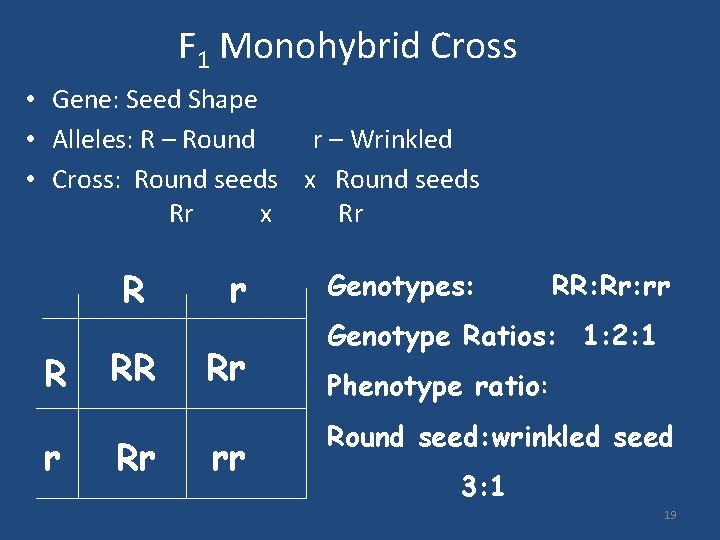
F 1 Monohybrid Cross • Gene: Seed Shape • Alleles: R – Round r – Wrinkled • Cross: Round seeds x Round seeds Rr x Rr R R r RR Rr rr Genotypes: RR: Rr: rr Genotype Ratios: 1: 2: 1 Phenotype ratio: Round seed: wrinkled seed 3: 1 19
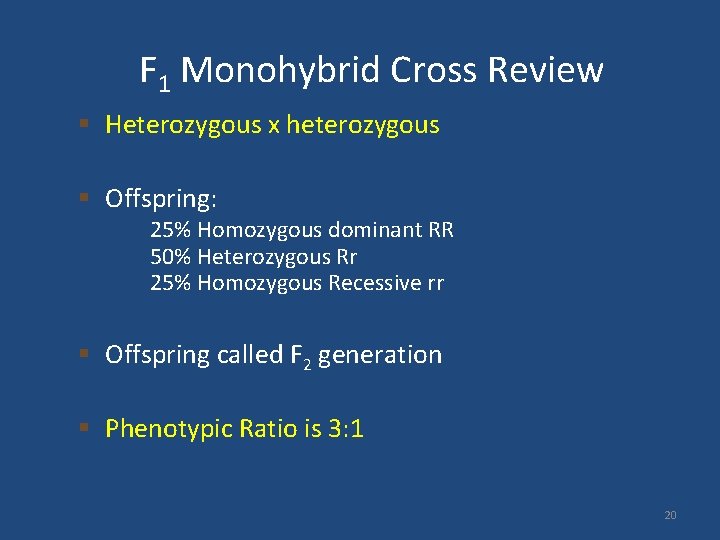
F 1 Monohybrid Cross Review § Heterozygous x heterozygous § Offspring: 25% Homozygous dominant RR 50% Heterozygous Rr 25% Homozygous Recessive rr § Offspring called F 2 generation § Phenotypic Ratio is 3: 1 20
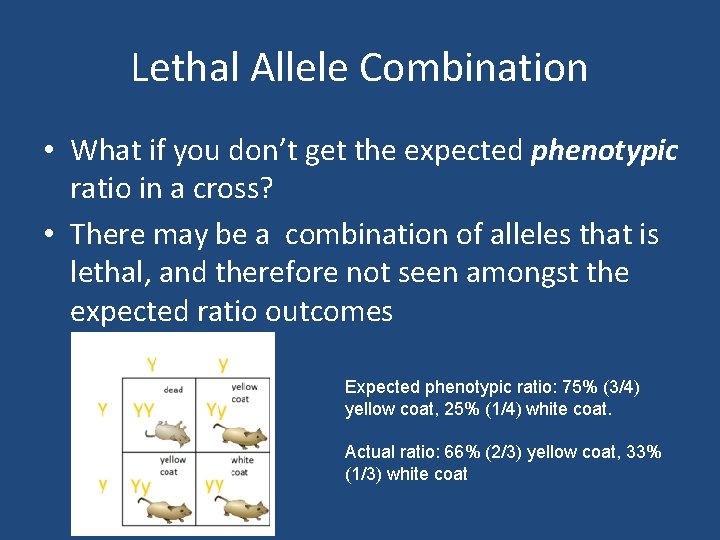
Lethal Allele Combination • What if you don’t get the expected phenotypic ratio in a cross? • There may be a combination of alleles that is lethal, and therefore not seen amongst the expected ratio outcomes Expected phenotypic ratio: 75% (3/4) yellow coat, 25% (1/4) white coat. Actual ratio: 66% (2/3) yellow coat, 33% (1/3) white coat
Lethal Allele Combination • What if all offspring were yellow coat and no offspring had white coats? • Then the lethal allele combination would be the recessive homozygous genotype, yy.
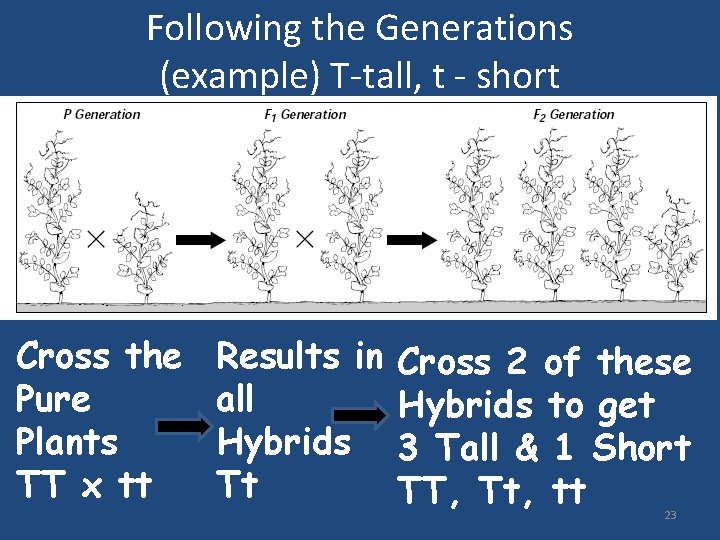
Following the Generations (example) T-tall, t - short Cross the Pure Plants TT x tt Results in all Hybrids Tt Cross 2 of these Hybrids to get 3 Tall & 1 Short TT, Tt, tt 23
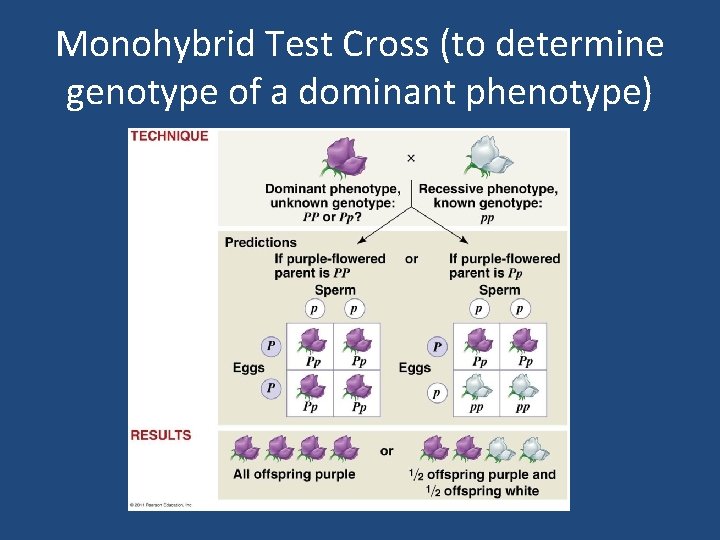
Monohybrid Test Cross • When an organism displays a dominant trait, it is unable to be determined from looking at them if their genotype is homozygous or heterozygous for that dominant trait • To find out, the organism is bred with a homozygous recessive organism (as their genotypes can be determined from their phenotypes) 24
Monohybrid Test Cross (to determine genotype of a dominant phenotype)
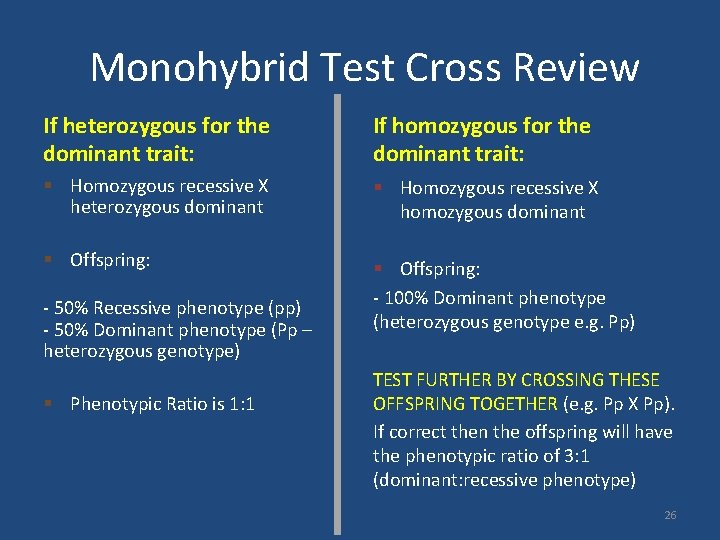
Monohybrid Test Cross Review If heterozygous for the dominant trait: If homozygous for the dominant trait: § Homozygous recessive X heterozygous dominant § Homozygous recessive X homozygous dominant § Offspring: - 100% Dominant phenotype (heterozygous genotype e. g. Pp) - 50% Recessive phenotype (pp) - 50% Dominant phenotype (Pp – heterozygous genotype) § Phenotypic Ratio is 1: 1 TEST FURTHER BY CROSSING THESE OFFSPRING TOGETHER (e. g. Pp X Pp). If correct then the offspring will have the phenotypic ratio of 3: 1 (dominant: recessive phenotype) 26
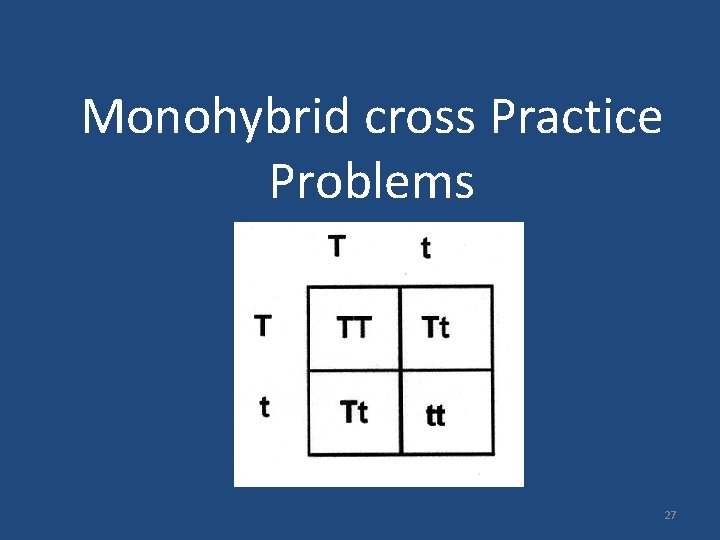
Monohybrid cross Practice Problems 27
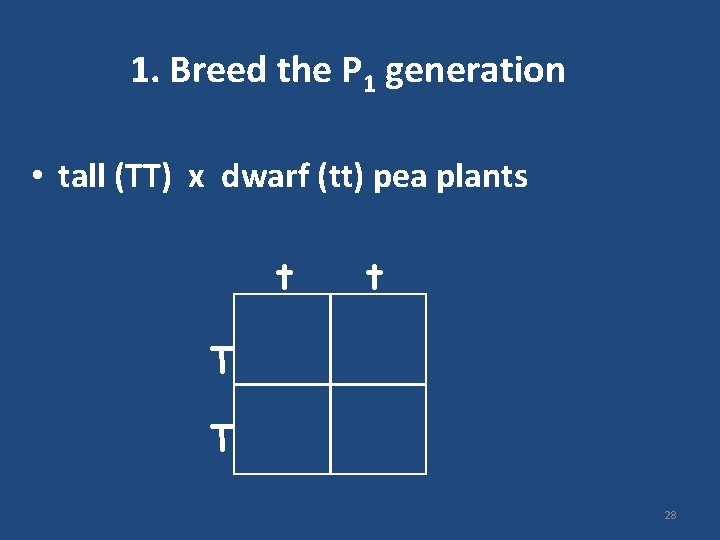
1. Breed the P 1 generation • tall (TT) x dwarf (tt) pea plants t t T T 28
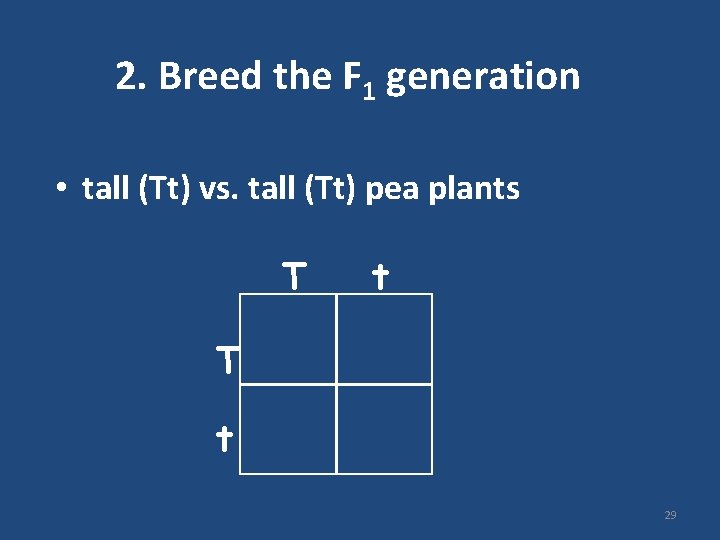
2. Breed the F 1 generation • tall (Tt) vs. tall (Tt) pea plants T t 29
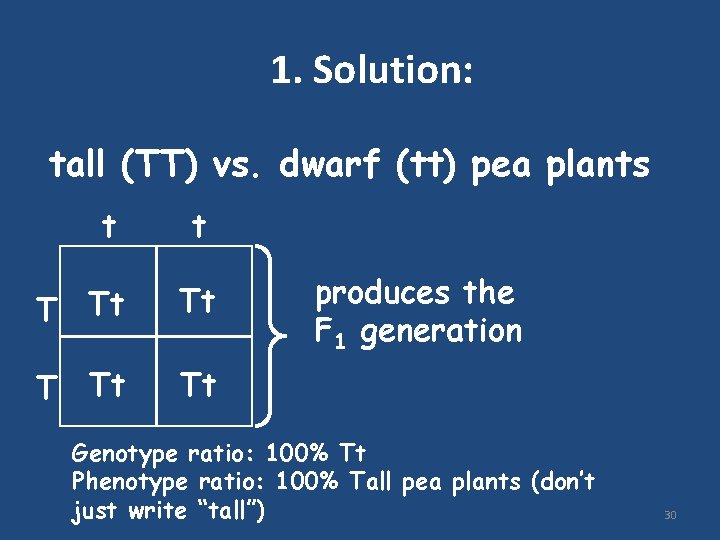
1. Solution: tall (TT) vs. dwarf (tt) pea plants t t T Tt Tt produces the F 1 generation Genotype ratio: 100% Tt Phenotype ratio: 100% Tall pea plants (don’t just write “tall”) 30
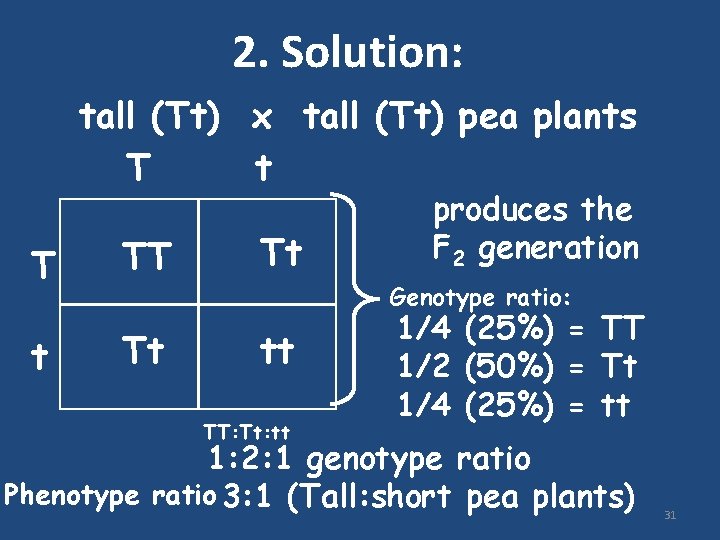
2. Solution: tall (Tt) x tall (Tt) pea plants T t TT Tt Tt produces the F 2 generation Genotype ratio: tt TT: Tt: tt 1/4 (25%) = TT 1/2 (50%) = Tt 1/4 (25%) = tt 1: 2: 1 genotype ratio Phenotype ratio 3: 1 (Tall: short pea plants) 31
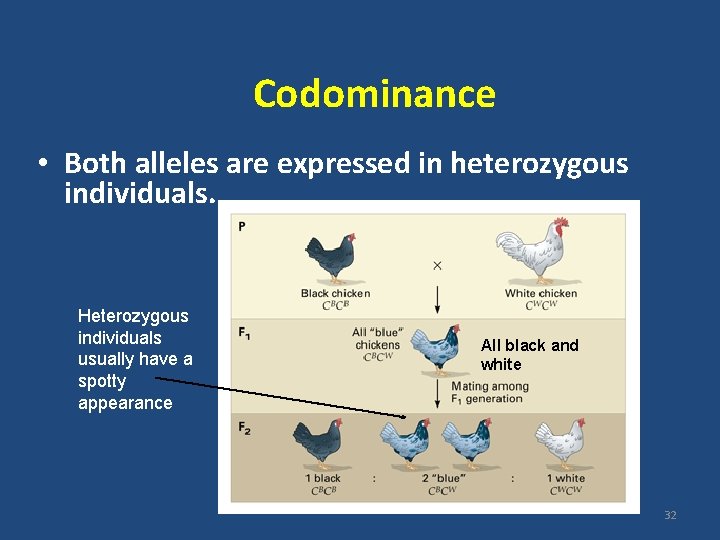
Codominance • Both alleles are expressed in heterozygous individuals. Heterozygous individuals usually have a spotty appearance All black and white 32
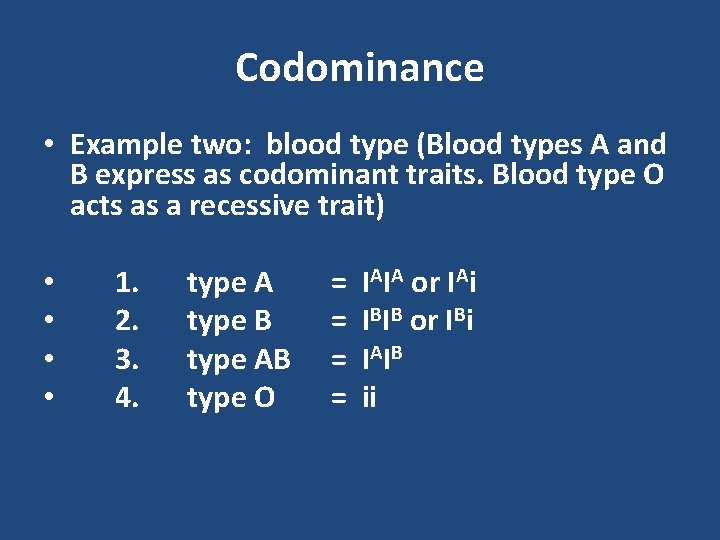
Codominance • Example two: blood type (Blood types A and B express as codominant traits. Blood type O acts as a recessive trait) • • 1. 2. 3. 4. type A type B type AB type O = = IAIA or IAi IBIB or IBi I AIB ii
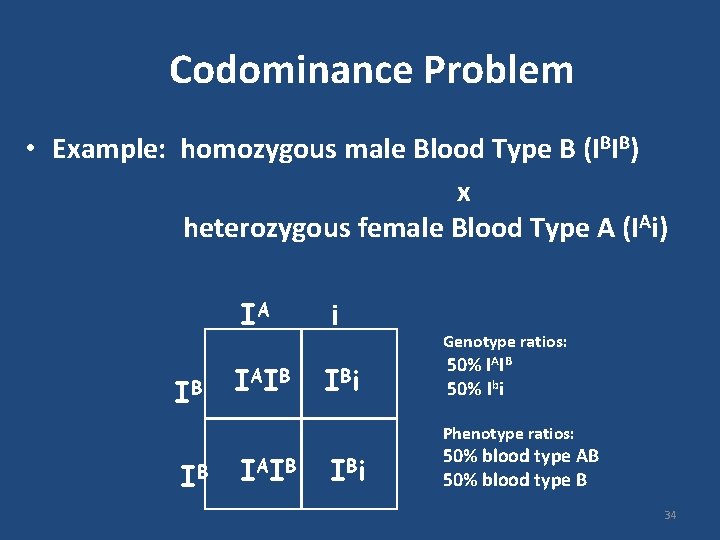
Codominance Problem • Example: homozygous male Blood Type B (IBIB) x heterozygous female Blood Type A (IAi) IA IB I AI B i I Bi Genotype ratios: 50% IAIB 50% Ibi Phenotype ratios: IB I AI B I Bi 50% blood type AB 50% blood type B 34
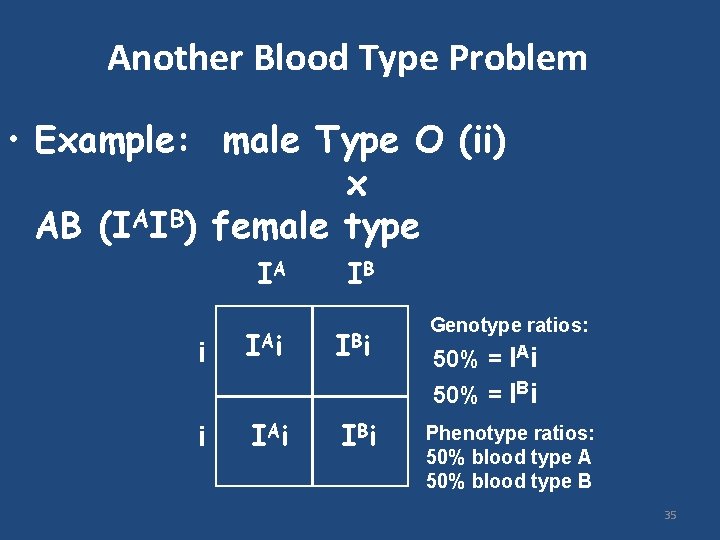
Another Blood Type Problem • Example: male Type O (ii) x AB (IAIB) female type IA IB i I Ai I Bi Genotype ratios: 50% = IAi 50% = IBi Phenotype ratios: 50% blood type A 50% blood type B 35
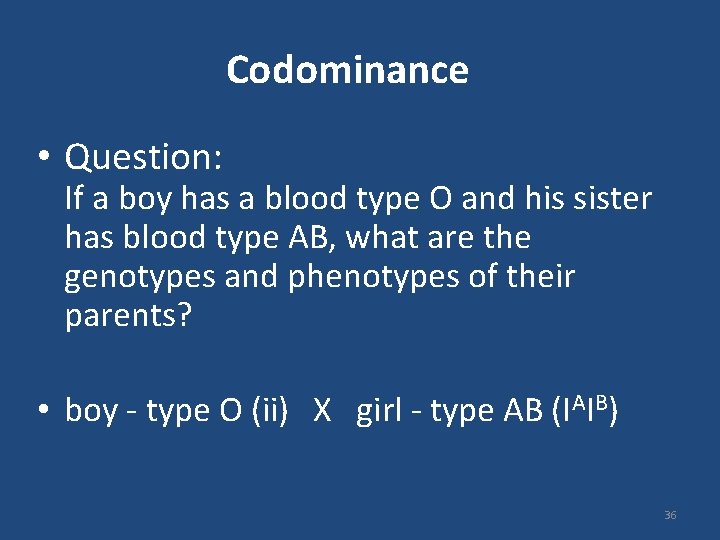
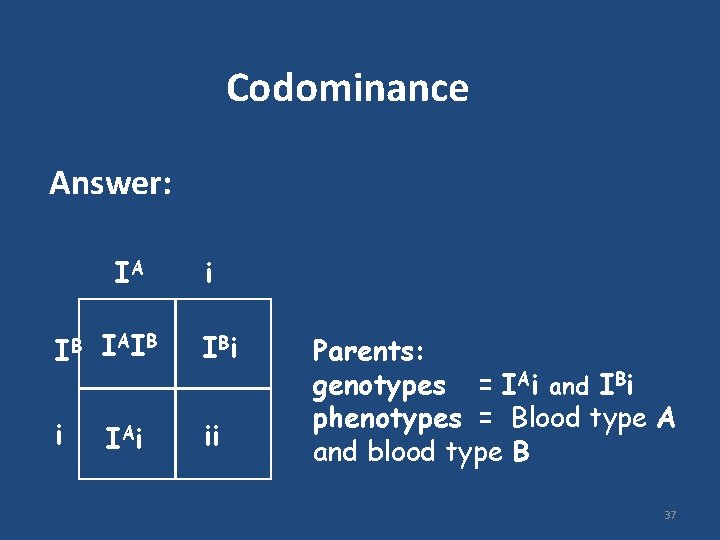
Codominance • Question: If a boy has a blood type O and his sister has blood type AB, what are the genotypes and phenotypes of their parents? • boy - type O (ii) X girl - type AB (IAIB) 36
Codominance Answer: IA i IB I AI B I Bi i I Ai ii Parents: genotypes = IAi and IBi phenotypes = Blood type A and blood type B 37
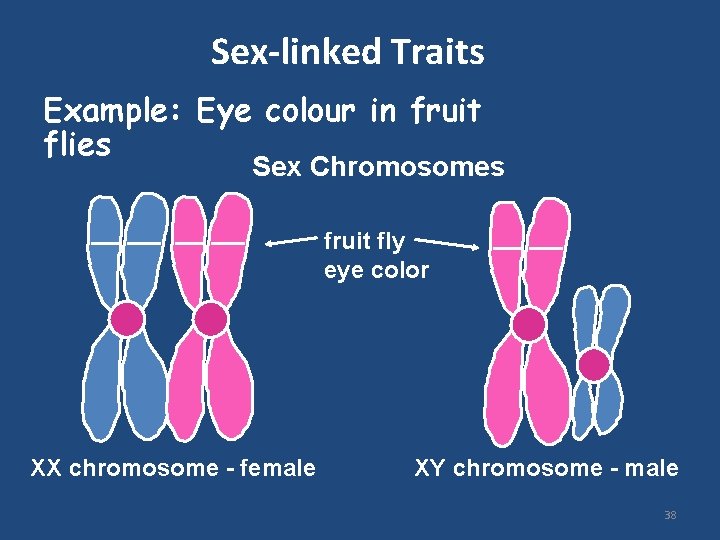
Sex-linked Traits Example: Eye colour in fruit flies Sex Chromosomes fruit fly eye color XX chromosome - female XY chromosome - male 38
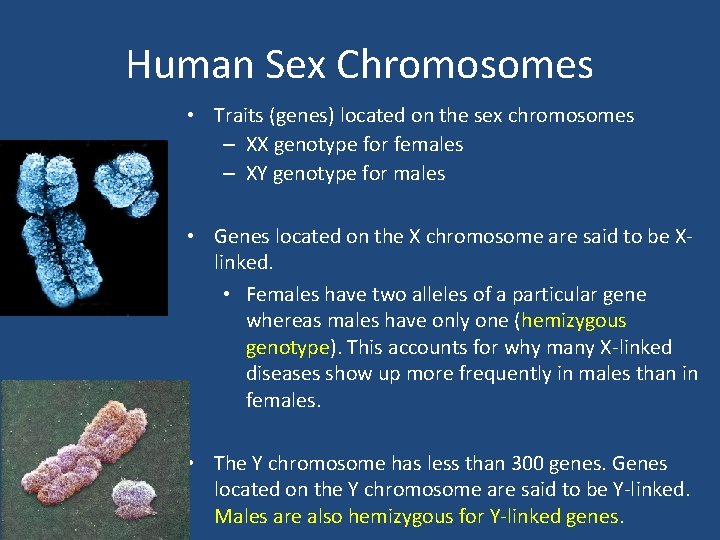
Human Sex Chromosomes • Traits (genes) located on the sex chromosomes – XX genotype for females – XY genotype for males • Genes located on the X chromosome are said to be Xlinked. • Females have two alleles of a particular gene whereas males have only one (hemizygous genotype). This accounts for why many X-linked diseases show up more frequently in males than in females. • The Y chromosome has less than 300 genes. Genes located on the Y chromosome are said to be Y-linked. Males are also hemizygous for Y-linked genes.
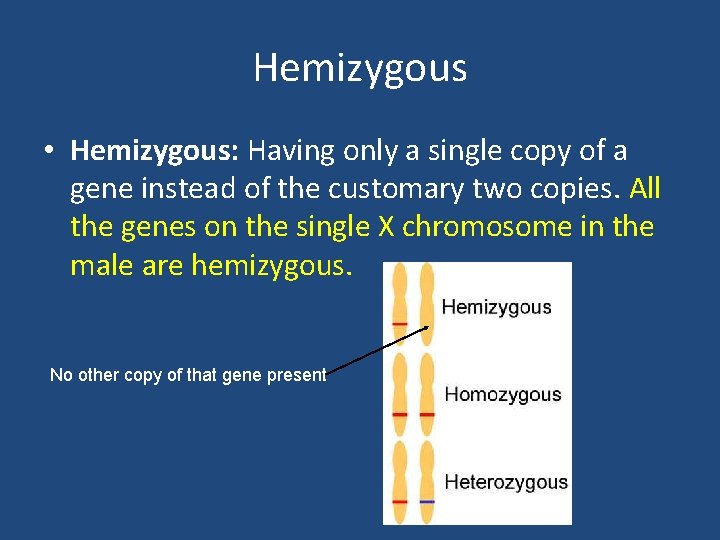
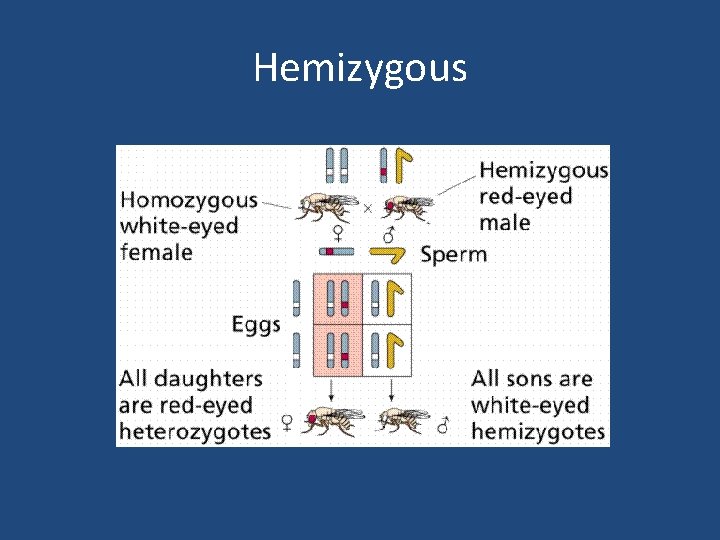
Hemizygous • Hemizygous: Having only a single copy of a gene instead of the customary two copies. All the genes on the single X chromosome in the male are hemizygous. No other copy of that gene present
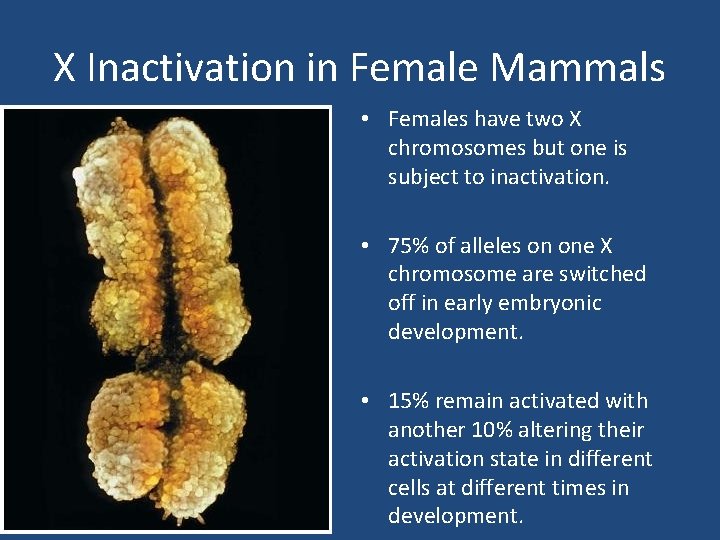
X Inactivation in Female Mammals • Females have two X chromosomes but one is subject to inactivation. • 75% of alleles on one X chromosome are switched off in early embryonic development. • 15% remain activated with another 10% altering their activation state in different cells at different times in development.
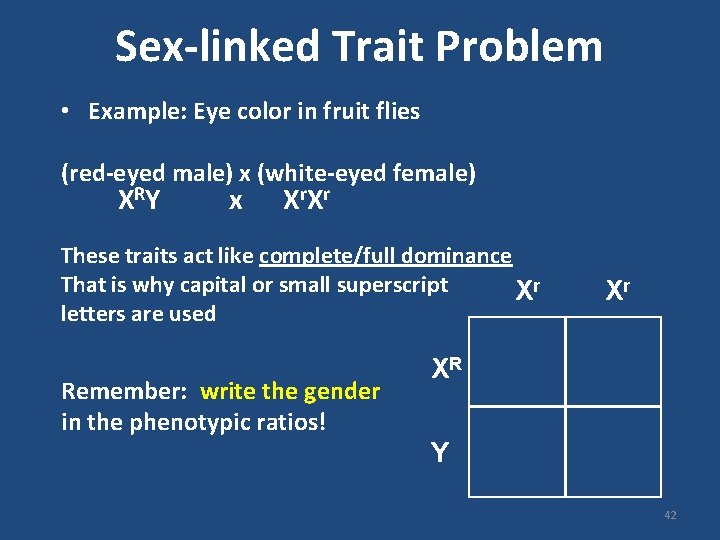
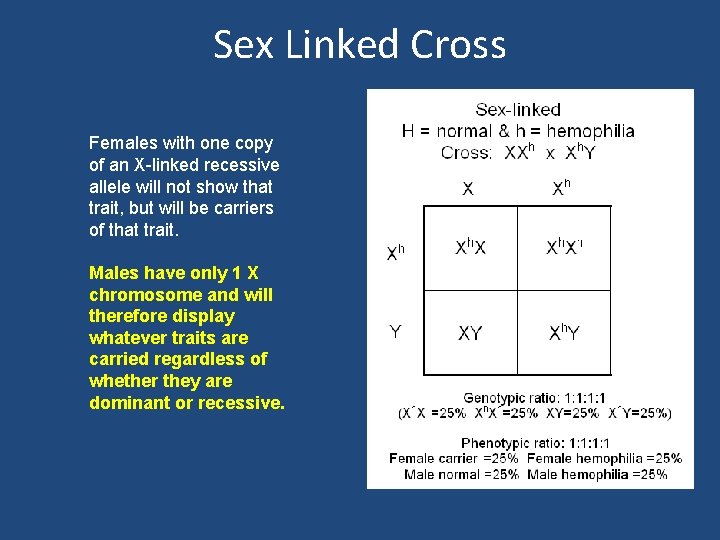
Sex-linked Trait Problem • Example: Eye color in fruit flies (red-eyed male) x (white-eyed female) XRY x X r These traits act like complete/full dominance That is why capital or small superscript Xr letters are used Remember: write the gender in the phenotypic ratios! Xr XR Y 42
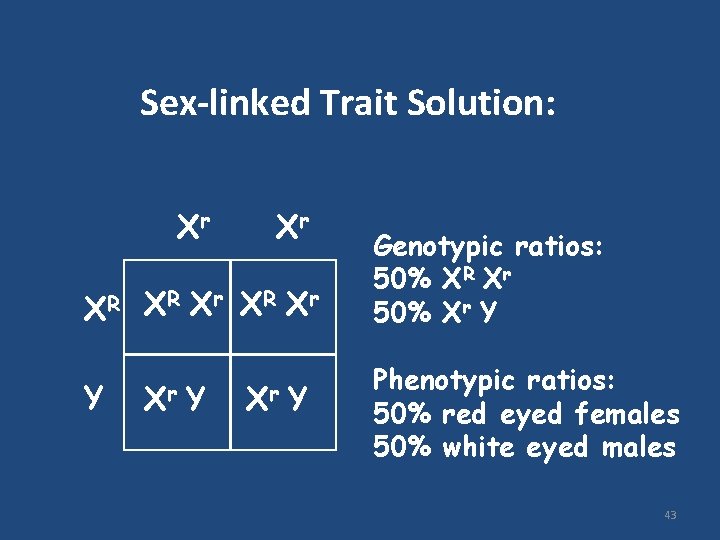
Sex-linked Trait Solution: Xr Xr XR XR Xr Y Genotypic ratios: 50% XR Xr 50% Xr Y Phenotypic ratios: 50% red eyed females 50% white eyed males 43
Hemizygous
Sex Linked Cross Females with one copy of an X-linked recessive allele will not show that trait, but will be carriers of that trait. Males have only 1 X chromosome and will therefore display whatever traits are carried regardless of whether they are dominant or recessive.
Dihybrid Cross • A breeding experiment that tracks the inheritance of two different traits. • Each trait is coded for by different allelles of different genes • Used to determine if traits might be linked (inherited together, and therefore their alleles are on the same chromosome) 46
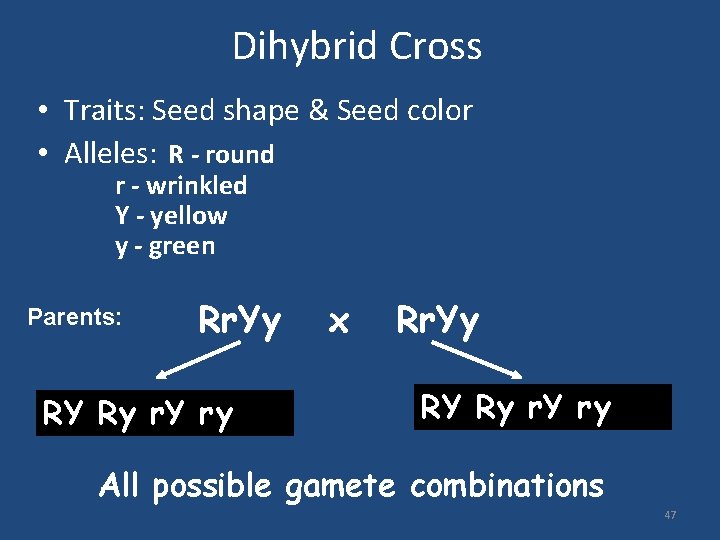
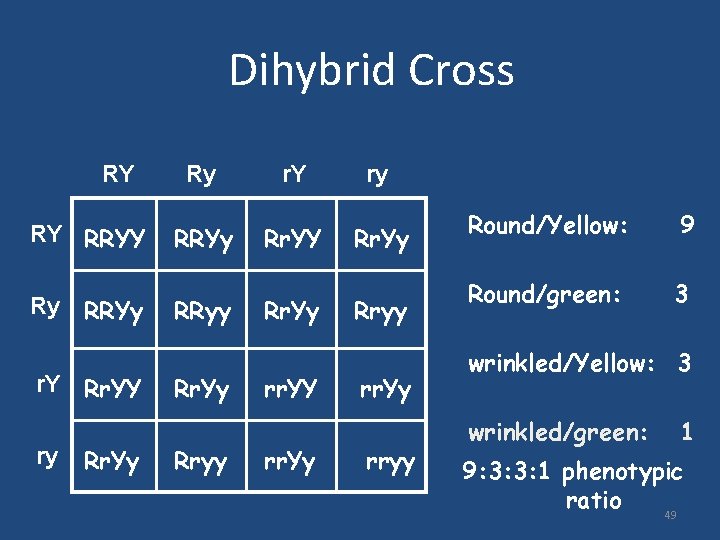
Dihybrid Cross • Traits: Seed shape & Seed color • Alleles: R - round r - wrinkled Y - yellow y - green Parents: Rr. Yy RY Ry r. Y ry x Rr. Yy RY Ry r. Y ry All possible gamete combinations 47
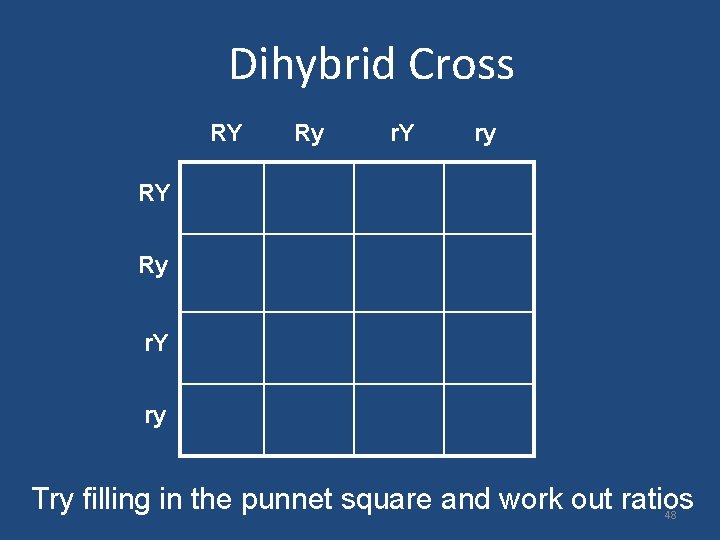
Dihybrid Cross RY Ry r. Y ry Try filling in the punnet square and work out ratios 48
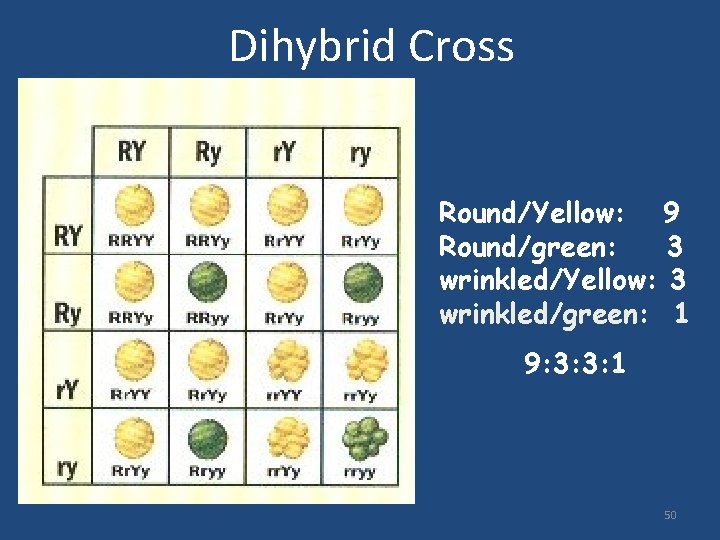
Dihybrid Cross RY RY RRYY Ry RRYy r. Y Rr. YY ry Rr. Yy Ry r. Y ry RRYy Rr. YY Rr. Yy RRyy Rr. Yy Rryy Rr. Yy rr. YY rr. Yy Rryy rr. Yy rryy Round/Yellow: 9 Round/green: 3 wrinkled/Yellow: 3 wrinkled/green: 1 9: 3: 3: 1 phenotypic ratio 49
Dihybrid Cross Round/Yellow: 9 Round/green: 3 wrinkled/Yellow: 3 wrinkled/green: 1 9: 3: 3: 1 50
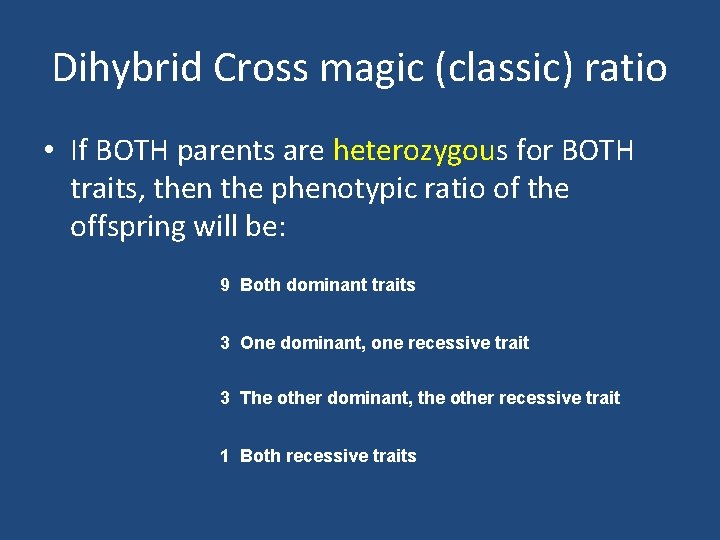
Dihybrid Cross magic (classic) ratio • If BOTH parents are heterozygous for BOTH traits, then the phenotypic ratio of the offspring will be: 9 Both dominant traits 3 One dominant, one recessive trait 3 The other dominant, the other recessive trait 1 Both recessive traits
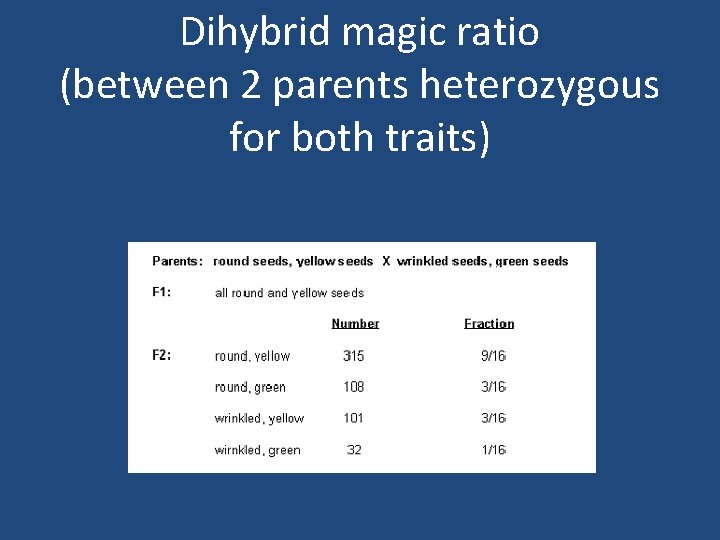
Dihybrid magic ratio (between 2 parents heterozygous for both traits)
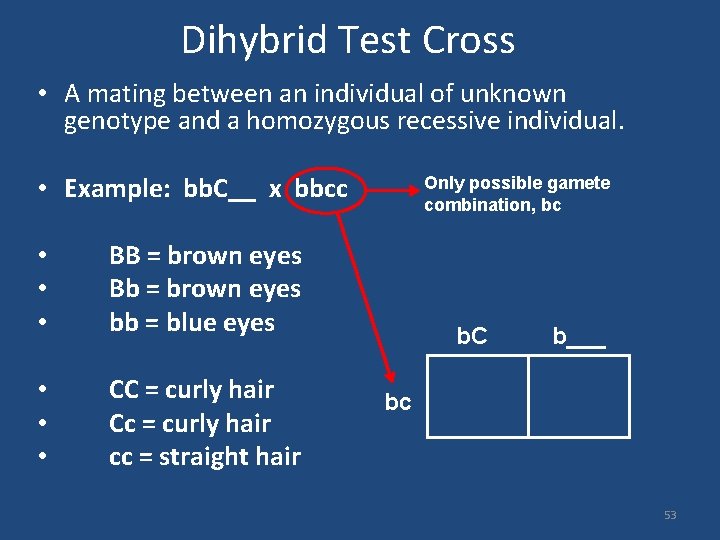
Dihybrid Test Cross • A mating between an individual of unknown genotype and a homozygous recessive individual. • Example: bb. C__ x bbcc • • • BB = brown eyes Bb = brown eyes bb = blue eyes • • • CC = curly hair Cc = curly hair cc = straight hair Only possible gamete combination, bc b. C b___ bc 53
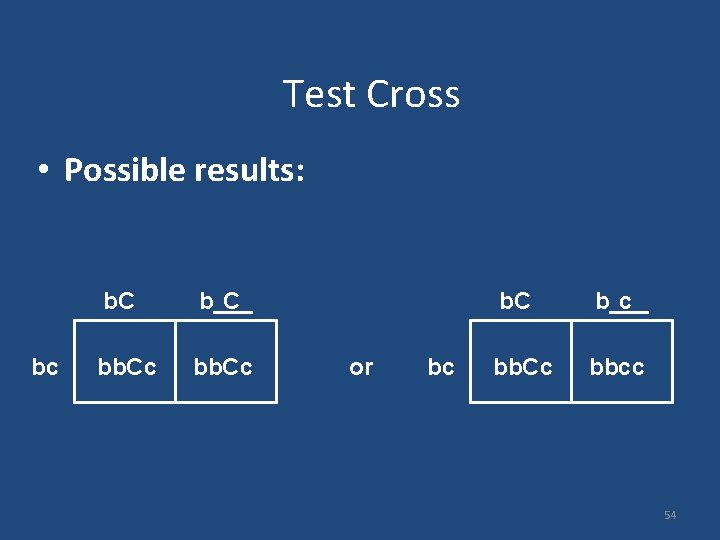
Test Cross • Possible results: bc b. C b___ C bb. Cc or bc b. C b___ c bb. Cc bbcc 54
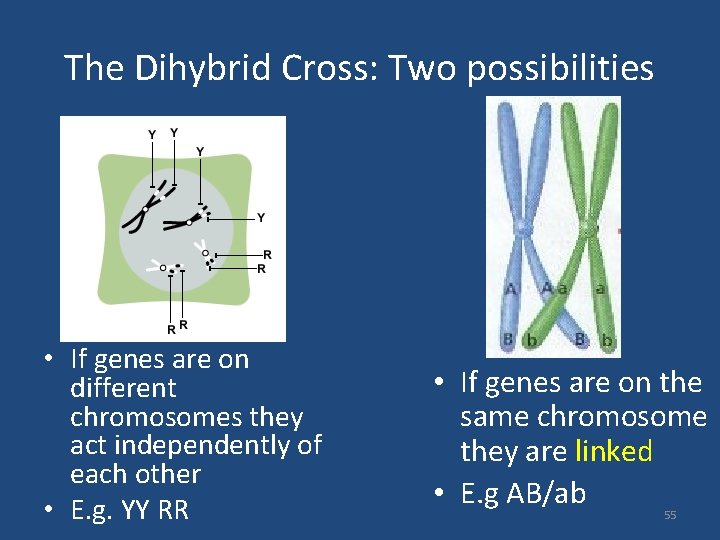
The Dihybrid Cross: Two possibilities • If genes are on different chromosomes they act independently of each other • E. g. YY RR • If genes are on the same chromosome they are linked • E. g AB/ab 55
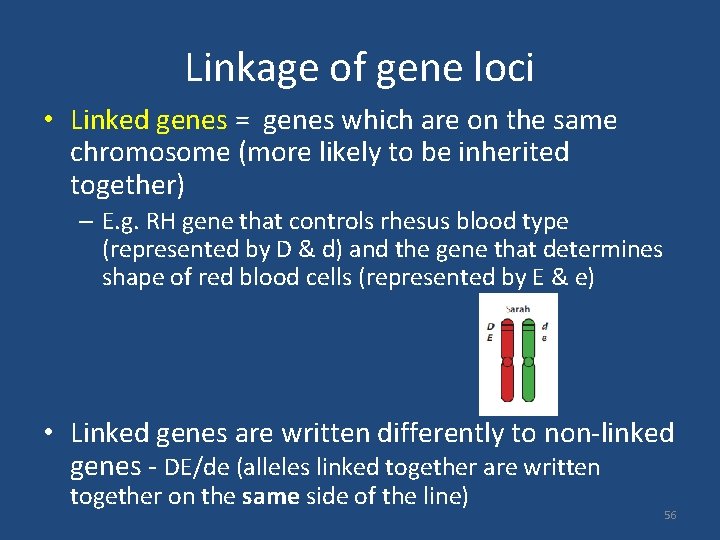
Linkage of gene loci • Linked genes = genes which are on the same chromosome (more likely to be inherited together) – E. g. RH gene that controls rhesus blood type (represented by D & d) and the gene that determines shape of red blood cells (represented by E & e) • Linked genes are written differently to non-linked genes - DE/de (alleles linked together are written together on the same side of the line) 56
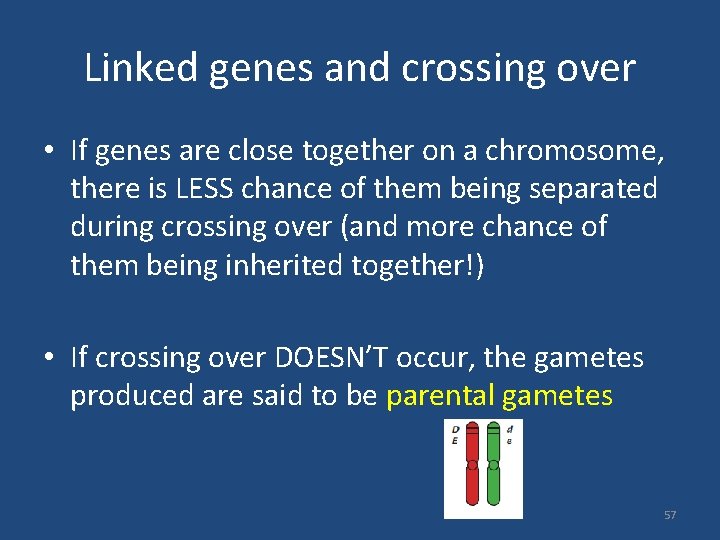
Linked genes and crossing over • If genes are close together on a chromosome, there is LESS chance of them being separated during crossing over (and more chance of them being inherited together!) • If crossing over DOESN’T occur, the gametes produced are said to be parental gametes 57
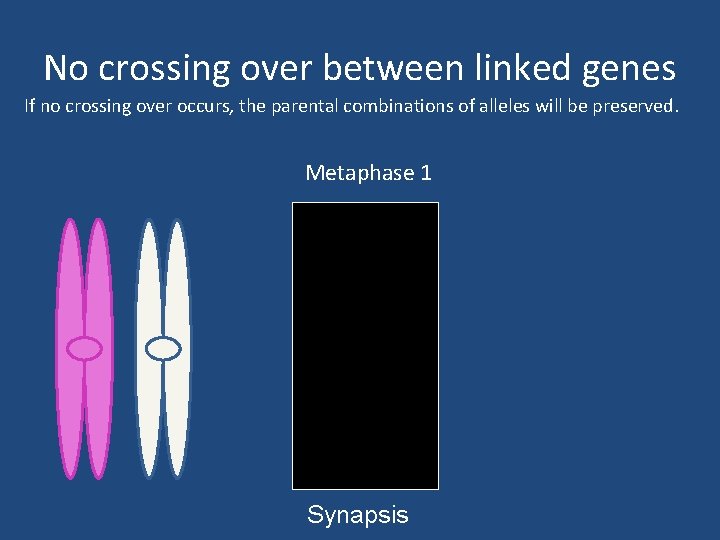
No crossing over between linked genes If no crossing over occurs, the parental combinations of alleles will be preserved. Metaphase 1 Synapsis
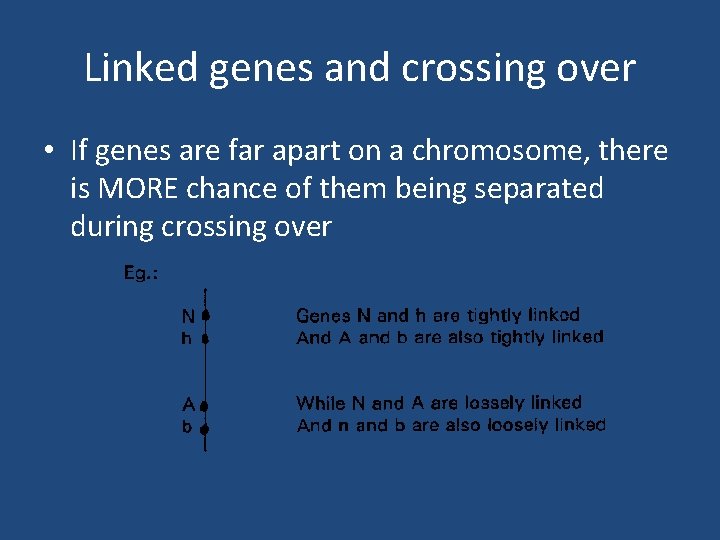
Linked genes and crossing over • If genes are far apart on a chromosome, there is MORE chance of them being separated during crossing over
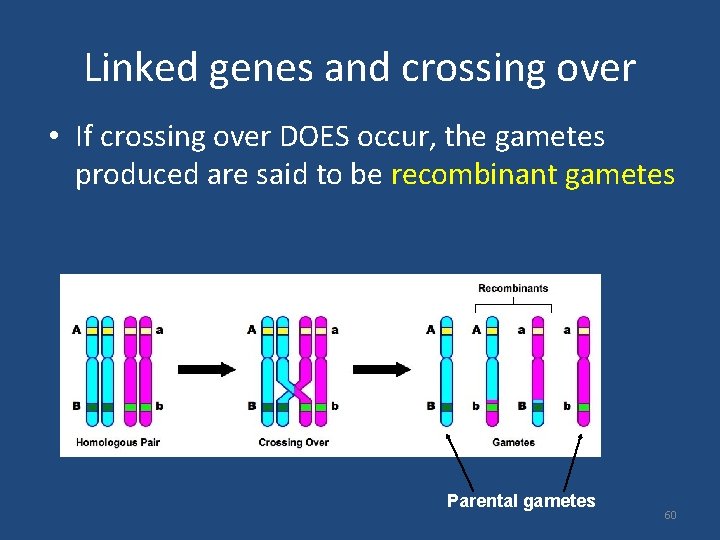
Linked genes and crossing over • If crossing over DOES occur, the gametes produced are said to be recombinant gametes Parental gametes 60
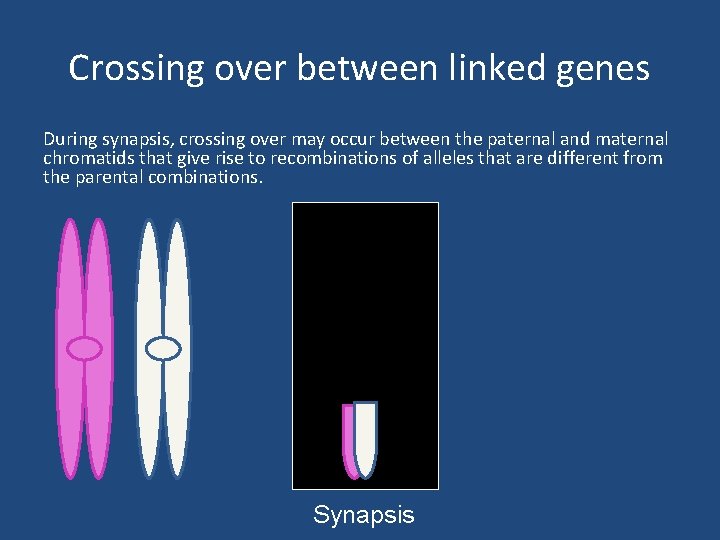
Crossing over between linked genes During synapsis, crossing over may occur between the paternal and maternal chromatids that give rise to recombinations of alleles that are different from the parental combinations. Synapsis
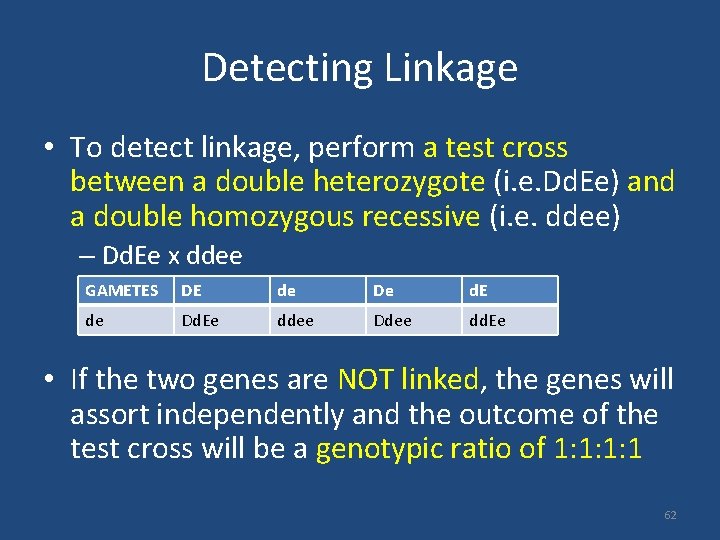
Detecting Linkage • To detect linkage, perform a test cross between a double heterozygote (i. e. Dd. Ee) and a double homozygous recessive (i. e. ddee) – Dd. Ee x ddee GAMETES DE de De d. E de Dd. Ee ddee Ddee dd. Ee • If the two genes are NOT linked, the genes will assort independently and the outcome of the test cross will be a genotypic ratio of 1: 1: 1: 1 62
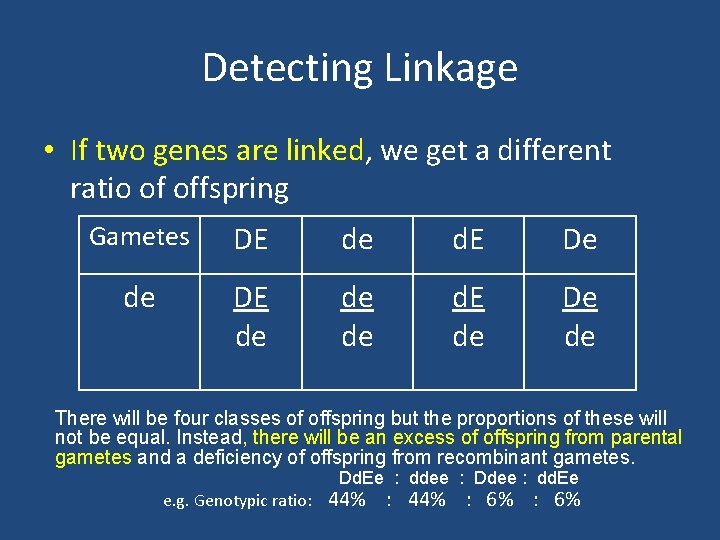
Detecting Linkage • If two genes are linked, we get a different ratio of offspring Gametes DE de d. E De de DE de de de d. E de De de There will be four classes of offspring but the proportions of these will not be equal. Instead, there will be an excess of offspring from parental gametes and a deficiency of offspring from recombinant gametes. Dd. Ee : ddee : Ddee : dd. Ee e. g. Genotypic ratio: 44% : 6%
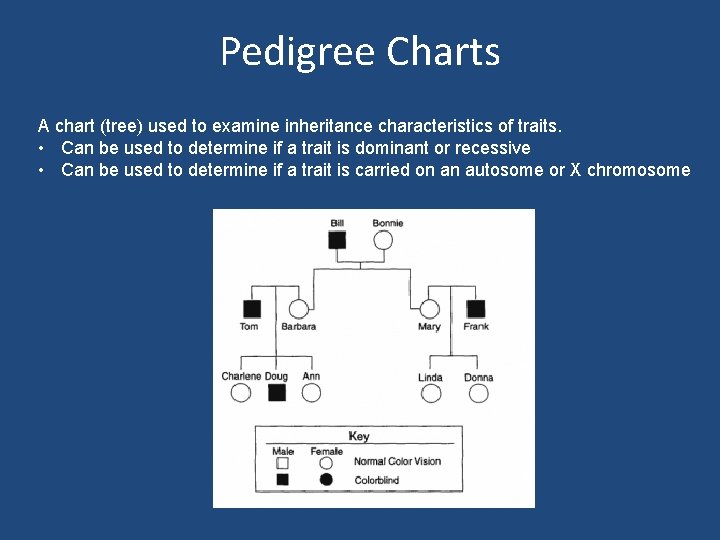
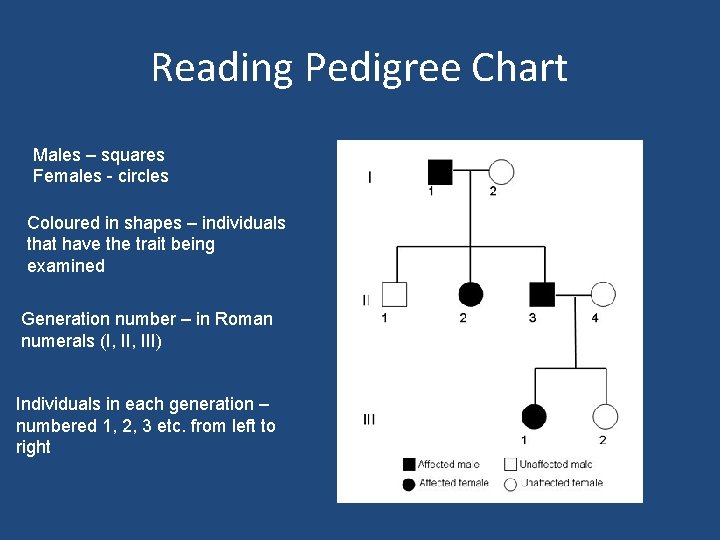
Pedigree Charts A chart (tree) used to examine inheritance characteristics of traits. • Can be used to determine if a trait is dominant or recessive • Can be used to determine if a trait is carried on an autosome or X chromosome
Reading Pedigree Chart Males – squares Females - circles Coloured in shapes – individuals that have the trait being examined Generation number – in Roman numerals (I, III) Individuals in each generation – numbered 1, 2, 3 etc. from left to right
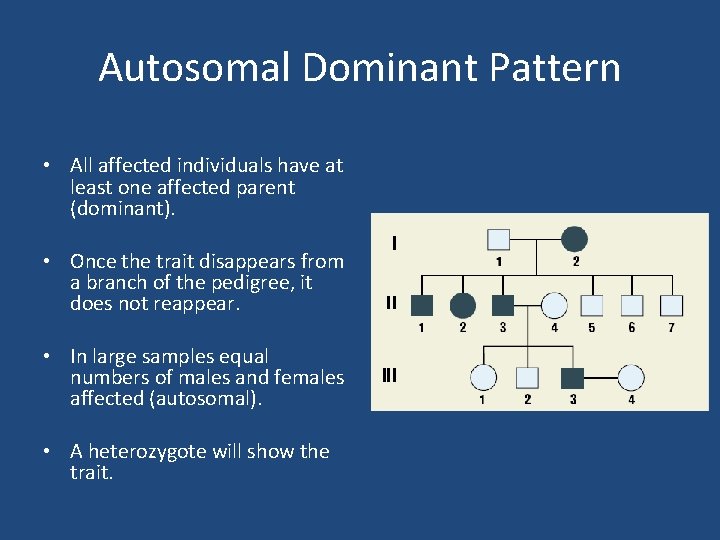
Autosomal Dominant Pattern • All affected individuals have at least one affected parent (dominant). • Once the trait disappears from a branch of the pedigree, it does not reappear. • In large samples equal numbers of males and females affected (autosomal). • A heterozygote will show the trait.
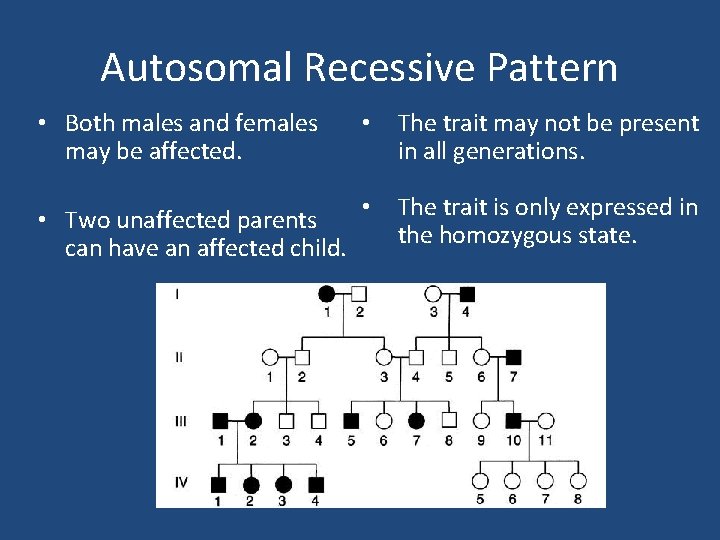
Autosomal Recessive Pattern • Both males and females may be affected. • The trait may not be present in all generations. • • Two unaffected parents can have an affected child. The trait is only expressed in the homozygous state.
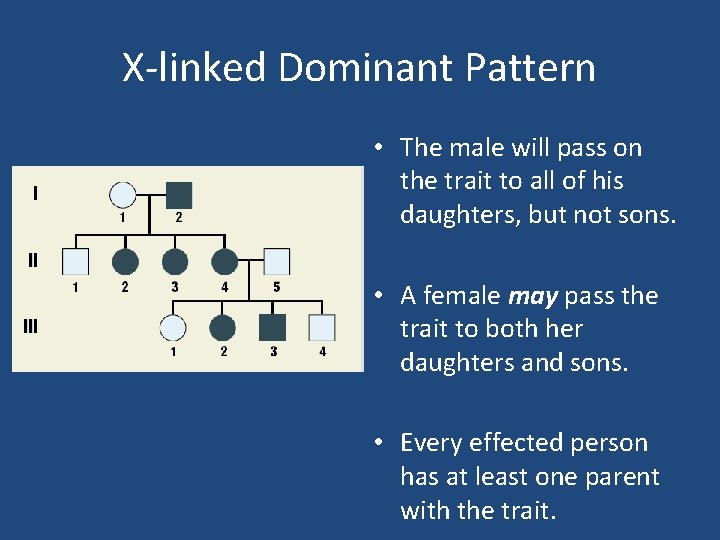
X-linked Dominant Pattern • The male will pass on the trait to all of his daughters, but not sons. • A female may pass the trait to both her daughters and sons. • Every effected person has at least one parent with the trait.
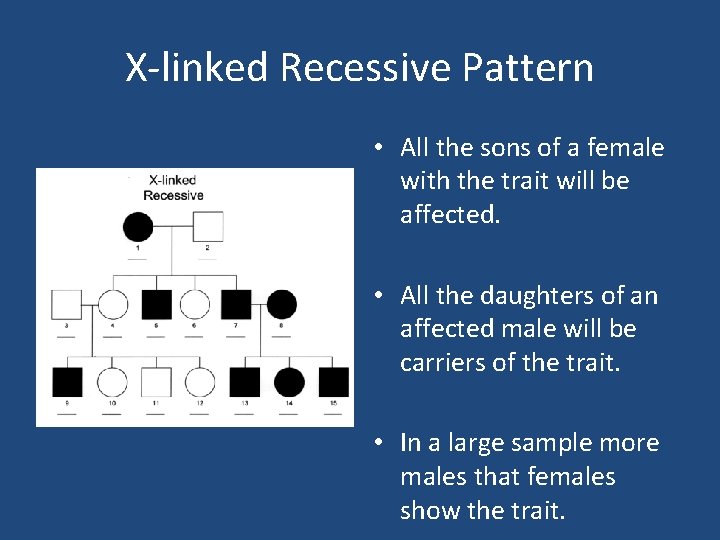
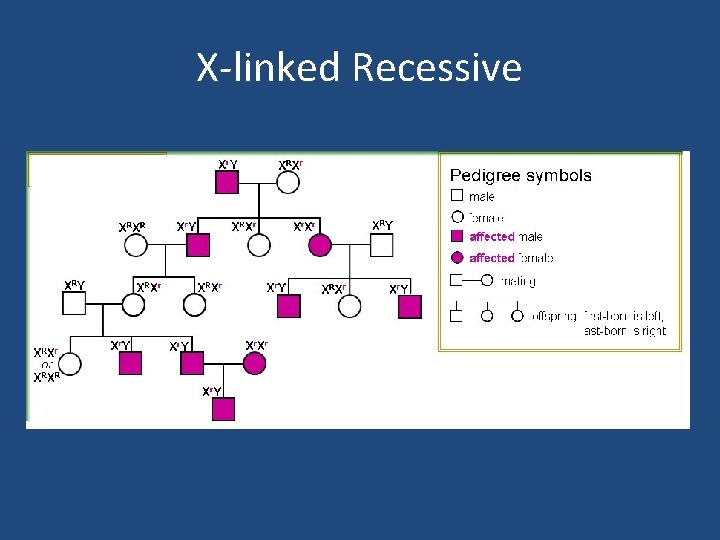
X-linked Recessive Pattern • All the sons of a female with the trait will be affected. • All the daughters of an affected male will be carriers of the trait. • In a large sample more males that females show the trait.
X-linked Recessive
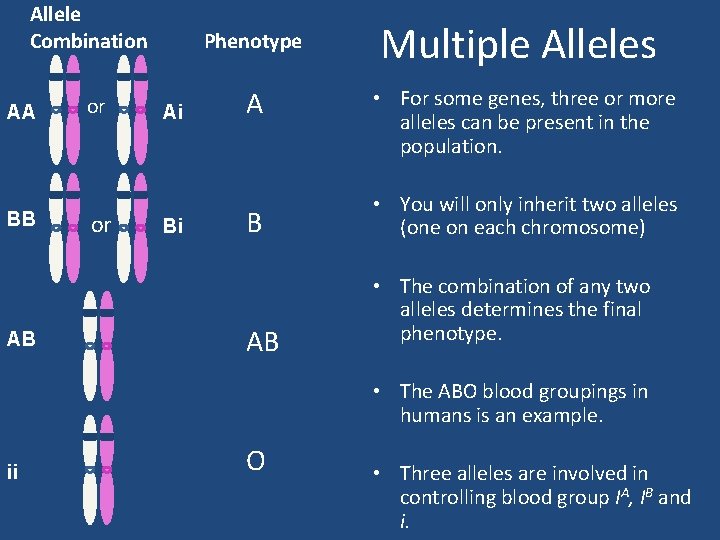
Allele Combination AA BB AB or or Phenotype Ai Bi A B AB Multiple Alleles • For some genes, three or more alleles can be present in the population. • You will only inherit two alleles (one on each chromosome) • The combination of any two alleles determines the final phenotype. • The ABO blood groupings in humans is an example. ii O • Three alleles are involved in controlling blood group IA, IB and i.
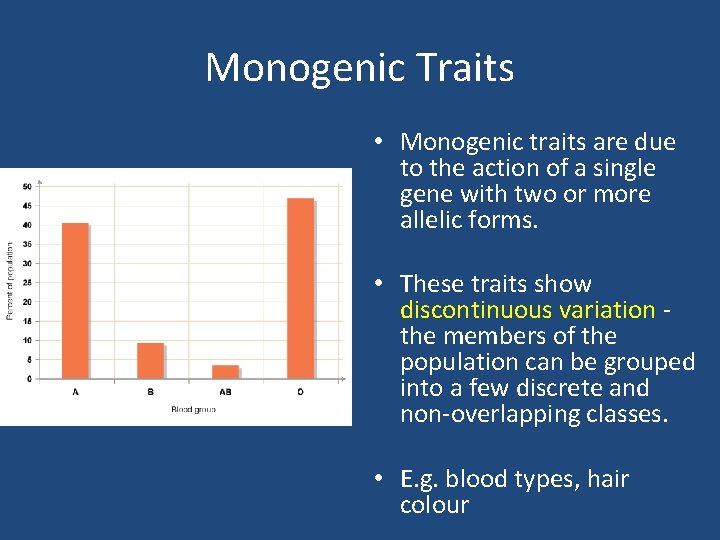
Monogenic Traits • Monogenic traits are due to the action of a single gene with two or more allelic forms. • These traits show discontinuous variation the members of the population can be grouped into a few discrete and non-overlapping classes. • E. g. blood types, hair colour
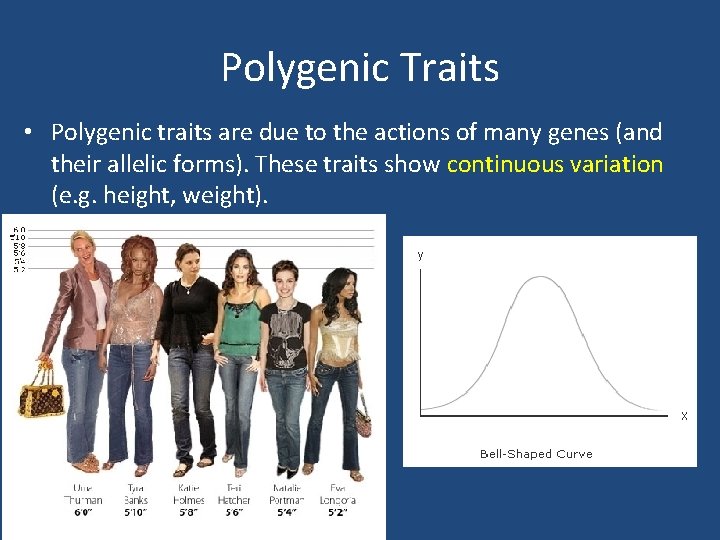
Polygenic Traits • Polygenic traits are due to the actions of many genes (and their allelic forms). These traits show continuous variation (e. g. height, weight).
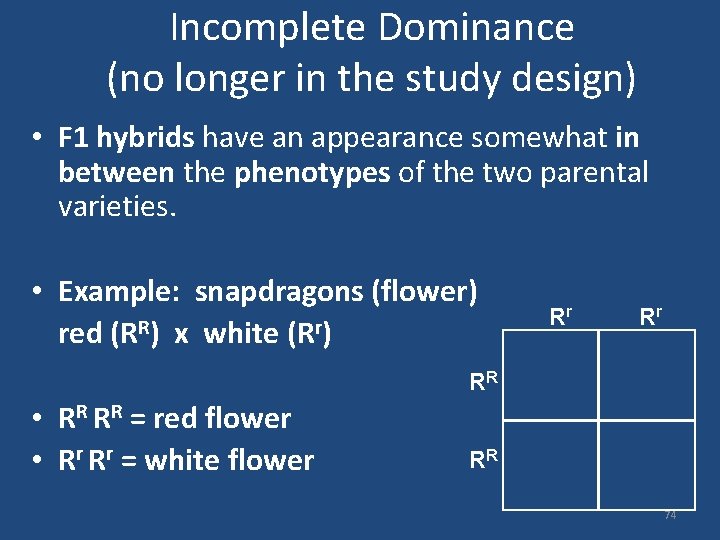
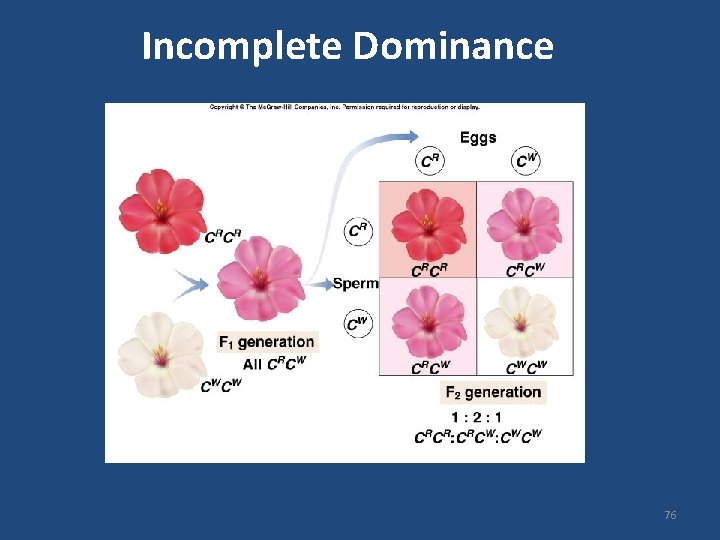
Incomplete Dominance (no longer in the study design) • F 1 hybrids have an appearance somewhat in between the phenotypes of the two parental varieties. • Example: snapdragons (flower) red (RR) x white (Rr) Rr Rr RR • RR RR = red flower • Rr Rr = white flower RR 74
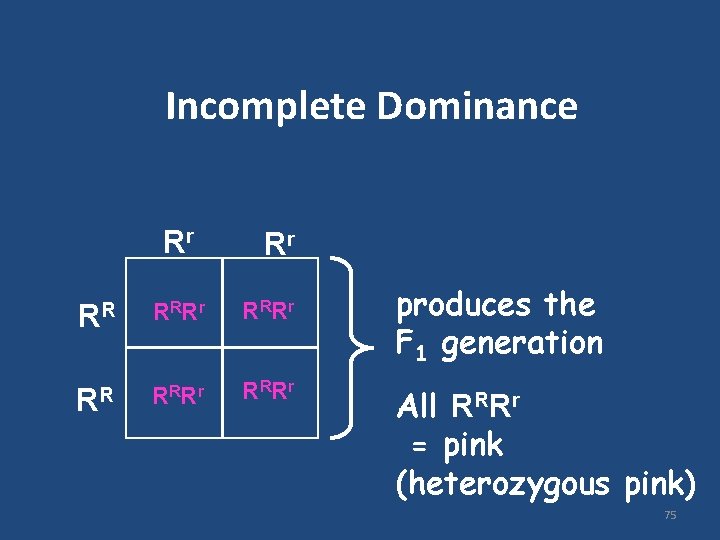
Incomplete Dominance Rr Rr RR R RR r produces the F 1 generation All RRRr = pink (heterozygous pink) 75
Incomplete Dominance 76
Comparison of Different Modes of Inheritance