
Chapter 9 Folds Faults and Mountains v Stress






- Slides: 39
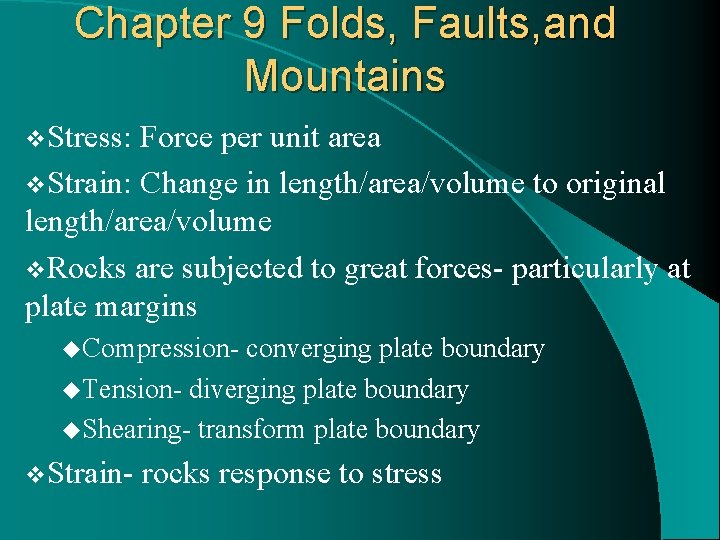
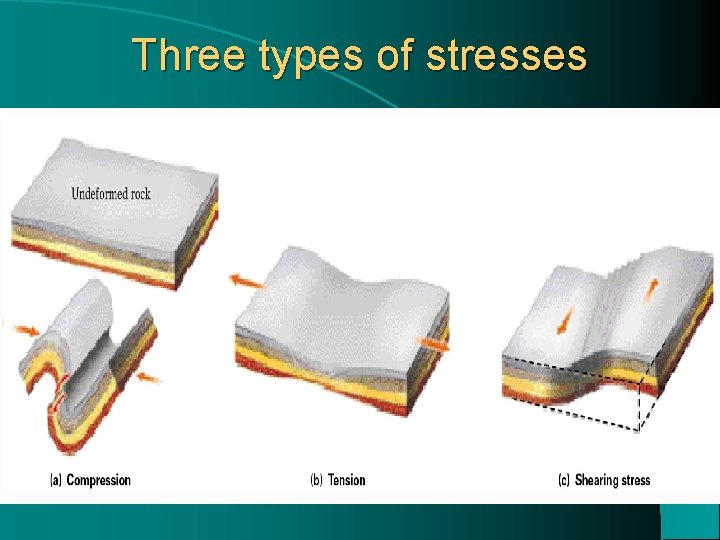
Chapter 9 Folds, Faults, and Mountains v. Stress: Force per unit area v. Strain: Change in length/area/volume to original length/area/volume v. Rocks are subjected to great forces- particularly at plate margins u. Compression- converging plate boundary u. Tension- diverging plate boundary u. Shearing- transform plate boundary v. Strain- rocks response to stress
Three types of stresses
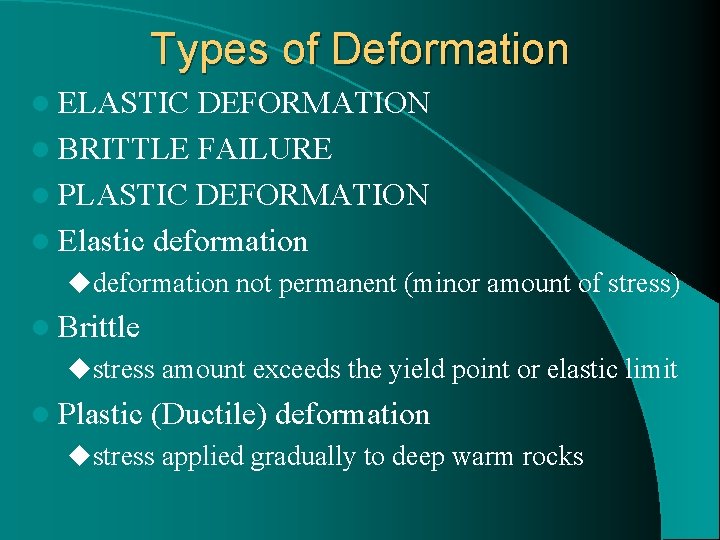
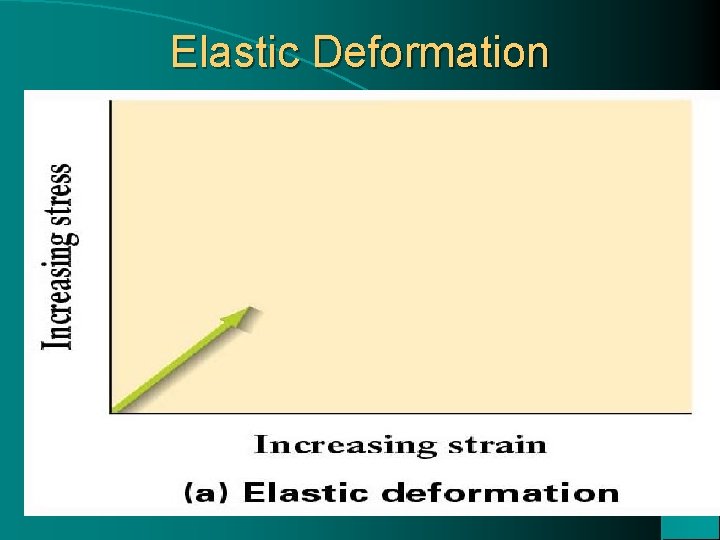
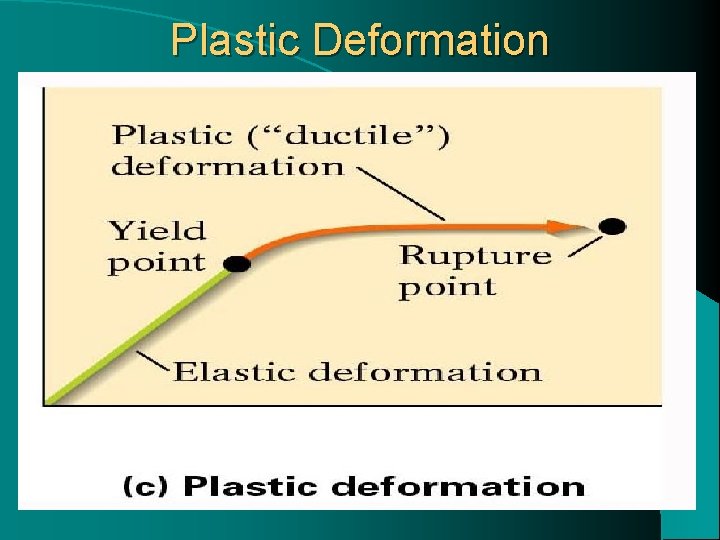
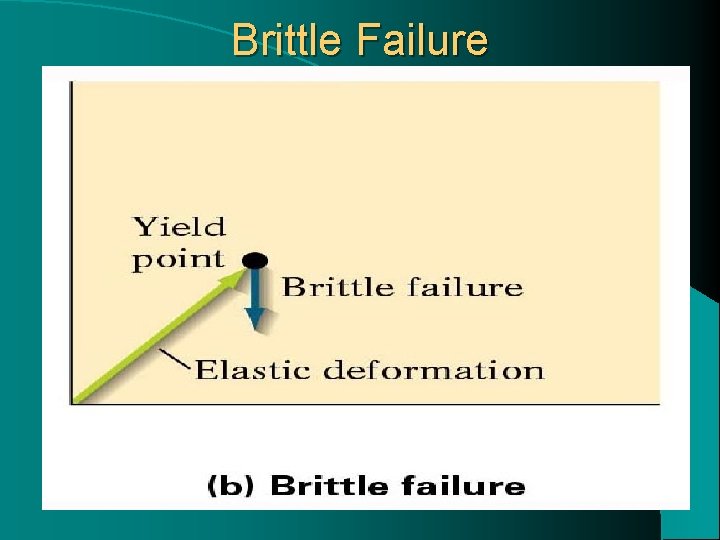
Types of Deformation l ELASTIC DEFORMATION l BRITTLE FAILURE l PLASTIC DEFORMATION l Elastic deformation udeformation not permanent (minor amount of stress) l Brittle ustress amount exceeds the yield point or elastic limit l Plastic (Ductile) deformation ustress applied gradually to deep warm rocks
Elastic Deformation
Plastic Deformation
Brittle Failure
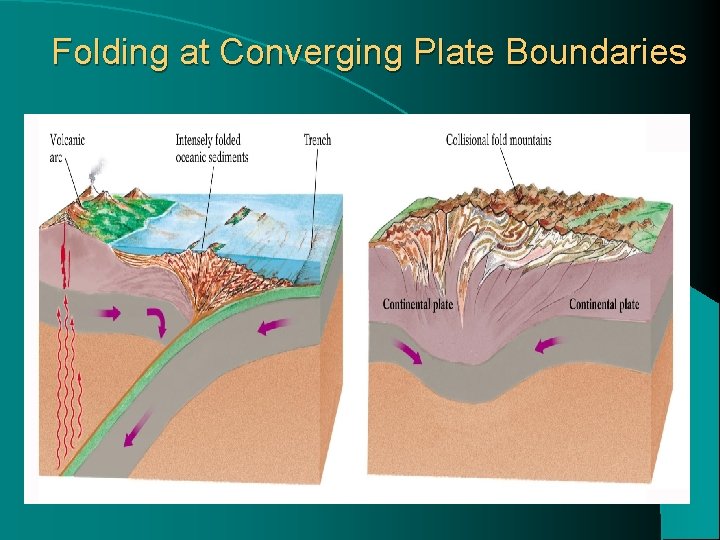
Folding at Converging Plate Boundaries
Factors affecting rock deformation l Intensity of Applied Stree l Lithostatic Pressure l Heat uleads to stretching of rocks at near Earth’s surface without breaking t at depth- plastic deformation l Time l Composition – different minerals have different strength
Deformed rocks in the field l Most apparent in Sedimentary Rocks l Importance of deformation – Indicate Past Plate Motions – Indicates other Past Geological Events – Locates Specific Natural Resources – Rock Orientation: Strike and Dip
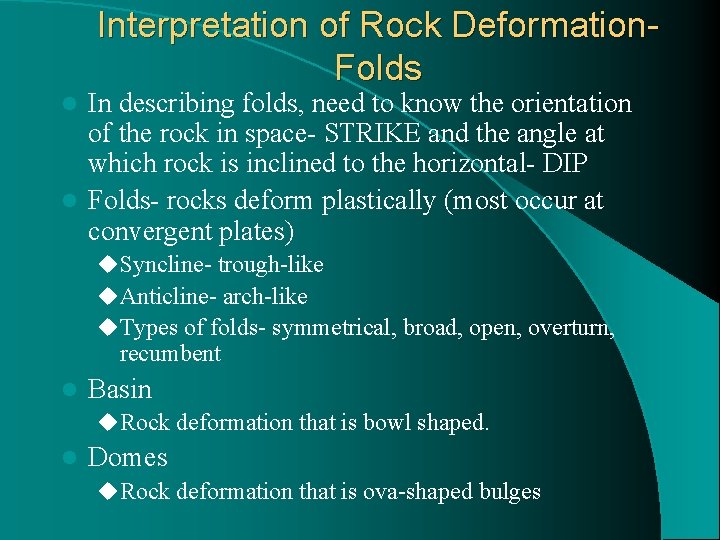
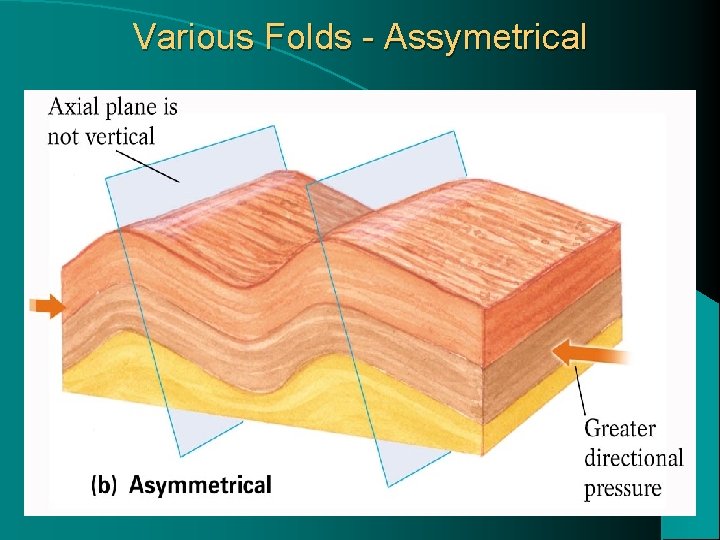
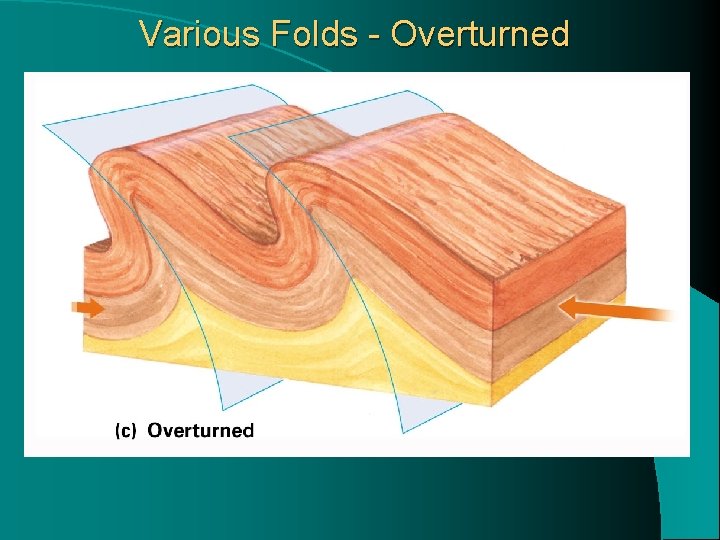
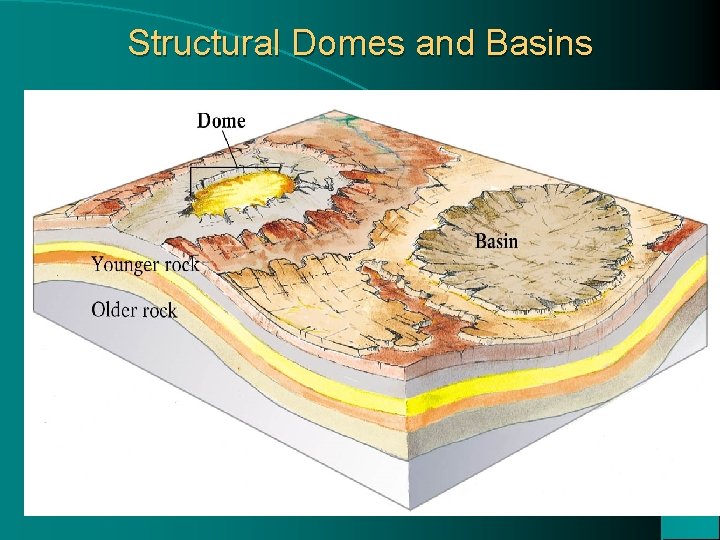
Interpretation of Rock Deformation. Folds In describing folds, need to know the orientation of the rock in space- STRIKE and the angle at which rock is inclined to the horizontal- DIP l Folds- rocks deform plastically (most occur at convergent plates) l u Syncline- trough-like u Anticline- arch-like u Types of folds- symmetrical, broad, open, overturn, recumbent l Basin u Rock deformation that is bowl shaped. l Domes u Rock deformation that is ova-shaped bulges
Geometry of anticlines and synclines
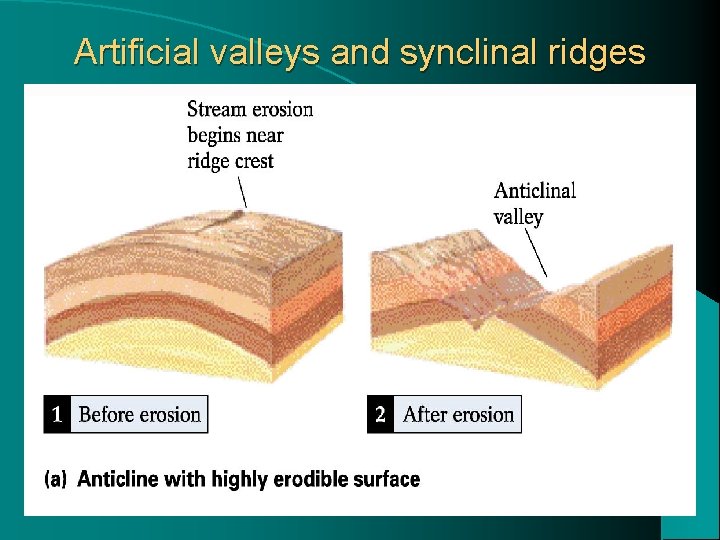
Artificial valleys and synclinal ridges
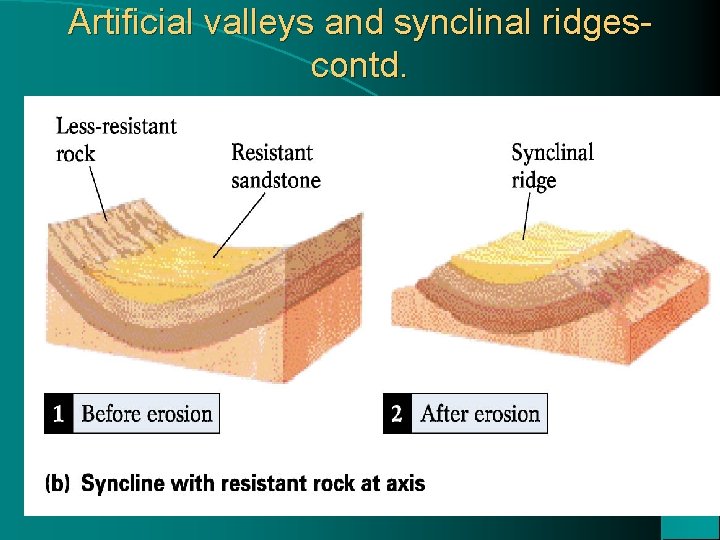
Artificial valleys and synclinal ridgescontd.
Various folds – Symmetrical (open)
Various Folds - Assymetrical
Various Folds - Overturned
Various Folds - Recumbent
Various Folds - Plunging
Structural Domes and Basins
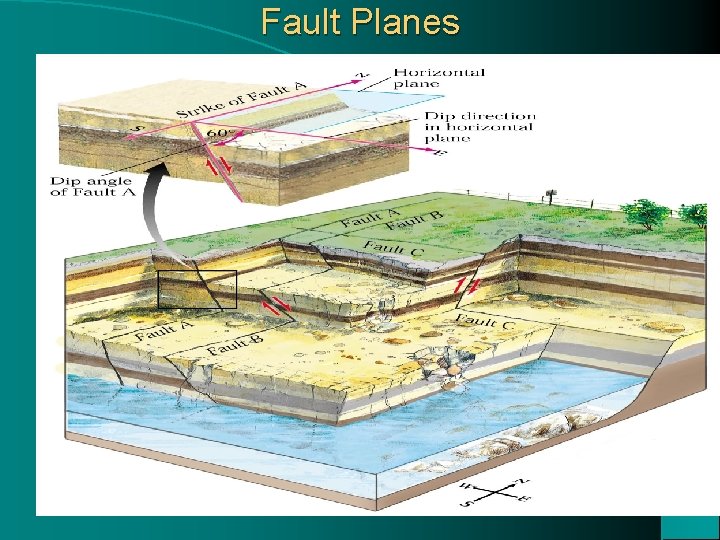
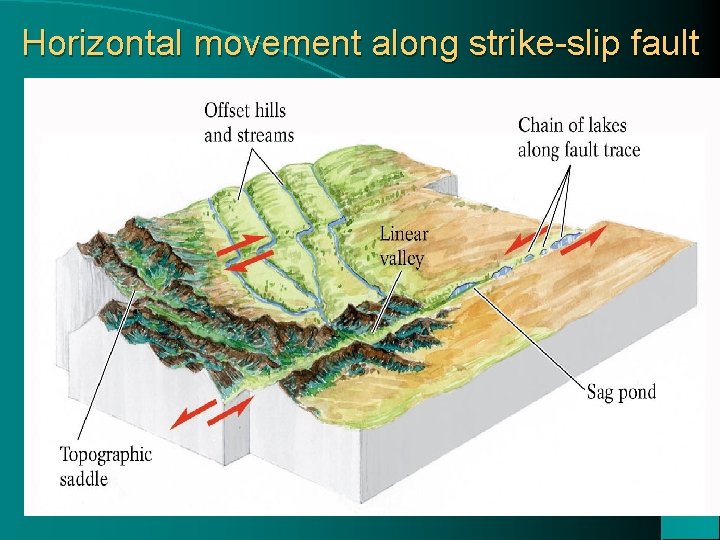
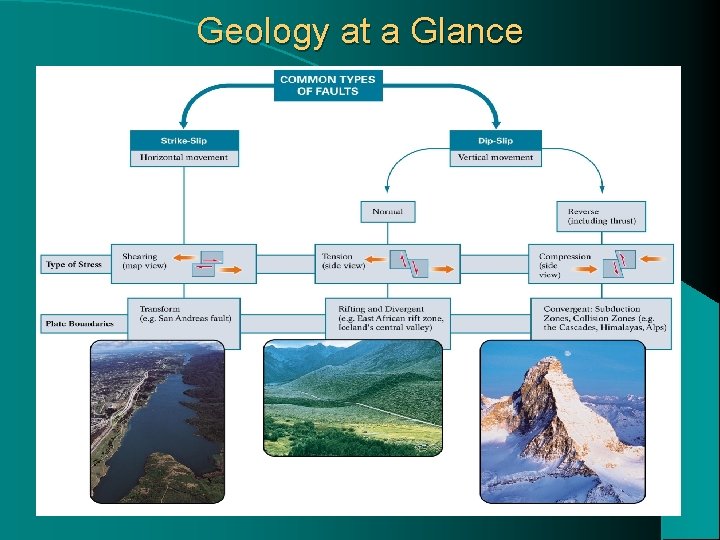
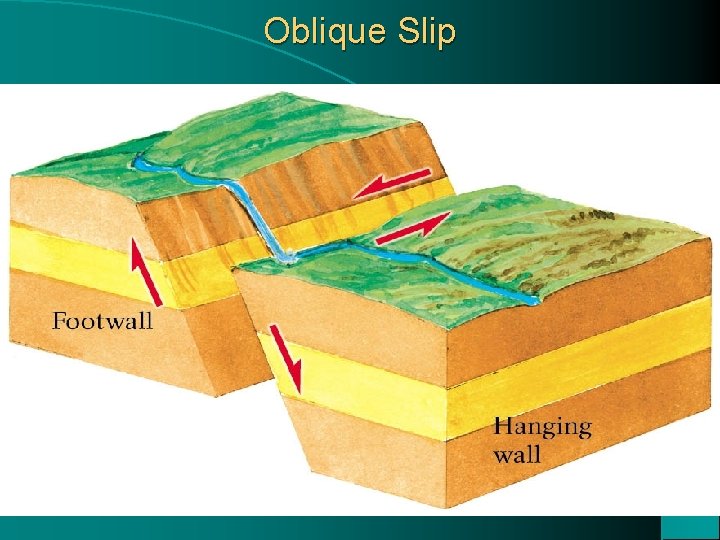
Faults A fracture is a break in a rock (joint or a fault) l Joints: Fractures with no relative movement l Fault is when there is relative movement along the break l Fault Types l u Strike-Slip fault horizontal movement (transform plate boundary) u Dip-Slip fault t Normal (tensional stress) u Reserve (compressional stress) t Thrust (low angle reserve fault) t Oblique (combination of strike-slip & dip-slip) t
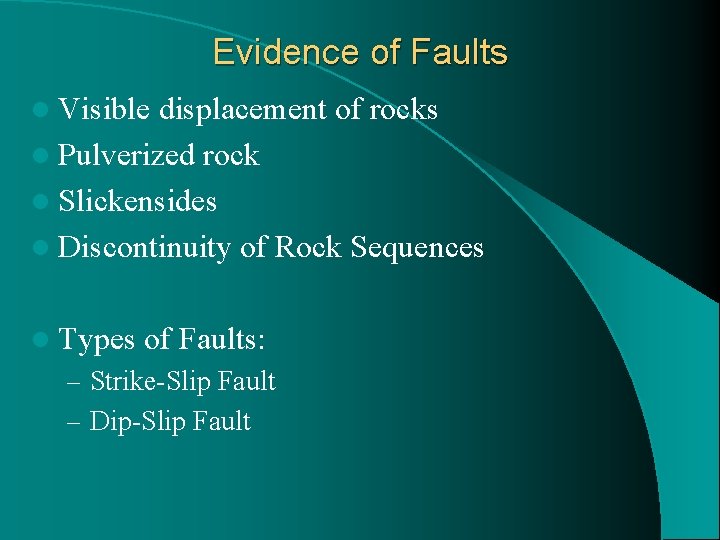
Evidence of Faults l Visible displacement of rocks l Pulverized rock l Slickensides l Discontinuity of Rock Sequences l Types of Faults: – Strike-Slip Fault – Dip-Slip Fault
Fault Planes
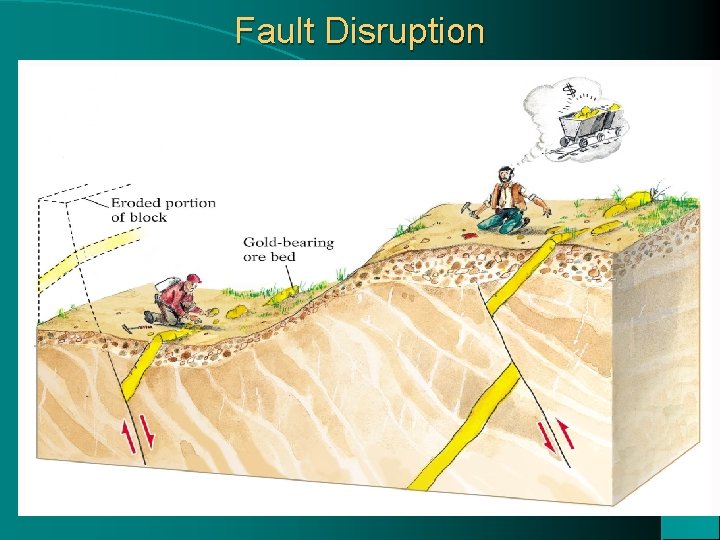
Fault Disruption
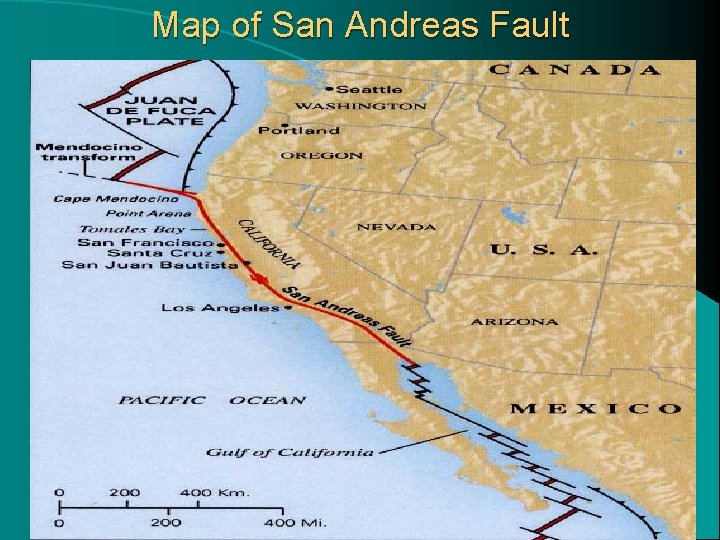
Map of San Andreas Fault
Horizontal movement along strike-slip fault
Dip-slip Fault
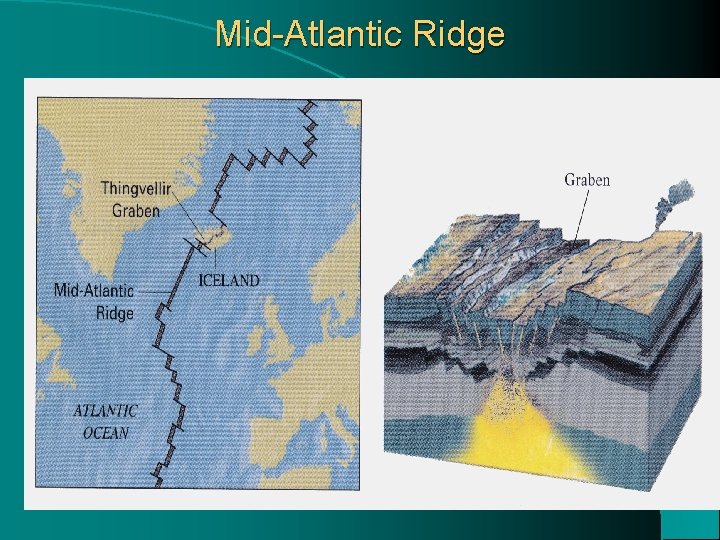
Mid-Atlantic Ridge
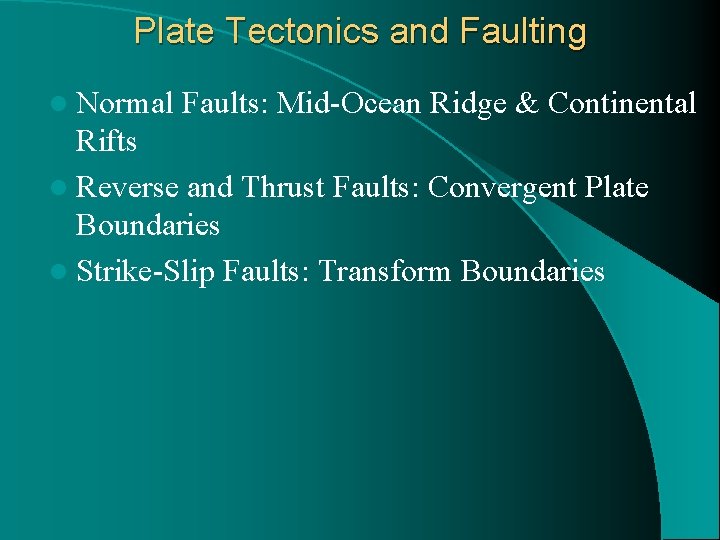
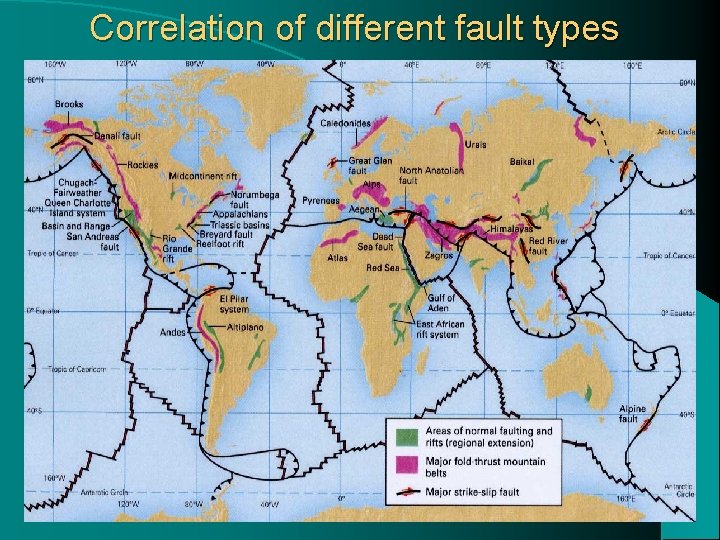
Plate Tectonics and Faulting l Normal Faults: Mid-Ocean Ridge & Continental Rifts l Reverse and Thrust Faults: Convergent Plate Boundaries l Strike-Slip Faults: Transform Boundaries
Geology at a Glance
Oblique Slip
Correlation of different fault types
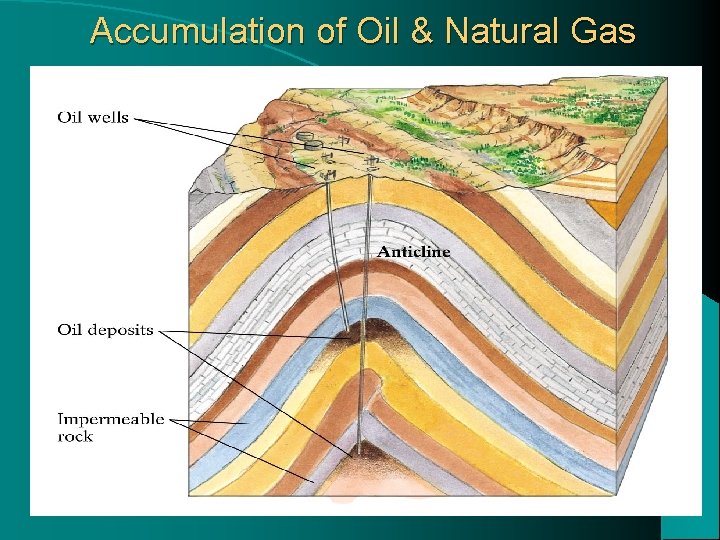
Accumulation of Oil & Natural Gas
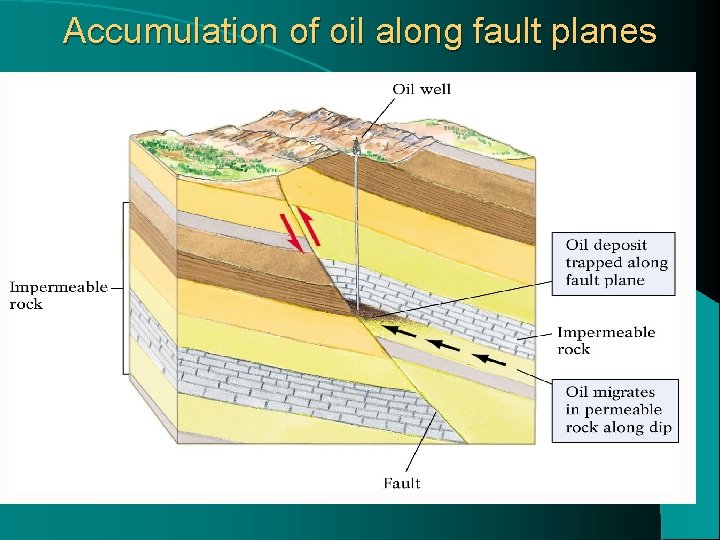
Accumulation of oil along fault planes
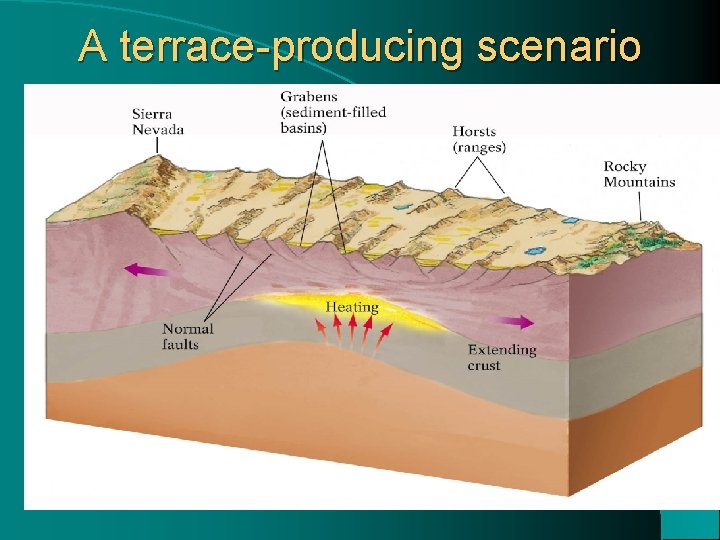
A terrace-producing scenario
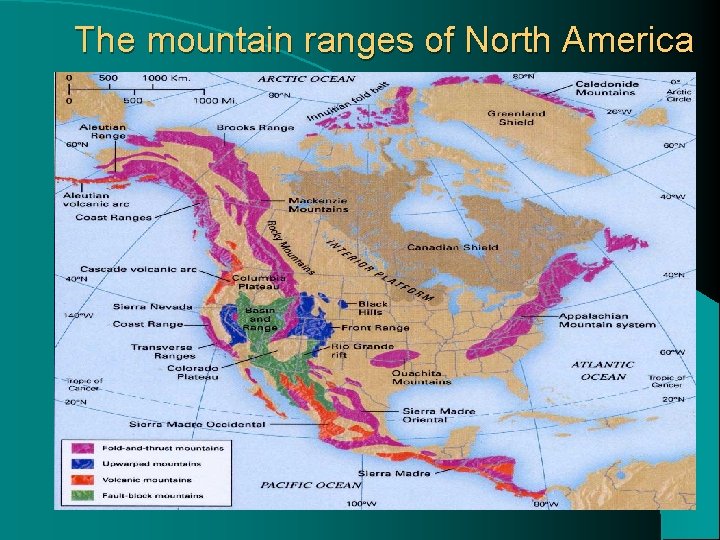
The mountain ranges of North America
A terrace-producing scenario
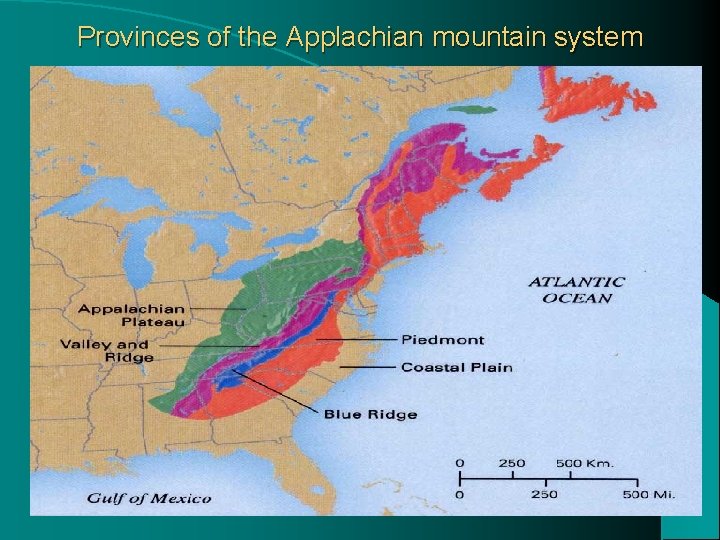
Provinces of the Applachian mountain system
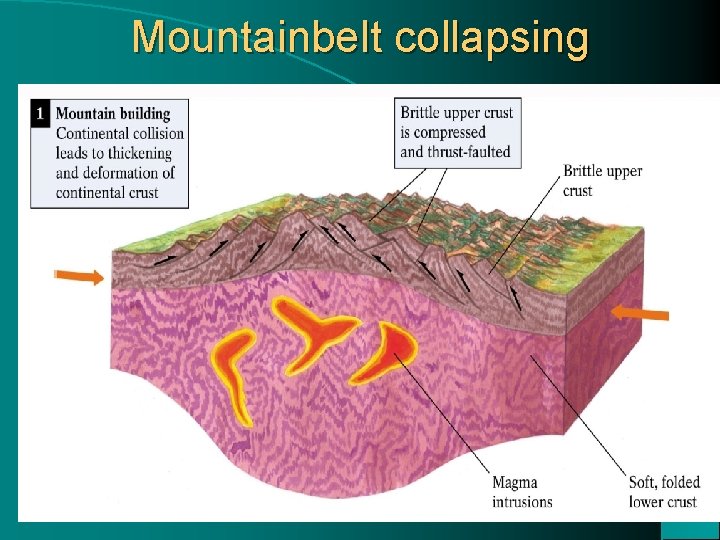
Mountainbelt collapsing
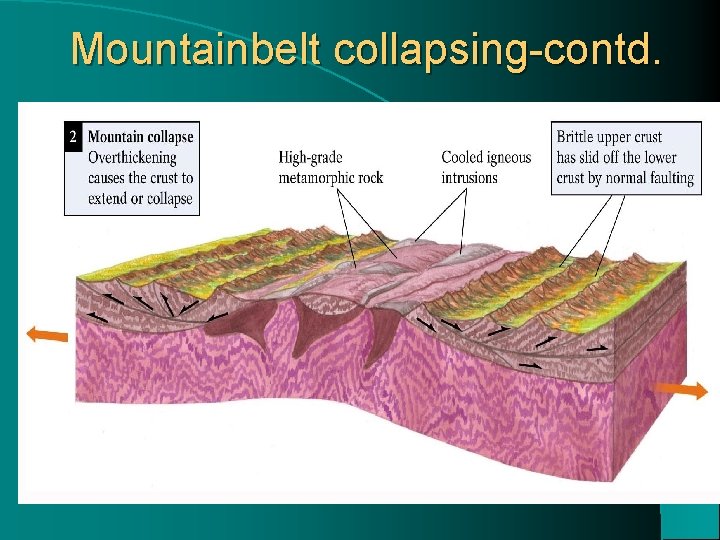
Mountainbelt collapsing-contd.