
Chapter 9 Controlling Microbial Growth in the Environment
Chapter 9 Controlling Microbial Growth in the Environment
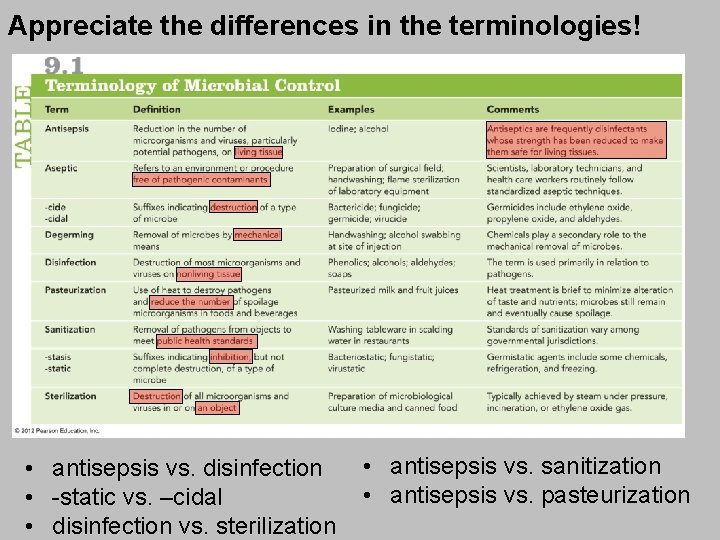
Appreciate the differences in the terminologies! • antisepsis vs. disinfection • -static vs. –cidal • disinfection vs. sterilization • antisepsis vs. sanitization • antisepsis vs. pasteurization
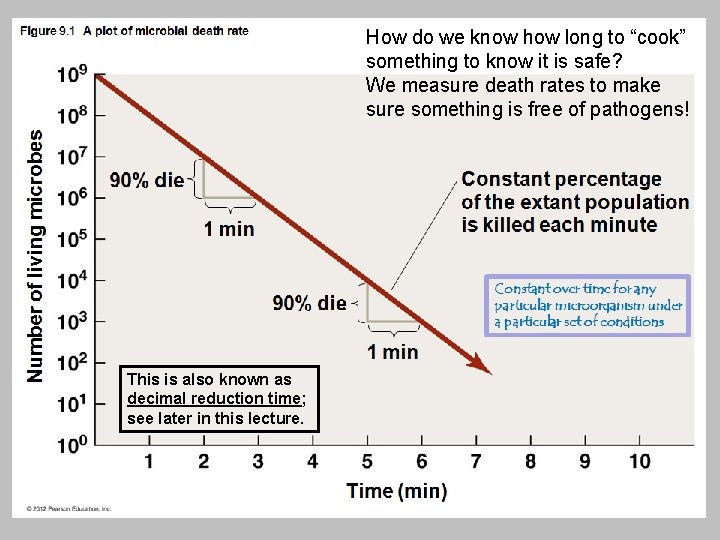
How do we know how long to “cook” something to know it is safe? We measure death rates to make sure something is free of pathogens! This is also known as decimal reduction time; see later in this lecture.
How do antimicrobial agents kill microbes? • Cell wall maintains integrity of cell – When damaged, cells are much more sensitive to osmotic effects • Plasma membrane controls passage of chemicals into and out of cell – When damaged, cellular contents leak out • Protein function depends on particular 3 -D configuration – Extreme heat or certain chemicals denatures proteins, ruins functions, incapacitates microbe • Chemicals, radiation, and heat can alter/destroy nucleic acids – Produce fatal mutants – Halt protein synthesis through disrupting RNA
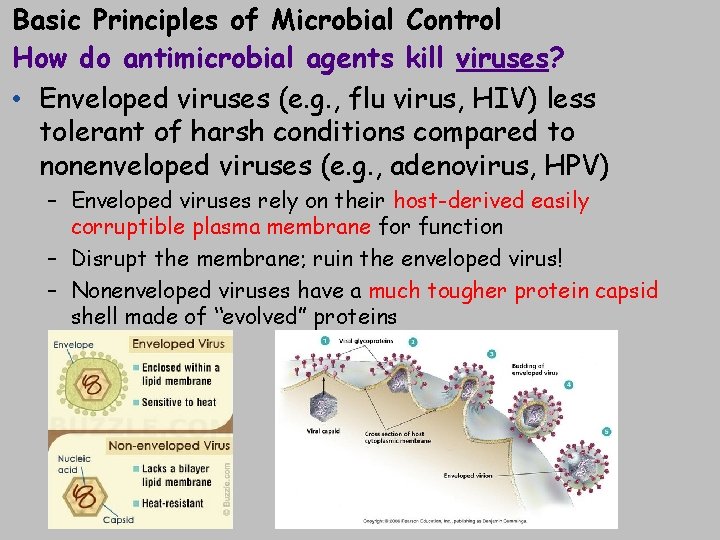
Basic Principles of Microbial Control How do antimicrobial agents kill viruses? • Enveloped viruses (e. g. , flu virus, HIV) less tolerant of harsh conditions compared to nonenveloped viruses (e. g. , adenovirus, HPV) – Enveloped viruses rely on their host-derived easily corruptible plasma membrane for function – Disrupt the membrane; ruin the enveloped virus! – Nonenveloped viruses have a much tougher protein capsid shell made of “evolved” proteins
The Selection of Microbial Control Methods • Ideally, antimicrobial agents should be – Inexpensive – used everywhere, repeatedly – Fast-acting – time is money… – Stable during storage – buy in bulk, if nonperishable – Selective toxicity - capable of controlling microbial growth while being harmless to humans, animals, and objects
The Selection of Microbial Control Methods • Factors Affecting the Efficacy and Application of Antimicrobial Methods – Harsh chemicals and extreme heat cannot be used on humans, animals, and fragile objects – Amount of chemical or heat limited by destructive effects on fragile objects – The method of microbial control used is based on site of medical procedure – e. g. degerming of skin vs. oral surgery
The Selection of Microbial Control Methods • Effectiveness of germicides – Germicides classified as high, intermediate, or low effectiveness – High level germicides — kill all pathogens, including endospores – used on invasive instruments – Intermediate level germicides — kill fungal spores, protozoan cysts, viruses, pathogenic bacteria – can be used on nonbiological or noninvasive devices or on surface that contact skin – Low level germicides — kill vegetative bacteria, fungi, protozoa, some viruses – can be used on biological tissues
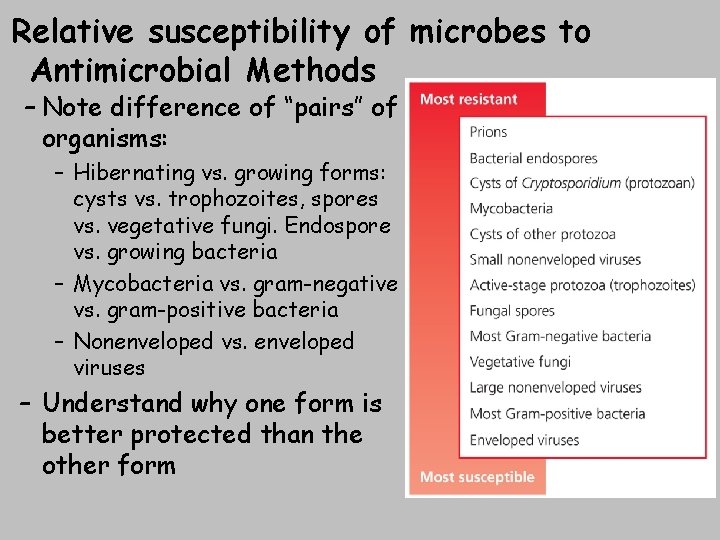
Relative susceptibility of microbes to Antimicrobial Methods – Note difference of “pairs” of organisms: – Hibernating vs. growing forms: cysts vs. trophozoites, spores vs. vegetative fungi. Endospore vs. growing bacteria – Mycobacteria vs. gram-negative vs. gram-positive bacteria – Nonenveloped vs. enveloped viruses – Understand why one form is better protected than the other form
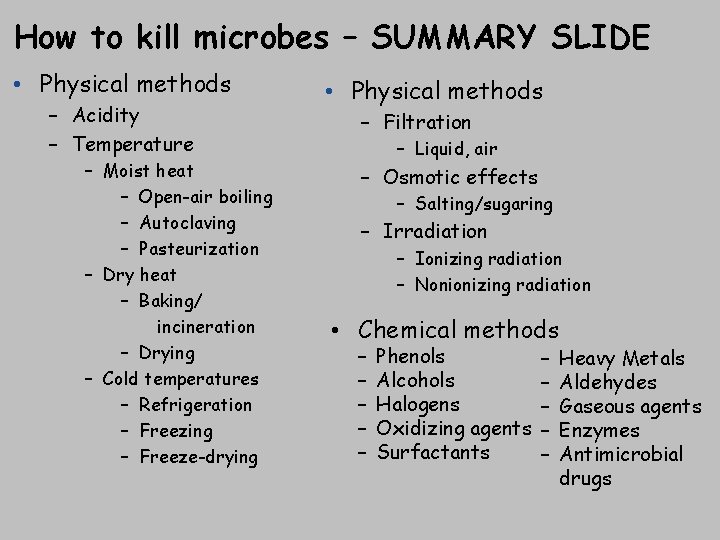
How to kill microbes – SUMMARY SLIDE • Physical methods – Acidity – Temperature – Moist heat – Open-air boiling – Autoclaving – Pasteurization – Dry heat – Baking/ incineration – Drying – Cold temperatures – Refrigeration – Freezing – Freeze-drying • Physical methods – Filtration – Liquid, air – Osmotic effects – Salting/sugaring – Irradiation – Ionizing radiation – Nonionizing radiation • Chemical methods – – – Phenols Alcohols Halogens Oxidizing agents Surfactants – – – Heavy Metals Aldehydes Gaseous agents Enzymes Antimicrobial drugs
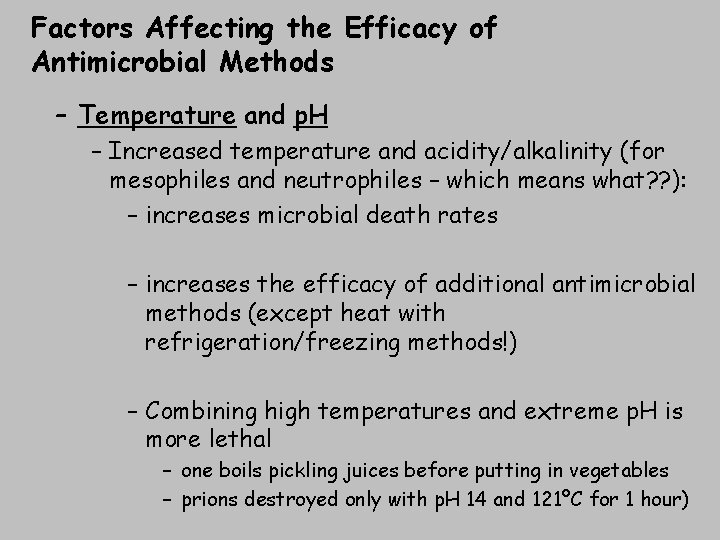
Factors Affecting the Efficacy of Antimicrobial Methods – Temperature and p. H – Increased temperature and acidity/alkalinity (for mesophiles and neutrophiles – which means what? ? ): – increases microbial death rates – increases the efficacy of additional antimicrobial methods (except heat with refrigeration/freezing methods!) – Combining high temperatures and extreme p. H is more lethal – one boils pickling juices before putting in vegetables – prions destroyed only with p. H 14 and 121ºC for 1 hour)
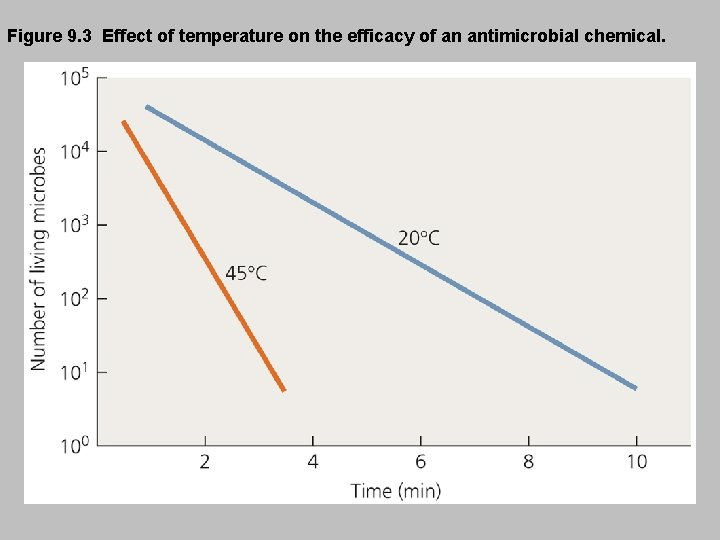
Figure 9. 3 Effect of temperature on the efficacy of an antimicrobial chemical.
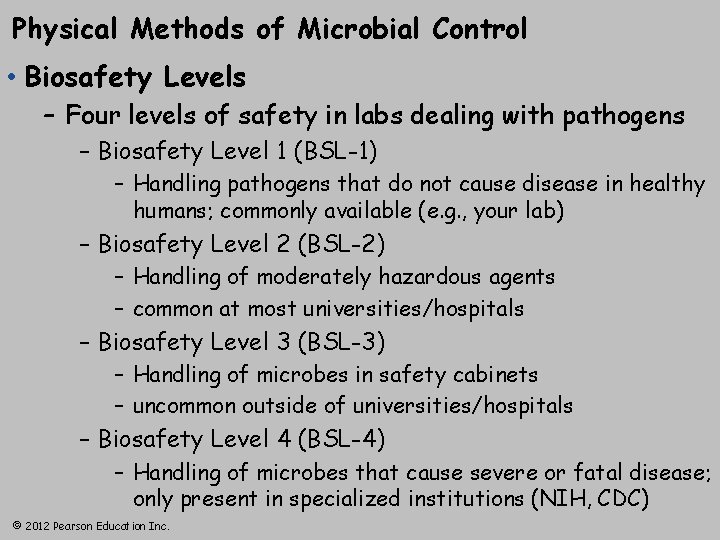
Physical Methods of Microbial Control • Biosafety Levels – Four levels of safety in labs dealing with pathogens – Biosafety Level 1 (BSL-1) – Handling pathogens that do not cause disease in healthy humans; commonly available (e. g. , your lab) – Biosafety Level 2 (BSL-2) – Handling of moderately hazardous agents – common at most universities/hospitals – Biosafety Level 3 (BSL-3) – Handling of microbes in safety cabinets – uncommon outside of universities/hospitals – Biosafety Level 4 (BSL-4) – Handling of microbes that cause severe or fatal disease; only present in specialized institutions (NIH, CDC) © 2012 Pearson Education Inc.
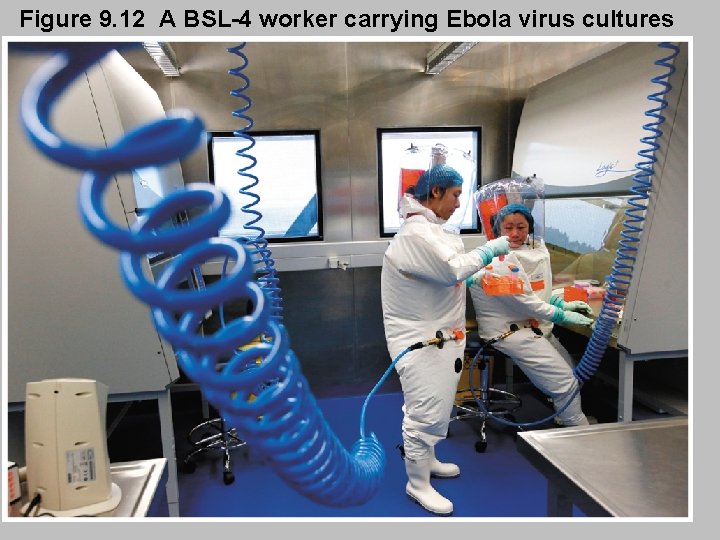
Figure 9. 12 A BSL-4 worker carrying Ebola virus cultures
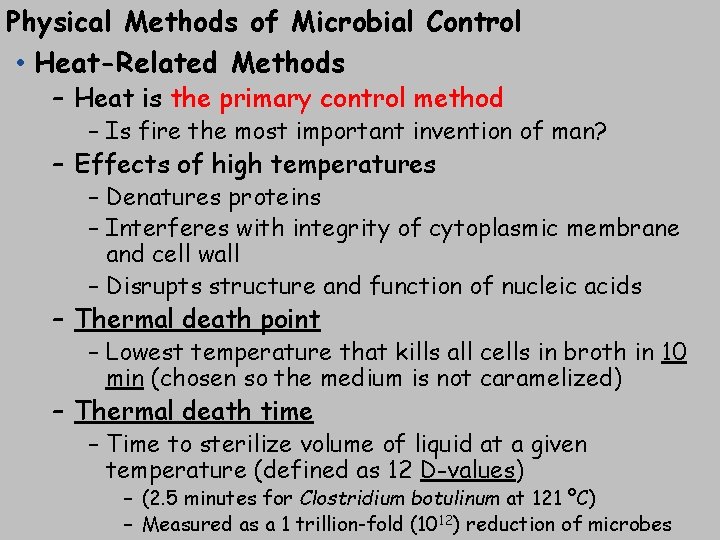
Physical Methods of Microbial Control • Heat-Related Methods – Heat is the primary control method – Is fire the most important invention of man? – Effects of high temperatures – Denatures proteins – Interferes with integrity of cytoplasmic membrane and cell wall – Disrupts structure and function of nucleic acids – Thermal death point – Lowest temperature that kills all cells in broth in 10 min (chosen so the medium is not caramelized) – Thermal death time – Time to sterilize volume of liquid at a given temperature (defined as 12 D-values) – (2. 5 minutes for Clostridium botulinum at 121 ºC) – Measured as a 1 trillion-fold (1012) reduction of microbes
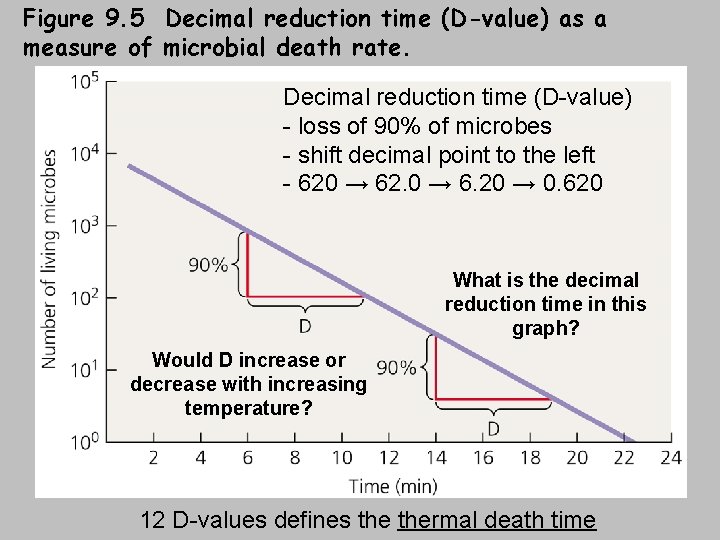
Figure 9. 5 Decimal reduction time (D-value) as a measure of microbial death rate. Decimal reduction time (D-value) - loss of 90% of microbes - shift decimal point to the left - 620 → 62. 0 → 6. 20 → 0. 620 What is the decimal reduction time in this graph? Would D increase or decrease with increasing temperature? 12 D-values defines thermal death time
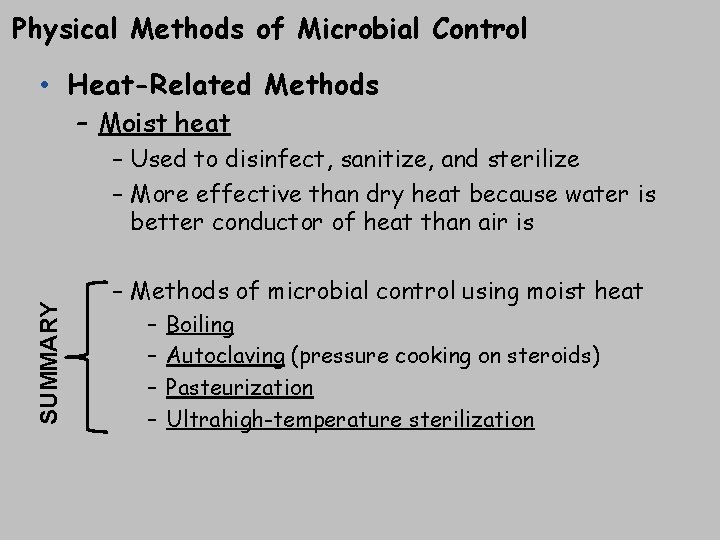
Physical Methods of Microbial Control • Heat-Related Methods – Moist heat SUMMARY – Used to disinfect, sanitize, and sterilize – More effective than dry heat because water is better conductor of heat than air is – Methods of microbial control using moist heat – – Boiling Autoclaving (pressure cooking on steroids) Pasteurization Ultrahigh-temperature sterilization
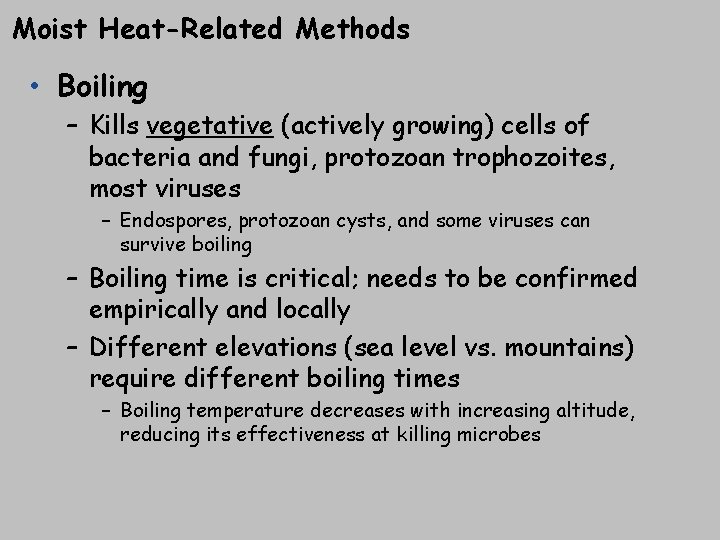
Moist Heat-Related Methods • Boiling – Kills vegetative (actively growing) cells of bacteria and fungi, protozoan trophozoites, most viruses – Endospores, protozoan cysts, and some viruses can survive boiling – Boiling time is critical; needs to be confirmed empirically and locally – Different elevations (sea level vs. mountains) require different boiling times – Boiling temperature decreases with increasing altitude, reducing its effectiveness at killing microbes
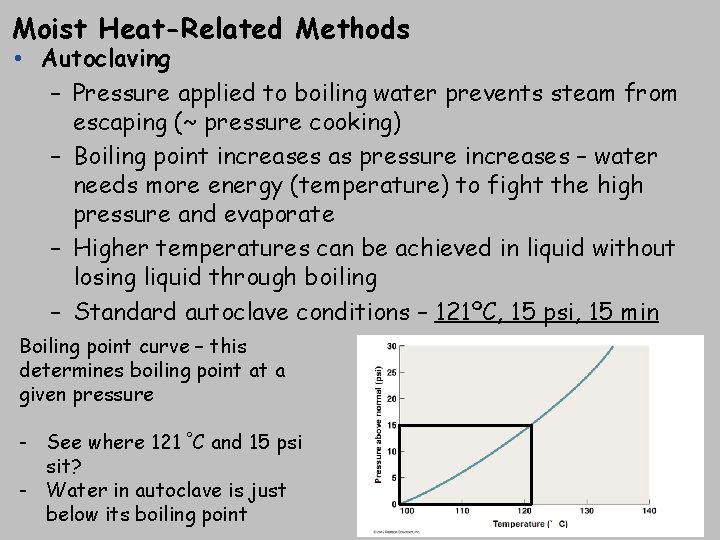
Moist Heat-Related Methods • Autoclaving – Pressure applied to boiling water prevents steam from escaping (~ pressure cooking) – Boiling point increases as pressure increases – water needs more energy (temperature) to fight the high pressure and evaporate – Higher temperatures can be achieved in liquid without losing liquid through boiling – Standard autoclave conditions – 121ºC, 15 psi, 15 min Boiling point curve – this determines boiling point at a given pressure - See where 121 ºC and 15 psi sit? - Water in autoclave is just below its boiling point
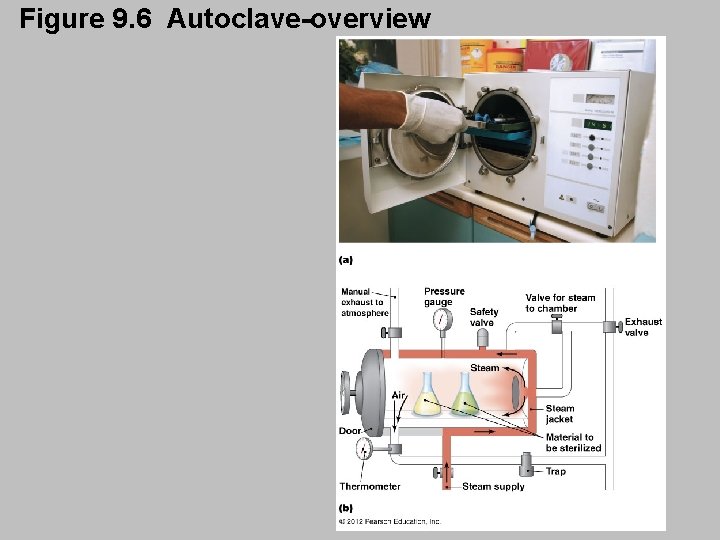
Figure 9. 6 Autoclave-overview
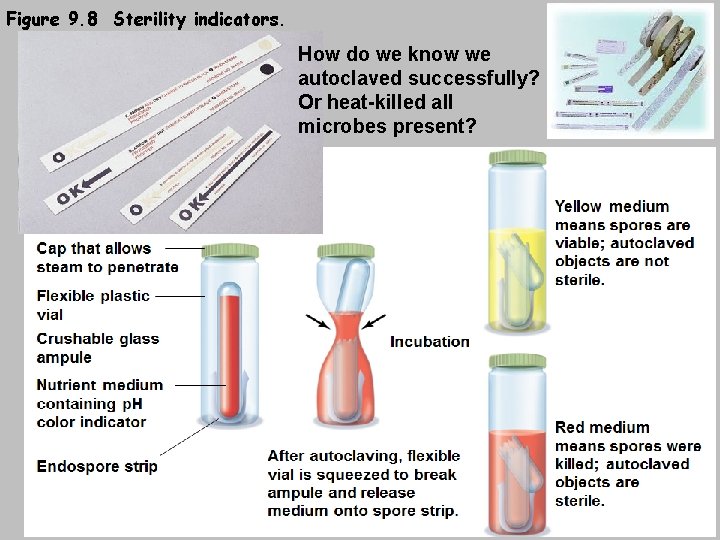
Figure 9. 8 Sterility indicators. How do we know we autoclaved successfully? Or heat-killed all microbes present?
Physical Methods of Microbial Control • Heat-Related Methods – Moist heat – Pasteurization – Used for delicate food that cannot be boiled - milk, ice cream, yogurt, and fruit juices – Pasteurization is NOT sterilization – Heat-tolerant microbes survive (tend to be nonpathogenic); they will eventually spoil food if left out – Pasteurization methods – Large-volume method » batch pasteurization - most commonly used; least expensive – Small-volume methods (usually under pressure) © 2012 Pearson Education Inc. » Flash pasteurization » Ultrahigh-temperature pasteurization » 140ºC for 1 sec, then rapid cooling » Treated liquids can be stored at room temperature » Used for fruit juices, soups, mini-creamers, etc.
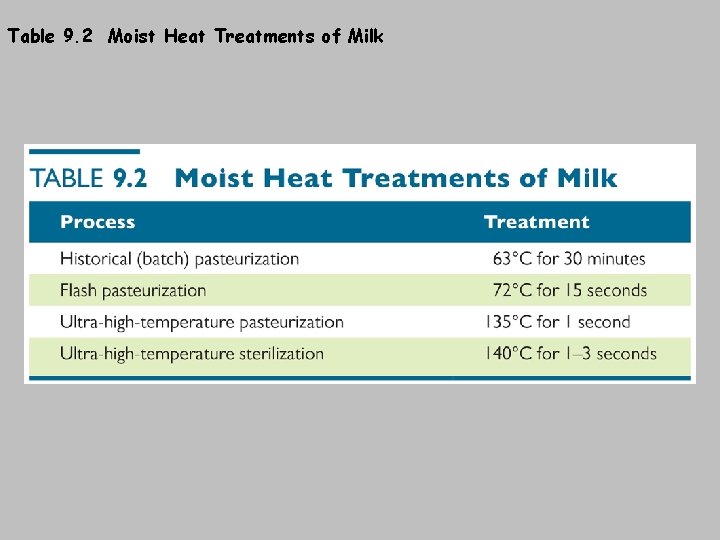
Table 9. 2 Moist Heat Treatments of Milk
Physical Methods of Microbial Control • Heat-Related Methods – Dry heat – Used for materials that cannot be sterilized with moist heat or can tolerate far more heat – Reserved for “tough” materials – hard plastics, metals – Dry heat does not involve heat limits like boiling (100 o. C) and so can get a LOT higher! – Denatures proteins and oxidizes metabolic and structural chemicals (“fries” or “burns” them) – Can utilize higher temperatures and longer times than moist heat – Incineration is ultimate means of sterilization – Cremation vs. burial; why fields are burned
Physical Methods of Microbial Control • Refrigeration and Freezing – Decrease microbial metabolism, growth, and reproduction – Chemical reactions occur more slowly at low temperatures – When frozen, liquid water not available – Refrigeration halts growth of most pathogens – Psychrophilic microbes can multiply in refrigerated foods (Listeria sp. are facultative psychrophiles) – Organisms vary in susceptibility to freezing – https: //www. youtube. com/watch? v=1 NQKEFe. FKsc
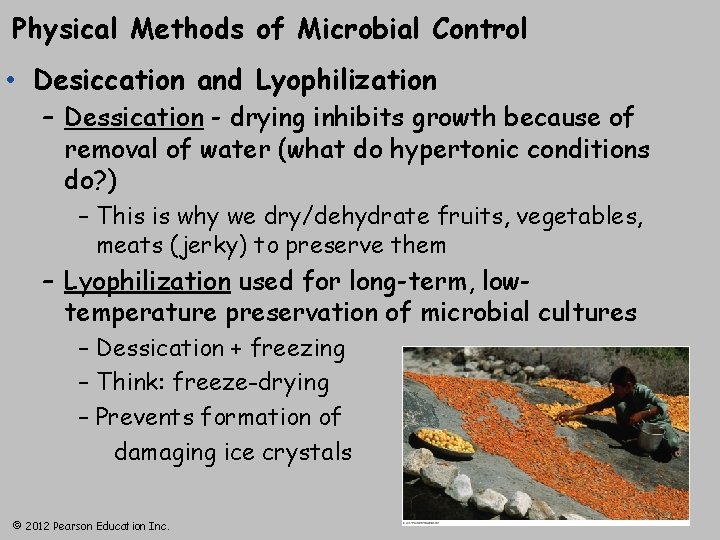
Physical Methods of Microbial Control • Desiccation and Lyophilization – Dessication - drying inhibits growth because of removal of water (what do hypertonic conditions do? ) – This is why we dry/dehydrate fruits, vegetables, meats (jerky) to preserve them – Lyophilization used for long-term, lowtemperature preservation of microbial cultures – Dessication + freezing – Think: freeze-drying – Prevents formation of damaging ice crystals © 2012 Pearson Education Inc.
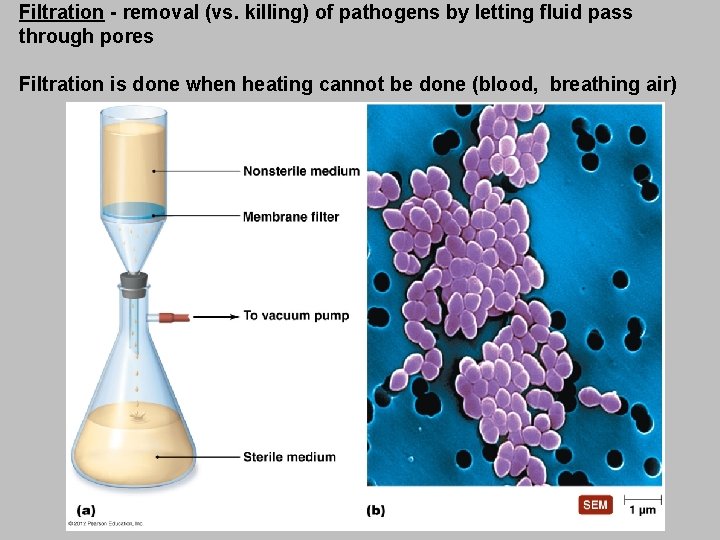
Filtration - removal (vs. killing) of pathogens by letting fluid pass through pores Filtration is done when heating cannot be done (blood, breathing air)
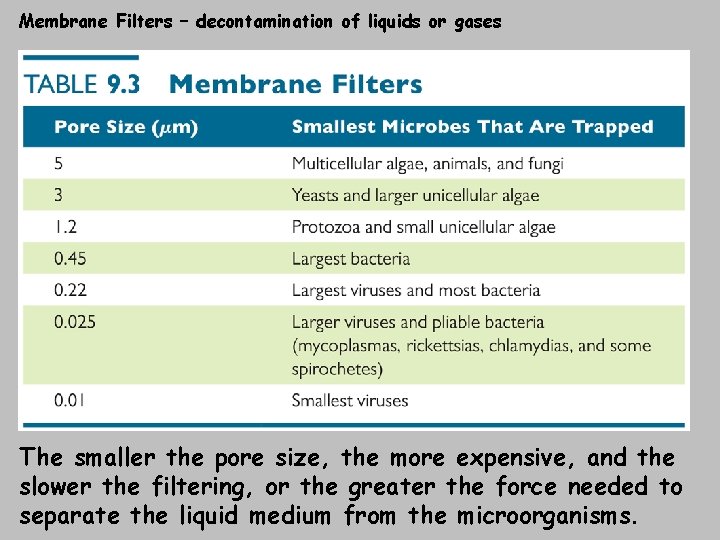
Membrane Filters – decontamination of liquids or gases The smaller the pore size, the more expensive, and the slower the filtering, or the greater the force needed to separate the liquid medium from the microorganisms.
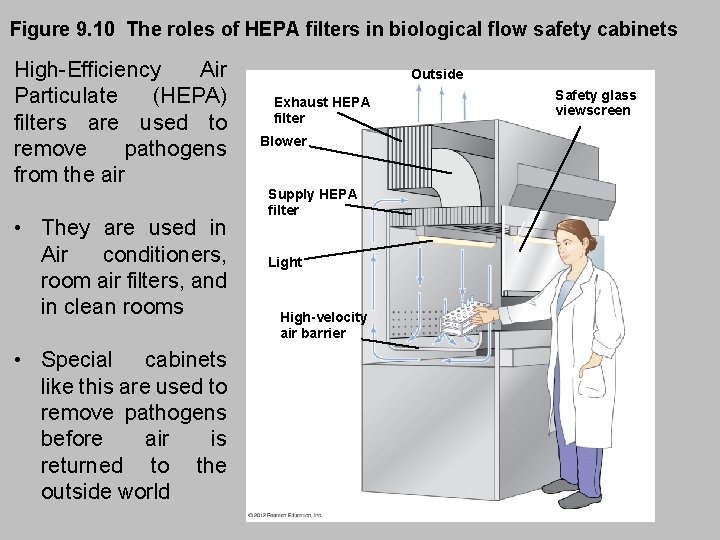
Figure 9. 10 The roles of HEPA filters in biological flow safety cabinets High-Efficiency Air Particulate (HEPA) filters are used to remove pathogens from the air • They are used in Air conditioners, room air filters, and in clean rooms • Special cabinets like this are used to remove pathogens before air is returned to the outside world Outside Exhaust HEPA filter Blower Supply HEPA filter Light High-velocity air barrier Safety glass viewscreen
Physical Methods of Microbial Control • Osmotic Pressure – Generally used for food preservation – High concentrations of salt or sugar in foods inhibit growth of food-spoiling microbes – Cells in hypertonic solution of salt or sugar lose water (crenation) to match salinity of surroundings – Fungi have greater ability than bacteria to survive hypertonic environments – This is how meats and cheeses are aged during curing – some molds are allowed to grow on aged steaks and cheeses to build flavor and further inhibit bacterial growth via their antibiotic release into the food
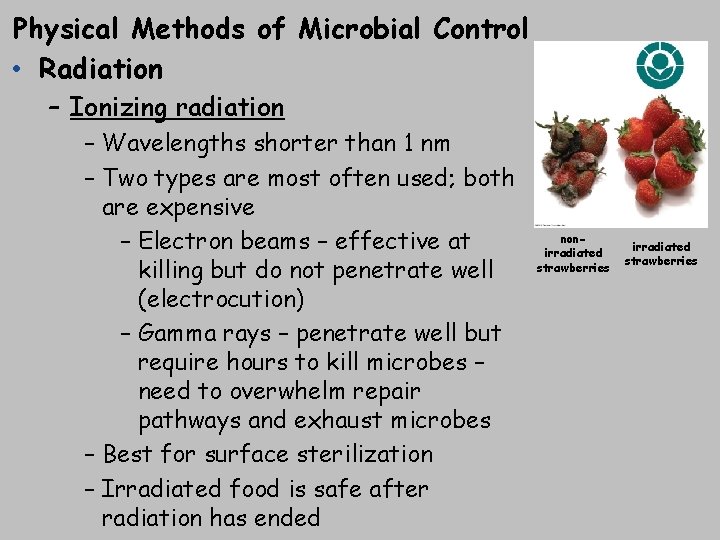
Physical Methods of Microbial Control • Radiation – Ionizing radiation – Wavelengths shorter than 1 nm – Two types are most often used; both are expensive – Electron beams – effective at killing but do not penetrate well (electrocution) – Gamma rays – penetrate well but require hours to kill microbes – need to overwhelm repair pathways and exhaust microbes – Best for surface sterilization – Irradiated food is safe after radiation has ended nonirradiated strawberries
Physical Methods of Microbial Control • Radiation – Nonionizing radiation – Wavelengths between 1 nm and 330 nm – UV light causes pyrimidine dimers in DNA, forces continuous DNA nucleotide excision repair – death occurs when excessive repairs overwhelm the microbes – UV light does not penetrate solids or liquids well – Effective to disinfect air, thin volumes of fluids, and surfaces of objects © 2012 Pearson Education Inc.
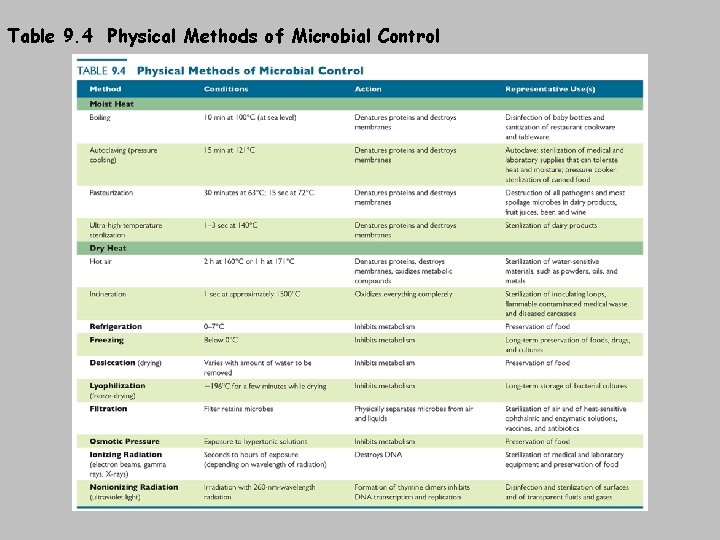
Table 9. 4 Physical Methods of Microbial Control
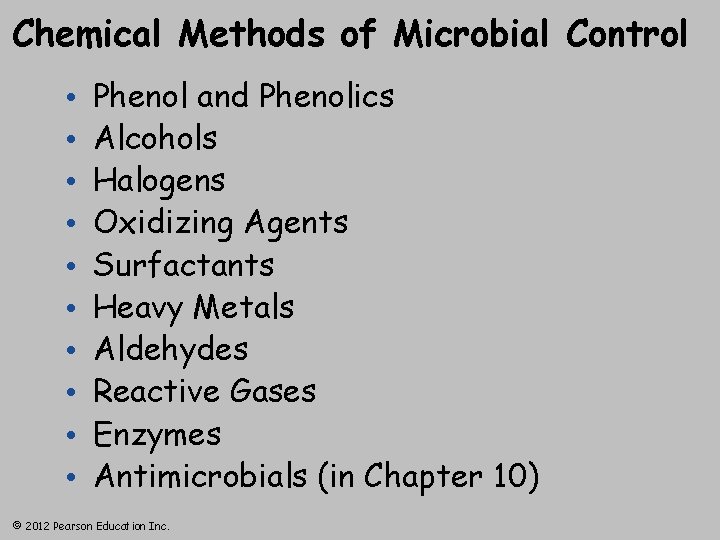
Chemical Methods of Microbial Control • • • Phenol and Phenolics Alcohols Halogens Oxidizing Agents Surfactants Heavy Metals Aldehydes Reactive Gases Enzymes Antimicrobials (in Chapter 10) © 2012 Pearson Education Inc.
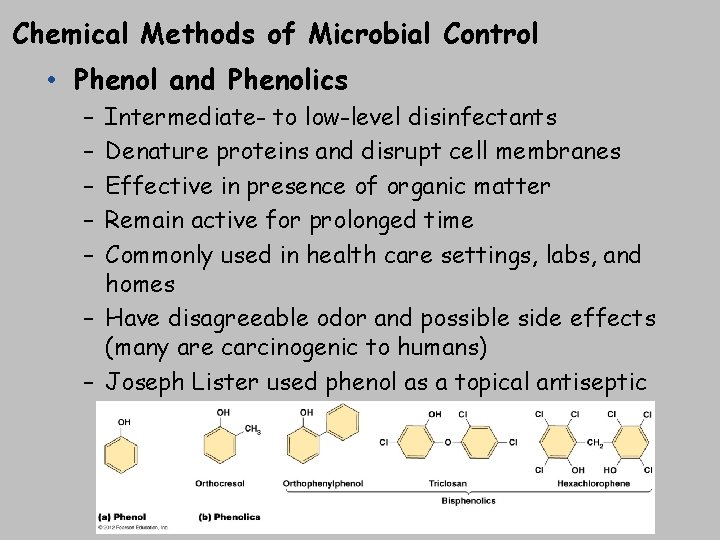
Chemical Methods of Microbial Control • Phenol and Phenolics – – – Intermediate- to low-level disinfectants Denature proteins and disrupt cell membranes Effective in presence of organic matter Remain active for prolonged time Commonly used in health care settings, labs, and homes – Have disagreeable odor and possible side effects (many are carcinogenic to humans) – Joseph Lister used phenol as a topical antiseptic
Chemical Methods of Microbial Control • Alcohols – Intermediate-level disinfectants – Most commonly used: isopropanol (topical), ethanol (safe on tissues) – Denature proteins; disrupt cytoplasmic membranes – More effective than soap in removing bacteria from hands – Hand sanitizers are ~60% ethanol in aloe gel matrix – This is why hand sanitizers are so common – Swabbing of skin with 70% ethanol prior to injection - degerming – Menthol, thymol, and ethanol are components of Listerine © 2012 Pearson Education Inc.
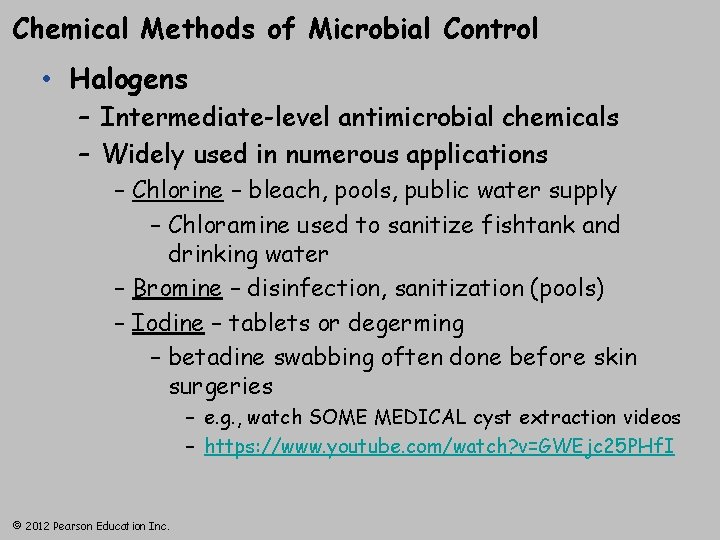
Chemical Methods of Microbial Control • Halogens – Intermediate-level antimicrobial chemicals – Widely used in numerous applications – Chlorine – bleach, pools, public water supply – Chloramine used to sanitize fishtank and drinking water – Bromine – disinfection, sanitization (pools) – Iodine – tablets or degerming – betadine swabbing often done before skin surgeries – e. g. , watch SOME MEDICAL cyst extraction videos – https: //www. youtube. com/watch? v=GWEjc 25 PHf. I © 2012 Pearson Education Inc.
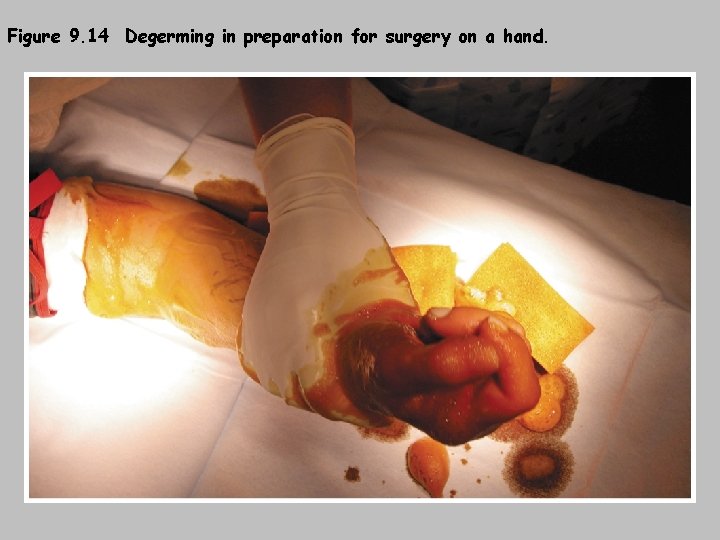
Figure 9. 14 Degerming in preparation for surgery on a hand.
Chemical Methods of Microbial Control • Oxidizing Agents – Kill by oxidation of microbial enzymes via hydroxyl/alkoxyl radical formation – High-level disinfectants and antiseptics – Many examples in use in hospitals and homes: – Hydrogen peroxide can disinfect and sterilize abiologic (high concentrations) or biologic (low concentrations) surfaces – Not highly effective to disinfect open external wounds because of catalase activity from our skin and skin-residing microbes – – Ozone treatment of drinking water Peracetic acid is effective sporocide used to sterilize equipment Benzoyl peroxide used in acne medications Sodium percarbonate used in dishwashing machine detergents © 2012 Pearson Education Inc.
Chemical Methods of Microbial Control • Surfactants – “Surface active” chemicals – Have hydrophilic and hydrophobic ends – Reduce surface tension of solvents – Helps dissolve oils and allows physical methods to remove pathogens form surface easier – Interfere with membrane function – Two main types – Soaps and detergents – Quats
Chemical Methods of Microbial Control • Soaps and detergents – Soaps are from fats/oils – Detergents are synthetic – Chemically optimized to dissolve better in water – Good degerming agents (dissolve oil and bacterial hiding places) but not antimicrobial by themselves • Quats (quaternary ammonium compounds) – positively charged organic surfactants – Low-level disinfectants – Ideal for many medical and industrial applications – Cetylpyridinium chloride found in Cepacol mouthwash – Active ingredient of Lysol and Bactine is benzalkonium chloride
Chemical Methods of Microbial Control • Heavy Metals – Heavy-metal ions denature proteins; “gum-up” membranes (think of soap scum on bathtubs) – Low-level bacteriostatic and fungistatic agents – Many different metals used – 1% silver nitrate used to counter blindness caused by N. gonorrhoeae – Thimerosal (mercury) used to preserve vaccines – Copper controls algal growth in freshwater tanks – Zinc is component of many anti-cold medications, combined with gluconate or acetate – Toxicity with humans common; use with care! © 2012 Pearson Education Inc.
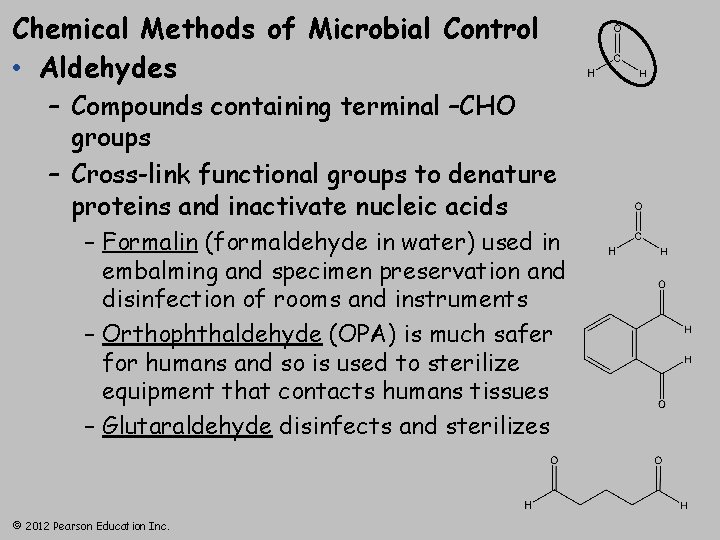
Chemical Methods of Microbial Control • Aldehydes – Compounds containing terminal –CHO groups – Cross-link functional groups to denature proteins and inactivate nucleic acids – Formalin (formaldehyde in water) used in embalming and specimen preservation and disinfection of rooms and instruments – Orthophthaldehyde (OPA) is much safer for humans and so is used to sterilize equipment that contacts humans tissues – Glutaraldehyde disinfects and sterilizes © 2012 Pearson Education Inc.
Chemical Methods of Microbial Control • Gaseous Agents – Used to sterilize areas in which gas can permeate – Microbicidal and sporicidal gases used in closed chambers to sterilize items – Used in hospitals and dental offices – Used to sterilize equipment outside of business hours – Disadvantages due to high chemical reactivity – – Treated areas must be evacuated before and after use Often highly explosive Extremely poisonous Potentially carcinogenic – Ethylene/propylene Oxide, Chlorine gas, Ozone, betapropione lactone © 2012 Pearson Education Inc.
Chemical Methods of Microbial Control • Enzymes – Antimicrobial enzymes act against microorganisms – Human tears contain lysozyme – Digests peptidoglycan cell wall of bacteria – Enzymes to control microbes in the environment – Lysozyme used to reduce the number of bacteria in cheese – Lysozyme used instead of sulfites by osme winemakers – Prionzyme can remove prions on medical instruments, environmental contamination – first effective anti-prion treatment
Chemical Methods of Microbial Control • Antimicrobials – Antibiotics, semisynthetic, and synthetic chemicals – Typically used for treatment of disease – Mostly used inside of body – Some used for antimicrobial control outside the body (i. e. triclosan in hand dish soaps) © 2012 Pearson Education Inc.
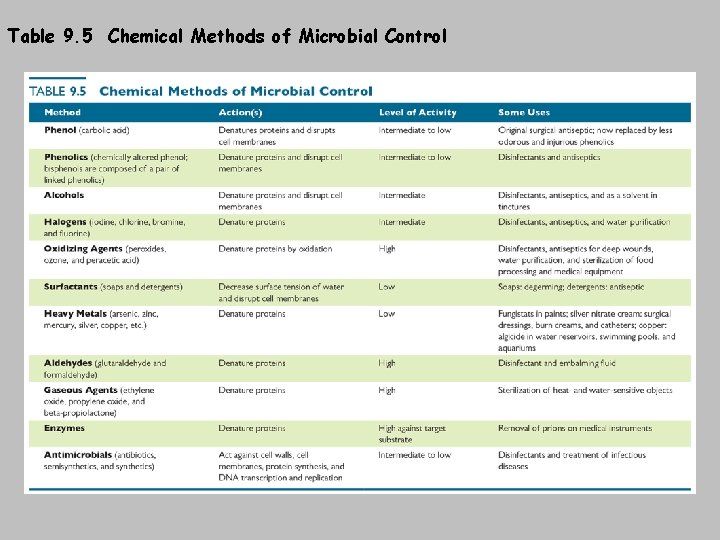
Table 9. 5 Chemical Methods of Microbial Control
Chemical Methods of Microbial Control • Development of Resistant Microbes – Little evidence that products containing antiseptic and disinfecting chemicals add to human or animal health – E. g. , triclosan in antibacterial handsoaps – “erring on the side of caution” causes them to be often used for indications when they are not really needed – such as normal handwashing and dishwashing – Excessive use of such products promotes development of resistant microbes
- Slides: 48