
Chapter 9 Chemical Bond and Molecular Structure The
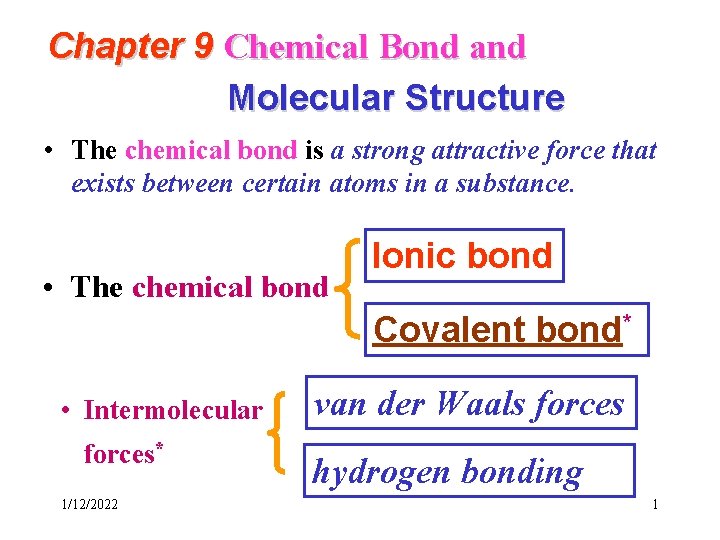
Chapter 9 Chemical Bond and Molecular Structure • The chemical bond is a strong attractive force that exists between certain atoms in a substance. • The chemical bond Ionic bond Covalent bond* • Intermolecular forces* 1/12/2022 van der Waals forces hydrogen bonding 1
9. 2 Valence Bond Theory 9. 3 Hybrid Orbital Theory 9. 5 Molecular Orbital Theory 9. 7 Intermolecular Forces • Van Der Waals Forces • The Hydrogen Bond 1/12/2022 2
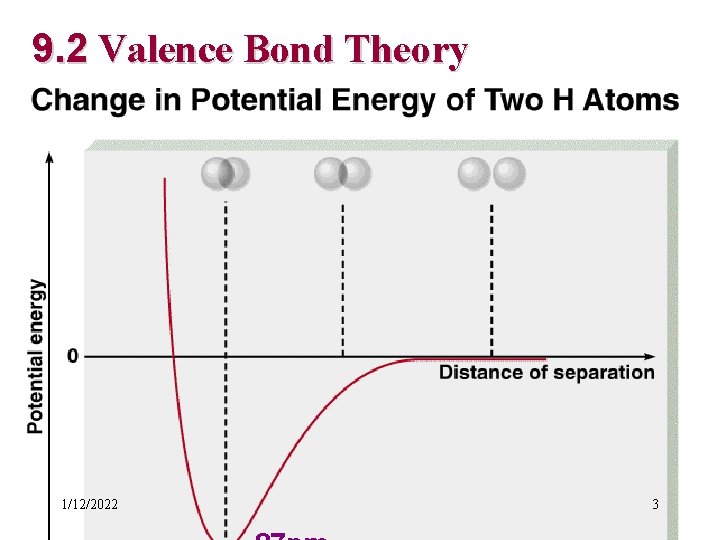
9. 2 Valence Bond Theory 1. The Formation of a Covalent Bond 1/12/2022 3
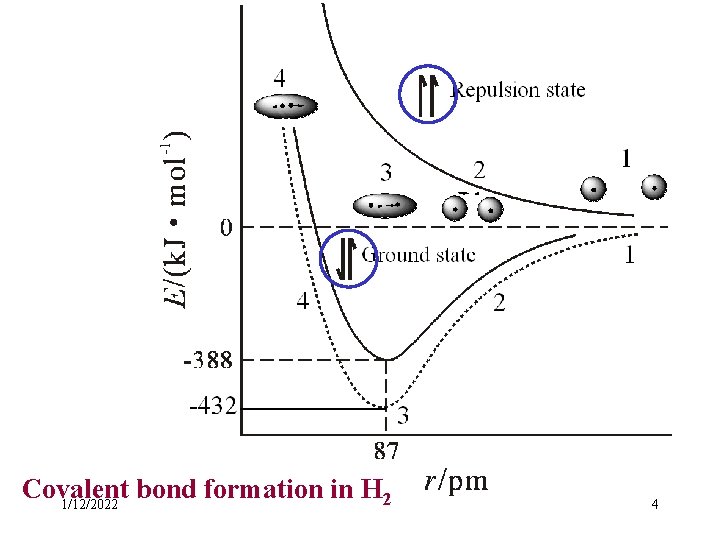
Covalent bond formation in H 2 1/12/2022 4
2. The Central Themes of VB Theory (1) Opposing Spins of the Electron Pair As the exclusion principle prescribes, the molecule formed by the overlapping orbitals has a maximum capacity of two electrons that must have opposite spins. 1/12/2022 5
(2) The Number of the Covalent Bond Saturation character The number of bonds formed by a given atom to equal the number of unpaired electrons in its valence shell. For example, nitrogen with the out configuration 2 s 22 px 12 py 12 pz 1, can share its 2 p electrons with three hydrogen atom to form three bonds, as in NH 3 (ammonia), but it cannot form NH 5. 1/12/2022 6
(3) Maximum Overlap of Bonding Orbitals Direction character An orbital on one atom comes to occupy a portion of the same region of space as an orbital on the other. The two orbitals are said to overlap. the greater the orbital overlap, the stronger (more stable) the bond. 1/12/2022 7
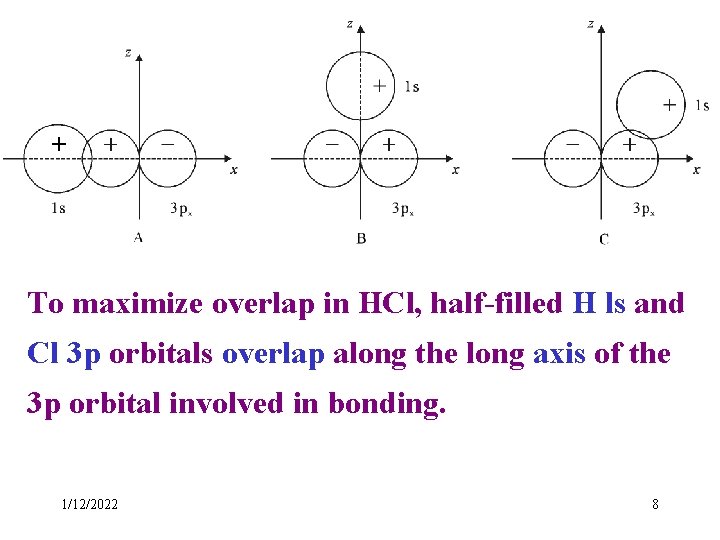
+ To maximize overlap in HCl, half-filled H ls and Cl 3 p orbitals overlap along the long axis of the 3 p orbital involved in bonding. 1/12/2022 8
3. The classification of covalent bonds Two kinds of bonds Sigma Bond Pi Bond (1) Sigma bond (σ) is formed by the overlap of the end of one orbital with the end of the other. It has a cylindrical shape symmetry about the bond axis. Sigma bonds are examplified by s-s, s-px, and px-px overlaps. (head to head) 1/12/2022 9
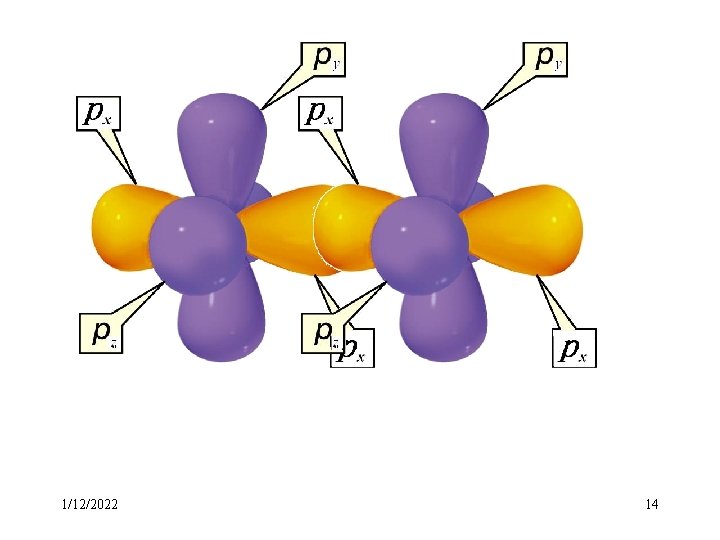
(2) A pi bond (л) is formed by the sidewise overlap of two parallel p orbitals. (side to side) Pi bonds are exemplified by py-py, and pz-pz overlaps. a sidewise overlap will not give so strong a bond as an along-the-axis overlap of two p orbitals. 1/12/2022 10
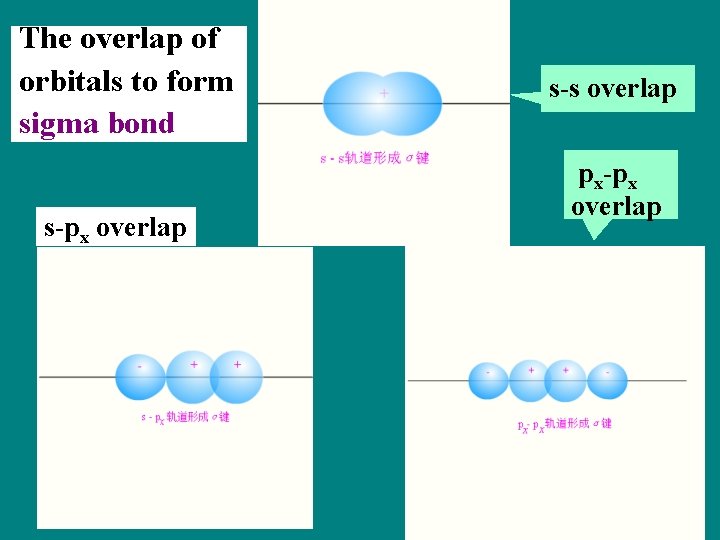
The overlap of orbitals to form sigma bond s-px overlap 1/12/2022 s-s overlap px-px overlap 11
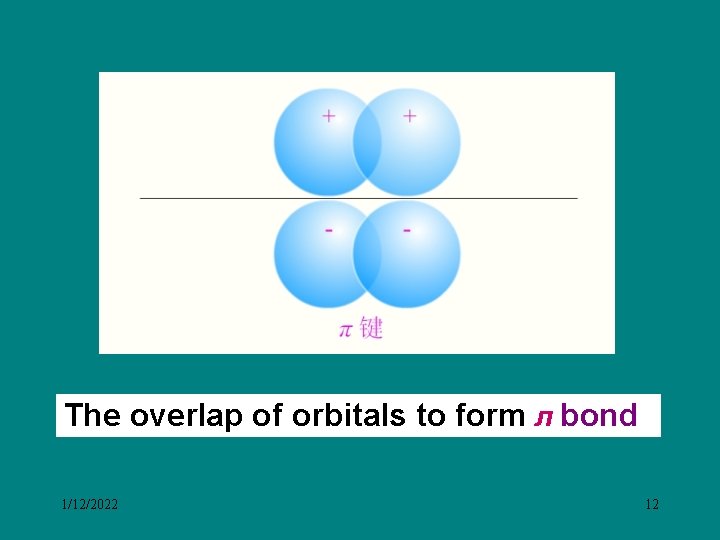
The overlap of orbitals to form л bond 1/12/2022 12
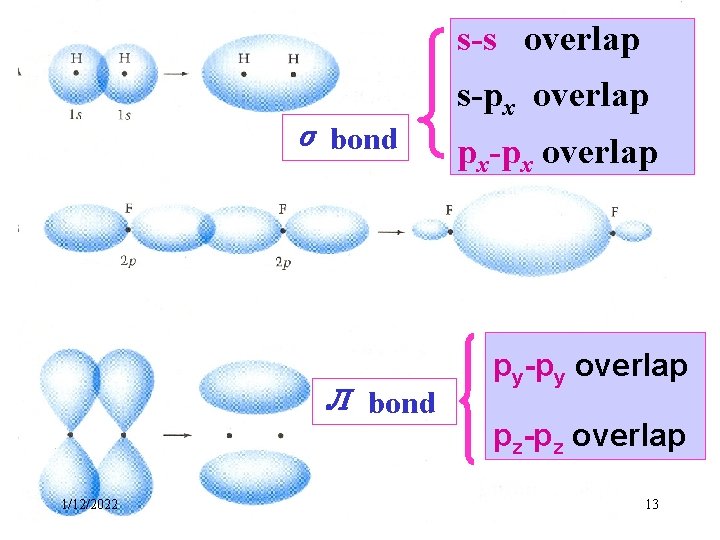
s-s overlap σ bond Л bond 1/12/2022 s-px overlap px-px overlap py-py overlap pz-pz overlap 13
1/12/2022 14
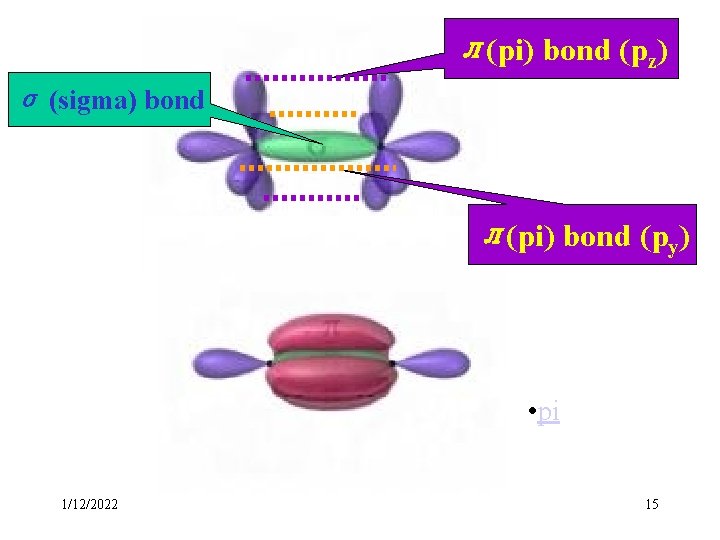
л(pi) bond (pz) σ (sigma) bond л(pi) bond (py) • pi 1/12/2022 15
4. Bond parameters • bond length • bond energy • bond angle • The bond length is defined as the distance between the nuclei of the atoms involved in the bond. 1/12/2022 16
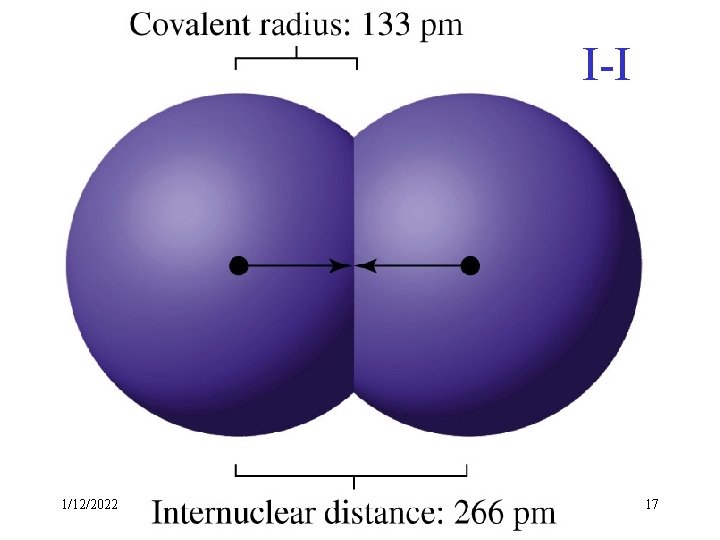
I-I 1/12/2022 17
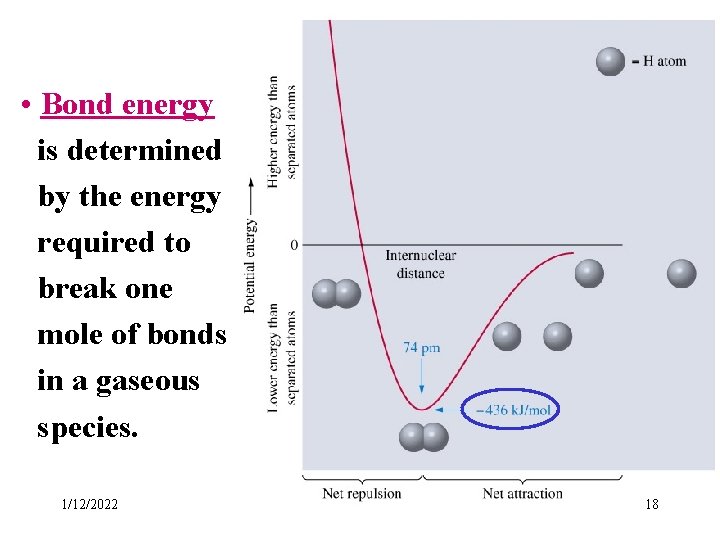
• Bond energy is determined by the energy required to break one mole of bonds in a gaseous species. 1/12/2022 18
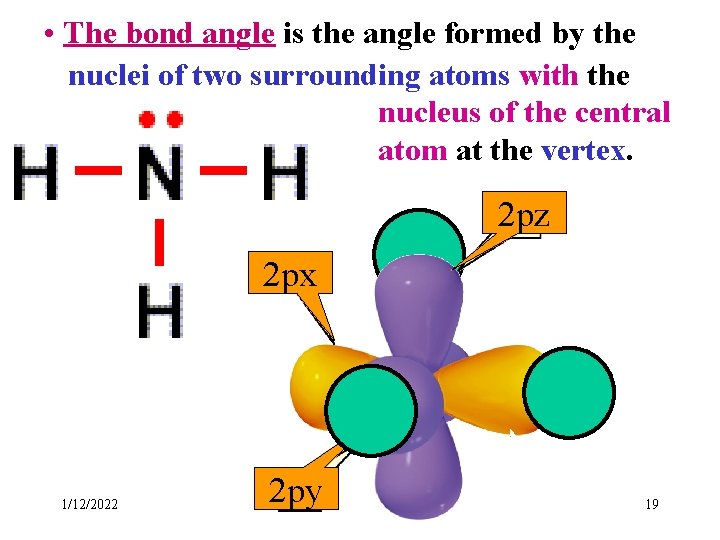
• The bond angle is the angle formed by the nuclei of two surrounding atoms with the nucleus of the central atom at the vertex. 2 pz 2 px 1/12/2022 2 py 19
- Slides: 19