
Chapter 9 Cellular Respiration Edited by Ms Rayner
Chapter 9: Cellular Respiration Edited by Ms Rayner for Yr 11 ATAR Biology
Cellular respiration: glucose + oxygen → carbon dioxide + water + ATP C 6 H 12 O 6 + 6 O 2 → 6 CO 2 + 6 H 2 O + 36 ATP All organisms (except Archaea) use glucose as a primary source of energy for cellular metabolism The chemical bonds in glucose are broken, releasing energy in the form of ATP
Cellular respiration The Breakdown of glucose starts with Glycolysis and then can be followed by Aerobic respiration or anaerobic respiration Stage 1 Glycolysis • No oxygen required • Cytosol • Glucose → 2 pyruvate molecules • 2 ATP molecules produced Stage 2 Cellular respiration with oxygen OR Stage 2 Cellular respiration without oxygen
Anaerobic respiration Cellular respiration without oxygen Alcohol fermentation (only in plants, yeasts and bacteria) Occurs in cytoplasm glucose → ethanol + carbon dioxide + ATP C 6 H 12 O 6 → 2 CH 3 CH 2 OH + 2 CO 2 + 2 ATP Glucose is converted to pyruvate in Glycolysis first. This pyruvate is then used in alcohol fermentation No new ATP is created, the two ATP come from Glycolysis.
Anaerobic respiration Cellular respiration without oxygen Lactic acid fermentation (only in animals) Occurs in cytoplasm Note: This is the overall equation. It does not Anaerobic respiration show Glycolysis, which glucose → lactic acid + ATP converts the Glucose to pyruvate first C 6 H 12 O 6 → 2 CH 3 CH(OH)COOH + 2 ATP Glucose is converted to pyruvate in Glycolysis first. This pyruvate is then used in lactic acid fermentation No new ATP is created, the two ATP come from Glycolysis
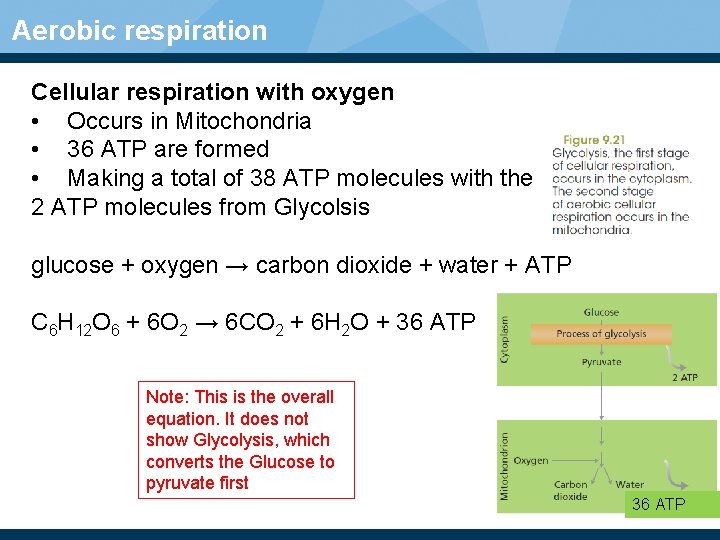
Aerobic respiration Cellular respiration with oxygen • Occurs in Mitochondria • 36 ATP are formed • Making a total of 38 ATP molecules with the 2 ATP molecules from Glycolsis glucose + oxygen → carbon dioxide + water + ATP C 6 H 12 O 6 + 6 O 2 → 6 CO 2 + 6 H 2 O + 36 ATP Note: This is the overall equation. It does not show Glycolysis, which converts the Glucose to pyruvate first 36 ATP
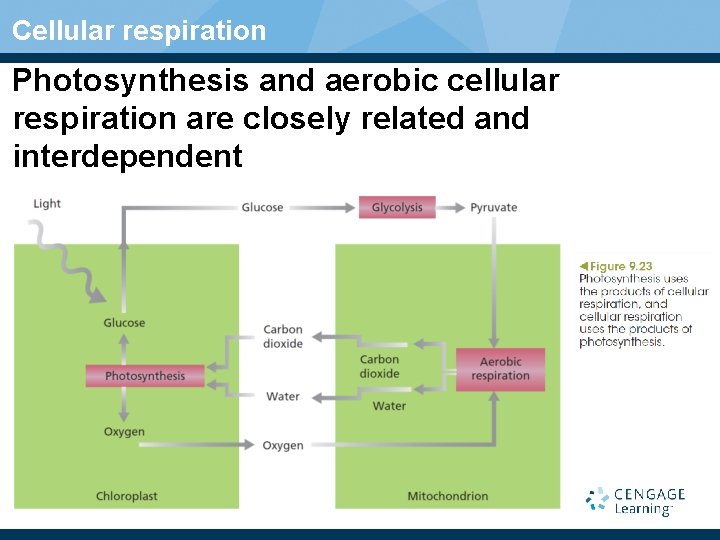
Cellular respiration Photosynthesis and aerobic cellular respiration are closely related and interdependent
- Slides: 7